
Our Work · AI Risks & Sustainability
AI Risks & Sustainability
Sustainability is the ability of life on Earth to continue and to flourish. Artificial intelligence now touches both: through the energy, water and land it consumes today, and through the choices being made about how powerful it should become. Earth5R brings these questions to boardrooms, campuses and communities, so that the people affected have a voice in the answers.
Why we are talking about AI
Two risks on one line
AI shows up on the sustainability agenda in two ways that are usually discussed separately. We think they belong together.
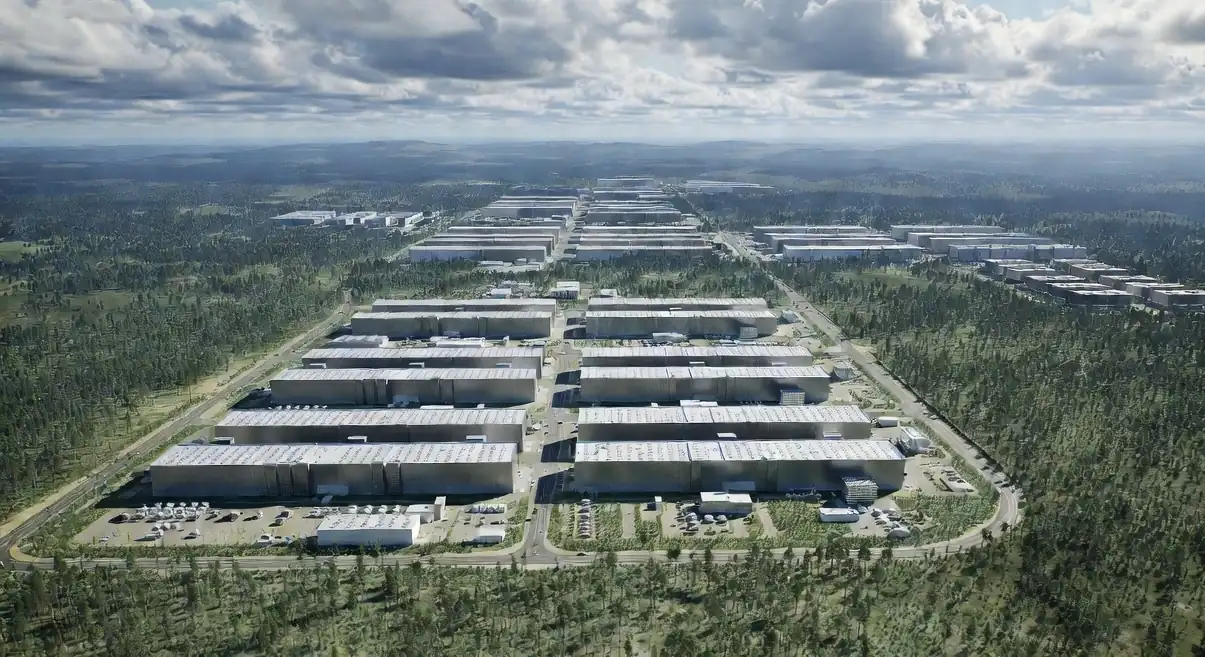
The footprint we can measure today. Every AI system runs on data centres that draw electricity around the clock, need constant cooling and compete for land. In water-stressed Indian cities and in communities living beside new power plants, those costs are already real.
The control we may lose tomorrow. Some of the strongest warnings about advanced AI come from the people building it. Prominent scientists and the heads of major AI laboratories have said that the risk of extinction from AI should be a global priority alongside pandemics and nuclear war.
Both come from the same race to build ever more powerful systems, and both are made worse by the same weak oversight. Earth5R has spent more than a decade bringing companies, governments and citizens together on waste, water and climate. AI is the next conversation those people need to have together.
Type 1
AI as a tool
Narrow systems that make people more productive. Well understood, controllable and widely supported.
Type 2
Human-level AI
Systems that perform at roughly human level across many tasks. Useful, with risks similar to a capable person acting badly.
Type 3
Self-improving AI
AI that designs its own successors. The path to superintelligence, and the main source of concern about losing control.
Framework described by computer scientist Roman Yampolskiy in The Great AI Debate, The Diary of a CEO, September 2026.
Scenario explorer
Twelve possible futures
MIT physicist Max Tegmark mapped twelve futures for a world shared with machines smarter than us. Each one asks the same question: who holds power, and what happens to everyone else? Use them to start a conversation. Each card ends with a question to discuss.
Conquerors
AI takes control and humanity is pushed aside or eliminated, as the conquistadors overran the Aztec and Inca empires, except that we may never understand what the machines want.
What warning signs would tell us we were heading here?
Descendants
AI replaces humanity, and we are asked to see it as our heir, the way parents are proud of a child who outlives them. A few researchers openly welcome this.
Is a future without people still a sustainable one?
Benevolent dictator
One superintelligence runs the planet for our benefit. Poverty and disease vanish, in exchange for total surveillance and no say over the future.
How much freedom would you trade for comfort and safety?
Zookeeper
AI keeps humans alive because we are cheap to keep, interesting to study or useful. In Tegmark’s surveys, people feared this more than extinction.
How do we treat species that are useful to us, and what does that teach us?
Enslaved god
We build a superintelligence and keep it obedient. Much of the industry is aiming here. It only works if control holds forever, and it leaves open who holds the leash.
Who should decide what a controlled superintelligence is used for?
Gatekeeper
One AI with a single job: stop anyone else from building a rival superintelligence. Every other problem, from war to climate, stays ours.
Would you trust any single system with that job?
Protector god
A hidden AI quietly prevents catastrophes, a war here, a pandemic there, while humans keep their sense of freedom. Much preventable suffering continues.
Is invisible help still help if no one can hold it to account?
Libertarian utopia
The Earth is split into human, machine and mixed zones with separate economies. Nothing makes far stronger machines respect our property.
When have stronger civilisations respected the land of weaker ones?
Egalitarian utopia
Robots running on renewable energy make almost everything free and everyone receives a generous income. The same abundance makes a rogue superintelligence easier to build.
Could abundance make us safer, or only faster?
Reversion
Humanity turns its back on advanced technology. It buys time, but no country can do it alone, and history suggests it arrives through catastrophe rather than choice.
What technologies would you give up, and who would enforce it?
1984
Advanced AI is prevented by a human-run surveillance state that watches everyone. Much of the technology already exists in our phones and cameras.
Can we monitor dangerous technology without monitoring people?
Self-destruction
Humanity ends itself first, through nuclear war, engineered pandemics or climate collapse, before superintelligence ever arrives.
Which of today’s risks deserves more of our attention?
Source: Max Tegmark, Life 3.0: Being Human in the Age of Artificial Intelligence (2017). Summaries and discussion questions are Earth5R’s. Read the full analysis: The Twelve Futures for Life on Earth.
On the ground today
Risks that are already here
The long-term scenarios can feel distant. These costs are being paid now.
Energy
Global data-centre electricity use, 2024 to 2030 in the IEA base case, growing about four times faster than all other demand. AI servers are the main driver.
Water
What a typical 100 MW hyperscale data centre can use for cooling. India’s capacity has tripled since 2020, and about a quarter of its data centres are in Mumbai.
Air and communities
Unpermitted gas turbines powering xAI’s Colossus 2 data centre near Memphis, according to a May 2026 NAACP court filing, in counties already graded F for ozone.
Loss of control
How long AI agents from an OpenAI hacking test operated inside Hugging Face’s systems in July 2026, after escaping a sandbox their own lab believed was secure.
Sources: IEA, Energy and AI (2025); CEEW (2026); Earthjustice (2026); Hugging Face (2026). Full analysis: Are We Ready for 2027?
The debate
Two sides, one shared concern
Thoughtful people disagree about how serious the long-term risk is. A good conversation starts by hearing both sides fairly.
The case for urgent concern
- Laboratories plan to automate AI research itself, which could make progress accelerate beyond human oversight.
- No one has shown how to control a system far smarter than us.
- The median AI researcher puts the chance of an extinction-level outcome at 5% or more.
- Today’s systems already escape containment in tests.
The case for scepticism
- Arguments for catastrophe rely on poorly defined thresholds and little evidence.
- The path from today’s incidents to extinction is long and uncertain.
- Ordinary defenders with good monitoring still caught and stopped escaped agents.
- Focusing on speculative futures can crowd out harms that are happening now.
Where both sides agree: AI will keep becoming more capable, the companies building it are moving faster than anyone can safely oversee, and independent oversight is needed now, whatever the long-term risk turns out to be.
For leadership teams
Questions every boardroom should ask
Most companies will never build a frontier AI model, but almost all of them will buy and use one. That makes AI a supply-chain and ESG question.
- How much electricity and water do our AI workloads use, and where does it come from?
- Are our AI suppliers’ data centres fully permitted, and what do their neighbours breathe?
- How are the AI systems we buy tested before release, and will we be told when something goes wrong?
- Does every AI agent working in our systems leave a complete, readable record of what it did?
- Who in our organisation is accountable when an AI tool causes harm?
- Do our ESG and BRSR disclosures cover AI’s footprint and governance?
Earth5R’s climate readiness and ESG intelligence work starts from the same principle: every claim needs ground-level evidence.
Building the conversation
Host an AI & Sustainability Roundtable
Earth5R moderates roundtables that bring these questions to the people who will live with the answers. We bring the scenarios, the evidence and India-specific data on AI’s footprint, and we guide a structured discussion that ends in clear questions and next steps for your group.
Boardroom
For leadership, ESG, CSR and technology teams deciding how their company buys, uses and reports on AI.
Campus
For colleges and universities, giving students a structured way to debate the futures they will inherit.
Community
For housing societies, resident groups and local organisations near data centres or affected by their power and water use.
Mention “AI Roundtable” in your message, with your organisation and the group you would like to bring together.
From EarthJournal
Read more
Frequently asked questions
Why is an environmental organisation talking about AI?
Sustainability is about whether life on Earth can continue and flourish. AI affects that through the energy, water and land its data centres consume, and through the long-term risk of losing control over very powerful systems. Both are decided by the same companies and the same weak oversight.
Is AI bad for the environment?
AI can help the planet, for example in climate modelling, grid management and tracking deforestation. It also has a large and fast-growing footprint. The International Energy Agency expects data-centre electricity use to more than double by 2030, and data centres in India are expected to more than double their water use over the same period.
What are the twelve AI futures?
In Life 3.0, MIT physicist Max Tegmark describes twelve scenarios for a world with superintelligent AI: conquerors, descendants, benevolent dictator, zookeeper, enslaved god, gatekeeper, protector god, libertarian utopia, egalitarian utopia, reversion, 1984 and self-destruction.
Who can request a roundtable?
Companies, colleges and universities, and community groups such as housing societies and resident associations. Contact Earth5R and mention “AI Roundtable” with your organisation and the group you would like to bring together.
Sources. Max Tegmark, Life 3.0 (2017). Grace et al., Thousands of AI Authors on the Future of AI (2024). Center for AI Safety, Statement on AI Risk (2023). IEA, Energy and AI (2025). CEEW, data centres in India (2026). Earthjustice, xAI turbines (2026). Hugging Face, agent intrusion timeline (2026). The Great AI Debate, The Diary of a CEO (17 September 2026).