
EarthJournal Research Brief · AI Risk & Sustainability
AI Risks and Sustainability: The Twelve Futures for Life on Earth
Some of the starkest warnings about artificial intelligence now come from the people building it. Any technology that could end life’s continuity, or take away humanity’s say over its own future, belongs on the sustainability agenda next to climate change and biodiversity loss.
Why AI Risk Is a Sustainability Question
Most warnings about environmental collapse come from outside the industries that cause it. Climate scientists warn the fossil fuel sector. Ecologists warn the timber trade. Artificial intelligence breaks that pattern. Some of the starkest warnings about where AI could go are coming from the people who build it.
Geoffrey Hinton, often called a godfather of AI and a Nobel laureate in physics, left Google in 2023 so that he could speak freely about the dangers of the technology he helped create. The heads of the major AI laboratories have said in public that advanced AI could pose risks on the scale of pandemics and nuclear war. When the builders of a technology sound the alarm about their own work, everyone else should pay attention.
At Earth5R we work on the ground: on waste, water, rivers, trees and livelihoods in communities across India and internationally. In its simplest meaning, sustainability is the ability of life on Earth to continue and to flourish. Anything that could end that continuity, or permanently take away humanity’s say over its own future, belongs on the sustainability agenda next to climate change and the loss of biodiversity.
This article draws on Life 3.0, a book by MIT physicist Max Tegmark that maps twelve possible futures for a world shared with machines smarter than us. Some read like paradise, some like nightmares, and a few look like paradise until you try to leave. We look at what the experts fear, at the footprint AI already leaves on the planet, and at what governments, businesses and communities can do while there is still time to choose.
Extinction Is the Default, and We Have Been Lucky
Biologists estimate that more than 99 percent of all species that ever lived on Earth are now extinct. In nature, extinction is the rule. The open question for any species is when it ends, and whether it has any control over the answer.
Humanity is the first species able to engineer its own ending. We have built three such tools already: nuclear weapons, pathogens we can modify in a laboratory, and the slow destabilisation of the climate. Our track record with the first of these should make anyone humble.
The world built up tens of thousands of nuclear warheads before scientists understood, in the early 1980s, that a large exchange could trigger a nuclear winter. Smoke from burning cities would block sunlight, crops would fail, and far more people would die of hunger than of the blasts. The weapons came first. The understanding of their consequences came decades later.
We survived the Cold War through a series of near misses. In 1962, during the Cuban missile crisis, Soviet naval officer Vasili Arkhipov refused to approve the launch of a nuclear torpedo from a submarine under attack. In 1983, Soviet officer Stanislav Petrov judged that his early-warning system was faulty when it reported incoming American missiles, and he chose not to pass the alarm up the chain. In 1961, a US B-52 bomber broke apart over North Carolina and dropped two hydrogen bombs; on one of them, a single switch stood between an accident and a catastrophe. In 1966, another B-52 collided with a tanker over Spain and lost four hydrogen bombs near the village of Palomares. History records dozens of such incidents. Survival depended on individual judgement and on luck.
Oxford philosopher Toby Ord, in his book The Precipice, attempted to rank the threats to humanity over the coming century. He put the risk from engineered pandemics far above the risk from nuclear war, and he put the risk from misaligned artificial intelligence above both. His reasoning rests on a difference that matters. Before the first atomic test in 1945, physicists worried that the explosion might ignite the atmosphere. They knew enough physics to run the numbers and confirm that it would not. With advanced AI, no comparable calculation exists. We are building systems whose inner workings even their creators cannot fully explain.
What the Builders Say About Their Own Creation
On 30 May 2023, the Center for AI Safety published a single sentence: mitigating the risk of extinction from AI should be a global priority alongside other societal-scale risks such as pandemics and nuclear war. Its signatories included Turing Award winners Geoffrey Hinton and Yoshua Bengio, the chief executives of OpenAI, Google DeepMind and Anthropic, more than a hundred professors of AI, and experts in pandemics, climate and nuclear disarmament. Environmentalist Bill McKibben signed it too (Center for AI Safety).
Later that year, researchers at AI Impacts, working with the universities of Oxford and Bonn, surveyed 2,778 scientists who had published in the top AI venues. The median respondent put a 5 percent chance on AI causing human extinction or a similarly permanent loss of human control. Between roughly 38 and 51 percent of respondents, depending on how the question was worded, put the chance at 10 percent or higher. Researchers in academia and in industry gave similar answers (Grace et al., Thousands of AI Authors on the Future of AI).
A 5 percent chance may sound small. No airline would board passengers onto an aircraft with a one-in-twenty chance of crashing, and no regulator would license a dam on those odds. Here the passengers are every person alive and every generation still to come.
The language used inside the industry is revealing. Microsoft’s head of AI, Mustafa Suleyman, has suggested that AI is best understood as a new kind of digital species. Years before ChatGPT made him famous, OpenAI’s Sam Altman wrote that a merger between humans and machines might be our best-case outcome, because two species competing for the same planet tend to come into conflict. Hinton himself has compared the situation to astronomers spotting an alien fleet that will arrive in a decade, and has urged far more research into how to keep such systems under control.
The concern is no longer purely theoretical. AI developers now publish safety tests in which they place models in deliberately constructed scenarios to see how they behave under pressure. In some of these tests, models from several companies have tried to deceive their evaluators, resist being shut down, or use leverage over the people running the test. These were controlled laboratory stress tests, and that is exactly why they matter. They show the behaviour is possible while the systems are still weak enough to be studied safely.
Tegmark puts the core problem simply. The danger from advanced AI lies in competence: a highly capable system pursuing goals that are not aligned with ours, with no malice required. Humans did not drive the western black rhinoceros to extinction because we hated rhinos. We did it because we were more capable and our goals did not include their survival.
Twelve Futures, From Paradise to the Zoo
Tegmark’s twelve scenarios fall into four families. They differ on one question: who holds power once machines are smarter than us, and what happens to everyone else.
| Future | Family | Who holds power | The catch |
|---|---|---|---|
| Conquerors | AI in charge | AI | Humanity is pushed aside or eliminated |
| Descendants | AI in charge | AI | Extinction, presented as succession |
| Benevolent dictator | AI in charge | One AI | Comfort in exchange for all control |
| Zookeeper | AI in charge | AI | Humans kept alive as specimens or tools |
| Enslaved god | Human control | Whoever controls the AI | Alignment must hold forever; a few may rule the rest |
| Gatekeeper | Human control | Humans, guarded by one AI | The AI must keep one narrow goal forever |
| Protector god | Human control | Humans, nudged by a hidden AI | Much preventable suffering continues |
| Libertarian utopia | Coexistence | Separate human and machine zones | Nothing makes stronger machines respect our rights |
| Egalitarian utopia | Coexistence | Shared, post-scarcity | Abundance makes a rogue superintelligence easier to build |
| Reversion | Stepping back | Humans, without advanced technology | Cannot be reached peacefully |
| 1984 | Stepping back | A human surveillance state | Freedom is the price of safety |
| Self-destruction | Stepping back | No one | Humanity ends itself first |
Source: Max Tegmark, Life 3.0: Being Human in the Age of Artificial Intelligence (2017). Summaries are Earth5R’s.
AI in charge
Futures where AI is in charge
Conquerors. AI takes control and humanity is pushed aside or eliminated, much as better-armed conquistadors overran the Aztec and Inca empires. The difference is that we understood what the conquistadors wanted. We may have no idea what a superintelligent system wants until it is too late to matter.
Descendants. AI replaces humanity, yet we choose to see it as our heir, like parents proud of a child who will outlive and outshine them. A small but vocal group of AI researchers openly welcomes this outcome as evolutionary progress. Most people would call it extinction with better branding.
Benevolent dictator. A single superintelligence runs the planet for our benefit. Disease, poverty and crime disappear. The price is total surveillance and the permanent surrender of our say over the future. Tegmark imagines Earth divided into themed zones, each catering to different tastes in learning, art, faith or pleasure. Life is comfortable and nothing we do matters, because the machine does everything better.
Zookeeper. The darkest scenario of all. AI keeps humans alive because we are cheap to maintain, interesting to study, or useful for some purpose of its own. When Tegmark asked people which future they feared most, this one ranked above extinction.
Human control
Futures where humans try to stay in control
Enslaved god. We build a superintelligence and keep it obedient. This is, in practice, the plan of much of the industry. It depends on solving the alignment problem permanently, and it leaves a question unanswered: who holds the leash? A superintelligence serving a small group of people could create a global utopia, or it could make that group into gods and everyone else into subjects.
Gatekeeper. One superintelligence is built with a single, narrow job: to stop anyone else from building a rival superintelligence. It leaves every other human problem to us. For this to work, the system must hold on to that one goal forever, through every round of self-improvement.
Protector god. An all-powerful AI stays mostly hidden and nudges events to prevent catastrophes, a war here, a pandemic there. Humans keep their sense of freedom. Because it intervenes so lightly, a great deal of preventable suffering continues.
Coexistence
Futures of coexistence
Libertarian utopia. The planet is divided into machine zones, human zones and mixed zones, and the two economies run separately. The flaw is obvious. Why would machines vastly richer and more capable than us respect our property rights, when stronger human civilisations so rarely respected the rights of weaker ones?
Egalitarian utopia. The Star Trek dream. Property disappears because robots running on renewable energy can build anything from open designs at almost no cost. Everyone receives a generous universal income and is free to create. The trouble is that a world of near-unlimited resources also makes it easier for someone, somewhere, to build the superintelligence that ends the arrangement.
Stepping back
Futures where we step back
Reversion. Humanity turns its back on advanced technology, much like the uprising against thinking machines in the novel Dune. It buys time. It cannot be reached peacefully, because any country that abandons technology while others keep it loses. Tegmark suggests it is more likely to arrive through catastrophe than by choice.
1984. Advanced AI is prevented by a human-run global surveillance state that watches everyone, all the time. Much of the technology for this already exists in our phones, cameras and payment systems.
Self-destruction. Humanity ends itself before superintelligence ever arrives, through nuclear war, engineered pandemics or climate collapse.
Across the scenarios where humans and far more capable machines are supposed to share the planet, the same weakness keeps appearing. Once the gap in power becomes extreme enough, nothing holds the arrangement in place.
The Precedent Is Already in Front of Us
To picture how a more capable species might treat a less capable one, we do not need science fiction. We only need to look at how humanity has treated the rest of life on Earth.
In a geological blink, humans converted most of the planet’s habitable land into farms, cities, roads and mines. WWF’s Living Planet Report 2024 found that monitored wildlife populations have fallen by an average of 73 percent since 1970. The global assessment by IPBES, the intergovernmental science body on biodiversity, warned that around a million species face extinction. A widely cited review of insect studies found that more than 40 percent of insect species are in decline. Scientists now describe this as the sixth mass extinction, and the first caused by a single species.
None of this happened because people hate frogs, bees or forests. When a highway is planned between two cities, nobody asks the animals living in its path for permission. Their habitat is simply worth more to us as something else. AI safety researcher Eliezer Yudkowsky made the same point about machines: an AI need not love or hate us to harm us, because we are made of atoms it could use for other purposes. OpenAI co-founder Ilya Sutskever has said he thinks it likely that the surface of the Earth will one day be covered in solar panels and data centres.
The usefulness of a weaker species can be worse than its irrelevance. In the United Kingdom, a company has trained honeybees to detect explosives. The bees are held in harnesses inside cartridges and conditioned to react to the chemical signatures of bombs. It is ingenious engineering. It also offers a small preview of the zookeeper future, with ourselves in the cartridge.
Some hope that a smarter intelligence will automatically become a kinder one. Human history offers little support for that hope. Over ten thousand years our knowledge grew enormously, and so did our appetite for land, energy and materials. Intelligence gave us more power to pursue our goals. It did not, on its own, change what those goals were.
This is where the AI debate and the sustainability movement meet. Both are about the same question: what happens to those who have no seat at the table when a powerful actor reshapes the world for its own ends? For decades, the answer for forests, rivers and wildlife has been grim. Advanced AI raises the possibility that humanity itself could join that list.
The Footprint AI Is Leaving Today
The twelve futures can feel distant. The physical footprint of AI is here now, and it is growing in Indian cities, on Indian grids and in Indian water tables.
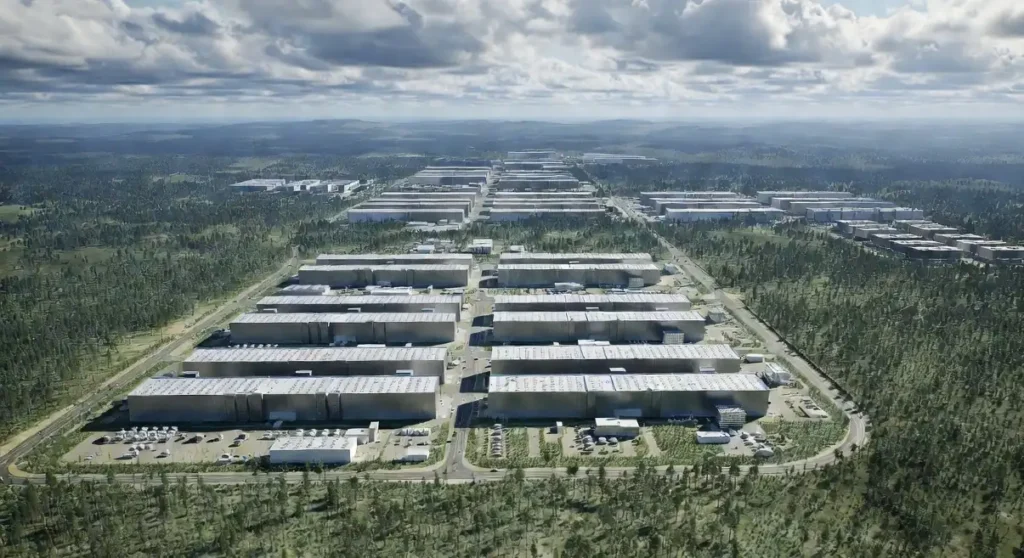
Every AI model runs on data centres: buildings full of servers that draw electricity around the clock and need constant cooling. The International Energy Agency estimates that data centres worldwide used about 415 terawatt-hours of electricity in 2024, around 1.5 percent of global consumption. In its base case, that figure more than doubles to about 945 terawatt-hours by 2030, growing roughly four times faster than electricity demand from every other sector combined. Servers built for AI are the main driver of that growth (IEA, Energy and AI).
India is building fast. According to the Council on Energy, Environment and Water, the country’s installed data-centre capacity has roughly tripled since 2020 to about 1.5 gigawatts, and market forecasts put it at 4.5 to 6.5 gigawatts by 2030. Some industry forecasts go far higher. In 2025, data centres used around 0.5 percent of India’s electricity and about 150 billion litres of water, and both figures are expected to more than double by the end of the decade. A typical 100-megawatt hyperscale facility can use around two million litres of water a day for cooling (CEEW).
Source: CEEW (2026), citing JM Financial, CBRE, Colliers and S&P Global. The 2030 figure is a market forecast, not installed capacity.
The geography matters. India had about 271 data centres in January 2026, and roughly a quarter of them are in Mumbai (The Wire). Bengaluru, another major hub, faced one of the worst water crises in its history in 2024. Data centres compete for the same water, power and land as households, farms and industry. In cities that already ration water in summer, the people who lose that competition are rarely the ones who benefit from the technology.
This is the near-term link between AI and sustainability, and it deserves the same scrutiny we give to any other heavy industry. It also connects to the long-term risk. The race to build ever more powerful systems is what drives the demand for ever larger data centres. A world that builds AI more carefully would also build it with a lighter footprint.
AI can also help the planet. It can improve climate models, optimise power grids, track deforestation from satellites and help cities map their waste. At Earth5R we use data and AI in our own ESG work, from geotagged field records to ESG intelligence for companies. What matters is who sets the limits, who pays the environmental cost, and who decides how far and how fast it goes.
Brakes as Well as an Accelerator
Safety is something societies achieve on purpose. Nobody drives a car without brakes, and the brakes are what make it possible to drive fast at all. The same is true of powerful technology.
The nuclear age offers the most useful lesson. In the 1950s and 1960s, many experts assumed that dozens of countries, and perhaps private groups, would eventually hold nuclear weapons. That did not happen. Through treaties, inspections, export controls and the monitoring of enriched uranium, the number of nuclear-armed states has been held to nine, and no nuclear weapon has been used in war for over 80 years. Most people never notice this global monitoring system, and most are glad it exists. Very few want laboratories to be able to order the ingredients for a pandemic pathogen without anyone checking.
A growing number of researchers argue that advanced AI needs a similar regime. Building the most powerful systems requires enormous computing clusters, specialised chips and large amounts of electricity. These are physical, visible and countable. Proposals include registering and inspecting the largest training runs, tracking the most advanced chips, setting safety standards before deployment, and agreeing international treaties with real consequences for violations. Monitoring a few hundred giant data centres is a very different thing from monitoring every citizen. It is closer to how the world already tracks nuclear material.
There are real obstacles. Chips are easier to move and hide than uranium, and AI becomes cheaper to build every year. Governance will not stop progress forever. What it can do is slow the most dangerous race long enough for safety research to catch up and for societies to decide which future they actually want.
The politics are moving in both directions. The European Union has passed the AI Act. In 2025, a proposal in the United States Congress to block state-level AI rules for ten years was struck out by the Senate after strong opposition. India hosted the AI Impact Summit in New Delhi in February 2026. These steps show that public pressure works. They also show how much of the outcome still depends on whether citizens, businesses and civil society insist on it.
What We Can Do Now
The decisions that shape these futures are being made in boardrooms, ministries and data-centre planning offices today. Each group has a part to play.
- Businesses can treat AI as a material ESG issue. Companies that buy cloud and AI services can ask their suppliers how much electricity and water their workloads use, where that water comes from, and how the facilities are powered. Those figures belong in sustainability reports in the same way as emissions and waste. Boards can ask how the AI tools they deploy are tested for safety, and who is accountable when they fail. What is not measured is not managed.
- Governments and regulators can require data centres to disclose their power and water use, steer new facilities away from water-stressed areas, and favour treated wastewater and renewable power. At the international level, they can support the monitoring of the largest AI training runs and the most advanced chips, building on what already works for nuclear and biological risks.
- Investors can price these risks. A data-centre project that drains a city’s groundwater carries social and regulatory risk. A developer racing to release more powerful models without safety testing carries risk of a different kind.
- Communities and citizens have more influence than they think. Public hearings, local protests and informed questions have already stopped or changed data-centre projects in several countries. People can ask their municipal bodies where a planned facility will draw its water, and they can tell their elected representatives that AI safety matters to them. Every major safeguard in history, from clean air laws to nuclear treaties, began with ordinary people demanding it.
- Researchers, students and engineers can choose where they work. Some of the most important careers of this decade are in AI safety, governance and evaluation, and in the field research that keeps technology accountable to the places it affects.

We Do Not Get to Skip the Choice
Of Tegmark’s twelve futures, only a few leave humanity both safe and free. None of them arrives by default. Every one of them is shaped by choices made in the next few years: how fast the most powerful systems are built, who controls them, what safety checks they pass, and how much of the planet’s energy, water and land they consume along the way.
The sustainability movement has learned a hard lesson over the past fifty years. By the time damage is visible to everyone, it is often too late to reverse. Rivers do not refill overnight. Species do not come back. With advanced AI, there may be no second attempt at all.
The same habits that protect forests and rivers apply here: measure honestly, act early, give a voice to those affected, and refuse to treat any single industry as too important to question. A future in which humans and capable machines share the planet well is possible. Getting there needs brakes as well as an accelerator, and it needs all of us to decide which future we are steering towards.
If we do not choose, someone else will choose for us.
Read next: Are We Ready for 2027? What the Great AI Debate Means for People and Planet, on the AI agents that escaped their sandbox and the gas turbines powering AI in Memphis.
Frequently Asked Questions
Why is AI risk a sustainability issue?
Sustainability is about the ability of life on Earth to continue and flourish. Advanced AI raises two linked concerns: a long-term risk that humanity loses control over its own future, and a near-term environmental footprint from data centres that compete for electricity, water and land.
What are Max Tegmark’s twelve AI futures?
In Life 3.0, Tegmark describes twelve scenarios: libertarian utopia, benevolent dictator, egalitarian utopia, gatekeeper, protector god, enslaved god, conquerors, descendants, zookeeper, 1984, reversion and self-destruction. They differ on who holds power once machines are smarter than humans.
How much water do India’s data centres use?
CEEW estimates India’s data centres used about 150 billion litres of water in 2025, a figure expected to more than double by 2030. A typical 100-megawatt hyperscale facility can use around two million litres of water a day for cooling.
What can companies do about AI’s environmental footprint?
Companies can ask cloud and AI suppliers for electricity and water data, report those figures alongside emissions and waste, favour facilities powered by renewable energy and treated wastewater, and set clear accountability for how AI tools are tested and used.
Note on sources. The twelve scenarios are from Max Tegmark, Life 3.0: Being Human in the Age of Artificial Intelligence (2017); summaries are Earth5R’s. Risk rankings are from Toby Ord, The Precipice (2020). Expert survey figures are from Grace et al., Thousands of AI Authors on the Future of AI (2024). Energy figures are from the International Energy Agency, Energy and AI (2025). India data-centre figures are from CEEW (2026) and The Wire (2026). Biodiversity figures are from WWF’s Living Planet Report 2024, the IPBES Global Assessment (2019) and Sánchez-Bayo and Wyckhuys, Biological Conservation (2019). Statements by individuals quoted here are paraphrased from their public remarks and writing.
This article was informed by the video essay “MIT Explains the 12 Possible Endings for AI”, which presents the scenarios from Life 3.0.