
Sustainable Futures Podcast by Earth5R
Does economic growth clean up pollution on its own? Professor David Stern of The Australian National University has spent three decades testing that idea against the data.
In this episode he tells Earth5R founder Saurabh Gupta why there is no such thing as pure green energy. He explains why efficiency gains are partly taken back by the rebound effect, and why the benefits of electricity in Indian villages took years to show. He also shares what students can do in their own cities.
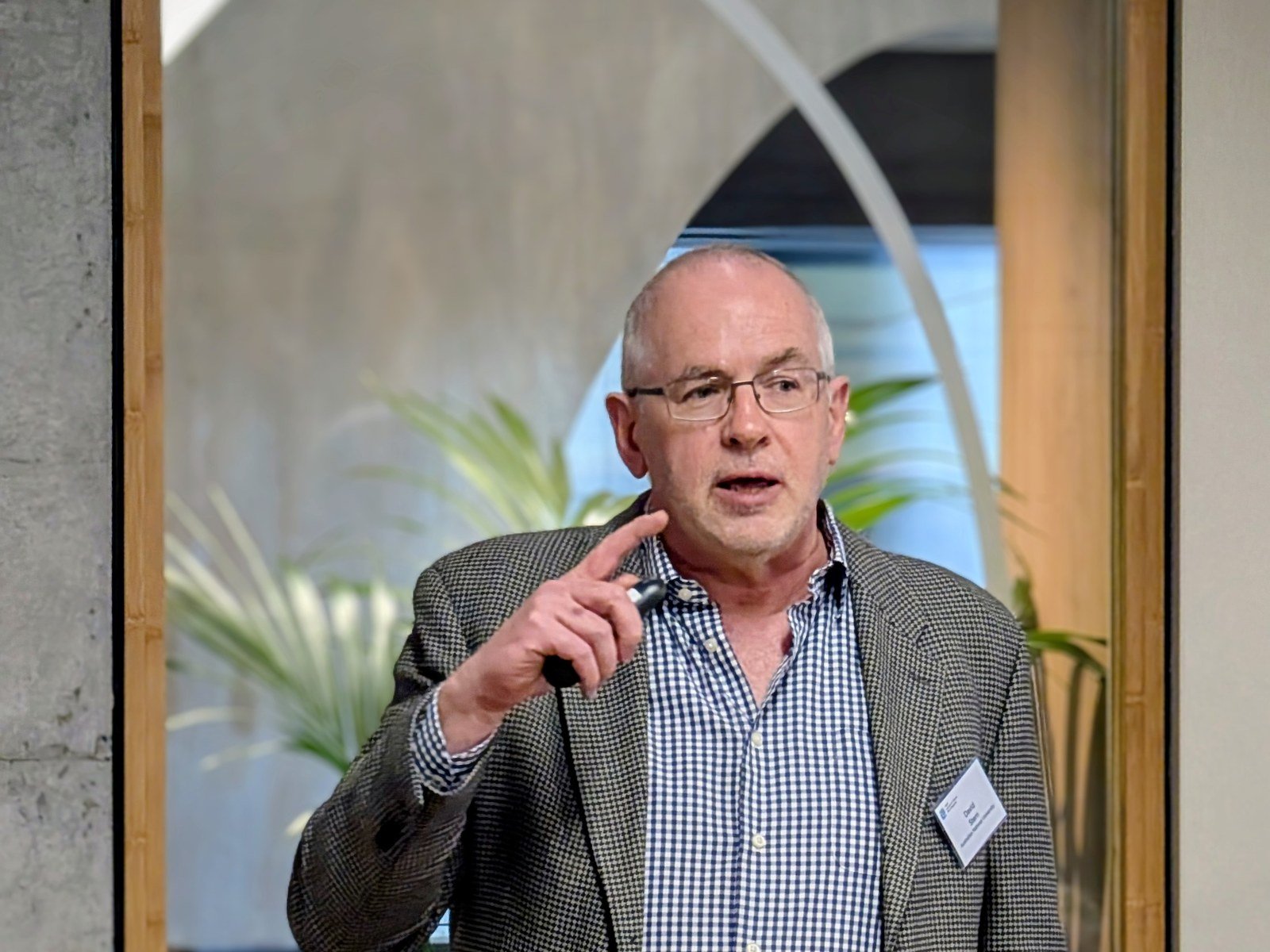
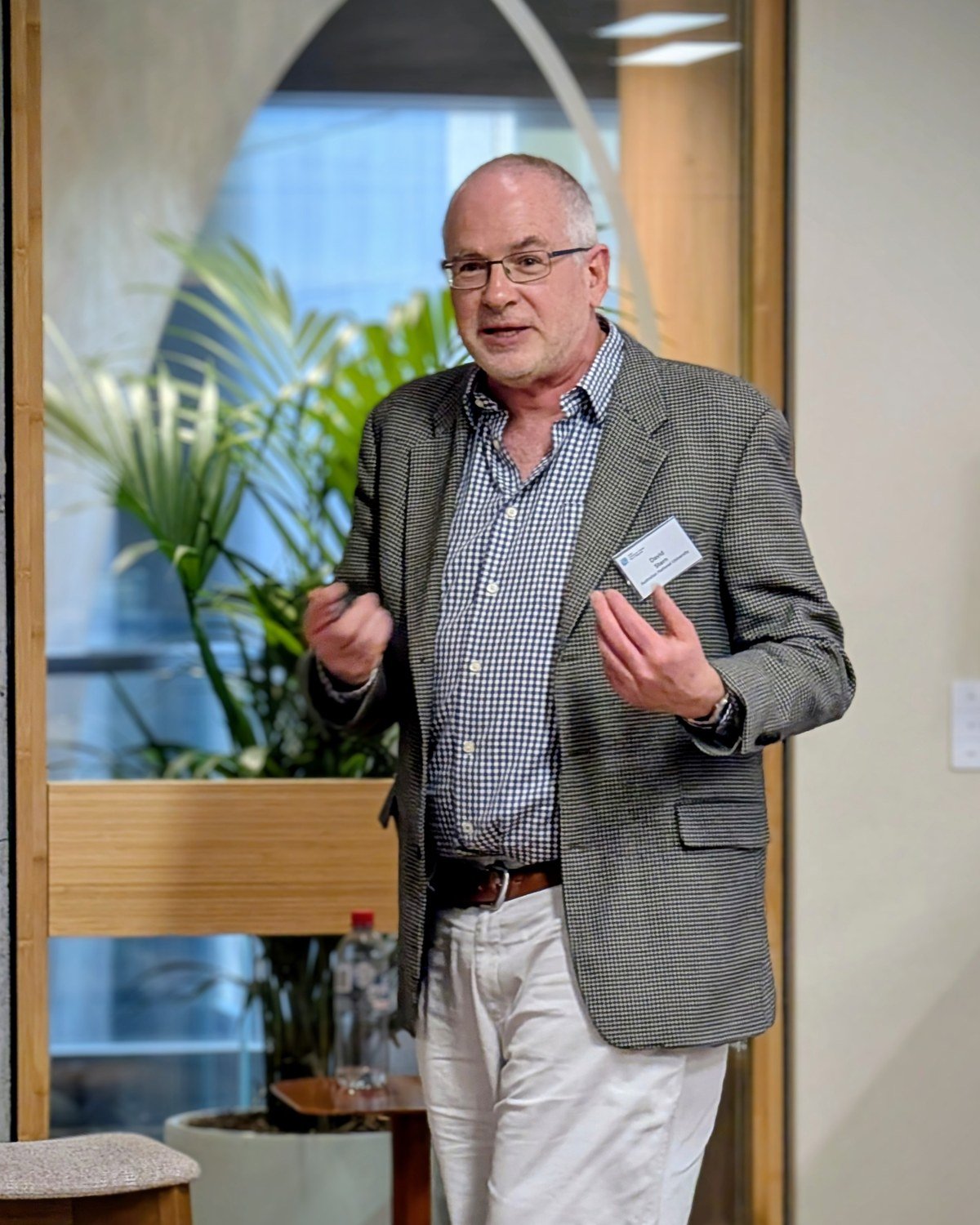
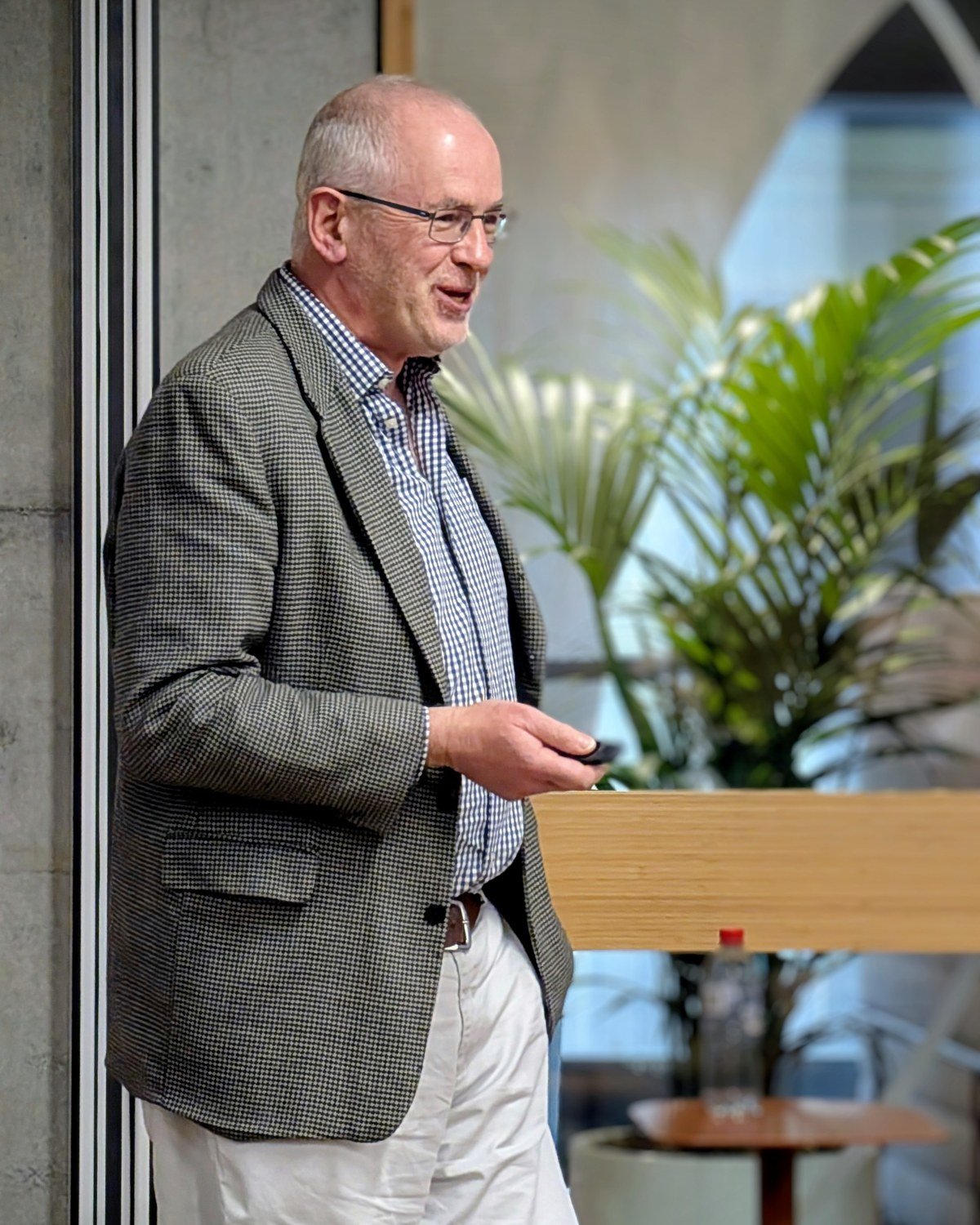
David Stern
Emeritus Professor, Crawford School of Public Policy, ANU
Saurabh Gupta
Founder and CEO, Earth5R, and host
Five ideas from this conversation
- Growth and technology pull in opposite directions. Growth pushes emissions up and cleaner technology pushes them down. Emissions fall only when technology improves faster than the economy grows.
- No energy is purely green. Solar, wind and hydro all have impacts on land and materials. They are greener, not impact free.
- Efficiency is partly taken back. Cheaper energy services get used more, and the money saved is spent on other goods that also need energy.
- Electricity’s benefits take time. In rural India, gains in living standards and education showed up years after households were connected, which short trials can miss.
- Act on what you will not regret. Uncertainty never goes away, so start with no regret steps such as rooftop solar.
Chapter 01 of 07
The journey and the Kuznets Curve
Watch from 0:00Saurabh Gupta
Welcome to the Sustainable Futures Podcast by Earth5R. I am Saurabh Gupta. My guest today is Professor David Stern of the Crawford School of Public Policy at The Australian National University in Canberra.
David is an environmental economist. His research looks at the role of energy in economic growth and development. It also looks at energy’s effects on pollution and climate change.
He was a lead author of the chapter on what drives greenhouse gas emissions in the IPCC’s Fifth Assessment Report. He also reviewed for the Sixth Assessment Report.
He is a Fellow of the Academy of the Social Sciences in Australia. He is also Editor in Chief of the Australian Journal of Agricultural and Resource Economics.
His work ranges from the environmental Kuznets curve to the rebound effect. It also runs from Britain’s Industrial Revolution to electrification in Indian villages. David, welcome to the show.
David Stern
Thank you for inviting me.
Saurabh Gupta
Before we begin, tell us a little about the work you are doing now, alongside your teaching.
David Stern
I have been teaching environmental economics and also resource economics. Because we have master’s level students, we get to teach relatively specialised courses.
I have taught lots of other things too, including general economics courses.
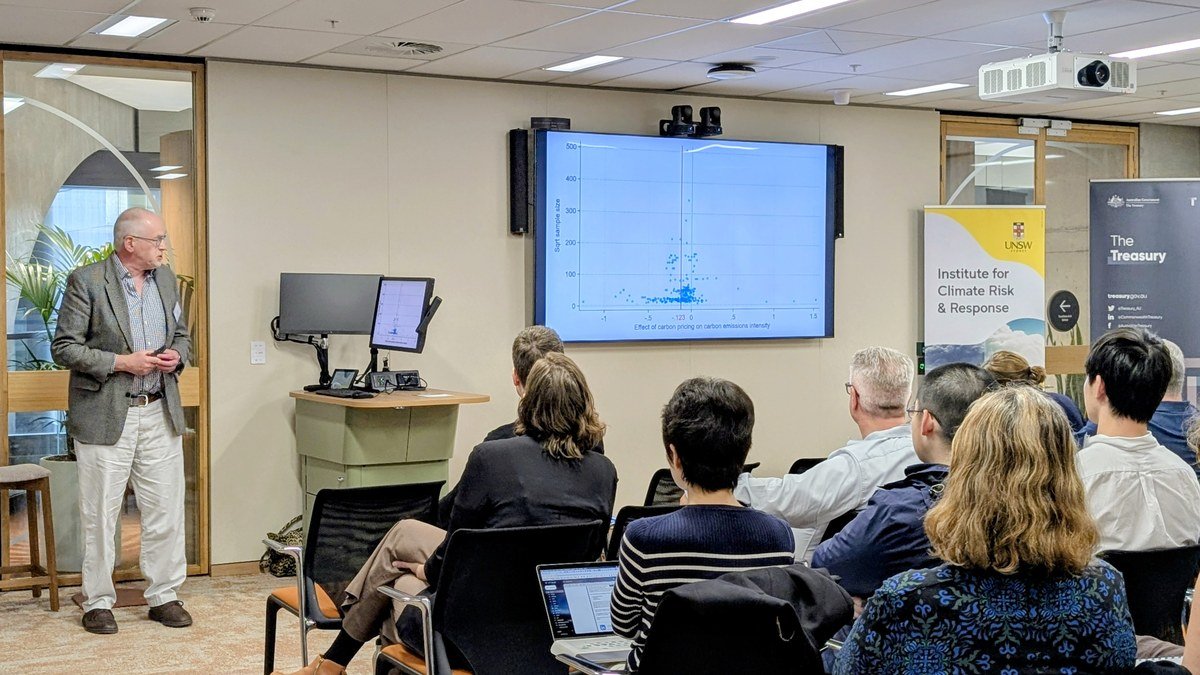
In my current research, a lot of what we are doing right now is meta-analysis. That is a quantitative analysis of existing research.
Most surveys of a literature just pick a study here and there. This is a systematic analysis. We are looking at the effects of climate policy in a quantitative, systematic way.
That is the work we are mainly focused on.
Saurabh Gupta
What first drew you to energy and environmental economics?
Was there a moment or a person that pointed you in that direction, or was it an accident?
David Stern
It pretty much was a random walk, with accidental things happening along the way. The starting point was growing up in England.
My favourite subject at school was geography. I loved cycling, hiking and the natural environment. So I knew I was going to study geography at university.
When I got to university I needed to pick two subjects. I thought economics would be a suitable one. Maybe the most important factor in human geography, apart from the natural environment, is economics.
It also seemed a more practical subject for getting work. So I did economics and geography, and then a master’s in geography. But I still studied a course in development economics.
Then I arrived to do my PhD at Boston University. I found that the faculty there were very interested in energy.
It was called the Center for Energy and Environmental Studies, and it had a very strong focus on energy. I thought, oh, this is interesting.
I had not thought that much about energy before then. And obviously it is very, very important for environmental impacts.
So that was where I moved away from thinking purely about environmental economics and geography. I started thinking about energy as well.
I took their courses there and challenged some of their ideas. That is how I developed a couple of my first papers. I was trying to find out whether those ideas were right or wrong.
That set the path. I think energy, the economy and the environment go together very well.
If you are interested in the social science side of the environment, those are really the important topics you need to know about.
Saurabh Gupta
Early in your career you were sceptical of the environmental Kuznets curve. That is the popular idea that countries pollute more as they grow, and less once they get rich enough.
First, could you explain the Kuznets curve for our audience?
And questioning such a widely accepted idea cannot be easy for a young researcher. How did that scepticism shape the work you went on to do?
David Stern
The environmental Kuznets curve looks at various environmental impacts. It asks how they change with the level of economic development, which we can measure by GDP per capita.
The idea is that the impacts first increase. We see pollution rising in middle income countries compared with the less developed economies.
But then at high income levels it begins to decline again. So you get this hump shaped curve. You plot environmental impact on the vertical axis and GDP per capita on the horizontal axis.
I first came across the idea when I was a postdoctoral fellow at the University of York in England. I had gone back there from Boston.
I was sitting in the office of a man called Mick Common, who later hired me for my first job in Australia. He started drawing it, literally on the back of an envelope.
People often say “back of the envelope”, but that is what he was doing. It was not called the environmental Kuznets curve yet. But the points go up and then they go down.
He said, well, I am a bit sceptical about this. It really depends on how many people and how many countries are on the left hand side of the curve, going up.
Then you compare that with how many are going down. And you ask what that means for the world as a whole.
This was 1994. The idea had been in the World Bank’s World Development Report, but it was still very new at the time.
So we said, let’s get data and see what happens as economies grow and populations grow.
We took existing estimates of the relationship from another paper. We added World Bank projections of economic growth and population growth, and put it all together.
We saw that most people in the world were still on the rising side of the curve. So even if the curve was true, the particular impacts we were looking at would increase over time.
It was actually hard to publish that paper. It took a couple of years, but we got it published in the journal World Development.
I think it is my second most cited paper, so a lot of people read it apparently. That started me off in that direction.
I was always sceptical of the environmental Kuznets curve, and I wrote a few papers that were sceptical of it.
But it is one thing to criticise. You really should do something better. So my later papers did more analysis to see what is really going on.
It is one thing to criticise. You really should do something better.
Saurabh Gupta
That is quite a challenge, questioning the status quo at such a young age. Especially science that is so well established.
David Stern
I would not say it was well established at the time. There were only four or five papers that had looked at this issue.
But the World Bank put its weight behind the idea in the World Development Report, and they promoted it.
So it was not that well established then. It became more established over time, perhaps.

Chapter 02 of 07
Advice for students and young researchers
Watch from 8:34Saurabh Gupta
Looking back, what advice would you give a young researcher who wants to work on climate today?
People are very concerned about climate change. They are no longer okay with the status quo. They want to be part of the change, and they want to study it.
What do you wish someone had told you when you started? A lot of young people right now are confused.
David Stern
Are you looking more for career advice? I have two things I would say on that.
In terms of a career, if you want to go into academia, climate is a very interdisciplinary topic. And that is good.
Most people say they love interdisciplinarity, and funding agencies say it is a great thing.
But often, when it comes down to actually spending their money, they feel it is somewhat uncertain. They want to spend on more certain things.
It is easy to get an interdisciplinary paper published, particularly if you have a team of different people working on it.
It is harder to get funding if you are purely an interdisciplinary person, that is for sure. Getting a job is even harder.
I often found people saying, well, you are not really a geographer any more, you are kind of an economist. Or, you are not really an economist, because you did your PhD in geography.
That can be a problem. So I think interdisciplinarity is very important, and it is definitely a selling point. But at the same time you need to know one discipline really well.
If you want to go into academia, they want you to teach courses. It is good if you can teach some basic courses in your field, particularly to undergraduate students.
That is as well as specialised ones. So having a solid disciplinary background, as well as that interdisciplinarity, is important.
I was lucky, really, to get the jobs I got. Sometimes I searched a long time, went to a lot of interviews and met a lot of scepticism.
You only see the successful careers, not all the ones who did not make it.
The other thing is that I was prepared to move for work, and that is something employers value too. The downside is that you have to move away from your family and friends.
Saurabh Gupta
From England to Australia.
David Stern
Yes. I did my PhD in the US, then went back to England. I moved to Australia, went back to the US and then finally came back to Australia.
Saurabh Gupta
So you have moved across three continents. We hope that someday we can bring you to Asia too, to India.
David Stern
Well, I have visited India. The problem is that things are very specialised.
So there often is not a job at the time in your particular area, in the place where you are living. That is a particular problem in academia, less so in other sectors.
Saurabh Gupta
A lot of the people who will watch this are school students in India, around 15 or 16 years old. They are starting to think about university.
Many are interested in climate, energy and the economy. But they are not sure which subjects to choose, or where those subjects will take them.
If one of them came to you for advice, what would you tell them to study at school? What would help them build a career in sustainability and climate change?
David Stern
I can tell you what I studied. In Britain we did A levels in the last two years of school, and they were already quite specialised.
I did geography, biology and chemistry. So I had some social science and some natural science background.
That has always been helpful, because science does not feel like a totally alien field to me. In my geography degree we did a bit of physical geography as well as human geography.
So having some knowledge of both the natural and the social sciences is good. I think you need to specialise in one direction or the other a bit, but know both.
I often wished in my career that I had done more mathematics at school.
It is one reason I did not study physical geography as an undergraduate. It required a stronger knowledge of physics and mathematics, and I had neither.
Then I ended up teaching mathematical economics, but it took me a long time to get there. So mathematics and statistics are a good background.
The field is so interdisciplinary that pretty much any science is a suitable background. So are geography, economics and other areas of social science.
Saurabh Gupta
You have taught and supervised students for decades.
When a young person applies to study with you or join a research programme, what makes one application stand out? What stays in your mind after you have read hundreds of them?
David Stern
Particularly at graduate level, it is important to have a background in the methods, maths and statistics. But that should not be your focus or your selling point.
For a lot of people, the methods seem to be the point of what they are doing. The environmental aspect is an afterthought.
What we want to see is that they are able to address interesting topics. Those could be science questions that we want answers for and do not yet have. Or they could be clear, practical policy questions.
This policy has been introduced in this country. Does it work? Does it not work?
They might show a genuine interest in a practical policy question or a science question. If that is what is really driving them, that is what we want to see.
Some maths skills are also good, but that should not be the main focus.
I get applications that say, I am going to develop a better way to forecast carbon prices. And I think, well, why do you want to forecast carbon prices? It is never explained in the application.
So a genuine interest in the subject, in a question, is much more important than the skills. You can always do some courses to get your skills better.
A genuine interest in the subject is much more important than the skills. You can always do some courses to get your skills better.
Saurabh Gupta
At Earth5R, a lot of school students go out into their own neighbourhoods. They test water, talk to residents and collect data on waste and energy.
Some of them have never done anything like it before, because they are very focused on studying hard at school. We call this programme FIELDWORK.
From your experience, how does this kind of work on the ground help someone who wants to study further and do research someday?
David Stern
I think it gives you an idea of how things really work out there in the real world. You see the kind of problems there are.
It is easy to say people should behave in a greener way, or to ask why people do not do this. Then you go out and actually see why there is pollution, or deforestation, or whatever the issue is.
It gives you a much better sense that this is not simply a question of wishing things were better. It is a really difficult problem.
And it is not just a science problem. It is a social problem as well. You can learn that from it.
It will help you see what you will need to know or learn if you really want to work in this area. And it shows whether this kind of work interests you, if you want to go in that more practical direction.
Saurabh Gupta
A lot of Indian parents worry about subjects like environmental economics or sustainability. This is true in many countries.
They feel these are not a safe career for their children compared with engineering, law or accountancy.
If parents asked you about these fields and the kind of work their children will get, what would you tell them?
David Stern
I think it is very important to have a strong grounding in at least one discipline as well. That way you have a plan B. That is always a good thing.
If you do not succeed in doing something professionally in the environmental area, you also have the skills to do other things.
That is why I think environmental studies programmes that are not rooted in particular, transferable skill sets are a bit risky.
But there is no contradiction in combining the two. In my case, I did economics and then took some classes on the environment and development as well.
So I do not think you need to follow a very narrow path. On the other hand, too much interdisciplinarity is risky. It is about finding the balance.
Chapter 03 of 07
Growth, trade and emissions
Watch from 19:47Saurabh Gupta
Let’s talk about growth, energy and emissions.
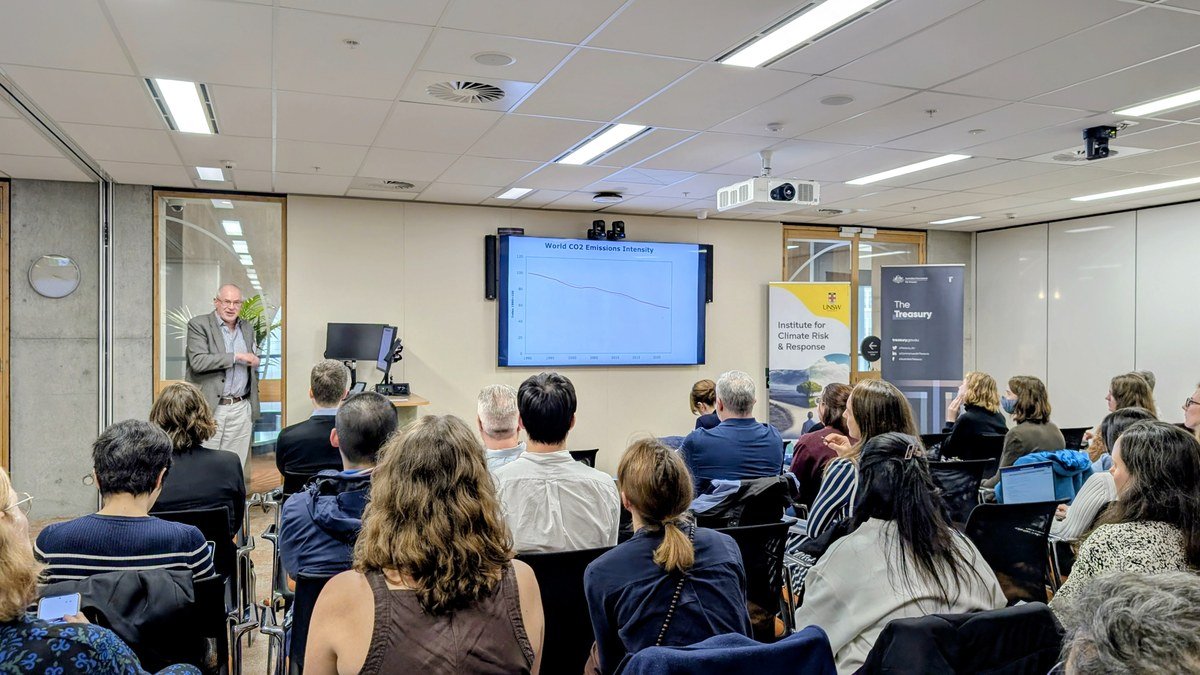
For many years a lot of people, including the World Bank, believed that growth would eventually clean up pollution on its own. In your later work you explained it very differently, as two forces working at the same time.
Growth pushes emissions up. Technology pushes them down a little every year as new technologies come along.
What did the data show you, and what does it mean for a fast growing country like India? What has to move faster than growth for emissions to start falling?
David Stern
We built alternative models instead of the environmental Kuznets curve. What we found is that for most impacts it is not a hump shaped curve. It is a concave curve.
Impacts increase as income rises. As you get richer, maybe that curve flattens out.
That is because of structural change in the economy. It is also because richer countries probably adopt cleaner technologies.
But over time, the best practice possible keeps improving, so that you can have lower impacts per unit of output. That curve shifts down over time, so at any level of development there is less impact.
So, as you said, there is a battle between the rate of growth and the progress of technology that lowers emissions. Those are two of the most important factors.
That is why you saw emissions increase in rapidly growing developing economies, like China in the past. The economy was growing too fast relative to the rate of improvement that could be achieved.
In the richer countries, the economies are growing much more slowly. They are near what is technically possible, at the frontier. At the same time, what is possible environmentally keeps improving.
There, the rate of environmental technology improvement is faster than the rate of economic growth. And so they see emissions falling. We think that is the general path.
Now, for some things, like local smoke and air pollution, you might get to a point where growth actually cleans things up. But for a lot of things, getting to a state where growth itself cleans up the economy seems unlikely.
Imagine a thought experiment. Say India grew at 10% this year instead of 5%, with everything else constant. We would expect that to have more impact rather than less.
That is the general picture. It is not saying that as long as there is growth, pollution will increase forever.
Eventually growth slows down and you begin to clean up more. That is more like what the story is.
But this is just a very, very big picture of the general relationship between growth and development across a lot of countries. It does not say much at all about policy in a specific country and what it can do.
A lot of people over interpret it as how things must be. But it is just a general regularity, a general pattern that we see across a lot of countries.
So I do not think the environmental Kuznets curve has the great policy implications that some people probably think it has.
Saurabh Gupta
Suppose we count emissions by what each country consumes, including imports. Then the picture of who is responsible changes quite a lot, because imports are a very big piece for developed economies.
Do you think climate targets and negotiations should look at consumption as well as production? What would change for a country like India if they did?
David Stern
This is the question of whether, particularly for carbon emissions, we should use production based or consumption based accounting.
Should we look at where the emissions actually took place? That could be by burning fuel directly, or in producing goods that were later exported and imported somewhere else.
Or should we look at who is responsible through the eventual supply chain impact of their consumption?
When you switch from production to consumption accounting, it changes things a bit. But it does not completely change the picture.
Some rich countries are also relatively resource intensive. Think particularly of Australia and Canada. So it changes the picture a bit, but it does not completely change the story.
We worked on the IPCC’s Fifth Assessment Report, and I had colleagues who were really keen on this approach. When they made up the graphs, it changed things a bit. But it really was not that dramatic.
Take China, for example. I know more about China and India.
There is a broad sense that China exports a lot, and that a lot of emissions are embodied in those exports. But large countries in particular do not actually trade that much.
Most production in China is for China. In fact, the bigger economies trade less than small economies. So it changes the picture, but it does not reverse the story.
Saurabh Gupta
Countries like Britain could move their heavy industry overseas as they got richer.
Countries that are developing now, like India or countries in Africa, will not have anyone to send their factories to. Does that mean the old path of grow first, clean up later is closed for them?
And if a policymaker in India says, let’s grow first and worry about the pollution later, how would you answer them?
David Stern
We also made that argument back in our first environmental Kuznets curve paper. But it turned out not to be quite as important as we thought back in 1996, when we published that paper.
One of the things I understand is that manufacturing has not gone away as much as it might seem in the rich countries.
Technological change makes manufacturing more efficient, so it needs fewer workers. The price of manufactured goods fell.
So the share manufacturing has in the value of the economy fell much more than the actual production of manufactured goods. It is a complicated argument.
Manufacturing is a smaller share of rich, developed economies than it used to be. Partly that is just because the price of manufactured goods fell. Technological change managed to reduce the cost of producing things.
They do import things from overseas. But not to the extreme you might think from the fall in manufacturing jobs. The same goes for the fall in manufacturing’s share of the value of the economy.
So yes, there is some offshoring, but it is not as dramatic as a naive view suggests.
Now, what should India do? It should develop, but it needs to look at how it can do this in the most environmentally efficient way.
With some of the other questions, if you ask me later, I might come back and contradict that a bit.
But I think we need to think about how we can control pollution while allowing some development. That is particularly true in India, where carbon emissions are still relatively low compared with the rest of the world.
Chapter 04 of 07
Green energy, AI and the rebound effect
Watch from 28:39Saurabh Gupta
People often argue about where the effort should go.
Should we focus on using less energy, or on changing the kind of energy we use? How do you see the balance between the two?
David Stern
This is something that some people understand, and other people do not understand very well. There is no such thing as pure green energy.
Energy always has an environmental impact, because we are taking energy out of the environment and putting it into the human system.
Green energy has large environmental impacts too. Think of hydro dams, or lots and lots of wind farms, which take up a lot of land. And think of the transmission cables.
There is a lot of political debate in Australia at the moment about transmission cables running across farms. They run from the areas where there is wind generation to the cities.
There are energy sources that have higher environmental impact, and ones that have lower environmental impact. But there are none that have no environmental impact.
So it is definitely good to move towards the ones with lower impact, and to look at total energy use as well.
There is no such thing as pure green energy. There are energy sources with higher and lower environmental impact, but there are none that have no environmental impact.
Saurabh Gupta
We should focus more on life cycle analysis as well. Even solar panels have a carbon footprint.
David Stern
Yes, and a lot of them only last a certain time. Then they will need to be recycled and replaced.
Just as fossil fuel generators need to be replaced, so do these green ones. There is a lot of material involved.
Thirty years ago we were very sceptical about solar power and wind power. They seemed to have a relatively low energy density. You need a lot of area and a lot of materials to collect the energy.
The efficiency has really increased, particularly in solar power. That is because of the semiconductor industry and the falling cost of producing the silicon.
Still, a lot of material goes into it, and it will need to be maintained. So it is a greener source of power, but its impact is not zero.
Saurabh Gupta
It is not zero.
David Stern
It is not zero. One advantage of solar is that you can stick it almost anywhere the sun is shining, on a roof or on degraded land.
Wind, on the other hand, needs particular locations that are suitable for it.
Saurabh Gupta
Coming to energy efficiency and electrification.
One recent change is the rise in electricity demand from AI and data centres, which few earlier projections had included.
What does the evidence so far suggest? And how should countries plan their energy systems for what looks like exponential demand?
David Stern
AI is definitely causing a big rise in electricity demand at the moment. That is particularly true in the US, where most of the development is.
It is hard to know where it is going. A lot of startup companies and others are now trying to work out ways to do this much more energy efficiently.
We do not know whether these technologies will succeed or not. And, as I may say a little later, efficiency may not reduce overall energy use by that much.
But there is definitely a big uptick in electricity demand.
And that is not the only thing causing an increase in electricity demand. Shifting to electric cars means a lot more demand for electricity as well.
It is not just a question of replacing fossil fuel electricity generation with renewables. One of the ideas is to transition things like cars to electricity. So you need a lot more electricity generation.
Now, on top of all of that, you have got this AI take off. So it is definitely a huge step up in electricity demand, particularly in the United States.
But presumably we will see it in other countries as well.
Go back to, say, the IPCC’s Fifth Assessment Report and the simulations there, which were done before all this happened. I expect there is going to be a lot more electricity demand than that.
Saurabh Gupta
David, you have written a lot about the rebound effect. Could you explain it in simple terms for our listeners?
Why do efficiency improvements often save less energy than engineers expect?
David Stern
People say, okay, how about we just get more energy efficient? Then we will need less energy overall.
Certainly, over time, the energy intensity of the economy in developed countries has declined. And the energy efficiency of lots of individual technologies has improved.
The issue is that a genuine technological improvement in efficiency reduces the cost. It is not like doing something really costly to avoid using energy.
It might be air conditioning or cars or whatever the energy service is. When we make it more efficient, people say, well, it is now cheaper to use this. So I am going to use more of it.
Say you had an air conditioner that really used a heap of electricity. So you did not set it very cold, and you might only use it in one room.
Then you get a much more energy efficient one. This is where psychology plays a role.
Oh, I do not need to set my thermostat at 27 degrees. I will set it at 25 or 23 or wherever, and I will air condition all the rooms.
As the energy service gets cheaper, people want to use more of it. It is the simple law of demand in economics. That is one source of rebound.
Another source is this. If you save money now, what are you going to spend that money on?
You spend it on a lot of other things. Even if they are not directly energy services, they are other goods that require energy to make.
Saurabh Gupta
More devices.
David Stern
More devices, yes. So I save money on air conditioning, and I spend money on going out to eat, I don’t know. And that requires energy too.
So those are the two most important reasons for rebound. The first is the demand effect, where I am going to use more of it because it is cheaper.
The second is the redirection effect, where I am going to spend my savings on other things.
Chapter 05 of 07
Lessons from villages, rooftops and shops
Watch from 36:01Saurabh Gupta
Your recent research looked at electrification in Indian villages. What did you find when electricity reached these villages?
I understand some of the benefits took years to show. What should governments learn from it?
David Stern
An important thing to say is that I worked on that project with Suryadeepto Nag. He was a master’s student at IISER in Pune.
They got in touch with me to be the foreign supervisor on the project. He has now gone on to do a PhD, and the paper was just published on this topic.
The question was this. When we electrify villages in places like India or in Africa, does that really generate benefits for the people who are connected?
We mean benefits in terms of increased income, or increased education and so forth. There are two ways to address that.
You can look at surveys that governments do periodically. You see who connects to electricity and what their income is. Then you do a statistical analysis of the survey data.
Or you can do an experiment, a so called randomised controlled trial. Some people are connected and others are not. Then you come back and see what has happened.
Randomised controlled trials came out of the medical field, where people test the effects of drugs. It is a real experiment.
The problem is that they usually get funding for a year or two to see what is happening.
With electricity, you need to buy the appliances to use it. You need to save the money to do that. You might develop new businesses that now use refrigeration.
All these things take time. The randomised controlled trials have a very short timeframe, so maybe they are not capturing all the effect.
The survey based studies tend to find a bigger effect, and the randomised controlled trials find a small effect. The proponents of the trials say the statistical methods in those survey based studies are not very good.
So what we did was look at three rounds of surveys in India that went back to the same households over time.
That meant we could find out when households were connected. In one round they were not connected, and in a later one they were.
Using the set of surveys, we could see whether it mattered how long ago they had been connected to electricity.
For households connected only in the last few years, the impact was not significant. That is roughly what the randomised controlled trials were finding, since they are also very short term.
But some households had been connected over a longer period, around ten years. Their income grew more than for those who had not been connected.
The last survey was in 2011, and now all households in India are supposed to be connected.
Those connected for longer saw bigger benefits, both in income and in education, as the household moved on to the next generation.
So it basically shows you need a long time to see the impact.
The randomised controlled trial, the gold standard experiment, might sound attractive. But its downside is that it does not see these long term impacts that might occur.
It basically shows you need a long time to see the impact.

Saurabh Gupta
A lot of our students do work on the ground as part of our programmes. They go out and study their local areas, as we discussed earlier.
I would like to tell you about a volunteer study we have been running since 2018.
Students go around residential and commercial buildings in their own neighbourhoods with the Earth5R app. They record the size of each rooftop and whether it has solar panels.
We do this because we believe the built environment where you live is where your carbon footprint is generated.
In 2018, only about one third of the buildings in this survey had rooftop solar. By 2026, that number had risen to roughly two thirds of urban buildings.
What changed was regulation, which has become more progressive and stricter.
Electricity is fairly cheap in Indian cities, so most owners do not see solar as a saving. It was more the law that pushed them to install it.
As an economist, does that surprise you? When energy is cheap, is regulation the only thing that works? Or are there better ways to change people’s choices?
David Stern
In Australia there is a very high uptake of solar power. That is particularly true in the states where electricity is the most expensive.
Having very cheap electricity makes it less worthwhile to invest in solar panels. That is a clear economic incentive. So yes, it took regulation in that case to encourage people to do that.
Here in Australia, solar panels were very expensive at first. So they initially paid you for the electricity you did not use. That was when the sun was at its peak and you were putting it into the grid.
Originally the amount they paid was really high, something like 50 cents a kilowatt hour.
They still pay you now, but it is the average wholesale price of electricity for the year. That is much, much lower, maybe 10 cents if you are lucky, or 8 cents a kilowatt hour.
So initially, even though electricity was expensive, they gave you an extra incentive. They paid a lot of money for the electricity you put into the grid, to encourage solar power.
The price of panels fell and they do not need that incentive any more.
But the price we pay is probably about 30 Australian cents a kilowatt hour, or 20 US cents, here in Canberra. And panels have become cheaper, so it is a fairly good incentive.
Saurabh Gupta
The second part of the story is in our data.
Even where buildings now have solar panels, our fieldwork students found that 40 to 50% of the usable rooftop space is still empty. Owners installed enough panels to meet the rules, and stopped there.
So regulation got people started on rooftop solar, but did not get them to use what the roof could offer.
How should policy deal with this gap between meeting the rule and using the full potential?
David Stern
You could just tell people to do more. Or you can give them an incentive to do more, if you think that is a worthy policy objective.
The fact is that a solar farm on flat land that is not otherwise used is cheaper per kilowatt hour than sticking panels on rooftops.
You install a whole bunch of panels at once. It is about half the cost.
On the other hand, there is competition for land. So sticking solar on rooftops is a good idea, if you think it is worthwhile encouraging that over other places you might put solar.
You can incentivise it, for example, through what they pay for the extra electricity that people put back into the grid. That is the easiest way.
Otherwise you do not know what size each roof is. You could use imaging. But you end up getting into a separate negotiation with everyone about how much extra solar to put on their roof.
So it is much easier to give an incentive that encourages people to maximise it. It costs money. But if you think it is a worthy objective, that is what you should probably consider.
Saurabh Gupta
One more data point from our community work. In some of our programmes, students visited small shops and markets during the daytime.
We looked only at the shops that had glass doors and windows and could have used daylight.
In 86% of them, the glass was covered with advertisements or with products stacked against it. So no natural light came in, and the lights were on the entire day.
For the shopkeeper, the display space was worth more than the electricity saved.
What does an example like this tell us about energy saving opportunities that go unused, even when they are free? How should policymakers in India think about this kind of behaviour when they design energy policy?
David Stern
Well, the downside of light coming in is that it heats the inside up, and it is already hot in India. So maybe they want to keep the light out to keep the shop cooler.
You have got to ask why they are doing it. Electric light is relatively cheap, perhaps, compared with air conditioning.
It depends on the time of day, but there is a downside to letting the light in. It heats the place up.
Sorry, your question was how we could get them to use that light?
Saurabh Gupta
Yes. It is about promoting natural lighting.
Using solar energy is not just about capturing it to create electricity, which has its own footprint. There is direct light coming in, and we are not able to use it.
Are there incentives or policy changes that could help, or is this an untapped opportunity?
David Stern
In existing buildings like this, if people want to stack things against the window, they are going to stack things against the window. It is very hard to change that.
The thing is to think about building codes. How could we get more light into a building, not just through the front window?
You could use skylights, or optical fibres to transfer light down into a building, and so forth.
I do not know how well building codes are enforced in a country like India. There is a lot of informal construction, I am sure.
But where there are building codes, you can use them to allow more sunlight in. That applies when buildings are renovated, as well as in new buildings.
Otherwise it is going to be really hard to get people to use sunlight instead of electric light. Unless, that is, electricity becomes more expensive than using sunlight.
Chapter 06 of 07
Carbon targets, markets and the IPCC
Watch from 47:43Saurabh Gupta
Now to the business side. At Earth5R we built a system called TERRA. It studies companies’ ESG reports and compares how they report with the reality on the ground.
We have scored more than 1,200 listed Indian companies. In India the top 1,000 listed companies must file their reports under BRSR. That is the Indian standard, and it also draws on GRI.
One thing we learned is that the way you measure emissions changes the story.
A company can show its emissions per rupee of revenue falling every year. Meanwhile its absolute emissions keep rising, simply because its revenue grows faster.
So we measure intensity both per rupee and per tonne of product, and compare that with absolute numbers.
You wrote about exactly this with China and India’s emissions intensity targets. When a company or a country says its intensity is falling, what should we look at to know whether it is real progress?
David Stern
Here in Australia, the government has a kind of carbon pricing scheme for large companies as well. It is called the Safeguard Mechanism.
It focuses on reducing the intensity of the largest companies in the industrial and transport sectors. It deliberately sets a target for emissions intensity rather than for total emissions.
That was thought of as being more friendly to industry. There was also a concern about a really tight cap on emissions. It could drive some activity offshore that would otherwise have happened in Australia.
So they adopted this intensity scheme.
The thing is, the intensity target comes down towards 2050. So emissions per unit of output will have to get down towards zero.
That means it is going to get more binding as the intensity level gets lower in the future.
If you are seeing intensity reductions greater than in the past, that is already some progress in the right direction. And if there is some way to keep encouraging that, it will eventually get more binding as time goes on.
But the measure here is emissions intensity, carbon emissions per unit of output, rather than energy intensity.
Saurabh Gupta
How does it look in other countries, the global north versus the global south?
David Stern
I think it is very varied. The European Union has a carbon market with a cap on total emissions.
It does not cover all industries, because you have to actually monitor emissions. So it focuses on just the large firms.
The EU has this cap and has tightened it over time, so the price of permits has gone up. That is one extreme.
Britain is pretty similar, even though it left the European Union.
In the US there is nothing national. But some states, like California, have their own schemes.
China introduced carbon prices in a few cities. They did pilot programmes in some cities and one or two provinces.
Now they have a national carbon market. As far as I understand, so far it covers just the electricity sector. But that is probably the biggest source of emissions.
Australia had a carbon price back in 2012, but then another government came in and scrapped it. Later we got this intensity based scheme.
Firms can reduce their emissions directly. Or they can buy credits generated by farmers who are not deforesting their land, or who are finding ways to absorb carbon on their farms.
So there are a lot of different things going on all around the world. I think it is hard to say it is developed versus developing countries. It is not a north south pattern.
Saurabh Gupta
David, you worked on IPCC assessments of what drives emissions.
When you looked across that evidence, was there a driver that surprised you? Something that mattered more or less than you had thought?
David Stern
No, I was not that surprised. The way the IPCC works, it is intergovernmental, and they run this assessment cycle over a number of years. Our role is to assess the existing literature.
Each chapter team balances people from developed and developing countries and so forth. But there need to be some genuine experts on the area in each chapter team. So you are summarising literature you already know.
As I mentioned earlier, some of the people on my team may have been surprised by one thing. Switching from production to consumption based emissions did not change things as dramatically as you might think.
But I already did not think that would be the case, so that did not really surprise me that much.
For people working in the field, IPCC reports summarise the state of the literature.
I would tell students who are interested in an area to go to the relevant IPCC chapter first. Then you will know what has happened. You do not need to read the ancient history of the literature from 20 years ago.
I get papers to review, or student work, that start way back somewhere. And I say, well, why don’t you start with the IPCC report? Say what it says, and then tell me what has happened since that report was published.
It is a stocktake of where we are.
We did develop some new graphs from the data that were not out there before.
One of them led to our publication on an alternative to the environmental Kuznets curve. It was based on a graph we generated for the chapter.
So there were some nice new graphs, but the rest of it is just trying to summarise what is already known.
Go to the relevant IPCC chapter first, and then you will know what has happened.
Saurabh Gupta
When we spoke earlier, you mentioned that the IPCC has focused more on describing the problems than on showing which policies have worked.
With the Seventh Assessment Report now underway, what would you like it to do differently?
David Stern
Look at Working Group III, which is one of the three volumes of the report. It is called Mitigation of Climate Change, so it is about reducing emissions.
The chapter I worked on was about trends and drivers, so that was historical.
Most of the chapters do scenario analysis with these big integrated assessment models. They ask what the possible future paths of emissions are.
It is very much driven by engineers. A lot of the people who work on this report are engineers, I find. They like scenarios of future emissions and the options we might adopt.
Then there are chapters on different sectors, and most of that is, well, there is this new technology, or this one.
Finally, at the end, there was a chapter with many economists. It said, these are policies that have been adopted and could be used.
But overall, for the whole report, there is very little on what countries have tried, and what the result was.
By this point we know pretty well what the science problem is and the likely developments. That should be in the report.
But there should be much more on assessing what was tried, not just what might be done. What was tried in this country and in that country? Which things worked, where and why?
Why did carbon pricing work so well in the European Union, and perhaps not so much in other economies? What was different? And how could we be more persuasive on that?
Really, what works. I think a lot more of the report should be that, rather than just possible things people could do without assessing them.
Saying this technology is available is very far from saying how we can get people to adopt it. And it is far from saying where they managed to do so.
Chapter 07 of 07
Policy lessons and a message for students
Watch from 56:53Saurabh Gupta
After decades of research in this field, what is one thing you think policymakers still get wrong? And why do you think it happens?
David Stern
One I have already mentioned. They think we just need greener growth and green energy.
They think that if we switch to green energy we will solve the environmental problem, like a magic bullet. The problem is that all energy use does have environmental impacts.
You then get into conflict between biodiversity conservation and using large areas of land, for example.
Here is a solution: we are going to take carbon out of the air by growing lots of plants and then burying the carbon. That will take up a lot of land, and you are constantly harvesting those trees.
So a lot of the solutions have their own impacts, which are not sufficiently recognised.
We need to recognise that there are these tradeoffs. It is not just, fossil fuels are bad, so anything that is not a fossil fuel is good.
We need to think about the bigger picture of what is really needed for sustainability. We do not know if things are sustainable. We do know things are probably moving in a more sustainable direction.
But everything people do has an environmental impact, and we need to take all of those into account.
Saurabh Gupta
Research does not always give a clear answer, David. Sometimes the evidence is mixed or uncertain.
In those moments, how should governments act? Should they wait for more evidence, or go ahead with what we already know?
David Stern
There is always uncertainty. Even if you look at the climate change problem, there is uncertainty about how much warming there will be.
But there is much more uncertainty beyond that about what the impacts of climate change will be. Where is rainfall going to increase, and where is it going to decrease?
There is huge uncertainty in the science, and there is always going to be uncertainty about the future. So if you always waited for certainty, you would not do anything.
What you should think about is the things we are least likely to regret. These are things that should definitely have a payoff, so we probably will not regret doing them. Those are the things you should look at.
Putting solar power on rooftops, for example. That is going to reduce fossil fuel use, and we know fossil fuels cause climate change.
You have got to mine the materials somewhere, but it is not going to conflict much with land use. That is an example of a no regret policy.
It is going to cost a bit, but it is something that probably would be beneficial.
And it might turn out that the climate does not warm as much as we thought. Even then, we have still developed a lot of new technologies for lower impact energy sources and so forth.
People think energy efficiency is a no regrets policy, and it is, up to a point. It depends how costly it is to do those energy efficiency things.
As I said, when they reduce costs for the user, they do not necessarily save that much energy.
But your general framework should be to think about what is relatively cost effective, and what we probably want to do anyway. You are never going to get rid of the uncertainty.
If you always waited for certainty, you would not do anything.
Saurabh Gupta
David, to close, imagine a student in Mumbai or Delhi who has just watched this. They want to do something about climate and energy in their own city.
If you could give them one message to take with them, what would it be?
David Stern
There are a lot of things you can do in your own location that save energy or save fossil fuel emissions. That includes walking and cycling.
Will they have a big impact on your city as a whole? Possibly not.
But you can install solar panels, as we already mentioned, to reduce your dependence on fossil fuel energy. It depends on your income level which things you might think about.
Even young people can do awareness building activities. People need to be aware of the impacts of what they are doing.
All these things are good. Everyone doing this is not going to solve the problem. Individuals are not going to solve the problem overall.
But some people then take the point of view that doing these things is not worthwhile. I do not think that is true. I think they are worthwhile doing.
Richer people should think about whether they should fly places unless it is really important, for example.
Should you buy a more fuel efficient car or a less fuel efficient car? A hybrid, not even an electric car, can make a big difference. Compare it with a car that uses much more fuel over its lifetime.
Think about whether you really need to use things that have large impacts.
You may not have a lot of influence on changing other people’s behaviour, but you can model the right kind of behaviour. Doing something yourself is more effective than just telling other people to do it.
Saurabh Gupta
Absolutely. Walking the talk.
David Stern
Yes, exactly.
Doing something yourself is more effective than just telling other people to do it.
Saurabh Gupta
Thank you so much for joining us today, David, and for sharing your work and experience so openly.
We learned a lot, from the evidence on growth and emissions to what students can learn from collecting data on their own streets.
To everyone watching, and especially the students: the questions David has spent his career on are being answered in cities and villages like yours. And you can be part of that work.