
High school photography internship and research fellowship
This high school photography internship lets students in Grades 9 to 12 document environmental field work in photos and short films, with a mentor who gives feedback on each shoot and edit. You photograph cleanups, school workshops and green spaces near home, write accurate captions and build a portfolio of finished work.
For school students who take IB Visual Arts or Film, IGCSE Art and Design or MYP Design, and want to tell real environmental stories with a camera. Online, with field work near home and a parent or guardian present at every self-guided activity. The fellowship is paid because every student receives time and attention from senior researchers and leaders.
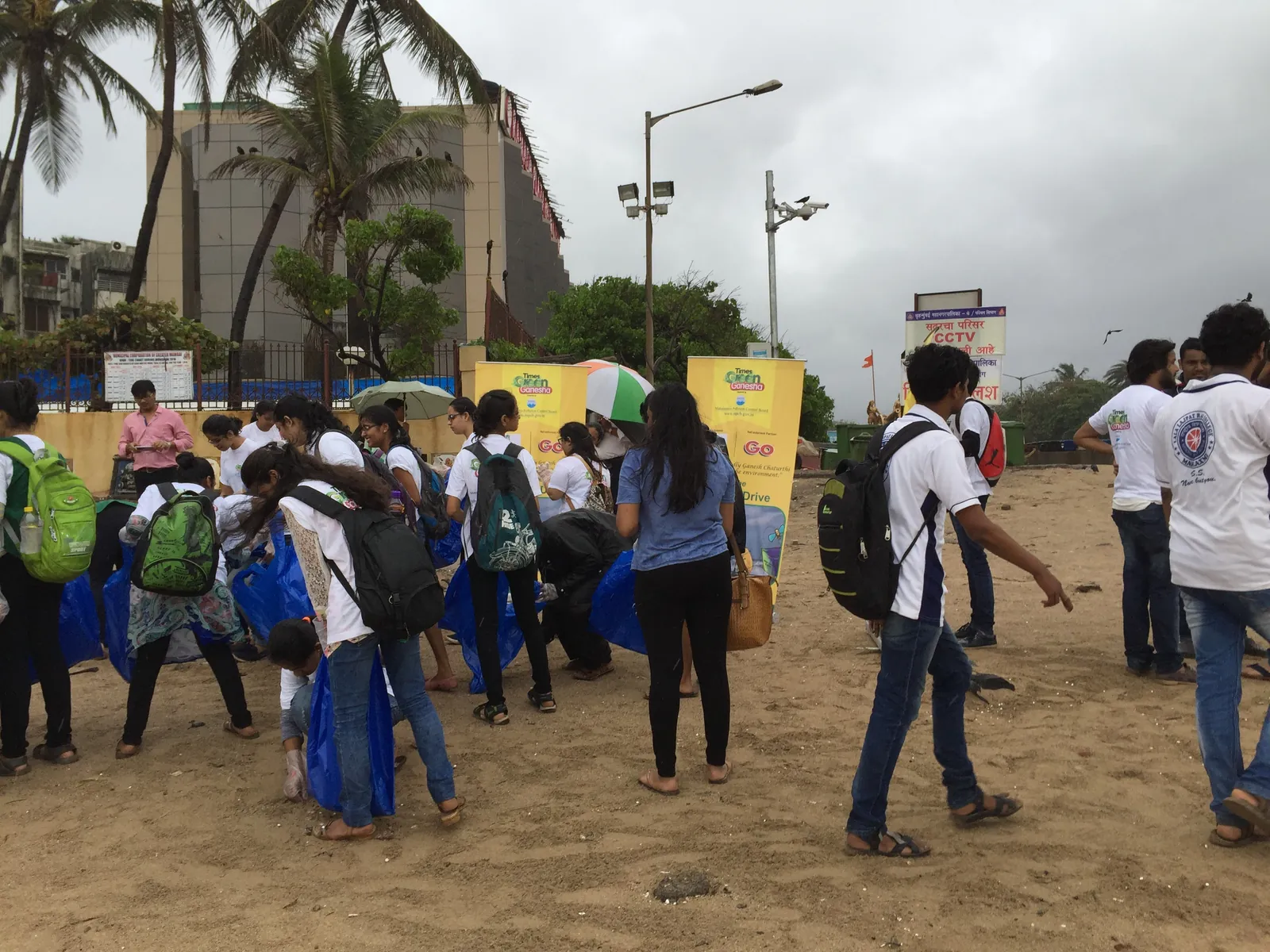
Why photography matters for sustainability
A photo of a littered beach can make a reader care in a way that a table of numbers often can’t. Images take people to places they wouldn’t visit on their own and introduce them to workers they rarely meet. A series of photos taken from the same spot over several weeks also works as a record, showing whether a cleaned site stays clean.
Earth5R’s teams clean beaches and lakes, run school workshops and help housing societies compost their kitchen waste, across 150+ Indian cities. The Earth5R app records field data as photographed, geo-tagged entries, so photos form part of the record. As a fellow you make photos and short films of work like this that are accurate enough to use as records.
This work links to the UN Sustainable Development Goals: Goal 12, Responsible consumption and production and Goal 11, Sustainable cities and communities.
Available projects in this high school photography internship
Each project fits around school work and takes place near home. Your mentor shapes the final project with you.
A cleanup in pictures
Photograph a beach or park cleanup near home from start to finish, with a parent present, and build a captioned photo story that shows what volunteers found.
Before and after from one spot
Choose a fixed spot, such as a garbage corner on your street or your school garden, and photograph it every week to show how the place changes over time.
A short film about a school project
Shoot and edit a two-minute film on a sustainability project at your school, such as composting or a plantation, with short interviews and subtitles.
Portraits of everyday green work
With a parent present and each person’s consent, photograph people near home who cut waste in their daily work, such as building housekeeping staff or a shopkeeper using cloth bags.
What you do in the field
- Plan your shots before each field visit
- Ask for consent before photographing anyone
- Shoot photos and short clips on a phone or camera
- Edit images and video on a phone or laptop
- Write accurate captions and short scripts
- Present your portfolio in a research conversation
Skills you build
On a high school photography internship, you collect your own data near home with a parent or guardian, using the Earth5R app and data forms. Earth5R checks the data on its platform before it goes into your project report.
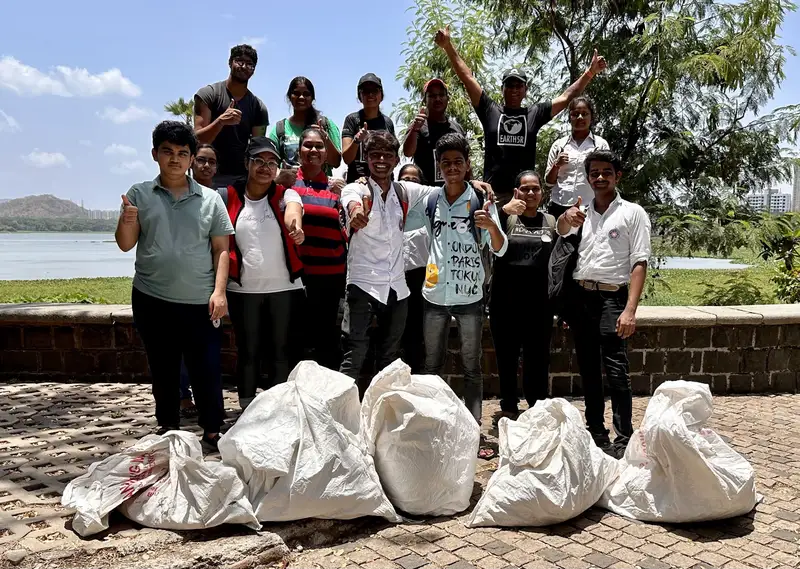
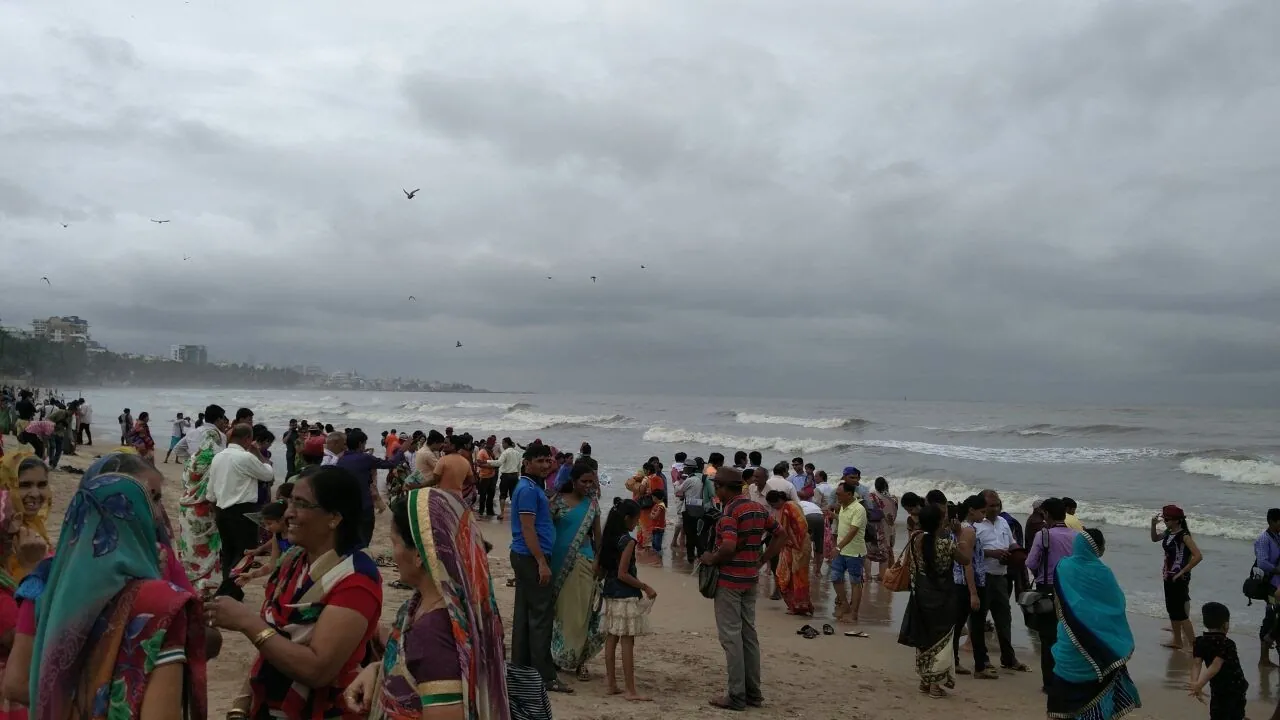
How a high school photography internship fits your school programme
For IB, IGCSE, CBSE and ICSE students. Your school decides what counts towards its own requirements.
IB CAS
Documenting a school or neighbourhood cleanup can form a CAS experience under the creativity strand. Your CAS coordinator decides whether it fits your plan.
Extended Essay and IA
A Visual Arts or Film Extended Essay needs a focused question about images. Your field photos can give you material to study, and your supervisor approves the topic.
MYP, IGCSE and CBSE projects
A photo series or short film fits the MYP Personal Project, IGCSE Art and Design coursework and art project work in CBSE and ICSE schools.
University applications
Art and film schools usually ask for a portfolio. Finished work from real field shoots, reviewed by your mentor, can form part of yours.
How the high school photography internship works
Every student moves through four phases. Your mentor checks each phase before you move on, and sessions pause during board exams.
Observe and Map
Go into the field near home, with a parent or guardian, and collect primary data for your project in Film and Photography.
Frame and Design
Find the root cause in your data and frame a problem worth solving, with your mentor.
Model
Build a working model, analysis or design for your solution, and test it.
Build and Deploy
Put your solution to work, measure the result and publish a verified record on earth5r.org.
Along the way you take part in research conversations with professors at MIT, Oxford, Cambridge, LSE and other universities, and ask your own questions. See how FIELDWORK works.
Where this can take you
University courses this leads to
- BA or BFA in Photography
- BA or BFA in Film
- BA in Media Production
- BA in Visual Communication
- BA in Documentary or Photojournalism
Careers in this field
- Photographer or photojournalist
- Documentary filmmaker
- Video editor
- Content producer
- Visual storyteller for an environmental organisation
Universities to aim for in Film and Photography
Photography and film admissions tutors want to see a portfolio that shows your own way of seeing and careful choices in editing. A high school photography internship with FIELDWORK gives you finished work from real field shoots, feedback from your mentor and a verified record on earth5r.org. Students use a high school photography internship to build a record of real work for applications to universities like these.
University of Southern California (USC)
USA · USC School of Cinematic Arts
USC’s School of Cinematic Arts teaches undergraduate degrees such as the Film & Television Production BA, the Cinema & Media Studies BA and the Writing for Screen & Television BFA. Other programmes cover animation and digital arts, games, and media arts and practice.
USA · Kanbar Institute of Film & Television, Tisch School of the Arts
NYU Tisch’s Kanbar Institute of Film & Television teaches a BFA in Film and Television, with classes in screenwriting, directing, cinematography, producing and editing. The degree combines history and criticism with core production, a production safety course and screenwriting.
University of California, Los Angeles (UCLA)
USA · Department of Film, Television and Digital Media, School of Theater, Film and Television
UCLA’s Department of Film, Television and Digital Media teaches a BA and a minor that mix professional and scholarly approaches to media within a liberal arts education. Students also have the UCLA Library Film & Television Archive, which preserves and screens film and television.
USA · BFA Photography and Video
SVA’s BFA Photography and Video teaches students to make and discuss still and moving images, including how images have worked over the last two centuries. Technical training sits alongside commercial, editorial and fine art skills, and each senior has a mentor for the thesis project.
London College of Communication, University of the Arts London (UAL)
UK · Screen School, London College of Communication (LCC)
LCC’s Screen School teaches undergraduate courses such as BA (Hons) Film and Television, BA (Hons) Film Practice and BA (Hons) Film and Screen Studies. Students build their skills in technical workshops that include film and TV studios, sound suites, and animation and games studios.
Film and TV School of the Academy of Performing Arts in Prague (FAMU)
Czech Republic · FAMU International, BcA in Photography
FAMU’s only English-taught bachelor’s degree is the BcA in Photography, run through FAMU International. The first two years cover the basic forms of photography in practice and theory, with art projects under mentors, and the final year prepares students for a bachelor exam.
Australian Film Television and Radio School (AFTRS)
Australia · AFTRS courses
AFTRS teaches the Bachelor of Arts Screen: Production, along with graduate courses and short courses that run across Australian states and online. The school has sustainability plans for student productions and is developing teaching on sustainable production methods.
Toronto Metropolitan University
Canada · School of Image Arts, The Creative School
Toronto Metropolitan University’s School of Image Arts, in The Creative School, teaches a Bachelor of Fine Arts in Film and a Bachelor of Fine Arts in Photography Media Arts. Its applied programmes give students access to industry-grade facilities and equipment.
Australia · School of Art, Bachelor of Photography
RMIT’s three-year Bachelor of Photography, in the School of Art, starts with foundation skills and then lets students choose a specialisation. Learning is project-based, mixing theory, practice and professional knowledge, and it treats photography as a practice that affects all parts of society.
This list is for guidance. These universities offer undergraduate study in Film and Photography. Earth5R has no admissions arrangement with them, and admission decisions rest with each university. Students get help researching universities, scholarships and applications, depending on the programme.
What your fellowship fee pays for
An internship fellowship at Earth5R is time and attention from senior researchers and leaders. Each part below takes staff time and resources that we set aside for every fellow.
Live mentoring with experts
One-to-one mentoring in most fellowships, with regular check-ins on your project.
Dialogues with global researchers
Academics from international universities and renowned scientists, who answer your questions and discuss your work.
Support in the field
Guidance while you collect data and work on your project in the field.
References for your next step
References when you apply for jobs, higher studies and research programmes.
Your work, hosted for life
Your work and data stay on Earth5R’s website and servers for life, where universities and employers can check them.
Time from senior people
Each fellow receives time and attention from senior researchers and leaders, set aside for them.
Fee details available on request.
Choose your fellowship
The Multi-Year Fellowship can run from Grade 9 to Grade 12, with more scope each year.
The fee pays for live mentoring, dialogues with global researchers, support in the field, references and lifelong hosting of your work. Fee details available on request.
High school photography internship: common questions
What camera do I need for this high school photography internship?
A phone camera is enough to start. Your mentor shows you how to work with daylight and framing on any phone. A separate camera helps later but isn’t needed to build a strong portfolio.
How much time will my child spend on this each week?
Projects are planned with a light weekly load. Shoots take place near home or at school, and most editing happens at home on a phone or laptop, around school work.
How do I photograph people fairly?
You ask for consent before taking a photo of anyone, and for a child you ask their parent. You explain where the photo will be used. Your mentor checks each image for consent and accuracy before it is shared.
Is the high school photography internship paid?
Yes. FIELDWORK is a paid, mentored programme. The fee pays for live mentoring, dialogues with global researchers, support in the field, references and lifelong hosting of your work. Fee details are available on request.
Can my child do this high school photography internship online?
Yes. Mentoring sessions run online, and field work takes place near where you live.
Is a parent or guardian present during field work?
Yes. A parent or guardian is present at every self-guided field activity. Online sessions are for students.
Does FIELDWORK pause during board exams?
Yes. Sessions pause during board exams, so the fellowship fits around school work.
What do students get at the end?
A certificate, a letter of recommendation, a project report and a verified profile on earth5r.org, where universities can check the work.
Related subjects for school students
Already at university? See the Film, Photography and Content Creation internship fellowship for university students.
Apply for a FIELDWORK fellowship in Film and Photography
This high school photography internship is for students in Grades 9 to 12. Work on a live Earth5R project with a mentor, take part in research conversations with global researchers, and build a verified record of your work. Fee details available on request.