
Case study · Agriculture · 2017 and 2018–2025
12 lakh farmers, five practices, one programme
Earth5R volunteers trained 12 lakh farmers across 14 states and 2 union territories in organic practice, drip irrigation, residue management, solar pumping and financial literacy. This is what the programme did, what it measured, how each figure was reached, and what a corporate sponsor can and cannot report from work of this kind.
Earth5R case study · Partner not named at the client’s request · Figures from Earth5R’s case study register, with the method shown beside each calculated one
12 lakh
farmers trained, 2018–2025
14 + 2
states and union territories
2,10,000 t
CO₂ reduced, cumulative
40%
reported cut in synthetic fertiliser

Why the programme exists
Indian agriculture carries four problems at once, and they are connected in a way that makes single-issue programmes fail. Fields are burned after harvest because clearing them by hand costs money the household does not have. Groundwater is pumped beyond replacement because flood irrigation is what the equipment allows. Synthetic fertiliser is applied above agronomic need because the price signal encourages it. And the household has no financial cushion, so none of the above can be changed by a farmer acting alone.
The health cost of one of those four is documented. The Health Effects Institute’s GBD MAPS study attributed about 66,200 deaths a year in India to crop residue burning. That is the consequence of a practice farmers adopt because the alternative is unaffordable, not because the harm is unknown.
That framing is why this programme trained across five practices at once rather than running a single campaign. A farmer shown residue management but with no way to pay for a seeder returns to burning the following season. A farmer who installs drip irrigation but has no savings cannot replace an emitter when it fails. Earth5R’s working position, tested across the programme, is that these practices hold when they are introduced together and reinforced locally, and lapse when introduced alone.
What the policy framework now expects
A corporate sponsor entering agriculture today is not entering an empty field. Three government programmes set the direction, and a CSR project that runs with them reaches further than one that runs beside them.
Residue management
The central Crop Residue Management scheme has released ₹4,237.47 crore, supplied 3.53 lakh machines and set up more than 43,500 custom hiring centres, where a smallholder rents equipment rather than buying it. Punjab recorded 5,114 farm fires in the 2025 season, 53% fewer than 2024 and 93% fewer than 2021. The equipment exists. Whether a given village knows how to book it is a training problem, not a hardware problem.
Micro-irrigation
Per Drop More Crop, run under the Pradhan Mantri Rashtriya Krishi Vikas Yojana since 2022-23, had brought 115 lakh hectares under micro-irrigation as of July 2026, reaching 12.30 lakh farmers with ₹8,123.24 crore of central assistance over three years. Set against India’s cultivated area, the great majority of fields are still flood irrigated, which is where the remaining water saving sits.
Natural and organic practice
The National Mission on Natural Farming, approved in November 2024 with an outlay of ₹2,481 crore, aims to reach 1 crore farmers and 7.5 lakh hectares through 15,000 village clusters, supported by 30,000 Krishi Sakhis and community resource persons. That last number matters for a sponsor: the mission’s own design assumes trained local people rather than visiting trainers, which is the model this programme used.

How Earth5R ran it
The programme is volunteer-delivered and locally anchored. Earth5R trains community leaders who live in the area, and those leaders carry the practice between visits. Across all of Earth5R’s programmes that network now numbers 98,073 community leaders working in 5,526 distinct locations, and the agriculture work is one strand of it.
Three design choices shaped the results, and they are the transferable part of this case.
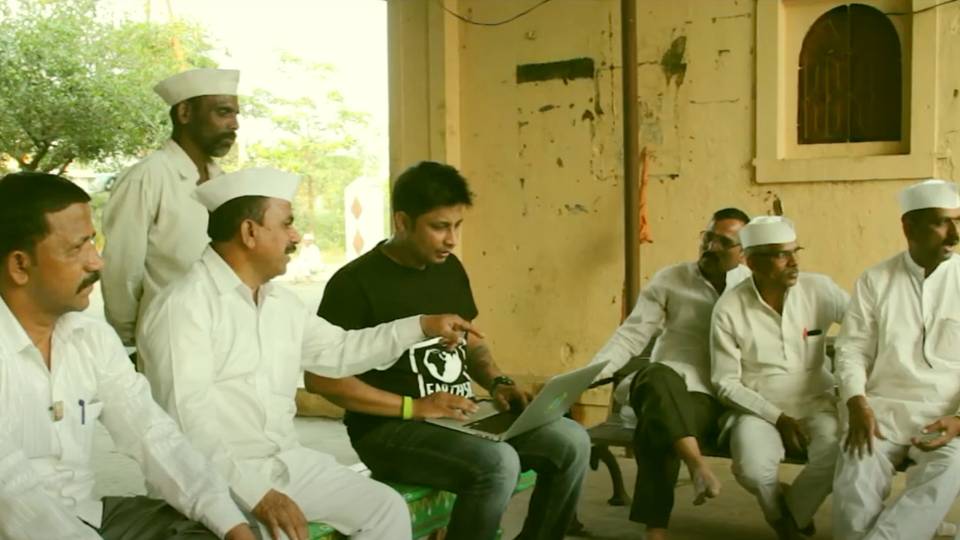
Training at the plot, in season. A session on residue management held in March teaches nothing, because the residue arrives in November. Sessions were timed to the operation they described and held on the land, which meant the trainer travelled and the farmer did not.
Cooperatives as the unit, not the individual. Practices were introduced to farmer groups so that equipment, and the confidence to use it, could be shared. One farmer trying drip irrigation alone is an experiment. Six farmers trying it together is a local norm forming.
Financial literacy alongside the agronomy. Every technical practice here has a cost before it has a return. Teaching the practice without teaching how to finance it produces adoption that lapses within a season.
The five practices
| Practice | What was taught | Why it was included |
|---|---|---|
| Organic practice | Composting, crop rotation, biological pest management, reduced synthetic input | Cuts a recurring cash cost and rebuilds soil that responds less and less to added fertiliser |
| Drip irrigation | Layout, emitter spacing, scheduling, maintenance | The water saving is real but survives only if the farmer can repair the system without calling anyone |
| Residue management | Incorporation, mulching, booking equipment from a custom hiring centre | The alternative to burning, and the point at which the health cost above is actually avoided |
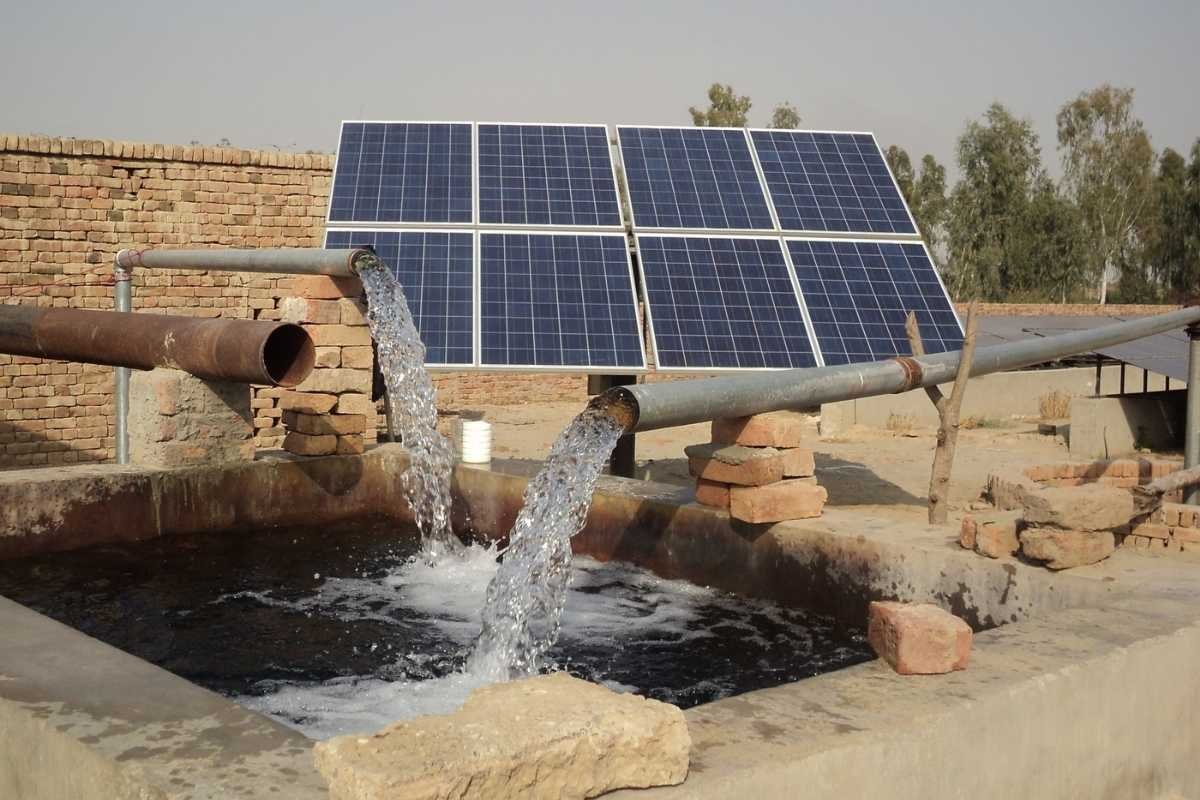
| Solar pumping | Sizing, siting, operation, upkeep | Removes diesel cost and the emissions with it, and frees irrigation timing from grid supply |
| Financial literacy | Savings, bank access, credit, group finance | Without it, the other four are advice the household cannot act on |
What the figures show
Two periods are reported here and they should not be added together. The 2017 figures describe a single documented programme year. The 2018–2025 figures describe the training programme that followed. Where a figure is calculated rather than counted, the method is shown next to it, so a sponsor’s own team can check the arithmetic rather than take it on trust.
12 lakh farmers trained
2018 to 2025, counted across 14 states and 2 union territories.
1,08,000 farmer engagements
2017 programme year. Method: 300 volunteers × 30 farmers × 12 months. This counts engagements, not unique farmers, and a farmer reached monthly appears more than once.
2,10,000 tonnes of CO₂ reduced
2018 to 2025, cumulative across the programme period.
18,000 tonnes of CO₂ a year avoided
2017, through residue management. Emissions not released because residue was incorporated rather than burned.
40% less synthetic fertiliser
Reported by trained farmers. This is self-reported at the farm and was not independently soil-tested, which is stated here rather than left for a reader to discover.
These are avoided and reduced emissions, estimated against the programme’s own records. No carbon credits were issued or claimed against this work, and none of these tonnes has been sold, retired or counted towards any company’s target.
What proved harder than expected
Three things are worth saying plainly, because a sponsor planning similar work will meet them.
Measurement at the farm is harder than measurement in a city. A housing society’s waste can be weighed. A farmer’s fertiliser reduction is reported, not weighed, unless someone funds soil testing across a sample. That is why the 40% figure carries a qualification rather than a decimal point.
One season of adoption is not adoption. The practices that held were the ones a cooperative took up together and repeated the following year. Where a single enthusiastic farmer adopted alone, the practice often did not survive a bad season.
Equipment access is a booking problem, not only a funding problem. Custom hiring centres exist in large numbers. A good share of the residue work was simply making sure a village knew which centre served it, and how to reserve a machine before the window closed.
For a CSR or ESG sponsor
Agricultural work of this kind sits comfortably inside Schedule VII of the Companies Act, under rural development, environmental sustainability and livelihood enhancement. What matters more than the category is what the sponsor can put in a report afterwards and defend if asked.
Three things make an agriculture programme reportable rather than merely photogenic. Count people once, and say so when a number counts engagements instead. Show the method beside any figure that was calculated. And separate what was measured from what the participant reported, rather than presenting both as measurement. Every figure on this page follows those three rules, which is why several of them carry qualifications.
For a company preparing BRSR disclosures, the useful output of a programme like this is not the headline tonnage. It is the underlying record: where the work happened, over what period, how many people it reached, and by what method each number was produced. That record is what survives a question from an assurance provider. Earth5R’s own field data across all programmes now runs to 2.4 billion data points, and a sponsor’s share of that record is handed over rather than summarised.
Figure register
| Ref | Figure | Scope and period | Measured or reported | Method |
|---|---|---|---|---|
| F66 | 12 lakh farmers trained | 2018–2025, 14 states and 2 UTs | Counted | Programme records |
| F67 | 1,08,000 farmer engagements | 2017 programme year | Modelled | 300 volunteers × 30 farmers × 12 months |
| F68 | 2,10,000 t CO₂ reduced | 2018–2025, cumulative | Estimated | Programme records |
| F69 | 18,000 t CO₂ a year avoided | 2017, residue burning avoided | Estimated | Residue incorporated rather than burned |
| F70 | 40% less synthetic fertiliser | 2017 and 2018–2025 | Reported by farmers | Self-reported, not soil-tested |
External figures cited on this page: crop residue burning deaths, Health Effects Institute GBD MAPS; Punjab farm fires and the Crop Residue Management scheme, Press Information Bureau releases of 1 December 2025 and 16 March 2026; micro-irrigation coverage, Per Drop More Crop factsheet, August 2026; National Mission on Natural Farming, Press Information Bureau, 25 November 2024. Earth5R figures come from Earth5R’s case study register and sector records.
Planning an agriculture programme?
Earth5R designs and runs field programmes with the measurement built in from the start, so the sponsor ends the year with a record rather than a photo album.
Write to community@earth5r.org See all CSR and ESG projectsRelated: Agriculture sector overview · Rural sustainability and organic transition · Follow Earth5R on LinkedIn for field updates.