
High school mechanical engineering internship and research fellowship
This high school mechanical engineering internship lets students in Grades 9 to 12 study the solar-powered river-cleaning machine Earth5R built for the Mithi River in Mumbai, with a mentor guiding each step. You learn how it works from photos, videos and view-only CAD designs, then propose an improvement with sketches and simple calculations.
For school students who take IB Physics or Design Technology, or IGCSE and CBSE Physics, and want to understand how real machines are designed. Online, with field work near home and a parent or guardian present at every self-guided activity. The fellowship is paid because every student receives time and attention from senior researchers and leaders.
Why mechanical engineering matters for sustainability
A lot of environmental work depends on machines. A drum composter has to turn easily even when it is full of wet waste. On a river, a cleaning machine must lift floating rubbish out of moving water without jamming. Mechanical engineers work out how each part moves and how much load it carries, and they choose materials that last. On a solar-powered machine, every moving part also has to run on the limited energy the panels collect.
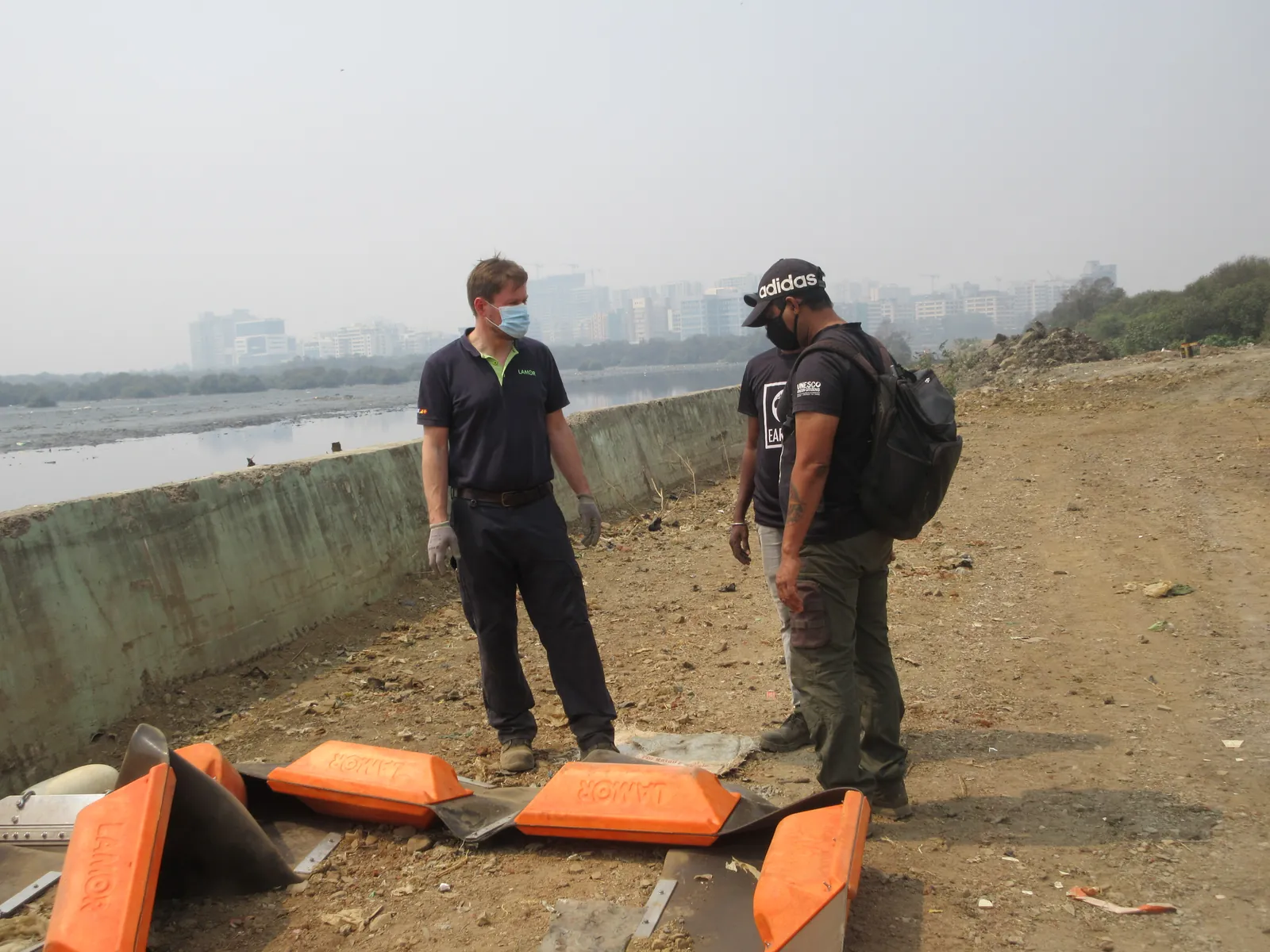
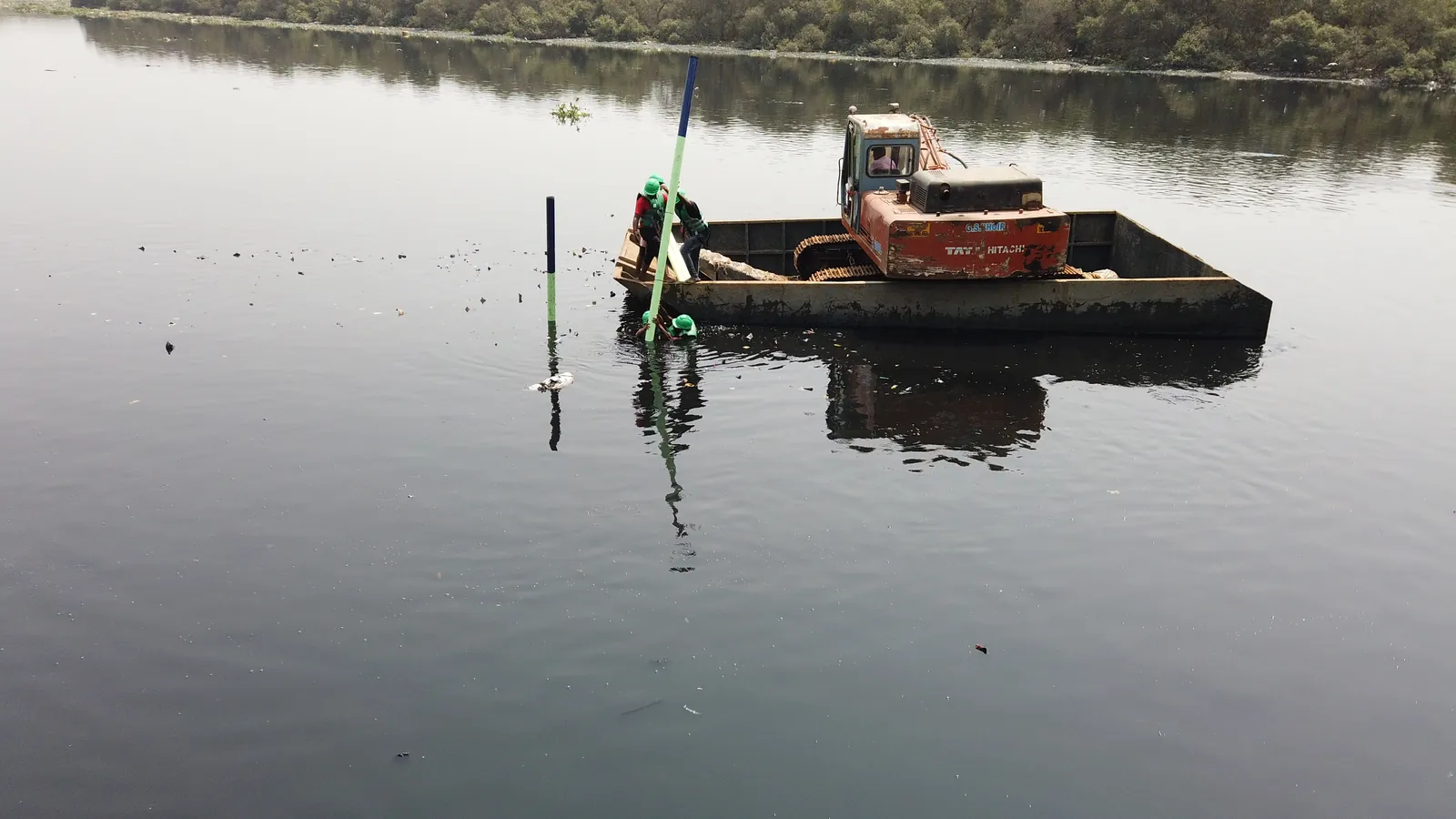
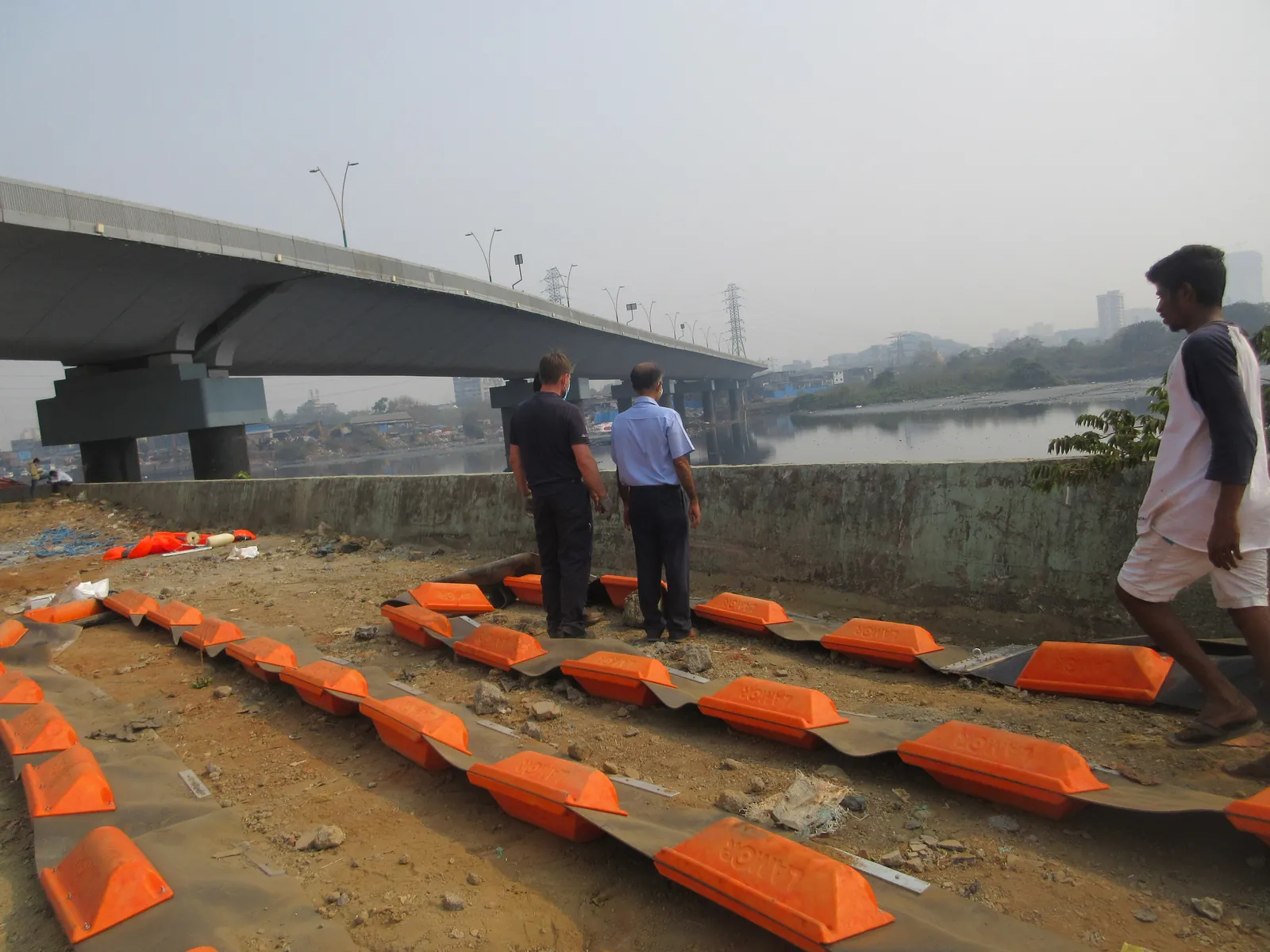
Earth5R worked with the UN Technology Innovation Labs, now UN Global Pulse, to build a solar-powered river-cleaning machine for the Mithi River in Mumbai. The first version was built in Finland. It was then rebuilt to cope with tides and the monsoon. You study the machine through its photos, videos, build documents and view-only CAD designs, and work out why the design had to change.
This work links to the UN Sustainable Development Goals: Goal 9, Industry, innovation and infrastructure and Goal 6, Clean water and sanitation.
Available projects in this high school mechanical engineering internship
Each project fits around school work and takes place near home. Your mentor shapes the final project with you.
Draw the machine as a system
Use the build documents, photos and view-only CAD designs of the Mithi River machine to draw a diagram of its main parts and explain what each one does.
Why the design changed
Study how the machine changed after its first build in Finland, and explain which design choices respond to tides and the monsoon on the Mithi River.
Improve one part
Pick one part, such as the way the machine collects or stores waste, and propose an improvement for Indian rivers with sketches, simple calculations and a choice of material.
A better drum composter
Study photos and videos of the drum composters Earth5R designed from reused industrial containers, then design a handle, stand or door that makes them easier to use, and build a cardboard model.
What you do in the field
- List the machine’s parts and materials from its build documents
- Explore the view-only CAD designs and draw your own diagrams
- Watch floating waste on a lake from a safe public spot
- Run simple calculations on loads, flow or solar power
- Sketch and document a design improvement
- Present your proposal in a research conversation and defend your choices
Skills you build
On a high school mechanical engineering internship, you collect your own data near home with a parent or guardian, using the Earth5R app and data forms. Earth5R checks the data on its platform before it goes into your project report.
How a high school mechanical engineering internship fits your school programme
For IB, IGCSE, CBSE and ICSE students. Your school decides what counts towards its own requirements.
IB CAS
Designing an easier-to-use composter for a housing society or school garden can support a CAS project with creativity and service elements. Your CAS coordinator decides what fits.
Extended Essay and IA
A question on solar power, loads or materials in the river machine can support a Design Technology IA or an Extended Essay. Your supervisor approves the topic.
MYP, IGCSE and CBSE projects
A design study with sketches, calculations and a cardboard model can fit the MYP Personal Project, MYP Design and project work in IGCSE, CBSE and ICSE physics.
University applications
A documented design study of a real machine, reviewed by your mentor, gives you something specific to discuss in an engineering personal statement or interview.
How the high school mechanical engineering internship works
Every student moves through four phases. Your mentor checks each phase before you move on, and sessions pause during board exams.
Observe and Map
Go into the field near home, with a parent or guardian, and collect primary data for your project in Mechanical Engineering.
Frame and Design
Find the root cause in your data and frame a problem worth solving, with your mentor.
Model
Build a working model, analysis or design for your solution, and test it.
Build and Deploy
Put your solution to work, measure the result and publish a verified record on earth5r.org.
Along the way you take part in research conversations with professors at MIT, Oxford, Cambridge, LSE and other universities, and ask your own questions. See how FIELDWORK works.
Where this can take you
University courses this leads to
- BEng or BS in Mechanical Engineering
- BEng in Mechatronics or Robotics
- BEng in General Engineering
- BEng in Energy or Renewable Energy Engineering
- BEng in Product Design Engineering
Careers in this field
- Mechanical design engineer
- Renewable energy engineer
- Clean technology engineer
- Product development engineer
- Robotics engineer
Universities to aim for in Mechanical Engineering
Mechanical engineering admissions tutors look for students who can explain how a machine works and back a design idea with simple numbers. A high school mechanical engineering internship with FIELDWORK gives you a design study of a real machine, reviewed by your mentor and recorded on earth5r.org. Students use a high school mechanical engineering internship to build a record of real work for applications to universities like these.
Massachusetts Institute of Technology (MIT)
USA · Department of Mechanical Engineering (MechE)
MIT Mechanical Engineering offers three undergraduate degrees, including the Bachelor of Science in Mechanical Engineering (Course 2) and one in Mechanical and Ocean Engineering (Course 2-OE). Energy and the environment are among its research and impact areas, and students build projects in maker spaces such as MakerWorks.
USA · Department of Mechanical Engineering
Stanford Mechanical Engineering offers undergraduate majors in Mechanical Engineering and Biomechanical Engineering, along with a minor. Its research areas are computational engineering, design, human health and sustainability, and its groups include the Design Group and the Thermofluids, Energy, and Propulsion Systems Group.
University of California, Berkeley (UC Berkeley)
USA · Department of Mechanical Engineering
Berkeley’s Department of Mechanical Engineering runs an undergraduate programme built on scientific and engineering fundamentals, with design electives and undergraduate research. Research areas include Energy Science & Tech, Ocean and Manufacturing, and trained students can use the Student Access Machine Shop.
Georgia Institute of Technology (Georgia Tech)
USA · George W. Woodruff School of Mechanical Engineering
Undergraduates at Georgia Tech’s Woodruff School follow a Design Sequence that starts with drafting and CAD in the first year and ends with a team capstone, where students solve problems set by industry, NGOs and others. Its research groups include Heat Transfer, Combustion and Energy Systems.
USA · Department of Mechanical Engineering
Michigan’s Department of Mechanical Engineering gives undergraduates four years of team-based design experiences. Recent research covers offshore renewable energy and sunlight-driven hydrogen production. Its course Data Science for Manufacturing Quality Control offers students experiential learning.
UK · Department of Engineering
Cambridge teaches engineering as one course that awards a BA (Hons) after three years and an MEng after four. The first two years cover mechanical and structural engineering, materials, and electrical and information engineering. From the third year, students can specialise in areas such as Mechanical Engineering.
UK · Department of Mechanical Engineering
Imperial’s Department of Mechanical Engineering starts its undergraduate courses with two years of core study in thermofluids, materials, mechanics and design. Third-year teams design, make and test prototypes, and later electives include sustainable energy technology.
Switzerland · Bachelor in Mechanical Engineering, Department of Mechanical and Process Engineering (D-MAVT)
ETH’s Bachelor in Mechanical Engineering begins with mathematics, physics, computer science and engineering basics such as product development and thermodynamics. In the third year, students take a focus specialisation, such as Sustainable Energy and Processes, or a team Focus Project that runs from concept to testing.
Delft University of Technology (TU Delft)
Netherlands · Faculty of Mechanical Engineering
TU Delft’s Faculty of Mechanical Engineering offers bachelor’s programmes in Mechanical Engineering, Marine Technology and Clinical Technology, and the BSc Mechanical Engineering is taught in Dutch. Students who go on to the master’s can choose tracks such as Energy, Flow & Process Technology.
National University of Singapore (NUS)
Singapore · Department of Mechanical Engineering, College of Design and Engineering
NUS Mechanical Engineering offers a BEng in Mechanical Engineering and a BEng in Robotics & Machine Intelligence, among other undergraduate degrees. Its research thrusts include advanced manufacturing, robotics and energy efficient thermal and storage systems.
This list is for guidance. These universities offer undergraduate study in Mechanical Engineering. Earth5R has no admissions arrangement with them, and admission decisions rest with each university. Students get help researching universities, scholarships and applications, depending on the programme.
What your fellowship fee pays for
An internship fellowship at Earth5R is time and attention from senior researchers and leaders. Each part below takes staff time and resources that we set aside for every fellow.
Live mentoring with experts
One-to-one mentoring in most fellowships, with regular check-ins on your project.
Dialogues with global researchers
Academics from international universities and renowned scientists, who answer your questions and discuss your work.
Support in the field
Guidance while you collect data and work on your project in the field.
References for your next step
References when you apply for jobs, higher studies and research programmes.
Your work, hosted for life
Your work and data stay on Earth5R’s website and servers for life, where universities and employers can check them.
Time from senior people
Each fellow receives time and attention from senior researchers and leaders, set aside for them.
Fee details available on request.
Choose your fellowship
The Multi-Year Fellowship can run from Grade 9 to Grade 12, with more scope each year.
The fee pays for live mentoring, dialogues with global researchers, support in the field, references and lifelong hosting of your work. Fee details available on request.
High school mechanical engineering internship: common questions
Do I need CAD skills for this high school mechanical engineering internship?
No. You start with sketches and simple diagrams, and your mentor shows you how to read CAD drawings. Students who already use CAD software can model their own design changes.
Will my child go near the river or use any machines?
No. Students study the river machine only through photos, videos, build documents and view-only CAD designs. Any field observation happens from a safe public place near home, with a parent or guardian present.
Can I edit the CAD designs?
They are view-only. You study them and make your own sketches and diagrams. If you use CAD software, you can model your improvement as a separate design and add it to your project report.
Is the high school mechanical engineering internship paid?
Yes. FIELDWORK is a paid, mentored programme. The fee pays for live mentoring, dialogues with global researchers, support in the field, references and lifelong hosting of your work. Fee details are available on request.
Can my child do this high school mechanical engineering internship online?
Yes. Mentoring sessions run online, and field work takes place near where you live.
Is a parent or guardian present during field work?
Yes. A parent or guardian is present at every self-guided field activity. Online sessions are for students.
Does FIELDWORK pause during board exams?
Yes. Sessions pause during board exams, so the fellowship fits around school work.
What do students get at the end?
A certificate, a letter of recommendation, a project report and a verified profile on earth5r.org, where universities can check the work.
Related subjects for school students
Already at university? See the Mechanical Engineering internship fellowship for university students.
Apply for a FIELDWORK fellowship in Mechanical Engineering
This high school mechanical engineering internship is for students in Grades 9 to 12. Work on a live Earth5R project with a mentor, take part in research conversations with global researchers, and build a verified record of your work. Fee details available on request.