
High school environmental engineering internship and research fellowship
This high school environmental engineering internship lets students in Grades 9 to 12 measure a real waste or water problem near home, with a mentor who checks the data and the design. You weigh waste, track water use or study air quality data, then design a practical fix for a home, school or housing society.
For school students who enjoy ESS, physics or Design Technology and want to measure a local problem and design a fix that people can use. Online, with field work near home and a parent or guardian present at every self-guided activity. The fellowship is paid because every student receives time and attention from senior researchers and leaders.
Why environmental engineering matters for sustainability
Environmental engineers design the systems that handle our waste and wastewater and keep pollution out of air, rivers and lakes. When a city grows fast, these systems can fall behind, and rubbish ends up in drains and on open land. Every good design starts with a measurement. You can’t size a compost unit or a rainwater tank until you know how much waste or water it has to handle.
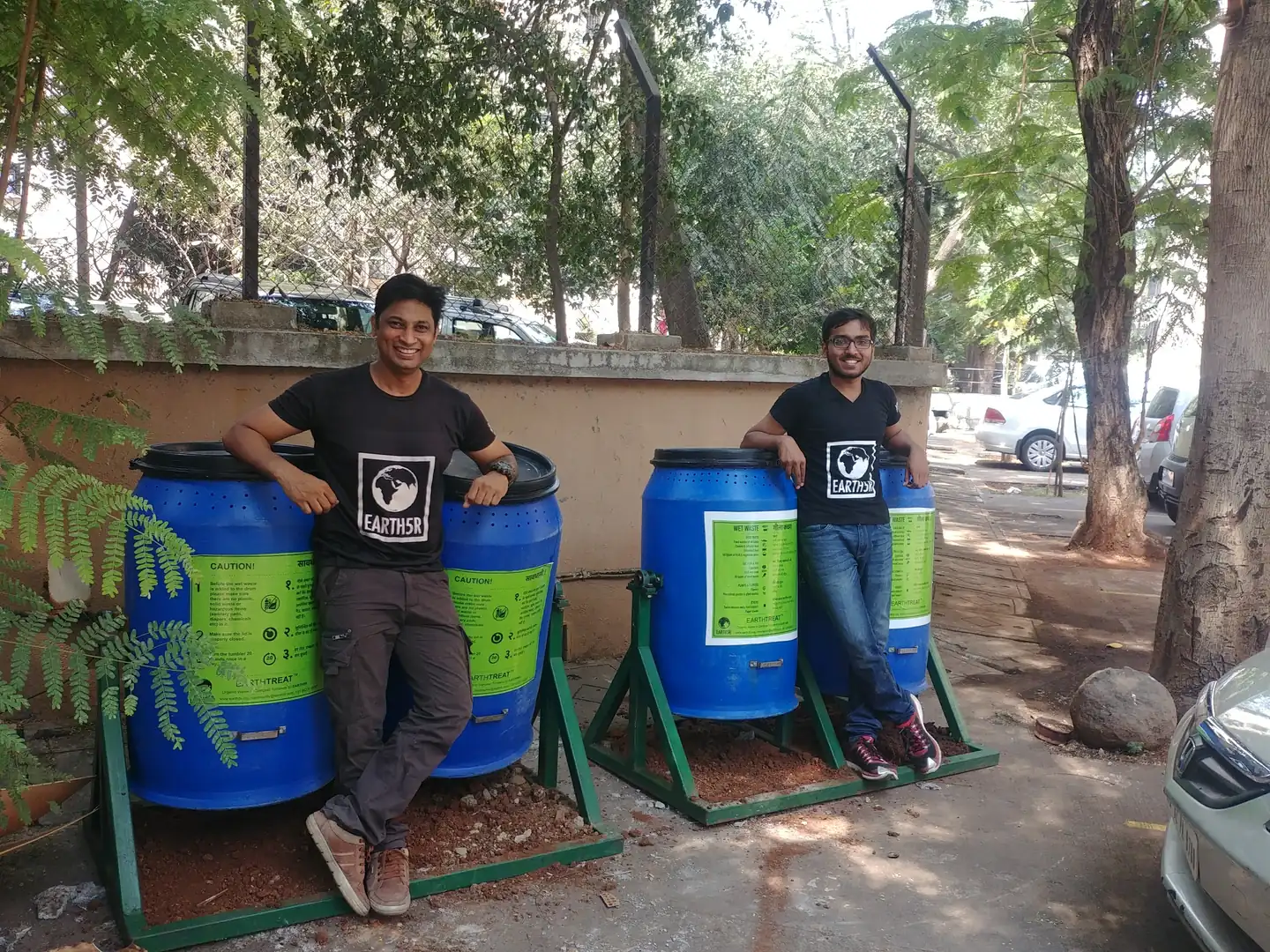
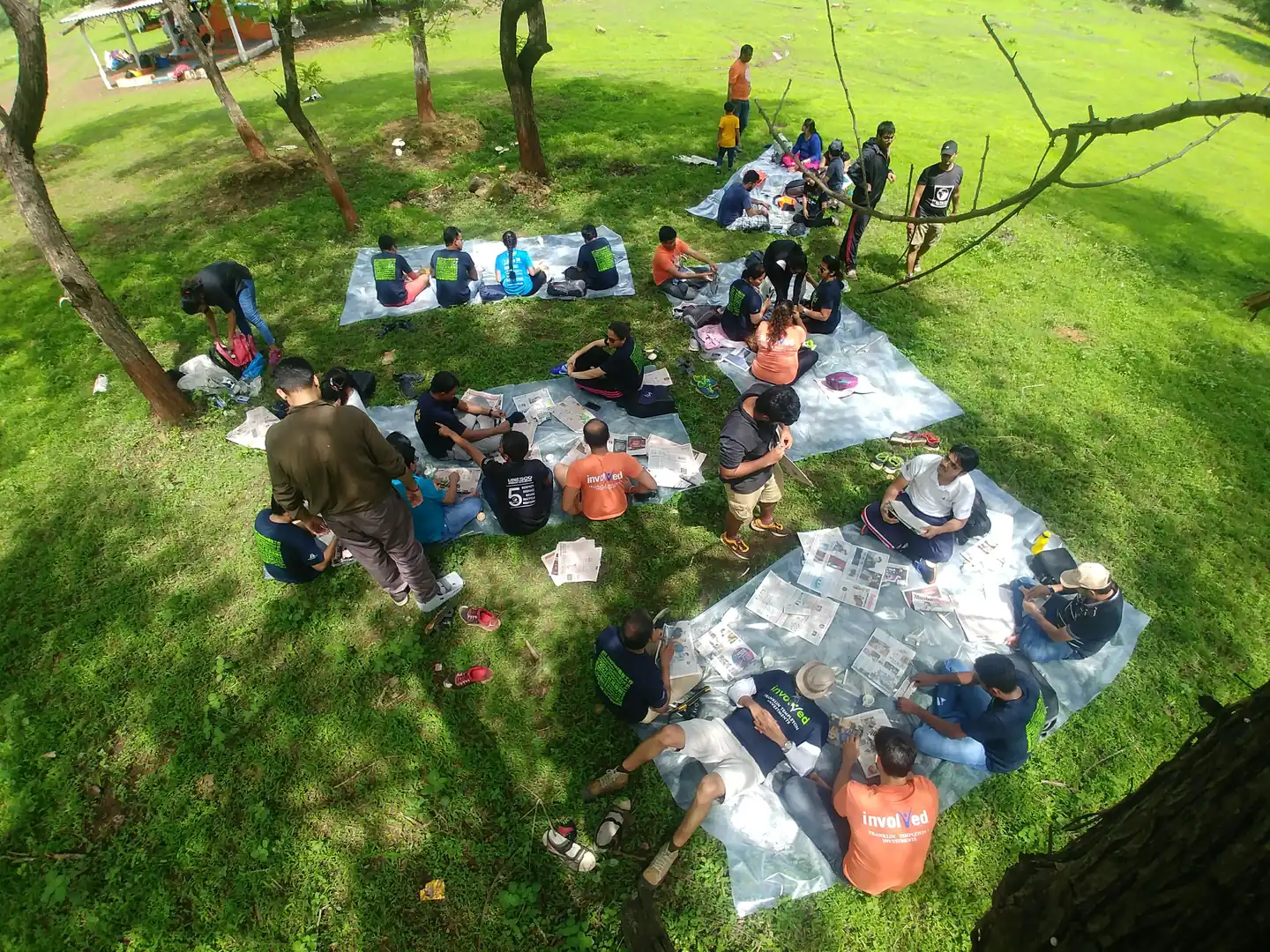
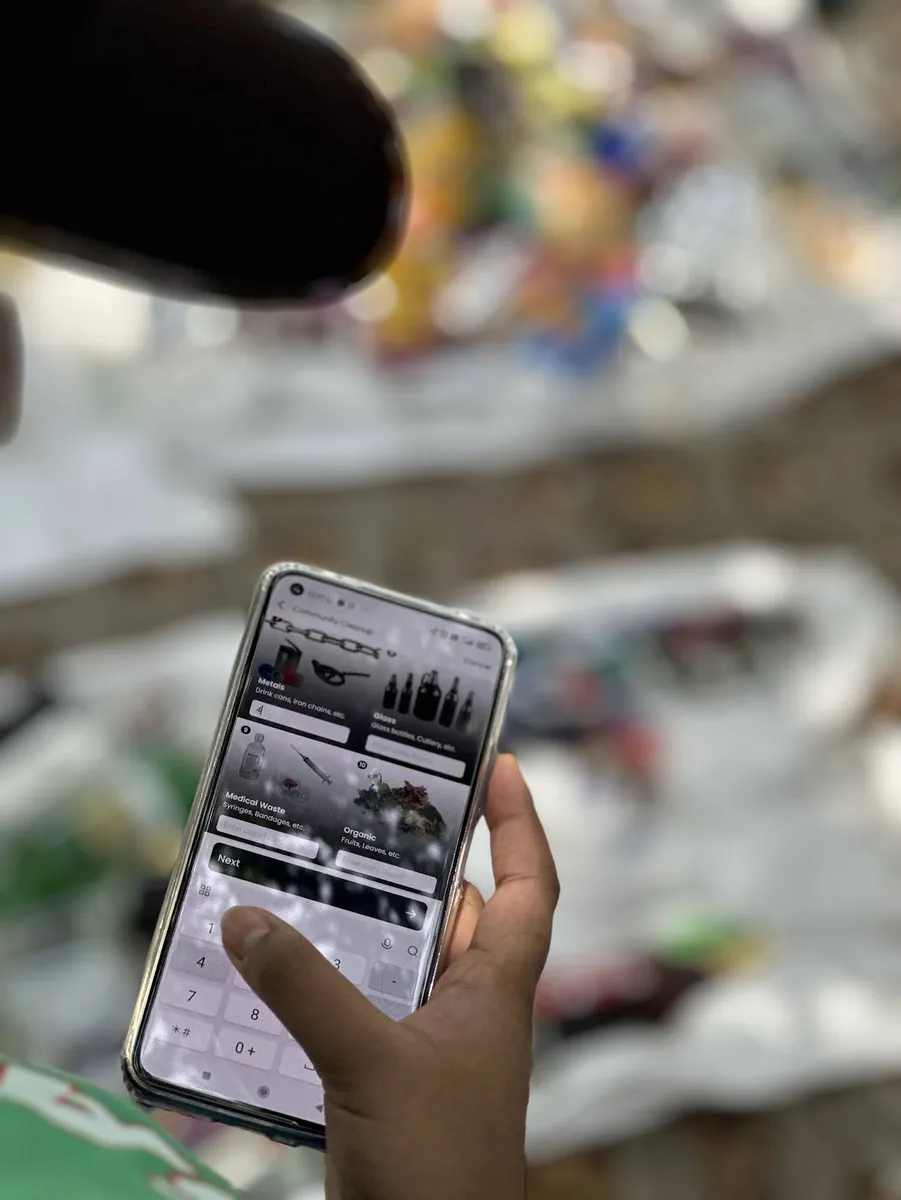
Earth5R measures waste before it plans a fix. At lake, river and beach cleanups, its teams sort and count the items they collect by type and brand. In zero waste housing societies, residents compost wet waste on site, some in drum composters that Earth5R designed from reused industrial containers. As a fellow you record your own measurements on the Earth5R app and plan a fix with your mentor.
This work links to the UN Sustainable Development Goals: Goal 6, Clean water and sanitation and Goal 12, Responsible consumption and production.
Available projects in this high school environmental engineering internship
Each project fits around school work and takes place near home. Your mentor shapes the final project with you.
Household waste audit and compost plan
Weigh and sort a week of your family’s waste, work out how much of it is wet waste and size a compost bin that could handle it at home.
Water use at home or school
Read the water meter or time taps and flushes to estimate daily water use at home or school, find where water is wasted and design a simple reuse plan.
Rainwater harvesting design for your school
Take the school’s roof area from a building plan and public rainfall data for your city, estimate how much rain could be collected and size a storage tank on paper.
Air quality around your school
Compare public air quality data for your city with your own notes on dust and waste burning seen from home or school, and suggest steps that cut students’ exposure.
What you do in the field
- Weigh, sort and log waste on the Earth5R app
- Read water meters and time taps and flushes
- Download public rainfall and air quality data for your city
- Size a compost bin or water tank with simple equations
- Write a design note with costs and upkeep needs
- Present your design in a research conversation and answer questions
Skills you build
On a high school environmental engineering internship, you collect your own data near home with a parent or guardian, using the Earth5R app and data forms. Earth5R checks the data on its platform before it goes into your project report.
How a high school environmental engineering internship fits your school programme
For IB, IGCSE, CBSE and ICSE students. Your school decides what counts towards its own requirements.
IB CAS
Proposing a compost bin or a water-saving plan to your school and helping others use it can support a CAS project. Your CAS coordinator decides what fits.
Extended Essay and IA
An ESS Extended Essay or Internal Assessment needs a clear question and your own data. Measured waste or water use can give you both, if your supervisor approves the topic.
MYP, IGCSE and CBSE projects
A design for a compost unit or a rainwater tank can fit the MYP Personal Project and design or science project work in IGCSE, CBSE and ICSE.
University applications
Field data and a sized design reviewed by your mentor give you a specific engineering project to describe in a personal statement or interview.
How the high school environmental engineering internship works
Every student moves through four phases. Your mentor checks each phase before you move on, and sessions pause during board exams.
Observe and Map
Go into the field near home, with a parent or guardian, and collect primary data for your project in Environmental Engineering.
Frame and Design
Find the root cause in your data and frame a problem worth solving, with your mentor.
Model
Build a working model, analysis or design for your solution, and test it.
Build and Deploy
Put your solution to work, measure the result and publish a verified record on earth5r.org.
Along the way you take part in research conversations with professors at MIT, Oxford, Cambridge, LSE and other universities, and ask your own questions. See how FIELDWORK works.
Where this can take you
University courses this leads to
- BEng or BS in Environmental Engineering
- BEng in Civil and Environmental Engineering
- BEng in Environmental and Sustainability Engineering
- BEng in Chemical Engineering
- BSc in Environmental Science
Careers in this field
- Environmental engineer
- Water and wastewater engineer
- Solid waste management specialist
- Air quality engineer
- Environmental consultant
Universities to aim for in Environmental Engineering
Environmental engineering admissions tutors look for students who have measured a real problem and turned the numbers into a workable design. A high school environmental engineering internship gives you field data you collected, a design your mentor reviewed and a record that admissions teams can check. Students use a high school environmental engineering internship to build a record of real work for applications to universities like these.
USA · Department of Civil and Environmental Engineering
Stanford’s Department of Civil and Environmental Engineering offers undergraduate majors such as Environmental Systems Engineering, where students can focus on coastal, energy, freshwater or urban systems. Its Codiga Resource Recovery Center tests wastewater treatment that extracts clean water, nutrients and energy.
University of California, Berkeley (UC Berkeley)
USA · Environmental Engineering Science major, Engineering Science Program, College of Engineering
Berkeley’s Environmental Engineering Science major pairs engineering fundamentals with courses in the environmental and natural sciences. Students can focus on environmental issues more than most engineering majors allow, with themes such as safe drinking water, air quality, renewable energy and protecting the climate.
Massachusetts Institute of Technology (MIT)
USA · Department of Civil and Environmental Engineering (CEE)
MIT’s Department of Civil and Environmental Engineering teaches an undergraduate major with an Environment track, covering chemistry, microbiology, fluid mechanics and hydrology. It also runs a major in Climate System Science and Engineering. Its Climate and Environment research looks at how cities, ecosystems and farming are affected by global change.
University of Illinois Urbana-Champaign (UIUC)
USA · Department of Civil and Environmental Engineering, BS in Environmental Engineering
The BS in Environmental Engineering at Illinois deals with clean air, safe drinking water and sanitation, and adapting to climate change. Students pick a primary field such as Water Systems and Sustainability, Public Health Engineering or One Water, which covers recovering water, nutrients and energy.
USA · Environmental Engineering major, School of Civil and Environmental Engineering
Cornell’s Environmental Engineering major is offered jointly by the College of Engineering and the College of Agriculture and Life Sciences. Students learn to design drinking water treatment, pollution control and renewable energy systems, and to restore streams and wetlands. Coursework outside engineering is also part of the degree.
Switzerland · Department of Civil, Environmental and Geomatic Engineering (D-BAUG), Environmental Engineering
ETH’s Department of Civil, Environmental and Geomatic Engineering offers a BSc in Environmental Engineering, followed by an MSc. The programme combines natural, industrial and social science, with a focus on managing key resources such as water, soil and air and on thinking in connected systems.
National University of Singapore (NUS)
Singapore · Department of Civil and Environmental Engineering, College of Design and Engineering
NUS Civil and Environmental Engineering offers a Bachelor of Engineering in Environmental and Sustainability Engineering, plus a Minor in Sustainability Solutions. Its research centres include the Centre for Water Research and the Centre for Resource Circularity and Resilience.
Australia · Environmental Engineering major, Bachelor of Engineering (Honours)
At UQ, environmental engineering is a major within the Bachelor of Engineering (Honours), taken through the chemical or civil engineering specialisation. Courses include Environmental System Dynamics and Modelling and Engineering the Circular Economy, and teaching includes fieldwork, lab work and work placements.
UK · Environmental Engineering BEng (Hons), Faculty of Engineering
Nottingham’s Environmental Engineering BEng is taught in chemical and environmental engineering and accredited by IChemE. Modules cover process engineering, air pollution, hazardous waste management, and waste and resource recovery, and the final year includes a group design project. Students can apply to study abroad at a partner university.
Canada · Environmental Engineering (BASc), Faculty of Engineering
Waterloo’s Bachelor of Applied Science in Environmental Engineering is a co-op programme, with paid work terms built into the degree. Students learn to design water treatment systems, clean up contaminated soil and control air pollution. Specialisations include Energy & Climate Change, Pollution & Restoration and Water Resources.
This list is for guidance. These universities offer undergraduate study in Environmental Engineering. Earth5R has no admissions arrangement with them, and admission decisions rest with each university. Students get help researching universities, scholarships and applications, depending on the programme.
What your fellowship fee pays for
An internship fellowship at Earth5R is time and attention from senior researchers and leaders. Each part below takes staff time and resources that we set aside for every fellow.
Live mentoring with experts
One-to-one mentoring in most fellowships, with regular check-ins on your project.
Dialogues with global researchers
Academics from international universities and renowned scientists, who answer your questions and discuss your work.
Support in the field
Guidance while you collect data and work on your project in the field.
References for your next step
References when you apply for jobs, higher studies and research programmes.
Your work, hosted for life
Your work and data stay on Earth5R’s website and servers for life, where universities and employers can check them.
Time from senior people
Each fellow receives time and attention from senior researchers and leaders, set aside for them.
Fee details available on request.
Choose your fellowship
The Multi-Year Fellowship can run from Grade 9 to Grade 12, with more scope each year.
The fee pays for live mentoring, dialogues with global researchers, support in the field, references and lifelong hosting of your work. Fee details available on request.
High school environmental engineering internship: common questions
What equipment does a high school environmental engineering internship need?
Simple tools are enough, such as a kitchen scale, a bucket of known volume, a tape measure and a phone with the Earth5R app. Air quality work uses public monitoring data, so you don’t need your own sensors.
How is environmental engineering different from environmental science?
Environmental science explains how pollution forms and what it harms. Engineers use that knowledge to design a fix. In this fellowship you measure a problem first and then size a system to reduce it, such as a compost bin or a rainwater tank.
Will my child have to handle dirty waste?
Only household waste from your own home, sorted with gloves and with a parent or guardian present. Students don’t work at dumps, drains or treatment plants. Wet waste goes straight into a compost bin after it is weighed.
Is the high school environmental engineering internship paid?
Yes. FIELDWORK is a paid, mentored programme. The fee pays for live mentoring, dialogues with global researchers, support in the field, references and lifelong hosting of your work. Fee details are available on request.
Can my child do this high school environmental engineering internship online?
Yes. Mentoring sessions run online, and field work takes place near where you live.
Is a parent or guardian present during field work?
Yes. A parent or guardian is present at every self-guided field activity. Online sessions are for students.
Does FIELDWORK pause during board exams?
Yes. Sessions pause during board exams, so the fellowship fits around school work.
What do students get at the end?
A certificate, a letter of recommendation, a project report and a verified profile on earth5r.org, where universities can check the work.
Related subjects for school students
Already at university? See the Environmental Engineering internship fellowship for university students.
Apply for a FIELDWORK fellowship in Environmental Engineering
This high school environmental engineering internship is for students in Grades 9 to 12. Work on a live Earth5R project with a mentor, take part in research conversations with global researchers, and build a verified record of your work. Fee details available on request.