
Environmental engineering internship fellowship
In this environmental engineering internship you measure a real pollution problem where you live, and a mentor checks your data and your design. You record waste, water use or air quality, find the main sources, and design a practical way to treat or reduce it at a home, school or housing society.
For school and university students who want to measure pollution themselves and design a fix that a real community could use. Online, with field work near where you live. The fellowship is paid because every fellow receives time and attention from senior researchers and leaders.
Why environmental engineering matters for sustainability
Environmental engineers design systems that treat waste and wastewater and keep pollution out of air and rivers. In fast-growing cities these systems often fall behind, and the waste ends up in lakes and on open land. Every design depends on measurement. Before you can size a compost unit or a water treatment system, you need to know the daily waste or water flow of the building it serves.
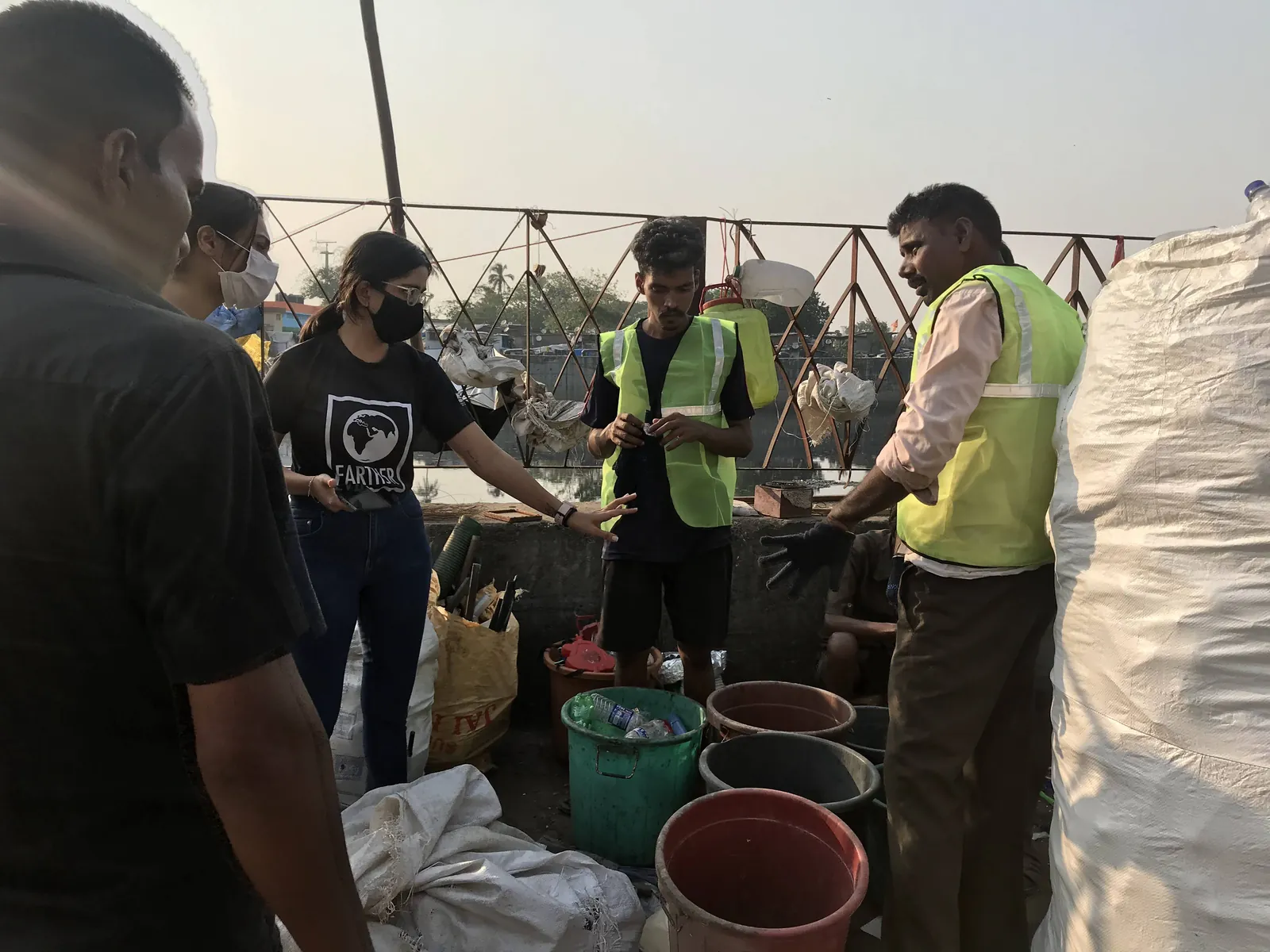
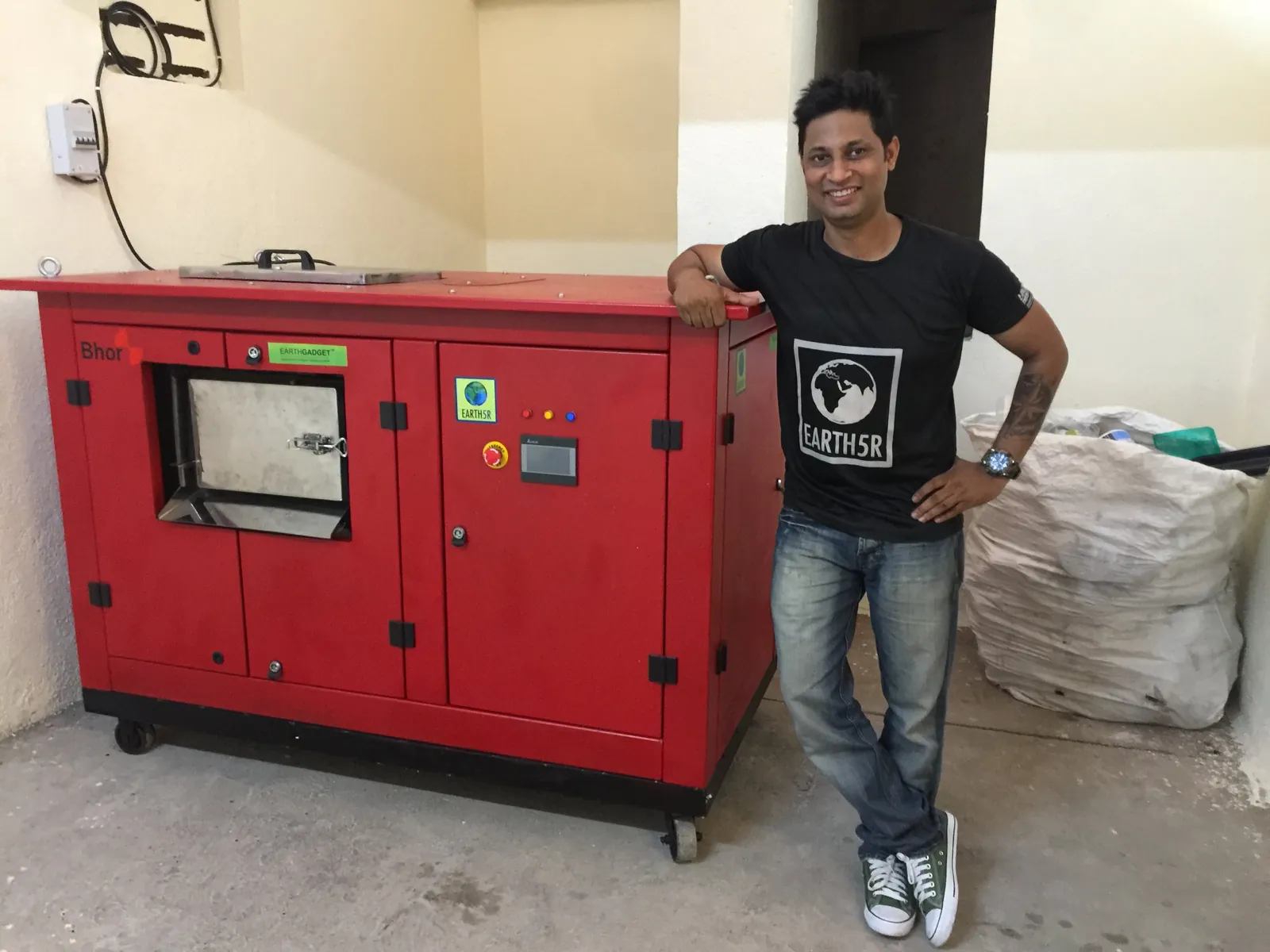
Earth5R’s field work covers several stages of this. Its waste audits sort and count the items and brands found at lake, river and beach cleanups. The zero waste housing societies Earth5R works with compost wet waste on site, some in drum composters Earth5R designed from reused industrial containers. As a fellow you collect your own measurements with the Earth5R app and design a treatment or reduction plan with your mentor.
This work links to the UN Sustainable Development Goals: Goal 6, Clean water and sanitation and Goal 12, Responsible consumption and production.
Available projects in the environmental engineering internship fellowship
You join Earth5R’s live work through your own subject. Your mentor shapes the final project with you.
Household waste audit and compost plan
Weigh and sort a week of waste from a few homes or a housing society, work out how much is wet waste, and size a composting unit to handle it on site.
Water use and reuse study
Measure daily water use in a home or school, find where water is wasted, and design a simple reuse or rainwater harvesting system with flow and storage estimates.
Local air quality check
Combine public air quality data for your city with your own observations of waste burning, traffic and dust near you, and propose measures that cut exposure for a school or street.
Lake or river pollution sources
Use waste audit data from a lake or river cleanup to trace the main sources of waste reaching the water, and design a way to stop it upstream.
What you do in the field
- Weigh, sort and log waste samples, recording each one on the Earth5R app
- Read water meters or time taps and flushes to estimate daily use
- Collect public air quality data for your city
- Size a compost unit, filter or storage tank with simple design equations
- Write a design note with costs, risks and maintenance needs
- Present your design in a research conversation and respond to questions
Skills you build
On a environmental engineering internship, you collect your own data near where you live, using the Earth5R app and data forms. Earth5R checks the data on its platform before it goes into your project report.
How the environmental engineering internship fellowship works
Every fellow moves through four phases. Each phase is checked by your mentor before you move on.
Observe and Map
Go into the field near where you live and collect primary data for your project in Environmental Engineering.
Frame and Design
Find the root cause in your data and frame a problem worth solving, with your mentor.
Model
Build a working model, analysis or design for your solution, and test it.
Build and Deploy
Put your solution to work, measure the result and publish a verified record on earth5r.org.
Along the way you take part in research conversations with professors at MIT, Oxford, Cambridge, LSE and other universities, and ask your own questions. See how FIELDWORK works.
Where this can take you
Degrees this work supports
- BTech or BE in Environmental Engineering
- BTech in Civil Engineering with an environmental focus
- MTech or MS in Environmental Engineering
- MSc in Water and Wastewater Engineering
- MSc in Waste Management or Resource Recovery
Careers in this field
- Environmental engineer
- Water and wastewater engineer
- Solid waste management specialist
- Air quality engineer
- Environmental consultant
Universities known for Environmental Engineering
Strong environmental engineering programmes look for applicants who have taken real measurements and turned them into a workable design. A fellowship project gives you field data you collected, a design your mentor reviewed and a public record of the work on earth5r.org. Students use a environmental engineering internship to build a record of real work for applications to universities like these.
USA · Department of Civil and Environmental Engineering
Stanford’s Department of Civil and Environmental Engineering offers undergraduate majors that include Environmental Systems Engineering and Atmosphere/Energy, plus MS, Engineer and PhD degrees. Its Codiga Resource Recovery Center is a testbed for wastewater treatment that recovers water, nutrients and energy. The Environmental Engineering and Science Laboratory also supports research.
University of California, Berkeley (UC Berkeley)
USA · Environmental Engineering Program, Department of Civil and Environmental Engineering
Berkeley’s Environmental Engineering Program is part of the Department of Civil and Environmental Engineering. Graduate coursework and research focus on three areas, namely air quality engineering, environmental fluid mechanics and hydrology, and water quality engineering. Air quality work spans indoor spaces, urban pollution, climate change mitigation and environmental justice.
Massachusetts Institute of Technology (MIT)
USA · Department of Civil and Environmental Engineering (CEE)
MIT’s Department of Civil and Environmental Engineering teaches a bachelor’s degree with civil and environmental tracks, a nine-month MEng, and master’s and doctoral degrees. Its Climate and Environment research studies the physical, chemical and biological processes that affect air, water, land and climate. Joint graduate degrees run with the Woods Hole Oceanographic Institution.
University of Illinois Urbana-Champaign (UIUC)
USA · Department of Civil and Environmental Engineering, BS in Environmental Engineering
The Department of Civil and Environmental Engineering at Illinois offers a BS in Environmental Engineering. The programme covers clean air, safe drinking water and sanitation, resource management, and infrastructure for climate change mitigation and adaptation. Its focus areas include Energy and Environmental Sustainability, Climate and Environmental Sustainability, Water Systems and Sustainability, Public Health Engineering and One Water.
UK · Department of Civil and Environmental Engineering, MSc Environmental Engineering
Imperial’s Department of Civil and Environmental Engineering runs a one-year MSc in Environmental Engineering through its Environmental and Water Resource Engineering section. The course covers water supply, wastewater treatment, sustainable resource management and pollution control in developed and developing countries. Students train in lab methods for detecting pollutants and finish with a research project.
Switzerland · Department of Civil, Environmental and Geomatic Engineering (D-BAUG), Environmental Engineering
At ETH, the Department of Civil, Environmental and Geomatic Engineering teaches a BSc and an MSc in Environmental Engineering, with doctoral research in its institutes. The programme links natural, industrial and social science to manage water, soil and air while protecting natural systems. Its research institutes include the Institute of Environmental Engineering.
Delft University of Technology (TU Delft)
Netherlands · Faculty of Civil Engineering and Geosciences, MSc Environmental Engineering
TU Delft’s MSc Environmental Engineering is run by the Faculty of Civil Engineering and Geosciences. Students learn to design resilient water systems, treat water, recover resources from waste and improve air quality. The programme also covers urban heat, flood and drought adaptation, and ways to reduce the risks of climate change.
Technical University of Denmark (DTU)
Denmark · DTU Sustain, Department of Environmental and Resource Engineering
DTU Sustain, the Department of Environmental and Resource Engineering, develops environmental technologies and methods and teaches master’s students in environmental engineering. Its eight research areas include water systems, water technology and processes, environmental contamination and chemicals, and waste, climate and monitoring. Current projects study Copenhagen’s future water supply and the reuse of treated wastewater.
National University of Singapore (NUS)
Singapore · Department of Civil and Environmental Engineering
At NUS, the Department of Civil and Environmental Engineering offers a Bachelor of Engineering in Environmental and Sustainability Engineering and an MSc in Environmental Engineering. Research centres include the Centre for Water Research and the Centre for Resource Circularity and Resilience. Projects cover industrial wastewater, air quality and health, emerging contaminants and microplastics.
Australia · Environmental Engineering major, Bachelor of Engineering (Honours)
UQ teaches environmental engineering as a major in its Bachelor of Engineering (Honours), taken through a chemical or civil engineering stream. Courses include environmental system dynamics and modelling, environmental phenomena and engineering the circular economy. The School of Civil Engineering also teaches and researches water and environmental engineering and resource management.
This list is for guidance. These universities are widely known for Environmental Engineering. Earth5R has no admissions arrangement with them, and admission decisions rest with each university. Fellows get help researching universities, scholarships and applications, depending on the programme.
What your fellowship fee pays for
An internship fellowship at Earth5R is time and attention from senior researchers and leaders. Each part below takes staff time and resources that we set aside for every fellow.
Live mentoring with experts
One-to-one mentoring in most fellowships, with regular check-ins on your project.
Dialogues with global researchers
Academics from international universities and renowned scientists, who answer your questions and discuss your work.
Support in the field
Guidance while you collect data and work on your project in the field.
References for your next step
References when you apply for jobs, higher studies and research programmes.
Your work, hosted for life
Your work and data stay on Earth5R’s website and servers for life, where universities and employers can check them.
Time from senior people
Each fellow receives time and attention from senior researchers and leaders, set aside for them.
Fee details available on request.
Choose your fellowship
The fee pays for live mentoring, dialogues with global researchers, support in the field, references and lifelong hosting of your work. Fee details available on request.
Environmental engineering internship: common questions
What equipment do I need for an environmental engineering internship?
Mostly simple tools, such as a weighing scale, a bucket of known volume, a phone with the Earth5R app and a notebook. Air quality work uses public monitoring data, so you don’t need your own sensors.
How is environmental engineering different from environmental science?
Environmental science focuses on understanding pollution and its effects. This fellowship goes a step further into design. After measuring a problem, you size and plan a system to treat or reduce it, such as a compost unit or a rainwater tank.
Can an environmental engineering internship help with a Master’s application?
It gives you measured data, a sized design and a verified profile on earth5r.org that you can describe in your statement of purpose and interviews. Each university makes its own admission decisions.
Is the environmental engineering internship fellowship paid?
Yes. It is a paid, mentored internship fellowship. The fee pays for live mentoring, dialogues with global researchers, support in the field, references and lifelong hosting of your work. Fee details are available on request.
Can I do this environmental engineering internship online?
Yes. FIELDWORK runs online, and your field work takes place near where you live. Your mentor guides you through each step.
Who can apply?
School and university students from India and other countries. The fellowship prepares you for university, postgraduate study and work.
What do I get at the end?
A certificate, a letter of recommendation, a project report and a verified profile on earth5r.org, where universities and employers can check your work.
Apply for the environmental engineering internship fellowship
Work on a live Earth5R project in Environmental Engineering with a mentor, take part in research conversations with global researchers, and build a verified record of your work. Fee details available on request.