
Electrical engineering internship fellowship
In this electrical engineering internship you study how homes, schools or small shops near you use electricity, with a mentor who checks your measurements and designs. You find where energy is wasted and design energy-saving, solar or sensor solutions on paper, with simple load and cost estimates.
For school and university students who like circuits, solar power or sensors and want to apply them to energy use they can measure. Online, with field work near where you live. The fellowship is paid because every fellow receives time and attention from senior researchers and leaders.
Why electrical engineering matters for sustainability
In India, much of the electricity supply still comes from coal, so wasted power means extra emissions. Electrical engineers design the systems that generate and control power, from rooftop solar panels to sensors that switch off lights in empty rooms. Good design starts with measurement. You have to know where a building uses energy before you can decide what to change.
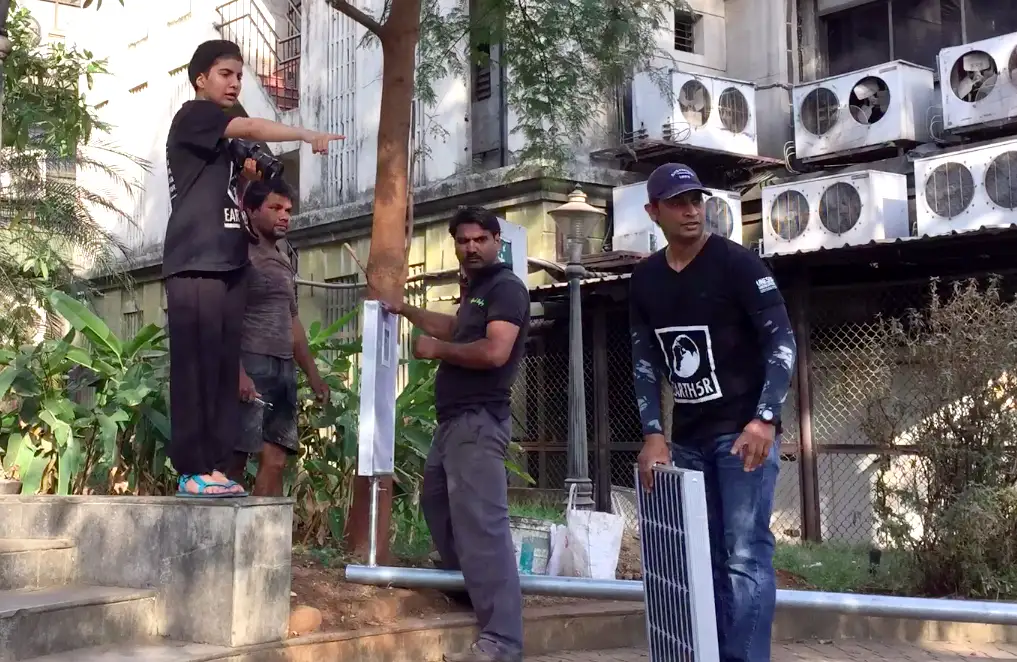
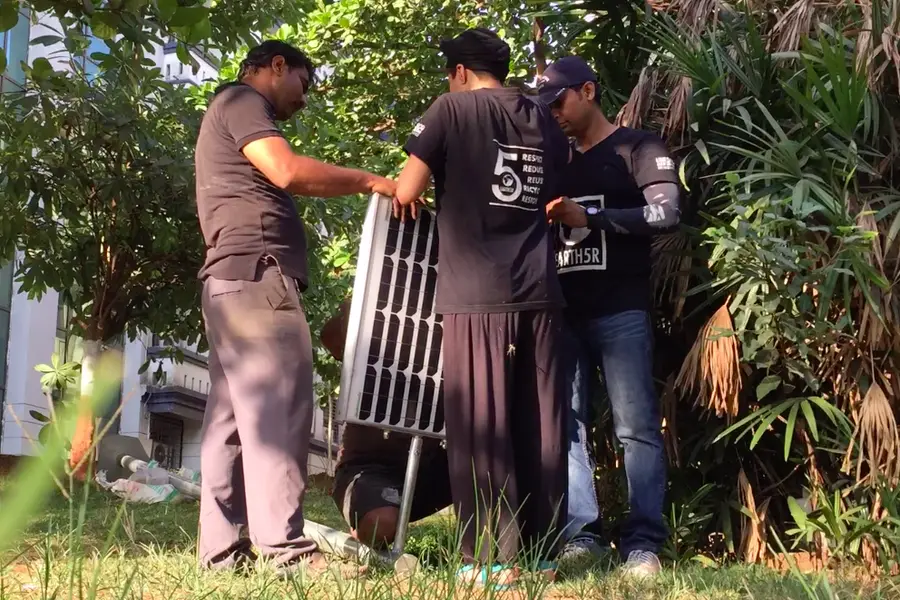
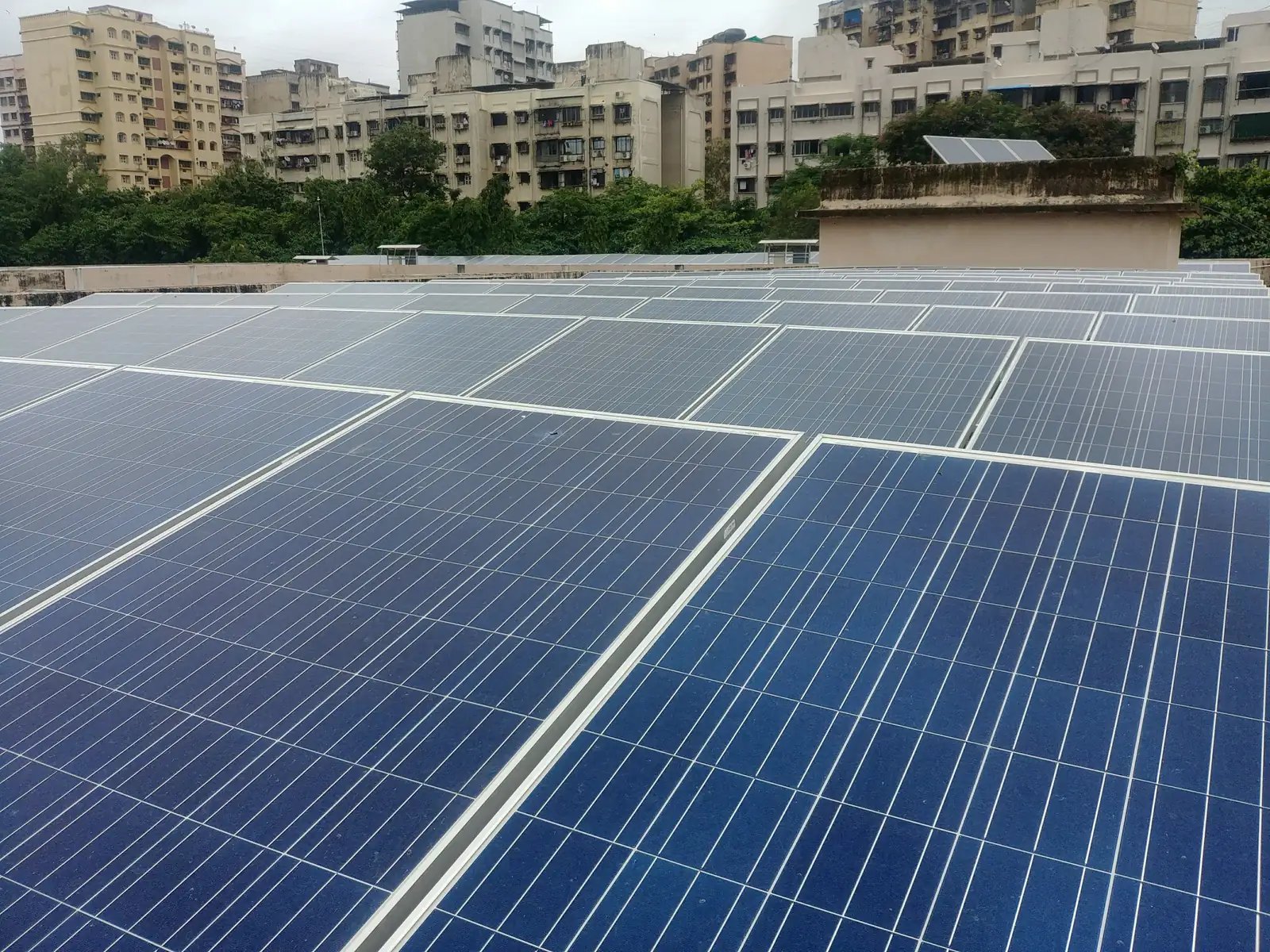
Earth5R has installed solar panels and solar street lights in Mumbai as part of a corporate CSR project. It also built a solar-powered river-cleaning machine for the Mithi River. As a fellow you learn how solar systems like these are sized and planned, then apply the same steps to a home, school or shop near you, with your mentor checking your numbers.
This work links to the UN Sustainable Development Goals: Goal 7, Affordable and clean energy and Goal 13, Climate action.
Available projects in the electrical engineering internship fellowship
You join Earth5R’s live work through your own subject. Your mentor shapes the final project with you.
Home or shop energy audit
Record the appliances, wattage and hours of use in a home or small shop near you, find where most energy goes, and design changes that would cut the monthly bill.
Rooftop solar sizing for a school
Measure a school’s electricity use and roof space, then size a rooftop solar system on paper, with a simple estimate of cost, output and payback time.
Solar street light study
Study how solar street lights, like those Earth5R installed in Mumbai, work from panel to battery to lamp, and record how well one near you lights its street after dark.
Sensor design for saving energy
Design a sensor circuit on paper that switches off lights or fans in an empty room, estimate the energy it would save, and list the parts it needs.
What you do in the field
- Read electricity bills and meter readings with the household’s permission
- List appliances and log their hours of use
- Measure roof area and shading for solar panels
- Draw circuit diagrams by hand or in simulation software
- Estimate energy savings, cost and payback in a spreadsheet
- Present your design in a research conversation and answer questions on safety and cost
Skills you build
On a electrical engineering internship, you collect your own data near where you live, using the Earth5R app and data forms. Earth5R checks the data on its platform before it goes into your project report.
How the electrical engineering internship fellowship works
Every fellow moves through four phases. Each phase is checked by your mentor before you move on.
Observe and Map
Go into the field near where you live and collect primary data for your project in Electrical and Electronics Engineering.
Frame and Design
Find the root cause in your data and frame a problem worth solving, with your mentor.
Model
Build a working model, analysis or design for your solution, and test it.
Build and Deploy
Put your solution to work, measure the result and publish a verified record on earth5r.org.
Along the way you take part in research conversations with professors at MIT, Oxford, Cambridge, LSE and other universities, and ask your own questions. See how FIELDWORK works.
Where this can take you
Degrees this work supports
- BTech or BE in Electrical Engineering
- BTech in Electronics and Communication Engineering
- MTech or MS in Power Systems
- MSc in Renewable Energy Engineering
- MS in Embedded Systems
Careers in this field
- Solar energy engineer
- Energy auditor
- Power systems engineer
- Embedded systems engineer
- Smart grid or battery storage engineer
Universities known for Electrical and Electronics Engineering
Strong electrical engineering programmes look for applicants who can measure a real system, reason with numbers and explain the trade-offs in a design. A fellowship project gives you an energy study and a design on paper, reviewed by your mentor and recorded on earth5r.org. Students use a electrical engineering internship to build a record of real work for applications to universities like these.
Massachusetts Institute of Technology (MIT)
USA · Department of Electrical Engineering and Computer Science (EECS)
MIT’s Department of Electrical Engineering and Computer Science offers undergraduate majors such as Electrical Science and Engineering, along with MEng and graduate degrees. Its energy research covers storage materials, power electronics and the control of large-scale energy systems. Faculty work in affiliate labs that include the Research Laboratory of Electronics and the Microsystems Technology Laboratories.
USA · Department of Electrical Engineering
Stanford Electrical Engineering offers BS, MS and PhD programmes, plus a coterminal route for undergraduates. One of its research areas is energy, environment and sustainability, shaped by rising demand for electricity and its effect on the environment. Other groups work on integrated circuits, sensing and imaging, and new materials and nanoscale devices.
University of California, Berkeley (UC Berkeley)
USA · Department of Electrical Engineering and Computer Sciences (EECS)
Berkeley’s EECS department runs an EECS major and a Bachelor of Science in Electrical and Computer Engineering, as well as graduate programmes. The ECE degree spans integrated circuits, microelectronics, sensing and communication, robotics and sustainable energy systems. Research areas listed by the department include power and energy, physical electronics, and micro and nano electro mechanical systems.
California Institute of Technology (Caltech)
USA · Electrical Engineering, Division of Engineering and Applied Science
Electrical Engineering at Caltech is part of the Division of Engineering and Applied Science and offers undergraduate and graduate study. Teaching covers the physical side of the field, such as devices, and the mathematical side, such as systems. Research areas include energy and sustainability, circuits and VLSI, RF and microwave circuits and antennas, and MEMS.
University of Illinois Urbana-Champaign (UIUC)
USA · Department of Electrical and Computer Engineering (ECE), Grainger College of Engineering
The Department of Electrical and Computer Engineering in the Grainger College of Engineering teaches curricula in electrical engineering and computer engineering, with MEng, MS and PhD study. Its power and energy systems group covers grid intelligence, renewable resources, electric transportation and efficient buildings, from utility systems and microgrids to energy-harvesting devices.
UK · Electrical Engineering Division, Department of Engineering
The Electrical Engineering Division of Cambridge’s Department of Engineering carries out electrical, electronic and photonic research at material, device and system levels. Its focus areas include nanotechnology, sensing, energy generation and conversion, displays and communications. Research groups include Electrical Power and Energy Conversion, Photonics, and Solid State Electronics and Nanoscale Science.
UK · Department of Electrical and Electronic Engineering
Imperial’s Department of Electrical and Electronic Engineering teaches undergraduate courses, MSc courses and PhD research. Its research groups are Circuits and Systems, Communications and Signal Processing, Control and Power, Intelligent systems and networks, and Optical and semiconductor devices. The department names energy, healthcare, smart technology, security and communications as fields its work serves.
Switzerland · Department of Information Technology and Electrical Engineering (D-ITET)
ETH Zurich’s D-ITET teaches a Bachelor’s programme and Master’s programmes that include Electrical Engineering and Information Technology, and Energy Science and Technology. Its research addresses sustainable energy, digital data transmission and processing, and healthcare. Key topics listed by the department include electric mobility and the energy turnaround, with groups in power electronics and power semiconductors.
École Polytechnique Fédérale de Lausanne (EPFL)
Switzerland · Electrical Engineering Section (SEL), School of Engineering (STI)
EPFL’s Electrical Engineering Section, part of the School of Engineering, runs a BSc and an MSc in Electrical Engineering and an MSc in Energy Science and Technology. Master’s specialisations include Power and Energy, and Electronic Circuits and Devices. The energy programme covers energy conversion devices, energy systems, and energy management and sustainability.
National University of Singapore (NUS)
Singapore · Department of Electrical and Computer Engineering, College of Design and Engineering
NUS Electrical and Computer Engineering, in the College of Design and Engineering, offers undergraduate degrees in Electrical Engineering and Computer Engineering, MSc programmes and research degrees. Power and Energy Systems is one of its research areas, supported by the Green Energy Management and Smart Grid Research Center. Undergraduates can specialise in Sustainable Electric Transportation.
This list is for guidance. These universities are widely known for Electrical and Electronics Engineering. Earth5R has no admissions arrangement with them, and admission decisions rest with each university. Fellows get help researching universities, scholarships and applications, depending on the programme.
What your fellowship fee pays for
An internship fellowship at Earth5R is time and attention from senior researchers and leaders. Each part below takes staff time and resources that we set aside for every fellow.
Live mentoring with experts
One-to-one mentoring in most fellowships, with regular check-ins on your project.
Dialogues with global researchers
Academics from international universities and renowned scientists, who answer your questions and discuss your work.
Support in the field
Guidance while you collect data and work on your project in the field.
References for your next step
References when you apply for jobs, higher studies and research programmes.
Your work, hosted for life
Your work and data stay on Earth5R’s website and servers for life, where universities and employers can check them.
Time from senior people
Each fellow receives time and attention from senior researchers and leaders, set aside for them.
Fee details available on request.
Choose your fellowship
The fee pays for live mentoring, dialogues with global researchers, support in the field, references and lifelong hosting of your work. Fee details available on request.
Electrical engineering internship: common questions
Will I build circuits in this electrical engineering internship?
The designs are on paper or in circuit simulation software, so you don’t work with mains wiring. Your mentor reviews each circuit diagram and helps you check that the parts and values make sense.
Do I need to know electronics already?
No. You start with how electricity is measured and billed, and learn circuit basics with your mentor. Students who already know electronics can design sensor circuits in more detail.
Can an electrical engineering internship help my degree application?
It gives you a real energy study, a sized solar or sensor design and a verified profile on earth5r.org. You can describe these in your statement of purpose or interview. Each university makes its own admission decisions.
Is the electrical engineering internship fellowship paid?
Yes. It is a paid, mentored internship fellowship. The fee pays for live mentoring, dialogues with global researchers, support in the field, references and lifelong hosting of your work. Fee details are available on request.
Can I do this electrical engineering internship online?
Yes. FIELDWORK runs online, and your field work takes place near where you live. Your mentor guides you through each step.
Who can apply?
School and university students from India and other countries. The fellowship prepares you for university, postgraduate study and work.
What do I get at the end?
A certificate, a letter of recommendation, a project report and a verified profile on earth5r.org, where universities and employers can check your work.
Apply for the electrical engineering internship fellowship
Work on a live Earth5R project in Electrical and Electronics Engineering with a mentor, take part in research conversations with global researchers, and build a verified record of your work. Fee details available on request.