
Chemical engineering internship fellowship
This chemical engineering internship follows waste as it’s turned back into useful material, with a mentor who reviews your process maps and calculations. You trace how plastic, organic and electronic waste is processed and recycled, then compare the emissions and losses of each route using simple life-cycle methods.
For school and university students who enjoy chemistry and want to see how real recycling and composting processes work, step by step. Online, with field work near where you live. The fellowship is paid because every fellow receives time and attention from senior researchers and leaders.
Why chemical engineering matters for sustainability
Recycling and waste treatment are chemical processes at their core. Plastics are sorted by polymer type, washed and melted down to make new products. Food waste dumped in a landfill gives off methane as it rots, so turning it into compost with air cuts emissions. Chemical engineers map processes like these step by step, balance the mass and energy at each stage and compare the emissions of different routes.
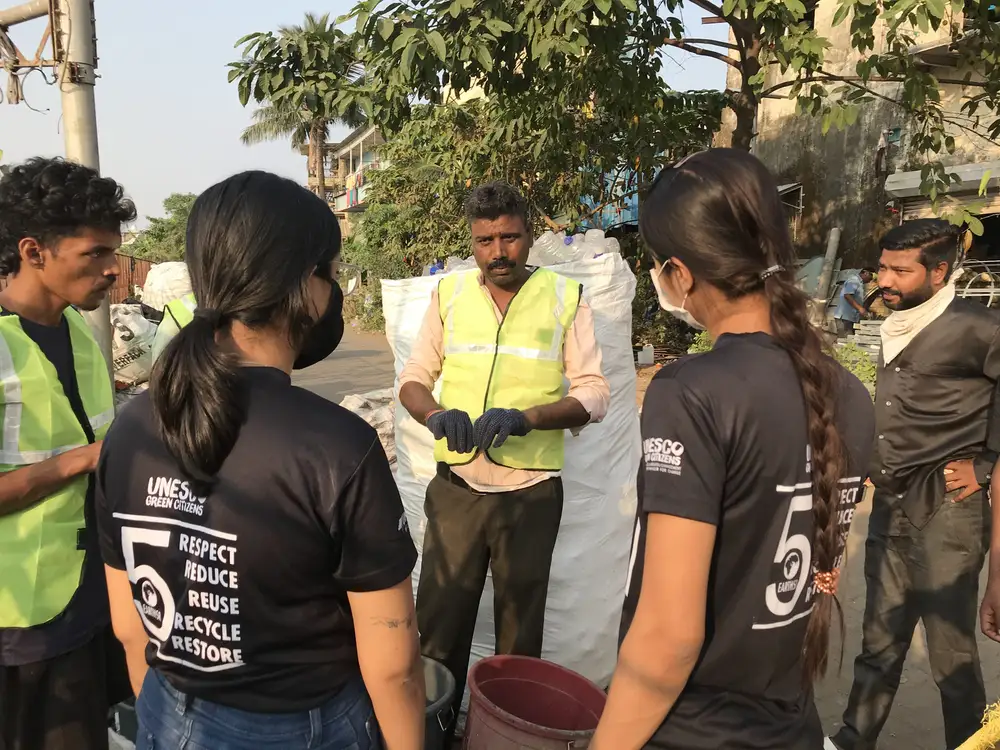
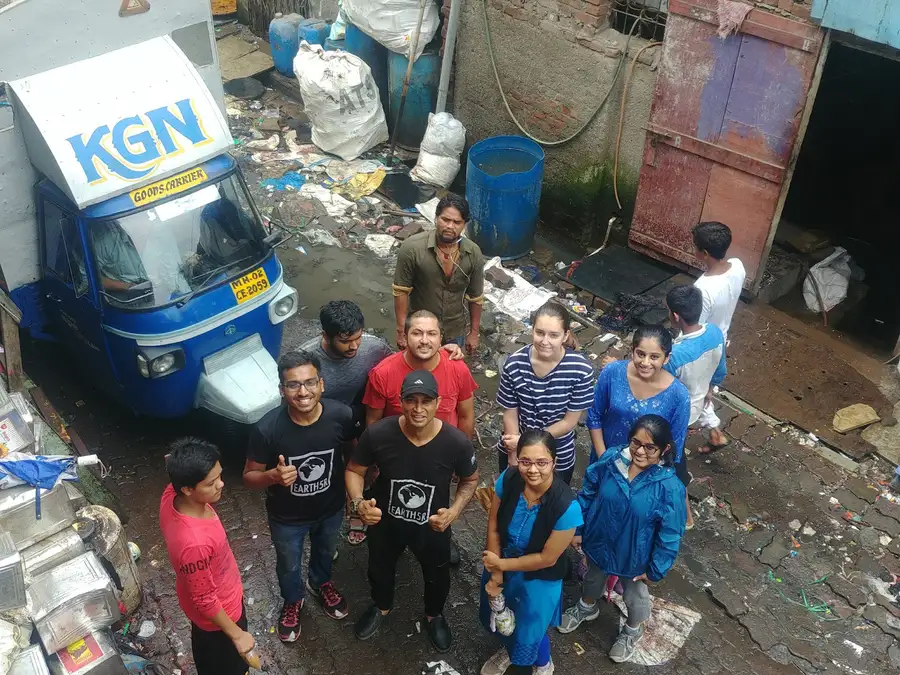
Earth5R’s field work touches several of these routes. It includes zero waste housing societies with composting units and visits to informal recycling units. Earth5R designed drum composters for these societies from reused industrial containers. Its waste audits sort and count the items and brands found at cleanups. As a fellow you build on this work, visit sites near where you live and compare real processes with your mentor.
This work links to the UN Sustainable Development Goals: Goal 12, Responsible consumption and production and Goal 13, Climate action.
Available projects in the chemical engineering internship fellowship
You join Earth5R’s live work through your own subject. Your mentor shapes the final project with you.
Plastic recycling process map
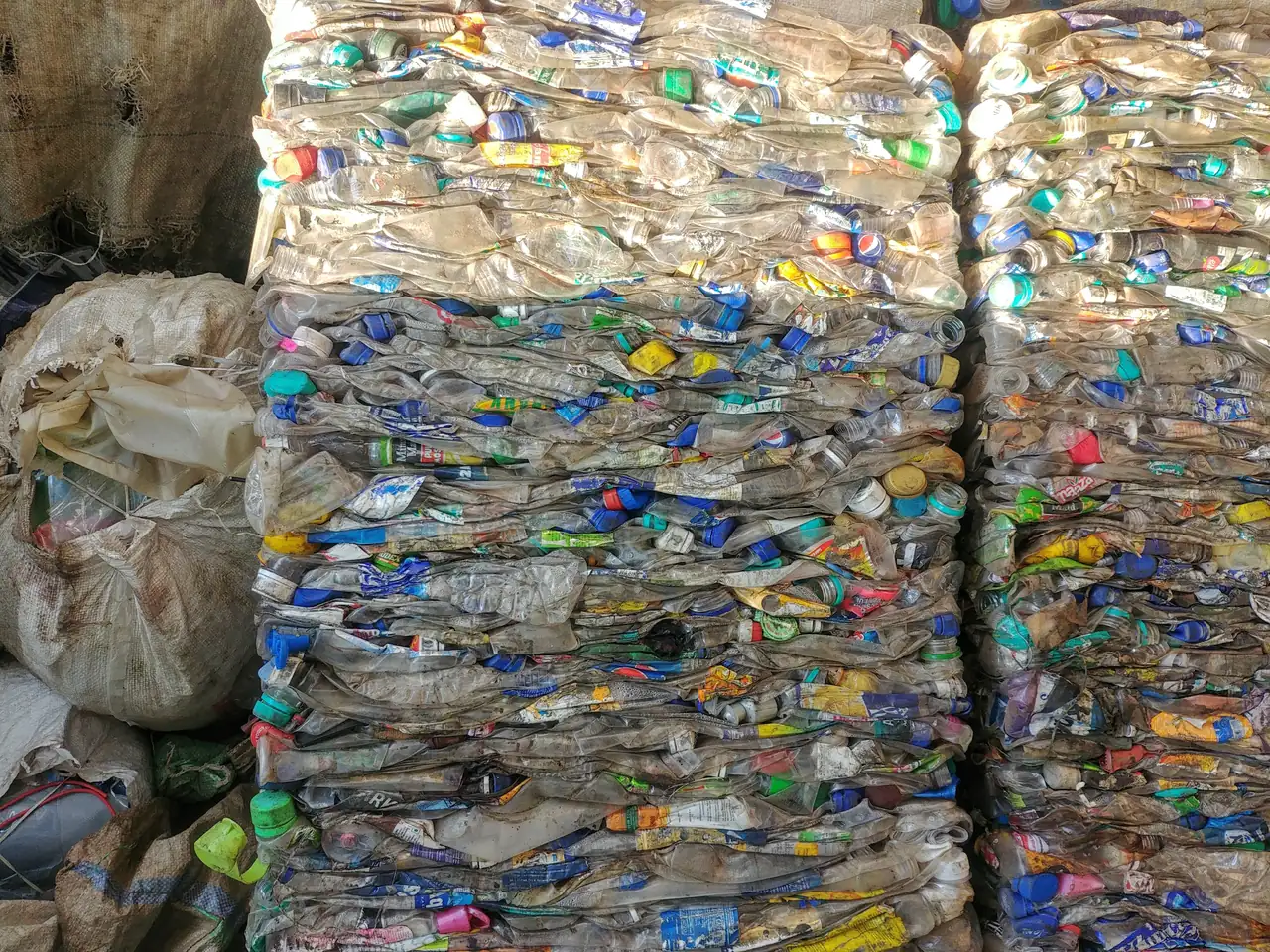
Map how plastic moves through an informal recycling unit, from sorting to shredding or melting, and estimate the energy, water and material losses at each step.
Composting chemistry and emissions
Study aerobic composting in drum composters like Earth5R’s, track temperature and moisture in a compost bin near you, and compare the emissions with sending the same food waste to a landfill.
E-waste recovery routes
Compare how electronic waste is handled by informal recyclers and by authorised facilities, using published studies, and set out the emissions, health risks and metals recovered on each route.
Life-cycle comparison for one plastic
Use simple life-cycle methods to compare recycling, incineration and landfill for one type of plastic found in Earth5R’s waste audits, and show which route has the lowest emissions per kilogram.
What you do in the field
- Visit a recycling unit or compost site near you, with permission, and record each process step
- Draw process flow diagrams with inputs and outputs
- Do simple mass and energy balances
- Read published life-cycle studies and pull out emission factors
- Compare routes in a spreadsheet and test your assumptions
- Present your comparison in a research conversation and defend your numbers
Skills you build
On a chemical engineering internship, you collect your own data near where you live, using the Earth5R app and data forms. Earth5R checks the data on its platform before it goes into your project report.
How the chemical engineering internship fellowship works
Every fellow moves through four phases. Each phase is checked by your mentor before you move on.
Observe and Map
Go into the field near where you live and collect primary data for your project in Chemical Engineering.
Frame and Design
Find the root cause in your data and frame a problem worth solving, with your mentor.
Model
Build a working model, analysis or design for your solution, and test it.
Build and Deploy
Put your solution to work, measure the result and publish a verified record on earth5r.org.
Along the way you take part in research conversations with professors at MIT, Oxford, Cambridge, LSE and other universities, and ask your own questions. See how FIELDWORK works.
Where this can take you
Degrees this work supports
- BTech or BE in Chemical Engineering
- BTech in Polymer or Materials Engineering
- MTech or MS in Chemical Engineering
- MSc in Sustainable Process Engineering
- MSc in Environmental Technology
Careers in this field
- Process engineer
- Recycling or waste-to-resource engineer
- Life-cycle assessment analyst
- Sustainability engineer in manufacturing
- Research scientist in green chemistry
Universities known for Chemical Engineering
Strong chemical engineering programmes look for applicants who can follow a process from start to finish and back their reasoning with balances and data. A fellowship project gives you a mapped process and a life-cycle comparison your mentor has reviewed, with a public record on earth5r.org. Students use a chemical engineering internship to build a record of real work for applications to universities like these.
Massachusetts Institute of Technology (MIT)
USA · Department of Chemical Engineering (MIT ChemE)
MIT ChemE teaches the Course 10 bachelor’s programmes, a PhD and two practice-based degrees run through the David H. Koch School of Chemical Engineering Practice. Research spans catalysis and reaction engineering, energy, materials, biotechnology, and a dedicated area on environment and sustainability.
University of California, Berkeley (UC Berkeley)
USA · Department of Chemical and Biomolecular Engineering (CBE), College of Chemistry
Berkeley’s Department of Chemical and Biomolecular Engineering is part of the College of Chemistry. It offers a BS in chemical engineering, a PhD, a Master of Bioprocess Engineering and a professional master’s in product development. Research groups cover biomolecular engineering, materials and interfaces, machine learning, and energy sustainability, catalysis and electrochemical engineering.
USA · Department of Chemical Engineering
Stanford ChemE groups its research under three themes, covering the chemistry of life, energy and the environment. Students can take a BS, a coterminal master’s, an online part-time MS or a PhD. Its research groups apply chemical transformations and processes to energy, medicine, electronics and new materials.
California Institute of Technology (Caltech)
USA · Chemical Engineering, Division of Chemistry and Chemical Engineering (CCE)
Caltech teaches chemical engineering within its Division of Chemistry and Chemical Engineering, at undergraduate and graduate level. Undergraduates choose a track in biomolecular, sustainability, process systems, materials or computational work. Graduate study centres on chemical reactions, transport phenomena and the design of new processes and materials.
Georgia Institute of Technology (Georgia Tech)
USA · School of Chemical and Biomolecular Engineering (ChBE)
Georgia Tech’s School of Chemical and Biomolecular Engineering offers a BS, a five-year BS/MS, and MS and PhD degrees. Its research focuses on four strategic areas, namely energy and sustainability, biotechnology, materials and nanotechnology, and complex systems. Current projects include the design of sustainable systems for improving the environment.
UK · Department of Chemical Engineering and Biotechnology (CEB)
Cambridge’s Department of Chemical Engineering and Biotechnology teaches a BA/MEng, MPhil courses in advanced chemical engineering and in biotechnology, an MRes in sensors and PhDs. Its research follows two themes, sustainability and healthcare. Sustainability work covers energy generation and storage, sustainable manufacturing and materials.
UK · Department of Chemical Engineering, Faculty of Engineering
Imperial’s Department of Chemical Engineering teaches undergraduate degrees, MSc programmes in Advanced Chemical Engineering and a PhD. Research falls into nine themes. These include energy and environmental engineering, reaction engineering and applied catalysis, separations, soft matter, and biomedical engineering and industrial biotechnology.
UK · Department of Chemical Engineering, Faculty of Science and Engineering
Manchester’s Department of Chemical Engineering offers IChemE-accredited undergraduate and taught master’s courses, plus PhD research. Students train in a large pilot-scale laboratory. Research spans eight thematic areas, from catalysis, advanced materials and biotechnology to multiscale modelling, with a focus on net zero and sustainable industrial systems.
Switzerland · Institute for Chemical and Bioengineering (ICB), Department of Chemistry and Applied Biosciences
The Institute for Chemical and Bioengineering is part of ETH’s Department of Chemistry and Applied Biosciences. Students take two years of core chemistry before bachelor’s and master’s courses in chemical engineering. Research covers energy, heterogeneous catalysis, polymer reactions, colloid engineering, safety and environmental technology, biotechnology and microfluidics.
National University of Singapore (NUS)
Singapore · Department of Chemical and Biomolecular Engineering, College of Design and Engineering
NUS Chemical and Biomolecular Engineering offers a BEng in chemical engineering, research degrees, and MSc programmes in chemical engineering, energy systems, and safety, health and environmental technology. One of its research areas is environmentally benign processing and sustainability. Others include biomolecular and biomedical engineering and nanostructured materials and devices.
This list is for guidance. These universities are widely known for Chemical Engineering. Earth5R has no admissions arrangement with them, and admission decisions rest with each university. Fellows get help researching universities, scholarships and applications, depending on the programme.
What your fellowship fee pays for
An internship fellowship at Earth5R is time and attention from senior researchers and leaders. Each part below takes staff time and resources that we set aside for every fellow.
Live mentoring with experts
One-to-one mentoring in most fellowships, with regular check-ins on your project.
Dialogues with global researchers
Academics from international universities and renowned scientists, who answer your questions and discuss your work.
Support in the field
Guidance while you collect data and work on your project in the field.
References for your next step
References when you apply for jobs, higher studies and research programmes.
Your work, hosted for life
Your work and data stay on Earth5R’s website and servers for life, where universities and employers can check them.
Time from senior people
Each fellow receives time and attention from senior researchers and leaders, set aside for them.
Fee details available on request.
Choose your fellowship
The fee pays for live mentoring, dialogues with global researchers, support in the field, references and lifelong hosting of your work. Fee details available on request.
Chemical engineering internship: common questions
Do I need advanced chemistry for this chemical engineering internship?
No. School chemistry is enough to start. Your mentor introduces mass balances and life-cycle methods step by step, and students further along can go deeper into polymer chemistry or reaction rates.
Will I work in a laboratory?
Most of the work is field observation, data and calculation. You visit recycling or composting sites near where you live and use published studies for lab-based data such as emission factors. Simple home tests, like tracking compost temperature, are part of some projects.
How does a chemical engineering internship on waste help my degree plans?
Recycling, polymers and life-cycle assessment are active areas in chemical engineering. A process map and an emissions comparison give you concrete work to describe in your statement of purpose. Each university makes its own admission decisions.
Is the chemical engineering internship fellowship paid?
Yes. It is a paid, mentored internship fellowship. The fee pays for live mentoring, dialogues with global researchers, support in the field, references and lifelong hosting of your work. Fee details are available on request.
Can I do this chemical engineering internship online?
Yes. FIELDWORK runs online, and your field work takes place near where you live. Your mentor guides you through each step.
Who can apply?
School and university students from India and other countries. The fellowship prepares you for university, postgraduate study and work.
What do I get at the end?
A certificate, a letter of recommendation, a project report and a verified profile on earth5r.org, where universities and employers can check your work.
Apply for the chemical engineering internship fellowship
Work on a live Earth5R project in Chemical Engineering with a mentor, take part in research conversations with global researchers, and build a verified record of your work. Fee details available on request.