
Mithi River Plastic Waste Cleanup: What 11,100 Tonnes Actually Took.
A solar-powered recovery unit in the water, a circular economy programme on the bank, and 10,000 families trained in the catchment. This is the record of what was built, what it removed, and what happened when Earth5R handed it over.
17.8 Kilometres Through the Middle of Mumbai
The Mithi runs from Vihar and Powai lakes to the Arabian Sea at Mahim Creek, passing through some of the densest parts of the city on the way. It was once an ecological corridor. For decades it has functioned as a drain.
The pollution is not one problem but four, arriving from different sources and requiring different responses. That is why single-intervention cleanups on the Mithi have repeatedly failed. Removing floating plastic without addressing the waste entering from the catchment produces a river that looks better for a week.
The consequences are not only ecological. Blocked channels raise flood risk across Kurla, Saki Naka and Bandra Kurla Complex during the monsoon, and the 2005 floods made the connection between river blockage and urban risk impossible to ignore.
Industrial effluent
Untreated discharge from small and medium units along the banks, carrying chemicals into the water and the sediment.
Municipal waste
Household garbage, untreated sewage and organic waste entering daily from settlements across the catchment.
Plastic
Single-use packaging, LDPE and HDPE, fragmenting into microplastics that move downstream into the creek and the sea.
Organic debris
Cattle-shed byproducts and invasive water hyacinth, which choke flow and compound blockage during the monsoon.

A Recovery Unit in the Water, Run Entirely on Solar
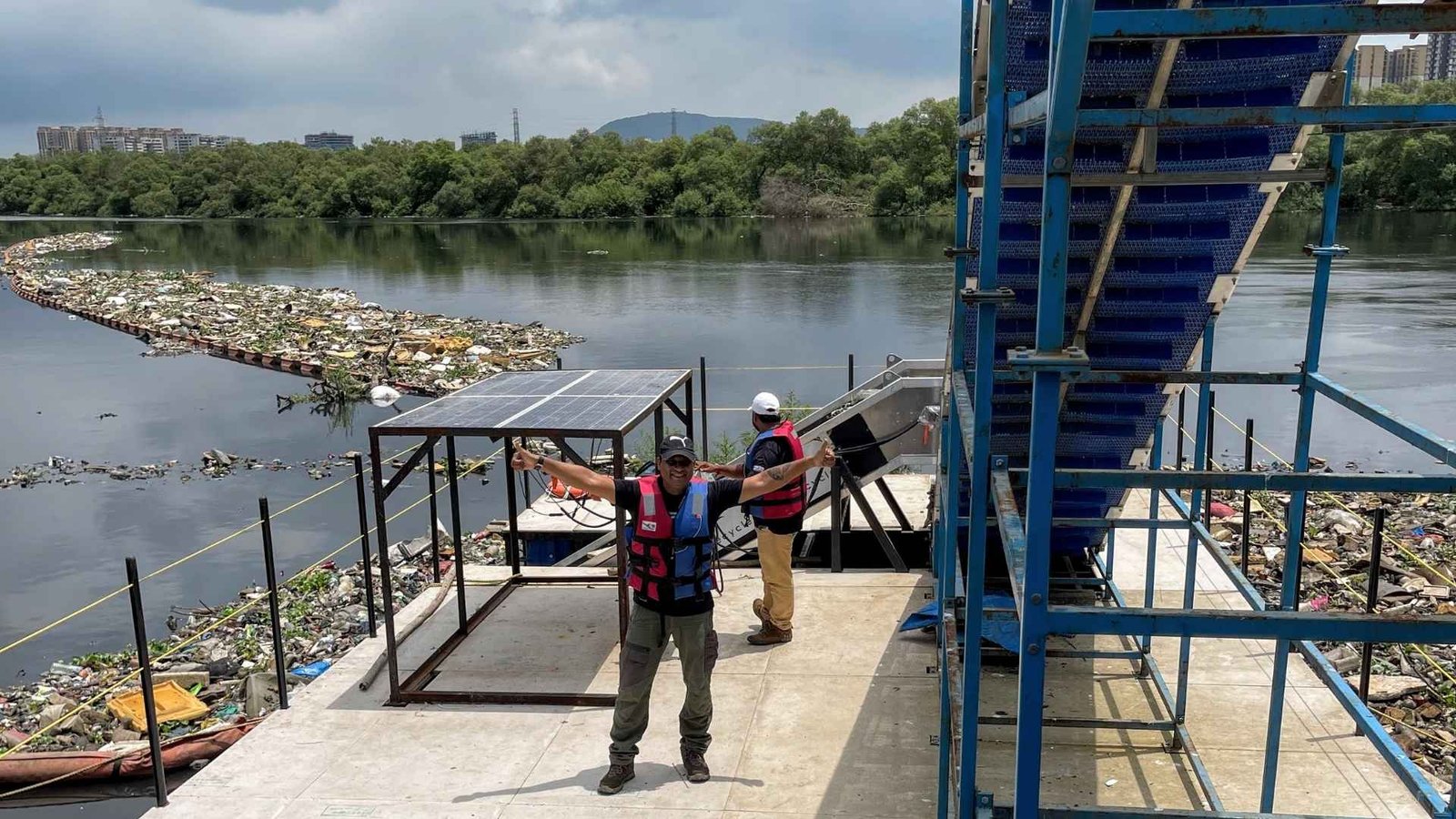
The project began in October 2020. At its centre is a solar-powered plastic recovery unit, developed by Earth5R with RiverRecycle, positioned to intercept floating debris and move it to the bank for processing.
Interception
The unit sits in the channel and captures floating material before it moves downstream toward the creek and the sea.
Recovery to bank
Captured material is conveyed to the riverbank. The entire recovery operation runs on solar power, with no grid or diesel input.
Segregation and processing
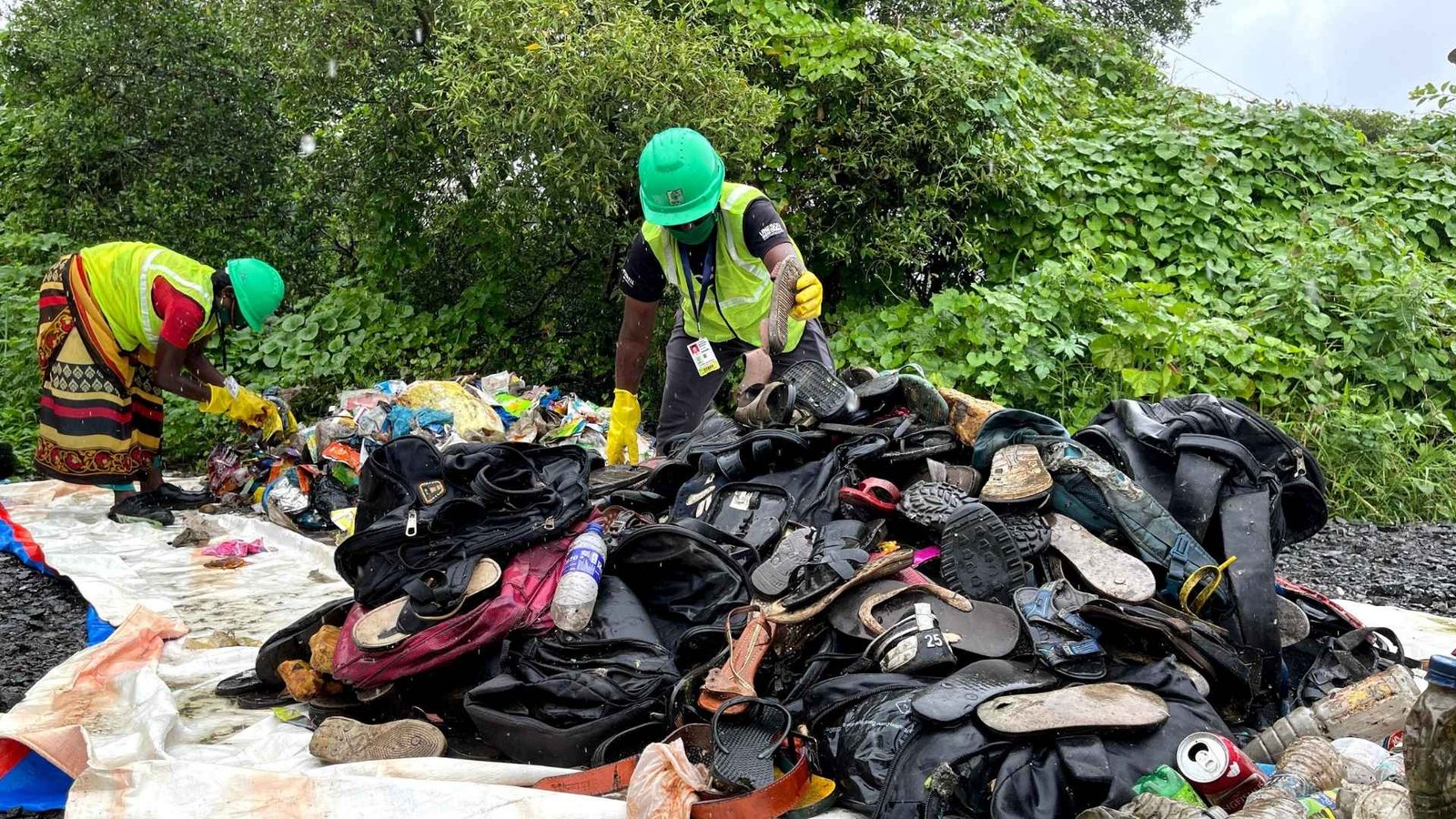
Material is segregated, washed, dried and shredded. High-value plastics are routed to recycling as manufacturing feedstock.
Residual conversion
Low-value plastics that recycling cannot take are processed through EU-approved pyrolysis into industrial-grade oil.
Why the last stage matters more than it looks. Most river plastic recovery fails at the point where low-value film and mixed plastic has nowhere to go. Without a route for the residual fraction, recovered material returns to landfill and the cleanup becomes a relocation. Closing that loop is what made the daily operating rate sustainable rather than seasonal.
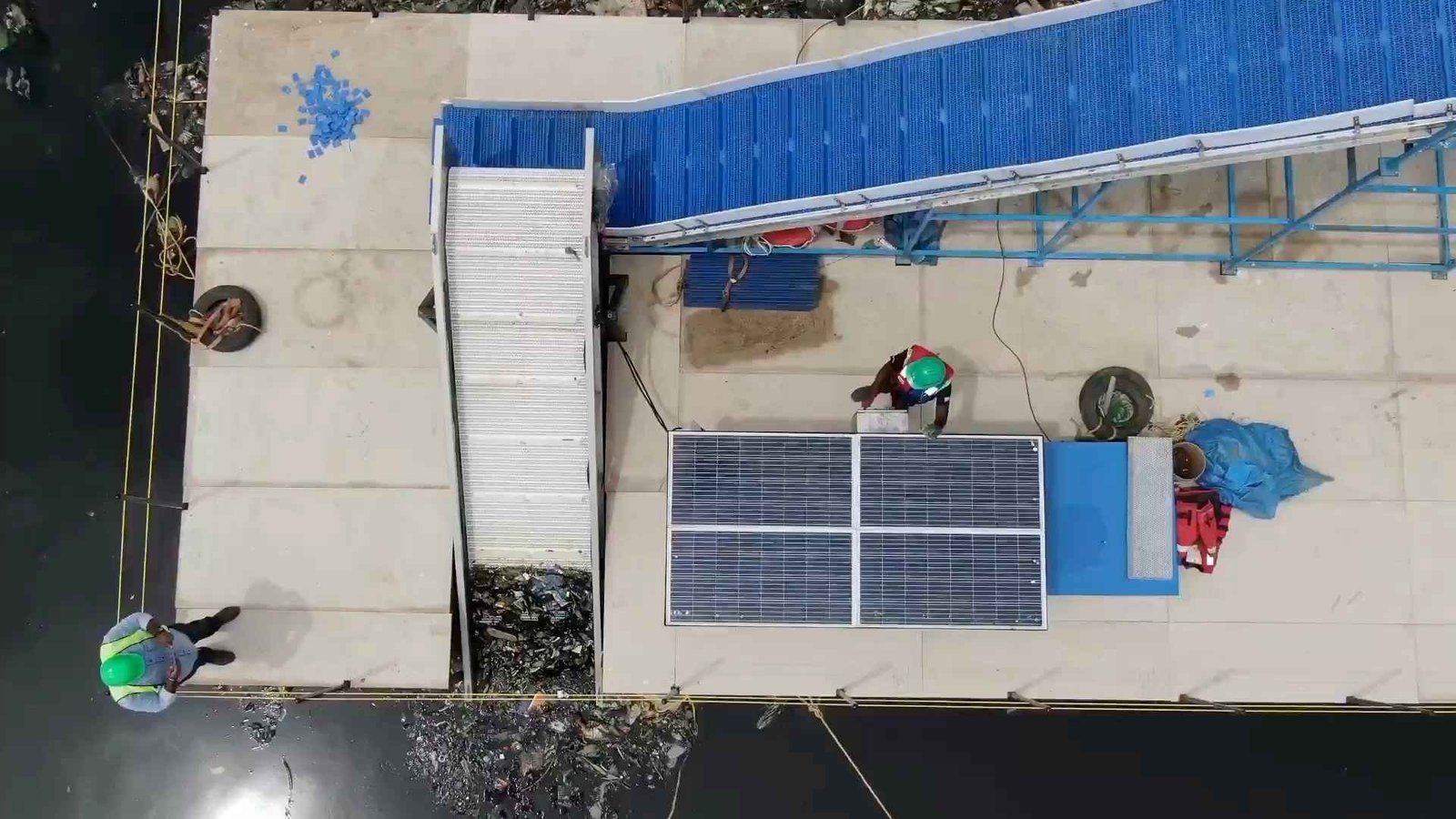
Photograph: Earth5R. Click to open at full size.
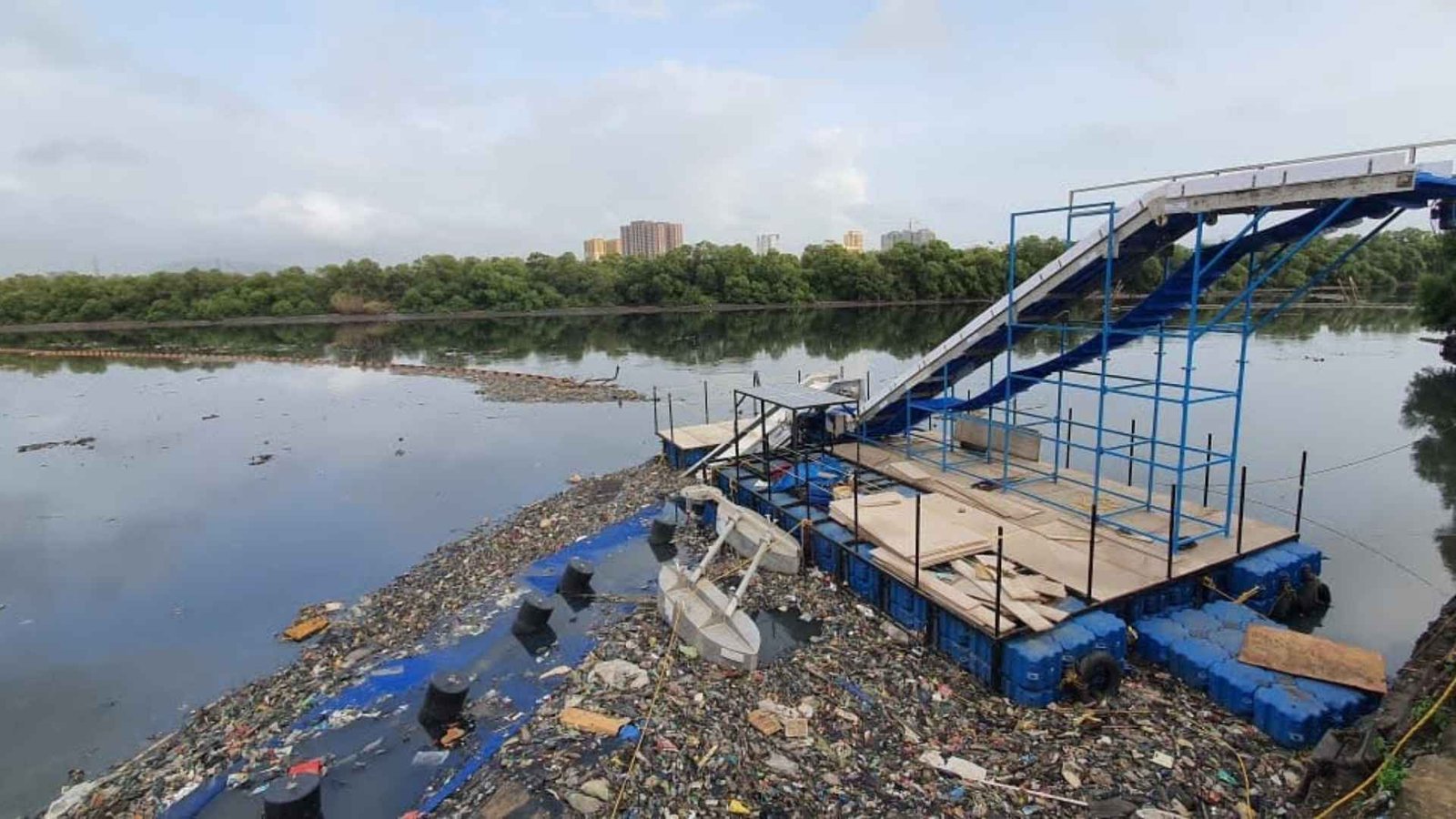
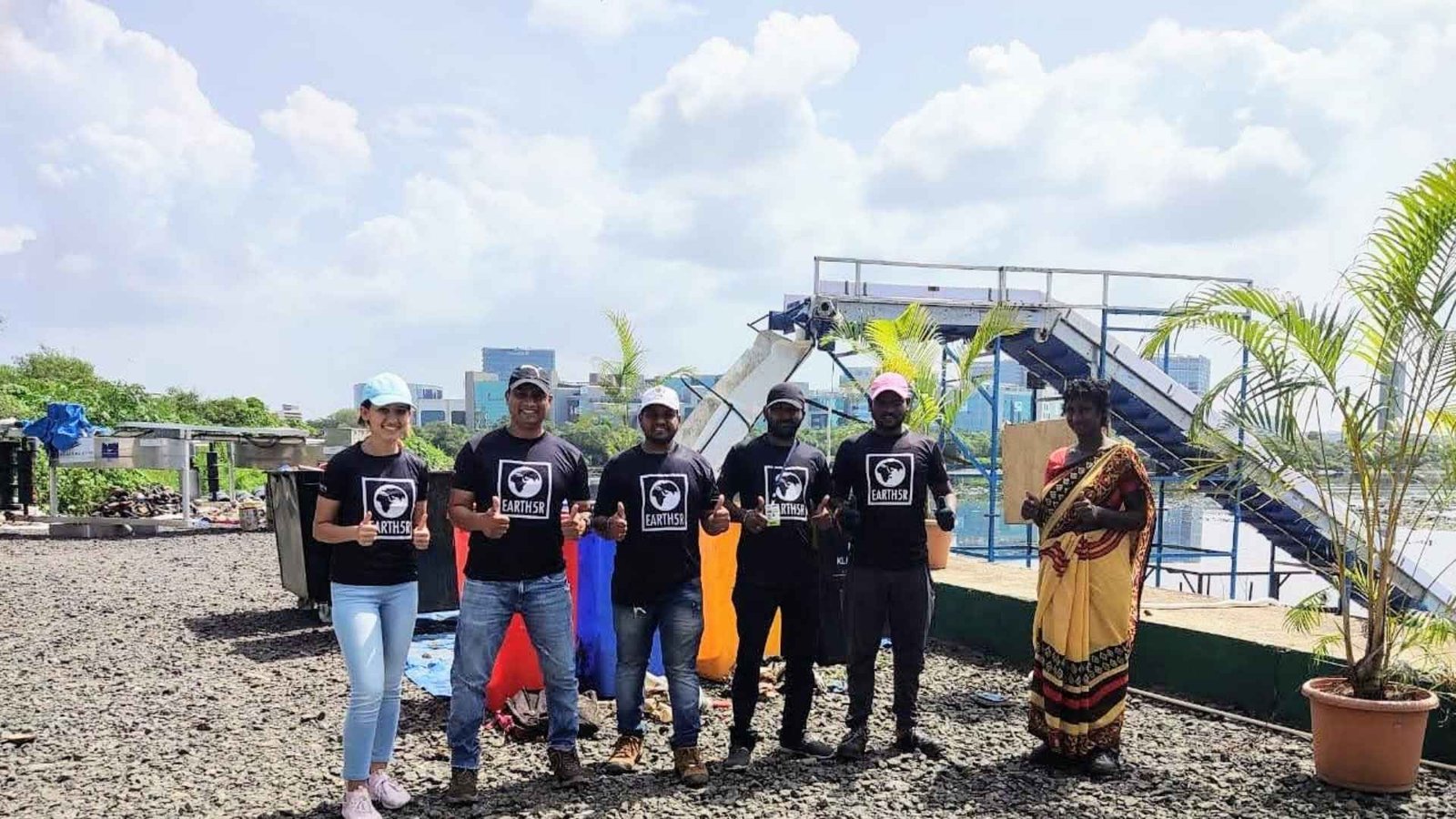
The recovery system and the catchment programme in operation on the Mithi.
The Part That Happens Before the Waste Reaches the Water
A recovery unit treats what has already entered the river. The volume entering is decided in the catchment, in households and small businesses, and that is where the second half of the project operated.
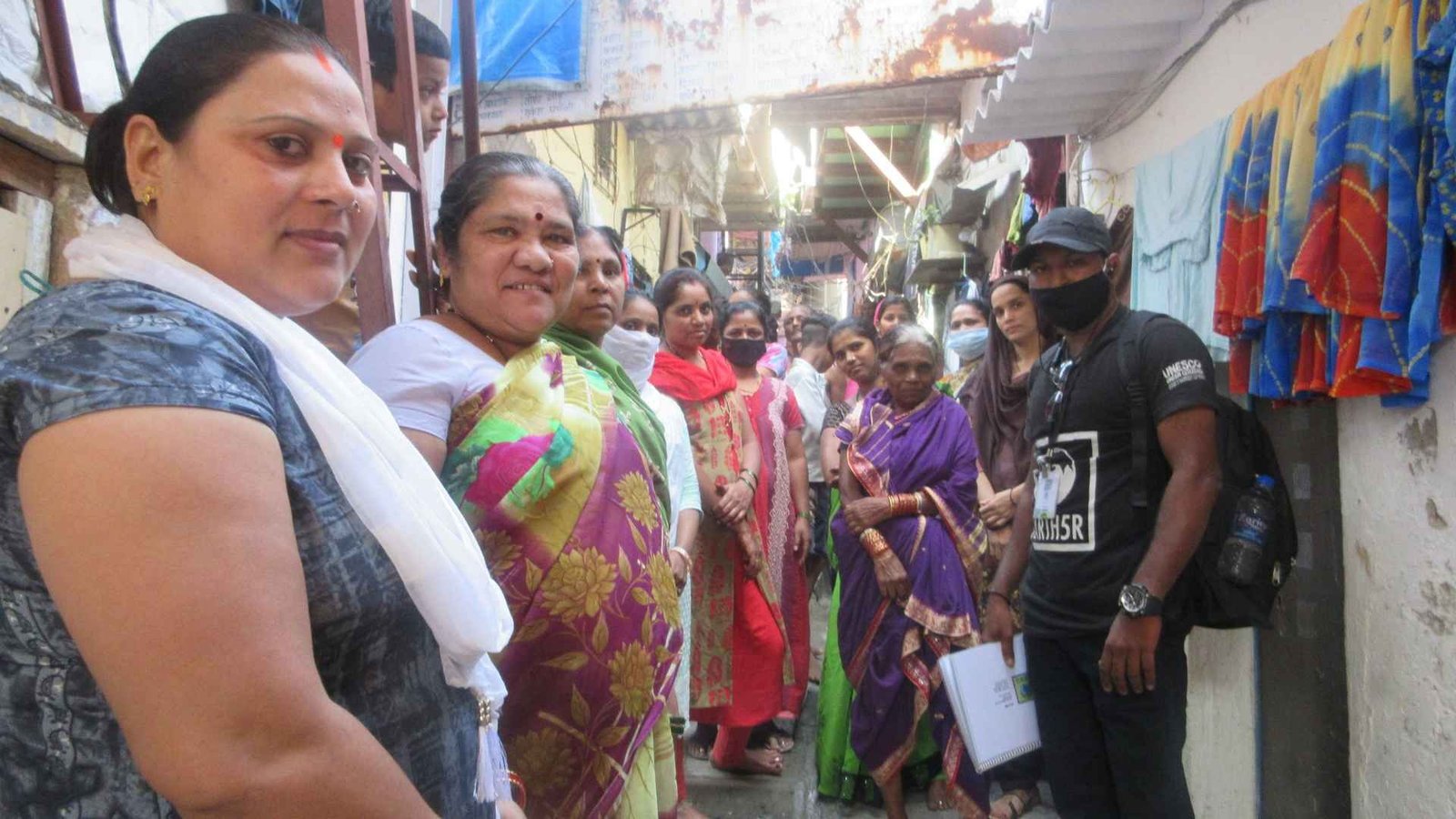
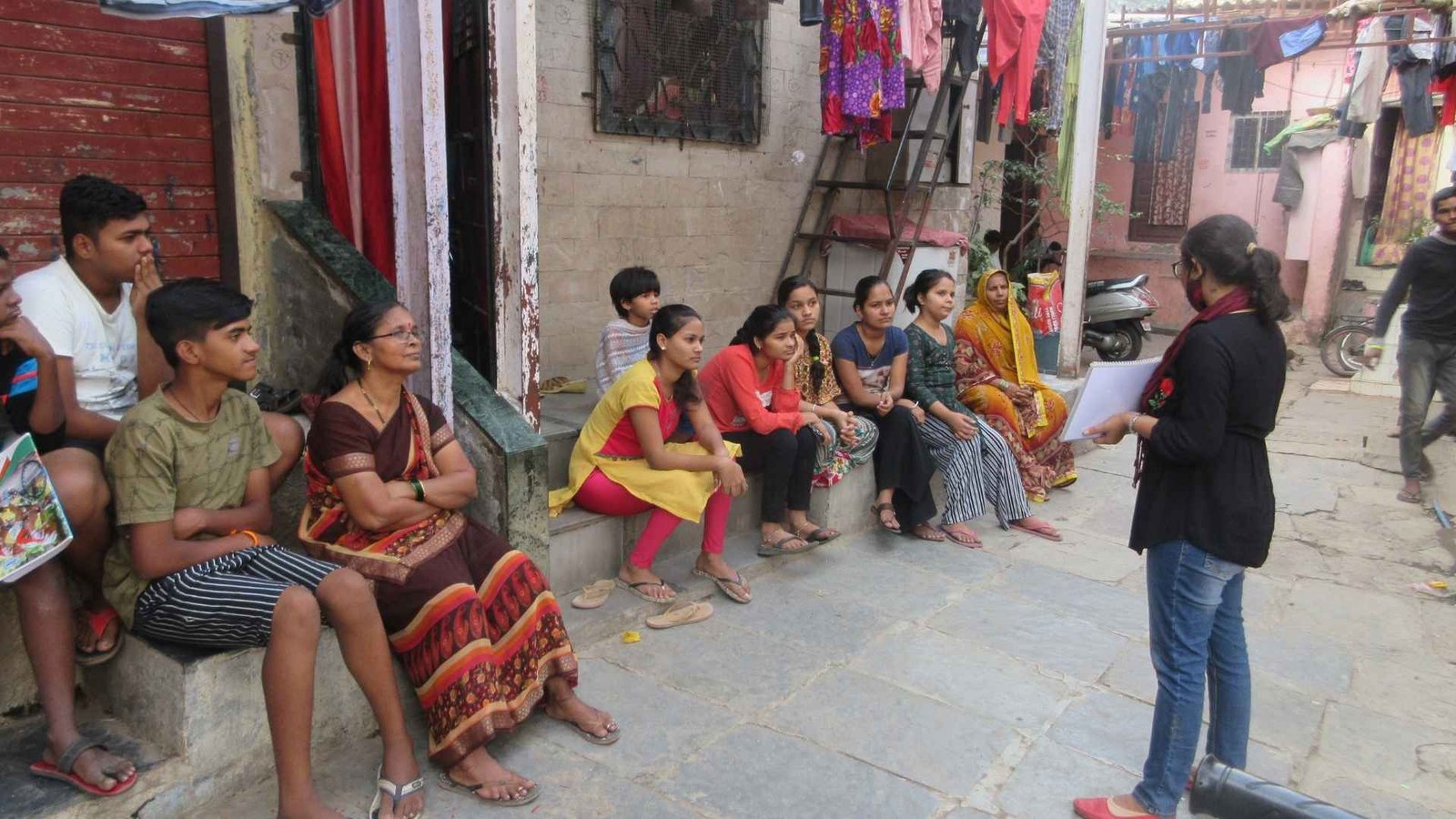
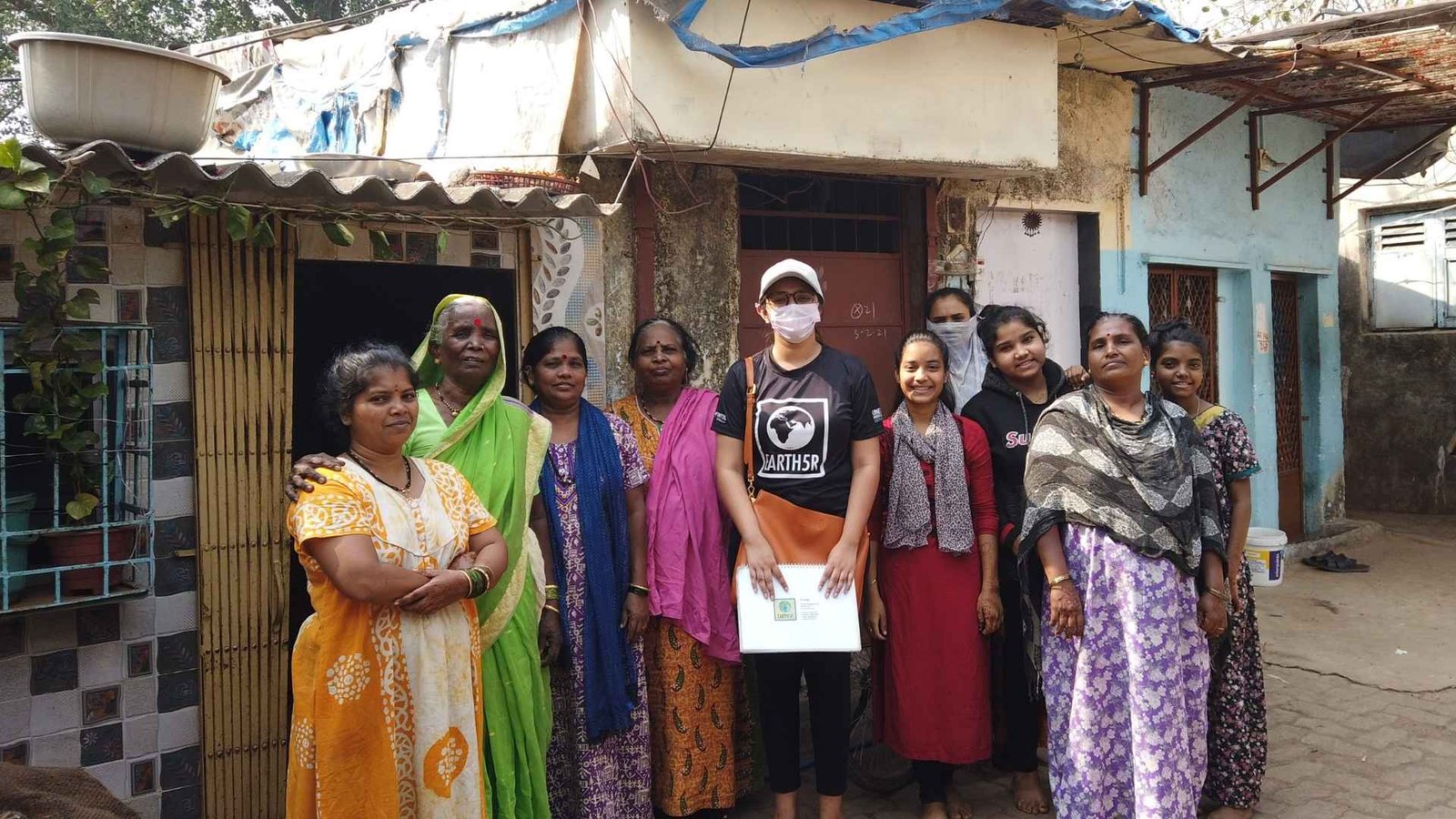
10,000 families and 500 businesses were trained in waste segregation and circular economy practice, including composting organic waste for use in growing herbs and medicinal plants at home.
Participation was made worth people's while rather than asked for as a favour. Residents were paid for segregated plastic handed over, which turned waste from something to dispose of into something with a price. Alongside it, households in the catchment were trained to upcycle waste into paper bags, lamps and handicrafts, producing income from material that previously went into the water.
Over the project period, 15,000 volunteers took part in cleanup activity along the river.
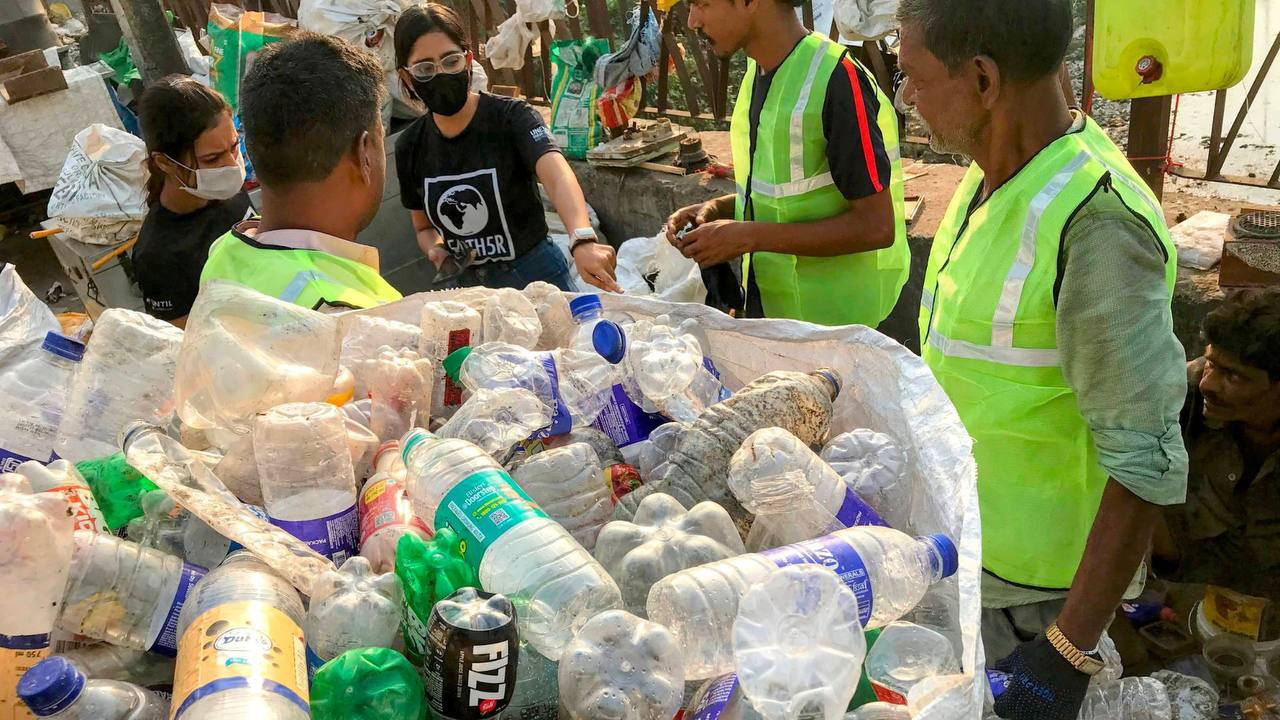
Why this is the part that gets cut. Community training is slow, unphotogenic and expensive relative to equipment. It is also the only component that reduces the volume entering the river. Projects that fund the machine and not the catchment end up operating the machine indefinitely.
What the Project Actually Removed
Figures below cover October 2020 to November 2024, the period of Earth5R's operational involvement, and relate to this project alone. Earth5R's organisation-wide totals across 144 Indian cities and internationally are set out on the Awards & Recognition page.
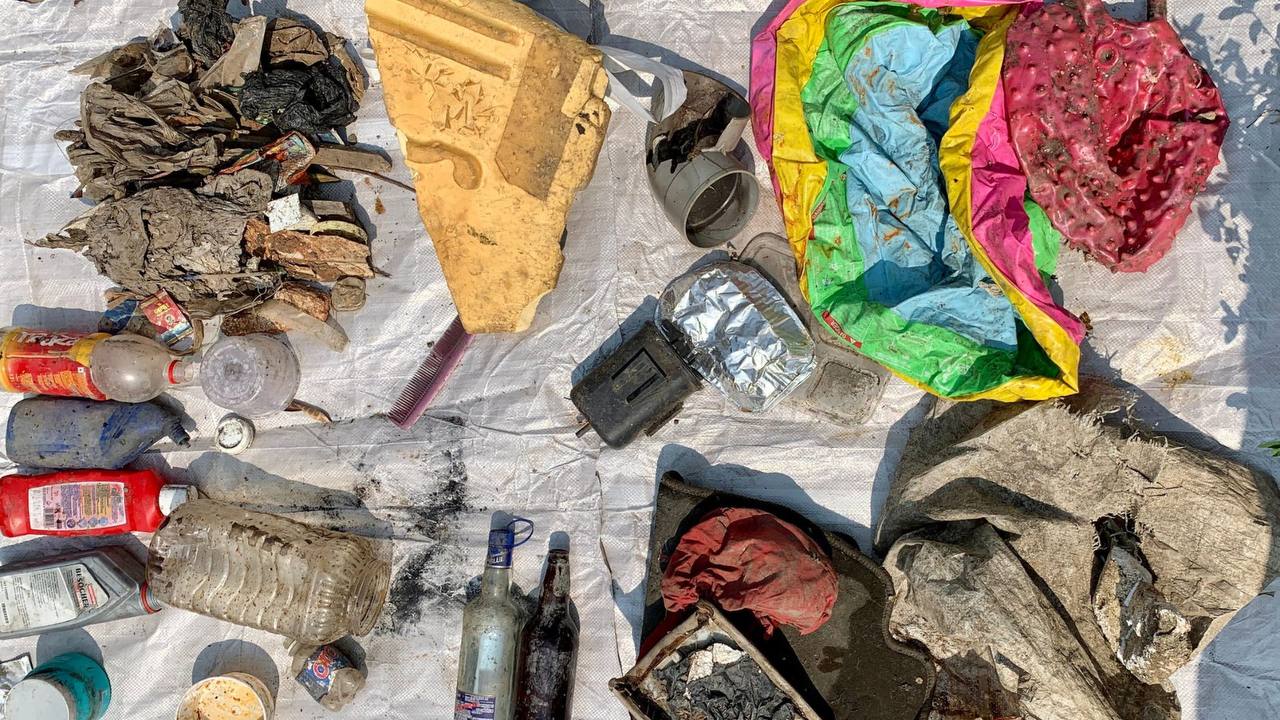
Operating rate over the period averaged approximately 10 tonnes of waste per day, of which around 4 tonnes was plastic, equivalent to roughly 300 tonnes of waste and 120 tonnes of plastic per month at full operation. Recovery volumes varied across the period as the system was commissioned, scaled and maintained.
Photograph: Earth5R. Click to open at full size.
Ecological and urban effects
Improved water quality through the treated stretch has supported a gradual return of aquatic life. Clearing accumulated blockage has reduced obstruction in the channel, which matters most during the monsoon, when the Mithi's capacity to carry water is what stands between heavy rainfall and street-level flooding in the surrounding wards.
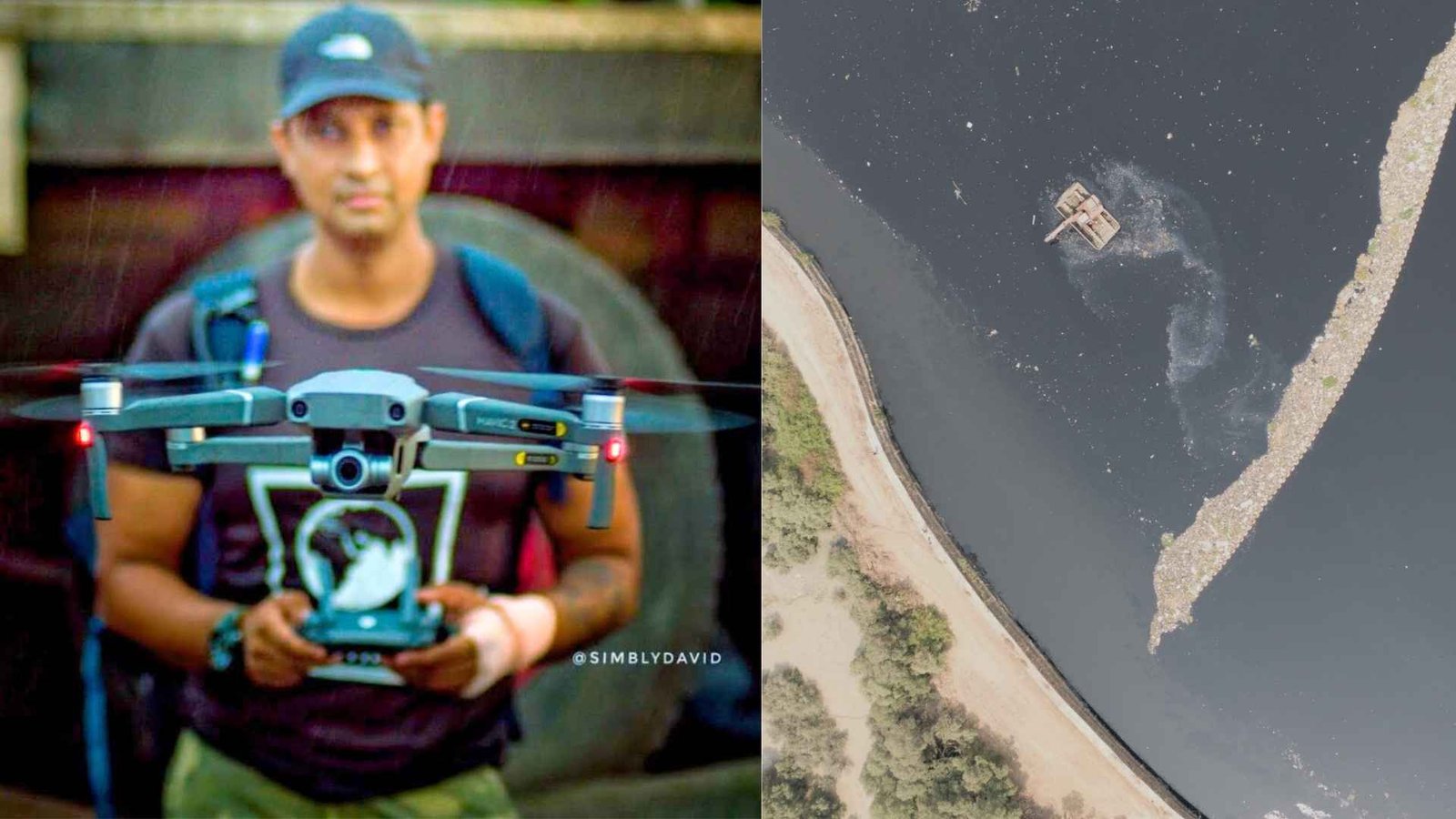
Drone mapping before and during the project recorded waste hotspots and tracked change along the channel, and data systems monitored recovery volumes and flow patterns. That record is what makes the figures above checkable rather than asserted.
Avoided emissions
Recycling the 4,440 tonnes of plastic recovered is estimated to have avoided approximately 6,660 tonnes of CO₂e, using a factor of 1.5 tonnes of CO₂e avoided per tonne of plastic recycled against a landfill and virgin-production counterfactual.
A deliberate limit on this claim. This is reported as avoided emissions, estimated against a stated factor. It is not a carbon credit, no credits were issued or retired, and no party has claimed this volume against a corporate emissions target.
That distinction matters for any company funding work of this kind from a CSR budget. What companies can and cannot claim from CSR-funded climate projects sets out why.
A Project No Single Organisation Could Have Run
Supported by €0.6 million in funding, with each partner holding a distinct part of the problem.
United Nations Technology Innovation Labs
Technology validation and the innovation framework behind the deployment.
Huhtamäki Oyj
Corporate funding partner, bringing packaging sector accountability to river plastic.
RiverRecycle
River recovery technology, and the pyrolysis route for the low-value plastic fraction.
Municipal Corporation of Greater Mumbai
Municipal authority, site access and integration with city waste systems.

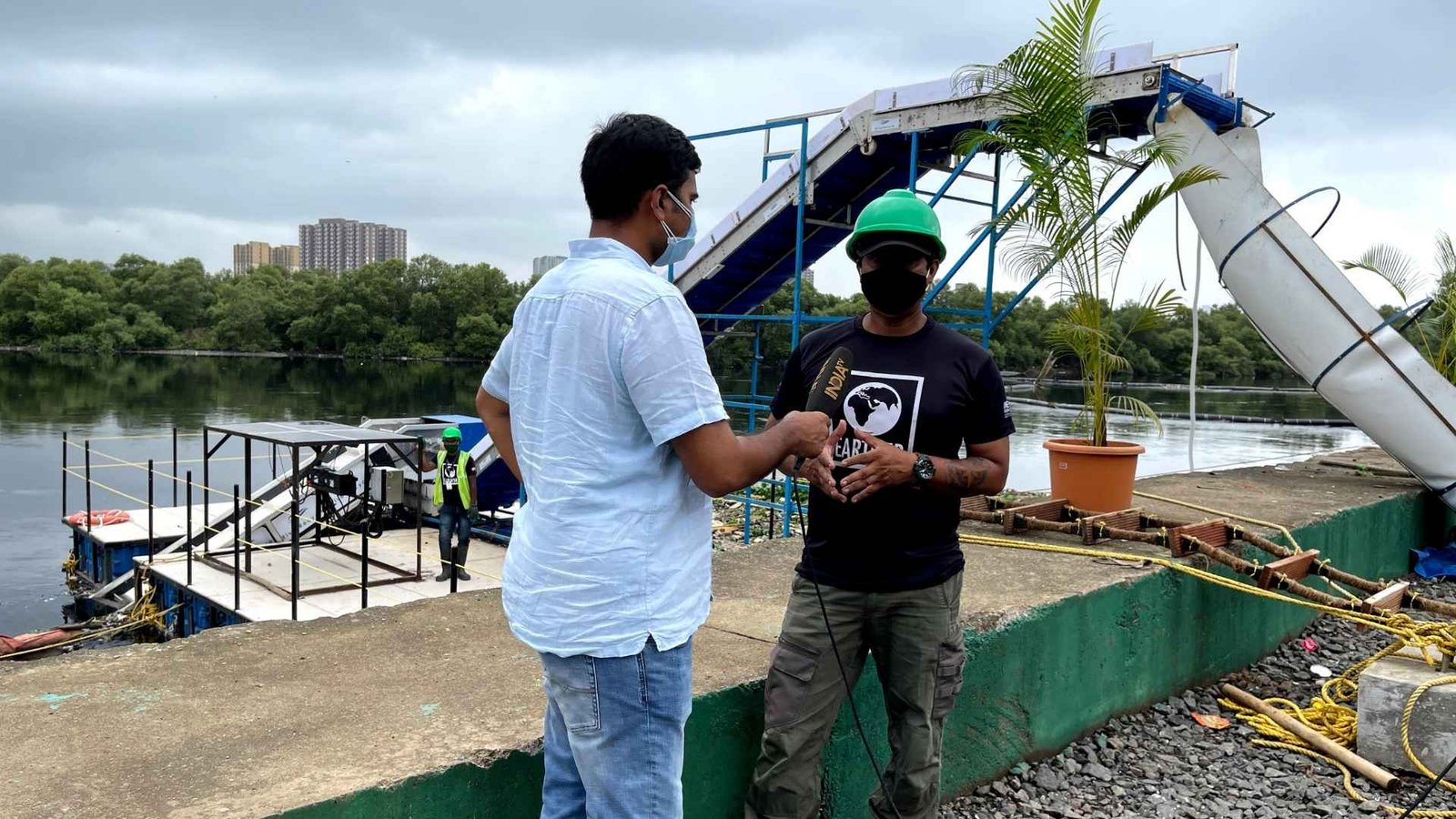
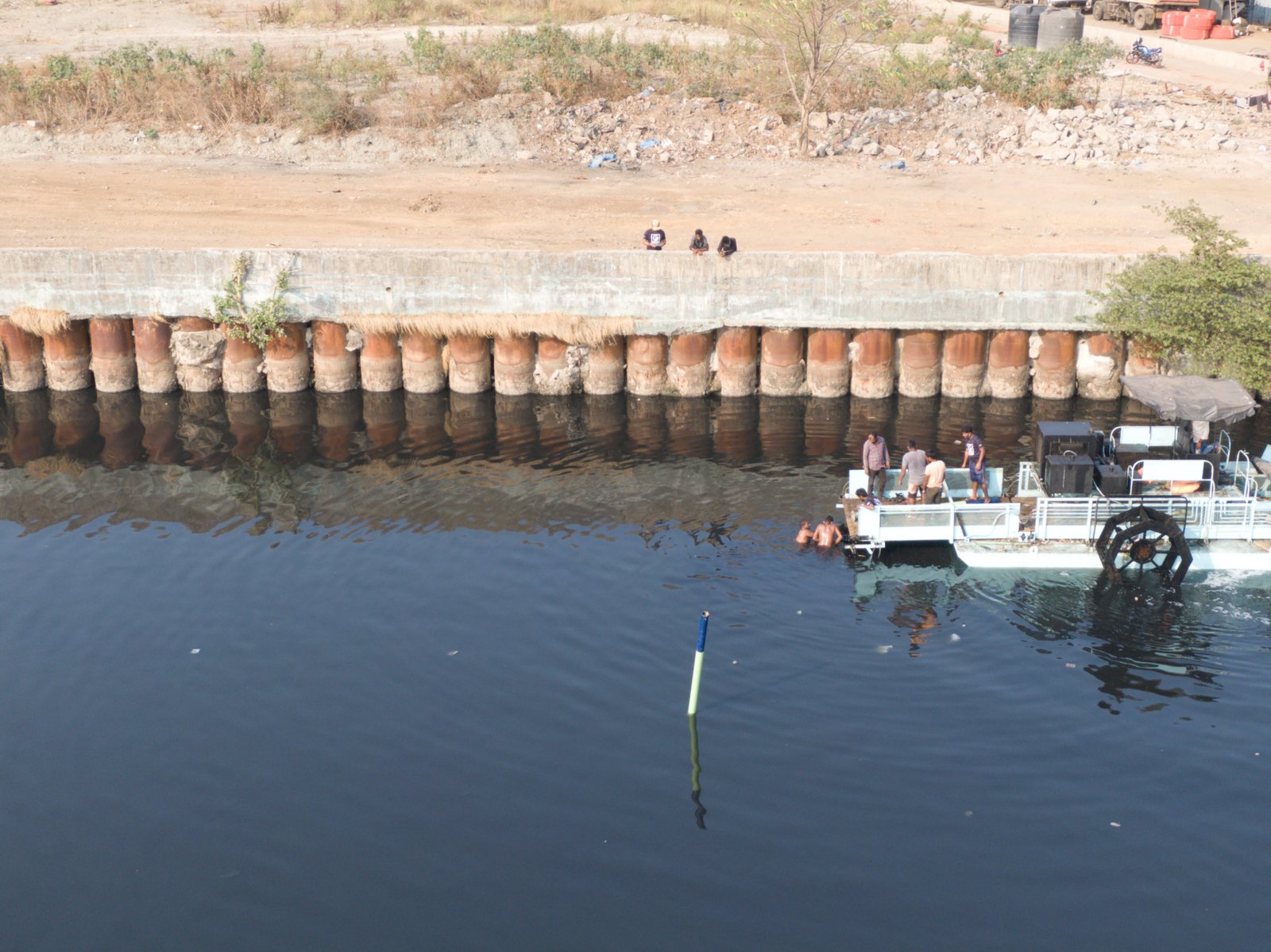
Regional news coverage of the recovery system on the Mithi.
The structural lesson. River restoration needs four things that rarely sit in one organisation: technology, funding, municipal permission, and community presence. Projects stall most often on the third, because site access on an urban river is granted rather than bought. Assembling the partnership is not preparation for the work. It is most of the work.
Built, Proved, Handed Over
Earth5R designed and deployed the Mithi River project and has since exited operations. The project continues to run under its delivery partners.
That exit was the intended outcome rather than a withdrawal. A restoration model that depends permanently on the organisation that built it has not been proved, only performed. The measure of this project is that the recovery system, the processing chain and the community programme continue without Earth5R operating them.
Earth5R's work now sits upstream of deployment: building the technology, the measurement systems and the partner ecosystem that make projects of this kind possible for other rivers, other cities and other funders. The Mithi is the reference implementation.
For corporate funders, this is the question worth asking of any river programme. What happens when the funding partner leaves? A project designed for handover looks different from day one: local operators trained rather than contracted, municipal integration built in rather than bolted on, and data systems that outlive the organisation that installed them.
Frequently Asked
How much waste was removed from the Mithi River?
Between October 2020 and November 2024, 11,100 tonnes of waste were removed, of which 4,440 tonnes were plastic. The operating rate averaged approximately 10 tonnes of waste per day, including around 4 tonnes of plastic.
How does the solar-powered recovery unit work?
The unit is positioned in the river to intercept floating debris and convey it to the bank. It runs entirely on solar power. Recovered material is segregated, washed, dried and shredded, with high-value plastics routed to recycling and low-value plastics processed through pyrolysis into industrial-grade oil.
Who funded and delivered the project?
Earth5R delivered the project with United Nations Technology Innovation Labs, Huhtamäki Oyj, RiverRecycle and the Municipal Corporation of Greater Mumbai, supported by €0.6 million in funding.
Were carbon credits generated?
No. Recycling the recovered plastic is estimated to have avoided around 6,660 tonnes of CO₂e, reported as avoided emissions against a stated factor. No credits were issued or retired, and no party claimed the volume against a corporate emissions target.
Is the project still running?
Yes. Earth5R designed and deployed the project and has since exited operations, which continue under the delivery partners. Earth5R continues to build the technology and partner ecosystem for river restoration projects of this kind.
Can this model be replicated on other rivers?
The components are designed to be transferable: an intercepting recovery system, a processing route that includes the low-value fraction, and a catchment training programme that reduces the load entering the water. What has to be rebuilt for each river is the partnership, particularly municipal permission and site access.
Planning a River or Coastal Programme?
Earth5R designs and measures river and coastal restoration programmes in India: baseline survey, recovery system design, catchment training, monitoring and verification, and reporting built to survive third-party assessment.
Tell us what you are planning
If you are scoping a river, coastal or catchment programme and want the design and measurement checked before it goes to your CSR committee, describe it below.