This week, Indian school students asked a question that sounds like writing advice. What kind of personal story should I craft for elite universities? Other students asked whether they need research papers or Olympiad medals, how to start a profile in Class 9, and what to do in Class 11 or 12 when school offers no activities. Under those questions sits a simpler one. What have you actually changed, near home, that you can show without inventing a thing?
Earth5R is a sustainability company. This article starts with environmental and community impact. University applications come later, because a credible file is a side effect of work that mattered on the ground, not the other way around. Earth5R is not an admissions consultancy.
How this article was built
This piece draws on two listening corpora gathered for FIELDWORK content work. It is not a survey of all Indian applicants, and the theme counts below are not national estimates.
The first corpus is four Quora questions checked on Monday, 23 Nov 2026. The questions came from a Class 9 student asking how to build a strong profile for study abroad, a student with 56% in Class 12 PCB who wants to switch to engineering abroad, a student asking whether research projects or Olympiad wins are needed for a top US college, and a student asking what personal story to craft for elite universities.
The second corpus is a Reddit listening digest covering 16 to 23 Nov 2026, India time. That digest found 16 posts from Indian school students, mostly in Class 10 to Class 12, plus one gap year student, who were asking about bachelor’s degrees abroad. Themes were coded with overlapping labels, so one post can sit in more than one theme. Theme counts therefore add up to more than 16. In that window, boards and subject eligibility appeared in 4 posts. Weak or late profiles, including a student who wrote that school offers no extracurriculars, appeared in 4 posts. A December SAT retake clashing with board preparation appeared in 3 posts. Costs and scholarships, school or counsellor gaps, and parents or JEE pressure also appeared in 3 posts each.
Coverage was incomplete. The digest fully checked r/Indians_StudyAbroad and r/IntltoUSA. It only partly checked r/IBO and r/CBSE. It could not check r/ApplyingToCollege, r/JEENEETards, r/Indian_Academia or r/IndianTeenagers, because Reddit feeds returned errors. The 16 posts are therefore a floor, not the full picture for that week. Treat the counts as a snapshot of what showed up in that verified window, not a representative sample, and not proof that one theme causes another.
A few quotations below also come from the 12 to 16 Nov window, where the Monday Quora notes recorded earlier wording of the same worries, such as not knowing what counts and confusion about statements of purpose. Those lines are labelled with their dates.
Quoted lines are taken from those public posts and questions. Handles are omitted. Each quotation carries its original URL. Spelling and punctuation in quotations are left as they appeared.
The question behind this week's questions
"What kind of personal story should I craft for my application to make it stand out to admissions committees at elite universities?"
The word that does the damage is craft. Admissions readers spend their days with essays. They can usually tell a story that was built to impress from a story that grew out of work. The Common App personal essay, when a college asks for it, is a place to show how you think. Each college decides whether that essay is required or optional, and the official prompts are listed on the Common App site. The official first year guide also asks you to list activities, work, hobbies and community engagement. The current UCAS personal statement uses three questions, with a 4,000 character limit including spaces. The third question asks what you have done outside formal education, and why those experiences are useful. UCAS also warns applicants not to exaggerate, because an interview can catch a claim that was stretched.
None of those forms ask you to invent a life. They ask you to account for one.
"Do you really need research projects or Olympiad wins to get into a top US college as an international student, or are there other ways to make your application stand out?"
You do not need an Olympiad medal or a published paper to be taken seriously. Plenty of students are admitted without either. What you do need, if you want the file to stand up, is evidence that you did more than collect marks. A forced paper in a pay to publish journal can work against you, because experienced readers often recognise the pattern. A problem in your own street that you studied, tried to fix and measured is harder to dismiss, and easier to talk about for ten honest minutes.
What real local impact looks like
Impact, in this sense, is a change you can point to in a real place. It is not a feeling, a poster week or a certificate of attendance. It can be small and still be real.
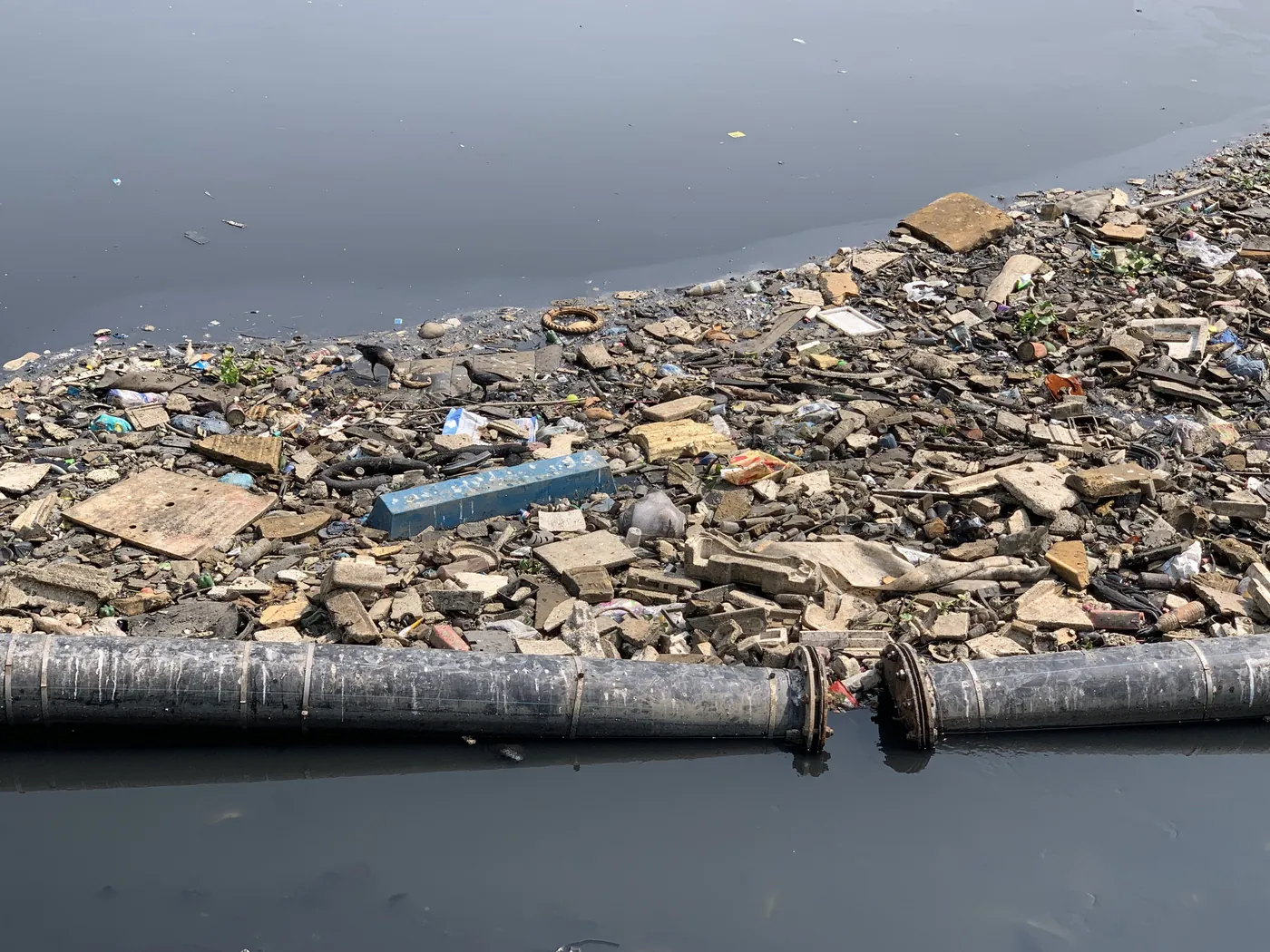
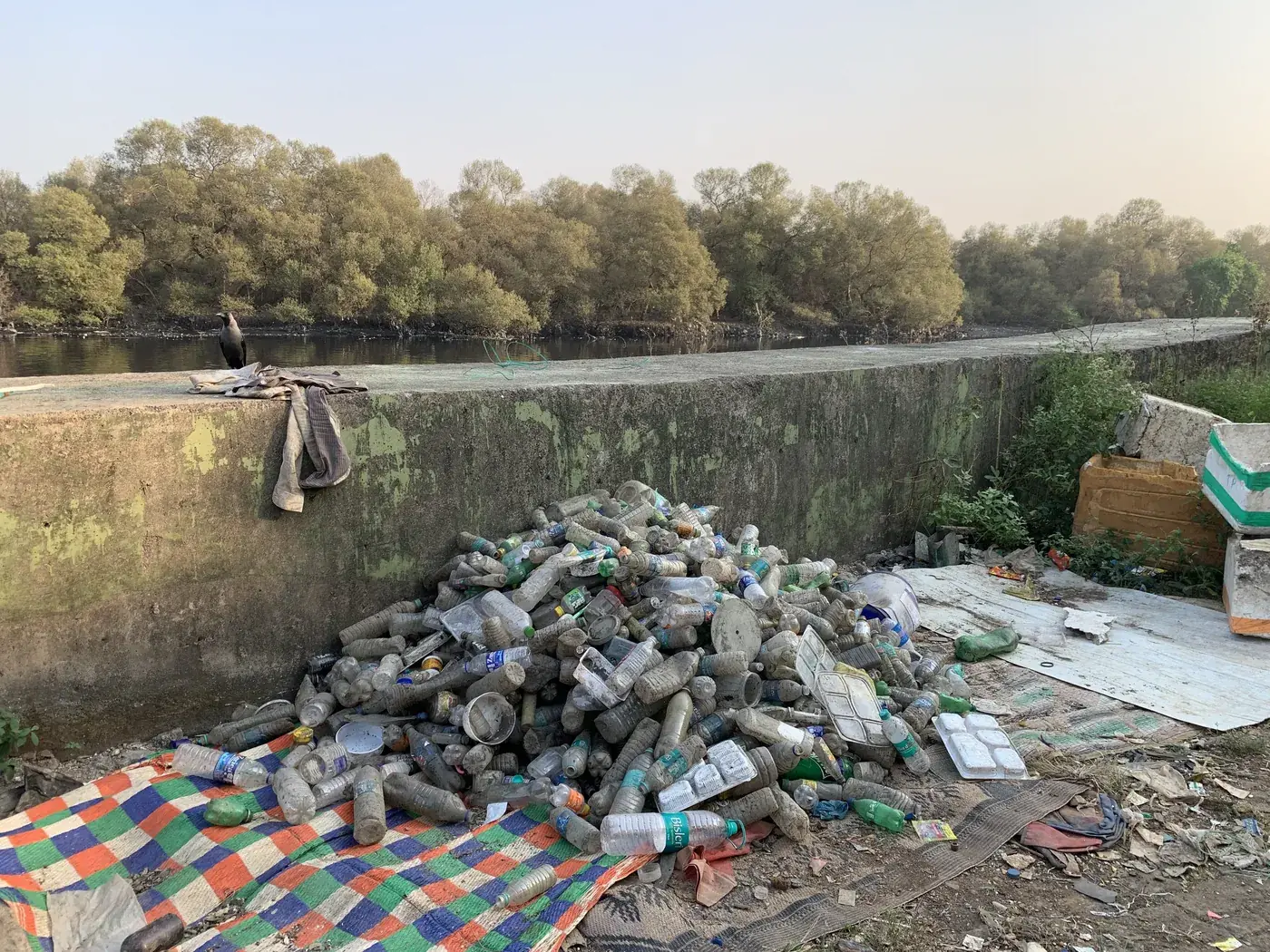
The work lives where you live. Waste that does not get segregated in your building. Water that does not reach every floor, or a drain that floods the same lane each monsoon. Air quality on the road outside school. Birds, trees or a wetland that is shrinking at the edge of town. Material that could be reused instead of dumped. A community survey that asks households what they actually do, not what a campaign hopes they do.
The point of that work is the place itself. A cleaner collection point, a clearer flood map, a reuse loop that keeps material in use, a record of who lacks water and when. If a university later reads the file, that is a consequence. It should not be the reason you showed up.
Earth5R’s FIELDWORK page describes one student project at Powai Lake in Mumbai that turned plastic collected from the lake into 450 benches and desks for municipal schools, with the Swiss Air Staff Foundation. That is circular reuse with a visible end use. Most student projects will be smaller than that, and they should be described at the scale they actually reached.
How to document impact without inflating it
Keep a record as you go, not after you decide the ending.
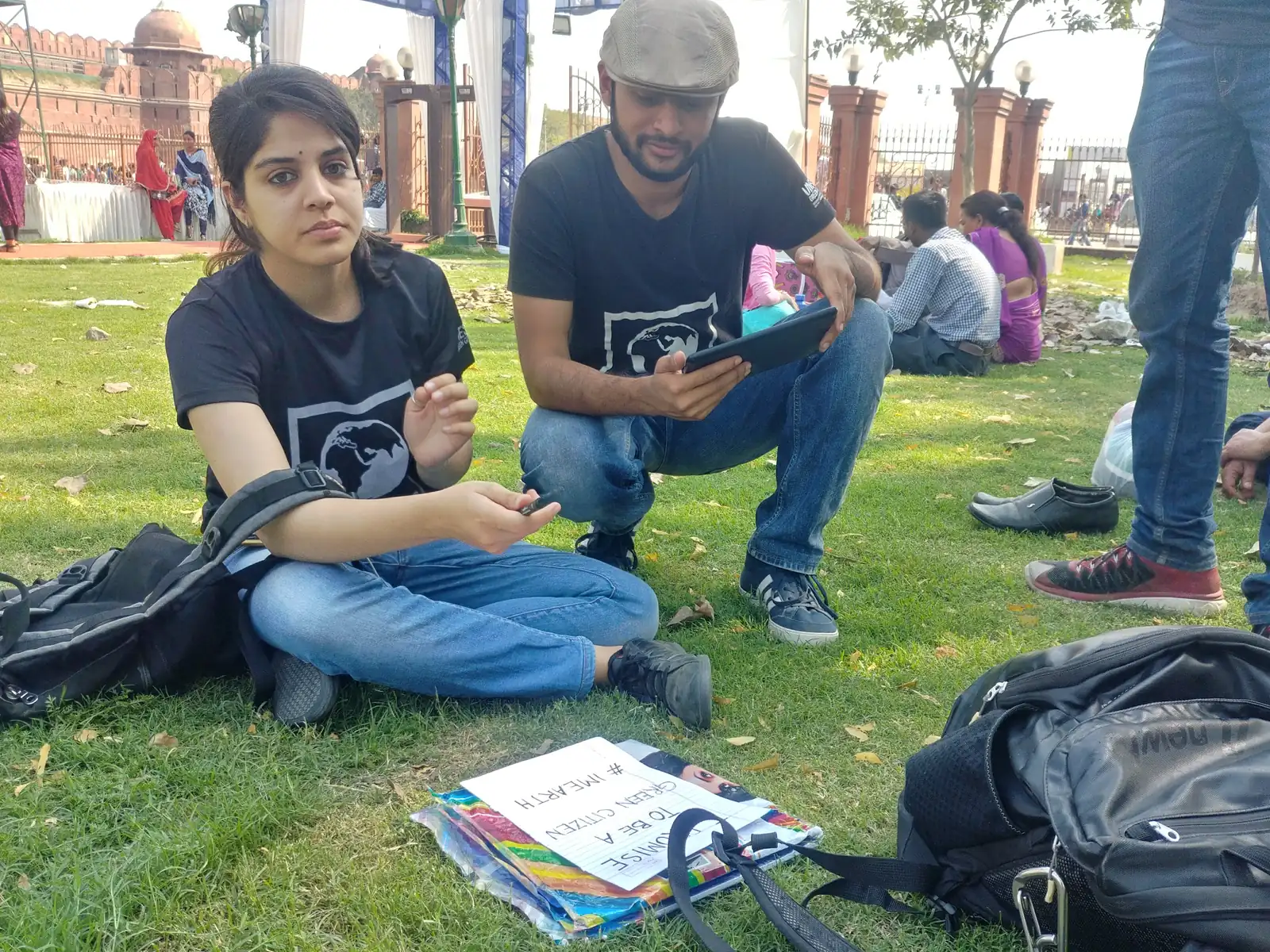
Baseline. Write down what was true before you started. A count, a dated photograph, a simple measurement, a short interview with a person who lives or works there. If you do not have a baseline, you cannot later claim a change. Guessing the starting point is how honest work turns into a story that will not survive a question.
Method. Say where you worked, when, how often, and what you did. Name your tools in plain language. Note who you spoke to, and whether they agreed to be quoted. Write down what you did not do, because the limits are part of the method.
Data. Keep raw notes, tallies, maps and photographs. If people trusted you with their words, protect their privacy unless they clearly agreed to be named. Do not tidy the numbers until they look impressive. The messy sheet is the evidence.
What changed. Compare the later record with the baseline. If nothing moved, say so. A trial that failed, and that you revised, is still evidence of thinking. A graph that hides a failure is not.
Who benefited. Be specific and modest. Ten households in one lane, one school storeroom, one pond edge. Do not stretch a lane into a city, or a city into a claim about the climate. If municipal workers, a parent, a teacher or a neighbour did part of the work, say that too.
Limits. Record the sample size, the season, what you could not measure, and what remains unsolved. Admissions readers and science mentors are both more likely to trust a student who can name the limits.
What to leave out of the file
Do not invent beneficiaries. Do not stage a before and after photograph. Do not turn a single cleanup morning into a year of leadership. Do not buy a publication in a journal that will print almost anything, then present it as research. Do not ask a writing tool to invent a life you did not live. Do not copy another student’s impact narrative. If you cannot talk, without notes, about what you did, what went wrong and what you would do next, the file is not ready.
Starting early, or starting late
"Right now, I'm in 9th and am going to study abroad after high school. What should I start doing from now on for building a strong profile?"
Starting in Class 9 is a gift of time, not a reason to collect a pile of short certificates. Pick one local problem you actually care about and stay with it. Marks still matter, because many universities look at more than the final board year. The difference by Class 12 is depth. A reader can feel the difference between a student who visited a problem once and a student who returned after it got inconvenient.
"E.Cs idk wht counts so imma just dump it all"
Source, 13 Nov 2026: https://www.reddit.com/r/IntltoUSA/comments/1xvbehz/help/
If you do not know what counts, the test is simple. Can you show a baseline, a method, a result and a limit? If yes, it counts, even if it never had a club name. If no, it is probably a list item, not a body of work.
"I am in 11th grade , my school doesn't offer any extracurriculars."
"I am studying 12th grade now, I can do sm extracurricular too get into Ivy League/ Oxford."
A late start is still a start. You will not get four years of depth in one term. You can still choose one problem near home, do the work carefully, and leave a record that is honest about how much time you had. A thin but real project is stronger than a sudden stack of activities invented in Class 12.
Boards, subjects and tests cannot be wished away
"So basically I am in 10th Grade CBSE and I want to do my bachelors in Germany and so far i have talked with counselor and they have given me 3 choices as germany requires 13 years of schooling:"
"are there any mandatory subjects that one must have studied in 12th to be eligible for german universities for bachelors?"
Students often describe Germany’s path as a 13 year rule. The official DAAD India bachelor page is more precise, and it is the page to trust. After a Class 12 certificate from Indian, Bhutanese or Nepalese boards, DAAD says you cannot get direct admission to a German university, with the exception of a valid IIT JEE Advanced result. Other listed routes include an IB or GCE qualification with the required subjects, successful completion of one academic year at a higher education institution in your home country in the relevant subject field, or the Feststellungsprüfung after a Studienkolleg. DAAD also says every university is autonomous, so you must check the specific programme. The DAAD admission database offers a check that is not binding. Field research cannot change those rules. It can only sit beside the route you actually qualify for.
"I just realised this halfway through 11th and i'm scared now."
For the Netherlands, do not guess whether one subject, such as Informatics Practices, will be accepted. Study in NL says admission requirements are set by the institution, and they may vary by programme. Nuffic compares foreign diplomas with Dutch levels, and Study in NL explains that the institution makes the final decision and can add its own subject requirements. Read the programme page, then ask the admissions office in writing. Bring your actual subject list. A verified project will not replace a required subject you did not take.
"I can give the december attempt but I dont know if I will be sacrificing my boards preparation or something."
"Should i retake the december SAT?"
College Board currently lists Saturday, 5 December 2026 as a SAT date. Confirm the latest registration deadlines on the official dates page, because those dates change. A retake is a tradeoff with board preparation, not a moral test. Board marks matter for many countries. A test score is only one part of a file. The Common App first year guide says some colleges always want scores and some have a test optional policy, and that you should check each college on your list. If you skip a retake to protect your boards, use the time on work you can stand behind, not on a new activity with no substance.
When marks are uneven, or the school has no map for this
"I got 56% in 12th with PCB. I now want to switch to engineering and study abroad."
A documented project will not erase a 56% result. Be honest about that. For engineering, the first gap is often Mathematics at Class 12 level, in India and abroad. Some students look at NIOS for an additional subject. NIOS publishes a procedure for changing or adding a subject. Read that official page and confirm the current rules before you rely on them. A university abroad will still decide whether the result meets its own entry requirements. Foundation years, bridging courses and other official pathways exist in some countries, but only the university’s page can confirm them. A year of careful environmental project work can show what you are like now. It cannot rewrite the mark sheet.
"I applied Early Decision to Dartmouth this cycle as an international gap year student from a local school in India where absolutely nobody has ever taken the SAT (1520 mine) or applied overseas before."
Source: https://www.reddit.com/r/IntltoUSA/comments/1y0loa9/is_it_just_me/
If nobody at school has applied overseas, or if there is no counsellor who knows the process, you still have official pages, and you still have work you can do near home. You will need adults who have actually watched you work, because a letter from someone who never saw the field visits will be thin. The Common App notes that some recommenders are teachers, and some are people who can describe your work outside the classroom. Find the person who was there.
Parents, money and the story on the page
"The problem is my parents say that i wont be mature enough to go abroad at that age."
A parent who worries about maturity is asking a fair question. One way to answer it is not a speech. It is a record of work done responsibly in the community, over weeks, with clear limits, real people and no invented claims. That does not settle cost, safety or timing, and it should not be used to overrule a family. It does give the family something concrete to look at.
Costs came up less often in the 16 to 23 Nov window than they did in the week before, but they have not gone away. A verified record of initiative can support a scholarship or aid file. It does not create the money, and it does not guarantee an award. Keep the money plan on official university and scholarship pages, and keep the field work honest.
"How do I write the perfect SOP?"
Source, 15 Nov 2026: https://www.reddit.com/r/ApplyingToCollege/comments/1xwu3s6/flame_university/
Students also asked how to write a perfect statement of purpose. There is no perfect one. For UCAS, the useful evidence often sits in the third question, about what you have done outside formal education. For the Common App, the personal essay and the activities list are meant to reflect work you can explain. A letter of recommendation should come from someone who saw you work. If you are asked to draft a letter for a busy adult, that is a weak position. It is better to find a mentor, a teacher or a community partner who can write from direct observation.
Where FIELDWORK fits
If you want mentored help with this kind of work, FIELDWORK is Earth5R’s fee based research fellowship for school and university students. Fellows join a live Earth5R field research project, do the field work near where they live, and complete the rest online. The live FIELDWORK page, read on 23 Nov 2026, says fellows work alongside scientists from NASA, Columbia and NYU, and that the lead mentor is a working scientist with research experience at NASA and Columbia University. Fellows can join conversations with researchers from universities including ETH Zurich, Cornell, King’s College London, Durham, the Australian National University and Carnegie Mellon. Work moves through four gated phases, Observe and Map, Frame and Design, Model, and Build and Deploy, and each phase is independently assessed. Every fellow receives a certificate, a letter of recommendation, a project report and a verified public profile that universities can check, with the student’s consent. FIELDWORK runs in 38 subjects for students in Grades 9 to 12, and the page also says university students may apply. Admissions are rolling, and a fellow can start the week they are accepted.
FIELDWORK does not promise an admission, a visa or a scholarship. It offers real environmental work, independent verification and a public record a university can check. You can read the current details at earth5r.org/fieldwork.
Let the work make the story
If you are in Class 9, pick one local problem and stay with it. If you are starting late, start smaller and tell the truth about the time you had. If your board or subject list is a barrier, read the official rule first, then do the work you can still do honestly. The story worth sending is the one the lane, the lake or the household would recognise.
Sources and references
- Quora, personal story for elite universities: https://www.quora.com/unanswered/What-kind-of-personal-story-should-I-craft-for-my-application-to-make-it-stand-out-to-admissions-committees-at-elite-universities
- Quora, research projects or Olympiad wins for a top US college: https://www.quora.com/Do-you-really-need-research-projects-or-Olympiad-wins-to-get-into-a-top-US-college-as-an-international-student-or-are-there-other-ways-to-make-your-application-stand-out
- Quora, building a strong profile from Class 9: https://www.quora.com/Right-now-Im-in-9th-and-am-going-to-study-abroad-after-high-school-What-should-I-start-doing-from-now-on-for-building-a-strong-profile
- Quora, 56% in Class 12 PCB and engineering abroad: https://www.quora.com/I-got-56-in-12th-with-PCB-I-now-want-to-switch-to-engineering-and-study-abroad-What-is-the-best-step-by-step-path-for-me-to-move-from-PCB-to-engineering-and-build-a-strong-profile-for-studying-abroad
- Reddit, Germany and 13 years of schooling: https://www.reddit.com/r/IBO/comments/1y0yrvb/
- Reddit, mandatory Class 12 subjects for German bachelor's programmes: https://www.reddit.com/r/Indians_StudyAbroad/comments/1y0ylqd/what_are_the_mandatory_subjects_in_12th_for/
- Reddit, Informatics Practices and study in the Netherlands: https://www.reddit.com/r/Indians_StudyAbroad/comments/1y1yt9l/does_anybody_know_if_informatics_practices_is_an/
- Reddit, school offers no extracurriculars: https://www.reddit.com/r/Indians_StudyAbroad/comments/1y2oxwk/how_do_i_make_a_good_profile_while_i_am_preparing/
- Reddit, adding extracurriculars in Class 12: https://www.reddit.com/r/Indians_StudyAbroad/comments/1y1kvzv/i_am_studying_12th_grade_now_i_can_do_sm/
- Reddit, December SAT attempt and board preparation: https://www.reddit.com/r/Indians_StudyAbroad/comments/1y12c7d/is_1390_a_good_score_for_admission_in_singapore/
- Reddit, whether to retake the December SAT: https://www.reddit.com/r/Indians_StudyAbroad/comments/1y19zgb/do_i_retake_sat_for_computer_science_at_nus_ntu/
- Reddit, first person from a local school to apply overseas: https://www.reddit.com/r/IntltoUSA/comments/1y0loa9/is_it_just_me/
- Reddit, parents and maturity to go abroad: https://www.reddit.com/r/Indians_StudyAbroad/comments/1y1brcy/how_to_convince_parents_to_let_me_go_abroad_for/
- Reddit, 13 Nov 2026, not knowing what counts as an extracurricular: https://www.reddit.com/r/IntltoUSA/comments/1xvbehz/help/
- Reddit, 15 Nov 2026, how to write a perfect SOP: https://www.reddit.com/r/ApplyingToCollege/comments/1xwu3s6/flame_university/
- DAAD India, Bachelor Studies: https://www.daad.in/en/study-research-in-germany/studying-in-germany/bachelor-studies/
- DAAD, database on admission requirements: https://www.daad.de/en/studying-in-germany/requirements/admission-database/
- Study in NL, admission requirements: https://www.studyinnl.org/plan-your-stay/admission-requirements
- Study in NL, checking your diploma: https://www.studyinnl.org/plan-your-stay/checking-your-diploma
- Nuffic, level of diplomas from India: https://www.nuffic.nl/en/education-systems/india/level-of-diplomas
- College Board, SAT Suite test dates and deadlines: https://satsuite.collegeboard.org/sat/dates-deadlines
- Common App, application guide for first year students: https://www.commonapp.org/apply/first-year-students/
- Common App, first year essay prompts: https://www.commonapp.org/apply/essay-prompts/
- UCAS, how to write your personal statement: https://www.ucas.com/applying/applying-to-university/writing-your-personal-statement/how-to-write-your-personal-statement
- NIOS, procedure for change of subject or additional subject: https://nios.ac.in/student-information-section/procedure-for-change-of-subjectadditional-subject.aspx
- Earth5R FIELDWORK page: https://earth5r.org/fieldwork