
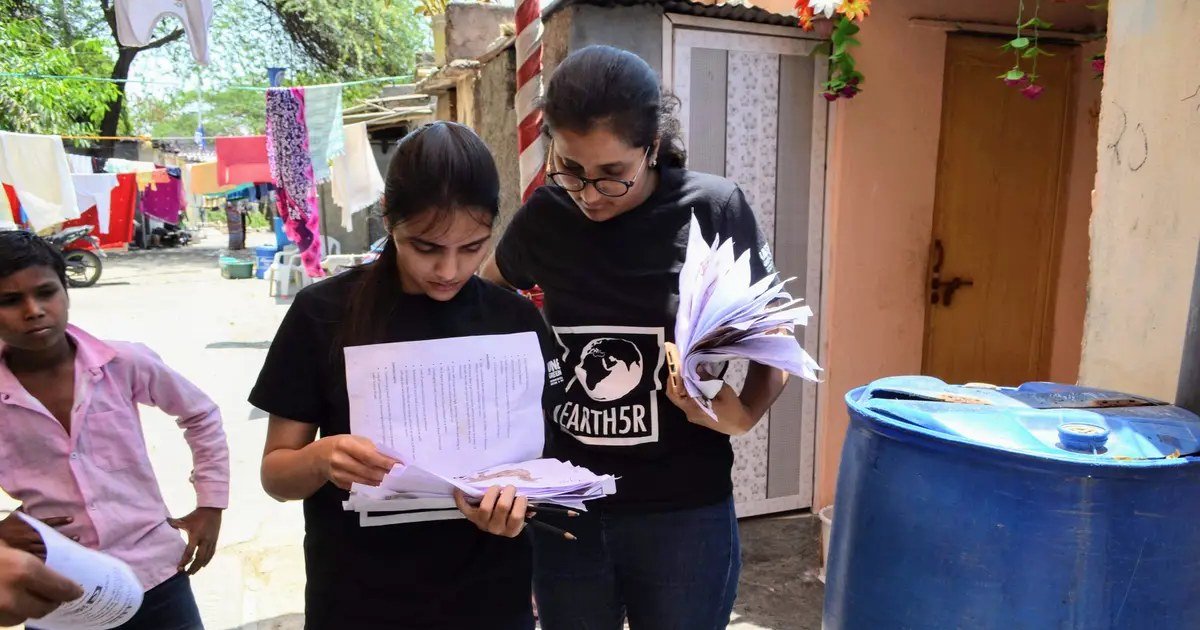
Earth5R is an environmental organisation. Since 2014, we have worked with communities across India on rivers, waste, water and climate. Through FIELDWORK by Earth5R, school students join this work. They study real environmental problems near their homes, collect data and help communities act on what they find.
Protecting the planet is the reason they do it. Something else happens along the way. The adults who work beside them for months come to know them well, and that is exactly what a meaningful letter of recommendation (LOR) needs.
This article is about that second part. It is for students in Classes 8 to 12, and their parents, who are thinking about universities in Europe and North America and feel stuck on recommendation letters.
You are not alone. Students on Reddit and Quora ask the same questions every year. Who should write my letter? How do I ask a teacher who barely knows me? What should it say?
It helps to understand the other side too. Teachers in India often teach very large classes and carry heavy workloads. The detailed, story based letters that universities in the US and UK expect are also quite different from the letters most Indian schools are used to writing. Teachers want to help. What they usually need is time, clear information and real material about you.
Here is honest, practical advice you can use, whatever school you are in.
How important is a letter of recommendation (LOR)?
Very. The letter is the one place where someone else describes you. UCAS, the UK admissions service, puts it plainly:
“The UCAS reference is the only part of the application not written by the applicant.”
From UCAS (UCAS)
MIT Admissions tells teachers that letters “are most helpful when they are specific and storied.” (MIT Admissions) Yale adds that
“a string of generic superlatives is not as useful as a specific, thoughtful discussion of your strengths.”
From Yale Admissions (Yale Admissions)
That is why many well meaning letters fall short. They are warm and positive, but without specific stories a reader has little to hold on to. One student said that the last time they asked, the letters “were 2 lines.” (Reddit) This usually happens when a teacher has not been given enough to write about, not because they do not care.
A good letter needs good material. And the best material is real work that someone watched you do.
Who should write my recommendation letter?
Choose the person who knows you best, not the one who gave you the highest marks. Yale says that
“the best recommendations are not always from the teachers in whose class you earned the highest grades, but rather from those teachers who know you best.”
From Yale Admissions (Yale Admissions)
EducationUSA, the US government’s advising network, makes the same point. It suggests asking teachers who know you well, and notes that a teacher who watched you struggle and improve can say more about your potential. (EducationUSA guide, US Embassy)
A simple way to choose
- A teacher from Class 11 or 12, in a core subject, ideally linked to what you want to study.
- Someone who has seen you ask questions, make mistakes and fix them.
- Someone who supervised a project of yours, inside or outside class.
- For the UK, one academic referee who can speak about your subject. A Students@LSE blog suggests that an “IB extended essay supervisor with whom you spent hours discussing your work” can be the right kind of person. (Students@LSE blog)
How do I ask for a letter of recommendation from someone I don’t know well?
This is one of the most common worries. A student applying abroad wrote about their principal:
“he doesn’t know me well personally or what I am really passionate about.”
A student on Reddit (Reddit)
One reply was honest:
“This describes someone who would not be capable of writing you an especially strong letter of recommendation.”
A reply on Reddit (Reddit)
The College Board advises that
“the best option can often be asking them in person and then telling them more about who you are.”
From College Board BigFuture (College Board BigFuture)
It also suggests bringing a resume and “a summary of your time and accomplishments in their class.”
The better answer, though, is to start early so you are not in this position. Relationships are built over months, not in one meeting.
How to build a real working relationship
- Stay back after class with a genuine question once in a while.
- Share a piece of work you did beyond the syllabus, such as a small field study near home.
- Ask for feedback on it, use the feedback, and show them what changed.
- Keep them updated every few months. A teacher who has followed your project for a year has a story to tell.
Someone who reads international application files wrote on Quora that
“we understand that students are sometimes coming from very large classes and teachers don’t know them that well. That’s fine. Just tell us.”
From Quora, someone who reads international application files (Quora)
Honesty is always safer than a letter that pretends.
What if a busy teacher asks me to draft my own letter?
This does happen. It usually comes from goodwill, from a teacher who is stretched thin and wants to help you meet a deadline. Even so, it is better to politely offer something else.
For UK applications, UCAS says the reference must come from someone who knows the applicant academically or professionally, and that applicants “must not write it themselves.” (UCAS) A reply on Reddit also warned students:
“Your writing style across both letters will serve as a dead giveaway that you wrote them.”
A reply on Reddit (Reddit)
What to offer instead: a one page brief
- Two or three specific moments from their class, with dates.
- What you did in their subject outside class, with a link to your write up.
- What you hope to study and why, in a few sentences.
- The universities, deadlines and how the online submission works.
- A link to the MIT guide on writing good letters, which shows teachers real examples. (MIT Admissions)
Most teachers are glad to receive this. It saves them time and lets them write honestly, in their own words. Facts, not praise. Let the words of the letter stay theirs.
A short letter in a teacher’s own voice is worth more than a polished one in yours.
What if my school has no counselor?
Most Indian schools do not have one, and universities know this. MIT says:
“If you don’t have a school counselor, a principal, headmaster, registrar’s office, or other official at your school may send the materials typically fulfilled by a school counselor.”
From MIT Admissions (MIT Admissions)
On Reddit, a student worried that their principal “never taught any of my classes.” A retired college counselor and admissions reader replied: “Your principal is fine.” and added,
“Many international schools don’t, and application readers understand that.”
A retired college counselor and admissions reader on Reddit (Reddit)
Give your principal a short note about your school, your subjects and the work you have done, so the job feels small and clear.
Does a letter from a research mentor count?
It can, as an extra letter, at universities that accept one. A mentor who has supervised your real field research over months is often the person who can write the most specific, story based letter about you. Yale says:
“If you have been engaged in advanced science or engineering research, consider requesting a letter of recommendation from a research mentor.”
From Yale Admissions (Yale Admissions)
It also says the extra recommender “should know you well personally or have mentored you closely in some capacity.” That describes a mentor who has worked beside you for months.
Caltech welcomes an additional letter “from a coach, mentor, employer, etc.” when it adds something different from the teacher letters. (Caltech Admissions)
One practical point. Where a university requires school letters, an extra letter is sent alongside them rather than in their place. What matters most is that the mentor truly knows you. One student on Reddit decided not to ask a professor because
“the second is simply a professor I interacted with for two weeks and am in no way close to.”
A student on Reddit (Reddit)
That was a wise call. A big name who barely knows you adds little. This is exactly why a months long Earth5R mentorship matters. The mentor sees your work, your setbacks and your progress first hand.
What does a strong recommendation letter actually show?
Look at what universities ask referees to write about. Cambridge wants to know “how the applicant compares with other students” and the applicant’s “desire to explore their subject.” (University of Cambridge)
MIT asks teachers whether the student has “demonstrated a willingness to take intellectual risks and go beyond the normal classroom experience” and how they reacted to “disappointment or failure.” (MIT Admissions)
EducationUSA puts it simply:
“A story or incident that illustrates the student’s character or ability is more telling than a statement like, ‘Tom is very intelligent’.”
From EducationUSA (EducationUSA guide, US Embassy)
This is where real environmental work helps in a way that a certificate cannot. Picture an Earth5R mentor writing about a student who mapped where her colony’s waste actually goes. The first survey failed because residents did not trust her. She changed her questions, went back with her mother, and won them over. Her data helped the residents’ association start separating waste at source.
That is a story. It shows curiosity, risk, failure, persistence and care for other people. And it happened because the student was trying to fix something real.
Specific, story based letters are exactly what MIT, Yale and EducationUSA ask for. A mentor who has supervised field research over months has watched these moments happen, so they are often the person best placed to write them down.
Our first article, Beyond Marks, explains how to run a small field study like this near home.
A timeline that respects board exams
Boards come first. A good plan works around them.
- Classes 8 to 10. Start one project linked to a subject you love. Nothing is urgent yet, and that is the gift.
- Class 11. Go deeper. This is the year your future recommenders get to know you. Keep a dated notebook of your work.
- Start of Class 12. EducationUSA suggests approaching teachers “at the start of Year 12.” Ask in person, then share your one page brief. (EducationUSA guide, US Embassy)
- Before deadlines. Check that each letter has been submitted. Oxford, Cambridge and US early rounds come earlier than most families expect, so look up each date on the university’s own website.
- Exam months. Block them out completely. Heavier field work can wait for the holidays.
- After results. Thank every recommender in person and tell them where you are going.
For parents. Be present for field visits and help with logistics. Please do not draft letters or speak to teachers on your child’s behalf. The relationship has to be your child’s own.
Where FIELDWORK by Earth5R fits
Everything above can be done without joining any programme. Some students, though, want an experienced mentor beside them while they work on a real environmental problem.
Earth5R is a Mumbai based environmental organisation, recognised under UNESCO Green Citizens, running climate and sustainability programmes across India since 2014.
FIELDWORK is a mentored research programme for school students, from one month to four years. Students:
- do original research on a live Earth5R project in their subject
- carry out field research near home, with a parent or guardian present
- have research conversations with professors and researchers from MIT, Oxford, Cambridge and LSE, such as a sustainability leader at MIT, researchers at Oxford and Cambridge, and economists and policy researchers at LSE
- attend career sessions on startups, AI tools and data science
- receive guidance on their statement of purpose and essays
Assignments are planned around school and board exams. Students receive a certificate, a recommendation letter and a verified research portfolio and profile.
The FIELDWORK letter of recommendation comes from an Earth5R mentor who has followed the student’s research. Because the mentor follows the work over time, that letter can describe what the student actually did, how they handled setbacks and what changed in the community.
Earth5R mentors have written letters of recommendation for thousands of students who have gone on to universities around the world.
FIELDWORK also gives school teachers real work to see and talk about, which can make their own letters richer.
We are grateful to the teachers who support their students. You can read more at earth5r.org/fieldwork.
Frequently asked questions
Are recommendation letters supposed to be from teachers only?
Most universities require letters from teachers who taught you in academic subjects. Some also accept one extra letter from a mentor, coach or supervisor who knows you well. Check each university’s own page.
Should I get a teacher I never had to write a letter of recommendation?
Usually not. A teacher who never taught you can say very little. Choose someone who has seen your work, and give them a clear one page brief.
My teachers are more comfortable writing in Hindi or another language. What do I do about LORs?
Princeton, for example, says a recommender who is not comfortable in English “may complete the forms in another language,” with an official translation. (Princeton Admission) Plain, honest English is also fine. Readers care about substance, not perfect grammar.
Can someone who is not my teacher write my college recommendation letter?
Yes, as an additional letter where a university allows it. A mentor who supervised your environmental or community project is a good choice, as long as they know your work closely.
How can you tell if your teacher will write you a letter of recommendation?
Ask directly and kindly whether they feel they know you well enough to write a strong letter. If they hesitate, thank them and ask someone else. It is better to know early.
A recommendation letter cannot be manufactured. It grows from real work and a real relationship. When that work also cleans a river, reduces waste or helps a community understand its water, the letter is only one of the good things it leaves behind. If you would like a mentor beside you on that journey, FIELDWORK by Earth5R is one place to begin.