
Companies that still have CSR budget between December and March are not looking for a slogan. They are trying to utilise unspent CSR funds before the financial year ends, without walking into the transfer rules that follow 31 March. This briefing sets out what Section 135 and Schedule VII actually require, what official CSR spend data shows, and how Earth5R works with NGO partners on projects that can still be designed and delivered as real work.
Official totals above come from two government tabulations. They are close but not identical, and they measure filed expenditure, not leftover funds.
What unspent CSR funds are, and why companies hunt for them after December
Unspent CSR funds are the portion of a company’s mandatory corporate social responsibility spend that has not been utilised by the close of the financial year. In India that close is 31 March. The duty itself sits in Section 135 of the Companies Act, 2013. A company that meets the net worth, turnover or net profit thresholds must spend, in every financial year, at least 2% of the average net profits of the three immediately preceding financial years on activities in Schedule VII.[3]
That is why December to March feels like a rush. CSR committees can see the unused line in the annual action plan, and finance teams start asking whether leftover money can be pushed to an NGO partner in the last week of March and still count. The law is stricter than that. The useful question is whether a project can still be designed, staffed and utilised in this financial year, with Earth5R and NGO partners who already work on waste management, river cleanup, tree plantation and livelihood programmes.
The two legal paths for unspent CSR funds after 31 March
Section 135 does not let a company quietly carry leftover CSR money into a general reserve and try again later. The Companies Act, as explained by the Ministry of Corporate Affairs in Lok Sabha Unstarred Question 2457, answered on 3 August 2026, splits the problem in two.[1]
If the unspent amount relates to an ongoing project, the company must transfer it, within 30 days from the end of the financial year, to a special account in a scheduled bank called the Unspent CSR Account. It must then spend that amount on the project, in line with its CSR policy, within the next three financial years from the date of transfer. If anything is still unspent after those three years, it must be moved to a fund mentioned in Schedule VII within 30 days of the third year ending.
If the unspent amount does not relate to an ongoing project, the company must transfer it to a fund mentioned in Schedule VII within six months of the financial year ending. That window is not an extra season for designing a new CSR project after 31 March. It is the period in which the statute requires a transfer to a specified fund.
For a company in FY 2026-27, that means the first job is still to utilise this year’s obligation by 31 March 2027. Money already sitting in an Unspent CSR Account from an earlier ongoing project is a separate pool, and it has its own three-year clock. CSR teams should not mix the two in a single last-week payment.
A company that has not started a project by December can still brief a CSR NGO partner and try to utilise funds this year. A company that waits until April to invent a new activity will find that leftover money, if it was not tied to an ongoing project, is on a path to a Schedule VII fund, not to a fresh field programme.
Utilisation is the test, not a last-day transfer to an NGO partner
Many CSR teams treat 31 March as a payment date. The Rules treat it as a utilisation date. The Companies (CSR Policy) Rules, 2014 require the Board to satisfy itself that funds disbursed have been utilised for the purpose and in the manner it approved. The chief financial officer, or the person responsible for financial management, must certify that.[4]
That is why a wire to an implementing agency on the last afternoon of March is a weak plan. If the partner cannot use the money on the approved project in the year, the company has not finished its duty. A serious CSR NGO partner needs time to staff the site, work with local NGO partners, and record the work the Board will later report.
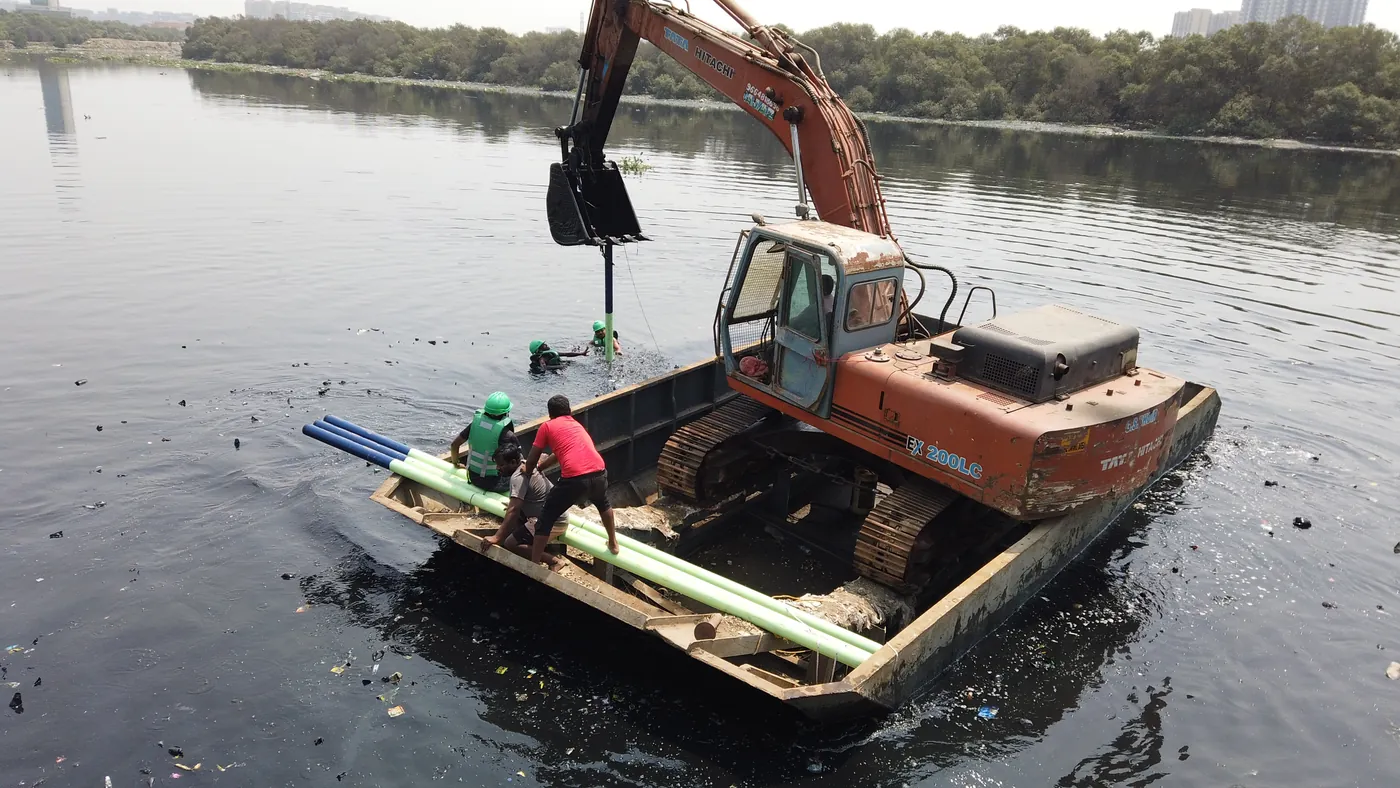
Earth5R works with NGO partners on environmental and livelihood projects that already have a public record. On the Mithi River in Mumbai, a programme running from October 2020 to November 2024 removed 11,100 tonnes of waste and recovered 4,440 tonnes of plastic, trained 10,000 families and engaged 15,000 volunteers, as set out in the Mithi River case study. That is the profile of an ongoing project, not a one-day transfer.[5]
The same is true of asset-based work. Under Hexaware’s SolarOne CSR project, Earth5R installed 50 solar street lights and provided a solar lamp to a tribal family for each light, with the partnership record on the SolarOne case page and on Earth5R’s CSR and sustainability goals page, which places the lights in Navi Mumbai and the lamps with 50 families near Borivali National Park.[6]


What official CSR data shows, and what it does not
Companies often want a national leftover figure before they act. That figure is not on the government portal. In the 3 August 2026 Lok Sabha reply, the Ministry said it does not maintain the data of the Unspent CSR Account of companies centrally. What it does publish is expenditure companies have filed.[1]
On 10 February 2026, a Press Information Bureau release quoted MCA21 filings for development CSR expenditure of ₹34,908.75 crore in FY 2023-24, and a five-year total from FY 2019-20 to FY 2023-24 of over ₹1,44,159 crore. The year-wise series is in that release, which also points the public to www.csr.gov.in, the National CSR Portal.[2]
The annexure to the later Lok Sabha reply gives state-wise totals of ₹31,183.28 crore for FY 2022-23, ₹35,917.98 crore for FY 2023-24 and ₹40,794.00 crore for FY 2024-25, updated to 31 March 2026. Maharashtra alone is shown at ₹8,630.80 crore in FY 2024-25.[1]
Those two official series are close, but they are not the same table. New copy should cite each figure with its source, and should not invent an unspent remainder by subtracting one official total from another. The legally important number for a company is the number in its own CSR obligation, its Board report and its bank accounts.
How to brief Earth5R and NGO partners while the year is still open
A December or January brief is still a brief for this financial year. A CSR team that wants to utilise unspent CSR funds should come with the remaining obligation, the geography it prefers, the Schedule VII clause it wants to work under, and a clear view of whether it is funding a project that can finish by 31 March or an ongoing project that will need the Unspent CSR Account.
Environmental activities sit in Schedule VII, including ensuring environmental sustainability, conservation of natural resources, and maintaining the quality of soil, air and water. Livelihood enhancement projects sit there too.[7] That is the legal home for river cleanup, waste management, tree plantation and skills work with local NGO partners.
Earth5R already publishes a CSR and NGO work gallery, a page on CSR and sustainability goals, and a free guide on how to design a CSR policy. For a short list of project types that companies can still brief this quarter, read the companion article on CSR project ideas for companies in India.
Contact Earth5R for CSR projectsSee the CSR and NGO work gallery
If your company is sitting on unspent CSR funds and needs a project with NGO partners that can be designed, delivered and documented, write to Earth5R through the contact page. Bring the remaining budget, the deadline you are working to, and the theme you want to fund.
Frequently asked questions about unspent CSR funds
- What are unspent CSR funds?
- Unspent CSR funds are the part of a company’s mandatory CSR spend for a financial year that has not been utilised on eligible activities by 31 March. Under Section 135 of the Companies Act, 2013, eligible companies must spend at least 2% of the average net profits of the three immediately preceding financial years on activities in Schedule VII.[3]
- What happens if a company does not spend its CSR obligation by 31 March?
- If the amount relates to an ongoing project, it must go into the Unspent CSR Account within 30 days and be spent on that project within three financial years, with any final balance going to a Schedule VII fund. Other unspent amounts must be transferred to a Schedule VII fund within six months. The Ministry of Corporate Affairs set this out in its Lok Sabha reply of 3 August 2026.[1]
- Does transferring unspent CSR funds to a Schedule VII fund count as compliance?
- The Act requires the prescribed spend, and it requires the transfer when that spend is not made in the year. The Board must still explain the shortfall in its report. A transfer is not a reason to delay a real project if the year is still open.
- Is leftover CSR money published as a national total?
- No central official total of Unspent CSR Accounts is maintained, according to the same Lok Sabha reply. Portals publish filed expenditure, not leftover funds. Companies should use their own obligation and accounts.[1]
- Can a company meet its CSR obligation by sending money to an implementing partner on 31 March?
- The CSR Policy Rules require the Board to satisfy itself that disbursed funds have been utilised as approved, and the CFO must certify that. A last-day transfer is not utilisation if the work has not happened. Brief Earth5R and NGO partners while there is still time in the year.[4]
- Where can a company get help to place unspent CSR funds in a real project?
- Earth5R designs and delivers environmental and livelihood CSR projects with NGO partners. The public record includes river, waste, plantation and solar work on earth5r.org. Start at the contact page.
Related reading on Earth5R
References
- Ministry of Corporate Affairs, reply to Lok Sabha Unstarred Question No. 2457, 3 August 2026, including the state-wise annexure updated to 31 March 2026. https://sansad.in/getFile/lsapps/loksabhaquestions/annex/188/AU2457_mdt6wF.pdf
- Press Information Bureau, Ministry of Corporate Affairs, “Annual filings by companies on development CSR expenditure totals over 1,44,159 crores in last five FYs (2019-20 to 2023-24)”, 10 February 2026, PRID 2226018. https://www.pib.gov.in/PressReleseDetailm.aspx?PRID=2226018. National CSR Portal: https://www.csr.gov.in/
- The Companies Act, 2013, Section 135, India Code. https://www.indiacode.nic.in/show-data?actid=AC_CEN_22_29_00008_201318_1517807327856&orderno=139§ionId=1326§ionno=135
- The Companies (CSR Policy) Rules, 2014, as amended, including the Board’s duty to satisfy itself on utilisation and the CFO certification. India Code compilation of the Rules. https://upload.indiacode.nic.in/showfile?actid=AC_CEN_22_29_00008_201318_1517807327856&filename=rules_2014_with_amendments.pdf&type=rule
- Earth5R, “Mithi River Case Study”, figures for October 2020 to November 2024. https://earth5r.org/mithi-river-cleaning-and-plastic-waste-management-case-study/
- Earth5R, “Hexaware’s Solar Street Light Initiative with Earth5R”, and the partnership summary on “CSR and Sustainability Goals”. https://earth5r.org/hexawares-solar-street-light-initiative-with-earth5r/ · https://earth5r.org/csr-and-sustainability-goals/
- The Companies Act, 2013, Schedule VII (see Section 135), India Code. https://upload.indiacode.nic.in/schedulefile?aid=AC_CEN_22_29_00008_201318_1517807327856&rid=79
How to cite this article
Saurabh Gupta, “Unspent CSR Funds in India: What Companies Must Do by 31 March”, Earth5R EarthJournal, 27 November 2026.