
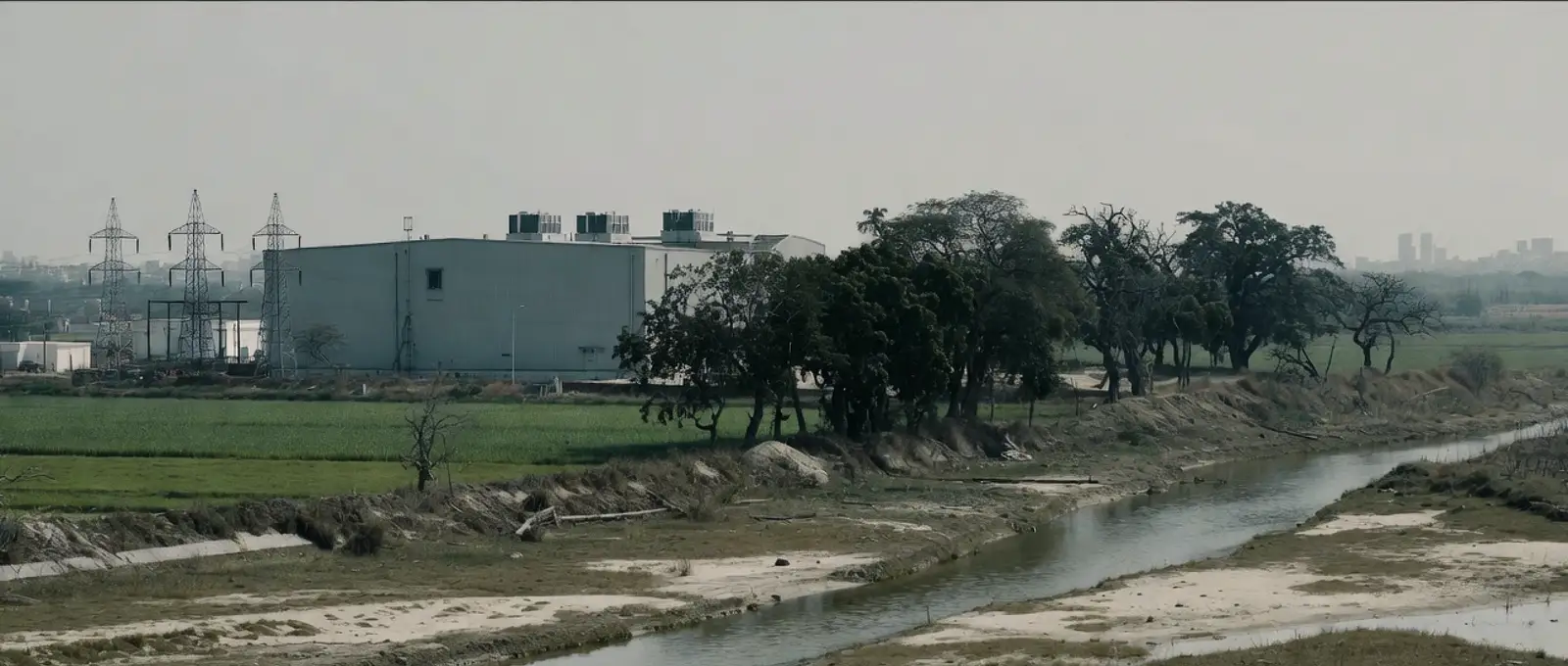
For fifty years, the sustainability conversation has been about the limits of the planet. Artificial intelligence forces us to add a second set of limits: the limits of the human mind, of our institutions and of our cultures. AI presses on both at the same time, and how we respond in the next few years will decide whether life on Earth, in all its forms, can keep renewing itself.
How AI tests the planet’s limits and ours
- The limits we measured, and the ones we forgot
- AI’s footprint on energy, water and materials
- Where AI presses on planet and people
- Intelligence is cheap, wisdom is scarce
- When the systems that run our lives become invisible
- Democracy is how we protect the commons
- Truth is expensive, communities check it best
- A monoculture of the mind
- Communities run on people who need each other
- The Earth5R 5R method applied to AI
- What companies, governments and citizens can do
- Join the conversation
The limits we measured, and the limits we forgot to measure
Most of my working life has been spent on the ground: on riverbanks, in housing society lobbies, in slum settlements, in school classrooms and in company boardrooms. In all those places I have seen one pattern again and again. Damage does not begin when a system runs out of resources. It begins when the people inside the system can no longer see what is happening, can no longer agree on what to do, or no longer feel responsible.
A river does not die only because of sewage. It dies because the people who live along it stop treating it as theirs, the ward office stops listening, and nobody can say who is accountable for which drain. When we fixed a waste system in a building, the composter was the easy part. The hard part was the shared understanding between residents, housekeeping staff, the waste collector and the municipality.
The sustainability movement learned to measure the planet’s limits with great precision. Since 2009, scientists have tracked nine planetary boundaries: climate, biodiversity, land, freshwater, nutrient flows, novel chemicals, ocean acidification, the ozone layer and aerosols.[1] Kate Raworth’s doughnut model added a social foundation, the minimum every person needs for a dignified life.[3] Between the ceiling of the planet and the floor of human dignity lies the safe and just space for humanity.
Planetary boundaries crossed, by assessment
Number of the nine boundaries found outside the safe operating space
Sources: Rockström et al. 2009; Steffen et al. 2015; Richardson et al. 2023; Planetary Health Check 2025.[1][2][4][5] Only the ozone layer and aerosol loading remain within safe limits.
What we measured much less carefully are the limits of human beings themselves: how much we can understand, how much we can pay attention to, how many people we can hold a real conversation with, how quickly our institutions can learn and correct their mistakes. These limits were always there. Artificial intelligence is now pressing on them, and on the planet’s limits, at the same time.
AI’s physical footprint is doubling within this decade
Intelligence in the cloud runs on very real land, water and electricity. The International Energy Agency estimates that data centres used about 415 terawatt-hours of electricity in 2024 and could use around 945 TWh by 2030, slightly more than Japan uses in a year today.[6]
Global data centre electricity use, TWh
AI is the main driver of the growth
Source: International Energy Agency, Energy and AI (2025).[6]
Many of these facilities are cooled with fresh water in places that are already short of it. We looked at what this means for Indian cities in Data Centres and Water in India.
An AI empire is also an empire of concrete, cables and cooling towers. Its costs fall on local rivers, groundwater and the communities around each campus, so they belong in every company’s sustainability boundary.
The deeper risk is on the human side of the ledger
When people talk about the environmental cost of AI, they usually mean electricity and water. Those costs are real and growing. But in my view the deeper risk to sustainability is on the human side, because it is the human side that decides how we treat the planet.
| Limit | How AI presses on it |
|---|---|
| Planet Energy, water, materials | Data centre electricity more than doubling by 2030; billions of cubic metres of water; millions of tonnes of e-waste.[6][7][8] |
| Human Understanding | Finance, law and administration are becoming too fast and complex for people to follow, widening the gap between the systems that govern our lives and our ability to question them. |
| Human Shared conversation | Feeds are curated by algorithms, bots act as people, and synthetic content makes a convincing lie almost free. |
| Human Culture and language | Most AI learns from a few dominant languages, while at least 40% of the world’s languages are endangered.[18] |
| Human Relationships | 72% of American teenagers have tried an AI companion, in a world where 1 in 6 people already feel lonely.[11][10] |
| Human Accountability | Proposals for companies run entirely by AI agents raise a question no environmental law was designed for: who answers when no human decided?[14] |
Intelligence is becoming cheap. Wisdom is not.
The historian Yuval Noah Harari made a point in a recent public conversation that reminds me of what I see in our fieldwork every day.[13] Every time something becomes cheap and abundant, the bottleneck moves somewhere else. AI is making intelligence, the ability to solve a problem and reach a goal, cheap and abundant. So the scarce thing becomes the goal itself. He uses the old fairy tale of the genie and three wishes: the genie can grant anything, and in almost every version of the story, people wish for the wrong things. Intelligence is the genie. Wisdom is knowing what to wish for.
I find this the most useful lens on AI and sustainability, because the ecological crisis never suffered from a shortage of intelligence. Some of the cleverest engineering in history went into extracting oil faster, catching more fish, clearing more forest and selling more single-use packaging. The systems worked brilliantly at the goals we gave them. The goals were the problem. If we give the same goals, more growth, more output, more consumption, to an intelligence far more capable than our own, we should expect the same results at greater speed.
The money shows where our priorities are today. Stanford’s AI Index reports that corporate investment in AI reached about $252 billion in 2024, and that 78% of organisations surveyed were using AI that year.[9] Harari estimates that for every hundred dollars spent on making AI more powerful, about one is spent on making it safe.[13]
Where each $100 of AI effort goes
Yuval Noah Harari’s estimate of capability versus safety spending at AI companies
Source: Harari, The next 50 years: humanity, AI, power (2026).[13] An estimate, not an audited figure.
No mature industry that can harm people at scale works on that ratio. We would not accept it from a drug company, a car maker or a chemical plant. The real sustainability question of the AI age is a question of purpose: what do we want this power for, and who gets to decide?
When the systems that run our lives become invisible, nobody can question them
Civilisation is built from words. Laws, money, land records, pollution permits and corporate charters are all agreements written in language. Harari calls language the operating system of civilisation, and describes AI as a “bureaucratic native”: something that can read every regulation, track every transaction and never sleeps.[12][13] His warning is that AI will most likely gain power through bureaucracy rather than force. He compares our possible future to the life of a horse, shaped by a financial system it cannot see, and estimates that perhaps 5% of people understand finance today.
I see the sustainability version of this every day. Carbon markets, ESG ratings, water allocation models, crop insurance algorithms and land-use approvals already shape the fate of forests, rivers and farming families. Very few of the people affected can follow how those decisions are made. If AI makes them faster and more opaque, the fishing family by the creek and the farmer on the edge of a new industrial corridor lose the one tool they have always had: the ability to question a decision and ask for it to be explained.

Every environmental safeguard we have assumes there is a responsible human somewhere. A factory discharges effluent; a manager signed off; a pollution control board can issue a notice; a court can summon a director. That assumption is being tested. In June 2026, Argentina’s President Javier Milei proposed a legal framework for “non-human corporations”, companies run by AI agents with little or no human involvement. Harari responded publicly that such entities could gain economic and political power with nobody answerable for what they do. As far as public reporting shows, it remains a proposal.[14]
There is an irony here that environmentalists should notice. In 2017, New Zealand recognised the Whanganui River as a legal person, and a high court in Uttarakhand declared the Ganga and the Yamuna living entities, an order the Supreme Court later stayed.[15][16] Legal personhood has been one of the boldest tools for giving a voice to nature. Now the same tool is being proposed for machines that can speak, trade and argue better than most of us.
Who we treat as a person is one of the most important sustainability decisions a society can make. It should be made deliberately and in public. In Earth5R’s ESG work, the gap we watch most closely is between what organisations say and what their data shows; AI can close that gap by checking claims against evidence, or widen it by producing polished sustainability language faster than any auditor can read.
Democracy is how societies agree to protect the commons
Climate action, river restoration and clean air all need millions of people to agree, argue, compromise and keep their commitments over decades. That is what a democracy is: a conversation. Harari points out that large democracies only became possible with newspapers, radio and television, because before them millions of people could not talk to each other in real time. Each new information technology shakes the foundation of that conversation, and social media has shaken it hard for a decade.[12]
The most powerful people in the twentieth century’s public conversation were editors, who decided what a nation would think about each morning. Today that job is done by recommendation algorithms. They have no faces, they answer to engagement metrics, and they are very good at keeping us angry and scrolling.
The atmosphere does not respond to who won an argument online. It responds to what billions of people actually do. When the shared conversation splinters into feeds tuned for outrage, the long, patient agreements that protect the commons become very hard to reach.
Truth is expensive, and communities are where it is cheapest to check
Harari gives a simple explanation of why lies so often beat facts. The truth is costly to find. It is usually complicated. And it is often painful. Fiction is cheap, simple and flattering.[13] That is why societies built expensive institutions to protect the truth, such as journalism, courts and science. AI drives the cost of convincing fiction close to zero: a fake report, a fake photo, a fake expert, a fake grassroots campaign.
I would add one more institution of truth, the one I have spent my career with: the community. Much of what we know about pollution in Indian cities came first from residents who noticed the smell of the water, the colour of the sky or the children coughing, long before an official report confirmed it. That is the idea behind my book, The Street Knows First. Ground-level observation is anchored in a real place, with real people you can visit and ask. It is very hard to fake at scale.
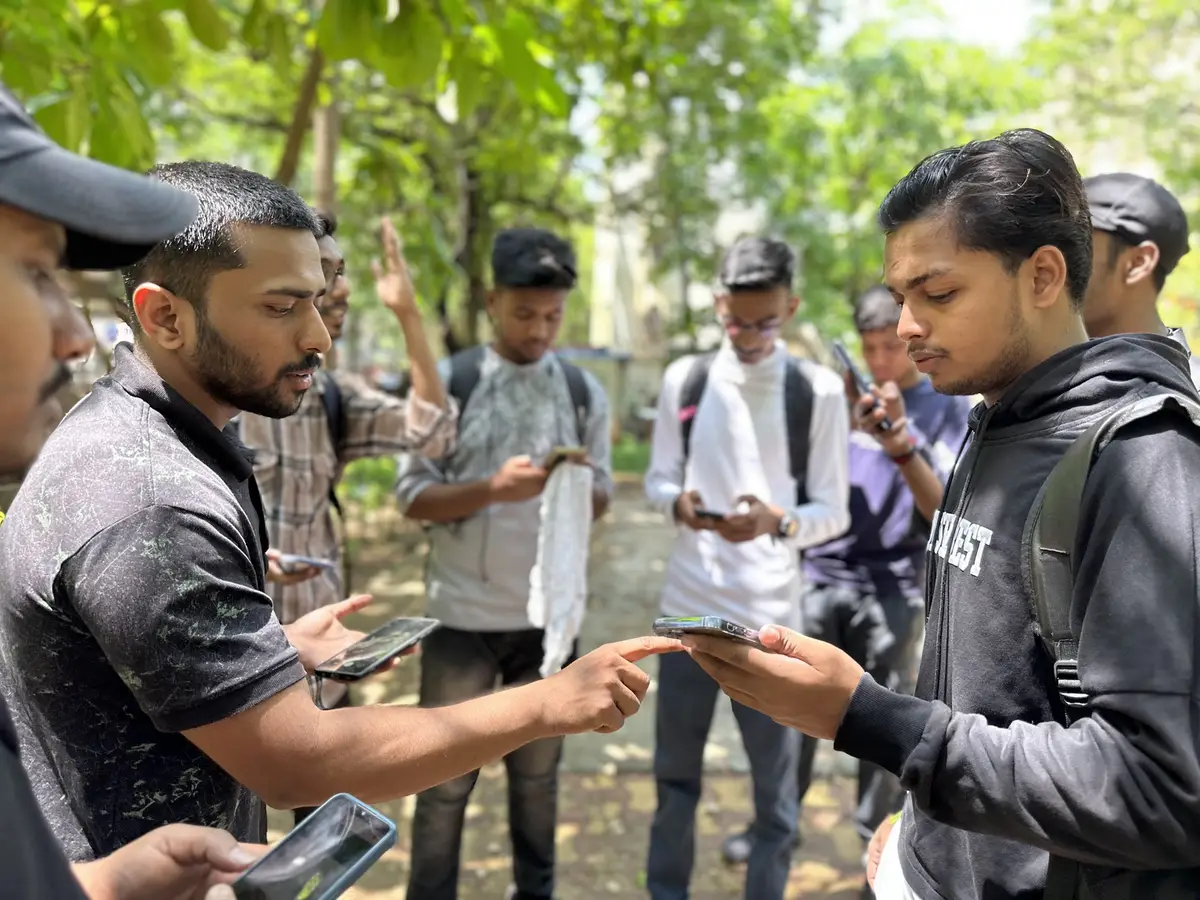
In an age of cheap fiction, citizen science, local monitoring, neighbourhood groups and field-verified data become some of the most valuable public goods we have. They deserve the protection we give a free press.
A monoculture of the mind is as fragile as a monoculture of crops
This is where human limits and planetary limits meet most clearly. About half of all websites whose language can be identified are in English, and the large language models that are becoming our storytellers learned mostly from that internet.[17] UNESCO estimates that at least 40% of the world’s languages are in danger of disappearing.[18] In India, the People’s Linguistic Survey under Ganesh Devy documented around 780 languages and estimated that about 220 had been lost in the previous 50 years.[19]
Languages carry knowledge of local plants, soils, seasons, fish and medicine, much of it never written down. Cultural diversity and biological diversity tend to live in the same places, and to decline together. Agriculture already taught us this lesson: replacing thousands of local varieties with a few high-yield ones raised production, until a single pest or drought found the weakness that diversity used to guard against.
If billions of people learn, write and think through a handful of AI systems trained on a handful of languages and worldviews, we risk a monoculture of the mind. It will be efficient. It will also be fragile, and it will quietly erase local knowledge that many ecosystems depend on.
Communities run on people who need each other
The social foundation of sustainability is made of relationships: the neighbour who convinces the next building to segregate waste, the volunteer who returns next Sunday, the officer who takes a call on a holiday. Every successful community project I have seen has depended on people showing up for each other, even when it was slow and inconvenient.
AI companions are always available, always agreeable and never need anything from us. For a lonely person that can be a comfort, and I do not want to dismiss it. A 2025 survey found that 72% of American teenagers had tried an AI companion.[11] The WHO’s Commission on Social Connection found that loneliness affects about 1 in 6 people and is linked to more than 871,000 deaths a year.[10]

A society that gets used to relationships with no demands may slowly lose the patience that collective action requires. Social connection is a sustainability issue, and we should treat it as one.
The Earth5R method applied to AI: Respect comes before Recycle
The 5R in Earth5R comes from a sequence we have taught since 2014: Respect, Reduce, Reuse, Recycle, Restore. The order matters. Respect comes first, respect for nature, for communities and for the limits of growth. A programme that starts at Recycle has skipped the three most important steps. I believe the same sequence offers a practical way for companies, governments and citizens to think about AI.
Respect: start from the limits of the planet and of people
Before adopting an AI system, ask what it will cost in energy, water and materials, and what it will do to people’s ability to understand, question and decide.
Reduce: use AI where it truly serves a purpose
Not every task needs the largest model. Smaller, efficient models and simple tools often do the job with a fraction of the energy and water. A clear purpose is the best efficiency measure.
Reuse: extend the life of hardware and knowledge
Longer server life, refurbishment and reuse could cut AI e-waste by up to 86%.[8] Reuse also applies to knowledge: build on open, shared and community-owned data.
Recycle: close the loop on materials and on value
Recover the metals in retired hardware through certified recyclers, and return the value of data to the communities that produced it.
Restore: rebuild the institutions of trust
Invest in local journalism, citizen science, public education and languages, the human systems that let societies see the truth and correct their course.
In our own work, this translates into a few habits. We train citizens to train others, so knowledge spreads through people as well as platforms. We verify field data on the ground, with geotagged records and photographs, before we use it in any analysis. And in our ESG work, we use AI to check claims against evidence.
A safe and just space for AI needs a ceiling and a floor
Sustainability science gave us the idea of a safe operating space for humanity, between the planet’s ceiling and the social floor. We now need the same idea for AI.
An ecological ceiling for AI would set energy, water, material and e-waste standards for data centres and AI services, with honest disclosure in sustainability reports, including India’s BRSR.
A human foundation for AI would guarantee that people can understand and appeal decisions that affect them, that a human or institution remains accountable for every AI system acting in the world, that public AI supports Indian and Indigenous languages, and that safety research is funded in proportion to the risk.
The precautionary principle, adopted at the Rio Earth Summit in 1992, already tells us how to act: where there are threats of serious or irreversible damage, lack of full scientific certainty should not be used as a reason to delay.[22] We learned that rule through asbestos, DDT and the chemicals that thinned the ozone layer. We can apply it to AI before the damage.
What companies, governments and citizens can do this year
Companies
Include AI in your sustainability boundary. Report the energy, water and hardware footprint of AI use alongside the business case, and ask vendors for data centre water and energy figures. Before automating a decision that affects people or nature, ask whether those affected will still be able to understand it and challenge it.
Governments and regulators
Decide deliberately, and in public, which entities can hold legal personhood. Require explainability and human appeal for AI in public services, permits and credit. Fund AI in Indian languages and community-owned data. Treat data centre siting as a water and land-use decision as much as an investment decision.
Citizens, educators and communities
Keep investing in slow, human institutions: neighbourhood groups, local news, libraries, citizen science and face-to-face meetings. Talk to young people about who, or what, they confide in. Teach and learn the languages of your grandparents. And whenever an organisation adopts a new AI system, ask two questions: what is it for, and who decided?
A problem this large needs many voices: join Earth5R’s podcasts, roundtables and policy dialogues
AI is changing the conditions for life on Earth faster than our institutions can respond. No single organisation, government or company can solve this alone, and the window to shape it is short. Earth5R is organising conversations on AI, planetary limits and human limits, and we would like you in them.
- Podcasts: conversations with researchers and practitioners on the Sustainable Futures Podcast.
- Roundtables: boardroom, campus and community roundtables on AI and sustainability, which your organisation can host with us.
- Policy dialogues: working with policymakers and governments to bring ground-level evidence into the rules being written for AI.
If you are a researcher, a business executive, a policymaker, an educator or a student who cares about this, write to us and mention “AI Roundtable”.
Host or join a roundtableSustainable Futures PodcastAI Risks & Sustainability
The future still needs human authors
Sustainability has always been a set of promises: to leave the river cleaner, the forest standing and the city fairer than we found them. Promises are made in words, between people who can hold each other to them. Machines may soon write better sentences than we do. Deciding which promises are worth keeping, and keeping them, is still our job. We have perhaps a few years to show that we can live wisely within the limits of the planet and within the limits of ourselves.
Saurabh Gupta
Founder & CEO, Earth5R
Frequently asked questions
- How does AI affect sustainability?
- AI affects sustainability in two ways. It adds pressure on planetary limits through electricity, water, minerals and e-waste from data centres and hardware. It also presses on human limits: our ability to understand complex systems, hold a shared public conversation, keep languages and cultures alive, maintain relationships and hold someone accountable for decisions. AI can also help, for example by monitoring emissions or checking sustainability claims against evidence.
- How much electricity and water does AI use?
- The International Energy Agency estimates that data centres used about 415 TWh of electricity in 2024 and could use around 945 TWh by 2030. Researchers at the University of California, Riverside estimate that global AI demand could withdraw 4.2 to 6.6 billion cubic metres of water in 2027.
- What are planetary boundaries?
- Planetary boundaries are nine Earth-system limits, including climate, biodiversity, freshwater and ocean acidification, within which humanity can develop safely. The 2025 Planetary Health Check found that seven of the nine have been crossed.
- What does “human limits” mean in the context of AI?
- It refers to the limits of human attention, understanding, institutions and relationships. As AI makes financial, legal and information systems faster and more complex, fewer people can follow or question them, which weakens the accountability and public debate that sustainability depends on.
- How can organisations use AI more sustainably?
- Start with purpose, use the smallest model that does the job, report AI’s energy and water footprint, extend hardware life, keep a human accountable for every automated decision, and make sure people affected by a decision can understand and appeal it.
- How can I take part in Earth5R’s AI and sustainability roundtables?
- Write to Earth5R through the contact page and mention AI Roundtable. Organisations can host a boardroom, campus or community roundtable, and researchers and practitioners can join the Sustainable Futures Podcast.
Related reading on Earth5R
References
- Rockström, J. et al. (2009). A safe operating space for humanity. Nature 461.
- Steffen, W. et al. (2015). Planetary boundaries: Guiding human development on a changing planet. Science 347.
- Raworth, K. (2017). Doughnut Economics: Seven Ways to Think Like a 21st-Century Economist. Random House.
- Richardson, K. et al. (2023). Earth beyond six of nine planetary boundaries. Science Advances 9.
- Stockholm Resilience Centre and PIK (2025). Planetary Health Check 2025: Seven of nine planetary boundaries now breached.
- International Energy Agency (2025). Energy and AI: Executive Summary.
- Li, P., Yang, J., Islam, M. A. and Ren, S. (2023, updated 2025). Making AI Less “Thirsty”: Uncovering and Addressing the Secret Water Footprint of AI Models.
- Wang, P. et al. (2024). E-waste challenges of generative artificial intelligence. Nature Computational Science; summary by Scimex.
- Stanford HAI (2025). AI Index Report 2025: Economy.
- World Health Organization (2025). Social connection linked to improved health and reduced risk of early death.
- Common Sense Media (2025). Talk, Trust, and Trade-Offs: How and Why Teens Use AI Companions; reported by Axios.
- Harari, Y. N. (2024). Nexus: A Brief History of Information Networks from the Stone Age to AI. Random House.
- Harari, Y. N. (2026). The next 50 years: humanity, AI, power. Public conversation, video.
- Buenos Aires Herald (2026). Milei, Harari clash over ‘non-human companies’ as Argentina pushes AI legal framework.
- New Zealand Parliament (2017). Te Awa Tupua (Whanganui River Claims Settlement) Act 2017.
- High Court of Uttarakhand (2017). Mohd. Salim v. State of Uttarakhand, order of 20 March 2017; stayed by the Supreme Court of India, July 2017.
- W3Techs. Usage statistics of content languages for websites.
- UNESCO. Towards a World Atlas of Languages.
- Devy, G. N. (ed.) (2013). People’s Linguistic Survey of India; reported in Atlas Obscura.
- Gorenflo, L. J. et al. (2012). Co-occurrence of linguistic and biological diversity in biodiversity hotspots and high biodiversity wilderness areas. PNAS 109(21).
- Garnett, S. T. et al. (2018). A spatial overview of the global importance of Indigenous lands for conservation. Nature Sustainability 1.
- United Nations (1992). Rio Declaration on Environment and Development, Principle 15.
How to cite this article
Gupta, S. (2026). AI and Sustainability: Living Within Planetary Limits and Human Limits. EarthJournal, Earth5R, 12 October 2026. https://earth5r.org/ai-and-sustainability-planetary-limits/
A founder’s perspective. Several ideas are credited to Yuval Noah Harari’s public conversation “The next 50 years: humanity, AI, power”; the 1:100 safety ratio and the 5% financial literacy figure are his estimates. Argentina’s framework for non-human corporations was a proposal at the time of writing. Projections for AI energy, water and e-waste are scenario estimates from the sources cited.