
High school architecture internship and research fellowship
This high school architecture internship lets students in Grades 9 to 12 study how real buildings near home deal with heat, light and fresh air, with a mentor who reviews each step. You measure rooms at home and at school, sketch what you find and design low-cost changes that make a space cooler and brighter.
For school students taking Visual Arts, Design Technology or Physics who want to see how a building’s design changes comfort before choosing a course. Online, with field work near home and a parent or guardian present at every self-guided activity. The fellowship is paid because every student receives time and attention from senior researchers and leaders.
Why architecture matters for sustainability
The way a building is designed decides how hot it feels inside and how much power it needs. A thin tin or concrete roof can make a small home very hot in summer, so families run fans and coolers for long hours. Architects use shade, cross ventilation, daylight and suitable materials to keep rooms comfortable with less energy. This matters most in crowded areas, where families can least afford cooling.
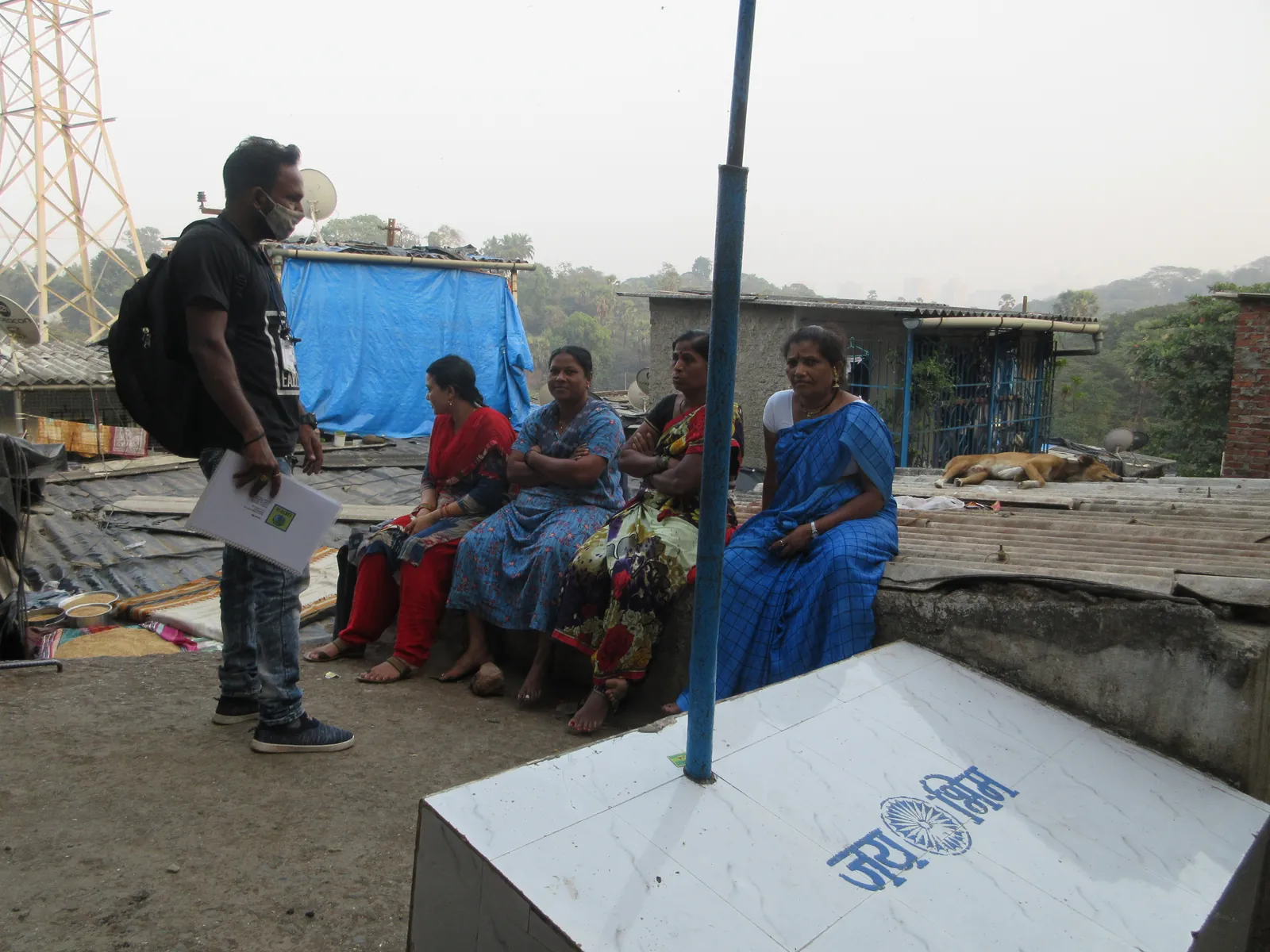
Earth5R has worked with women in informal settlements in Mumbai to grow saplings on hot tin roofs, to help cool the homes below. It has also installed solar panels and solar street lights in Mumbai for a corporate CSR project. As a fellow you apply the same thinking to a home or school building near you, with a mentor checking your method.
This work links to the UN Sustainable Development Goals: Goal 11, Sustainable cities and communities and Goal 7, Affordable and clean energy.
Available projects in this high school architecture internship
Each project fits around school work and takes place near home. Your mentor shapes the final project with you.
Cooling the hottest room at home
Measure the temperature of rooms in your home at fixed times for a few weeks, compare rooms with different roofs, windows or shade, and design a low-cost way to cool the hottest one.
Daylight in your classroom
With your school’s permission, record how much daylight reaches different desks through the day using a light meter app, and propose changes to blinds, colours or layout that cut the need for lights.
Plants for a hot terrace
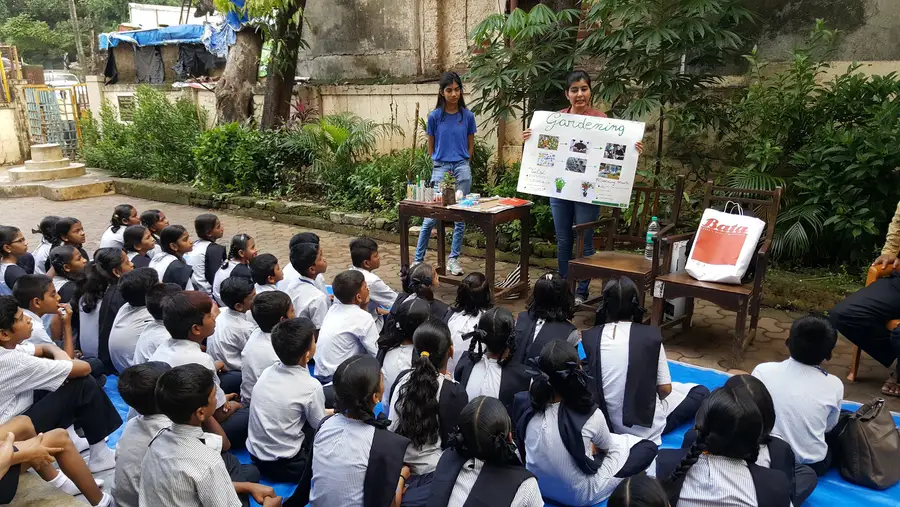
Study photos of Earth5R’s rooftop plantations on tin roofs and published research on green roofs, then design a planter layout for a balcony or terrace at home, with an adult checking it is safe.
A better space for bins
Study how your housing society or school stores its waste bins and composting units, then redesign the space so it is easier to reach, smells less and is safer for staff to use each day.
What you do in the field
- Measure temperature and daylight in rooms at set times
- Sketch floor plans and simple sections of the spaces you study
- Ask family members how comfortable each room feels
- Read published research on passive cooling and shading
- Draw design options and compare them with your measurements
- Present your design in a research conversation and answer questions
Skills you build
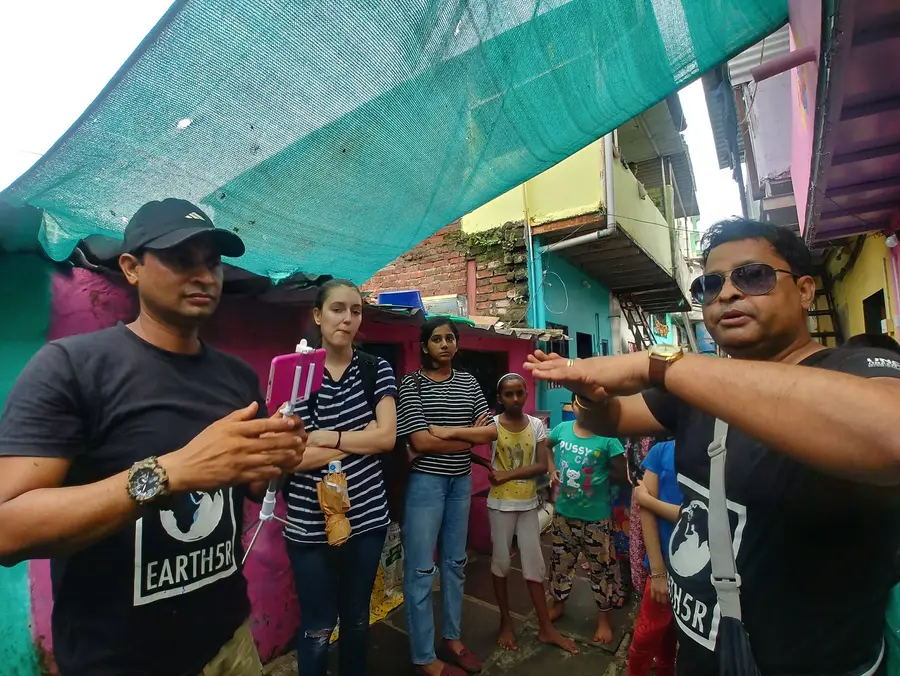
On a high school architecture internship, you collect your own data near home with a parent or guardian, using the Earth5R app and data forms. Earth5R checks the data on its platform before it goes into your project report.
How a high school architecture internship fits your school programme
For IB, IGCSE, CBSE and ICSE students. Your school decides what counts towards its own requirements.
IB CAS
Redesigning a hot classroom or the bin area at your school, and sharing the plan with staff, can form a CAS project with creativity and service. Your CAS coordinator decides.
Extended Essay and IA
Your own temperature and daylight records can support a Physics or Design Technology IA, or an Extended Essay on building comfort. Your supervisor approves the topic.
MYP, IGCSE and CBSE projects
A measured redesign of one room fits the MYP Personal Project and design or art project work in IGCSE, CBSE and ICSE, if your school agrees.
University applications
Measured drawings, sketches and a reviewed design report give you pages for an architecture portfolio and a specific project to talk about at interview.
How the high school architecture internship works
Every student moves through four phases. Your mentor checks each phase before you move on, and sessions pause during board exams.
Observe and Map
Go into the field near home, with a parent or guardian, and collect primary data for your project in Architecture.
Frame and Design
Find the root cause in your data and frame a problem worth solving, with your mentor.
Model
Build a working model, analysis or design for your solution, and test it.
Build and Deploy
Put your solution to work, measure the result and publish a verified record on earth5r.org.
Along the way you take part in research conversations with professors at MIT, Oxford, Cambridge, LSE and other universities, and ask your own questions. See how FIELDWORK works.
Where this can take you
University courses this leads to
- Bachelor of Architecture (BArch)
- BA or BSc in Architecture
- BSc in Architectural Engineering
- BA in Sustainable Environmental Design
- BA in Interior or Spatial Design
Careers in this field
- Architect
- Sustainability consultant for buildings
- Urban designer
- Interior designer
- Building energy analyst
Universities to aim for in Architecture
Architecture admissions tutors look for students who observe buildings closely, draw what they see and can explain the reasons behind a design. A high school architecture internship with FIELDWORK gives you measured site work, design options your mentor reviewed and a record that admissions teams can check. Students use a high school architecture internship to build a record of real work for applications to universities like these.
Massachusetts Institute of Technology (MIT)
USA · Department of Architecture, School of Architecture and Planning
MIT’s Department of Architecture offers two undergraduate degrees, the Bachelor of Science in Architecture and the Bachelor of Science in Art and Design. Architecture students work through a sequence of design studios and take a required subject called Environmental Technologies in Buildings. The Building Technology group teaches structural design.
UK · Architecture BA (Hons) and MArch, Department of Architecture
Cambridge’s Architecture course is taught by the Department of Architecture, with design studio work at its centre. Students also take history, theory and technology, including compulsory courses in environmental design. Later options include Sustainable Cities and Sustainable Housing and Climate Change.
University of California, Berkeley
USA · Department of Architecture, College of Environmental Design (CED)
Undergraduates in Berkeley’s Department of Architecture study for the BA Architecture, built around a sequence of design studios. The department aims to design sustainable environments and healthy building systems. Its research areas include Climate Solutions and Technology + Material Innovations, alongside building science, history and theory.
USA · Bachelor of Architecture, Department of Architecture, College of Architecture, Art, and Planning (AAP)
Cornell’s Bachelor of Architecture is a five-year professional programme run by the Department of Architecture in AAP. Students share a core curriculum in design, theory, history, representation and structures for three years. They can then choose a concentration such as Architectural Science and Technology.
University College London (UCL)
UK · The Bartlett School of Architecture
The Bartlett School of Architecture offers undergraduate degrees including the Architecture BSc, an Architecture MSci with a placement and an Engineering and Architecture MEngArch. The school names carbon and energy reduction as a strategic aim, and its research on sustainable urbanism covers decarbonisation and resource management.
UK · Department of Architecture & Civil Engineering
Bath teaches undergraduate architecture through a BSc and an MArch, and architects and civil engineers are taught together on cross-discipline projects. The department says sustainability in the built environment is central to its research, with centres for climate adaptation, regenerative design and sustainable energy systems.
Delft University of Technology (TU Delft)
Netherlands · Faculty of Architecture and the Built Environment (BK)
TU Delft’s Faculty of Architecture and the Built Environment runs a bachelor’s degree programme along with master’s and PhD study. Its departments cover architecture, architectural engineering and technology, management in the built environment, and urbanism. Faculty research covers climate adaptation, circular building and facades for cool, healthy homes.
Switzerland · Department of Architecture (D-ARCH)
ETH Zurich’s Department of Architecture teaches a Bachelor and a Master in Architecture. Its Master’s programme in Integrated Building Systems focuses on the energy performance and environmental impact of buildings. The department describes its work as driven by social, ecological and sustainable topics.
National University of Singapore (NUS)
Singapore · Department of Architecture, College of Design and Engineering
The NUS Department of Architecture teaches undergraduates through its Bachelor of Arts in Architecture. Its labs include the Urban Climate Design Lab, the Urban Ecology Lab and the SkyTimber Tropical Renewable Architecture Design Lab, and it belongs to the International Network for Tropical Architecture.
The University of Hong Kong (HKU)
Hong Kong · Bachelor of Arts in Architectural Studies, Department of Architecture
HKU’s Bachelor of Arts in Architectural Studies is the first degree needed to qualify as an architect. Studios and electives cover themes such as ecosystems and infrastructure, energy and the environment, and changing rural and urban areas in East Asia. Exchanges and overseas workshops are part of the programme.
This list is for guidance. These universities offer undergraduate study in Architecture. Earth5R has no admissions arrangement with them, and admission decisions rest with each university. Students get help researching universities, scholarships and applications, depending on the programme.
What your fellowship fee pays for
An internship fellowship at Earth5R is time and attention from senior researchers and leaders. Each part below takes staff time and resources that we set aside for every fellow.
Live mentoring with experts
One-to-one mentoring in most fellowships, with regular check-ins on your project.
Dialogues with global researchers
Academics from international universities and renowned scientists, who answer your questions and discuss your work.
Support in the field
Guidance while you collect data and work on your project in the field.
References for your next step
References when you apply for jobs, higher studies and research programmes.
Your work, hosted for life
Your work and data stay on Earth5R’s website and servers for life, where universities and employers can check them.
Time from senior people
Each fellow receives time and attention from senior researchers and leaders, set aside for them.
Fee details available on request.
Choose your fellowship
The Multi-Year Fellowship can run from Grade 9 to Grade 12, with more scope each year.
The fee pays for live mentoring, dialogues with global researchers, support in the field, references and lifelong hosting of your work. Fee details available on request.
High school architecture internship: common questions
Do I need to be good at drawing for this high school architecture internship?
No. You can start with simple sketches and phone photos. Your mentor helps you build drawing skills as the project grows, and students who already use CAD or 3D software can take their designs further.
How much time will the project take each week?
The weekly load is light, and your child agrees the timeline with the mentor. Measuring, sketching and writing happen at home, at school or in public places nearby, so there’s little travel and the work can fit around school.
Can the work go into an architecture portfolio?
Yes. Your measured drawings, sketches, design options and reviewed report can all go into a portfolio. Each university sets its own portfolio rules, so check what the courses you plan to apply for ask to see.
Is the high school architecture internship paid?
Yes. FIELDWORK is a paid, mentored programme. The fee pays for live mentoring, dialogues with global researchers, support in the field, references and lifelong hosting of your work. Fee details are available on request.
Can my child do this high school architecture internship online?
Yes. Mentoring sessions run online, and field work takes place near where you live.
Is a parent or guardian present during field work?
Yes. A parent or guardian is present at every self-guided field activity. Online sessions are for students.
Does FIELDWORK pause during board exams?
Yes. Sessions pause during board exams, so the fellowship fits around school work.
What do students get at the end?
A certificate, a letter of recommendation, a project report and a verified profile on earth5r.org, where universities can check the work.
Related subjects for school students
Already at university? See the Architecture and Sustainable Design internship fellowship for university students.
Apply for a FIELDWORK fellowship in Architecture
This high school architecture internship is for students in Grades 9 to 12. Work on a live Earth5R project with a mentor, take part in research conversations with global researchers, and build a verified record of your work. Fee details available on request.