High school product design internship and research fellowship
This high school product design internship lets students in Grades 9 to 12 design useful products from material that would otherwise be thrown away, with a mentor who reviews each prototype. You study the waste in your own home, sketch and build simple models and test them with the people who would use them.
For school students taking IB Design Technology, MYP Design or IGCSE Design and Technology who like making things and fixing everyday problems. Online, with field work near home and a parent or guardian present at every self-guided activity. The fellowship is paid because every student receives time and attention from senior researchers and leaders.
Why product design matters for sustainability
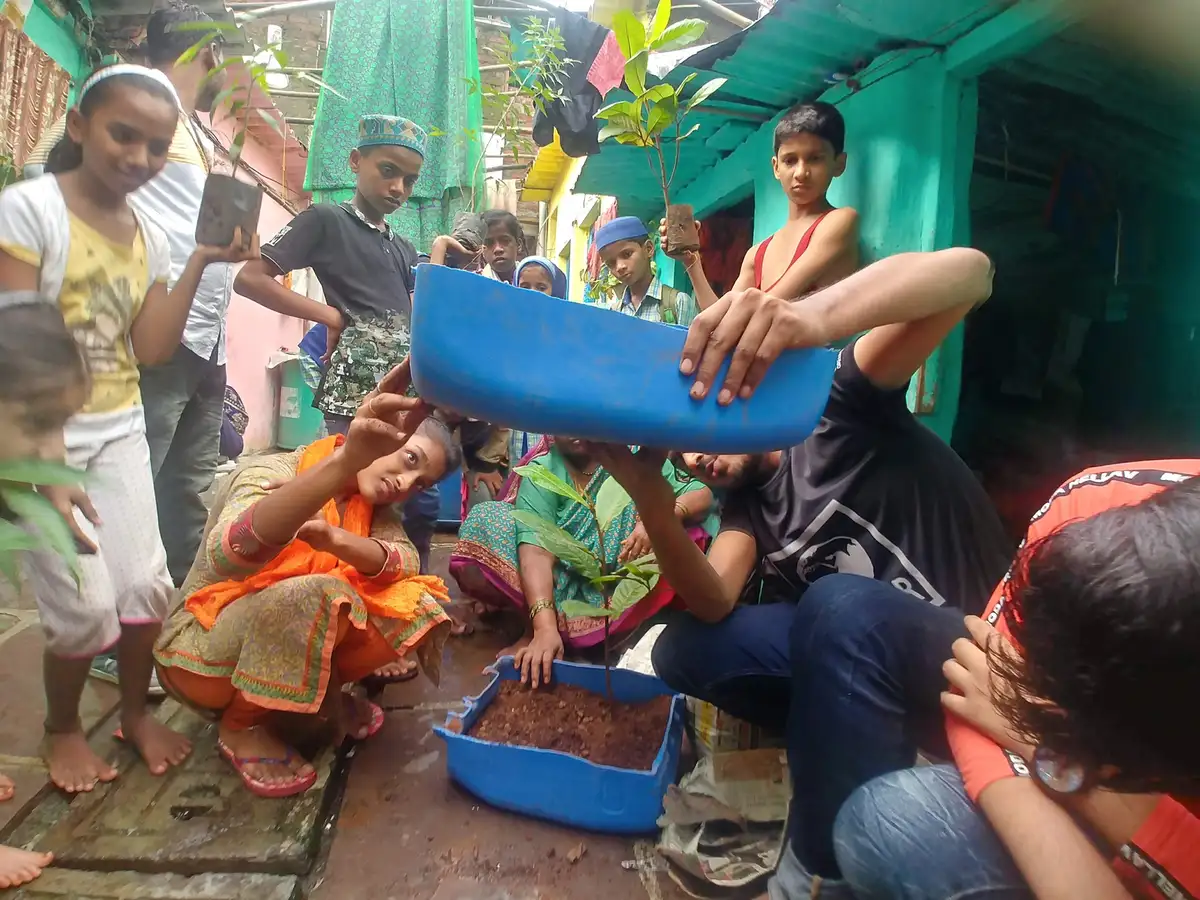
Someone chose the shape and material of every bottle, wrapper and phone charger you own. Recyclers can’t easily separate a snack pack made from several layers of plastic, and a gadget that can’t be repaired gets thrown out early. Circular design thinks about reuse and recycling from the first sketch, so less material ends up as litter on streets and beaches.
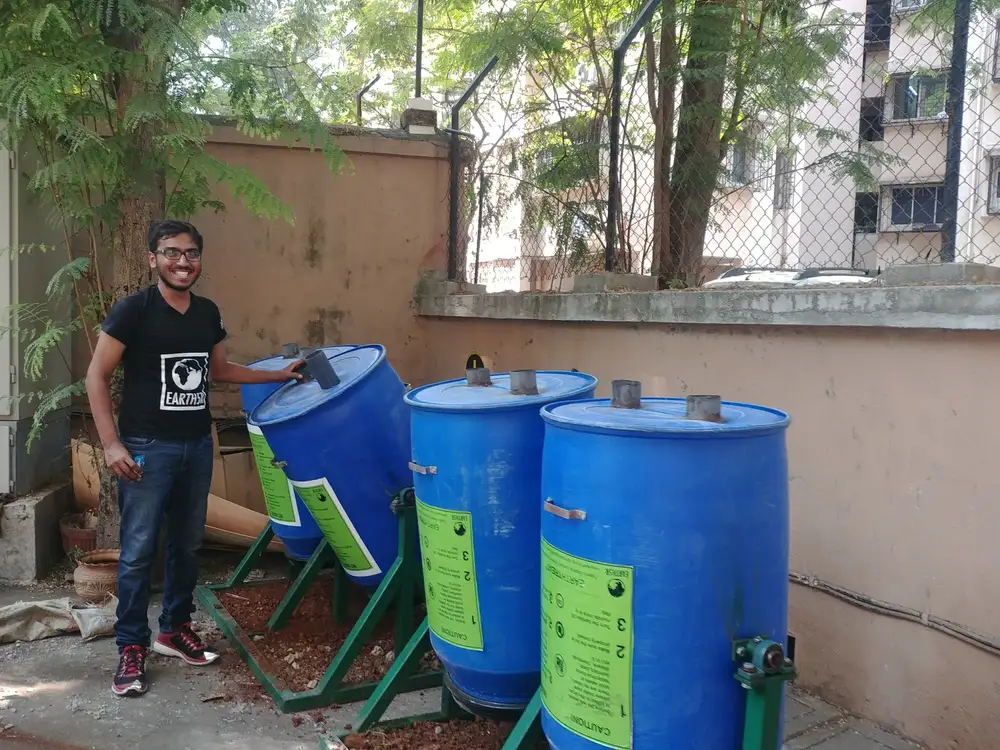
Earth5R’s waste and brand audits sort and count what volunteers collect at cleanups, which shows which products end up as litter. For zero waste housing societies, Earth5R designed drum composters from reused industrial containers. It has also run upcycling work with design students. As a fellow you design from the same kind of field data, starting with the waste in your own home.
This work links to the UN Sustainable Development Goals: Goal 12, Responsible consumption and production and Goal 9, Industry, innovation and infrastructure.
Available projects in this high school product design internship
Each project fits around school work and takes place near home. Your mentor shapes the final project with you.
A week of household packaging
Collect and sort the packaging your family throws away in one week, find the item that turns up most, and redesign it to use less material or be easier to recycle.
A product from used plastic
Pick a clean plastic container from home, such as a shampoo bottle or a food tub, and design and prototype something useful made from it, like a planter or a desk organiser.
A composter for a balcony
Study how Earth5R’s drum composters, made from reused industrial containers, are filled, turned and emptied, then design a smaller version that fits a balcony or a kitchen corner.
A bin that helps people sort
Watch how students use the waste bins at school, note where they sort wrongly, then design and test a bin, label or sign that makes segregation easier.
What you do in the field
- Sort and count household waste to find common materials
- Sketch ideas and build quick models from card and used plastic
- Watch people use a product and note what goes wrong
- Compare materials by strength, cost and how easily they recycle
- Test prototypes, record results and improve the design
- Present your final design in a research conversation
Skills you build
On a high school product design internship, you collect your own data near home with a parent or guardian, using the Earth5R app and data forms. Earth5R checks the data on its platform before it goes into your project report.
How a high school product design internship fits your school programme
For IB, IGCSE, CBSE and ICSE students. Your school decides what counts towards its own requirements.
IB CAS
Designing and building better bins or planters from waste for your school can form a CAS project with creativity and service. Your CAS coordinator decides.
Extended Essay and IA
Prototype testing gives you a design problem, user data and several versions of a product, which can support a Design Technology IA or Extended Essay. Your supervisor approves the topic.
MYP, IGCSE and CBSE projects
A tested product made from waste fits the MYP design cycle, the Personal Project and design project work in IGCSE, CBSE and ICSE, if your school agrees.
University applications
Sketches, prototypes and test results from a real design brief give you portfolio pages and a clear story to tell at design school interviews.
How the high school product design internship works
Every student moves through four phases. Your mentor checks each phase before you move on, and sessions pause during board exams.
Observe and Map
Go into the field near home, with a parent or guardian, and collect primary data for your project in Product Design and Design Technology.
Frame and Design
Find the root cause in your data and frame a problem worth solving, with your mentor.
Model
Build a working model, analysis or design for your solution, and test it.
Build and Deploy
Put your solution to work, measure the result and publish a verified record on earth5r.org.
Along the way you take part in research conversations with professors at MIT, Oxford, Cambridge, LSE and other universities, and ask your own questions. See how FIELDWORK works.
Where this can take you
University courses this leads to
- BA or BDes in Product Design
- BSc in Industrial Design Engineering
- BFA in Industrial Design
- BS in Design or Product Design
- BEng in Design Engineering
Careers in this field
- Product designer
- Industrial designer
- Packaging designer
- Circular economy designer
- Design researcher
Universities to aim for in Product Design and Design Technology
Design admissions tutors look for a portfolio that shows how you studied a problem, tested an idea and improved it. A high school product design internship with FIELDWORK gives you documented research, prototypes your mentor reviewed and a record that admissions teams can check. Students use a high school product design internship to build a record of real work for applications to universities like these.
UK · Product Design and Technology BSc (Hons), School of Design and Creative Arts
Loughborough’s Product Design and Technology BSc teaches sketching, model-making, CAD, electronics and manufacturing, with ideas tested through working prototypes. The course is built on responsible design, including products that are inclusive and sustainable. Students can take a placement year in industry and finish with a major project.
Rhode Island School of Design (RISD)
USA · Industrial Design Department
Undergraduates in RISD’s Industrial Design Department study for a BFA. They research how people use things and develop objects, products and systems, moving from sketches and drawings to models and working prototypes. The department also runs a master’s that treats design as a way to address environmental issues.
Parsons School of Design, The New School
USA · Product Design BFA
Parsons’ Product Design BFA gives students the technical and critical skills to design products that improve how people live and relate to each other. Students work with materials, fabrication and social engagement, with attention to sustainability. They can use the Healthier Materials Library and the Making Center.
USA · BS in Product Design
ArtCenter’s Bachelor of Science in Product Design teaches design research, materials, manufacturing and business, along with sustainable practice. Students learn ways to reduce environmental impact from production to disposal. They build prototypes in campus labs and work on Sponsored Studios with company partners.
USA · BS Design, Stanford d.school (School of Engineering)
Stanford’s four-year BS Design sits in the School of Engineering and grew out of its Product Design degrees. Students combine a design core with engineering maths and science, then choose a methods area such as Physical Form and Manufacturing. Domains include Designing for the Planet.
Delft University of Technology (TU Delft)
Netherlands · Faculty of Industrial Design Engineering (IDE)
TU Delft’s Faculty of Industrial Design Engineering teaches the BSc Industrial Design Engineering, followed by master’s programmes. Sustainability is one of its research themes, alongside health, mobility and inclusivity. Recent faculty projects include aircraft seats made from bacterial cellulose and classes on bio-based plastics.
Netherlands · Bachelor programme
Design Academy Eindhoven is a university of the arts that teaches only design. Its four-year Bachelor programme runs on three lines called Fundamentals, Studios and Reflections. Thinking through making sits at the core of how students learn.
Finland · Department of Design, School of Arts, Design and Architecture
Aalto’s Department of Design teaches bachelor’s majors in design, with master’s study including Creative Sustainability. Research focuses on sustainable design, human-centred design and co-design. The department aims to work towards a sustainable and just society and environment.
Italy · School of Design
Polimi’s School of Design offers a bachelor’s degree in Product Design, with master’s options such as Integrated Product Design. Students work in the Design Competence Center laboratories. They can shape their study plans by choosing laboratory sections that match their interests.
The Hong Kong Polytechnic University (PolyU)
Hong Kong · School of Design
PolyU Design teaches a BA (Hons) in Design with a Product Design pathway, among others such as Environmental and Social Design. Students test materials in modelling workshops. Research groups include the Asian Ergonomics Design Lab and the Public Design Lab.
This list is for guidance. These universities offer undergraduate study in Product Design and Design Technology. Earth5R has no admissions arrangement with them, and admission decisions rest with each university. Students get help researching universities, scholarships and applications, depending on the programme.
What your fellowship fee pays for
An internship fellowship at Earth5R is time and attention from senior researchers and leaders. Each part below takes staff time and resources that we set aside for every fellow.
Live mentoring with experts
One-to-one mentoring in most fellowships, with regular check-ins on your project.
Dialogues with global researchers
Academics from international universities and renowned scientists, who answer your questions and discuss your work.
Support in the field
Guidance while you collect data and work on your project in the field.
References for your next step
References when you apply for jobs, higher studies and research programmes.
Your work, hosted for life
Your work and data stay on Earth5R’s website and servers for life, where universities and employers can check them.
Time from senior people
Each fellow receives time and attention from senior researchers and leaders, set aside for them.
Fee details available on request.
Choose your fellowship
The Multi-Year Fellowship can run from Grade 9 to Grade 12, with more scope each year.
The fee pays for live mentoring, dialogues with global researchers, support in the field, references and lifelong hosting of your work. Fee details available on request.
High school product design internship: common questions
Do I need design experience for this high school product design internship?
No. You start with sketches and quick models made from card and used packaging. Your mentor helps you build skills step by step, and students who already use CAD or 3D printing can take their prototypes further.
Is it safe for my child to work with waste at home?
The projects use clean, dry packaging such as bottles, tubs and cartons from your own home or school. Your mentor checks each plan before you start, and a parent or guardian is present at every self-guided activity.
Can my prototypes go into a design portfolio?
Yes. Photos of your sketches, models and test results can go into a portfolio alongside your reviewed project report. Universities set their own portfolio rules, so check what each course asks to see.
Is the high school product design internship paid?
Yes. FIELDWORK is a paid, mentored programme. The fee pays for live mentoring, dialogues with global researchers, support in the field, references and lifelong hosting of your work. Fee details are available on request.
Can my child do this high school product design internship online?
Yes. Mentoring sessions run online, and field work takes place near where you live.
Is a parent or guardian present during field work?
Yes. A parent or guardian is present at every self-guided field activity. Online sessions are for students.
Does FIELDWORK pause during board exams?
Yes. Sessions pause during board exams, so the fellowship fits around school work.
What do students get at the end?
A certificate, a letter of recommendation, a project report and a verified profile on earth5r.org, where universities can check the work.
Related subjects for school students
Already at university? See the Product and Industrial Design internship fellowship for university students.
Apply for a FIELDWORK fellowship in Product Design and Design Technology
This high school product design internship is for students in Grades 9 to 12. Work on a live Earth5R project with a mentor, take part in research conversations with global researchers, and build a verified record of your work. Fee details available on request.