Product design internship fellowship
In this product design internship you turn recycled material into new products and redesign packaging to cut waste, with a mentor who reviews each prototype. You start from what Earth5R’s waste audits find, sketch and build simple prototypes, and test them with the people who would use them.
For school and university students who like making things and want to design products that keep material in use for longer. Online, with field work near where you live. The fellowship is paid because every fellow receives time and attention from senior researchers and leaders.
Why product design matters for sustainability
Every wrapper and bottle found on a beach was designed by someone. A snack pack made from several layers of plastic is hard to recycle, and a product that can’t be repaired gets thrown away early. Designers choose what a product is made of and what happens to it after use. Circular design plans for reuse and recycling from the first sketch, so less material ends up as waste.
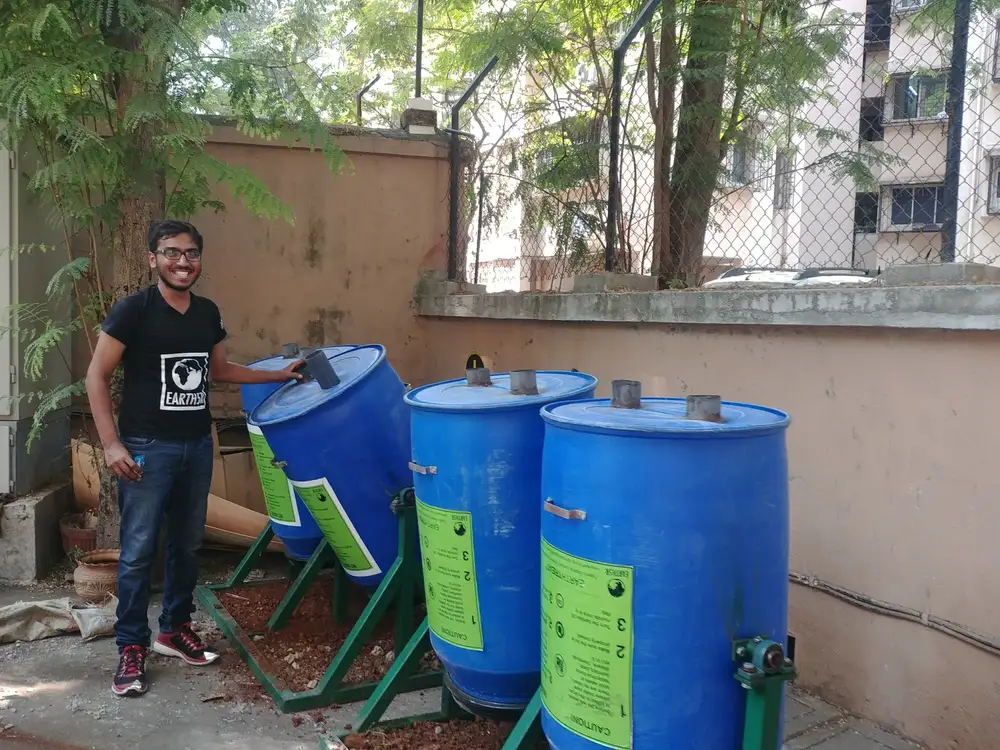
Earth5R’s waste audits and brand audits sort and count the items and brands collected at cleanups, so it’s clear which products end up as litter. Earth5R designed drum composters for zero waste housing societies from reused industrial containers. It has also turned waste into new products with NIFT students. As a fellow you design from the same field data.
This work links to the UN Sustainable Development Goals: Goal 12, Responsible consumption and production and Goal 9, Industry, innovation and infrastructure.
Available projects in the product design internship fellowship
You join Earth5R’s live work through your own subject. Your mentor shapes the final project with you.
Products from recovered plastic
Pick a plastic item that turns up often in Earth5R’s waste audits, study how it can be cleaned and reused safely, and design and prototype a new product made from it.
Packaging redesign
Choose a common snack or household product found in brand audit data, study its packaging, and redesign the pack so it uses less material or is easier to recycle.
A composter for small homes
Study the drum composter Earth5R designed from reused industrial containers, map how it is filled, turned and emptied, and design a version that fits a small flat or balcony.
Upcycled planters and tools
Design low-cost planters or watering aids from discarded containers, like the upcycled containers Earth5R uses in its rooftop plantations, then build prototypes and test them over a few weeks.
What you do in the field
- Sort and count waste items to see which materials turn up most
- Sketch ideas and build quick models from card, plastic or waste material
- Interview users and watch how they handle a product
- Compare materials by cost, strength and how easily they recycle
- Test prototypes, record what fails and improve the design
- Present your final design in a research conversation
Skills you build
On a product design internship, you collect your own data near where you live, using the Earth5R app and data forms. Earth5R checks the data on its platform before it goes into your project report.
How the product design internship fellowship works
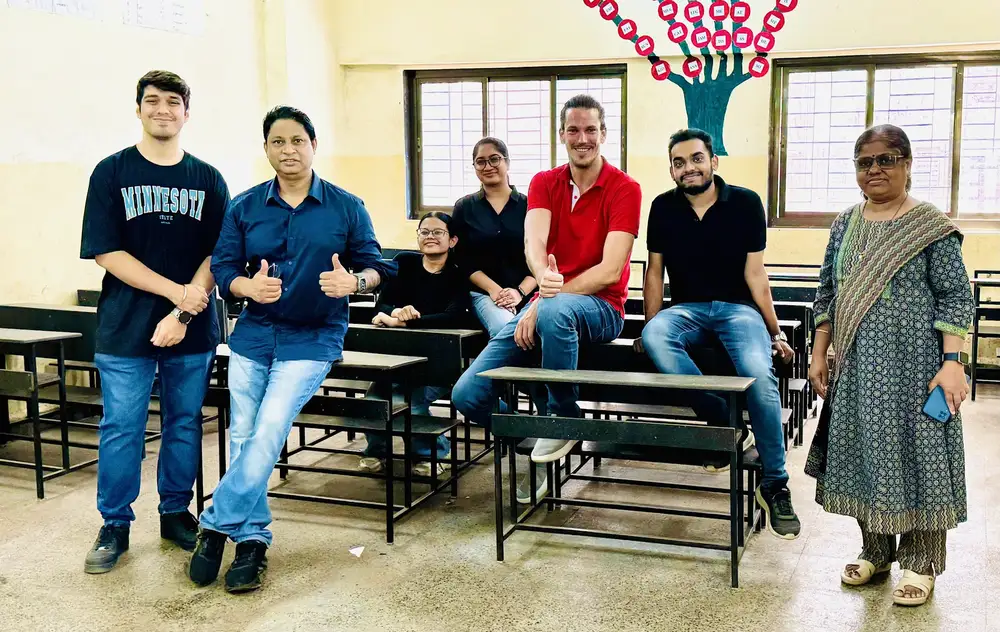
Every fellow moves through four phases. Each phase is checked by your mentor before you move on.
Observe and Map
Go into the field near where you live and collect primary data for your project in Product and Industrial Design.
Frame and Design
Find the root cause in your data and frame a problem worth solving, with your mentor.
Model
Build a working model, analysis or design for your solution, and test it.
Build and Deploy
Put your solution to work, measure the result and publish a verified record on earth5r.org.
Along the way you take part in research conversations with professors at MIT, Oxford, Cambridge, LSE and other universities, and ask your own questions. See how FIELDWORK works.
Where this can take you
Degrees this work supports
- BDes in Product or Industrial Design
- BEng or BTech in Design Engineering
- MDes or MA in Industrial Design
- MSc in Sustainable Design or Design for Sustainability
- PhD in design research or circular materials
Careers in this field
- Product designer
- Industrial designer
- Packaging designer
- Circular economy designer
- Design researcher
Universities known for Product and Industrial Design
Strong design schools look for a portfolio that shows how you research a problem and improve an idea after testing it. A fellowship project gives you documented research, prototypes your mentor reviewed and a public record of the work. Students use a product design internship to build a record of real work for applications to universities like these.
UK · Design Products MA/MDes, School of Communication & Design
The RCA’s Design Products programme runs as a one-year MA or a two-year MDes in the School of Communication & Design. Students work through objects, materials and manufacturing, emerging technologies, services or interventions, testing ideas with prototypes. The programme asks them to consider products in relation to wider systems of care, resources, technology, society and ecology.
Rhode Island School of Design (RISD)
USA · Industrial Design Department
RISD’s Industrial Design Department offers a BFA and a Master of Industrial Design (MID). Students research user experiences and develop objects, products and systems, moving from sketching and drawing to models and working prototypes. The MID treats industrial design as a way to address social, cultural and environmental issues.
Parsons School of Design, The New School
USA · Product Design BFA
The Product Design BFA at Parsons teaches the technical and critical skills to design products that enhance human abilities and relationships. Students explore materials, fabrication, aesthetics and social engagement, with attention to sustainability and technological change. Facilities include the Angelo Donghia Healthier Materials Library and the Making Center.
USA · BS in Product Design
ArtCenter’s Bachelor of Science in Product Design covers design research methods, materials technologies, manufacturing processes, business principles and sustainable practices. Students prototype in campus labs and take part in Sponsored Studios with corporate partners. Coursework also teaches practices that reduce environmental impact from production to disposal.
USA · BS Design, Stanford d.school (School of Engineering)
Stanford’s four-year BS Design, offered within the School of Engineering, grew out of the university’s Product Design degrees. It combines a Design Core, engineering maths and science, and a Methods depth such as Physical Form and Manufacturing. Domain options include Designing for the Planet, Designing for Health and Designing for Social Impact.
Delft University of Technology (TU Delft)
Netherlands · Faculty of Industrial Design Engineering (IDE)
TU Delft’s Faculty of Industrial Design Engineering teaches the BSc Industrial Design Engineering, a BSc in Health and Technology and a set of master’s programmes. Its research themes are digital, health, inclusivity, mobility, sustainability and design methods. Recent projects include aircraft seats made from bacterial cellulose and design master classes on bio-based plastics.
Netherlands · Bachelor and Master programmes
DAE is a university of the arts that specialises in design. Its four-year Bachelor programme is built on three lines, Fundamentals, Studios and Reflections, with thinking through making at its core. Five master’s departments, including Contextual Design, Social Design and Critical Inquiry Lab, focus on the cultural context of design.
Finland · Department of Design, School of Arts, Design and Architecture
Aalto’s Department of Design offers bachelor’s majors in design and fashion and master’s programmes including Collaborative and Industrial Design, Contemporary Design and Creative Sustainability. Its research focuses on sustainable design, practice-based design research, human-centred design and co-design. The department states an aim of working towards a sustainable and just society and environment.
Italy · School of Design
Polimi’s School of Design offers a bachelor’s degree in Product Design and master’s degrees such as Integrated Product Design, Product Service System Design and Design & Engineering. It also runs a PhD in Design. Students work in the Design Competence Center laboratories and can tailor study plans by choosing laboratory sections.
The Hong Kong Polytechnic University (PolyU)
Hong Kong · School of Design
PolyU Design offers a BA (Hons) in Design with a Product Design pathway, alongside Interaction, Environmental and Social Design, plus taught postgraduate study and a PhD. Students test materials in modelling workshops. Research groups include the Asian Ergonomics Design Lab, the Public Design Lab and the Research Centre for Future (Caring) Mobility.
This list is for guidance. These universities are widely known for Product and Industrial Design. Earth5R has no admissions arrangement with them, and admission decisions rest with each university. Fellows get help researching universities, scholarships and applications, depending on the programme.
What your fellowship fee pays for
An internship fellowship at Earth5R is time and attention from senior researchers and leaders. Each part below takes staff time and resources that we set aside for every fellow.
Live mentoring with experts
One-to-one mentoring in most fellowships, with regular check-ins on your project.
Dialogues with global researchers
Academics from international universities and renowned scientists, who answer your questions and discuss your work.
Support in the field
Guidance while you collect data and work on your project in the field.
References for your next step
References when you apply for jobs, higher studies and research programmes.
Your work, hosted for life
Your work and data stay on Earth5R’s website and servers for life, where universities and employers can check them.
Time from senior people
Each fellow receives time and attention from senior researchers and leaders, set aside for them.
Fee details available on request.
Choose your fellowship
The fee pays for live mentoring, dialogues with global researchers, support in the field, references and lifelong hosting of your work. Fee details available on request.
Product design internship: common questions
Do I need a design background for this product design internship?
No. You start with sketches and simple models made from card or waste material. Your mentor helps you build skills step by step, and students who already use CAD or 3D printing can take their prototypes further.
What materials will I work with?
Mostly waste and recovered materials, such as plastic containers, bottle caps, packaging and old newspaper, chosen from what you find when you audit waste near you. You test how each one behaves and whether it can be reused safely.
Can a product design internship help with a design school portfolio?
It gives you a real project with research, sketches, prototypes and test results that you can show in a portfolio, along with a verified record on earth5r.org. Admission decisions rest with each school.
Is the product design internship fellowship paid?
Yes. It is a paid, mentored internship fellowship. The fee pays for live mentoring, dialogues with global researchers, support in the field, references and lifelong hosting of your work. Fee details are available on request.
Can I do this product design internship online?
Yes. FIELDWORK runs online, and your field work takes place near where you live. Your mentor guides you through each step.
Who can apply?
School and university students from India and other countries. The fellowship prepares you for university, postgraduate study and work.
What do I get at the end?
A certificate, a letter of recommendation, a project report and a verified profile on earth5r.org, where universities and employers can check your work.
Related internship fellowships
Apply for the product design internship fellowship
Work on a live Earth5R project in Product and Industrial Design with a mentor, take part in research conversations with global researchers, and build a verified record of your work. Fee details available on request.