
Sustainable fashion internship fellowship
This sustainable fashion internship has you study what happens to clothes and fabric after use, with a mentor who reviews your research and designs. You trace textile waste near you, compare the footprint of common fabrics, and design and sample upcycled products made from discarded cloth.
For school and university students drawn to fashion and textiles who want to design with material that already exists. Online, with field work near where you live. The fellowship is paid because every fellow receives time and attention from senior researchers and leaders.
Why fashion and textile design matters for sustainability
Every garment starts as a fibre that is grown, like cotton, or made from oil, like polyester. Turning fibre into cloth takes water and energy, and dyeing adds chemicals that can reach rivers. When clothes are thrown away, the fabric often goes to landfill or is burned. Designers choose the fibre and how long a piece will last. Sustainable fashion design makes those choices with the whole life of the garment in mind.
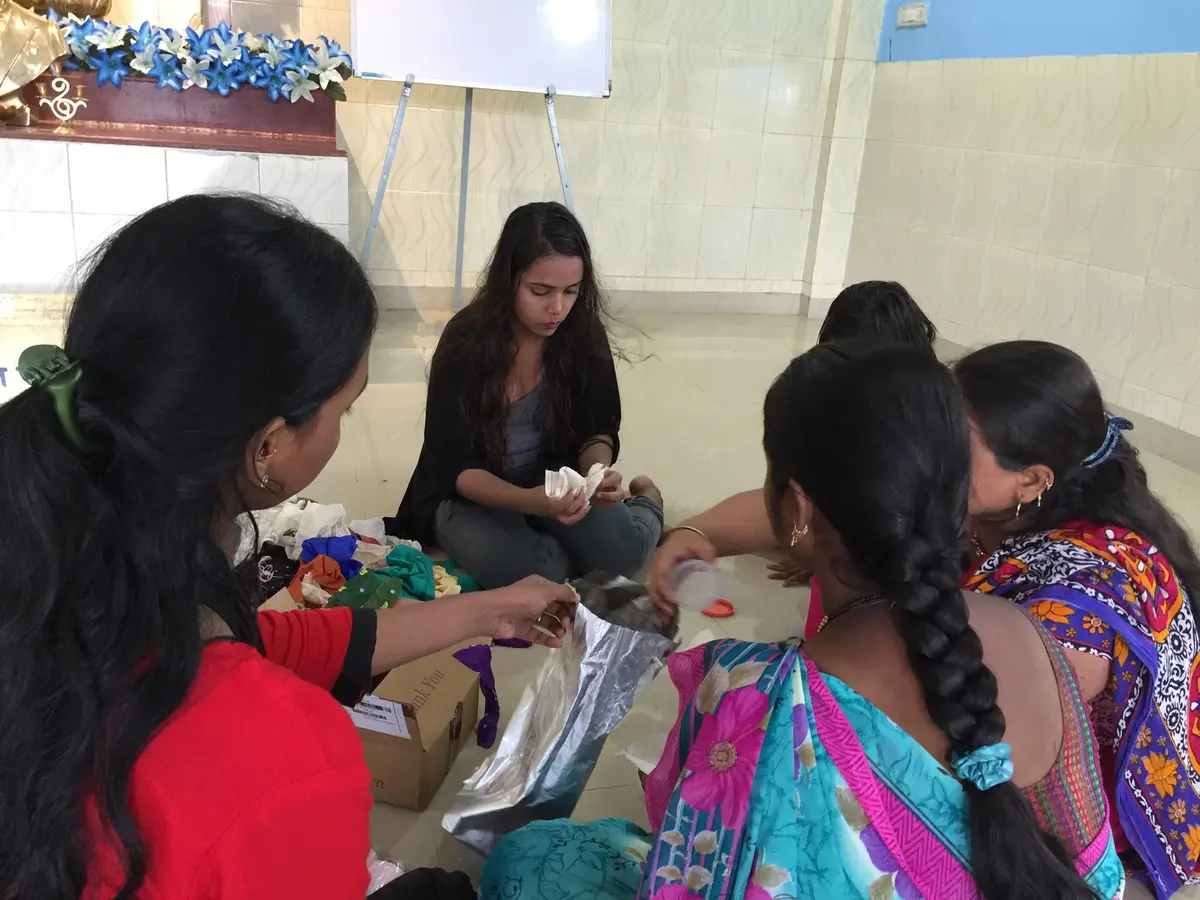
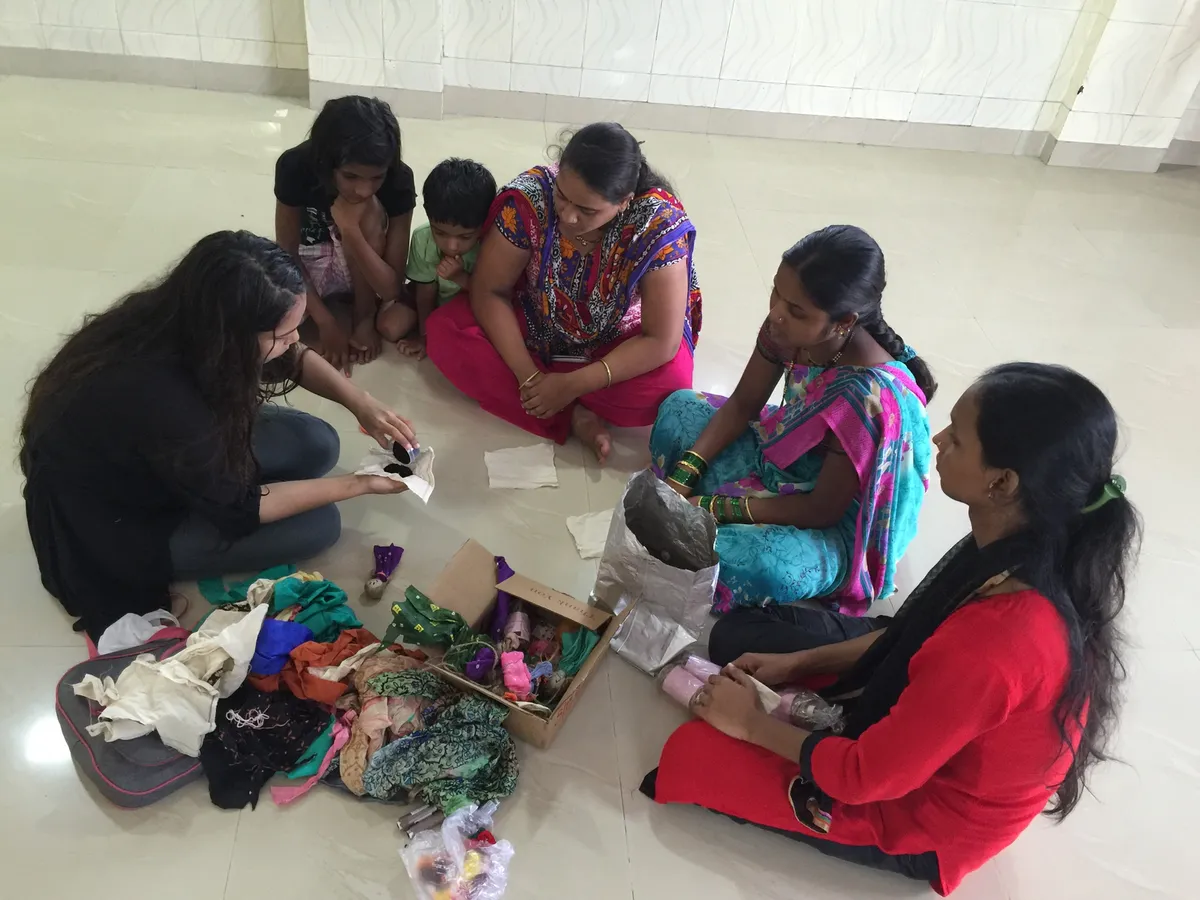
Earth5R’s waste audits sort and count the items collected at cleanups, which shows what people throw away. Earth5R has also run upcycling work with design students, turning waste into new products. Its livelihood work with women includes paper bag making and financial literacy. As a fellow you bring a fashion and textile lens to this work and design from the waste you find near you.
This work links to the UN Sustainable Development Goals: Goal 12, Responsible consumption and production and Goal 8, Decent work and economic growth.
Available projects in the sustainable fashion internship fellowship
You join Earth5R’s live work through your own subject. Your mentor shapes the final project with you.
Textile waste audit
Use Earth5R’s waste audit method of sorting and counting to record the clothes and fabric thrown away at home, in tailoring shops or at a cleanup, and find which fibres turn up most.
Fabric footprint comparison
Compare cotton, polyester, viscose and blended fabrics using published research on water, energy and chemical use, and explain which choices make sense for Indian weather and budgets.
Upcycled product range
Design and make a small range of products from discarded cloth, old clothes or tailoring offcuts, test them with users, and work out what it would cost to make more.
Where old clothes go
Trace what happens to old clothes in your city, from hand-me-downs and resale to informal recyclers and landfill, and map the points where fabric could be kept in use.
What you do in the field
- Sort and count fabric waste at home, in shops or at a cleanup
- Talk to tailors, resellers and recyclers about where fabric goes
- Read fibre labels and compare fabrics using published research
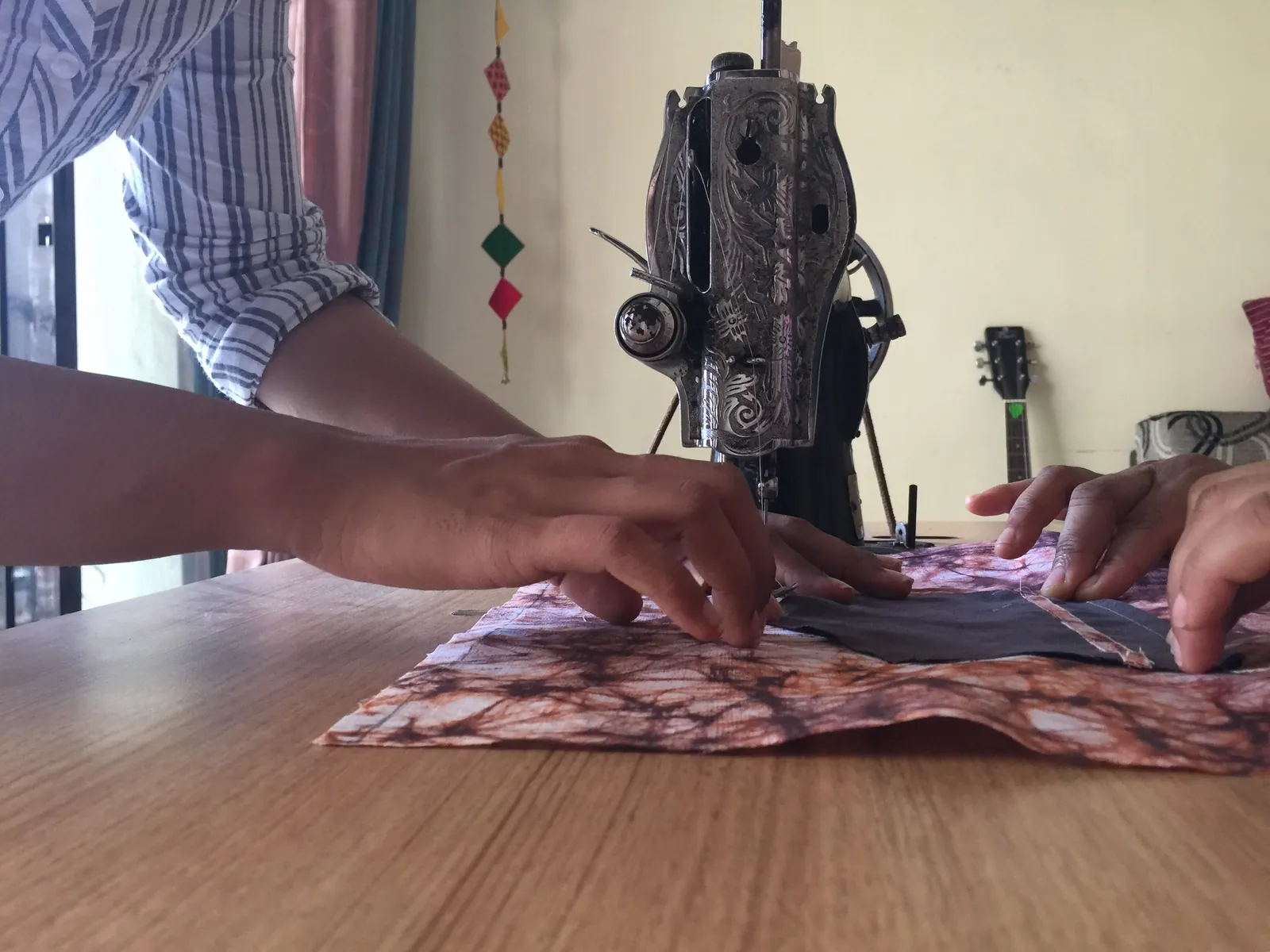
- Sketch designs and make samples from discarded cloth
- Test your products with users and record their feedback
- Present your designs and findings in a research conversation
Skills you build
On a sustainable fashion internship, you collect your own data near where you live, using the Earth5R app and data forms. Earth5R checks the data on its platform before it goes into your project report.
How the sustainable fashion internship fellowship works
Every fellow moves through four phases. Each phase is checked by your mentor before you move on.
Observe and Map
Go into the field near where you live and collect primary data for your project in Fashion and Textile Design.
Frame and Design
Find the root cause in your data and frame a problem worth solving, with your mentor.
Model
Build a working model, analysis or design for your solution, and test it.
Build and Deploy
Put your solution to work, measure the result and publish a verified record on earth5r.org.
Along the way you take part in research conversations with professors at MIT, Oxford, Cambridge, LSE and other universities, and ask your own questions. See how FIELDWORK works.
Where this can take you
Degrees this work supports
- BDes in Fashion Design or Textile Design
- BSc or BTech in Textile Technology
- MA or MDes in Sustainable Fashion
- Master’s in Fashion Management with a sustainability focus
- MSc in Textile Engineering or Materials Science
Careers in this field
- Fashion or textile designer
- Sustainability manager at a fashion brand
- Sourcing and materials specialist
- Founder of an upcycled or circular fashion label
- Textile researcher
Universities known for Fashion and Textile Design
Strong fashion and textile programmes look for a portfolio that shows research into materials and a clear design process. A fellowship project gives you that research, samples your mentor reviewed and a public record of the work. Students use a sustainable fashion internship to build a record of real work for applications to universities like these.
London College of Fashion, University of the Arts London (UAL)
UK · London College of Fashion (LCF)
London College of Fashion teaches fashion design, media and business at undergraduate and postgraduate level, with courses such as BA Fashion Design Technology and MA Fashion Futures. UAL’s Centre for Sustainable Fashion has worked with Kering on Governance for Tomorrow, a research project on how luxury fashion makes decisions.
Central Saint Martins, University of the Arts London (UAL)
UK · Fashion programme, Central Saint Martins (CSM)
Central Saint Martins’ Fashion programme teaches BA (Hons) Fashion Design pathways in knit, menswear, womenswear, print and communication, plus BA courses in fashion communication. Postgraduate options include MA Fashion and a Graduate Diploma. The Knit pathway aims for responsible, material-led work, and college partnerships include LVMH Material Innovation and the Swarovski Sustainable Design Hub.
UK · Fashion MA, School of Communication & Design
The RCA’s Fashion MA is a one-year, full-time programme in the School of Communication & Design. It asks students to take a critical approach to the practice and industry of fashion, with a focus on social and political issues. Alumni practices include circular design using biomaterials and zero waste methods.
Parsons School of Design, The New School
USA · BFA Fashion Design, School of Fashion
Parsons’ BFA Fashion Design programme, part of its School of Fashion, asks students to challenge existing ideas of fashion and study its social and theoretical context. From the spring of the second year, students follow one of four pathways that shape their research methods and technical skills. External projects set design challenges from industry.
Fashion Institute of Technology (FIT)
USA · Fashion Design, School of Art and Design
FIT’s Fashion Design programme sits in the School of Art and Design and offers an AAS and a BFA. The AAS covers computer-aided design, draping, patternmaking, construction and textiles. BFA students choose a concentration such as knitwear, sportswear or children’s wear and finish with an internship and a senior collection.
Royal Academy of Fine Arts Antwerp
Belgium · Fashion Department
The Antwerp Academy’s Fashion Department teaches fashion design within its Bachelor and Master in Visual Arts. Each student is supervised individually by a team of lecturers, and most of the department’s students come from abroad. Student work is shown each year at the department’s SHOW and EXPO.
Institut Français de la Mode (IFM)
France · Institut Français de la Mode (IFM)
IFM teaches a Bachelor and a Master of Arts in Fashion Design, management degrees in fashion and luxury, and a doctoral programme in fashion design. Its IFM-Kering Sustainability Chair runs research and teaching on sustainable and circular fashion, covering materials, traceability, supply chains and the end of life of products.
University of Borås (The Swedish School of Textiles)
Sweden · The Swedish School of Textiles
The Swedish School of Textiles covers design, textile technology, textile management and information systems, from fibre to final product. BFA and MFA fashion design students present graduation collections at its fashion show. Research includes circular fashion, customised clothing production, dyeing textiles without water and sustainable supply chains in textile management.
Japan · Bunka Fashion College programmes
Bunka Fashion College in Tokyo began as a small dressmaking school. Its Fashion Creation Department teaches garment making from the basics to haute couture, and the Fashion Technology Department runs courses in knitwear design, industrial merchandising and virtual fashion technology. A Fashion Marketing and Distribution Department trains students for retail and distribution roles.
The Hong Kong Polytechnic University (PolyU)
Hong Kong · School of Fashion and Textiles (SFT)
PolyU’s School of Fashion and Textiles teaches fashion and textile design, fashion business and fashion technology, from bachelor’s degrees up to postdoctoral study. Research spans design, technology and business, including fibre-based materials for textiles and wearable systems, supply chain management and sustainability in manufacturing.
This list is for guidance. These universities are widely known for Fashion and Textile Design. Earth5R has no admissions arrangement with them, and admission decisions rest with each university. Fellows get help researching universities, scholarships and applications, depending on the programme.
What your fellowship fee pays for
An internship fellowship at Earth5R is time and attention from senior researchers and leaders. Each part below takes staff time and resources that we set aside for every fellow.
Live mentoring with experts
One-to-one mentoring in most fellowships, with regular check-ins on your project.
Dialogues with global researchers
Academics from international universities and renowned scientists, who answer your questions and discuss your work.
Support in the field
Guidance while you collect data and work on your project in the field.
References for your next step
References when you apply for jobs, higher studies and research programmes.
Your work, hosted for life
Your work and data stay on Earth5R’s website and servers for life, where universities and employers can check them.
Time from senior people
Each fellow receives time and attention from senior researchers and leaders, set aside for them.
Fee details available on request.
Choose your fellowship
The fee pays for live mentoring, dialogues with global researchers, support in the field, references and lifelong hosting of your work. Fee details available on request.
Sustainable fashion internship: common questions
What will I do in this sustainable fashion internship?
You’ll choose one textile question near you, such as what tailoring shops throw away or where old school uniforms end up. You research it in the field, then design and sample products that answer it, with your mentor reviewing each phase of the work.
Do I need sewing or design skills?
No. Some fellows start with research and simple sketches, and others already sew or drape. Your mentor shapes the project to your level, and you build skills as you make and test samples.
Can a sustainable fashion internship help with a fashion school application?
It gives you research, sketches, samples and a reviewed report to show in a portfolio, along with a verified record on earth5r.org. Admission decisions rest with each school.
Is the sustainable fashion internship fellowship paid?
Yes. It is a paid, mentored internship fellowship. The fee pays for live mentoring, dialogues with global researchers, support in the field, references and lifelong hosting of your work. Fee details are available on request.
Can I do this sustainable fashion internship online?
Yes. FIELDWORK runs online, and your field work takes place near where you live. Your mentor guides you through each step.
Who can apply?
School and university students from India and other countries. The fellowship prepares you for university, postgraduate study and work.
What do I get at the end?
A certificate, a letter of recommendation, a project report and a verified profile on earth5r.org, where universities and employers can check your work.
Related internship fellowships
Apply for the sustainable fashion internship fellowship
Work on a live Earth5R project in Fashion and Textile Design with a mentor, take part in research conversations with global researchers, and build a verified record of your work. Fee details available on request.