
Architecture internship fellowship
This architecture internship takes you into real homes and buildings near where you live, with a mentor and guidance from Earth5R’s environmental architect. You measure heat, light and energy use, study how people live in each space, and design low-cost passive cooling and green building changes that families can afford.
For school and university students who want to study architecture and see how design changes heat, light and comfort in real homes. Online, with field work near where you live. The fellowship is paid because every fellow receives time and attention from senior researchers and leaders.
Why architecture matters for sustainability
Buildings decide how much energy people use and how comfortable they feel indoors. A thin tin or concrete roof can make a small home very hot in summer, and families then depend on fans, coolers or air conditioning. Good design uses shade, airflow, daylight and the right materials to keep rooms comfortable with less energy. This kind of design matters most in crowded neighbourhoods, where families can least afford to pay for cooling.
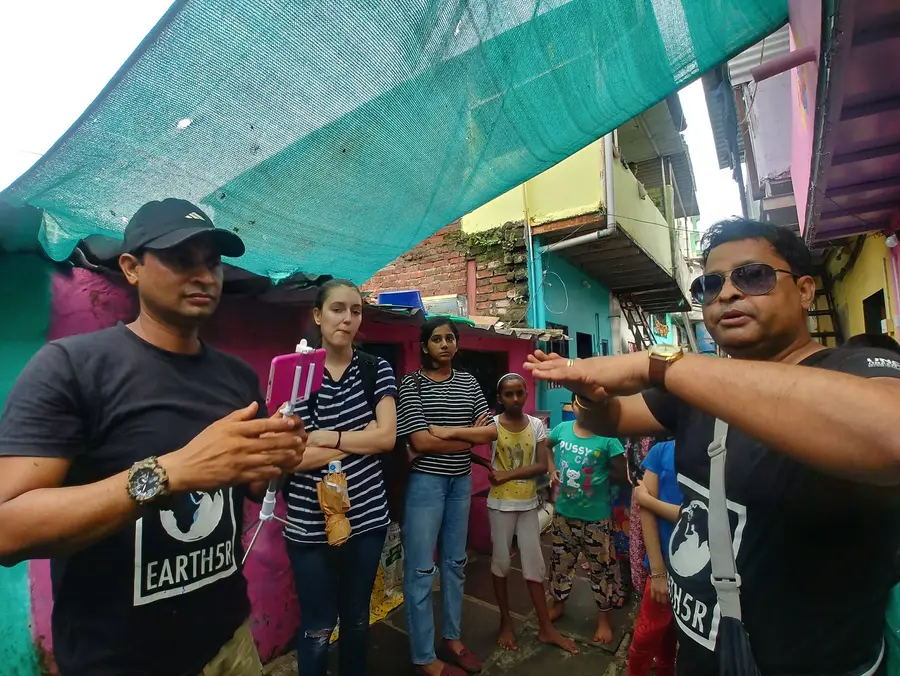
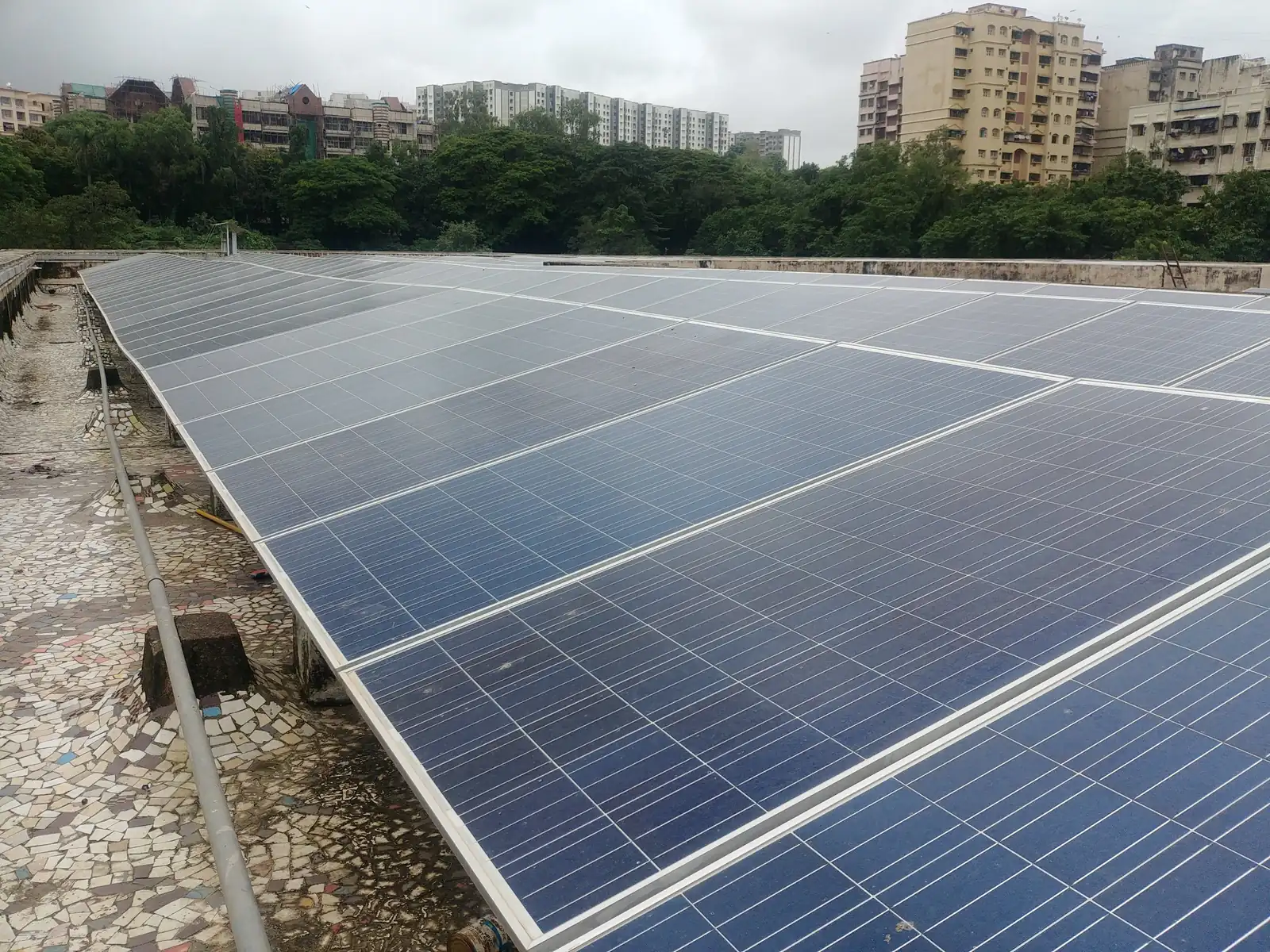
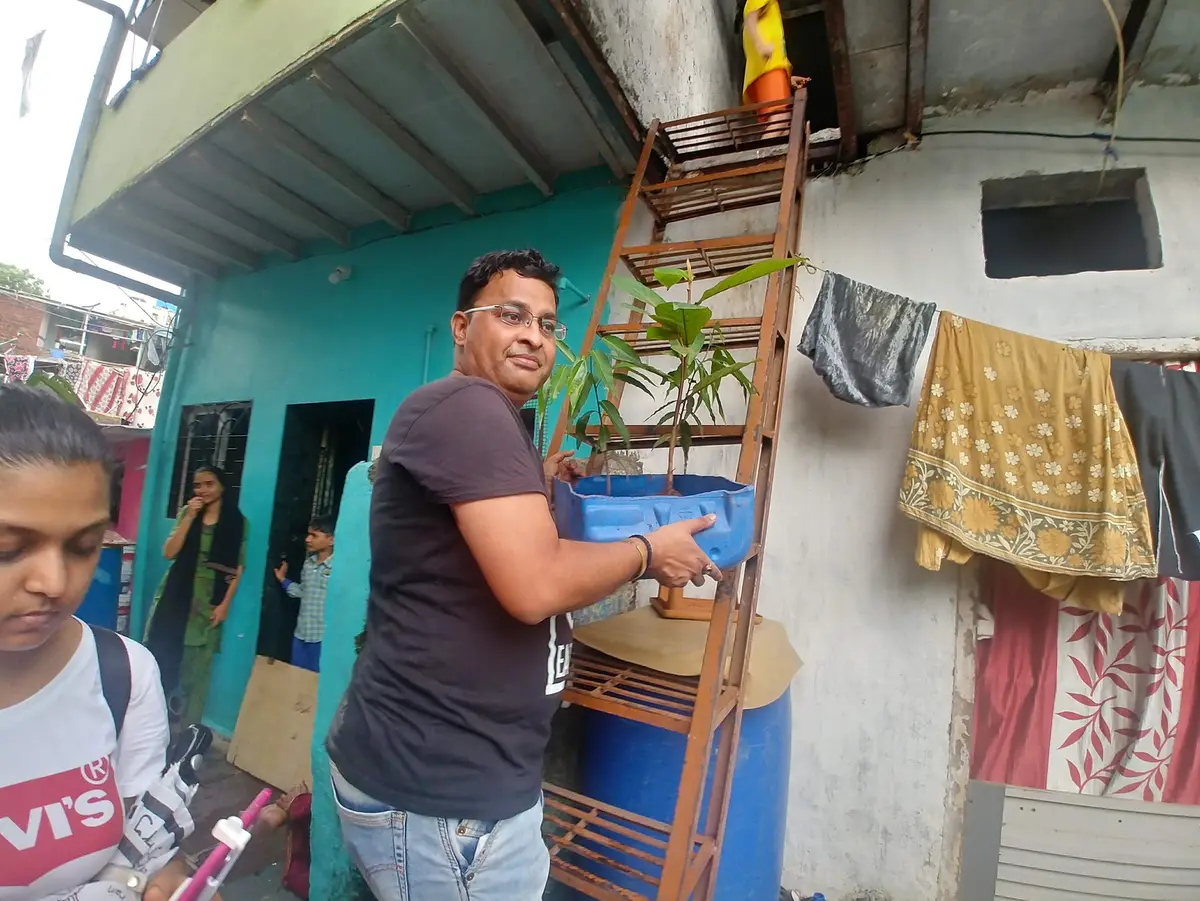
Earth5R has an environmental architect on its team, who guides the design side of this fellowship. In informal settlements, Earth5R has worked with women to grow saplings in upcycled containers on hot tin roofs, to cool the homes below. It has also installed solar panels and solar street lights in Mumbai as part of a corporate CSR project. As a fellow you study this work and apply the same thinking to buildings near you.
This work links to the UN Sustainable Development Goals: Goal 11, Sustainable cities and communities and Goal 7, Affordable and clean energy.
Available projects in the architecture internship fellowship
You join Earth5R’s live work through your own subject. Your mentor shapes the final project with you.
Cooling hot tin roofs
Measure roof and room temperatures in homes with tin or thin concrete roofs, study Earth5R’s rooftop plantation approach, and design a low-cost passive cooling plan for one home.
Heat and daylight audit
Audit heat, daylight and energy use in a school or housing society building near you, then propose green building changes such as shading, ventilation or reflective roofs, with rough costs.
Space for zero waste living
Study how a housing society fits segregation bins and composting units into its buildings, and redesign the layout for access, drainage, odour and daily use by residents and staff.
Solar on the roof
Use Earth5R’s solar work in Mumbai as a starting point, survey the roof space and shading of a building near you, and sketch a solar layout that suits it.
What you do in the field
- Measure temperature and light in rooms at set times of day
- Sketch floor plans and sections of the buildings you study
- Talk to residents about heat, light and comfort in their homes
- Compare passive cooling methods from published research
- Draw design options and test them against your measurements
- Present your design in a research conversation and answer questions
Skills you build
On a architecture internship, you collect your own data near where you live, using the Earth5R app and data forms. Earth5R checks the data on its platform before it goes into your project report.
How the architecture internship fellowship works
Every fellow moves through four phases. Each phase is checked by your mentor before you move on.
Observe and Map
Go into the field near where you live and collect primary data for your project in Architecture and Sustainable Design.
Frame and Design
Find the root cause in your data and frame a problem worth solving, with your mentor.
Model
Build a working model, analysis or design for your solution, and test it.
Build and Deploy
Put your solution to work, measure the result and publish a verified record on earth5r.org.
Along the way you take part in research conversations with professors at MIT, Oxford, Cambridge, LSE and other universities, and ask your own questions. See how FIELDWORK works.
Where this can take you
Degrees this work supports
- Bachelor of Architecture (BArch)
- BDes in Interior or Spatial Design
- MArch or MSc in Sustainable Architecture
- MSc in Environmental Design or Building Performance
- Master’s in Urban Design
Careers in this field
- Architect
- Sustainability consultant for buildings
- Green building and energy analyst
- Urban designer
- Research assistant in a building science lab
Universities known for Architecture and Sustainable Design
Strong architecture schools look for applicants who observe buildings closely and can explain the reasons behind a design. A fellowship project gives you measured site work, design options your mentor reviewed and a public record of what you made. Students use a architecture internship to build a record of real work for applications to universities like these.
Massachusetts Institute of Technology (MIT)
USA · Department of Architecture, School of Architecture and Planning
MIT Architecture offers undergraduate programmes, the MArch, the SMArchS and other master’s degrees, and PhDs, organised through discipline groups. Its Building Technology group works on low-carbon structures, heat-resilient design and circular construction. The Sustainable Design Lab builds tools that estimate the energy costs and emissions of homes and suggest upgrades.
USA · Department of Architecture, Graduate School of Design (GSD)
The Department of Architecture at the Harvard Graduate School of Design offers the Master of Architecture I, Master of Architecture I AP and Master of Architecture II. GSD research centres include the Harvard Center for Green Buildings and Cities and the Joint Center for Housing Studies. Its labs include the Healthy Places Lab and the Material Processes and Systems Group.
University of California, Berkeley
USA · Department of Architecture, College of Environmental Design (CED)
Berkeley’s Department of Architecture, in the College of Environmental Design, teaches a BA in Architecture, the Master of Architecture, a Master of Science in Architecture and a Master of Advanced Architectural Design. The college also offers a BA in Sustainable Environmental Design. Its research areas include Climate Solutions, and Technology and Material Innovations.
USA · Graduate School of Architecture, Planning and Preservation (GSAPP)
Columbia GSAPP offers the Master of Architecture, MS degrees in Advanced Architectural Design and Computational Design Practices, and a PhD in Architecture. Its labs include the Natural Materials Lab, which studies earth and fibre based building materials, their life cycles and supply chains. Other labs work on housing, urban design and extraction.
University College London (UCL)
UK · The Bartlett School of Architecture
The Bartlett School of Architecture teaches degrees such as Architecture BSc, Architecture MSci and Engineering and Architectural Design MEng, along with graduate and doctoral study. Its Sustainable Urbanism and Landscape research area covers urban infrastructure, resource management and decarbonisation technologies. The school names carbon and energy reduction as a strategic aim.
Architectural Association School of Architecture (AA)
UK · Sustainable Environmental Design (SED) programme
The AA’s Sustainable Environmental Design programme offers an MArch and an MSc. Its research-led teaching aims for architecture that supports carbon-neutral futures and the comfort, health and well-being of inhabitants. Students carry out fieldwork and computer modelling of urban microclimates, working from case studies set by its Refurbishing the City research agenda.
Delft University of Technology (TU Delft)
Netherlands · Faculty of Architecture and the Built Environment (BK)
TU Delft’s Faculty of Architecture and the Built Environment has departments of Architecture, Architectural Engineering and Technology, Management in the Built Environment, and Urbanism. It offers a bachelor’s programme, the Master’s in Architecture, Urbanism and Building Sciences, and PhD research. Recent research stories cover climate adaptation, circular building and wildfire-resistant homes.
Switzerland · Department of Architecture (D-ARCH)
ETH Zurich’s Department of Architecture teaches Bachelor and Master programmes in Architecture, a Master in Landscape Architecture and the Master’s programme in Integrated Building Systems (MIBS). MIBS centres on the energy performance and environmental impacts of buildings. Research takes place in institutes such as the Institute of Technology in Architecture and the Institute of Landscape and Urban Studies.
National University of Singapore (NUS)
Singapore · Department of Architecture, College of Design and Engineering
The NUS Department of Architecture, part of the College of Design and Engineering, offers a BA in Architecture, the Master of Architecture and a Master of Science in Integrated Sustainable Design, among other degrees. Its labs include the Urban Climate Design Lab and the Urban Ecology Lab. Its networks include the International Network for Tropical Architecture.
The University of Hong Kong (HKU)
Hong Kong · Department of Architecture, Faculty of Architecture
HKU’s Department of Architecture, within the Faculty of Architecture, teaches the Bachelor of Arts in Architectural Studies, the Master of Architecture, an MSc in Advanced Architectural Design, and MPhil and PhD degrees. Research labs across the faculty include the Future Urbanity & Sustainable Environment (FUSE) Lab and the Healthy High Density Cities Lab.
This list is for guidance. These universities are widely known for Architecture and Sustainable Design. Earth5R has no admissions arrangement with them, and admission decisions rest with each university. Fellows get help researching universities, scholarships and applications, depending on the programme.
What your fellowship fee pays for
An internship fellowship at Earth5R is time and attention from senior researchers and leaders. Each part below takes staff time and resources that we set aside for every fellow.
Live mentoring with experts
One-to-one mentoring in most fellowships, with regular check-ins on your project.
Dialogues with global researchers
Academics from international universities and renowned scientists, who answer your questions and discuss your work.
Support in the field
Guidance while you collect data and work on your project in the field.
References for your next step
References when you apply for jobs, higher studies and research programmes.
Your work, hosted for life
Your work and data stay on Earth5R’s website and servers for life, where universities and employers can check them.
Time from senior people
Each fellow receives time and attention from senior researchers and leaders, set aside for them.
Fee details available on request.
Choose your fellowship
The fee pays for live mentoring, dialogues with global researchers, support in the field, references and lifelong hosting of your work. Fee details available on request.
Architecture internship: common questions
Do I need drawing skills for this architecture internship?
No. You can start with simple sketches and photographs, and your mentor helps you build drawing and modelling skills as the project grows. Students who already use CAD or 3D software can take their designs further.
Will I design a whole new building?
You’ll design changes to an existing building near you, such as roof cooling, shading or better ventilation. Working on a real building means you can test your ideas against what you measured on site, and keep the changes within what families can afford.
Can an architecture internship help with a BArch application or portfolio?
It gives you site photographs, measured drawings, design options and a reviewed report that can go into a portfolio, along with a verified record on earth5r.org. Admission decisions rest with each school.
Is the architecture internship fellowship paid?
Yes. It is a paid, mentored internship fellowship. The fee pays for live mentoring, dialogues with global researchers, support in the field, references and lifelong hosting of your work. Fee details are available on request.
Can I do this architecture internship online?
Yes. FIELDWORK runs online, and your field work takes place near where you live. Your mentor guides you through each step.
Who can apply?
School and university students from India and other countries. The fellowship prepares you for university, postgraduate study and work.
What do I get at the end?
A certificate, a letter of recommendation, a project report and a verified profile on earth5r.org, where universities and employers can check your work.
Related internship fellowships
Apply for the architecture internship fellowship
Work on a live Earth5R project in Architecture and Sustainable Design with a mentor, take part in research conversations with global researchers, and build a verified record of your work. Fee details available on request.