
High school biology internship and research fellowship
This high school biology internship lets students in Grades 9 to 12 study living things in their own neighbourhood, with a mentor who checks each step. You survey trees, birds and plants, record what you find on the Earth5R app and write up the results as a research report.
For school students who enjoy biology or ESS and want real field research on their profile before university. Online, with field work near home and a parent or guardian present at every self-guided activity. The fellowship is paid because every student receives time and attention from senior researchers and leaders.
Why biology matters for sustainability
Cities change the plants and animals that live in them. A new road, a drained wetland or a row of non-native trees can push out species that were there before. Biologists measure these changes. Their surveys show which green spaces still support life and which ones need care.
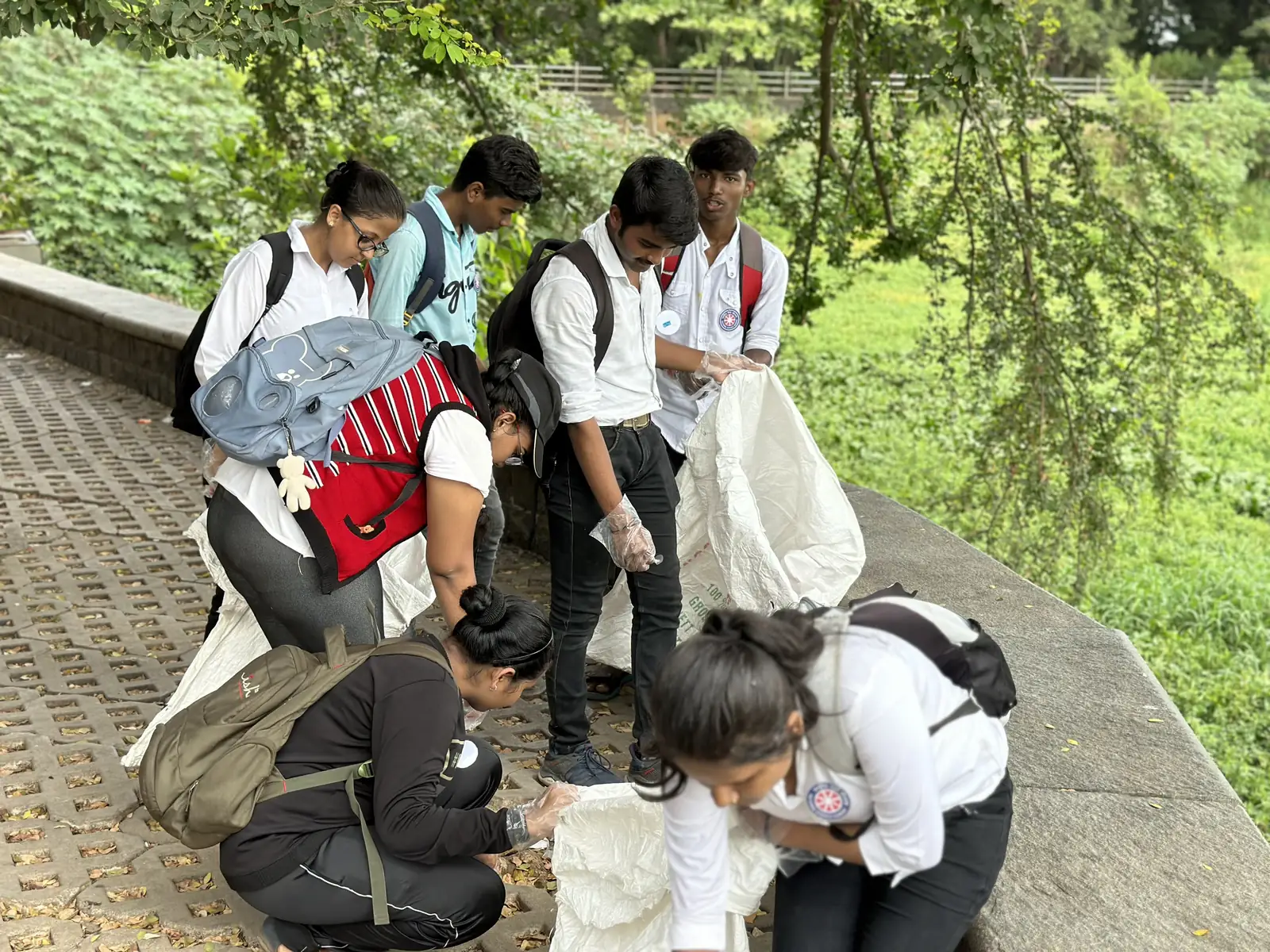
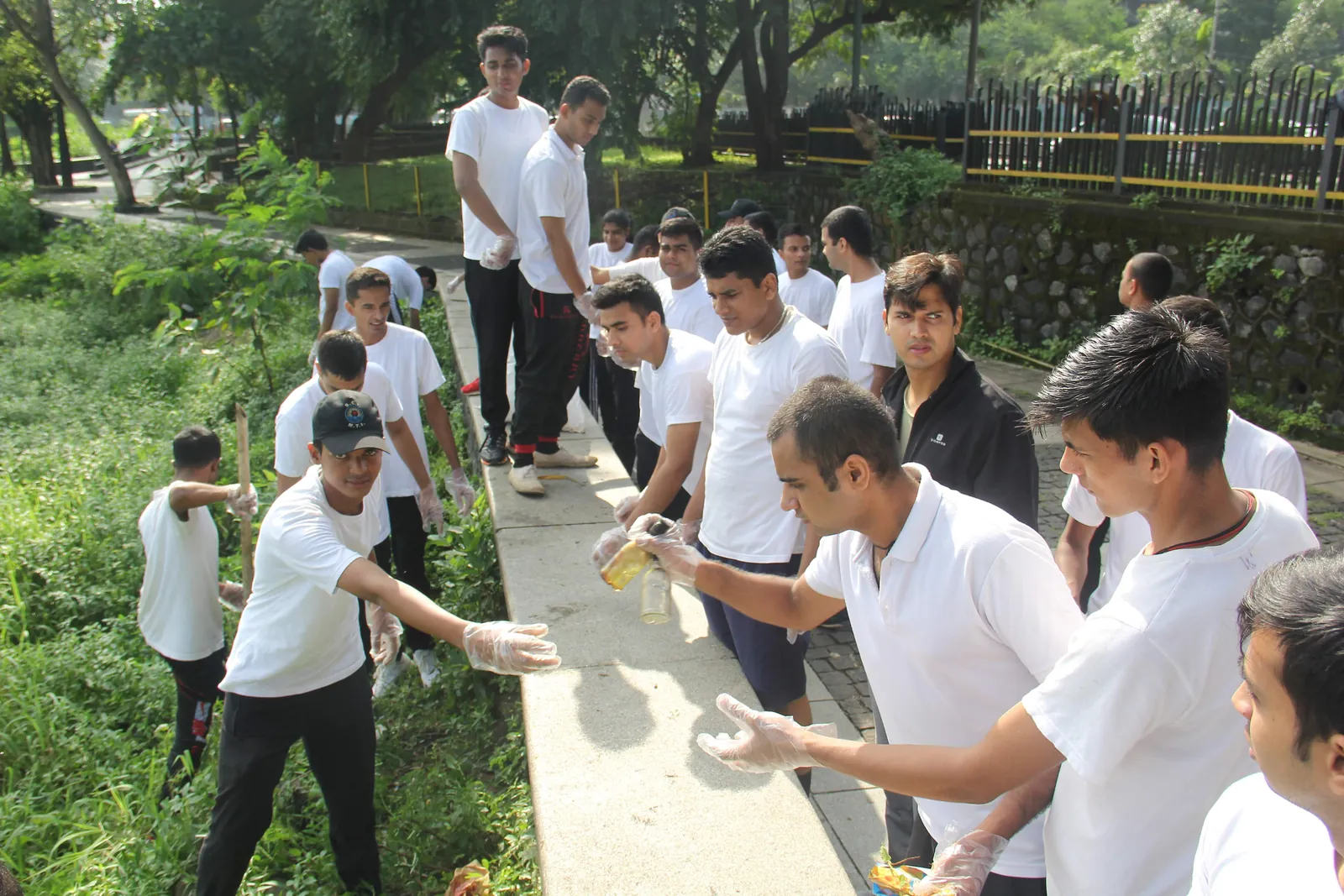
Earth5R has run tree plantations in Indian cities, with volunteers geotagging each sapling on the Earth5R app. It has also worked with women in informal settlements to grow saplings on hot tin roofs to cool their homes. As a fellow you study green spaces like these near where you live, with a mentor guiding your method.
This work links to the UN Sustainable Development Goals: Goal 15, Life on land and Goal 11, Sustainable cities and communities.
Available projects in this high school biology internship
Each project fits around school work and takes place near home. Your mentor shapes the final project with you.
Tree survey of your neighbourhood
Count and identify the trees on your street or in a nearby park, record each one on the Earth5R app and compare native and non-native species.
Birds in urban green spaces
Record the birds you see in two green spaces near home at the same times each week, and compare how many species each place supports.
Survival of planted saplings
Revisit saplings planted in a local plantation drive, record which ones survived and look for reasons such as water, soil and shade.
Plants on rooftops and balconies
Study how plants on rooftops or balconies change the temperature of the surface below, using a simple thermometer and a regular routine.
What you do in the field
- Identify trees, birds and plants using field guides and the Earth5R app
- Record each observation with a photo and its location
- Repeat counts on a fixed routine so your data can be compared
- Enter your data in a spreadsheet and make simple charts
- Write up your question, method and results with your mentor
- Present your findings in a research conversation and answer questions
Skills you build
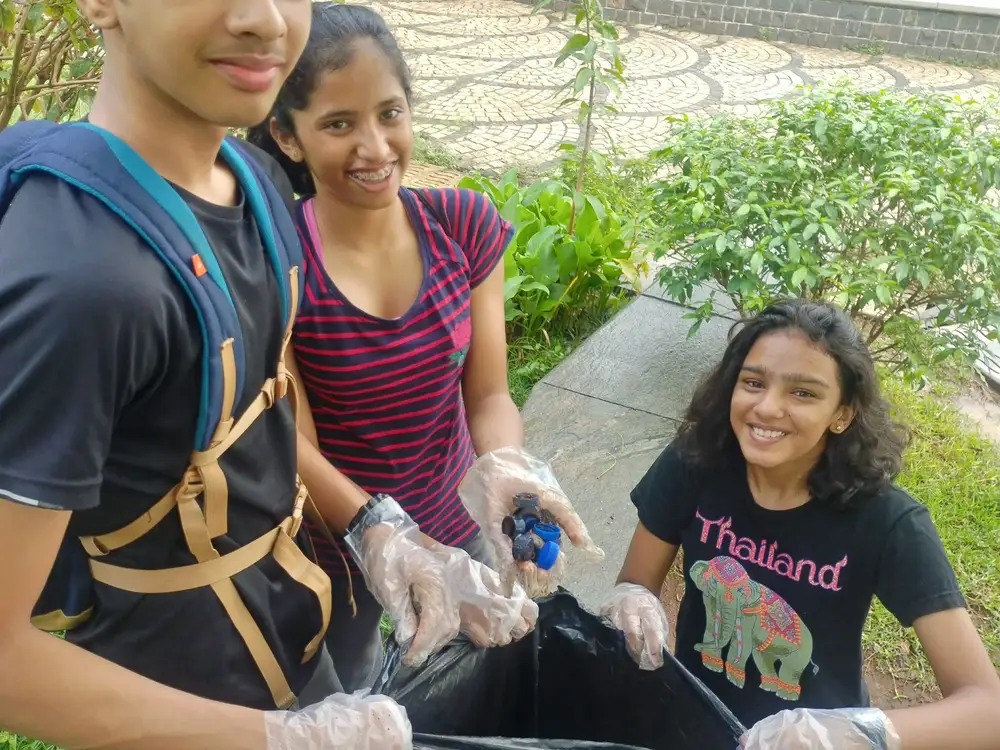
On a high school biology internship, you collect your own data near home with a parent or guardian, using the Earth5R app and data forms. Earth5R checks the data on its platform before it goes into your project report.
How a high school biology internship fits your school programme
For IB, IGCSE, CBSE and ICSE students. Your school decides what counts towards its own requirements.
IB CAS
Field surveys and plantation follow-ups can form a CAS project with a service element. Your CAS coordinator decides what counts.
Extended Essay and IA
A biology Extended Essay or Internal Assessment needs a clear question and primary data. Your field data can give you both.
MYP, IGCSE and CBSE projects
A local ecology survey fits the MYP Personal Project and the project work in IGCSE, CBSE and ICSE biology.
University applications
A verified record of real field research gives you something specific to write about in a personal statement.
How the high school biology internship works
Every student moves through four phases. Your mentor checks each phase before you move on, and sessions pause during board exams.
Observe and Map
Go into the field near home, with a parent or guardian, and collect primary data for your project in Biology and Ecology.
Frame and Design
Find the root cause in your data and frame a problem worth solving, with your mentor.
Model
Build a working model, analysis or design for your solution, and test it.
Build and Deploy
Put your solution to work, measure the result and publish a verified record on earth5r.org.
Along the way you take part in research conversations with professors at MIT, Oxford, Cambridge, LSE and other universities, and ask your own questions. See how FIELDWORK works.
Where this can take you
University courses this leads to
- BSc in Biology or Biological Sciences
- BSc in Ecology and Conservation
- BSc in Environmental Science
- BSc in Zoology or Plant Sciences
- Pre-medical or life sciences courses
Careers in this field
- Ecologist or conservation scientist
- Wildlife or forest researcher
- Environmental consultant
- Science teacher or educator
- Doctor or health researcher
Universities to aim for in Biology and Ecology
Biology admissions tutors look for students who have asked a real question about living things and gone out to answer it. A high school biology internship with FIELDWORK gives you field data you collected, a report your mentor reviewed and a record that admissions teams can check. Students use a high school biology internship to build a record of real work for applications to universities like these.
USA · Department of Ecology and Evolutionary Biology
Cornell undergraduates can study ecology and evolutionary biology as a concentration within the Biological Sciences major or the Environment and Sustainability major. Many of the department’s courses have outdoor or field components, and its research areas include sustainability, environment and conservation.
University of California, Davis (UC Davis)
USA · Department of Evolution and Ecology, College of Biological Sciences
UC Davis’s Department of Evolution and Ecology runs the undergraduate major in Evolution, Ecology and Biodiversity. Its research covers biodiversity, conservation, environmental change and behaviour, from the evolution of genes to the ecology of whole ecosystems, using lab, field and computer methods.
USA · Department of Biology
Stanford’s Department of Biology offers an undergraduate Biology major and minor, with research opportunities and capstone options. Ecology and Environmental Science is one of its research subgroups, and its research sites include Jasper Ridge Biological Preserve and Hopkins Marine Station.
USA · Department of Organismic and Evolutionary Biology (OEB)
Harvard’s Department of Organismic and Evolutionary Biology runs the Integrative Biology concentration for undergraduates, with flexible pathways such as Plant Sciences or Marine Biology and Biological Oceanography. The department studies how biodiversity is generated and maintained and how organisms interact with their environment.
UK · Department of Biology
Oxford’s MBiol in Biology covers the subject from molecules to ecosystems, with ecology and evolution as one of the first-year themes. Students go on residential field courses in the first and second years, and the fourth year is a long research project in a supervisor’s research group.
UK · Department of Zoology
Cambridge’s Department of Zoology teaches undergraduates through the Natural Sciences Tripos, including Part II Zoology. Its research themes include Ecology and Conservation Science, with field sites from rainforests in Malaysia and Panama to Antarctic ecosystems. The department houses the University Museum of Zoology.
UK · Department of Life Sciences, Faculty of Natural Sciences
Imperial’s Department of Life Sciences teaches BSc degrees in Biological Sciences and in Ecology and Environmental Biology, which focuses on climate change, biodiversity and conservation. Its Silwood Park campus near Ascot is a centre for research and teaching in ecology, evolution and conservation.
Switzerland · Department of Environmental Systems Science (D-USYS)
At ETH Zurich, the Department of Environmental Systems Science teaches the BSc Environmental Sciences and the BSc Agricultural Sciences. For students interested in living things, its strategic research areas include ecosystems and biodiversity as well as agriculture and food systems.
University of British Columbia (UBC)
Canada · Biology, Faculty of Science (UBC Science)
UBC Science’s Biology programme, overseen by Botany and Zoology, offers a Major or Honours, with Honours options such as Conservation Biology and Ecology and Environmental Biology. Students learn field techniques like plot surveys and population estimates. The Biodiversity Research Centre hosts researchers in evolution, ecology and conservation biology.
Australia · School of the Environment, Faculty of Science
UQ’s School of the Environment brings together ecology, conservation, marine biology, zoology, genetics and evolution. Its study areas include conservation biology, marine biology and ocean science, and zoology and wildlife science, and its work addresses climate change, environmental resilience and natural resources.
This list is for guidance. These universities offer undergraduate study in Biology and Ecology. Earth5R has no admissions arrangement with them, and admission decisions rest with each university. Students get help researching universities, scholarships and applications, depending on the programme.
What your fellowship fee pays for
An internship fellowship at Earth5R is time and attention from senior researchers and leaders. Each part below takes staff time and resources that we set aside for every fellow.
Live mentoring with experts
One-to-one mentoring in most fellowships, with regular check-ins on your project.
Dialogues with global researchers
Academics from international universities and renowned scientists, who answer your questions and discuss your work.
Support in the field
Guidance while you collect data and work on your project in the field.
References for your next step
References when you apply for jobs, higher studies and research programmes.
Your work, hosted for life
Your work and data stay on Earth5R’s website and servers for life, where universities and employers can check them.
Time from senior people
Each fellow receives time and attention from senior researchers and leaders, set aside for them.
Fee details available on request.
Choose your fellowship
The Multi-Year Fellowship can run from Grade 9 to Grade 12, with more scope each year.
The fee pays for live mentoring, dialogues with global researchers, support in the field, references and lifelong hosting of your work. Fee details available on request.
High school biology internship: common questions
Do I need to take biology at school for this high school biology internship?
It helps but it isn’t required. Students who take biology, ESS or general science all join. Your mentor shapes the project to what you already know.
Is the field work safe for school students?
Yes. Field work takes place near your home, in public places such as streets and parks, with a parent or guardian present at every self-guided activity.
Can my biology project become my Extended Essay?
It can give you the question and the primary data for one. Your school and your Extended Essay supervisor decide whether the topic is approved.
Is the high school biology internship paid?
Yes. FIELDWORK is a paid, mentored programme. The fee pays for live mentoring, dialogues with global researchers, support in the field, references and lifelong hosting of your work. Fee details are available on request.
Can my child do this high school biology internship online?
Yes. Mentoring sessions run online, and field work takes place near where you live.
Is a parent or guardian present during field work?
Yes. A parent or guardian is present at every self-guided field activity. Online sessions are for students.
Does FIELDWORK pause during board exams?
Yes. Sessions pause during board exams, so the fellowship fits around school work.
What do students get at the end?
A certificate, a letter of recommendation, a project report and a verified profile on earth5r.org, where universities can check the work.
Related subjects for school students
Already at university? See the Biology and Ecology internship fellowship for university students.
Apply for a FIELDWORK fellowship in Biology and Ecology
This high school biology internship is for students in Grades 9 to 12. Work on a live Earth5R project with a mentor, take part in research conversations with global researchers, and build a verified record of your work. Fee details available on request.