
High school chemistry internship and research fellowship
This high school chemistry internship lets students in Grades 9 to 12 apply school chemistry to the waste and water problems of their own city, with a mentor who checks each step. You study composting, plastics and water pollution through safe observation at home and published data, then write up what you find as a research report.
For school students who enjoy IB Chemistry or chemistry in IGCSE, CBSE or ICSE and want to see how it explains everyday waste and pollution. Online, with field work near home and a parent or guardian present at every self-guided activity. The fellowship is paid because every student receives time and attention from senior researchers and leaders.
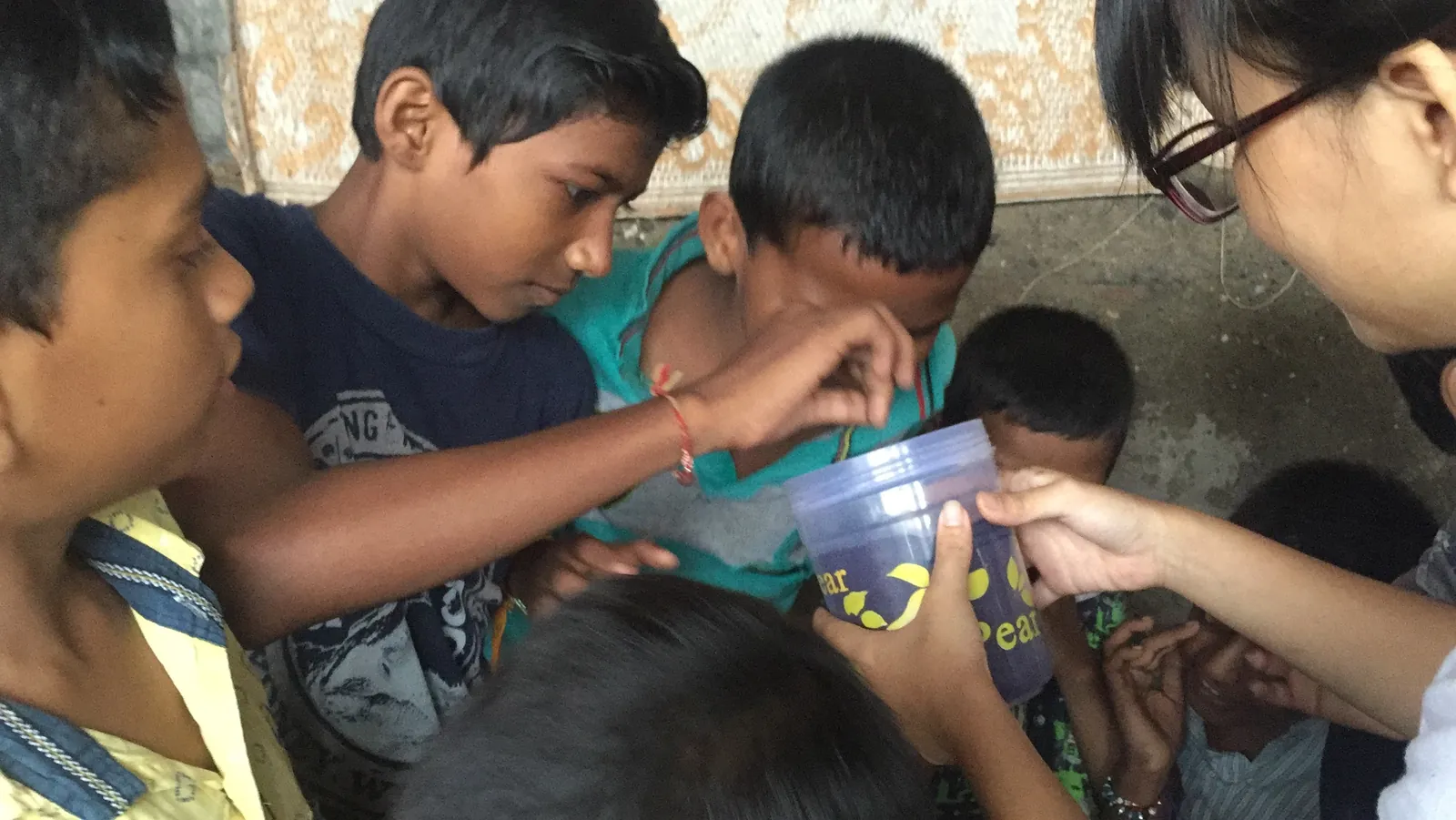
Why chemistry matters for sustainability
A lot of pollution comes down to chemistry. Plastics are long chains of molecules called polymers, and the type of polymer decides whether a bottle or wrapper can be recycled. Food scraps in a compost bin break down through reactions that need oxygen. When oxygen runs short, the same scraps give off methane and a bad smell. Chemists also track what is dissolved in rivers and lakes, so a city can find out where its pollution comes from.
Earth5R sets up zero waste housing societies, where residents compost their wet waste in drum composters designed from reused industrial containers. Its teams run waste and brand audits at lake, river and beach cleanups, sorting and counting what they collect. They also visit informal recycling units, where plastic is sorted before it is recycled. As a fellow you study the chemistry behind this work, at home and through Earth5R’s records, with a mentor guiding your method.
This work links to the UN Sustainable Development Goals: Goal 12, Responsible consumption and production and Goal 6, Clean water and sanitation.
Available projects in this high school chemistry internship
Each project fits around school work and takes place near home. Your mentor shapes the final project with you.
Chemistry of a compost bin
Follow a home or housing society compost bin for several weeks, record its temperature and moisture with a simple thermometer, and explain how oxygen and the carbon to nitrogen ratio change the result.
Plastic types in your household waste
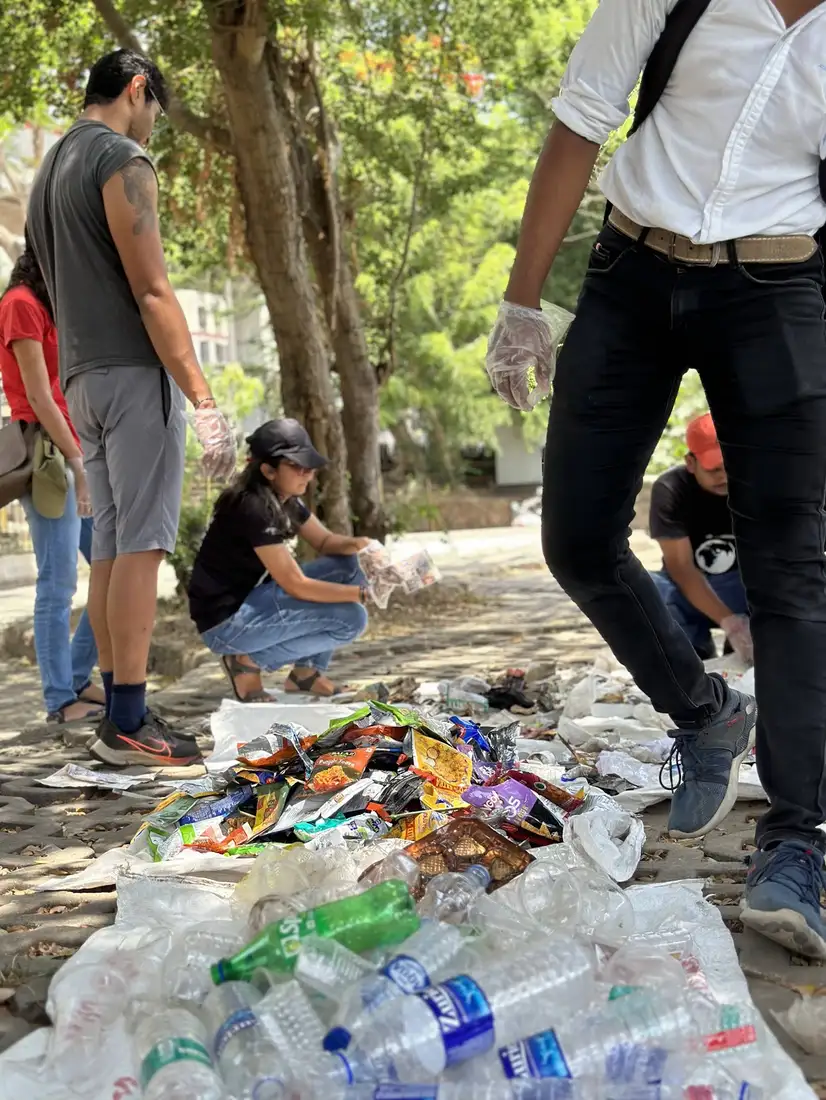
Sort a week of your family’s dry waste by resin code, count each type of polymer and explain why some plastics recycle easily while multilayer wrappers are hard to process.
Reading water quality data
Use public water quality data for a river or lake in your city, find out what each measured pollutant is and how it behaves in water, and trace where it may come from.
What recycling does to a PET bottle
Use published studies to explain how PET bottles are recycled, how each round of reprocessing changes the polymer, and how mechanical and chemical recycling compare.
What you do in the field
- Record compost temperature and moisture on a fixed routine
- Sort household plastic by resin code and count each type
- Read public water quality data and published research
- Write simple equations for the reactions you study
- Enter your data in a spreadsheet and make simple charts
- Present your findings in a research conversation and answer questions
Skills you build
On a high school chemistry internship, you collect your own data near home with a parent or guardian, using the Earth5R app and data forms. Earth5R checks the data on its platform before it goes into your project report.
How a high school chemistry internship fits your school programme
For IB, IGCSE, CBSE and ICSE students. Your school decides what counts towards its own requirements.
IB CAS
A compost project in your building or a plastic count at home can form a CAS project with a service element. Your CAS coordinator decides whether it qualifies.
Extended Essay and IA
A chemistry Extended Essay or Internal Assessment needs a focused question and data to analyse. Your compost readings or plastic counts can support one, and your supervisor decides.
MYP, IGCSE and CBSE projects
A study of compost or household plastics can fit the MYP Personal Project and the project work in IGCSE, CBSE and ICSE chemistry, if your school approves it.
University applications
A verified record of a chemistry study you designed yourself gives you a specific example to discuss in a personal statement or an interview.
How the high school chemistry internship works
Every student moves through four phases. Your mentor checks each phase before you move on, and sessions pause during board exams.
Observe and Map
Go into the field near home, with a parent or guardian, and collect primary data for your project in Chemistry.
Frame and Design
Find the root cause in your data and frame a problem worth solving, with your mentor.
Model
Build a working model, analysis or design for your solution, and test it.
Build and Deploy
Put your solution to work, measure the result and publish a verified record on earth5r.org.
Along the way you take part in research conversations with professors at MIT, Oxford, Cambridge, LSE and other universities, and ask your own questions. See how FIELDWORK works.
Where this can take you
University courses this leads to
- BSc in Chemistry or an integrated MChem
- BSc in Environmental Chemistry
- BEng in Chemical Engineering
- BSc in Materials Science
- BSc in Biochemistry
Careers in this field
- Environmental chemist
- Water quality analyst
- Polymer or materials scientist
- Green chemistry researcher
- Product sustainability specialist
Universities to aim for in Chemistry
Chemistry admissions tutors look for students who can link what they learn in class to reactions in the world around them and explain their reasoning clearly. A high school chemistry internship with FIELDWORK gives you data you recorded, a report your mentor reviewed and a profile that admissions teams can check. Students use a high school chemistry internship to build a record of real work for applications to universities like these.
Massachusetts Institute of Technology (MIT)
USA · Department of Chemistry
MIT Chemistry offers undergraduates the Chemistry major, known as Course V, and a Chemistry and Biology major, with minors in chemistry and in polymers and soft matter. Its research areas include Energy & Sustainability, Materials & Nanoscience and Chemical Biology.
California Institute of Technology (Caltech)
USA · Division of Chemistry and Chemical Engineering (CCE)
Caltech’s Division of Chemistry and Chemical Engineering offers undergraduate options in chemistry and in chemical engineering. Chemistry students begin with a first-year lab course, can take an introduction to research and may write a senior thesis. Division initiatives bring groups together on energy and the environment.
University of California, Berkeley (UC Berkeley)
USA · College of Chemistry
Berkeley’s College of Chemistry offers a B.S. and a B.A. in Chemistry, a B.S. in Chemical Biology and a B.S. in Chemical Engineering. Chemical engineering students can take an environmental technology option, and atmospheric chemistry is among the research areas of the college’s faculty.
USA · Department of Chemistry and Chemical Biology (CCB)
Harvard’s Department of Chemistry and Chemical Biology is home to the undergraduate Chemistry concentration, and its faculty also teach students in Chemistry & Physics and Chemical & Physical Biology. Undergraduates can do research in its labs. Energy work looks at how photosynthetic complexes, enzymes and catalytic surfaces convert energy.
UK · Yusuf Hamied Department of Chemistry
Undergraduates reach the Yusuf Hamied Department of Chemistry through the Natural Sciences course. Its Physical and Atmospheric Chemistry group uses models and experiments to study how the make-up of the air affects climate and health. The Materials Chemistry group works on materials for batteries, fuel cells and photovoltaics.
UK · Department of Chemistry
Oxford teaches chemistry as a four-year integrated MChem. The first three years combine practical work, lectures and tutorials, and the fourth year is given entirely to research in one of the department’s groups. Its Energy and Sustainable Chemistry theme studies battery materials and cleaner ways to make chemicals.
UK · Department of Chemistry
York offers chemistry as a three-year BSc or a four-year MChem, with course options that focus on the atmosphere and the environment or on green principles and sustainable processes. The department houses the Green Chemistry Centre of Excellence and the Wolfson Atmospheric Chemistry Laboratories.
Switzerland · Bachelor’s programmes in Chemistry and in Chemical and Bioengineering, Department of Chemistry and Applied Biosciences (D-CHAB)
ETH’s Bachelor’s programmes in Chemistry and in Chemical and Bioengineering share two years of core chemistry, mathematics, physics, computer science and biology, with laboratory courses throughout. The third year focuses either on creating molecules or on turning them into industrial products. Bachelor’s teaching at ETH is mainly in German.
National University of Singapore (NUS)
Singapore · Department of Chemistry, Faculty of Science
NUS Chemistry, in the Faculty of Science, runs undergraduate and graduate study. Its research areas include Environmental and Sustainable Chemistry and Advanced Catalysis and Synthesis. Groups in these areas work on photocatalysis, sustainable chemical reactions, carbon dioxide reduction and water splitting.
Japan · Department of Chemistry, School of Science
The Department of Chemistry in Tokyo’s School of Science teaches an undergraduate programme alongside graduate study. Its research divisions run from physical and organic chemistry to cosmo- and geochemistry. Laboratories include Green Sustainable Chemistry and Green Material Conversion.
This list is for guidance. These universities offer undergraduate study in Chemistry. Earth5R has no admissions arrangement with them, and admission decisions rest with each university. Students get help researching universities, scholarships and applications, depending on the programme.
What your fellowship fee pays for
An internship fellowship at Earth5R is time and attention from senior researchers and leaders. Each part below takes staff time and resources that we set aside for every fellow.
Live mentoring with experts
One-to-one mentoring in most fellowships, with regular check-ins on your project.
Dialogues with global researchers
Academics from international universities and renowned scientists, who answer your questions and discuss your work.
Support in the field
Guidance while you collect data and work on your project in the field.
References for your next step
References when you apply for jobs, higher studies and research programmes.
Your work, hosted for life
Your work and data stay on Earth5R’s website and servers for life, where universities and employers can check them.
Time from senior people
Each fellow receives time and attention from senior researchers and leaders, set aside for them.
Fee details available on request.
Choose your fellowship
The Multi-Year Fellowship can run from Grade 9 to Grade 12, with more scope each year.
The fee pays for live mentoring, dialogues with global researchers, support in the field, references and lifelong hosting of your work. Fee details available on request.
High school chemistry internship: common questions
Will my child handle chemicals in this high school chemistry internship?
No. Projects use observation, household waste, a simple thermometer and published data. There are no lab chemicals and no machines. Field work takes place at home or in public places, with a parent or guardian present at every self-guided activity.
What chemistry do I need to know before I start?
School chemistry up to Grade 9 or 10 is enough to begin. You should know about atoms, bonds and simple reactions. Your mentor helps you build up the polymer and organic chemistry your project needs, with readings matched to your level.
Can this project help with my chemistry Internal Assessment?
It can give you a research question and background reading to build on. Your school sets the rules for the Internal Assessment, and your chemistry teacher decides whether your topic and method are suitable.
Is the high school chemistry internship paid?
Yes. FIELDWORK is a paid, mentored programme. The fee pays for live mentoring, dialogues with global researchers, support in the field, references and lifelong hosting of your work. Fee details are available on request.
Can my child do this high school chemistry internship online?
Yes. Mentoring sessions run online, and field work takes place near where you live.
Is a parent or guardian present during field work?
Yes. A parent or guardian is present at every self-guided field activity. Online sessions are for students.
Does FIELDWORK pause during board exams?
Yes. Sessions pause during board exams, so the fellowship fits around school work.
What do students get at the end?
A certificate, a letter of recommendation, a project report and a verified profile on earth5r.org, where universities can check the work.
Related subjects for school students
Already at university? See the Chemistry internship fellowship for university students.
Apply for a FIELDWORK fellowship in Chemistry
This high school chemistry internship is for students in Grades 9 to 12. Work on a live Earth5R project with a mentor, take part in research conversations with global researchers, and build a verified record of your work. Fee details available on request.