
Chemistry internship fellowship
This chemistry internship applies school and university chemistry to the waste and water problems Earth5R works on, with a mentor who reviews your reasoning and your sources. You study the chemistry behind composting, plastic recycling and water pollution, using Earth5R’s field data and published research, and write it up as a short report.
For school and university students who enjoy chemistry and want to see how it explains everyday waste and pollution. Online, with field work near where you live. The fellowship is paid because every fellow receives time and attention from senior researchers and leaders.
Why chemistry matters for sustainability
Many environmental problems come down to chemistry. Plastics are long-chain polymers, and the type of polymer decides whether an item can be recycled and how. Food waste in a compost bin breaks down through microbial reactions that need oxygen. When oxygen runs short, the same waste gives off methane and bad smells. In rivers and lakes, chemists track pollutants such as nutrients and detergents to find out where they come from.
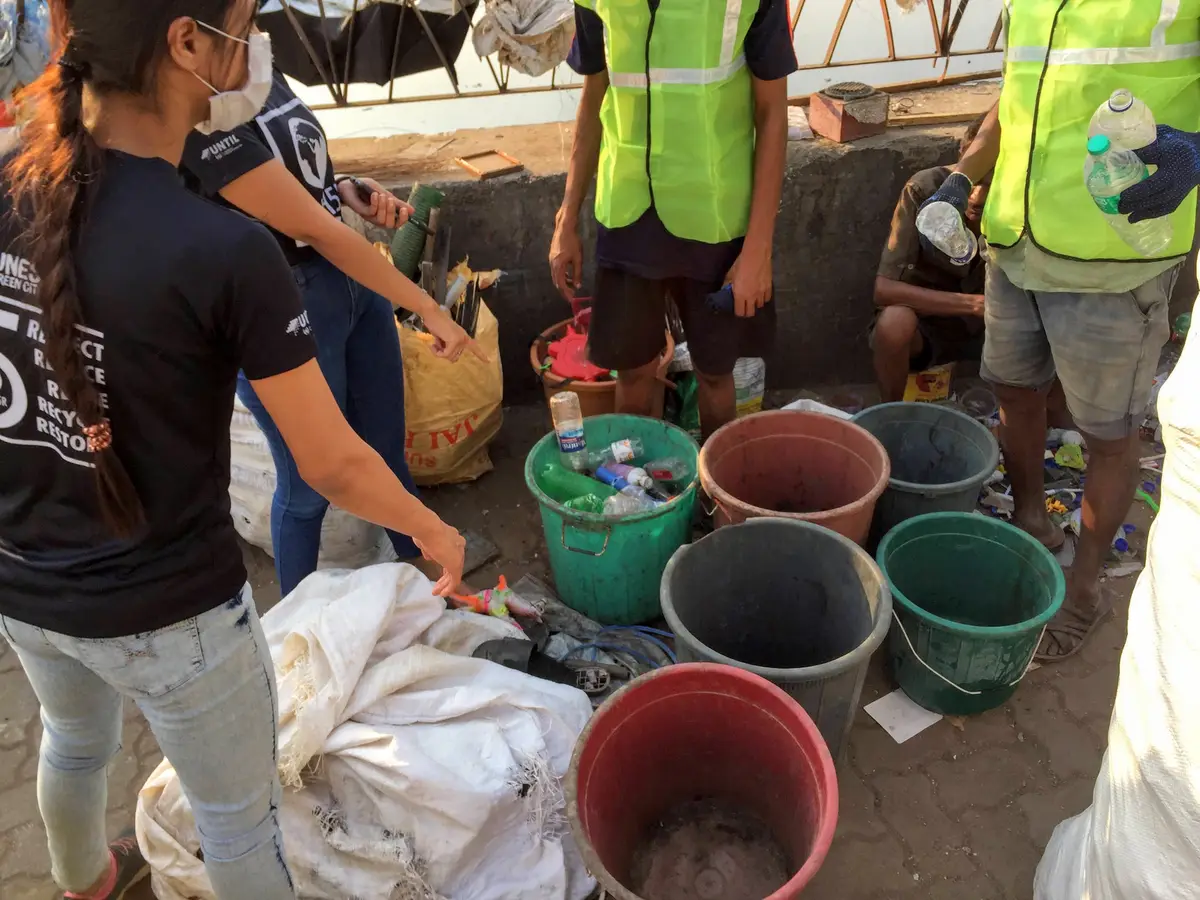
Earth5R designed drum composters from reused industrial containers for zero waste housing societies, where residents compost their wet waste on site. Its waste audits at lake, river and beach cleanups sort and count items and brands. Teams also visit informal recycling units, where plastic is sorted before it is recycled. As a fellow, you explain the chemistry behind what this field work records, using Earth5R’s data and published research.
This work links to the UN Sustainable Development Goals: Goal 12, Responsible consumption and production and Goal 6, Clean water and sanitation.
Available projects in the chemistry internship fellowship
You join Earth5R’s live work through your own subject. Your mentor shapes the final project with you.
Chemistry of a drum composter
Study the reactions that turn food waste into compost in a drum composter, record temperature and moisture where possible, and explain how oxygen and the carbon to nitrogen ratio affect the result.
Plastic types in a waste audit
Sort plastic from a cleanup waste audit by polymer type using resin codes, then explain which polymers are easiest to recycle and why multilayer packaging is so difficult to process.
Water pollution chemistry
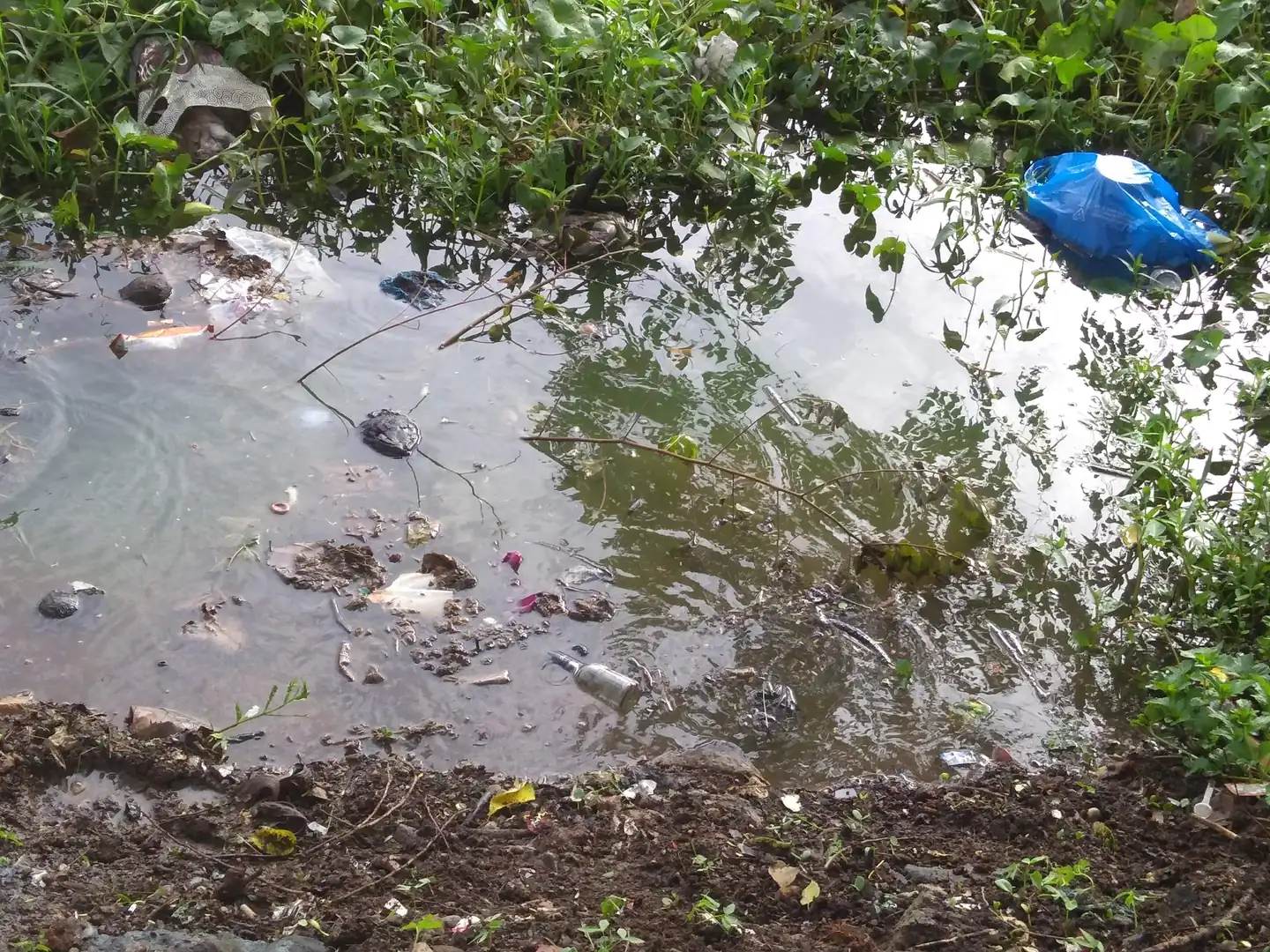
Study the main chemical pollutants in a local river or lake using published water quality data, and link them to sources you observe during a cleanup.
Inside an informal recycling unit
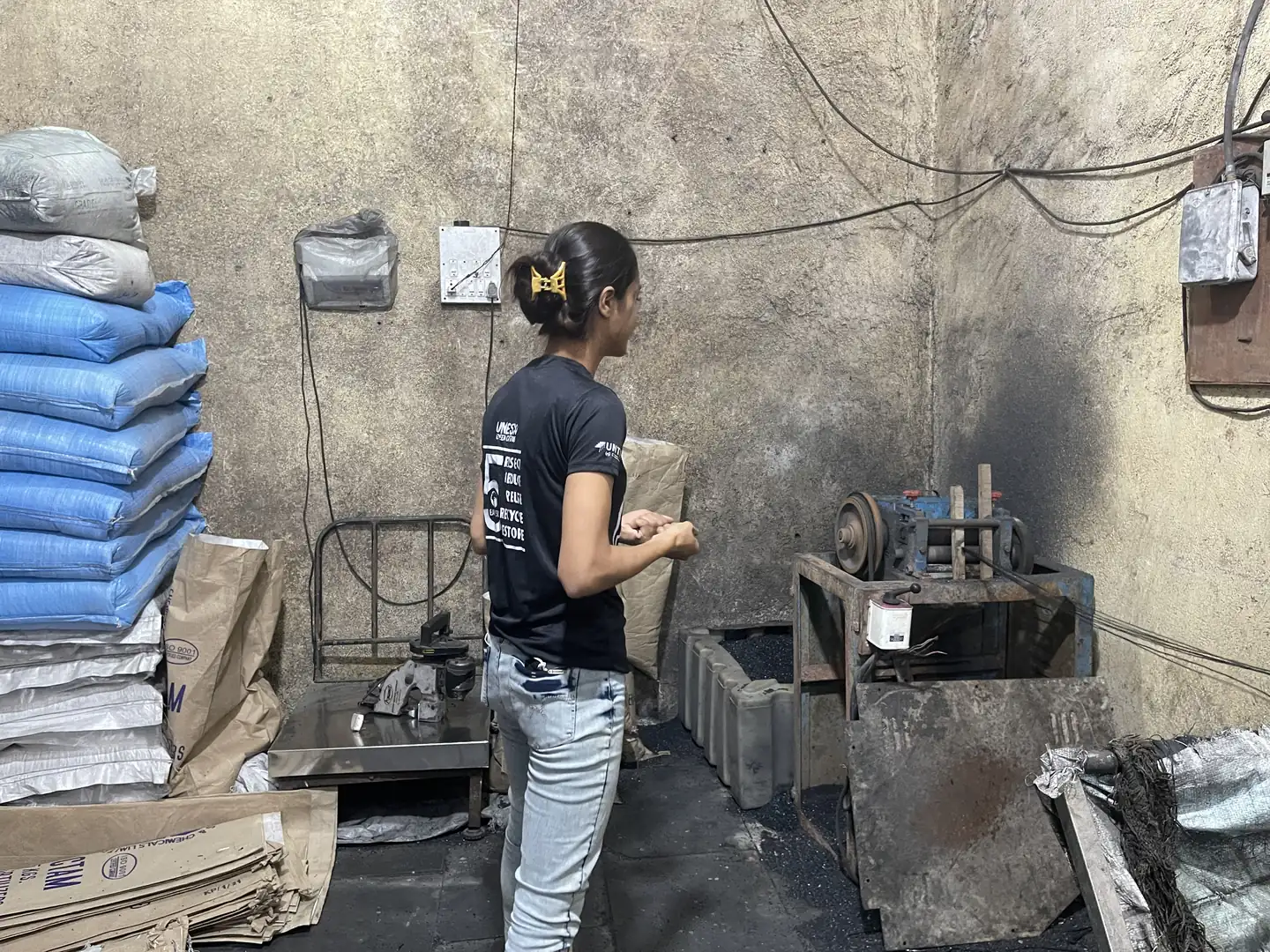
Find out how an informal recycling unit cleans, sorts and processes plastic, and explain how each round of reprocessing changes the polymer and its quality.
What you do in the field
- Observe composting, waste audits or recycling in the field and note what you see
- Sort collected plastic by resin code and record the counts
- Read published research on the reactions behind each process
- Use simple, safe tests such as pH strips where your mentor approves them
- Explain the chemistry in plain language, with equations where they help
- Present your findings in a research conversation
Skills you build
On a chemistry internship, you collect your own data near where you live, using the Earth5R app and data forms. Earth5R checks the data on its platform before it goes into your project report.
How the chemistry internship fellowship works
Every fellow moves through four phases. Each phase is checked by your mentor before you move on.
Observe and Map
Go into the field near where you live and collect primary data for your project in Chemistry.
Frame and Design
Find the root cause in your data and frame a problem worth solving, with your mentor.
Model
Build a working model, analysis or design for your solution, and test it.
Build and Deploy
Put your solution to work, measure the result and publish a verified record on earth5r.org.
Along the way you take part in research conversations with professors at MIT, Oxford, Cambridge, LSE and other universities, and ask your own questions. See how FIELDWORK works.
Where this can take you
Degrees this work supports
- BSc in Chemistry
- BTech in Chemical Engineering or Polymer Engineering
- MSc in Green Chemistry or Sustainable Chemistry
- MSc in Environmental Chemistry or Materials Science
- PhD in Chemistry or Materials Science
Careers in this field
- Environmental chemist
- Green chemistry researcher
- Polymer and materials scientist
- Water quality analyst
- Product sustainability specialist in industry
Universities known for Chemistry
Strong chemistry programmes look for applicants who can connect classroom theory with real reactions and explain their reasoning clearly. A fellowship project gives you a written study of real field processes, checked by your mentor and recorded on your verified profile on earth5r.org. Students use a chemistry internship to build a record of real work for applications to universities like these.
Massachusetts Institute of Technology (MIT)
USA · Department of Chemistry
MIT Chemistry offers undergraduate and graduate programmes and supports a postdoctoral research community. Research areas include chemical biology, inorganic, organic and physical chemistry, materials and nanoscience, and energy and sustainability. Shared facilities such as the Department of Chemistry Instrumentation Facility support NMR, mass spectrometry and EPR work.
California Institute of Technology (Caltech)
USA · Division of Chemistry and Chemical Engineering (CCE)
Caltech’s Division of Chemistry and Chemical Engineering (CCE) brings chemistry, chemical engineering and biochemistry together in one division. Its chemistry graduate programme covers organic and inorganic chemistry, chemical physics, theoretical chemistry and chemical biology. Major initiatives link groups working on energy and environment, molecular medicine and nanomaterials.
University of California, Berkeley (UC Berkeley)
USA · College of Chemistry
Berkeley’s College of Chemistry houses the Department of Chemistry and the Department of Chemical and Biomolecular Engineering. Degrees include the B.S. in Chemistry, the B.S. in Chemical Biology and graduate programmes. Green chemistry and atmospheric chemistry are among its research areas, and affiliated centres include the Berkeley Center for Green Chemistry.
USA · Department of Chemistry and Chemical Biology
Harvard’s Department of Chemistry and Chemical Biology runs undergraduate, graduate and postdoctoral programmes. Research areas include catalysis, materials, energy, and organic, inorganic, physical and theoretical chemistry. Energy groups study how photosynthetic complexes, enzymes and catalytic surfaces convert energy, and recent work includes artificial photosynthesis.
UK · Yusuf Hamied Department of Chemistry
Cambridge’s Yusuf Hamied Department of Chemistry teaches undergraduates through the Natural Sciences course and trains postgraduate researchers. Research falls into five Research Interest Groups, including Materials Chemistry and Physical and Atmospheric Chemistry. Materials work covers batteries, fuel cells and photovoltaics.
UK · Department of Chemistry
Oxford’s Department of Chemistry teaches a four-year integrated MChem, with a final year spent on a research project, and runs postgraduate degrees. Its Energy and Sustainable Chemistry theme studies materials for batteries, supercapacitors and photovoltaics, catalysts for fuel cells and cleaner routes to chemical synthesis.
UK · Department of Chemistry
York’s Department of Chemistry offers undergraduate and postgraduate degrees and organises its research into six themes, including Atmospheric Chemistry and Green Synthesis and Catalysis for a Sustainable Future. It is home to the Green Chemistry Centre of Excellence, and its air pollution research has informed the UK government’s Clean Air Strategy 2019.
Switzerland · Department of Chemistry and Applied Biosciences (D-CHAB)
The Department of Chemistry and Applied Biosciences (D-CHAB) at ETH offers bachelor’s and master’s degree programmes. It is made up of six institutes and laboratories, among them the Laboratories of Inorganic, Organic and Physical Chemistry and the Institute for Chemical and Bioengineering. Its stated aim is to create new compounds and materials for a better life.
National University of Singapore (NUS)
Singapore · Department of Chemistry, Faculty of Science
NUS Chemistry is a department in the Faculty of Science with undergraduate studies, an MSc in Chemical Sciences and a PhD programme. Research areas include Environmental and Sustainable Chemistry, Advanced Catalysis and Synthesis, Advanced Materials, and Computational Chemistry and AI/ML. Groups work on green catalysis and on materials for energy storage and conversion.
Japan · Department of Chemistry, School of Science
The Department of Chemistry in Tokyo’s School of Science runs undergraduate and graduate programmes. Research divisions cover physical, material, inorganic, analytical, organic and biological chemistry, along with information chemistry and cosmo- and geochemistry. Its laboratories include Green Sustainable Chemistry and Green Material Conversion.
This list is for guidance. These universities are widely known for Chemistry. Earth5R has no admissions arrangement with them, and admission decisions rest with each university. Fellows get help researching universities, scholarships and applications, depending on the programme.
What your fellowship fee pays for
An internship fellowship at Earth5R is time and attention from senior researchers and leaders. Each part below takes staff time and resources that we set aside for every fellow.
Live mentoring with experts
One-to-one mentoring in most fellowships, with regular check-ins on your project.
Dialogues with global researchers
Academics from international universities and renowned scientists, who answer your questions and discuss your work.
Support in the field
Guidance while you collect data and work on your project in the field.
References for your next step
References when you apply for jobs, higher studies and research programmes.
Your work, hosted for life
Your work and data stay on Earth5R’s website and servers for life, where universities and employers can check them.
Time from senior people
Each fellow receives time and attention from senior researchers and leaders, set aside for them.
Fee details available on request.
Choose your fellowship
The fee pays for live mentoring, dialogues with global researchers, support in the field, references and lifelong hosting of your work. Fee details available on request.
Chemistry internship: common questions
Is there lab work in this chemistry internship?
The work centres on field observation, Earth5R’s data and published research. Where it’s safe and your mentor agrees, you can run simple tests such as pH checks on compost or water. You don’t need a lab to complete a strong project.
What chemistry do I need to know before I start?
School chemistry is enough to begin. You should know about atoms, bonds and simple reactions. Your mentor helps you build up the organic and polymer chemistry your project needs, step by step, with readings matched to your level.
Can a chemistry internship help me apply for chemistry or chemical engineering?
It gives you a project that applies chemistry to a real problem, which you can describe in your personal statement and interviews. Your report and verified profile on earth5r.org give admissions teams a record they can check. Admission decisions rest with each university.
Is the chemistry internship fellowship paid?
Yes. It is a paid, mentored internship fellowship. The fee pays for live mentoring, dialogues with global researchers, support in the field, references and lifelong hosting of your work. Fee details are available on request.
Can I do this chemistry internship online?
Yes. FIELDWORK runs online, and your field work takes place near where you live. Your mentor guides you through each step.
Who can apply?
School and university students from India and other countries. The fellowship prepares you for university, postgraduate study and work.
What do I get at the end?
A certificate, a letter of recommendation, a project report and a verified profile on earth5r.org, where universities and employers can check your work.
Apply for the chemistry internship fellowship
Work on a live Earth5R project in Chemistry with a mentor, take part in research conversations with global researchers, and build a verified record of your work. Fee details available on request.