Geography internship fellowship
This geography internship covers human and physical geography on Earth5R’s field work, with a mentor who reviews your maps and your method. You study land use, rivers and urban growth in your own area, using maps, satellite images and field visits, and write up how the place is changing.
For school and university students who like maps and field work and want to study how their own area is changing. Online, with field work near where you live. The fellowship is paid because every fellow receives time and attention from senior researchers and leaders.
Why geography and earth sciences matter for sustainability
Geography explains where things happen and why they happen there. Earth scientists study how rivers carry water and sediment and how floods spread across a city. Human geography adds the people, asking how cities grow and which communities live in the areas most exposed to risk. A flooded street can have its cause some distance away, such as a blocked drain or a riverbank that has been built over. Maps show planners these links.
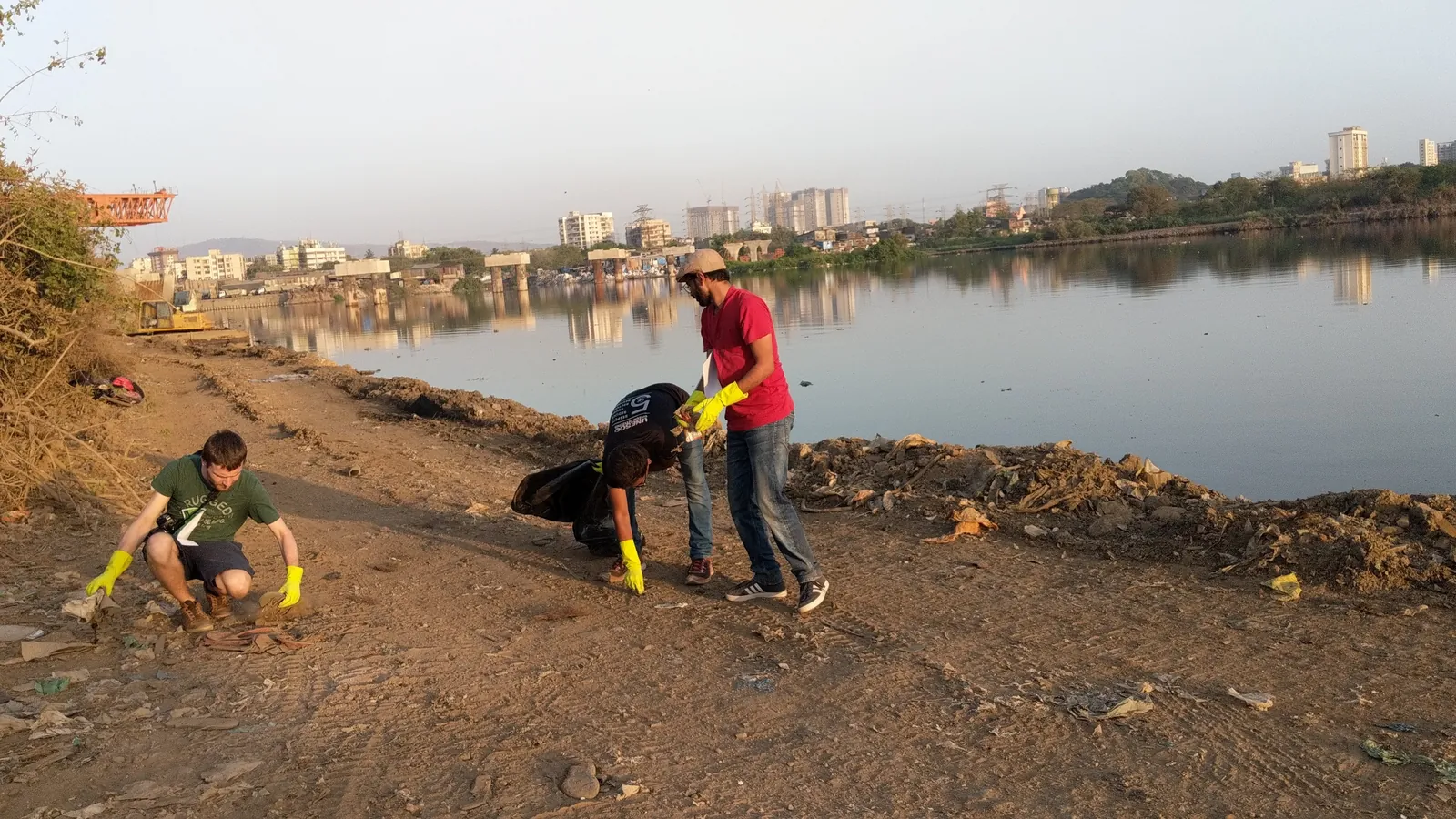
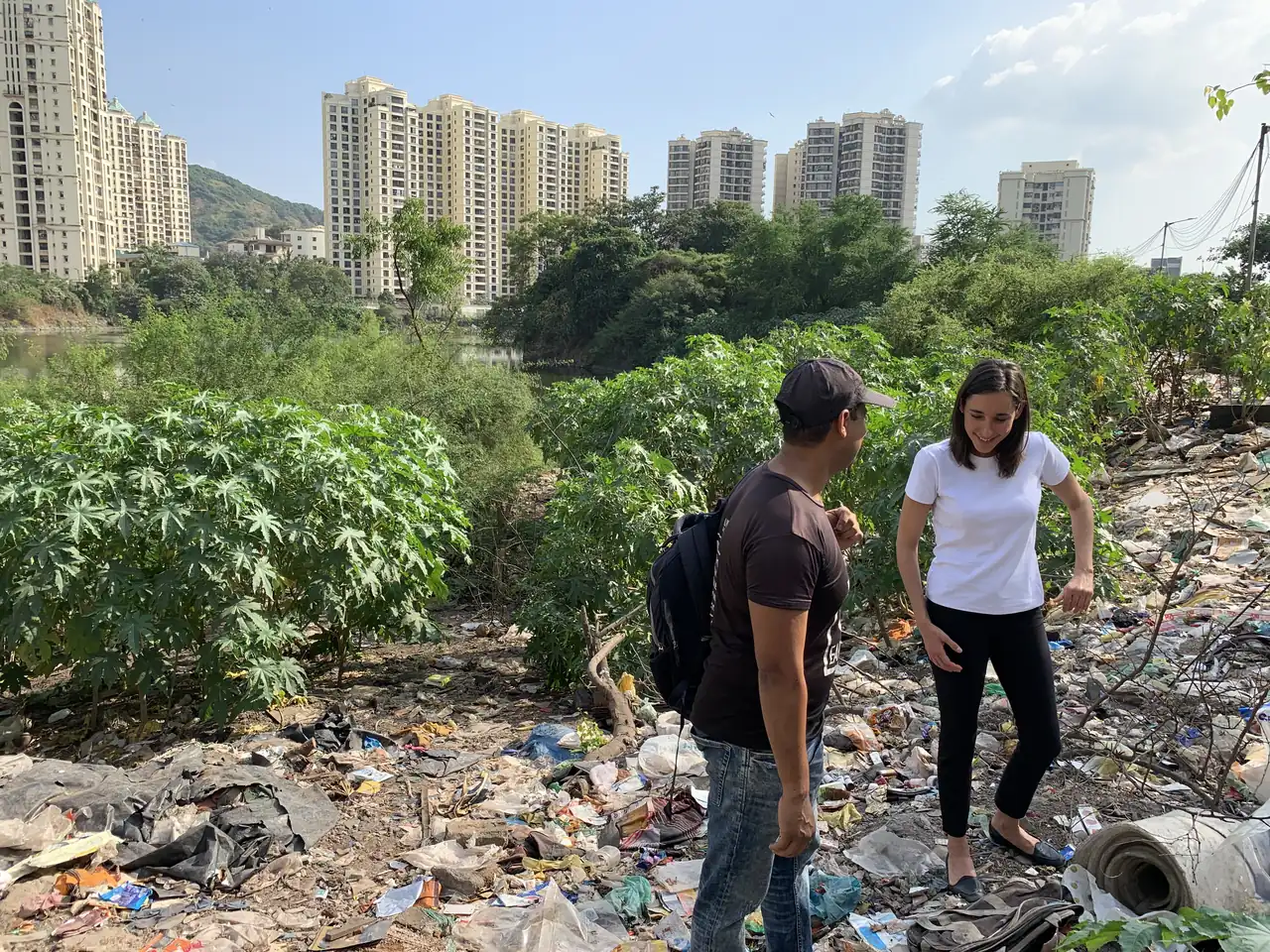
Earth5R works in 150+ Indian cities. Its teams have cleaned rivers and lakes, including the Mithi River and Powai Lake in Mumbai, the Mula Mutha in Pune and the Yamuna in Delhi. Field records on the Earth5R app are photographed and geo-tagged, so waste points, cleanups and tree plantations can be placed on a map. As a fellow, you combine this kind of data with satellite images and your own field visits.
This work links to the UN Sustainable Development Goals: Goal 11, Sustainable cities and communities and Goal 13, Climate action.
Available projects in the geography internship fellowship
You join Earth5R’s live work through your own subject. Your mentor shapes the final project with you.
Land use change in your area
Compare satellite images of your neighbourhood or town across several years, map how open ground, green cover and built-up area have changed, and check it on foot.
Mapping a city river
Walk and map a stretch of a local river, recording drains, dumping points and changes to the riverbank, and link them to land use nearby.
Mapping waste hotspots
Use geo-tagged cleanup and waste audit records to map where waste gathers in a ward, and test whether hotspots match markets, roads or drains.
Flood-prone streets and urban growth
Map streets that flood during the monsoon, compare them with where the city has grown, and talk to residents about their experience of flooding.
What you do in the field
- Compare satellite images of your area from different years
- Walk your study area and record observations with geo-tagged photos
- Draw sketch maps and annotate them in the field
- Talk to residents about how the area has changed
- Build simple maps in an open-source GIS tool such as QGIS
- Write up your findings with maps and present them in a research conversation
Skills you build
On a geography internship, you collect your own data near where you live, using the Earth5R app and data forms. Earth5R checks the data on its platform before it goes into your project report.
How the geography internship fellowship works
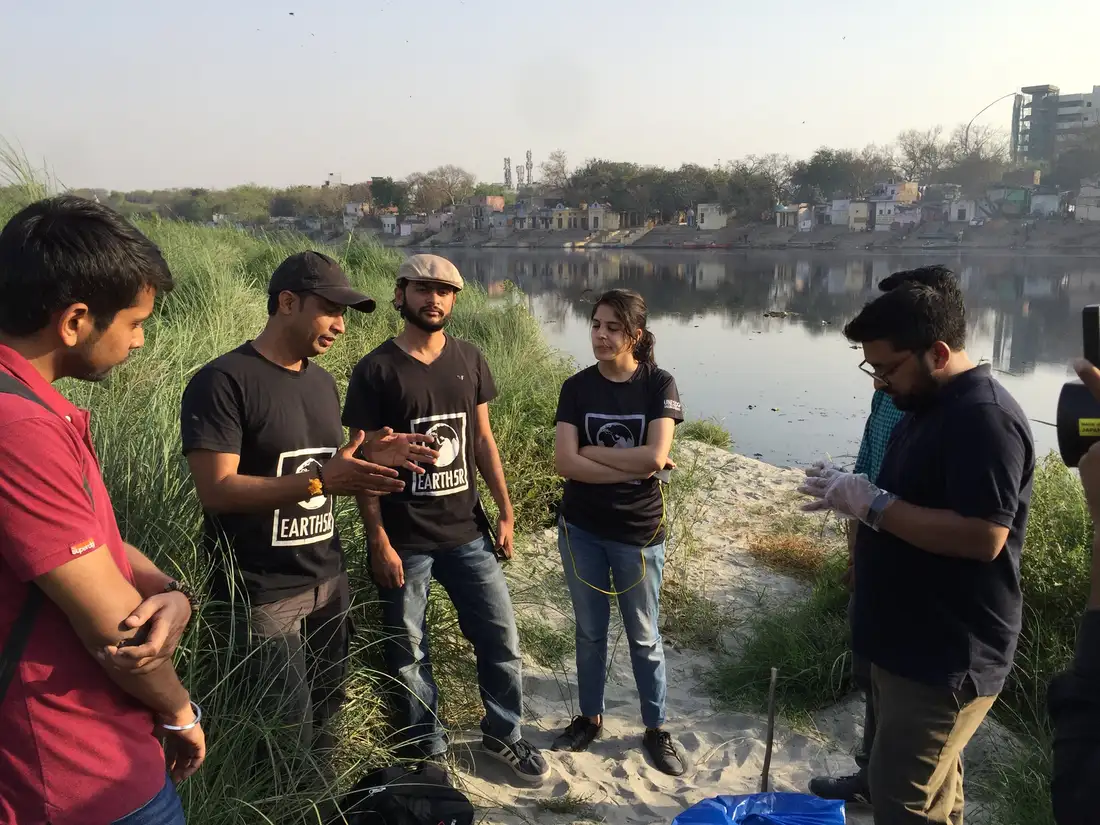
Every fellow moves through four phases. Each phase is checked by your mentor before you move on.
Observe and Map
Go into the field near where you live and collect primary data for your project in Geography and Earth Sciences.
Frame and Design
Find the root cause in your data and frame a problem worth solving, with your mentor.
Model
Build a working model, analysis or design for your solution, and test it.
Build and Deploy
Put your solution to work, measure the result and publish a verified record on earth5r.org.
Along the way you take part in research conversations with professors at MIT, Oxford, Cambridge, LSE and other universities, and ask your own questions. See how FIELDWORK works.
Where this can take you
Degrees this work supports
- BA or BSc in Geography
- BSc in Earth Sciences or Geology
- MSc in GIS and Remote Sensing
- MSc or MA in Environmental Geography or Urban Studies
- PhD in Physical or Human Geography
Careers in this field
- Geographer or GIS analyst
- Urban planner
- Hydrologist or geomorphologist
- Disaster risk and resilience analyst
- Environmental consultant
Universities known for Geography and Earth Sciences
Strong geography programmes look for applicants who can link what they see in the field to maps and data, and explain the causes behind a pattern. A fellowship project gives you maps and field records of your own area, reviewed by your mentor and recorded on your verified profile on earth5r.org. Students use a geography internship to build a record of real work for applications to universities like these.
UK · School of Geography and the Environment (SoGE)
Oxford’s School of Geography and the Environment teaches the BA in Geography, a set of MSc courses and a DPhil in Geography and the Environment. Its three research centres are the Environmental Change Institute, the Transport Studies Unit and the Smith School of Enterprise and the Environment. Taught courses cover biodiversity and conservation, water science and policy, and environmental change.
UK · Department of Geography
The Department of Geography at Cambridge teaches undergraduate geography, runs MPhil courses and supervises PhD research. Research groups include Climate and Environmental Dynamics, Glaciology and Glacial Geology, and Biogeography and Biogeomorphology. Its website also links to the Scott Polar Research Institute, which studies the polar regions.
University College London (UCL)
UK · UCL Geography, Faculty of Social & Historical Sciences
UCL Geography sits in the Faculty of Social & Historical Sciences and offers undergraduate, taught postgraduate and research degrees. Research groups work on past and present climates, environmental modelling and observation, and environmental change and biodiversity. The Environmental Change Research Centre is linked to its work on past climates and biodiversity.
UK · Department of Geography
Durham’s Department of Geography offers a BA and a BSc in Geography, with taught and research postgraduate study. Its research clusters include Sea Level, Ice and Climate, which studies how ice sheets respond to change and add to sea level rise. Other clusters cover Hazards and Surface Change, and Catchments and Rivers.
Switzerland · Department of Earth and Planetary Sciences (D-EAPS)
ETH Zurich’s Department of Earth and Planetary Sciences teaches a Bachelor in Earth and Climate Sciences, Master’s programmes in Earth Sciences, Atmospheric and Climate Science, and Applied Geophysics, and a doctorate. Research falls under three themes covering Earth surface systems, Earth and planetary dynamics, and georesources and geohazards. Groups include Climate Geology and Geothermal Energy and Geofluids.
Netherlands · Faculty of Geosciences
Utrecht’s Faculty of Geosciences combines natural and social sciences in one faculty, with bachelor’s, master’s and PhD programmes. Its four departments are Earth sciences, Physical Geography, Human Geography and Spatial Planning, and Sustainable Development, which houses the Copernicus Institute. Research covers the Earth system and the transition towards a sustainable future.
USA · Department of Earth & Planetary Sciences, Stanford Doerr School of Sustainability
The Department of Earth & Planetary Sciences belongs to the Stanford Doerr School of Sustainability. It studies the deep history and dynamic processes of Earth and other worlds, offering a BS, a coterminal MS, and MS and PhD programmes. Its work informs natural hazards and sustainable resource use, and it has groups in geobiology and planetary science.
University of California, Berkeley (UC Berkeley)
USA · Department of Geography
Berkeley Geography, in the College of Letters & Science, offers an undergraduate major and minor and graduate study. Topics range from cities and built landscapes to tropical climates and the flow of polar ice sheets. Research areas include Earth System Science, Critical Environments and Geospatial Representation, with courses on climate change, hydrology and remote sensing.
Canada · Department of Geography & Planning, Faculty of Arts & Science
The Department of Geography and Planning, part of the Faculty of Arts and Science, offers MA, MSc and PhD degrees in Geography and a Master of Science in Planning. Graduate fields include Environmental Geography and Resource Management, and Physical Geography and Natural Systems. Faculty research spans climatology, hydrology, biogeography, remote sensing and sustainable natural resource management.
National University of Singapore (NUS)
Singapore · Department of Geography, Faculty of Arts and Social Sciences
The Department of Geography at NUS offers major, minor and honours programmes, along with graduate research and coursework degrees. Its research clusters include Tropical Environmental Change, Geographic Information Systems, Social Cultural Geographies, and Politics, Economies And Space. Climate change and sustainable development appear among its teaching themes.
This list is for guidance. These universities are widely known for Geography and Earth Sciences. Earth5R has no admissions arrangement with them, and admission decisions rest with each university. Fellows get help researching universities, scholarships and applications, depending on the programme.
What your fellowship fee pays for
An internship fellowship at Earth5R is time and attention from senior researchers and leaders. Each part below takes staff time and resources that we set aside for every fellow.
Live mentoring with experts
One-to-one mentoring in most fellowships, with regular check-ins on your project.
Dialogues with global researchers
Academics from international universities and renowned scientists, who answer your questions and discuss your work.
Support in the field
Guidance while you collect data and work on your project in the field.
References for your next step
References when you apply for jobs, higher studies and research programmes.
Your work, hosted for life
Your work and data stay on Earth5R’s website and servers for life, where universities and employers can check them.
Time from senior people
Each fellow receives time and attention from senior researchers and leaders, set aside for them.
Fee details available on request.
Choose your fellowship
The fee pays for live mentoring, dialogues with global researchers, support in the field, references and lifelong hosting of your work. Fee details available on request.
Geography internship: common questions
Is this geography internship about physical or human geography?
Both. You can study rivers, floods and land use, and also how cities grow and how residents experience these changes. Your mentor helps you choose a project that fits the degree you’re thinking about.
Do I need GIS software?
No. You can start with paper maps, public satellite images and your own geo-tagged photos. If you want to go further, your mentor shows you the basics of an open-source GIS tool such as QGIS, which many geography degrees use.
Can a geography internship help me apply for geography at university?
It gives you field work and maps of your own area to describe in your personal statement and interviews. Your report and verified profile on earth5r.org give admissions teams a record they can check. Admission decisions rest with each university.
Is the geography internship fellowship paid?
Yes. It is a paid, mentored internship fellowship. The fee pays for live mentoring, dialogues with global researchers, support in the field, references and lifelong hosting of your work. Fee details are available on request.
Can I do this geography internship online?
Yes. FIELDWORK runs online, and your field work takes place near where you live. Your mentor guides you through each step.
Who can apply?
School and university students from India and other countries. The fellowship prepares you for university, postgraduate study and work.
What do I get at the end?
A certificate, a letter of recommendation, a project report and a verified profile on earth5r.org, where universities and employers can check your work.
Apply for the geography internship fellowship
Work on a live Earth5R project in Geography and Earth Sciences with a mentor, take part in research conversations with global researchers, and build a verified record of your work. Fee details available on request.