Biotechnology internship fellowship
This biotechnology internship looks at how living organisms can help deal with city waste, with a mentor who guides your research at each step. You study composting, biodegradation and bio-based materials, using Earth5R’s field work and published research, and compare the options for your own city.
For school and university students interested in microbes and bio-based materials who want to work on a real waste problem. Online, with field work near where you live. The fellowship is paid because every fellow receives time and attention from senior researchers and leaders.
Why biotechnology matters for sustainability
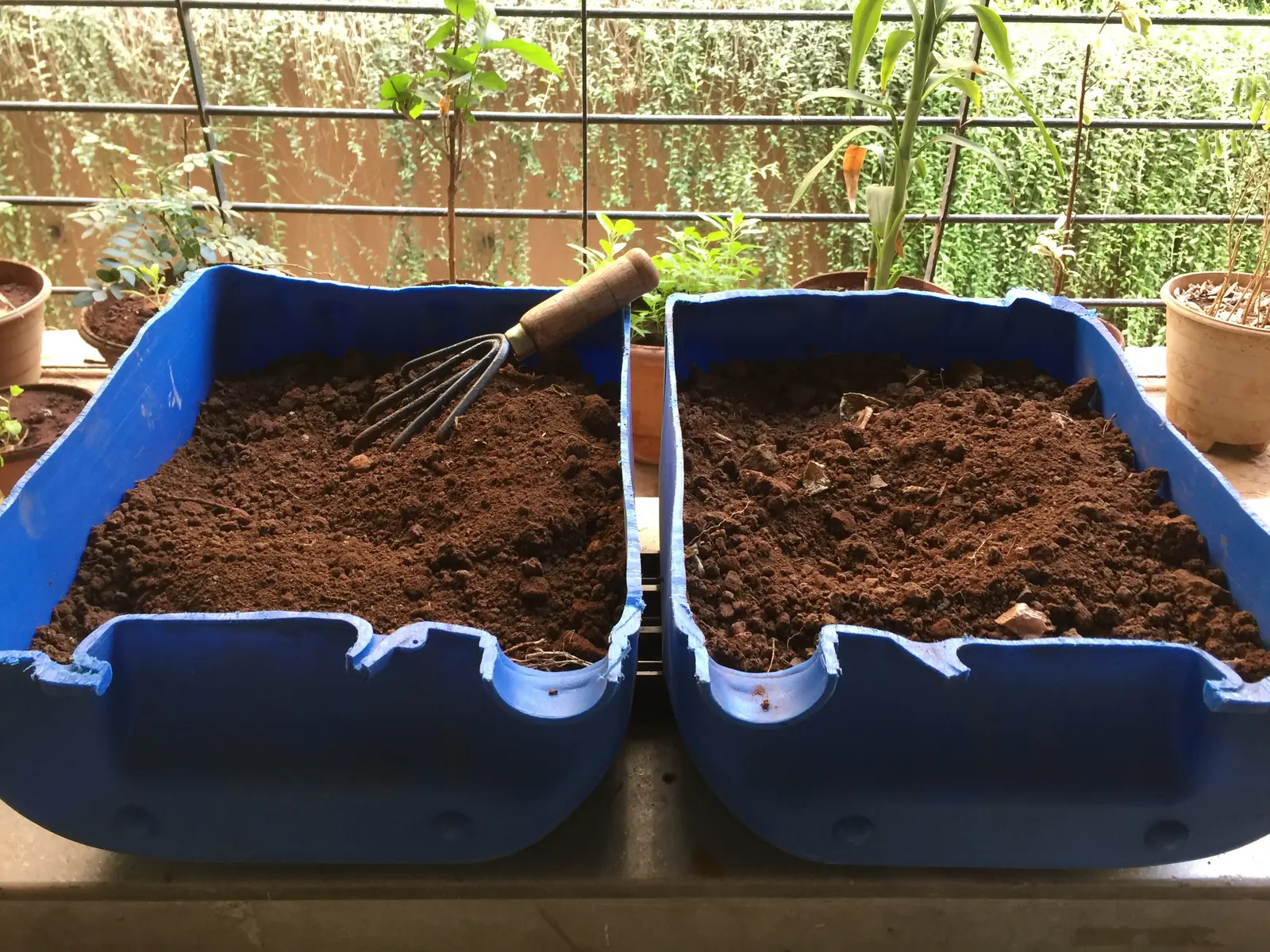
Biotechnology uses living organisms and their enzymes to make or break down materials. In composting, microbes do the work. They turn food and garden waste into compost, and in sealed digesters they can produce biogas. Researchers are also studying enzymes and microbes that break down some plastics, along with bio-based materials that could replace plastic. Each option needs testing, because a material labelled biodegradable may only break down under industrial composting conditions.
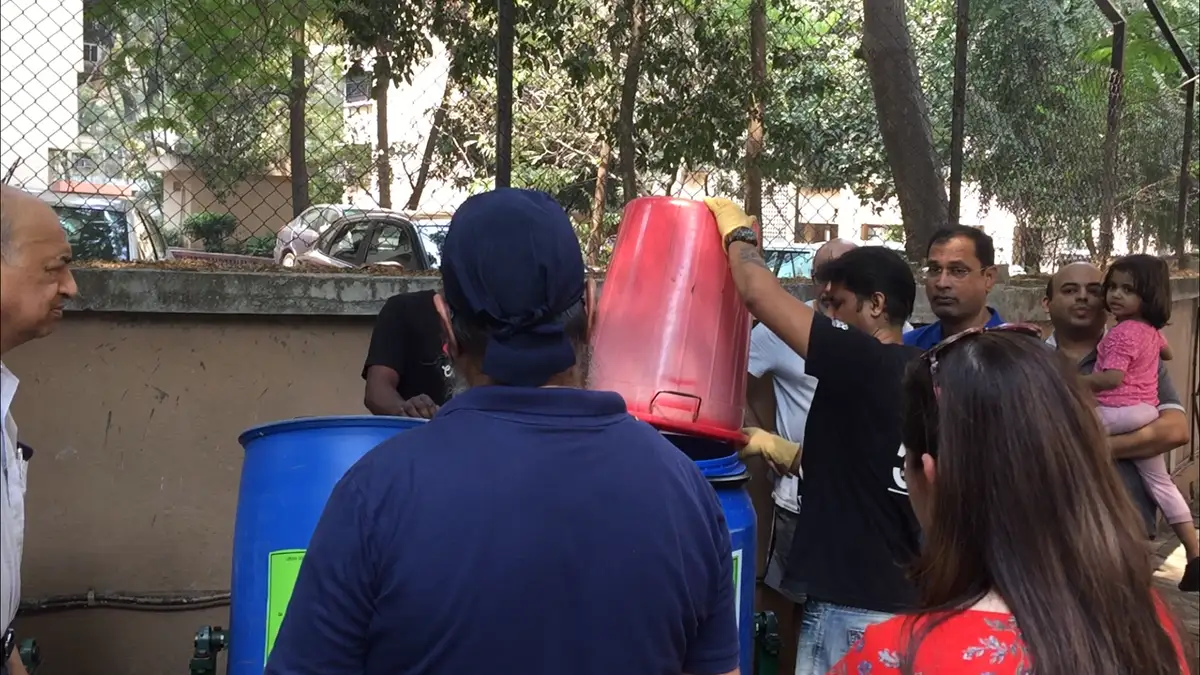
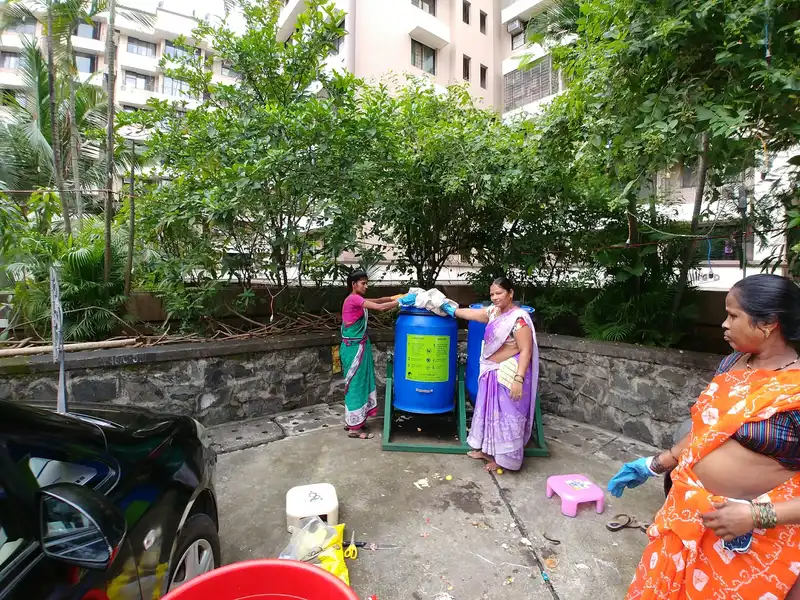
Earth5R sets up zero waste housing societies with composting units, including drum composters it designed from reused industrial containers. It trains communities on waste segregation and composting. Its waste audits at lake, river and beach cleanups sort and count items and brands, which records the packaging that ends up in the open. As a fellow, you study the biology behind composting and biodegradation, and compare which options would work for your city.
This work links to the UN Sustainable Development Goals: Goal 12, Responsible consumption and production and Goal 11, Sustainable cities and communities.
Available projects in the biotechnology internship fellowship
You join Earth5R’s live work through your own subject. Your mentor shapes the final project with you.
Microbes in a drum composter
Follow a batch of wet waste through a drum composter, record temperature and moisture over several weeks, and link each stage to the microbes at work.
Testing biodegradable claims
Take packaging labelled biodegradable or compostable, test how it breaks down in home compost or soil, and compare your results with published research.
Bio-based alternatives to packaging
Use waste audit data to find the most common plastic packaging at a cleanup site, then study which bio-based materials could replace it and what trade-offs each brings.
Options for a society’s wet waste
Compare home composting, community drum composters and biogas for the organic waste of a housing society or ward, using field data and published figures.
What you do in the field
- Observe a composting unit near you and record how it is run
- Track temperature and moisture in a compost batch over time
- Set up simple, safe biodegradation tests at home
- Read published research on microbes, enzymes and bio-based materials
- Compare options with a simple scoring table
- Present your comparison in a research conversation
Skills you build
On a biotechnology internship, you collect your own data near where you live, using the Earth5R app and data forms. Earth5R checks the data on its platform before it goes into your project report.
How the biotechnology internship fellowship works
Every fellow moves through four phases. Each phase is checked by your mentor before you move on.
Observe and Map
Go into the field near where you live and collect primary data for your project in Biotechnology.
Frame and Design
Find the root cause in your data and frame a problem worth solving, with your mentor.
Model
Build a working model, analysis or design for your solution, and test it.
Build and Deploy
Put your solution to work, measure the result and publish a verified record on earth5r.org.
Along the way you take part in research conversations with professors at MIT, Oxford, Cambridge, LSE and other universities, and ask your own questions. See how FIELDWORK works.
Where this can take you
Degrees this work supports
- BSc or BTech in Biotechnology
- BSc in Microbiology or Biochemistry
- MSc in Industrial or Environmental Biotechnology
- MSc in Bioprocess Engineering
- PhD in Biotechnology or Synthetic Biology
Careers in this field
- Environmental biotechnologist
- Bioprocess or fermentation scientist
- Research scientist in bio-based materials
- Organic waste and composting specialist
- Research assistant in a biotechnology lab
Universities known for Biotechnology
Strong biotechnology programmes look for applicants who can design a fair test and explain what their results mean. A fellowship project gives you an experiment or comparison on a real waste problem, reviewed by your mentor and recorded on your verified profile on earth5r.org. Students use a biotechnology internship to build a record of real work for applications to universities like these.
Massachusetts Institute of Technology (MIT)
USA · Department of Biological Engineering (BE)
MIT’s Department of Biological Engineering applies engineering principles to biological systems, with aims across agriculture, environment, health and medicine. It offers an undergraduate major, a biomedical engineering minor, a master’s degree and a PhD. Research areas include synthetic biology, biomolecular design, microbiome engineering, plant and agriculture, and climate, environment and toxicology.
USA · Department of Bioengineering
Stanford Bioengineering offers a BS in Bioengineering, a BS in Biomedical Computation, coterminal study, a master’s and a PhD. Research areas include synthetic biology, protein engineering, metabolic engineering, the microbiome, systems biology and bioinformatics. Faculty also work on agro-bio and planet health, frugal science and bio-policy.
University of California, Berkeley (UC Berkeley)
USA · Department of Bioengineering
Berkeley’s Department of Bioengineering teaches an undergraduate major, a Master of Engineering, a Master of Translational Medicine and a joint PhD with UCSF. Research areas include synthetic and systems biology, biomaterials and nanotechnology, and computational biology. An environment impact area applies this work to climate change, agriculture, environmental remediation and green manufacturing.
UK · Department of Chemical Engineering and Biotechnology (CEB)
Cambridge’s Department of Chemical Engineering and Biotechnology offers a BA/MEng, an MPhil in Biotechnology, other master’s courses and PhD study. Its research groups cover engineering, biology, materials, reactions and processes, and sensor technologies. The department describes its focus as innovations that drive sustainability and improve healthcare.
UK · Department of Life Sciences
Imperial’s Department of Life Sciences teaches undergraduate degrees in biochemistry and biotechnology, along with master’s courses such as the MSc Applied Bioscience and Biotechnology. Research themes include engineering biology, computational biology, genetics, plant sciences, structural biology, and ecology and ecosystems.
Switzerland · Department of Biosystems Science and Engineering (D-BSSE)
Based in Basel, D-BSSE works in biotechnology, systems biology, synthetic biology, bioinformatics and computational biology. It runs ETH’s Master’s degree programme in biotechnology, which focuses on systems and synthetic biology. Students build an individual study plan with a mentor and finish with an eight-month master’s thesis.
Wageningen University & Research
Netherlands · Master’s in Biotechnology
Wageningen’s two-year Master’s in Biotechnology combines gene technology and editing, microbiology, biochemistry and process engineering. Students specialise in one of five fields, including Process Technology, Food Biotechnology, and Environmental and Biobased Technology. They learn to design processes that produce drugs, vaccines, food or biobased materials, and finish with a thesis and an internship.
Delft University of Technology (TU Delft)
Netherlands · Department of Biotechnology, Faculty of Applied Sciences
The Department of Biotechnology in TU Delft’s Faculty of Applied Sciences designs and tests new biobased catalysts, micro-organisms and processes. Its five sections are Biocatalysis, Bioprocess Engineering, Biotechnology and Society, Environmental Biotechnology and Industrial Microbiology. Work includes sustainable production of fuels, chemicals and food, water purification and waste-to-product processes for a circular economy.
Technical University of Denmark (DTU)
Denmark · DTU Bioengineering
DTU Bioengineering works on biotechnology, food technology, and human and animal health, and educates BSc, MSc and PhD students in bioengineering. It focuses on discovering new bioactive molecules, enzymes and microorganisms. Its units include the Section for Synthetic Biology, the Center for Microbial Secondary Metabolites (CeMiSt) and the Initiative for Biofertilizer Innovation and Science (IBIS).
National University of Singapore (NUS)
Singapore · Department of Biological Sciences, Master of Science in Biotechnology
The NUS Department of Biological Sciences runs a Master of Science in Biotechnology that builds skills in protein engineering, genetic engineering and data analysis. Elective baskets include Computational Biotechnology, Nucleic Acid Biotechnology, Pharmaceutical Biotechnology and Urban Farming Biotechnology. Students can also take a capstone project or an internship project.
This list is for guidance. These universities are widely known for Biotechnology. Earth5R has no admissions arrangement with them, and admission decisions rest with each university. Fellows get help researching universities, scholarships and applications, depending on the programme.
What your fellowship fee pays for
An internship fellowship at Earth5R is time and attention from senior researchers and leaders. Each part below takes staff time and resources that we set aside for every fellow.
Live mentoring with experts
One-to-one mentoring in most fellowships, with regular check-ins on your project.
Dialogues with global researchers
Academics from international universities and renowned scientists, who answer your questions and discuss your work.
Support in the field
Guidance while you collect data and work on your project in the field.
References for your next step
References when you apply for jobs, higher studies and research programmes.
Your work, hosted for life
Your work and data stay on Earth5R’s website and servers for life, where universities and employers can check them.
Time from senior people
Each fellow receives time and attention from senior researchers and leaders, set aside for them.
Fee details available on request.
Choose your fellowship
The fee pays for live mentoring, dialogues with global researchers, support in the field, references and lifelong hosting of your work. Fee details available on request.
Biotechnology internship: common questions
Do I need a lab for this biotechnology internship?
No. You study composting and biodegradation with simple, safe set-ups at home or in a housing society, and you use published research for the molecular side. Your mentor helps you design tests that give clear results with everyday equipment.
Is composting part of biotechnology?
Yes. Composting is a controlled process run by bacteria and fungi, and the same principles apply in industrial fermentation and waste treatment. Studying it teaches you how microbial communities respond to oxygen, moisture and temperature, which is a good base for further study.
Can a biotechnology internship help with a university application?
It gives you a project to describe in your personal statement and interviews, with an experiment you designed and a report your mentor reviewed. Your verified profile on earth5r.org records the work. Admission decisions rest with each university.
Is the biotechnology internship fellowship paid?
Yes. It is a paid, mentored internship fellowship. The fee pays for live mentoring, dialogues with global researchers, support in the field, references and lifelong hosting of your work. Fee details are available on request.
Can I do this biotechnology internship online?
Yes. FIELDWORK runs online, and your field work takes place near where you live. Your mentor guides you through each step.
Who can apply?
School and university students from India and other countries. The fellowship prepares you for university, postgraduate study and work.
What do I get at the end?
A certificate, a letter of recommendation, a project report and a verified profile on earth5r.org, where universities and employers can check your work.
Apply for the biotechnology internship fellowship
Work on a live Earth5R project in Biotechnology with a mentor, take part in research conversations with global researchers, and build a verified record of your work. Fee details available on request.