Environmental science internship fellowship
This environmental science internship takes you into the field on Earth5R’s sustainability work, with a mentor who guides your method and checks your results. You survey waste, water and green cover near where you live, record the data on the Earth5R app and write up your findings as a research report.
For school and university students who want to learn how environmental field research works, from the first survey to a finished report. Online, with field work near where you live. The fellowship is paid because every fellow receives time and attention from senior researchers and leaders.
Why environmental science matters for sustainability
Environmental science studies how air, water, soil and living things interact, and how people change them. It gives cities and communities the measurements they need before they act. A lake can’t be restored until someone knows what is polluting it and where the waste comes from. Field surveys and careful records turn a visible problem into a clear finding that a city council or a housing society can act on.
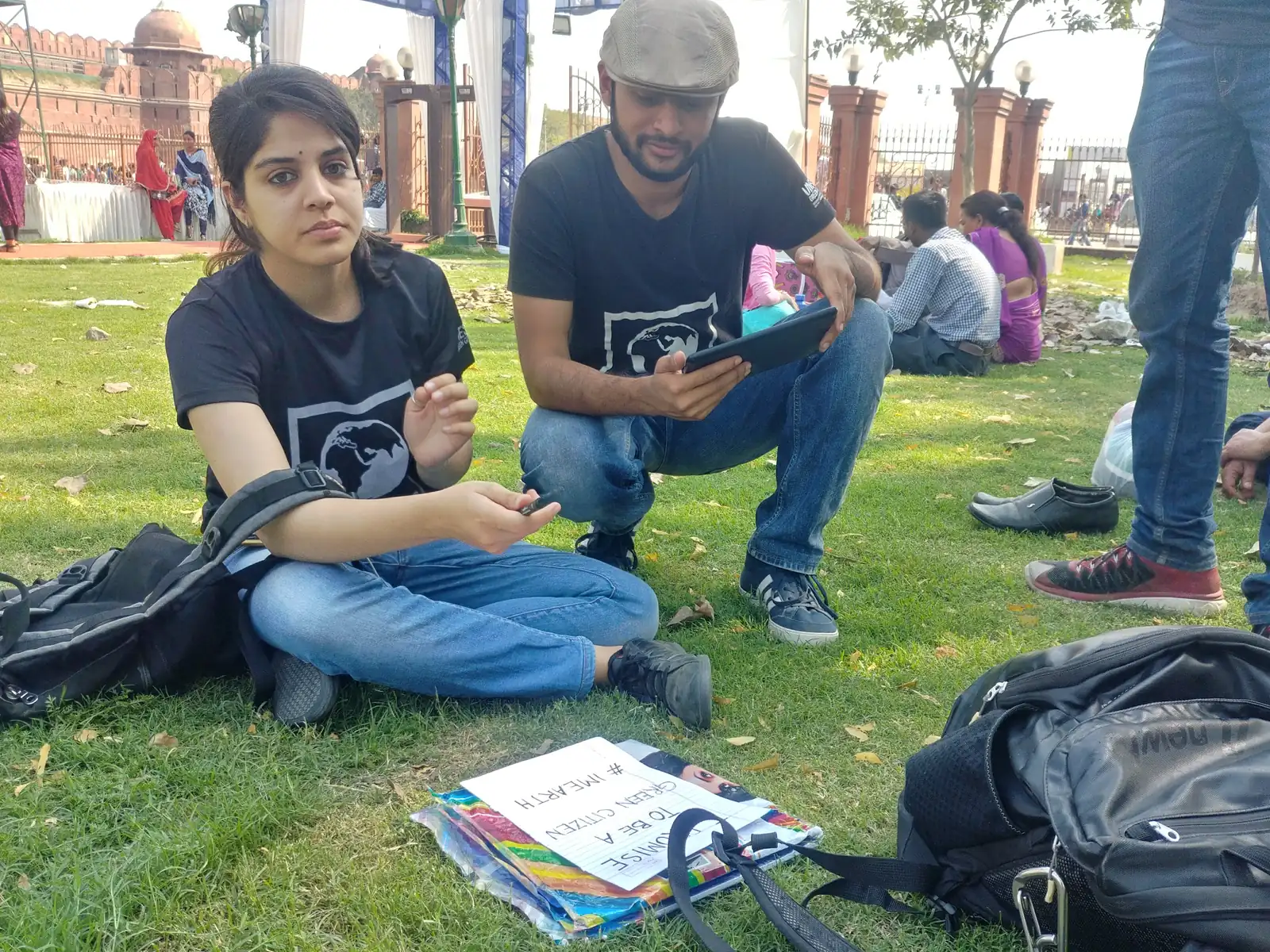
Earth5R works in 150+ Indian cities and records its field data on the Earth5R app as photographed, geo-tagged entries. Teams run waste audits at lake and river cleanups and survey households door to door. Earth5R’s TERRA Score work checks what 1,200+ companies listed in India report against what the ground shows. As a fellow, you collect this kind of data near where you live and analyse it with your mentor.
This work links to the UN Sustainable Development Goals: Goal 11, Sustainable cities and communities and Goal 15, Life on land.
Available projects in the environmental science internship fellowship
You join Earth5R’s live work through your own subject. Your mentor shapes the final project with you.
Waste audit at a cleanup
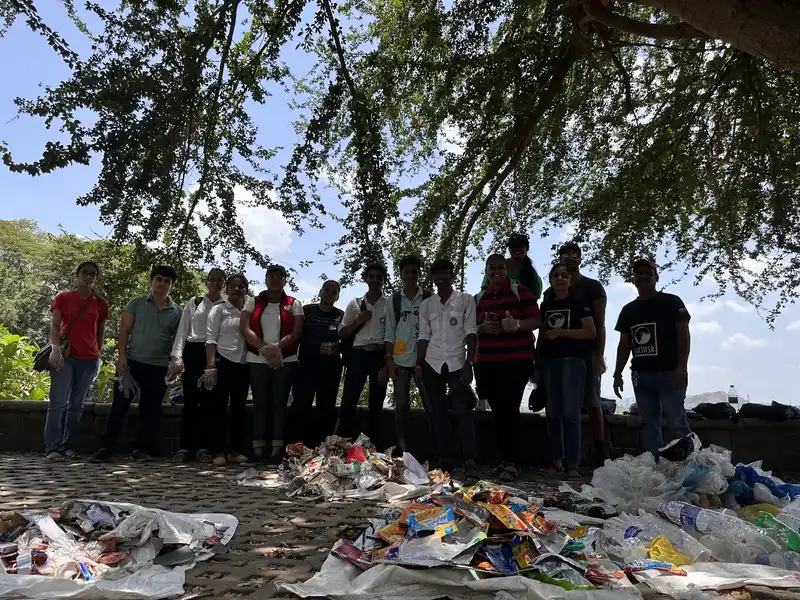
Take part in a lake, river or beach cleanup, sort and count the waste by item and brand, and record the results on the Earth5R app.
Lake or river pollution survey
Walk a stretch of a local lake or river, photograph and geotag drains and dumping points, and map where waste enters the water.
Green cover survey
Map trees and green cover across a neighbourhood or school campus, geotag what you find on the Earth5R app, and compare areas with more and less shade.
Checking company environmental claims
Compare what a listed company reports on waste or water with field data, using Earth5R’s TERRA Score method. Company names are masked in student work.
What you do in the field
- Plan a field survey with your mentor, including what to measure and where
- Collect photographed, geo-tagged records on the Earth5R app
- Sort and count waste at cleanup sites for a waste audit
- Enter, clean and check your data in a spreadsheet
- Compare your findings with published studies and public data for your city
- Write a research report and present it in a research conversation
Skills you build
On a environmental science internship, you collect your own data near where you live, using the Earth5R app and data forms. Earth5R checks the data on its platform before it goes into your project report.
How the environmental science internship fellowship works
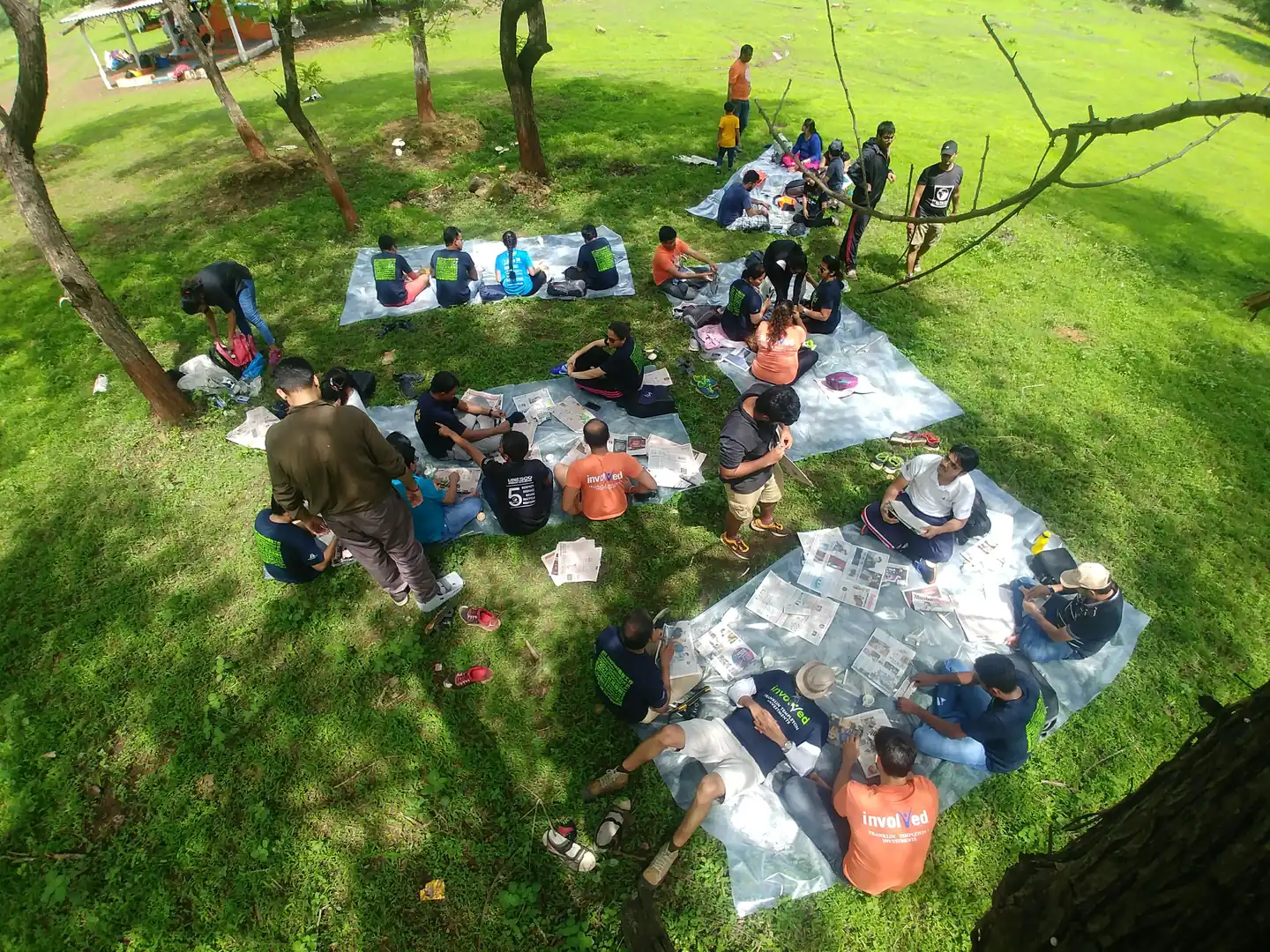
Every fellow moves through four phases. Each phase is checked by your mentor before you move on.
Observe and Map
Go into the field near where you live and collect primary data for your project in Environmental Science.
Frame and Design
Find the root cause in your data and frame a problem worth solving, with your mentor.
Model
Build a working model, analysis or design for your solution, and test it.
Build and Deploy
Put your solution to work, measure the result and publish a verified record on earth5r.org.
Along the way you take part in research conversations with professors at MIT, Oxford, Cambridge, LSE and other universities, and ask your own questions. See how FIELDWORK works.
Where this can take you
Degrees this work supports
- BSc in Environmental Science or Environmental Studies
- BSc in Biology, Chemistry or Geography with an environmental focus
- MSc in Environmental Science or Environmental Management
- MSc in Sustainability Science
- PhD in Environmental Science
Careers in this field
- Environmental scientist or field researcher
- Environmental consultant
- Environmental impact assessment analyst
- ESG and sustainability analyst
- Research assistant in a university lab
Universities known for Environmental Science
Strong environmental science programmes look for applicants who have collected field data and can explain their method and its limits. A fellowship project gives you data you gathered yourself and a report your mentor reviewed, listed on your verified profile on earth5r.org. Students use a environmental science internship to build a record of real work for applications to universities like these.
USA · Earth Systems Program, Stanford Doerr School of Sustainability
Stanford’s Earth Systems Program is an interdisciplinary environmental science major with a coterminal master’s programme. Students investigate environmental problems caused by human activity alongside natural change in the Earth system. The programme is part of the Stanford Doerr School of Sustainability, which also houses the Department of Earth System Science and the Woods Institute for the Environment.
University of California, Berkeley (UC Berkeley)
USA · Department of Environmental Science, Policy, and Management (ESPM)
Part of the Rausser College of Natural Resources, Berkeley’s Department of Environmental Science, Policy, and Management offers undergraduate majors in areas such as environmental science, environmental policy and biology, plus a PhD and master’s degrees in forestry and range management. Faculty work in three divisions, Ecosystem Sciences, Organisms & Environment, and Society & Environment.
USA · Yale School of the Environment (YSE)
The Yale School of the Environment offers the Master of Environmental Management, Master of Environmental Science, Master of Forestry and Master of Forest Science, along with a doctoral programme and certificates. Its initiatives include the Yale Program on Climate Change Communication and Yale Climate Connections, a climate news service broadcast on radio across the United States.
USA · Nicholas School of the Environment
Duke’s Nicholas School of the Environment offers undergraduate degrees, the Master of Environmental Management, the Master of Forestry and PhDs. Doctoral study spans Earth & Climate Sciences, Environment, and Marine Science & Conservation. Part of the school’s teaching and research takes place on the Duke Marine Laboratory campus.
UK · School of Geography and the Environment (SoGE)
Oxford’s School of Geography and the Environment teaches the BA in Geography and the DPhil in Geography and the Environment. Master’s courses include the MSc in Environmental Change & Policy and the MSc in Biodiversity, Conservation & Nature Recovery. The school includes the Environmental Change Institute and the Smith School of Enterprise and the Environment.
UK · Department of Geography
At Cambridge, the Department of Geography teaches undergraduate geography, MPhil courses and the PhD. Research groups include Climate and Environmental Dynamics, Glaciology and Glacial Geology, and Biogeography and Biogeomorphology, and its Conservation & Development Lab studies zero deforestation policies. The department also includes the Scott Polar Research Institute, which studies the polar regions.
University of East Anglia (UEA)
UK · School of Environmental Sciences
The School of Environmental Sciences at UEA brings together physical, chemical, biological and social sciences to study the Earth, its life and its people. It offers degrees in environmental sciences and geography, plus PhDs. Research themes are atmosphere, ocean and climate sciences, environmental biology, environmental social sciences and geosciences.
Switzerland · Department of Environmental Systems Science (D-USYS)
Environmental sciences and agricultural sciences are the two fields of ETH’s Department of Environmental Systems Science, which offers degree programmes in both. Its institutes include the Institute for Atmospheric and Climate Science and the Institute of Biogeochemistry and Pollutant Dynamics. Researchers in the department work on topics such as climate change, drought and river heatwaves.
Wageningen University & Research
Netherlands · Master’s in Environmental Sciences
Wageningen’s Master’s in Environmental Sciences lets students specialise in tracks such as air quality and atmospheric chemistry, aquatic ecology and water quality management, soil chemistry, environmental policy and environmental economics. The university also offers a Bachelor’s in Environmental Sciences. Its environmental research covers sustainable land and water use, nature restoration and a climate-resilient environment.
University of British Columbia (UBC)
Canada · Environmental Sciences, Faculty of Science (UBC Science)
UBC Science’s Environmental Sciences programme gives students a background in physical sciences, earth and ocean sciences, and life sciences. Topics include global climate change, energy use and sources, biodiversity loss and environmental policy, and students learn GIS, statistics and programming. The Institute for Resources, Environment and Sustainability offers related master’s and PhD study.
This list is for guidance. These universities are widely known for Environmental Science. Earth5R has no admissions arrangement with them, and admission decisions rest with each university. Fellows get help researching universities, scholarships and applications, depending on the programme.
What your fellowship fee pays for
An internship fellowship at Earth5R is time and attention from senior researchers and leaders. Each part below takes staff time and resources that we set aside for every fellow.
Live mentoring with experts
One-to-one mentoring in most fellowships, with regular check-ins on your project.
Dialogues with global researchers
Academics from international universities and renowned scientists, who answer your questions and discuss your work.
Support in the field
Guidance while you collect data and work on your project in the field.
References for your next step
References when you apply for jobs, higher studies and research programmes.
Your work, hosted for life
Your work and data stay on Earth5R’s website and servers for life, where universities and employers can check them.
Time from senior people
Each fellow receives time and attention from senior researchers and leaders, set aside for them.
Fee details available on request.
Choose your fellowship
The fee pays for live mentoring, dialogues with global researchers, support in the field, references and lifelong hosting of your work. Fee details available on request.
Environmental science internship: common questions
Do I need lab equipment for an environmental science internship?
No. Most of the work uses observation, counting, photographs and the Earth5R app on a phone. Your mentor shows you how to design a survey that gives reliable results with simple tools. Where public monitoring data exists for your area, you can add it to your analysis.
What kind of field work will I do?
You might sort and count waste at a lake or beach cleanup, map pollution points along a river or geotag trees in your neighbourhood. You choose a topic with your mentor and do the field work near where you live.
How does an environmental science internship help with university applications?
It gives you a research project to describe in your personal statement and interviews, with field data you collected and a report your mentor reviewed. Your verified profile on earth5r.org records the work. Admission decisions rest with each university.
Is the environmental science internship fellowship paid?
Yes. It is a paid, mentored internship fellowship. The fee pays for live mentoring, dialogues with global researchers, support in the field, references and lifelong hosting of your work. Fee details are available on request.
Can I do this environmental science internship online?
Yes. FIELDWORK runs online, and your field work takes place near where you live. Your mentor guides you through each step.
Who can apply?
School and university students from India and other countries. The fellowship prepares you for university, postgraduate study and work.
What do I get at the end?
A certificate, a letter of recommendation, a project report and a verified profile on earth5r.org, where universities and employers can check your work.
Apply for the environmental science internship fellowship
Work on a live Earth5R project in Environmental Science with a mentor, take part in research conversations with global researchers, and build a verified record of your work. Fee details available on request.