
Climate change internship fellowship
This climate change internship is a mentored climate science project on Earth5R’s field work in Indian cities. With your mentor, you track local heat, rainfall or air pollution data, link it to climate risks for your city and write up what the data shows in a short research report.
For school and university students who want to understand climate science through real data from their own city. Online, with field work near where you live. The fellowship is paid because every fellow receives time and attention from senior researchers and leaders.
Why climate science matters for sustainability
Climate science explains how heat moves between the atmosphere and the oceans, and how greenhouse gases change that balance. Cities use this science to plan for heat waves and flooding. A local risk becomes clear when someone compares long-term weather records with what people see on their own street. Climate scientists combine these records with satellite images and field observation to show which neighbourhoods face the most risk.
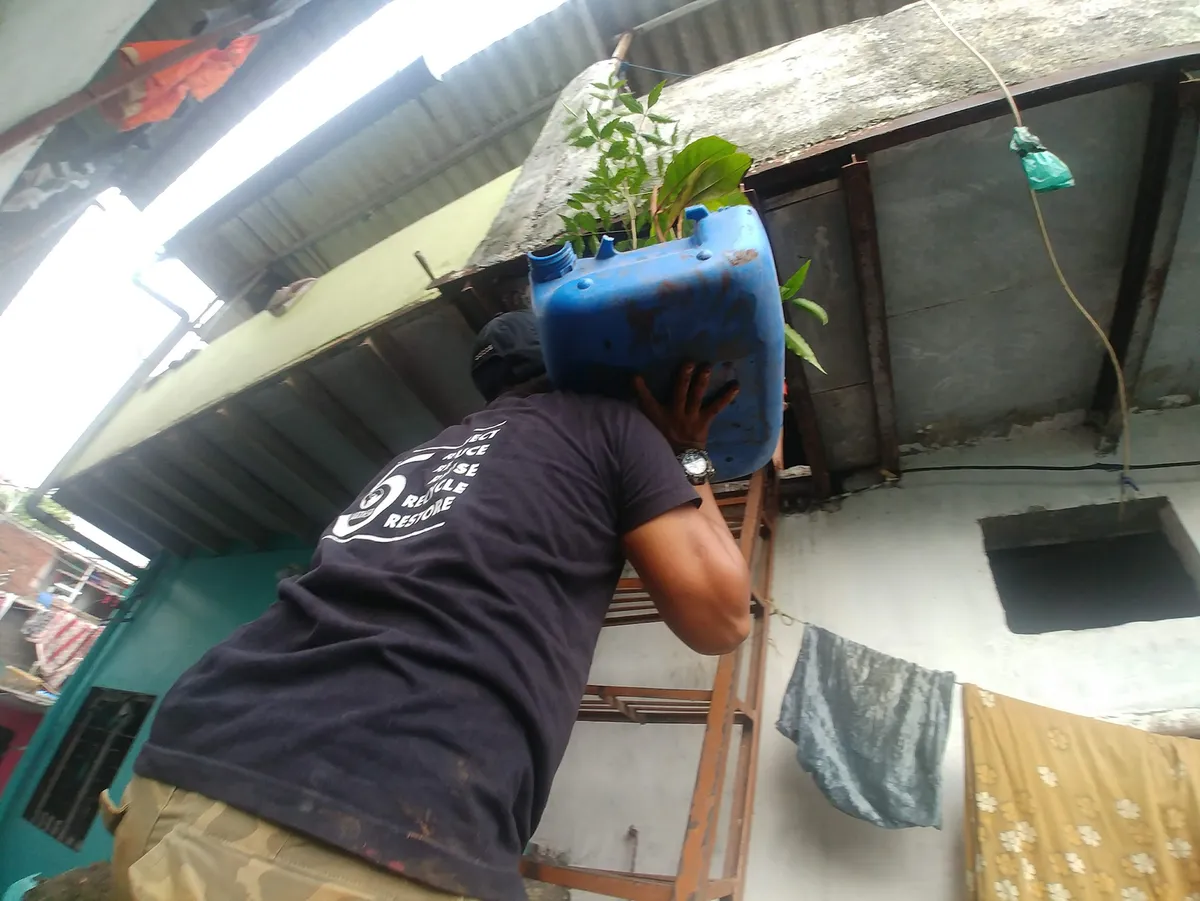
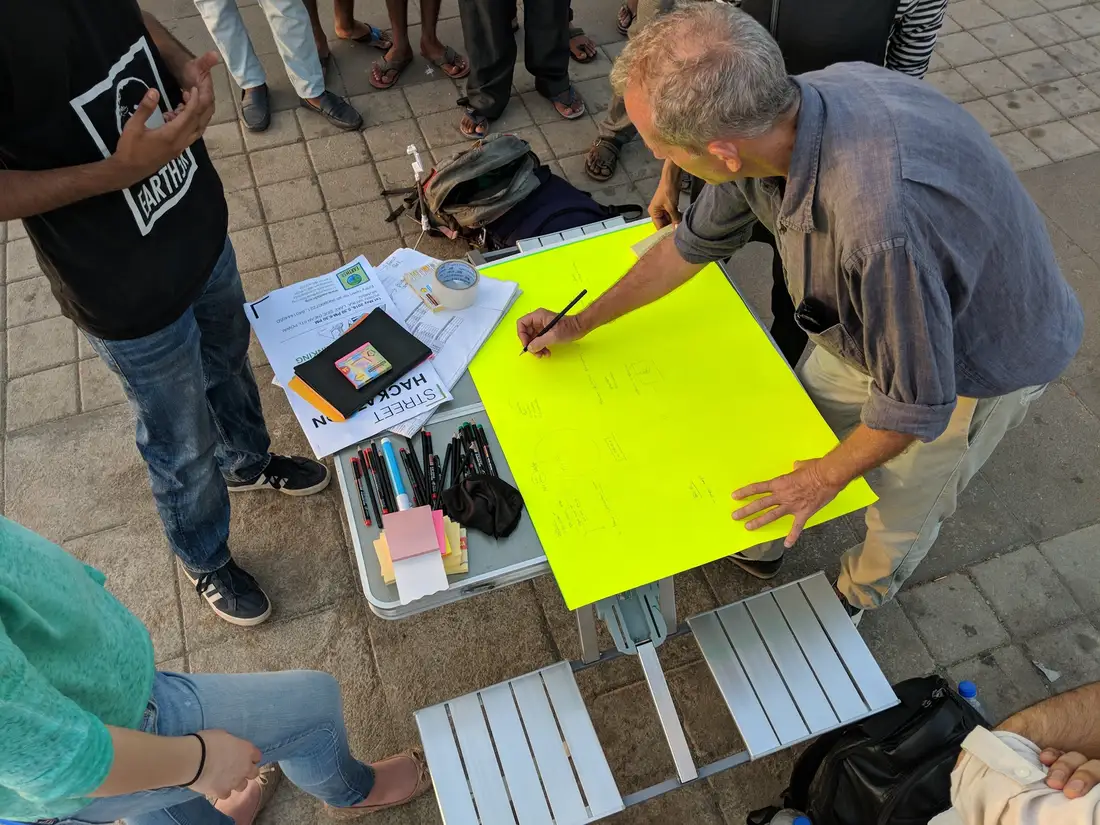
Earth5R’s work in 150+ Indian cities includes local climate action. It has worked with women in informal settlements to grow saplings in upcycled containers on hot tin roofs, to cool their homes. In Mumbai, it installed solar panels and solar street lights for a corporate CSR project. Its street hackathons ask citizens to propose climate solutions. One flagship FIELDWORK project, with a NASA and Columbia University scientist, studies climate change and basmati rice across the Gangetic Plain.
This work links to the UN Sustainable Development Goals: Goal 13, Climate action and Goal 11, Sustainable cities and communities.
Available projects in the climate change internship fellowship
You join Earth5R’s live work through your own subject. Your mentor shapes the final project with you.
Rooftop plants and indoor heat
Study how saplings in upcycled containers on hot tin roofs help cool homes, and compare indoor temperatures in homes with and without rooftop plants.
Heavy rain and flooding
Use public rainfall records for your city to check whether heavy rain events have changed over the years, and map the streets that flood during the monsoon.
Air pollution and weather
Combine public air quality readings with weather data for your city, and test how pollution peaks relate to temperature, wind and the seasons.
Climate and basmati rice
Work on the flagship project with a NASA and Columbia University scientist on climate change and basmati rice, which builds a new method to score rice businesses on climate impact and effect on farmers.
What you do in the field
- Download public weather, rainfall and air quality records for your city
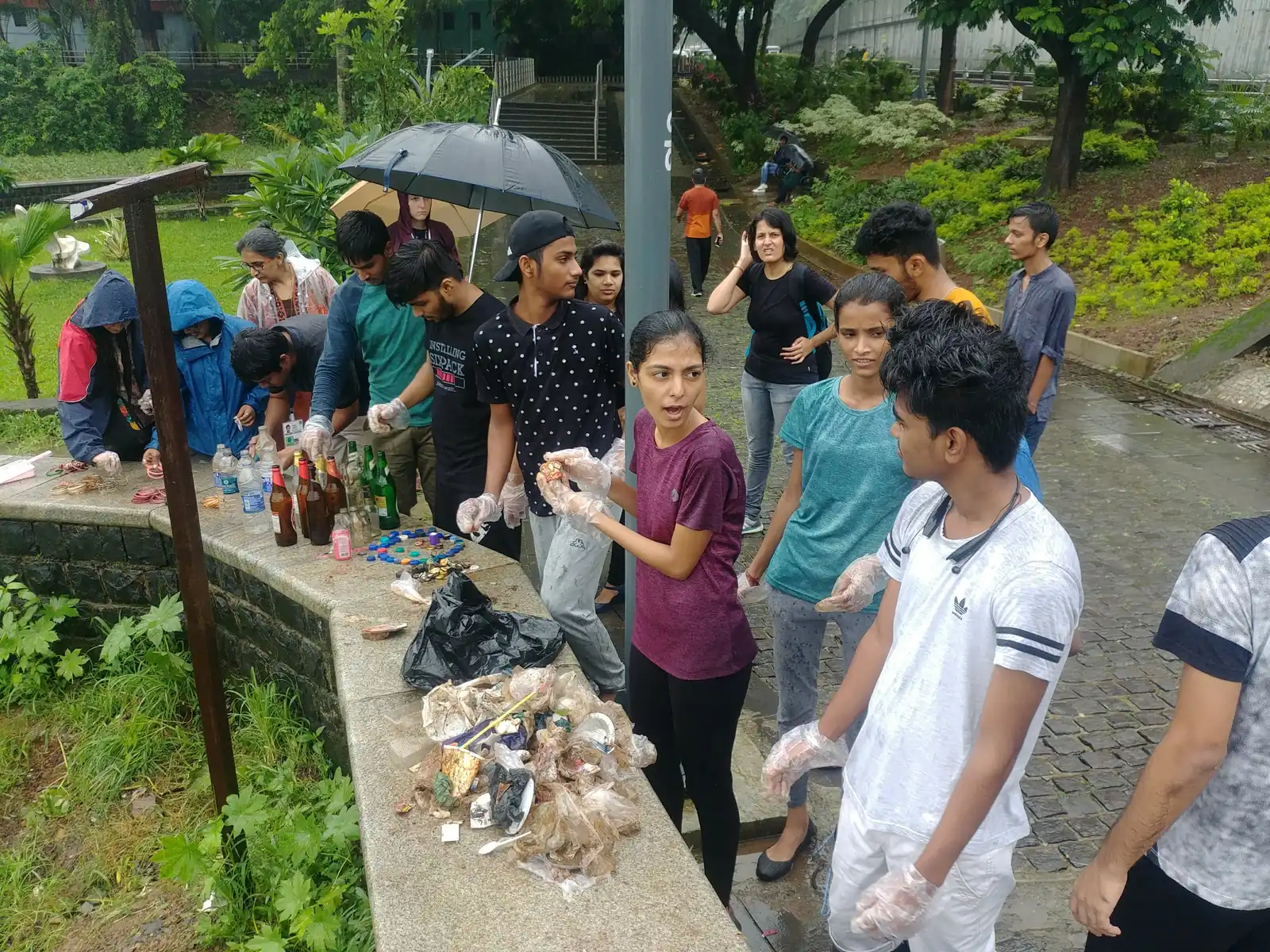
- Record field observations of heat, flooding or pollution with geo-tagged photos
- Clean the data and plot long-term trends in a spreadsheet or Python
- Map the neighbourhoods most exposed to a climate risk
- Read published climate studies and compare them with your results
- Discuss your findings in research conversations with professors
Skills you build
On a climate change internship, you collect your own data near where you live, using the Earth5R app and data forms. Earth5R checks the data on its platform before it goes into your project report.
How the climate change internship fellowship works
Every fellow moves through four phases. Each phase is checked by your mentor before you move on.
Observe and Map
Go into the field near where you live and collect primary data for your project in Climate Science.
Frame and Design
Find the root cause in your data and frame a problem worth solving, with your mentor.
Model
Build a working model, analysis or design for your solution, and test it.
Build and Deploy
Put your solution to work, measure the result and publish a verified record on earth5r.org.
Along the way you take part in research conversations with professors at MIT, Oxford, Cambridge, LSE and other universities, and ask your own questions. See how FIELDWORK works.
Where this can take you
Degrees this work supports
- BSc in Environmental Science or Climate Science
- BSc in Physics, Geography or Earth Sciences
- MSc in Climate Change or Climate Science
- MSc in Atmospheric Science or Meteorology
- PhD in Climate or Earth System Science
Careers in this field
- Climate scientist or climate researcher
- Climate risk analyst
- Meteorologist or weather data analyst
- Urban climate resilience planner
- Sustainability and ESG analyst
Universities known for Climate Science
Strong climate science programmes look for applicants who can work with real climate data and explain what it shows and what it can’t. A fellowship project gives you an analysis of your own city’s climate data, reviewed by your mentor and recorded on your verified profile on earth5r.org. Students use a climate change internship to build a record of real work for applications to universities like these.
Massachusetts Institute of Technology (MIT)
USA · Department of Earth, Atmospheric and Planetary Sciences (EAPS)
MIT’s Department of Earth, Atmospheric and Planetary Sciences runs undergraduate and graduate programmes that combine fieldwork, computer models and lab experiments. Its climate research spans atmospheric chemistry and physics, oceanography, glaciology, past climates, the carbon cycle and climate system modelling. Other work studies greenhouse gas emissions and natural hazards such as tropical cyclones.
USA · Program in Atmospheric and Oceanic Sciences (AOS)
A collaboration between Princeton and NOAA’s Geophysical Fluid Dynamics Laboratory (GFDL), the Program in Atmospheric and Oceanic Sciences runs as an autonomous programme within the Department of Geosciences. It offers a PhD and a postdoctoral programme. Its events include talks on how climate shapes weather extremes such as heat, rain and drought.
University of California, San Diego (UC San Diego)
USA · Scripps Institution of Oceanography
Scripps Institution of Oceanography is a department of UC San Diego that offers degrees, minors and courses in earth, atmospheric and marine sciences, plus PhD and master’s programmes. It keeps the Keeling Curve, the global record of atmospheric carbon dioxide. Scripps also manages ocean observation programmes such as Argo and studies El Niño events and their impacts.
USA · Department of Atmospheric and Climate Science, College of the Environment
UW’s Department of Atmospheric and Climate Science is part of the College of the Environment. Undergraduates choose from options in climate, meteorology, atmospheric chemistry and air quality, and data science. The department also offers MS and PhD degrees and holds an undergraduate research symposium each year.
UK · Atmospheric, Oceanic and Planetary Physics (AOPP), Department of Physics
Atmospheric, Oceanic and Planetary Physics is a sub-department of Oxford Physics whose climate work covers the atmosphere, oceans and cryosphere. Its groups include Climate Dynamics, Climate Processes, Physical Oceanography and the Earth Observation Data Group, which retrieves atmospheric data from satellites. Researchers combine large weather and climate models with high-resolution process models.
UK · Grantham Institute (Climate Change and the Environment)
The Grantham Institute is the hub for Imperial’s work on climate change and the environment, across research, policy, innovation and training. It runs master’s programmes in Climate Change, Management & Finance, Sustainable Energy Futures and Cleantech Innovation, and funds PhD studentships. It also offers a work experience programme for Year 12 students.
UK · Department of Meteorology
Reading’s Department of Meteorology teaches undergraduate, master’s and PhD programmes in meteorology and climate science. Its research covers climate change, ozone depletion, atmospheric pollution and space weather. The department runs its own atmospheric observatory and works with the MetOffice@Reading collaborative centre and two Natural Environment Research Council centres.
University of East Anglia (UEA)
UK · Climatic Research Unit (CRU), School of Environmental Sciences
Based in UEA’s School of Environmental Sciences, the Climatic Research Unit studies natural and human-caused climate change. It has built data sets used widely in climate research, including the global temperature record used to monitor the climate system. The unit contributes to teaching, most notably the MSc in Climate Change.
Switzerland · Institute for Atmospheric and Climate Science (IAC), Department of Environmental Systems Science (D-USYS)
The Institute for Atmospheric and Climate Science at ETH is part of the Department of Environmental Systems Science. It studies how greenhouse gases, aerosols and changes to land surfaces alter climate, and how this affects extreme events, water resources and ecosystems. Its research links to the Center for Climate Systems Modeling (C2SM), and it teaches in several degree programmes.
University of New South Wales (UNSW Sydney)
Australia · Climate Change Research Centre (CCRC), School of Biological, Earth & Environmental Sciences
The Climate Change Research Centre is a multi-disciplinary centre run within UNSW’s School of Biological, Earth & Environmental Sciences in the Faculty of Science. Its researchers study atmospheric, oceanic and land processes. They apply basic science to questions on climate dynamics, global climate change, and extremes of weather and climate.
This list is for guidance. These universities are widely known for Climate Science. Earth5R has no admissions arrangement with them, and admission decisions rest with each university. Fellows get help researching universities, scholarships and applications, depending on the programme.
What your fellowship fee pays for
An internship fellowship at Earth5R is time and attention from senior researchers and leaders. Each part below takes staff time and resources that we set aside for every fellow.
Live mentoring with experts
One-to-one mentoring in most fellowships, with regular check-ins on your project.
Dialogues with global researchers
Academics from international universities and renowned scientists, who answer your questions and discuss your work.
Support in the field
Guidance while you collect data and work on your project in the field.
References for your next step
References when you apply for jobs, higher studies and research programmes.
Your work, hosted for life
Your work and data stay on Earth5R’s website and servers for life, where universities and employers can check them.
Time from senior people
Each fellow receives time and attention from senior researchers and leaders, set aside for them.
Fee details available on request.
Choose your fellowship
The fee pays for live mentoring, dialogues with global researchers, support in the field, references and lifelong hosting of your work. Fee details available on request.
Climate change internship: common questions
Is this climate change internship about climate science or climate policy?
It’s mainly climate science. You work with heat, rainfall and air quality data and your own field observations, and learn how scientists study climate risk. Some projects also look at how cities and communities respond, which brings in policy questions.
Do I need to be strong in physics or maths?
School-level maths is enough to start. Your mentor shows you how to read climate records, plot trends and test whether a change is larger than normal year-to-year variation. Students with stronger maths can use Python and more advanced statistics.
Can a climate change internship help me apply for climate science degrees?
It gives you a climate data project to describe in your personal statement and interviews, with a report your mentor reviewed and a verified record on earth5r.org. Admission decisions rest with each university.
Is the climate change internship fellowship paid?
Yes. It is a paid, mentored internship fellowship. The fee pays for live mentoring, dialogues with global researchers, support in the field, references and lifelong hosting of your work. Fee details are available on request.
Can I do this climate change internship online?
Yes. FIELDWORK runs online, and your field work takes place near where you live. Your mentor guides you through each step.
Who can apply?
School and university students from India and other countries. The fellowship prepares you for university, postgraduate study and work.
What do I get at the end?
A certificate, a letter of recommendation, a project report and a verified profile on earth5r.org, where universities and employers can check your work.
Apply for the climate change internship fellowship
Work on a live Earth5R project in Climate Science with a mentor, take part in research conversations with global researchers, and build a verified record of your work. Fee details available on request.