
High school public policy internship and research fellowship
This high school public policy internship lets students in Grades 9 to 12 follow one environmental rule from the policy text to their own street, with a mentor who reviews every draft. You check how the rule works near home, talk to people it affects and write a short policy note with one clear recommendation.
For school students taking IB Global Politics, Economics or CBSE Political Science who want their own field data behind their policy writing. Online, with field work near home and a parent or guardian present at every self-guided activity. The fellowship is paid because every student receives time and attention from senior researchers and leaders.
Why public policy matters for sustainability
Laws and city rules decide how waste is collected, which plastic bags shops may hand out and what may be drained into rivers. A rule can work well in one neighbourhood and fail in the next one. Policy researchers ask why. They look at who is in charge, how the rule is checked and whether people know about it. Political science adds a further question about who holds power over these choices.
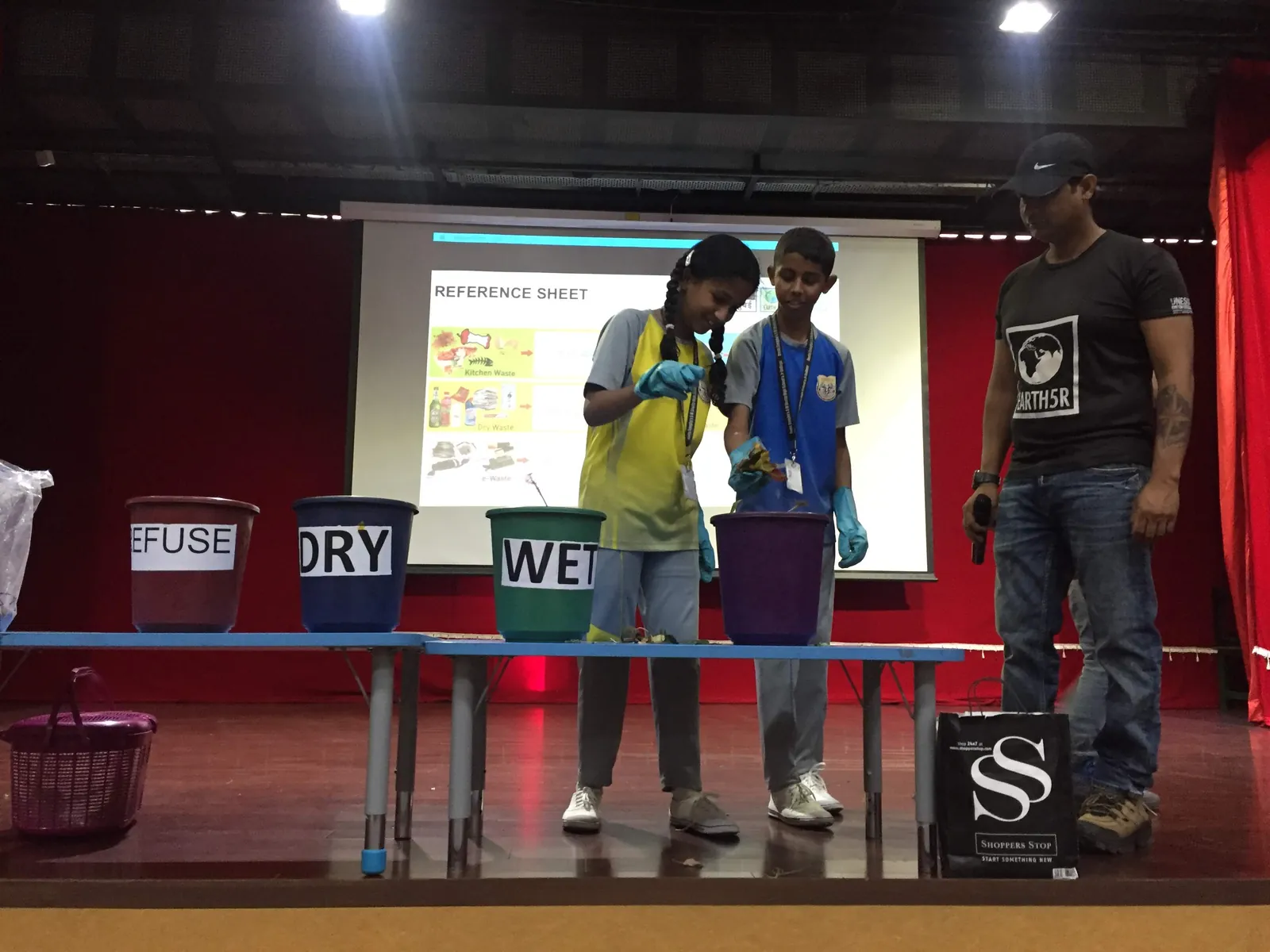
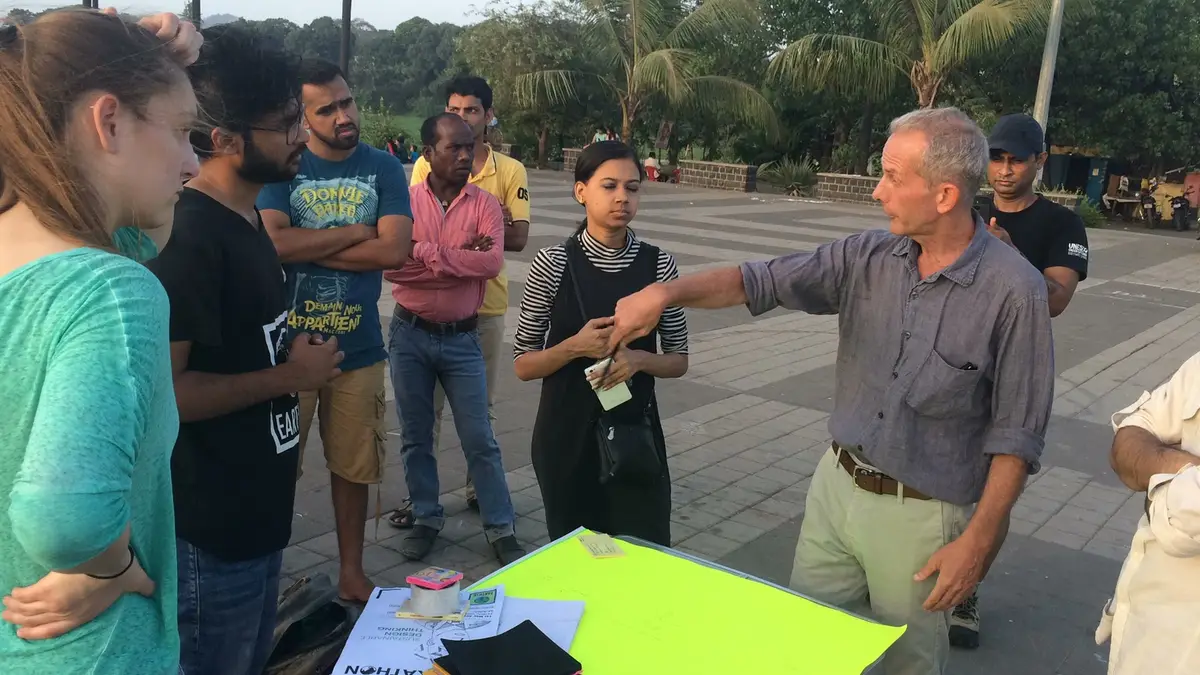
Earth5R’s teams work in 150+ Indian cities. They knock on doors for household surveys, help housing societies set up segregation and composting, and run street hackathons where citizens put forward climate solutions. As a fellow you use similar methods to test whether a rule works near your home, with a mentor checking your method and your writing.
This work links to the UN Sustainable Development Goals: Goal 16, Peace, justice and strong institutions and Goal 11, Sustainable cities and communities.
Available projects in this high school public policy internship
Each project fits around school work and takes place near home. Your mentor shapes the final project with you.
Waste rules in your building
Read your city’s rules on waste segregation, record how your housing society or school sorts its waste over two weeks, and write a short note on the gaps you find.
Plastic bags on your street
With a parent, note which shops on your street still hand out thin plastic bags, read the rule that applies to them, and suggest how it could work better.
Your school’s green policy
Study your school’s own rules on waste, water or energy, survey students and staff on how well they work, and present a short policy proposal to the student council.
Citizen ideas into policy
Study ideas that citizens proposed at Earth5R street hackathons, choose one a city ward could adopt, and draft a one-page note on its cost, who would run it and next steps.
What you do in the field
- Read a policy and the official guidance behind it
- Record how a rule works at home, school or local shops
- Interview neighbours, shopkeepers or school staff about the rule
- Compare what the rule promises with what you found
- Write a policy note with options and one recommendation
- Present and defend your note in a research conversation
Skills you build
On a high school public policy internship, you collect your own data near home with a parent or guardian, using the Earth5R app and data forms. Earth5R checks the data on its platform before it goes into your project report.
How a high school public policy internship fits your school programme
For IB, IGCSE, CBSE and ICSE students. Your school decides what counts towards its own requirements.
IB CAS
Proposing a waste or water policy to your student council and helping put it in place can form a CAS project with a service element. Your CAS coordinator decides.
Extended Essay and IA
A local case of how a rule works in practice can support a Global Politics IA or an Extended Essay in Global Politics or Economics. Your supervisor approves the topic.
MYP, IGCSE and CBSE projects
A policy study of your own area fits the MYP Personal Project and project work in IGCSE Global Perspectives, CBSE Political Science and ICSE Civics, if your school agrees.
University applications
A policy note built on your own field data shows admissions readers that you can study a public problem and write clearly about it.
How the high school public policy internship works
Every student moves through four phases. Your mentor checks each phase before you move on, and sessions pause during board exams.
Observe and Map
Go into the field near home, with a parent or guardian, and collect primary data for your project in Public Policy and Global Politics.
Frame and Design
Find the root cause in your data and frame a problem worth solving, with your mentor.
Model
Build a working model, analysis or design for your solution, and test it.
Build and Deploy
Put your solution to work, measure the result and publish a verified record on earth5r.org.
Along the way you take part in research conversations with professors at MIT, Oxford, Cambridge, LSE and other universities, and ask your own questions. See how FIELDWORK works.
Where this can take you
University courses this leads to
- BA in Political Science or Government
- BA in Public Policy
- BA in Philosophy, Politics and Economics (PPE)
- BSc in Politics and Economics
- BA in Environmental Studies or Policy
Careers in this field
- Policy analyst
- Civil servant
- Legislative assistant
- Environment policy researcher at a think tank
- Urban governance programme officer
Universities to aim for in Public Policy and Global Politics
Politics and public policy admissions tutors look for students who follow public issues, weigh different views and write a clear argument. A high school public policy internship with FIELDWORK gives you a policy note based on your own field data, reviewed by your mentor and listed on a verified profile on earth5r.org. Students use a high school public policy internship to build a record of real work for applications to universities like these.
USA · Undergraduate Program, Princeton School of Public and International Affairs (SPIA)
Princeton SPIA’s undergraduate major is a multidisciplinary liberal arts programme for students interested in public service. Juniors work in a Policy Task Force, and seniors write a thesis on a public policy issue. Environment and Energy is one of the thematic areas students can choose to study in depth.
USA · Undergraduate Program, Sanford School of Public Policy
Duke’s public policy major, taught by the Sanford School of Public Policy, covers areas such as environment and energy, health, education and international development. Students build skills in political and economic analysis, leadership and ethical decision-making. The major trains them to read critically, think analytically and write concisely.
USA · BA in Public Policy, Gerald R. Ford School of Public Policy
The Ford School’s BA in Public Policy is a liberal arts degree grounded in the social sciences, offered as a major or a minor. It teaches students to think critically and design answers to problems such as climate change. Applied learning includes a Policy Analysis Learning Lab and a Public Policy Consulting Clinic.
USA · Undergraduate Public Policy major, Harris School of Public Policy
Harris runs the College’s multidisciplinary major in Public Policy, rooted in economics, sociology, political science and law. Students build quantitative and communication skills and get direct contact with policy problems. Each student completes either a year-long BA thesis or a class-based writing project.
London School of Economics and Political Science (LSE)
UK · Department of Government
LSE’s Department of Government teaches the BSc Politics and joint degrees with economics, international relations and philosophy. Every programme starts with comparative politics and political philosophy. Its staff include experts in public policy, and students learn how citizens and governments respond to challenges such as climate change.
UK · Philosophy, Politics and Economics (PPE), taught with the Department of Politics and International Relations
Oxford’s three-year PPE degree is taught by the Faculty of Philosophy, the Department of Politics and International Relations and the Department of Economics. First-year students study all three subjects. Later options include international relations, social policy and an economics paper on environmental economics and climate change.
France · Undergraduate College
Sciences Po’s Undergraduate College awards a Bachelor of Arts and a Bachelor of Arts and Sciences across campuses in French cities such as Paris, Reims and Menton. Each regional campus offers a minor, for example Asia-Pacific at Le Havre. Students also join a Civic Learning Programme on exercising citizenship.
Nanyang Technological University (NTU)
Singapore · Bachelor of Social Sciences in Public Policy and Global Affairs (Honours), School of Social Sciences
NTU’s four-year degree in Public Policy and Global Affairs, from the School of Social Sciences, covers policy analysis, programme evaluation, public finance and non-profit management. Students also study international politics and foreign policy. The common core includes a course on sustainability across society, economy and environment, plus an internship.
Canada · Major in Public Policy, Munk School of Global Affairs & Public Policy
Toronto’s undergraduate Major in Public Policy is offered jointly by the Munk School, the Department of Economics and the Department of Political Science. Students draw on tools from economics and political science to build skills in policy analysis. They also gain a base in quantitative and research methods.
Australian National University (ANU)
Australia · Bachelor of Public Policy, ANU College of Arts and Social Sciences
ANU’s three-year Bachelor of Public Policy, from the College of Arts and Social Sciences, combines public policy theory and practice with social policy, economics and research methods. Policy practice options include courses in Environmental Policy and International Environmental Policy. Electives can add a further major or minor.
This list is for guidance. These universities offer undergraduate study in Public Policy and Global Politics. Earth5R has no admissions arrangement with them, and admission decisions rest with each university. Students get help researching universities, scholarships and applications, depending on the programme.
What your fellowship fee pays for
An internship fellowship at Earth5R is time and attention from senior researchers and leaders. Each part below takes staff time and resources that we set aside for every fellow.
Live mentoring with experts
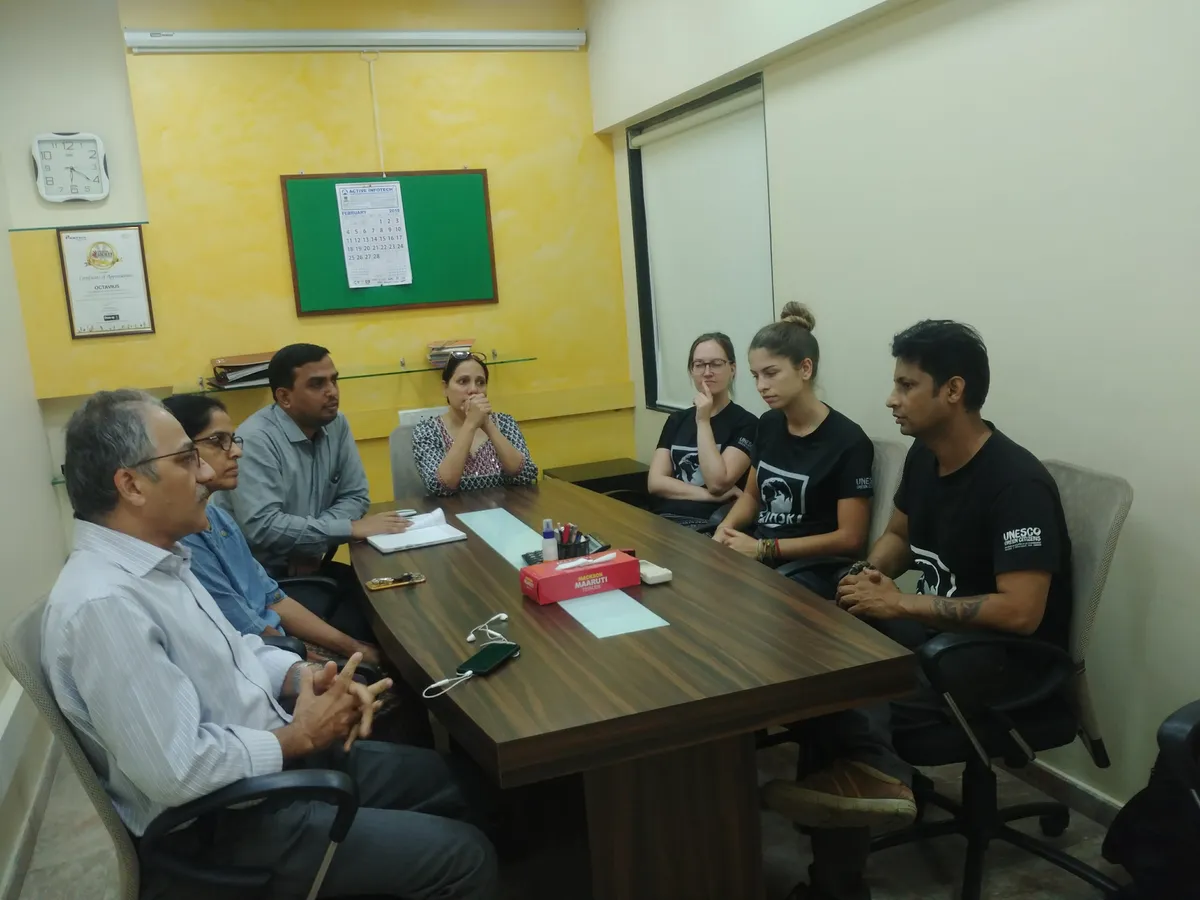
One-to-one mentoring in most fellowships, with regular check-ins on your project.
Dialogues with global researchers
Academics from international universities and renowned scientists, who answer your questions and discuss your work.
Support in the field
Guidance while you collect data and work on your project in the field.
References for your next step
References when you apply for jobs, higher studies and research programmes.
Your work, hosted for life
Your work and data stay on Earth5R’s website and servers for life, where universities and employers can check them.
Time from senior people
Each fellow receives time and attention from senior researchers and leaders, set aside for them.
Fee details available on request.
Choose your fellowship
The Multi-Year Fellowship can run from Grade 9 to Grade 12, with more scope each year.
The fee pays for live mentoring, dialogues with global researchers, support in the field, references and lifelong hosting of your work. Fee details available on request.
High school public policy internship: common questions
What will my child write in a high school public policy internship?
A short policy note on one environmental rule or programme near home. It explains the problem, what the field data shows and the options open to decision makers, and it ends with one recommendation. The mentor reviews each draft.
Will my child need to meet government officials?
No. The research uses published rules and reports, plus what students record at home, at school and on their street. Interviews are with family, neighbours, shopkeepers or school staff, with a parent or guardian present for any field visit.
Can I study a rule from my own country if I live outside India?
Yes. Field work happens near where you live, so you can pick a rule that applies in your own city. You can then compare it with a similar Indian rule using published sources, with your mentor’s help.
Is the high school public policy internship paid?
Yes. FIELDWORK is a paid, mentored programme. The fee pays for live mentoring, dialogues with global researchers, support in the field, references and lifelong hosting of your work. Fee details are available on request.
Can my child do this high school public policy internship online?
Yes. Mentoring sessions run online, and field work takes place near where you live.
Is a parent or guardian present during field work?
Yes. A parent or guardian is present at every self-guided field activity. Online sessions are for students.
Does FIELDWORK pause during board exams?
Yes. Sessions pause during board exams, so the fellowship fits around school work.
What do students get at the end?
A certificate, a letter of recommendation, a project report and a verified profile on earth5r.org, where universities can check the work.
Related subjects for school students
Already at university? See the Public Policy and Political Science internship fellowship for university students.
Apply for a FIELDWORK fellowship in Public Policy and Global Politics
This high school public policy internship is for students in Grades 9 to 12. Work on a live Earth5R project with a mentor, take part in research conversations with global researchers, and build a verified record of your work. Fee details available on request.