
Economics internship fellowship
This economics internship gives you a real environmental problem to cost, with a mentor who checks your method at each step. You collect field data on waste or water, estimate what the problem and each solution cost, and compare the options in a short paper that a city official could follow.
For school and university students who like economics and want to apply it to a problem they can see in their own city. Online, with field work near where you live. The fellowship is paid because every fellow receives time and attention from senior researchers and leaders.
Why economics matters for sustainability
Pollution continues when the people who cause it don’t pay for the damage it does. Economists measure that cost and test which tools change behaviour, such as a fee on mixed waste or a deposit on bottles. A city choosing between waste collection systems needs to know what each one costs and who bears it.
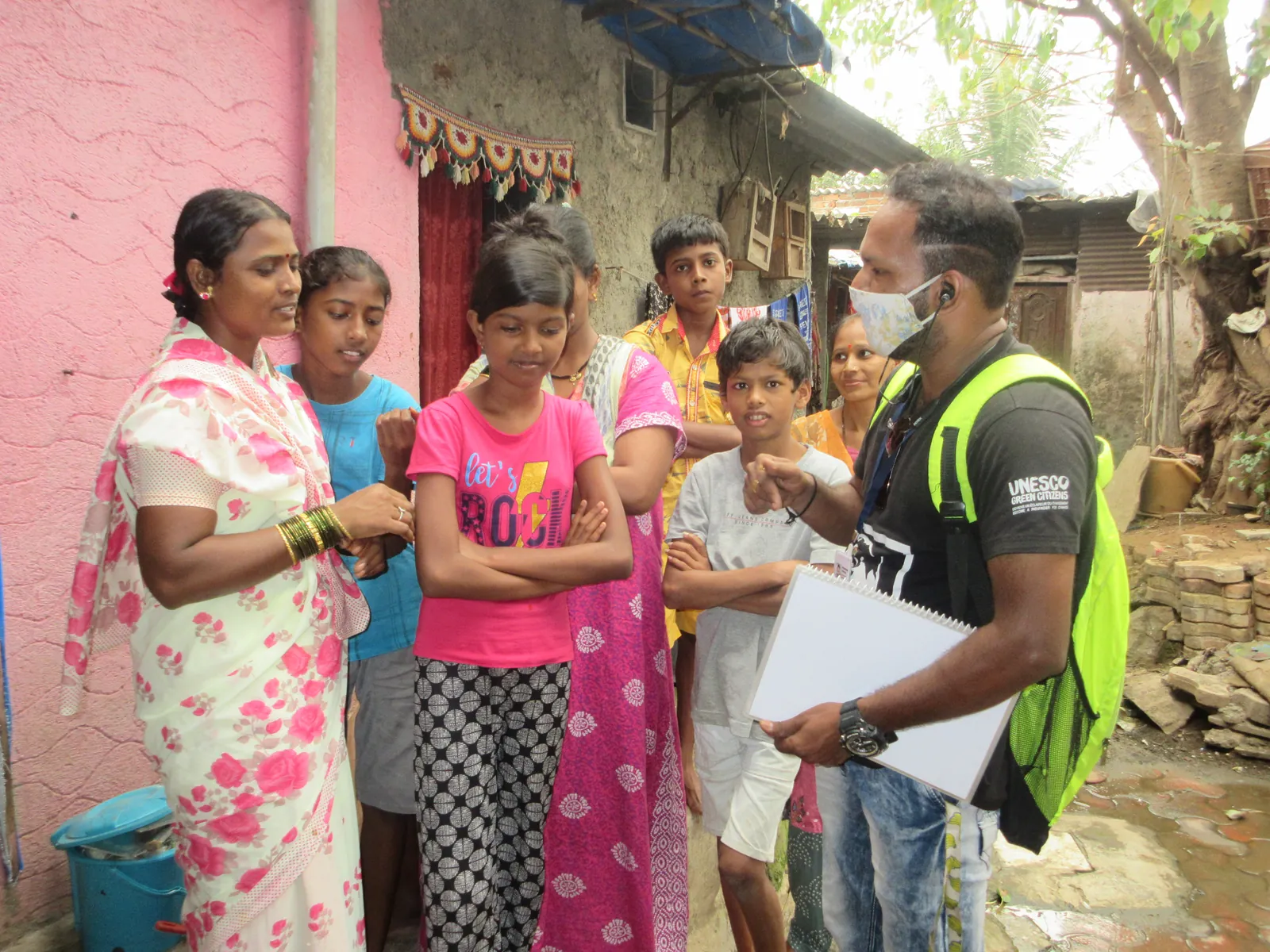
Earth5R works with communities in 150+ Indian cities on waste, water and livelihoods. Its app records geo-tagged field data from waste audits and door-to-door household surveys. Zero waste housing societies compost their wet waste on site in drum composters made from reused industrial containers. Women in its livelihood work make paper bags and open bank accounts. Each of these gives an economist real prices and household choices to study.
This work links to the UN Sustainable Development Goals: Goal 8, Decent work and economic growth and Goal 12, Responsible consumption and production.
Available projects in the economics internship fellowship
You join Earth5R’s live work through your own subject. Your mentor shapes the final project with you.
Costing waste collection options
Estimate the cost of collecting mixed waste in one neighbourhood, compare it with segregation and composting in a zero waste housing society, and set out who pays and who saves.
The cost of fetching water
Measure the time families in a community spend fetching water and put a value on it, then compare your method with a New York University researcher’s project on data centres and water shortages in Maharashtra.
Prices in the recycling chain
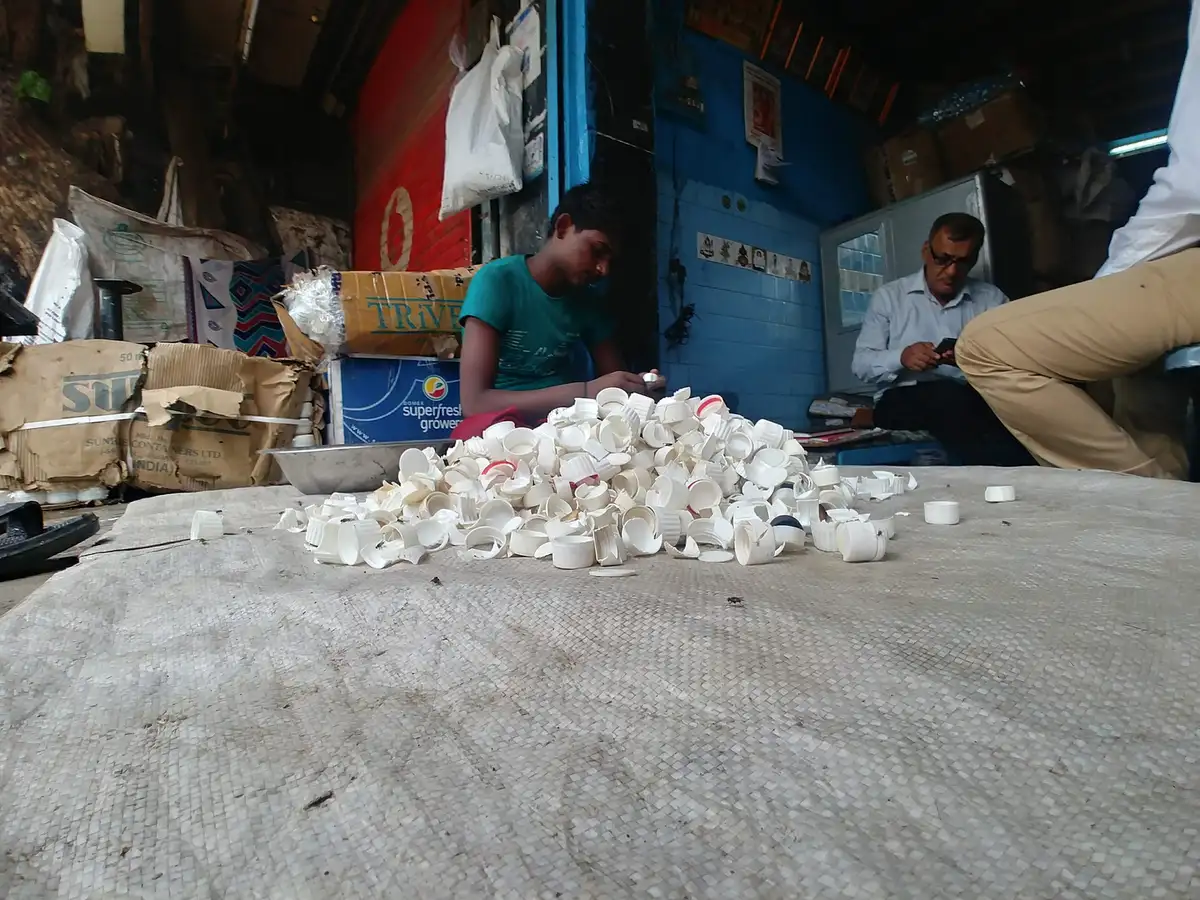
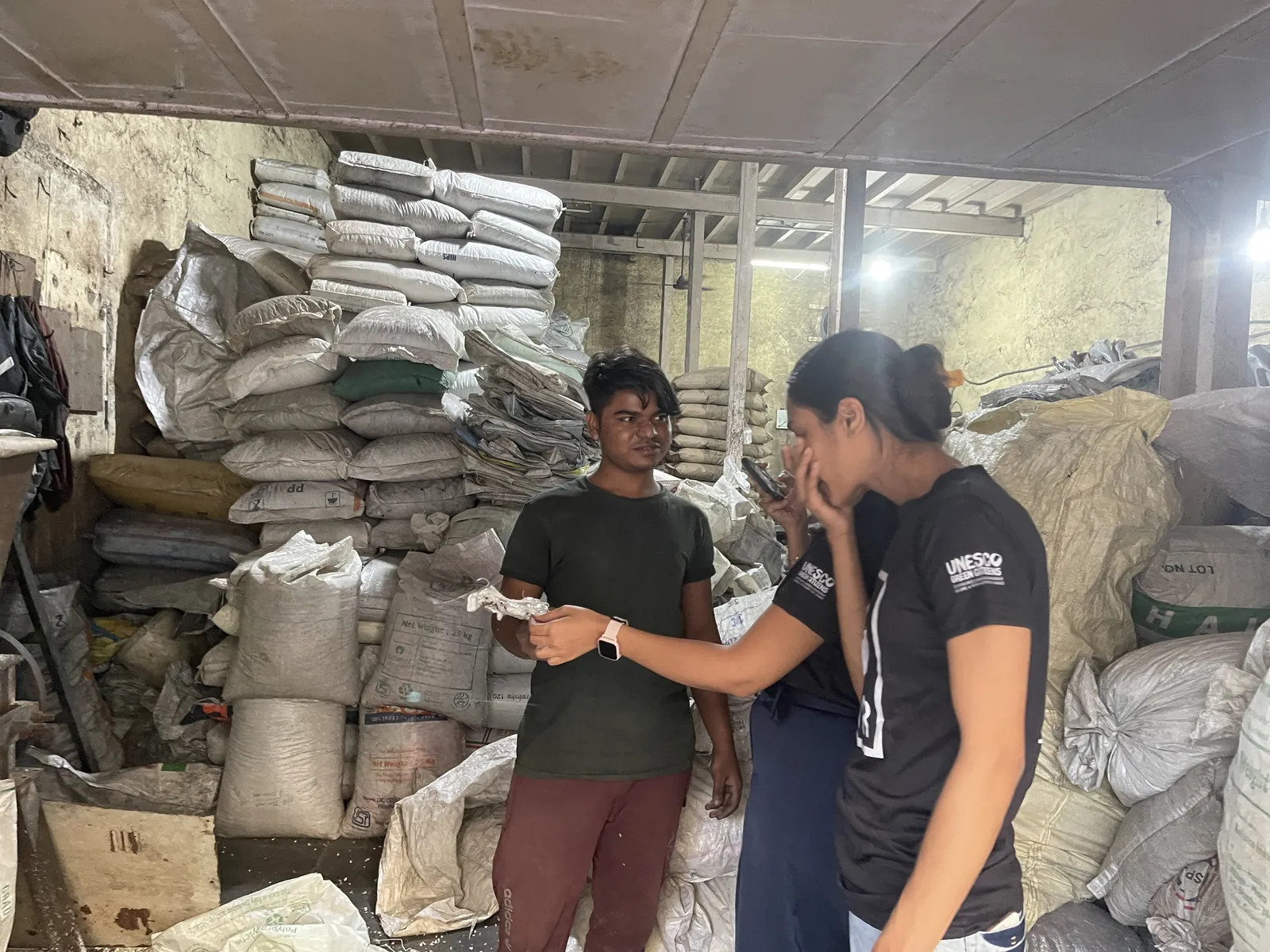
Visit an informal recycling unit, record the price paid for each type of material, and map how value builds as waste moves from homes to recyclers.
Livelihood income study
Study the income and costs of women making paper bags in Earth5R’s livelihood work, and look at whether bank accounts and financial literacy training change how much they save.
What you do in the field
- Run household surveys on the Earth5R app and record costs and prices
- Visit a recycling unit and note what each material sells for
- Build a cost model in a spreadsheet and test your assumptions
- Compare options with a simple cost-benefit analysis
- Read published studies and public data for your city
- Write a short economics paper and present it in a research conversation
Skills you build
On a economics internship, you collect your own data near where you live, using the Earth5R app and data forms. Earth5R checks the data on its platform before it goes into your project report.
How the economics internship fellowship works
Every fellow moves through four phases. Each phase is checked by your mentor before you move on.
Observe and Map
Go into the field near where you live and collect primary data for your project in Economics.
Frame and Design
Find the root cause in your data and frame a problem worth solving, with your mentor.
Model
Build a working model, analysis or design for your solution, and test it.
Build and Deploy
Put your solution to work, measure the result and publish a verified record on earth5r.org.
Along the way you take part in research conversations with professors at MIT, Oxford, Cambridge, LSE and other universities, and ask your own questions. See how FIELDWORK works.
Where this can take you
Degrees this work supports
- BA or BSc in Economics
- BA in Philosophy, Politics and Economics (PPE)
- MA or MSc in Economics
- MSc in Environmental or Development Economics
- Master’s in Public Policy
Careers in this field
- Economist or economic analyst
- Environmental or climate economist
- Policy analyst in government or a think tank
- Development sector researcher
- Economic consultant
Universities known for Economics
Strong economics programmes look for applicants who can use numbers to answer a clear question and explain the limits of their method. A fellowship project gives you a costed study built on data you collected, reviewed by your mentor and recorded on earth5r.org. Students use a economics internship to build a record of real work for applications to universities like these.
Massachusetts Institute of Technology (MIT)
USA · Department of Economics
MIT Economics teaches undergraduate majors, master’s programmes and a PhD. Faculty work with centres such as the Abdul Latif Jameel Poverty Action Lab (J-PAL), which uses scientific research to inform policy on global poverty, and Blueprint Labs, which studies education, health care and the workforce. The Stone Center on Inequality and Shaping the Future of Work is also affiliated.
USA · Department of Economics
Harvard’s Department of Economics offers an undergraduate concentration, with an Honors Program and senior thesis, and a PhD programme. Fields of study include economic development, public economics, labour economics and political economy. The department describes its work as ranging from the future of work to ending global poverty and improving the environment.
USA · Department of Economics
Stanford’s Department of Economics trains students at undergraduate and graduate level, with a master’s programme, a PhD and joint degrees. Its research fields include development economics, economics and technology, and environmental, resource and energy economics. One seminar series covers industrial organisation, public, labour, urban and sustainability economics.
USA · Department of Economics
Princeton’s Department of Economics teaches an undergraduate concentration with independent research and a PhD programme. Its research centres include the Griswold Center for Economic Policy Studies, the Industrial Relations Section and the International Economics Section. The Center for Health and Wellbeing, based at the School of Public and International Affairs, studies health in developed and developing countries.
USA · Kenneth C. Griffin Department of Economics
The Kenneth C. Griffin Department of Economics offers a PhD and master’s programmes, including the MA in Economics and an economics track in computational social science. It is affiliated with the Becker Friedman Institute for Research in Economics, the Center for the Economics of Human Development and the Development Innovation Lab.
University of California, Berkeley
USA · Department of Economics
Berkeley’s Department of Economics teaches a BA and a PhD programme. Its research centres include the Center for Effective Global Action, which evaluates large development programmes with data science and new measurement tools. The Stone Center on Wealth and Income Inequality and the Center for Regulatory Policy are also based in the department.
London School of Economics and Political Science (LSE)
UK · Department of Economics
LSE’s Department of Economics teaches degree programmes from undergraduate to PhD level, and its research ranges from climate change and inequality to global development. Most faculty work with research centres such as the Centre for Economic Performance, which studies growth and ways to create a fair, inclusive and sustainable society.
UK · Department of Economics
Oxford’s Department of Economics teaches undergraduate and graduate courses and runs summer schools. Alongside microeconomics, macroeconomics and econometrics, it has research clusters in the economics of climate change and sustainability, development economics, behavioural economics, machine learning and economic history. Its researchers also work to inform public policy in the UK and abroad.
UK · Faculty of Economics
Cambridge’s Faculty of Economics teaches a BA in Economics and postgraduate programmes, including the MPhil in Economic Research and the PhD. Research is organised in groups such as macroeconomics, empirical microeconomics, econometrics and economic history, each with its own seminar series. The Janeway Institute is an associated research centre.
Paris School of Economics (PSE)
France · Paris School of Economics (PSE)
PSE was founded by partners including CNRS, EHESS, École des Ponts, ENS-PSL, INRAE and Paris 1 Panthéon-Sorbonne. It teaches master’s programmes, a PhD and a summer school. Its research groups cover development, labour and public economics, and regulation, environment and markets, and it hosts the World Inequality Lab, J-PAL Europe and the PSE Environment initiative.
This list is for guidance. These universities are widely known for Economics. Earth5R has no admissions arrangement with them, and admission decisions rest with each university. Fellows get help researching universities, scholarships and applications, depending on the programme.
What your fellowship fee pays for
An internship fellowship at Earth5R is time and attention from senior researchers and leaders. Each part below takes staff time and resources that we set aside for every fellow.
Live mentoring with experts
One-to-one mentoring in most fellowships, with regular check-ins on your project.
Dialogues with global researchers
Academics from international universities and renowned scientists, who answer your questions and discuss your work.
Support in the field
Guidance while you collect data and work on your project in the field.
References for your next step
References when you apply for jobs, higher studies and research programmes.
Your work, hosted for life
Your work and data stay on Earth5R’s website and servers for life, where universities and employers can check them.
Time from senior people
Each fellow receives time and attention from senior researchers and leaders, set aside for them.
Fee details available on request.
Choose your fellowship
The fee pays for live mentoring, dialogues with global researchers, support in the field, references and lifelong hosting of your work. Fee details available on request.
Economics internship: common questions
Do I need advanced maths for this economics internship?
No. You need school-level maths and a spreadsheet. Your mentor shows you how to build a cost model and run simple comparisons. Students who already know statistics or econometrics can take on larger datasets and more formal tests.
What kind of economics will I use?
Mostly environmental and development economics. You put a value on costs that families and cities carry, such as time spent fetching water or money spent on waste collection, and compare policy or business options with cost-benefit analysis.
Can an economics internship help with a university application?
It gives you an applied project to write about in your personal statement or statement of purpose, with a verified record on earth5r.org that admissions teams can check. Admission decisions rest with each university.
Is the economics internship fellowship paid?
Yes. It is a paid, mentored internship fellowship. The fee pays for live mentoring, dialogues with global researchers, support in the field, references and lifelong hosting of your work. Fee details are available on request.
Can I do this economics internship online?
Yes. FIELDWORK runs online, and your field work takes place near where you live. Your mentor guides you through each step.
Who can apply?
School and university students from India and other countries. The fellowship prepares you for university, postgraduate study and work.
What do I get at the end?
A certificate, a letter of recommendation, a project report and a verified profile on earth5r.org, where universities and employers can check your work.
Related internship fellowships
Apply for the economics internship fellowship
Work on a live Earth5R project in Economics with a mentor, take part in research conversations with global researchers, and build a verified record of your work. Fee details available on request.