
ESG internship fellowship
This ESG internship puts you on Earth5R’s TERRA Score analysis of listed companies in India, and a mentor reviews every finding with you. You read company sustainability reports, check their claims against field data and write up where the reported numbers and the ground agree or differ.
For school and university students interested in finance, investing or sustainability who want to read real company reports the way an analyst does. Online, with field work near where you live. The fellowship is paid because every fellow receives time and attention from senior researchers and leaders.
Why ESG analysis matters for sustainability
Banks and investors decide which companies get capital, and those choices shape which factories, farms and power plants get built. ESG analysis tells them how a company manages its environmental, social and governance risks. It only works when the reported data is reliable. An analyst who can read a sustainability report closely and test its claims gives investors a clearer picture of the risks they hold.
TERRA Score is Earth5R’s ESG intelligence work on 1,200+ companies listed in India. It checks BRSR filings and annual reports against field data. Its CvR Gap method measures the gap between what a company reports and what the ground shows. As a fellow you work on this analysis with Earth5R’s ESG team, and company names are masked in all student work.
This work links to the UN Sustainable Development Goals: Goal 12, Responsible consumption and production and Goal 13, Climate action.
Available projects in the ESG internship fellowship
You join Earth5R’s live work through your own subject. Your mentor shapes the final project with you.
Reading a BRSR filing
Read a listed company’s BRSR filing and annual report, pull out its waste, water and emissions figures, and check them for gaps and year-on-year changes.
CvR Gap analysis
Compare a company’s reported claims with field data using the TERRA Score CvR Gap method, and write a short note on each gap you find.
Packaging claims and brand audits
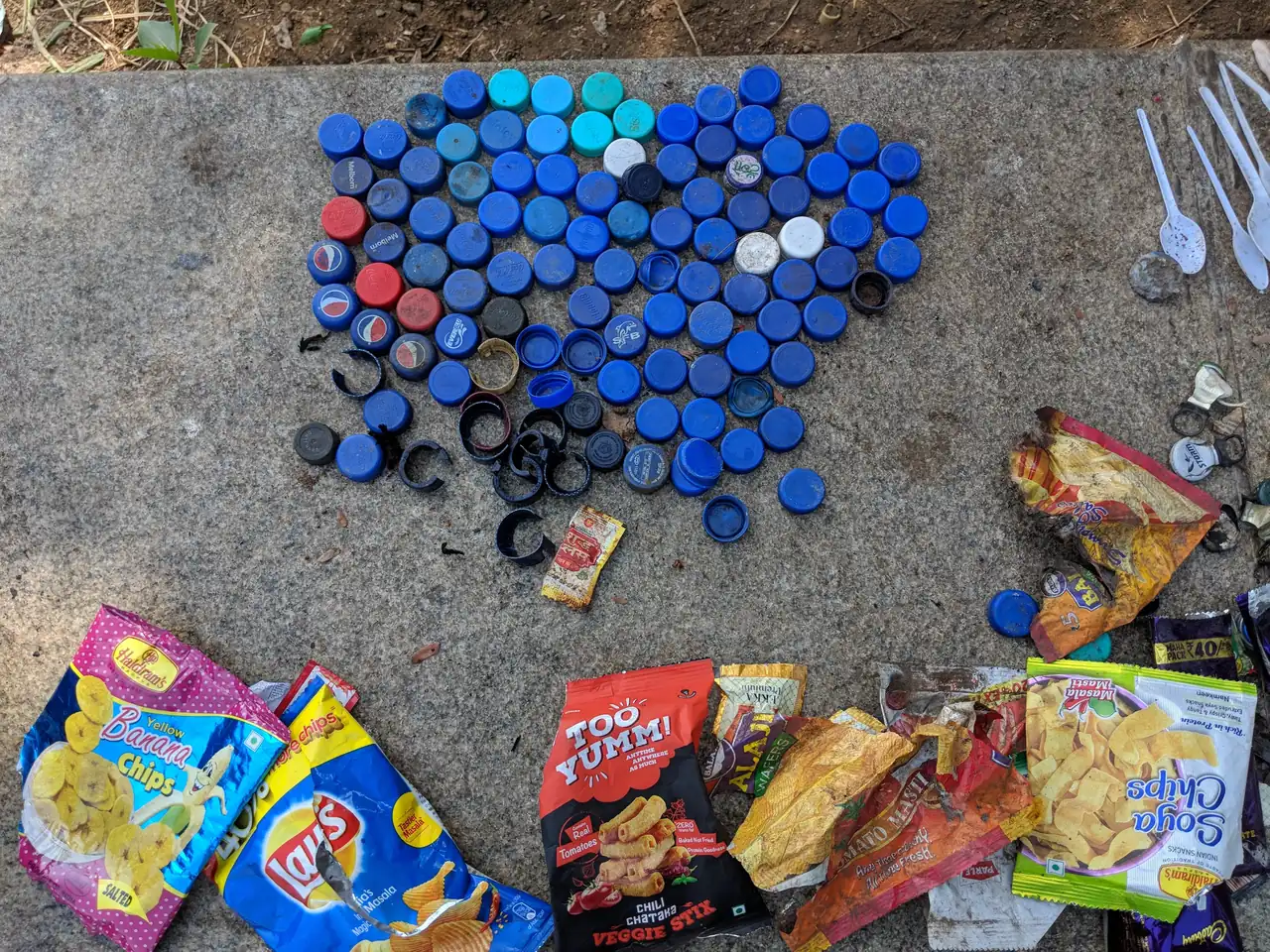
Compare the packaging and waste disclosures of consumer goods companies with brand audit counts from lake and beach cleanups, with company names masked.
Climate risk in basmati rice
Study how climate change affects basmati rice across the Gangetic Plain, drawing on a NASA and Columbia University scientist’s project that scores rice businesses on climate impact and effect on farmers.
What you do in the field
- Read BRSR filings and annual reports, with company names masked
- Pull ESG figures into a clean, documented spreadsheet
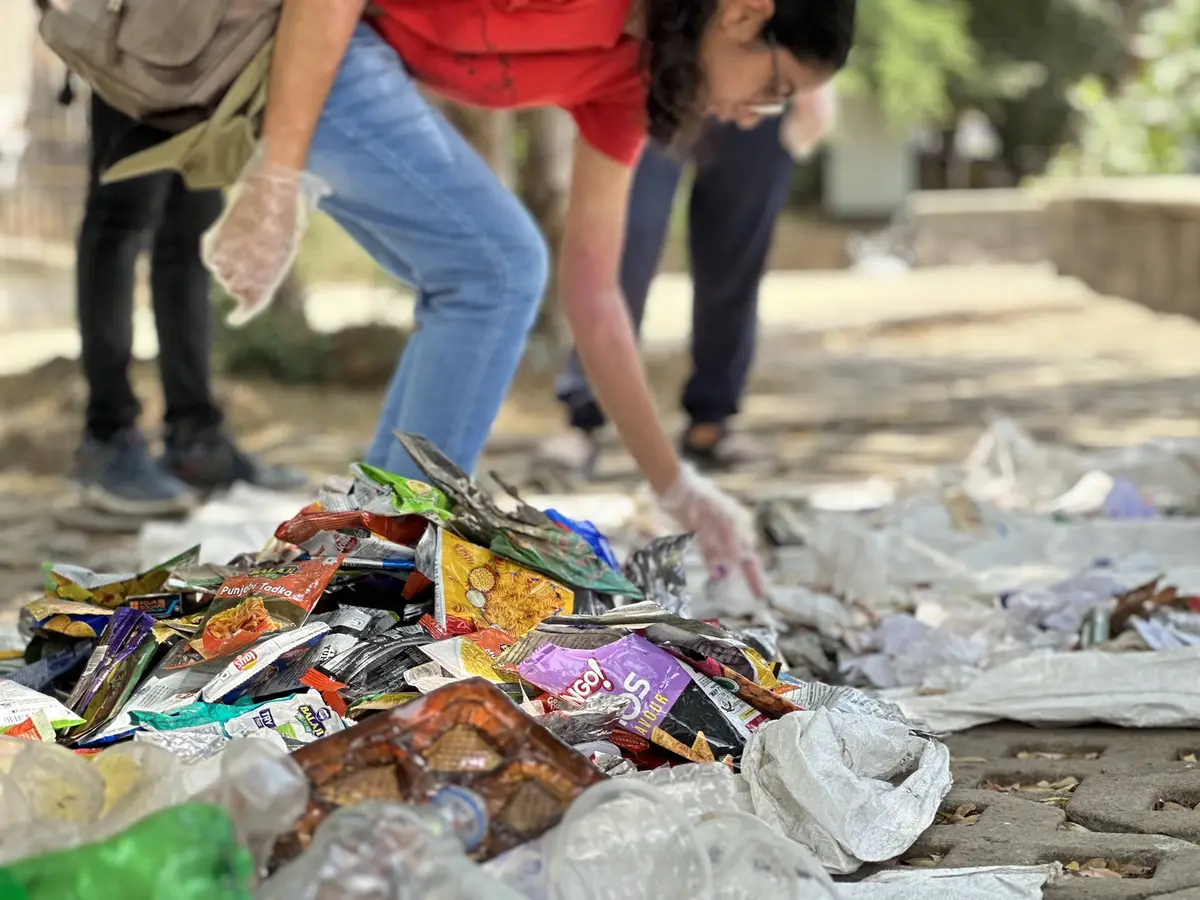
- Join a waste audit or brand audit and log the data on the Earth5R app
- Compare reported figures with field data using the CvR Gap method
- Write a short analyst note on one company or sector
- Present your findings in a research conversation and answer questions
Skills you build
On a ESG internship, you collect your own data near where you live, using the Earth5R app and data forms. Earth5R checks the data on its platform before it goes into your project report.

How the ESG internship fellowship works
Every fellow moves through four phases. Each phase is checked by your mentor before you move on.
Observe and Map
Go into the field near where you live and collect primary data for your project in Finance and ESG.
Frame and Design
Find the root cause in your data and frame a problem worth solving, with your mentor.
Model
Build a working model, analysis or design for your solution, and test it.
Build and Deploy
Put your solution to work, measure the result and publish a verified record on earth5r.org.
Along the way you take part in research conversations with professors at MIT, Oxford, Cambridge, LSE and other universities, and ask your own questions. See how FIELDWORK works.
Where this can take you
Degrees this work supports
- BCom, BBA or BSc in Finance or Economics
- BSc in Accounting and Finance
- MSc in Finance or Financial Economics
- MSc in Sustainable or Climate Finance
- MBA with a finance or sustainability focus
Careers in this field
- ESG analyst at a bank, fund or rating agency
- Sustainability reporting specialist
- Climate risk analyst
- Equity research analyst
- Sustainable finance consultant
Universities known for Finance and ESG
Strong finance and sustainable finance programmes look for applicants who read financial documents closely and back a view with numbers. A fellowship project gives you an analyst note on real company data, reviewed by your mentor and recorded on your earth5r.org profile. Students use a ESG internship to build a record of real work for applications to universities like these.
Wharton School of the University of Pennsylvania (Wharton)
USA · Impact, Value, and Sustainable Business Initiative (Wharton Impact)
Wharton Impact, formally the Impact, Value, and Sustainable Business Initiative, studies how business activities affect natural, human and social capital and how those effects shape risk and financial performance. It includes the Climate Center and the Impact Investing Research Lab, and supports the MBA major in Business, Energy, Environment and Sustainability.
MIT Sloan School of Management (MIT Sloan)
USA · MIT Sloan Sustainability Initiative
The MIT Sloan Sustainability Initiative offers graduate students curated sustainability courses, internships and a Sustainability Certificate. Its research runs through three projects. The Aggregate Confusion Project works on better ways to measure environmental, social and governance (ESG) performance, alongside the Owning Impact Project and the Climate Pathways Project.
University of Chicago Booth School of Business (Chicago Booth)
USA · Rustandy Center for Social Sector Innovation
Chicago Booth’s Rustandy Center for Social Sector Innovation supports students, ventures and researchers working on social and environmental problems. It backs social impact courses and research shared with practitioners. Its event series include Perspectives in Impact Investing and Perspectives in Sustainability, and its stories examine ESG questions such as mandatory environmental reporting.
Stanford Graduate School of Business (Stanford GSB)
USA · Stanford Initiative on Business and Environmental Sustainability (SIBES), Stanford Leadership Institute
Stanford GSB’s Sustainability Initiative, part of the Stanford Leadership Institute, supports research and teaching on environmental challenges. It runs a sustainability research conference series, with coverage of topics such as capital finance for sustainability, and helps faculty add sustainability material to their courses. Global working groups, including one in India, support field-based research.
London School of Economics and Political Science (LSE)
UK · Grantham Research Institute on Climate Change and the Environment
LSE’s Grantham Research Institute on Climate Change and the Environment carries out research, policy analysis and training on climate change. Its Financing a Better Future theme covers banking and private investors, central banks, public finance and the global financial system. Recent publications include work on mobilising private finance for nature.
Saïd Business School, University of Oxford
UK · Sustainability at Oxford Saïd (teaching)
Oxford Saïd builds ESG content into the core teaching of its MBA and runs an MBA Climate Bootcamp for incoming students. Executive programmes include the Oxford Sustainability Reporting and ESG Data Management Programme for finance and sustainability professionals, and the Oxford Sustainable Business Programme, run with the Smith School of Enterprise and the Environment.
Imperial College Business School, Imperial College London
UK · Centre for Climate Finance & Investment (CCFI)
The Centre for Climate Finance & Investment (CCFI) at Imperial Business School combines finance, climate science, economics and data analytics to help investors manage climate and nature-related risks. Its work covers climate risk analytics, clean energy investment and adaptation finance. Students can take the affiliated MSc Climate Change, Management & Finance.
Cambridge Judge Business School, University of Cambridge
UK · Master of Finance (MFin), sustainable finance and ESG courses
Cambridge Judge’s Master of Finance (MFin) includes a set of sustainable finance and ESG courses. Electives include Sustainable Finance, which covers climate risk and ESG scoring approaches, Impact Investments and Finance, and The Circular Economy. Students can work with research centres such as the Circular Economy Centre and the Cambridge Institute for Sustainability Leadership.
France · Sustainability & Organizations (S&O) Center, HEC Institute
HEC Paris’s Sustainability & Organizations (S&O) Center studies how businesses respond to environmental and social challenges, with a focus on climate and social sustainability. It supports research through initiatives such as the Impact Lab and HOPES, and contributes to the MSc in Sustainability and Social Innovation and to courses across the HEC curriculum.
National University of Singapore (NUS)
Singapore · Sustainable and Green Finance Institute (SGFIN)
The Sustainable and Green Finance Institute (SGFIN) is a research institute set up by NUS. It offers the Master of Science in Sustainable and Green Finance and executive courses in carbon accounting and climate reporting. Research pillars include blended finance for decarbonisation, adaptation and resilience, and impact measurement and valuation.
This list is for guidance. These universities are widely known for Finance and ESG. Earth5R has no admissions arrangement with them, and admission decisions rest with each university. Fellows get help researching universities, scholarships and applications, depending on the programme.
What your fellowship fee pays for
An internship fellowship at Earth5R is time and attention from senior researchers and leaders. Each part below takes staff time and resources that we set aside for every fellow.
Live mentoring with experts
One-to-one mentoring in most fellowships, with regular check-ins on your project.
Dialogues with global researchers
Academics from international universities and renowned scientists, who answer your questions and discuss your work.
Support in the field
Guidance while you collect data and work on your project in the field.
References for your next step
References when you apply for jobs, higher studies and research programmes.
Your work, hosted for life
Your work and data stay on Earth5R’s website and servers for life, where universities and employers can check them.
Time from senior people
Each fellow receives time and attention from senior researchers and leaders, set aside for them.
Fee details available on request.
Choose your fellowship
The fee pays for live mentoring, dialogues with global researchers, support in the field, references and lifelong hosting of your work. Fee details available on request.
ESG internship: common questions
Do I need a finance background for this ESG internship?
No. Your mentor starts with how a sustainability report is laid out and what each section means. Students who already study finance or accounting move on to sector comparisons and CvR Gap analysis sooner.
What is the CvR Gap method?
It’s how TERRA Score checks a company’s reported claims against conditions on the ground. You take figures from a BRSR filing or annual report, set them beside field data on the same issue, and record each difference and its size.
Are real company names used in an ESG internship project?
No. Company names are masked in all student work. You still analyse real BRSR filings, annual reports and field data, and your project report sets out your method and findings without naming the company.
Is the ESG internship fellowship paid?
Yes. It is a paid, mentored internship fellowship. The fee pays for live mentoring, dialogues with global researchers, support in the field, references and lifelong hosting of your work. Fee details are available on request.
Can I do this ESG internship online?
Yes. FIELDWORK runs online, and your field work takes place near where you live. Your mentor guides you through each step.
Who can apply?
School and university students from India and other countries. The fellowship prepares you for university, postgraduate study and work.
What do I get at the end?
A certificate, a letter of recommendation, a project report and a verified profile on earth5r.org, where universities and employers can check your work.
Related internship fellowships
Apply for the ESG internship fellowship
Work on a live Earth5R project in Finance and ESG with a mentor, take part in research conversations with global researchers, and build a verified record of your work. Fee details available on request.