
Sustainable Futures Podcast by Earth5R
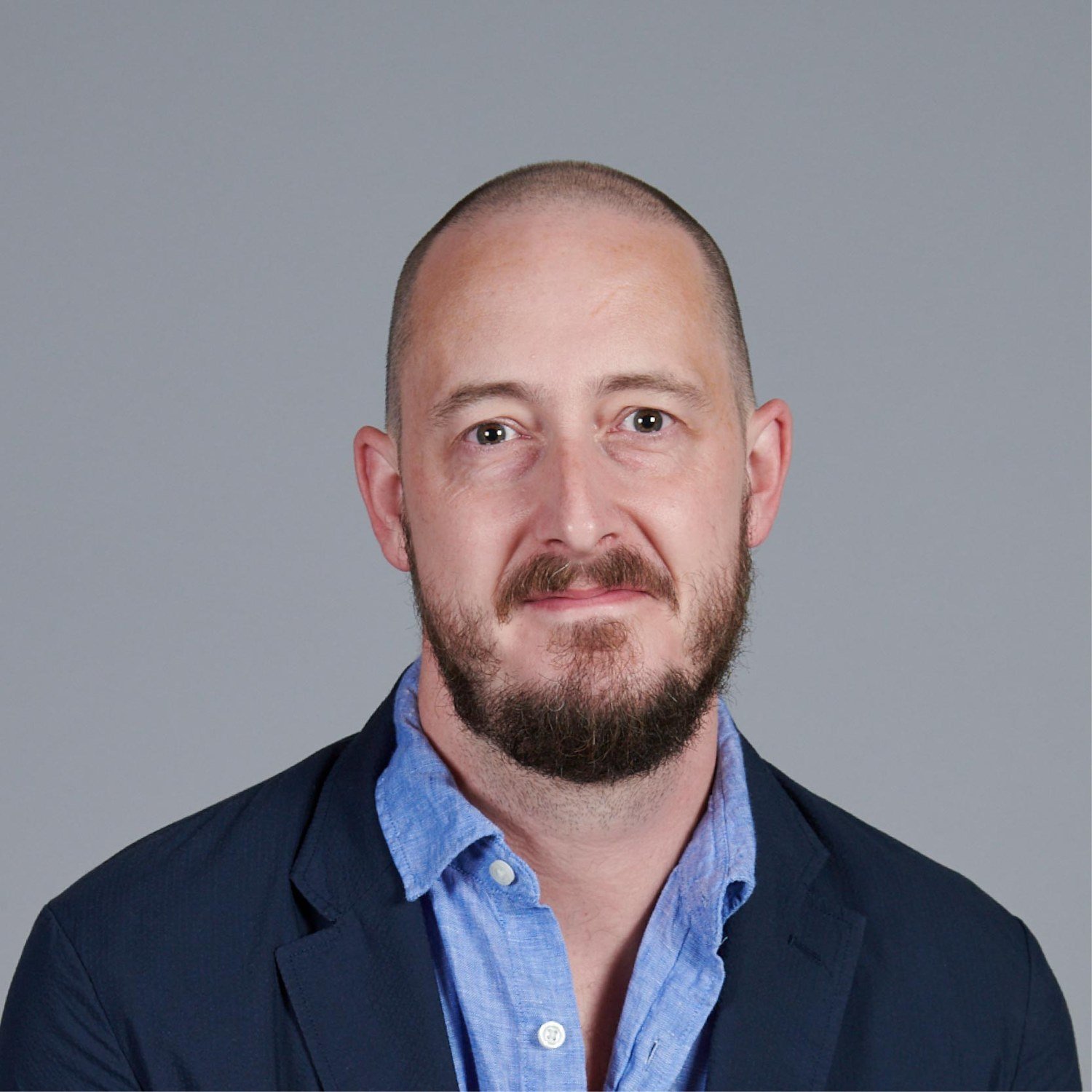
Carbon credits are always in the news, and often misunderstood. Owen Hewlett, Chief Technical Officer of Gold Standard, has spent more than a decade setting the rules that decide whether a credit is real.
In this episode he tells Earth5R founder Saurabh Gupta why every project must do more than cut carbon, how new methods for biochar, rice and smallholder dairy work, why companies should take responsibility rather than simply offset, how Article 6 works for countries, and why he calls India the heartbeat of the carbon market.
Owen Hewlett
Chief Technical Officer, Gold Standard
Saurabh Gupta
Founder and CEO, Earth5R, and host
Five ideas from this conversation
- A credit must do more than carbon. Safeguards, stakeholder engagement and SDG contributions both add value and reduce risk.
- One framework, many tracks. New methods for biochar, rice and dairy group many activities together and tailor the rules to small and large projects.
- Take responsibility, not just offset. Companies should cut emissions in line with temperature goals and fund climate action for the emissions they cannot cut yet.
- Host countries stay sovereign. Under Article 6 the host country always decides how much to adjust when credits move abroad.
- Stay optimistic and curious. Visit sites, ask questions, and know that you can be both a specialist and a generalist.
Chapter 01 of 08
From construction to Gold Standard
Watch from 0:00Saurabh Gupta
Welcome to the Sustainable Futures Podcast. I am Saurabh Gupta, Founder and CEO of Earth5R, an environmental company from Mumbai, India. On this show we talk to the scientists and leaders who are shaping how the world understands and responds to climate change.
Today we talk about something that is regularly in the news but is also widely misunderstood: carbon credits. A carbon credit is a claim that one tonne of carbon dioxide has been cut or removed.
If those credits are real, they can move private money to climate projects in the places that need it most. If they are not, they can give a false sense of progress. My guest today works at the centre of exactly that.
Owen Hewlett is the Chief Technical Officer of Gold Standard, a not for profit foundation based in Geneva, Switzerland. It was founded in 2003 by WWF and other international organisations to set a higher bar for climate projects that cut or remove greenhouse gases and also help people.
Owen led the creation of the organisation’s current standard, Gold Standard for the Global Goals, launched in 2017. Under it, every project must contribute to climate action plus at least two other UN Sustainable Development Goals, such as clean water, health or gender equality, and those benefits must be measured and checked.
Gold Standard now has more than 4,700 projects in over 130 countries. In 2025 those projects issued 81 million carbon credits, and over the years they have reduced or removed more than 500 million tonnes of carbon dioxide equivalent. India is its largest host country.
Owen also sits on two of the most influential bodies in corporate climate accounting. He is a member of the Technical Council of the Science Based Targets initiative, which sets the rules for company climate targets, and since last year he has been a member of the Independent Standards Board of the Greenhouse Gas Protocol, the rulebook most companies use to measure their emissions. Owen, welcome to the Sustainable Futures Podcast.
Owen Hewlett
Thanks for having me.
Saurabh Gupta
Owen, you came to Gold Standard from engineering and carbon project development, and you have led its technical work since 2015. What brought you into this work?
Owen Hewlett
It is an interesting journey. I graduated in 2004 and went straight into the engineering side of property development and construction. I worked at AECOM, the very large American engineering consultancy, starting in programming and project controls.
I became less and less interested in big infrastructure and supermarkets, and more and more interested in the built environment and sustainability. I ended up on the sustainability consulting side at AECOM.
Then came the 2008 financial crash, and construction is not a great place to be in a financial crash. I did not have a family at that point, so I could look around, work abroad and take some risks.
I went and did some work on clean cooking projects and programmes in East Africa, mainly Kenya, Uganda and Tanzania. That is where I came across Gold Standard for the first time.
Two things happened. First, I realised this whole world of carbon markets, environmental markets and corporate responsibility existed, and that there was an organisation that held itself to a higher account. Not perfect, I am sure we will come on to that, but always trying to do the right thing and putting things right when things go wrong.
Second, I went to a carbon expo in Marrakesh and bumped into some Gold Standard staff. It immediately felt like hanging out with friends and family.
Saurabh Gupta
Which year was that?
Owen Hewlett
That would have been 2011, I reckon. I remember thinking, if something comes up in my wheelhouse, I am applying for that job. I worked on the technical governance for a couple of years and joined the foundation in 2014, so all in all I have been involved since about 2012.
Saurabh Gupta
How did Gold Standard begin, and what does the name stand for?
Owen Hewlett
As you said, we were founded by WWF and a few others, with support from organisations such as Mercy Corps and REEEP, and some governments were involved too, either supporting us loosely or naming us in legislation, like Switzerland and Luxembourg.
The slightly odd name can be a bit of an albatross. Calling yourself the gold standard, you have to be aware of that. It was about striving for the right level of environmental integrity, that a credit is a credit, and that it included sustainable development.
At that time it was the Millennium Development Goals, not the Sustainable Development Goals. Time flies. 2030 is coming around and we will have whatever replaces the SDGs, so we have been through two cycles.
The name also reflected what we did first. We labelled carbon credits issued under the UN Kyoto Protocol through the Clean Development Mechanism, so it was the CDM Gold Standard. It was a label first, then it started issuing its own credits, and later still it branched out into other areas.
Saurabh Gupta
Every Gold Standard project has to show benefits beyond carbon, such as clean water, education or gender equality. Why did you make that rule?
Owen Hewlett
It was there from the start. It was one of the reasons we were founded. A carbon market is a market mechanism, and like any market it exists to deliver value efficiently. The more you add in, the less efficient it becomes.
But adding things can be for good reasons. It can add value and it can reduce risk. Safeguards clearly reduce risk. As we have seen in the news, you do not want to fund a project and later find it has a big safeguarding problem, and if that happens you want the standard to put it right.
You want stakeholder engagement, because you do not want to inflict a project on a community that did not want it. And with the goal contributions you get a well rounded project. Climate is itself a Sustainable Development Goal, and the goals speak to working together.
Engagement, safeguards and contributions. When you see them work together as intended, you get a much more optimised project, including for emission reductions or removals.
Chapter 02 of 08
Biochar, rice and framework methods
Watch from 7:55Saurabh Gupta
Now let us talk about your new methods, from biochar to small farms. Your first biochar methodology, PARC, was published in November. PARC stands for Production and Application for the Removal of Carbon via Biochar. What is biochar, and what can it do for farmers?
Owen Hewlett
It is our first biochar methodology, so we are very excited to see PARC released. Two things before I explain it. First, Gold Standard can be applied anywhere, but part of its DNA is to support action in developing countries. The standard could work in Germany or the UK, where I am, but it has to work in places where access is hard.
Second, over the last 20 years methodologies in carbon markets grew organically. Almost every individual activity came with its own methodology, so in an area like community energy services you ended up with lots of methodologies doing similar things in slightly different ways. It was confusing.
So this year we have created what we call framework methodologies, which capture a whole range of activities. PARC is a good example.
Biochar is organic material that has been heated with little or no oxygen. It creates something similar to charcoal, and it stores carbon in a robust and secure way. Applied to soil, it can also improve how water and nutrients move.
Saurabh Gupta
And the retention of water as well?
Owen Hewlett
Retention of water, exactly. There are almost too many benefits. It can seem like a miracle cure sometimes.
Astute listeners will know that if you heat something without oxygen, there are more and less efficient ways of doing it. So the methodology covers activities on the production side, the P, and on the application side, the A, such as how it is applied to soil in different conditions.
We do not plan another biochar methodology. New activities will be added to this one, rather than sprawling as the market did before.
We have also given these framework methodologies what we call tracks, for different contexts. The rules apply to everybody, but they are tailored to different sizes of project, or to places without access to monitoring equipment. The tracks are there to manage risk and still give people access.
Saurabh Gupta
Rice paddies release methane, and millions of farmers grow rice. How does a method work at that scale?
Owen Hewlett
I confess I knew a lot more about biochar than about rice, so rice has been a real learning curve for me. One of the interesting things about this career is that you touch every sector, and you cannot be an expert in everything anymore.
What I did know is that flooded soil becomes oxygen poor, which lets microbes produce methane. Methane is a very potent greenhouse gas, much more climate forcing than carbon dioxide, albeit shorter lived.
Rice is a staple food for a very large share of humanity, and much of it is eaten close to where it is grown. So it matters locally and internationally, and it has this super pollutant focus. We really wanted to support rice farmers and tackle methane.
Like PARC, DREAM is a framework methodology. The main activities are things like alternate wetting and drying, which stops the soil becoming oxygen poor. But there are lots of other things rice farmers can do that add up when you put them together.
It is like a menu of options. We want to keep them all under one hat, so people do not need ten different methodologies. And with tracks, if it is small scale or in a developing country, we can find ways to reduce the risk and allow access.
Rice is also a very commercial product. You have huge companies like Cargill and Olam, and they would not usually get involved in a project with just one activity. They look for many opportunities combined, so a framework approach is more accessible from that end of the scale too. We are seeing a lot of rice projects arise, which is exciting.
Chapter 03 of 08
Smallholder dairy and shared benefits
Watch from 14:18Saurabh Gupta
Your new dairy methodology, HERD, is for smallholders with up to 100 animals. Why did you design it for them? Isn’t it very difficult to manage at such a small scale?
Owen Hewlett
It is. To be completely frank, it is difficult. But that is the Gold Standard way. The alternative answer is to say it is too difficult, so we will not use this instrument to help those farmers. It does not even sound right saying it out loud, and it would be against our DNA.
Smallholder dairy farms are widespread across the world. We are talking about farms with up to 100 animals, in low income communities. They have two big issues: access, and data quality or data scarcity.
Dairy carbon credits are very methodology heavy, with a lot of monitoring and reporting. Smallholders in developing countries and heavy monitoring are not happy bedfellows. Farmers everywhere are the savviest people around. If anybody can tell you what is inefficient, it is a farmer.
So we built HERD with them in mind. The main focus is making measurement workable where data is limited. We have other methodologies for other parts of the dairy industry, but we chose to break this one out on its own because this subsector matters so much.
Saurabh Gupta
Are there examples of projects where small scale has worked?
Owen Hewlett
In other sectors, yes. The carbon markets traditionally looked at micro and small scale, defined by the size of a community, the number of cattle or the number of credits. Small scale opened access at the expense of risk control, because at micro scale the risk is small in terms of credits.
There are small scale tracks in the methods we have talked about, and a lot of that in community services such as clean cooking and safe water. Collectively, the market has learned a lot about managing risk with scale.
Scale and risk are not a perfect proxy, to be honest. Technology has come a long way. In rice, biochar and clean cooking the technology is much better than 20 years ago. My hope is that within ten years scale will not matter for most project types because of technology, though it may still matter for smallholders.
Saurabh Gupta
Many of these projects also have a cascading social impact. With clean cooking, we have seen projects that reduce indoor and outdoor pollution, and women get hours back to focus on livelihoods and education.
Owen Hewlett
Definitely. Some projects deliver benefits just through the nature of the activity. They should still be demonstrated, but we also love it when projects add things. We have seen projects run language or engineering classes for local people, or microfinance and community groups.
Even in HERD, the activity types such as feeding, manure and herd management are strangely framed as climate activities. That is not why a farmer would do them. You would do them for yield, or for health and safety.
Saurabh Gupta
One example is from our own project in Mumbai. Residential buildings became zero waste after we trained them, and they started composting their segregated organic waste in decentralised units that Earth5R provided. Soon they had more compost than they could use.
Nearby, in slum areas, we found many women looking for work, and tin roofs that became extremely hot in summer. So we brought in horticulture professionals, made containers by upcycling old plastic, and trained the women to make soil and compost and to grow saplings on their rooftops.
When a sapling was ready for planting, we paid them for it, because we needed the plants for large plantation programmes for corporate projects. Now hundreds of families have rooftop plants that cool their homes. The women were paid by cheque, and they began spending that money on healthcare and their children’s education. Everything is connected.
Owen Hewlett
What a fantastic story, and an illustration of why you incorporate sustainable development. The moment it is in there, people start to think outside the box and put things together in ways you could imagine otherwise just being waste.
With safeguards you need to be very clear on what is and is not allowed, because that is about reducing risk. But with the goal contributions and engagement, less is more. You have just described something we could never prescribe in a standard. It is too context specific, but the ingenuity people show when prompted is incredible to see.
Saurabh Gupta
How do you check that the benefits reach the people on the ground?
Owen Hewlett
Benefit sharing has really grown as a topic in the last few years, and people have different views on what is reasonable. Should it be financial, for example? As your story shows, just distributing money may not always have the effect you expect. It can create a safeguarding problem of its own, though sometimes it is the right answer.
The approach we are pursuing treats benefit sharing a bit like the SDG contributions. There are guidelines and guardrails, and you should do it, but how you do it is up to the ingenuity of projects working with communities.
Some projects are very lean. People would love to think there are huge profit margins, but often these are hard projects, as you know. Asking a project that is distributing technology to a community to also give back part of its profit is a bit of double jeopardy, and it may make the project fail. So it is a delicate balance, but a serious issue. We prompt, we guard and we guide, but we do not restrict innovation.
There was interesting work by Fairtrade, which requires part of the community to be involved in community contributions.
Saurabh Gupta
Do you have a partnership with Fairtrade?
Owen Hewlett
Yes, a longstanding one. I love working with Fairtrade. We experimented with Fairtrade labelled carbon credits, with mixed success. Some were issued and some were bought, but it did not catch on in a big way. Some of the thinking has really stuck with us, and I hope with them too. They are very close friends and allies.
Chapter 04 of 08
From offsetting to taking responsibility
Watch from 24:19Saurabh Gupta
Now let us get to companies and governments. Companies are still learning about the latest SBTi standards and carbon market tools, especially in countries like India. What questions are you getting from them?
Owen Hewlett
This one is partly a history lesson. In 1992 you had the UN climate convention, and in 1997 the Kyoto Protocol, which named the principle of the Clean Development Mechanism. The UN then launched the CDM as its carbon crediting scheme, and Gold Standard and the voluntary carbon markets followed.
I raise that gap because it has just happened again. The Paris Agreement came in 2015, and the Paris Agreement Crediting Mechanism, which you could read as a successor to the CDM, really launched last year. About a decade again. History does not repeat, but it rhymes.
Corporate responsibility goes hand in hand with that cycle. From Kyoto to Paris, it was mainly about disclosure. Measure your carbon footprint and be honest about it. The Greenhouse Gas Protocol, which I am involved in, grew up in that period. The other part was like Kyoto for countries: reduce as much as you can and offset the rest.
I do not doubt the intent, but reduce as much as you can is a bit arbitrary. And offset the rest can sound like you are allowed to reduce less. Sometimes that criticism was fair. I do not think carbon credits caused that. Human nature did.
Paris is a much more science based framework than Kyoto. Under Kyoto, around 20 or so countries had negotiated targets. Under Paris, targets are linked to temperature goals, and science based targets for companies grew up at the same time, launched around the Paris Agreement.
So companies should not just reduce as much as they can, but link their cuts to temperature goals. That leaves a new era for carbon credits. If we are not offsetting the rest, what are we doing? Gold Standard actually wrote about this in 2016, straight after Paris.
It is about reducing your own emissions in line with temperature goals, and then taking responsibility for the emissions still happening on the journey. For most companies, hitting the temperature goal means cutting somewhere between 3 and 6 percent a year until 2050.
That does not sound like much, but it will feel like a lot, because it means whole economy change. It also means about 96 percent of your emissions are still happening in that first year. Ideally they would not be, but that is where we are. Companies cannot change the world on their own, even if they really want to.
It is less about offsetting, and more about taking responsibility for the emissions you cannot cut yet.
So you take responsibility for them, and that is where carbon credits can come in. If I have 96 percent left, perhaps because my country does not have a renewable grid yet, I can fund commensurate climate action. It is a much more credible and robust system. It is just not as catchy as reduce as much as you can and offset the rest.
Saurabh Gupta
It is a more scientific approach, and it does make an impact on the ground.
Owen Hewlett
That is what we hope. If we follow science based temperature goals, we have to apply science everywhere. According to the science, smallholder farming and clean cooking are also needed for net zero. So the funding should reach those projects. They are not just philanthropy.
Saurabh Gupta
This is one reason the Sustainable Futures Podcast talks to so many scientists, especially IPCC scientists. We want to connect these dots and show that policy has to be led by science.
Chapter 05 of 08
Article 6 and national carbon markets
Watch from 29:03Saurabh Gupta
Coming to national climate plans, what role can a standard play for governments working under Article 6?
Owen Hewlett
Gosh, a lot in that one. The same history lesson is a good start. Since the Paris Agreement in 2015, why did it take ten years to launch its crediting mechanism? Because the mechanism, and to some extent standards like ours, respond to a clause of the Paris Agreement called Article 6, which is about cooperation between countries.
It breaks down in three ways. Article 6.2 covers agreements between countries to transfer emission reductions from one to the other. Article 6.4 is the formal crediting mechanism, where the Paris Agreement Crediting Mechanism comes from. It does a similar job through the UN. Article 6.8 is a nobly intended loose end, a non market route for one country to support another.
The main purpose is that some countries will need to buy emission reductions or removals on their journey. It will not be a nice straight line down to net zero. It will be a roller coaster, and at times countries will be stuck and need to buy in. Others may have a surplus, for example from big forestry programmes, and can sell some of that progress to help another country.
We are seeing countries take part, with a lot of interest in East and West Africa and East Asia. There is still a lot of debate about how it should work.
The Paris Agreement introduces concepts that cannot be ignored. We do not swim in a separate ocean. More than 190 countries have committed to ratchet up their ambition towards net zero by mid century and to limit warming. If they are ratcheting ambition, you cannot assume the status quo is your project baseline anymore.
So aligning with Paris means setting a baseline beyond business as usual, adjusting downwards for the ratchet of ambition so projects get slightly fewer credits over time, and not crediting things that regulation already requires, which we call regulatory surplus. Gold Standard has a whole programme on how we align with the Paris Agreement.
If you account for those changes, you can take part in cooperation between countries, or in regulated schemes like CORSIA for airlines. If you do not, you risk over issuing. One thing we have learned from 20 years of carbon markets is that a scientist somewhere will work out whether you over issued.
Saurabh Gupta
How do you see that sitting alongside a national market, such as India’s Carbon Credit Trading Scheme?
Owen Hewlett
The question is the same for every country. Do you want to use these clauses of the Paris Agreement, and how, through the mechanisms available to you? One country’s right answer is another country’s wrong answer. There is no one size fits all.
Some countries, India and China for example, will have very mature domestic markets that issue their own units with their own accounting systems. It is a sovereign system, so more power to the countries doing it well. We are not there to compete with them.
Other countries will look at existing standards and endorse them. The South African carbon tax, for example, names Gold Standard as an instrument. The important thing is that the power to decide stays with the host country at all times. Nobody should force a country to give up a benefit to another country.
Saurabh Gupta
And different methodologies have different benefits, so there is no one size fits all.
Owen Hewlett
That is for sure. There are maybe five or six voluntary standards of different sizes. Gold Standard is one of the biggest and oldest, and some newer ones have exciting ideas too. We often have our own methods for the same thing. That is not fatal, as long as everybody is pushing for integrity and nobody uses a weak method to issue more credits, which has happened in the past.
The other illustration matters a lot. When reductions move from one country to another in a closed system, one country adjusts upwards and the other downwards, otherwise the global books do not balance. The host country stays in control of how much it adjusts. It does not even have to agree with our methodology. It can decide to adjust for more or fewer credits.
So the host country remains sovereign at all times. I have made it sound easy, but if you are in an environment ministry trying to work out how to tackle all this, it is tricky.
Chapter 06 of 08
Climate shocks, permanence and food
Watch from 36:28Saurabh Gupta
Many people imagine climate change arriving slowly, like the boiling frog. But it may arrive like COVID, with a tipping point crossed and everything breaking down suddenly. Are carbon markets and climate finance prepared for that? Do we have enough trusted standards, auditors, project developers and investment to scale up removals quickly?
Owen Hewlett
What a brilliant question. I felt this in the UK this summer. Not that anyone should have much sympathy for a UK summer, but we had a series of what we would call heatwaves. The UK talks a lot about the weather, but we are terribly unprepared for even a mild change, let alone a big one.
For the first time I felt the conversation move to, is this what it is going to be like? I was telling friends and family, no, it is going to be a lot worse. And at the end of the summer people went back to saying, it is just another heatwave. Human nature is a strange thing.
There are two questions there. Are projects robust enough, and planned for the fact that they sit in places that will change? And can the market scale and stay robust?
On the first, project types differ. Biochar and rice are very different from a big avoided deforestation project that may face wildfires. Once an emission is reduced, it will never be released. So permanence is mainly an issue for projects that remove and store carbon that could be lost.
In our forestry and agriculture projects we have a risk and capacities requirement that looks at exactly this, for example whether a place is a smart place to plant trees. It can really surprise you what is a good or a bad place. We also look at how robust our overall portfolio is, and I expect to learn some uncomfortable truths and some pleasant surprises.
On scale, the market has gone through cycles of booms and dips. It scales back very quickly each time with new entrants. So I do not fear a lack of capacity. I am concerned about the boom and bust cycle, which we need to get out of so that the instrument is more trusted and more useful.
Saurabh Gupta
So it needs to be stable.
Owen Hewlett
Stable is a good word, exactly, without those dips.
Saurabh Gupta
This has worried me since COVID, when the whole world shut down within weeks. Along with climate, we have food supplies. Food is how humanity survives, so it is not just about temperature.
Owen Hewlett
Very much so. There is an older report from the World Resources Institute that I found super inspiring, Creating a Sustainable Food Future. It was set out as a menu, a bit of a gimmick, and the exam question was how to tackle the climate emergency and feed 10 billion people.
The options the market tends to focus on, such as soil carbon, ended up near the bottom of the list. Near the top was taking no more land and increasing the yield of the land we already farm. There is enough land in agriculture to feed 10 billion people securely, if it is used efficiently and we stop taking more.
There were also things like shifting diets, but that first one was really compelling. I would like to think you see it in things like PARC and DREAM. They are climate mitigation activities, but not only that anymore. They let you increase your yield on the same land. That is really what it is all about.
Chapter 07 of 08
India, digital MRV and AI
Watch from 41:46Saurabh Gupta
Let us discuss geographies and digital tools. Gold Standard is based in Europe and wants to grow in Asia, Latin America and India, and India is already your largest host country. What are you looking to learn from a country like India, with so many crops, soils and weather conditions?
Owen Hewlett
We have been really fortunate. The foundation is Swiss with many European staff, but the projects are all over the world. Our biggest continent by number of projects is Africa, and the biggest single country, as you say, is India. Turkey was strong for a long time too.
For longer than I have been part of it, about three quarters of its history, Gold Standard has had a technical division built on Indian talent. A big part of my team is based in or from India, including the senior technical director who reports directly to me, and other team leads.
It is one of the great pleasures of being Chief Technical Officer. The science is the science, but the approach to thinking and the work culture are different enough to make a fascinating and very productive working relationship. It is one of the highlights of my career.
To me, India is the heartbeat of the carbon market.
India is also very strong in audit and in digital professionals, and those will not be separate for much longer. We will all be digital professionals.
Then there are the projects. An Indian smallholder farm project is very different from an East African one, with some shared principles but a different context. When we bring forward a methodology like DREAM, the lessons from our India projects and the consultation responses are always huge.
Saurabh Gupta
How are digital tools, satellites and AI changing the way you check projects? Do you still need people on the ground?
Owen Hewlett
Everybody should be asking themselves this question. My short answer is yes, we will still need lots of people, and the human element remains essential. These tools will make smart people smarter and more efficient. They will not do away with smart people.
There are three things on my to do list. The first is digitalising certification, so that the experience a project developer, auditor or reviewer has with Gold Standard is entirely digital. We started in the era of PDFs, Word documents and spreadsheets. That got us through the first 15 years, but it is already out of date. Over the next two years you will see us fully digitalise.
The second is digital MRV, which means monitoring, reporting and verification. How much can we move from manual surveys or counting trees by hand to remote sensing? We have put guidelines out to consultation on how projects can do that.
As with everything else, the idea is to give prompts and guardrails and then let flowers bloom. We are not the best people to invent technologies for projects. The projects are. Then digitally captured MRV will flow straight into digital certification. That is the dream, and I hope it will be there within the next couple of years.
The third has to be AI. It is part of the same picture. We see it everywhere, from helping us write methodologies to research and sorting stakeholder comments so we can pass information to reviewers faster. We have traditionally embraced new technology with guardrails. AI scares us like it scares everybody, but it has helped us, and it is an inevitable part of the future.
Chapter 08 of 08
Advice for young people
Watch from 47:22Saurabh Gupta
Many in our community are young people in schools and colleges who are worried about climate change and want to be part of the solution. With your long career as a technical person in the climate space, how can they get involved and also build careers from it?
Owen Hewlett
First, I want to acknowledge that it must be hard and scary to be young and coming into this workplace. Climate change was an issue when I was at university, and I was scared of it then. It has got worse, and as a global community we have done less, if anything.
So my first piece of advice is, even if you have to fake it, try to keep your optimism. It can be fixed. Things can get better. Human endeavour is ingenious when put to use. Even if you do not feel optimistic, try to act optimistically.
Second, my career has ended up in rice projects, an area where I had no expertise. I did not even know how rice was produced before I took this job. Being a good professional is downstream of being interested and curious, and wanting to know how things fit together and how they do and do not work. Have a genuine, deep love of that, and do not assume the status quo is right.
Saurabh Gupta
Something like fieldwork on the ground?
Owen Hewlett
Exactly. Get into rice, or transport, or buildings. Get out there and ask questions. Why do we build buildings that way? Why is rice produced that way? Volunteer, go to sites and be super curious about how the world works. You cannot go deep on everything, but you can go deep on a few things, and that helps you see that others have gone deep on other things.
Third, do not worry too much about specialising. I started in construction, which has very little to do with my job today. Whatever you specialise in, you can still go on to lead something else. Or you can specialise and stay in it forever, and that is fine too.
Do not fall into the trap of thinking that if you specialise you cannot be broad. My deputy, who is Indian, is a deep expert in community energy projects, and he now runs our entire standard system. You can be a world leading expert and a broad ranging manager.
Finally, look for any opportunity for experience early on. Value your time, so do not just give it away and be exploited, but visit sites and do short volunteering stints to get on the experience ladder. I do a lot of interviews for things like dissertations, and I am always happy to find the time. It might not be immediate, but I will dig out the time, so please connect with me.
Saurabh Gupta
That is amazing. Owen, thank you so much. This has been a rich conversation, from how Gold Standard began, to biochar and small farms, to how we keep climate finance honest. Thanks to the whole Gold Standard team.
For listeners who want to learn more, you can find Gold Standard at goldstandard.org and read about its projects, its methods and its work on climate and the Global Goals. If this episode helped you see carbon markets more clearly, please share it with students, colleagues and people in the policy space. This is Saurabh Gupta for the Sustainable Futures Podcast. Until next time, take care.