
Sustainable Futures Podcast by Earth5R
Clouds look soft and simple, but they are one of the biggest open questions in climate science. Professor Ulrike Lohmann of ETH Zurich has spent more than 30 years studying how tiny particles in the air change them.
In this episode she tells Earth5R founder Saurabh Gupta how her team seeds real clouds from drones, why cloud seeding cannot end a drought, and why cleaner air has to go hand in hand with cutting fossil fuels. She also shares what students should study if they want to work on climate.
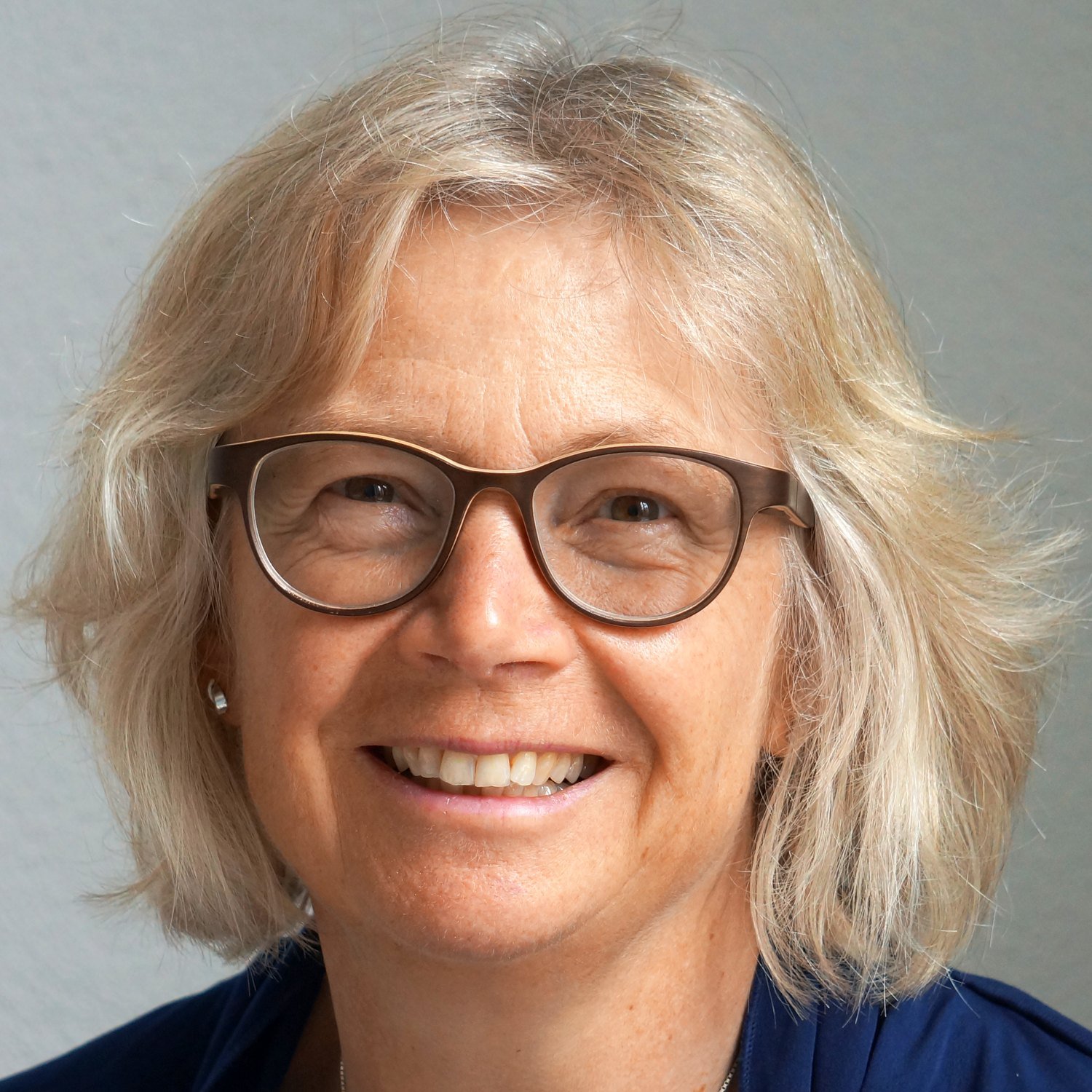
Ulrike Lohmann
Professor of Atmospheric Physics, ETH Zurich
Saurabh Gupta
Founder and CEO, Earth5R, and host
Five ideas from this conversation
- A cloud needs three things. Moisture, rising air and tiny aerosol particles for the droplets to form on.
- Ice is the hard part. Cloud droplets can stay liquid far below zero because the particles that help ice form are rare.
- Cloud seeding cannot end a drought. It can clear holes in a low cloud, but it cannot bring enough extra rain to the ground.
- Clean air and climate action go together. Pollution particles cool the planet, so cutting them has to go hand in hand with cutting fossil fuel emissions.
- Follow your passion. Environmental problems do not go away with AI, so there is even more reason to study environmental science.
Chapter 01 of 08
From Nigeria to the clouds
Watch from 0:00Saurabh Gupta
Welcome to the Sustainable Futures Podcast. I am Saurabh Gupta, Founder and CEO of Earth5R, an environmental company from Mumbai, India. On this show we talk to the scientists and leaders who are shaping how the world understands and responds to climate change.
Today we talk about something every one of us has looked up at since we were children: the clouds in the sky. Clouds look soft and simple, but they are one of the biggest open questions in climate science. How much the planet will warm depends a great deal on how clouds behave.
My guest has spent more than 30 years studying exactly that. Professor Ulrike Lohmann is Professor of Atmospheric Physics at ETH Zurich, the Swiss Federal Institute of Technology, where she has led a research group since 2004. She is also ETH Zurich’s Vice Rector for Doctoral Studies.
Ulrike is one of the world’s leading experts on how tiny particles in the air, called aerosols, change clouds, and how those clouds in turn change our climate. She has a special focus on ice crystals and the clouds that contain them.
She was a lead author for the IPCC’s Fourth Assessment Report and for the Fifth, where she was a lead author of Chapter 7 on clouds and aerosols. She contributed to the IPCC work recognised by the 2007 Nobel Peace Prize.
In 2025 she received the Vilhelm Bjerknes Medal of the European Geosciences Union, one of the highest honours in atmospheric science. She is a member of the Leopoldina, the German National Academy of Sciences, a Fellow of the American Geophysical Union, and holds an honorary doctorate from Stockholm University. She has also received the American Meteorological Society’s Henry G. Houghton Award.
In 2021 she won a European Research Council Advanced Grant for a project called CloudLab. Her team uses drones to seed real winter clouds over Switzerland and then follows the ice crystals as they form. In simple words, she uses real clouds as an outdoor laboratory.
Her journey took her from a doctorate at the Max Planck Institute for Meteorology in Hamburg to Canada, where she was a professor at Dalhousie University in Halifax and held a Canada Research Chair, and then to Zurich. With a colleague she wrote the textbook An Introduction to Clouds: From the Microscale to Climate, published by Cambridge University Press, with a new edition out this year. Ulrike, welcome to the Sustainable Futures Podcast.
Ulrike Lohmann
Thanks, it is my pleasure. I am looking forward to chatting with you.
Saurabh Gupta
A lot of young people moving into the climate space want to follow the footsteps of people like you. You did not plan to become a scientist. After school you spent a year as a volunteer with young children at an SOS Children’s Village in Nigeria, and then studied ethnology and geography.
How did you find your way from there to clouds? And do you think your time in Nigeria counts towards what you do today?
Ulrike Lohmann
Oh yes, for sure. Lots of young people here in Europe take a year off after high school. In high school you are not trained for whatever is out there. We just do not know all the job possibilities there are.
I loved maths and physics in school, but I did not really know what I wanted to do with that. I did not want to become a teacher, and then there was not much left.
So I thought, maybe if I go abroad for a year I will get a better idea of what I want to do. That was the naive thinking.
When you are young and curious to see and understand the world, you are open to that. It was a great experience and it widened my horizon tremendously.
But the truth is that after Nigeria I still did not know what I wanted to do. I was overwhelmed by all the impressions of living in a completely different country.
I had to master everyday tasks like finding water or finding something to eat, with no electricity. There were so many daily challenges that I did not really think about what I would do afterwards.
So the most obvious thing was to enrol in ethnology. Of course, that is a logical path if you have spent a year in Africa.
But I quickly realised I am not a social scientist. I just do not like writing big essays, which is what you need to do.
So I tried to move back into the physical sciences, but I still was not completely sure what I wanted. I would have been interested in what we call environmental engineering.
But in Germany at that time it required better high school marks than I had. I was lazy in school, and that backfired on me.
Saurabh Gupta
So very much like young people of today.
Ulrike Lohmann
Exactly! I did not think I needed it, so I did not study hard. So I could not do environmental engineering, and I went to physical geography.
In Germany you had to take two minor subjects. I chose chemistry and meteorology.
I liked chemistry as long as it was theoretical. Then we had a chemistry lab, and I realised I am not a person who goes into the lab and is very precise about what I have to do. So I failed the lab.
Saurabh Gupta
Now you have your lab in the clouds.
Ulrike Lohmann
Yes, exactly. But I do not go out in the field, for that reason. I am useless in the field. I have realised that.
So that was another decision that was basically made for me. I do not have the passion for detailed laboratory work, where you have to be very precise and tedious. That was just not me.
Then I convinced my parents that I was allowed to switch gears one more time and study meteorology from beginning to end.
In Germany at the time that was basically a bachelor in physics, in today’s terms, and afterwards you specialise in the atmosphere.
Then I found what I really wanted to do, and I studied hard. That is how I got here.
Saurabh Gupta
It has been quite a roller coaster.
Ulrike Lohmann
Yes, exactly. It was not that as a child I was already saying, yes, clouds. Clouds are of course fascinating to watch, and I grew up at the beach, so we were looking at clouds all the time.
But little did I know then that this could be an interesting topic to study.
Chapter 02 of 08
How clouds form and why ice matters
Watch from 8:21Saurabh Gupta
Many of our readers and listeners are school and college students. In simple terms, how does a cloud form?
Ulrike Lohmann
It basically needs three ingredients. First, you need moisture in the air.
Second, you need air that is rising. Either the sun heats the surface in summer and the warm air rises, or air is pushed over mountains. Or a low pressure system comes through, with a warm front and a cold front, and the air is pushed up there too. So you need some lifting mechanism.
The third thing you need is tiny particles, aerosol particles. Those are the centres the cloud droplets form on.
If all of that is in place, with high enough moisture, air that is rising and a sufficient number of aerosol particles, then you form cloud droplets.
Saurabh Gupta
So behind a cloud that looks so fascinating, there is a lot of physics and chemistry.
Ulrike Lohmann
Yes, it is physics and chemistry. The physics is the physical laws that tell you what happens when air rises.
Pressure decreases as we go up, so rising air expands. When it expands, it cools down.
That cooling raises the relative humidity until it reaches 100 percent or more, and then condensation can take place. That is the physics behind it.
The chemistry comes into play because aerosol particles are chemical particles, like sulfate or nitrate particles, sea salt, which is mainly sodium chloride, or mineral dust.
There is also quite some rivalry over what is more important. The physicists among us say of course physics governs cloud formation. The chemists say chemical composition matters as well. Both do matter.
Saurabh Gupta
And now climate science comes into the picture, because aerosols are changing everything.
Ulrike Lohmann
Exactly, aerosols are changing everything. We know they are bad for your health.
I think it was in India, maybe in Delhi, that it made the news that the air pollution was so bad that students had to stay at home.
Saurabh Gupta
Yes, the schools were closed.
Ulrike Lohmann
Yes, the schools were closed because the air pollution was so bad. That is the side of aerosols that people are most familiar with.
Saurabh Gupta
Most people think water freezes at zero degrees, but cloud droplets can stay liquid far below that. Why does ice in a cloud matter so much for rain and for climate?
Ulrike Lohmann
If you have only cloud droplets, they are so tiny and there are so many of them that they just float in the cloud.
On average only every tenth cloud will produce precipitation. All the other clouds just stay there.
That is because the small cloud droplets are far enough apart that they do not bump into each other. They stay, and then they evaporate again.
Now, at temperatures below zero, a cloud droplet would of course love to be an ice crystal.
But ice has more structure and more order, and creating that takes energy. It is very easy to create a mess, but it takes work to clean it up.
Going from liquid to ice is cleaning up the mess. In the liquid the water molecules float freely, and in ice they sit in a structured grid. Getting all the water molecules to arrange themselves is what requires energy.
That is why you have to go to low enough temperatures for this energy barrier to become smaller, so that eventually ice can form.
Aerosol particles can help there too, but they are different particles. For cloud droplets you want the soluble ones, like sulfate or sea salt. For ice crystals you want solid ones, like mineral dust, pollen, bacteria or fungal spores. They are the centres for ice crystals, and there are far, far fewer of them.
Because so few of them are out there, cloud droplets often stay liquid at temperatures below zero and do not freeze. Scientists call these ice nucleating particles.
Chapter 03 of 08
CloudLab: seeding clouds with drones
Watch from 13:35Saurabh Gupta
Why are clouds still the hardest part of the climate for computers to predict?
Ulrike Lohmann
Because clouds are small. When a computer predicts the weather or makes a climate projection, you have to put a grid over the Earth.
With today’s resolution we can maybe have one grid point every 10 kilometres, or a little better. But clouds themselves can be smaller than that.
And then there are the processes inside them. Raindrops are on the order of a millimetre and cloud droplets are even smaller. They are so small that you always have to find a way to describe them with what you know, and there are not many possibilities.
The more detail you try to describe in clouds, the more computing time you need. That is already the limiting factor.
You want the grid, the mesh over the Earth, to be as fine as possible so that you capture all the mountains. The topography determines where the air rises, and it shapes the circulation between the mountains and the valleys.
You want to get that right, and on top of that you want to get all the processes inside the cloud right.
Saurabh Gupta
Tell us about your project, CloudLab. Can you walk us through the experiment? How does your team seed a cloud from a drone and follow the ice crystals?
Ulrike Lohmann
I am very happy to. If you look at my background, it is just grey. That is a typical situation in wintertime Switzerland. We have a low stratus cloud.
It forms when the air comes towards Switzerland from the northeast. It comes from continental Europe, so it is cold, and the cold air pushes into Switzerland. Looking in the direction of the flow, you have the Jura Mountains to the right and the Alps to the south.
The Jura and the Alps come closer and closer together towards the south, so the air is funnelled through there. It pushes the warmer air out of the way.
We also have moisture from the lakes on the Swiss Plateau, so we have a moisture source and a very persistent cloud deck.
On top of that, because it is typically under a high pressure system, there is a temperature inversion. Above the cloud the temperature increases again. So you have a very stable cloud system that can last for days.
In winter this cloud is at temperatures below zero, and it still consists of cloud droplets. We are trying to understand better how ice crystals form. So we artificially introduce ice nucleating particles into the cloud.
We do that from a drone, because we can control where the drone is. Say we have a measurement site here in the centre, and we know the wind comes from this direction. Then we release the particles upwind, and the wind pushes them over our measurement site.
At the measurement site we have a holographic device, a camera that takes pictures, so we see whether there are cloud droplets or ice crystals.
Because we know the time we seeded and the time we measured, we know how much time the ice crystals had to grow.
What is unique is that now we can really understand what is going on in the cloud. We know where the ice crystals formed and where we measure them, and from the pictures we see what must have happened in between.
What habits, meaning which shapes, have they grown into? Have they collided with each other? Have they started to fall out?
We also have different radars and lidars for remote sensing, so we see through the whole column of the cloud. That gives us an unprecedented understanding of what is actually going on inside it.
The nice thing is that the seeding takes maybe five or six minutes, which is how long a flare lasts. The cloud we measure before is pure liquid. Then the ice crystals come through, and afterwards it is pure liquid again. So we really see the change from liquid to ice and back.
What is unique is that we have really good reference conditions. If you study a thunderstorm cloud, you have only that one thunderstorm cloud and you are missing the reference. We have our reference cloud.
It is very easy to create a mess, but it takes work to clean up the mess. Going from liquid to ice is cleaning up the mess.
Saurabh Gupta
With wind and all those other factors, you have to be extremely precise in your experiments.
Ulrike Lohmann
Yes. Our very first success was that we saw the signal at all. By now we are not so surprised, because we know the prevailing wind direction helps us. It really pushes the seeded cloud over our measurement site.
Of course we do not always capture the centre of the ice crystal plume. Sometimes we are more at the edge.
But as the ice crystals spread, they widen in all directions, like any plume from any industry. So you just have to be in the general area of the plume, and then you capture the signal.
Chapter 04 of 08
Can cloud seeding make rain?
Watch from 19:53Saurabh Gupta
Cloud seeding is also used to try to make rain, for example in India and other countries facing drought. It is an expensive exercise that needs small aircraft, and a lot of the time it is trial and error and does not work.
From your experiments, what should people understand about creating rain this way?
Ulrike Lohmann
I have looked into that. Last year China said it had created, I think, 30 Olympic size swimming pools of additional rain.
As a volume of rain that sounds like a lot. But if you think of the area they seeded, and assume it was spread equally, it would have been less than a millimetre at each point. That is nothing.
Saurabh Gupta
That is not efficient.
Ulrike Lohmann
Not efficient, exactly. There was also a campaign in the northwest of the USA, in Wyoming, where they tried to increase snowfall.
They estimated what reached the surface, and that was also less than a millimetre, about a centimetre of snow, which equates to one millimetre of rain. Also not a lot.
I can tell you why cloud seeding typically is not efficient. As I said before, most clouds do not precipitate.
Think of how much water is in a cloud like the one in our sky right now. Even if you removed all of it and put it on the surface, that would be less than a millimetre.
And chances are that the relative humidity below the cloud is lower, so the rain would evaporate. Or if you have dry soil and put trace amounts of precipitation on it, it just evaporates again. So most of the time it does not work.
The alternative is that you already have a situation where it is going to rain, and then it rains regardless. You may be able to change the timing a little bit, but you would not be able to change whether it rains or not.
Saurabh Gupta
So if the cloud already has that much water to rain, you can only play around with the timing.
Ulrike Lohmann
The only thing that works is this. If you have a cloud like ours, with cloud droplets below zero degrees, you seed it with ice nucleating particles and initiate freezing.
Because there are so few ice crystals out there, they grow large, and the cloud droplets eventually evaporate. Below zero, the minute an ice crystal forms, it grows at the expense of the evaporating cloud droplets.
When that happens, you are able to create holes in the cloud. So when Beijing claimed it was able to create clear skies for the opening of the Olympic Games in 2008, I believe, that is possible. You can clear the sky of clouds. That you can do.
That works. But you cannot get enough rain to the surface.
Saurabh Gupta
And for drought, where the problem is not having enough rain, the results are always very patchy.
Chapter 05 of 08
Clean air, carbon and the business gap
Watch from 23:57Saurabh Gupta
Pollution particles cool the planet a little, even while they harm people’s lungs. As cities in India and elsewhere clean up their air, what should people expect for heat? Why does cutting fossil fuels need to go together with cutting particles like soot?
Ulrike Lohmann
It is what you just said. Aerosols cool. And aerosols are bad because of air pollution, as we said when your schools were closed.
So you want to have clean air. But if you remove particles, it gets even warmer, because you are reducing something that cools.
That is why it is basically saying yes, you need to reduce particles, aerosols, for air quality. But that has to go hand in hand with cutting fossil fuel emissions, so that you are not heating the Earth even more.
Otherwise the heating from fossil fuel emissions dominates, because the cooling aerosol is gone.
Yes, you need to reduce aerosols for air quality. But that has to go hand in hand with cutting fossil fuel emissions.
Saurabh Gupta
You were a lead author of two IPCC reports. Which part of the science do business and city leaders understand least? Scientists are often frustrated about whether things actually work out on the ground. Where do you think the gap is?
Ulrike Lohmann
I think the gap is that to do something against climate change, you have to think ahead. You have to think about future generations and what the climate is going to look like beyond the next few years. You cannot be so selfish as to look only at your own profit.
Typically the problem is business, and how society is. Businesses need to grow, and politicians need to be reelected, so their horizon is rather short.
But really cutting fossil fuel emissions and finding alternatives takes time. You have to do something where you may not see the benefit in your own time as a politician. Or you may need to accept that your business does not grow for a few years.
And the way the system is, there is no penalty for emitting CO2 as a business. If there were a CO2 tax, it would be really clear: the more CO2 you emit, the more you pay. Then it would be a different picture, because businesses could factor it in.
That is why it needs to go hand in hand. It needs the right will from businesses, plus politics that put the legislation in place.
Chapter 06 of 08
The textbook, India and weather control
Watch from 27:10Saurabh Gupta
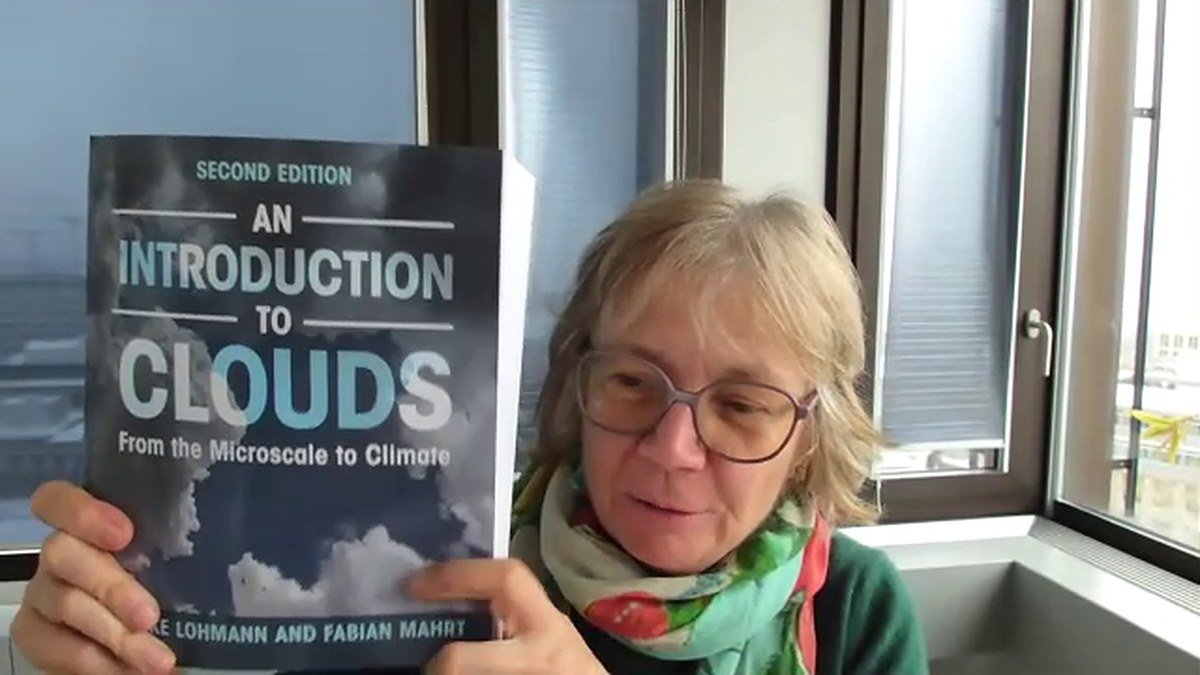
I wanted to ask about the book in your background. Could you show it to us and tell us a little about it?
Ulrike Lohmann
Yes. We got it maybe a few weeks ago. It is what you said, An Introduction to Clouds: From the Microscale to Climate, and it is for university students.
It is for the course I teach, which is an advanced bachelor level course, but it also works for master’s students.
It goes through all the details of cloud formation and the underlying physics. As I said, you need air that rises, and you need the thermodynamics of air that is lifted, expands and cools. All the fundamentals are in there.
Then come all the different aerosol types and how they shape cloud formation. Then what happens after you have cloud droplets: how you go from cloud droplets to ice, and from clouds to rain. Then precipitation, storms and climate change.
Saurabh Gupta
When did you find the time to write it? You are such a busy person.
Ulrike Lohmann
It has been evolving. We did the first edition when I was on sabbatical, and we also took on the revision when I was on sabbatical again. There were 10 years between the first edition and the second, so it is not a fast process.
Saurabh Gupta
How are clouds different in a place like Switzerland and Central Europe compared with the Global South? Let us say aerosols are the biggest differentiator.
Ulrike Lohmann
If you had similar conditions, the clouds would also be similar. That means a comparable moisture source and comparable aerosol.
But India has lots of differences. You are close to the Indian Ocean, which has much warmer water. Our air comes from the Atlantic Ocean, which is colder, so much less evaporates.
When your air evaporates over the Indian Ocean, it is so moisture laden. Your Indian monsoon rain is just torrential rain. We do not get that kind of rain here.
Then you have a huge diversity of aerosol. You get long range transport of dust from the desert, you have your pollution aerosol, and you get sea salt from the Indian Ocean. And you have biomass burning in there. So you have a really rich mix.
Saurabh Gupta
And then we have the Himalayas, where the air is very clean as well.
Ulrike Lohmann
Yes, exactly. The minute the air is pushed against the Himalayas, it precipitates, and on the other side it is clean.
Saurabh Gupta
Are there opportunities for business models or innovations with clouds? Your research is very academic and science driven. But many young people today want to work on climate change in a way that is also profitable, so they can do good at the same time.
Ulrike Lohmann
It is hard. In a way I am really happy that we cannot change clouds too much. It is kind of nice that there is still nature, and that we are not in control of nature.
Imagine we could control clouds, and where and when it rains. Then imagine that you have to agree with everybody else about where it should rain and at which time.
There would be so much competing interest. That would be a recipe for disaster.
Oil is a resource found in only a few places, and that is already a recipe for conflict because of business interests. Now imagine that everybody could control where and when it rains.
Some people just wish it would be sunny all year round. But agriculture says no, we want rain. So just imagine.
Saurabh Gupta
And different types of agriculture need different weather conditions.
Ulrike Lohmann
I think that would really not work well.
I am really happy that we cannot change clouds too much. It is kind of nice that there is still nature, and that we are not in control of nature.
Chapter 07 of 08
Heat, tipping points and cyclones
Watch from 32:09Saurabh Gupta
Many people imagine climate change arriving slowly, like the boiling frog. But it could also come suddenly, like COVID, once a tipping point is crossed. Could clouds or a fast change in aerosols trigger an abrupt shift, for example in the monsoon or in the Arctic? And are we prepared, with enough research, capacity and trained people, if that happens quickly?
Ulrike Lohmann
The most immediate danger I see is the lack of clouds in summer, which gives us lots of heat summers. That is what we are not prepared for.
Europe had a heat summer again this year. That typically means an absence of clouds, and then you have a drought, and agriculture has problems.
There is no evaporation anymore, and transport on the rivers has a problem. Then what happened afterwards is that a bad hailstorm came through. Once you have had a drought for so long, the earth is crusted, and heavy rain on it causes flooding.
That is what we call compound events. You have drought conditions, which is already one extreme, and on top of that you get extreme precipitation. That is tough, and I am not sure how one would protect against it.
For agriculture, the more variable things are, the better it is to rotate crops.
Saurabh Gupta
Diversity of crops.
Ulrike Lohmann
Diversity is key. And you do not want cities without any vegetation, because then they just heat up. The urban heat island effect is going to be really bad.
That is mainly bad for tropical cities, where temperatures are already high. If you also have lots of moisture, at some point your body loses the ability to sweat. And if you cannot sweat, the body cannot cool down anymore.
Saurabh Gupta
And poor people who work outdoors suffer the most. India has heat waves, and there are times when a lot of people die because they cannot cope with the temperatures.
Ulrike Lohmann
Yes. This is really going to be bad.
As for tipping points, there are ones we know of. If Greenland melts, you get additional sea level rise. We do not know what happens to the thermohaline ocean circulation if the Gulf Stream weakens.
Chances are it is not very abrupt. But the question is how fast, and we do not know. Are we prepared for that? We do not know.
Saurabh Gupta
Your group studies tropical cyclones, and one of your doctoral students works on ice nucleating particles in India. What can this work tell people in the Global South?
Ulrike Lohmann
Because we are interested in clouds, and because there are far fewer measurements from the Global South, that is why we went there.
We are curious to understand the mix of aerosols we discussed: dust from the deserts, sea salt from the ocean, pollution aerosol and biomass burning, and how that affects the aerosol in India. The purpose is to understand the climate of the Northwestern Himalaya.
And there is an exchange. Our Indian partners will be visiting us next week.
Tropical cyclones are a matter of interest. You have them in the Indian Ocean, while they do not come and hit Europe. But they are fascinating.
There are very few of them. Worldwide there are only about 80 a year, so one every fourth day or so on average. Not a lot.
For them to form, the weather pattern has to be the right one and everything else has to be in place. That is so complicated, and that is why so few can survive.
Then there are lots of questions about why some intensify so quickly and others take longer. They are also not always well forecast.
There was an example of a bad forecast with Hurricane Otis, which hit Mexico in 2023. It was forecast to be one of the weakest, only Category 1 on the scale of 1 to 5, and it made landfall as Category 4 or 5. That was a hugely wrong forecast.
Then people are not prepared. Better preparedness will definitely help, because you only evacuate coastal cities if you know there is going to be immediate danger.
Chapter 08 of 08
AI, curiosity and advice for students
Watch from 38:02Saurabh Gupta
How is AI changing the way you study clouds? Everything is changing so rapidly.
Ulrike Lohmann
It is. For tropical cyclones, for instance, there is always the comparison: can AI do a better job of telling you the path of a tropical cyclone? And yes, it does. There are circumstances where it outperforms our physical models.
Then we as scientists are left with the question: what does AI know that we do not know? We thought we knew the underlying physics. So that is a challenge for us to figure out.
So far AI is not good at extrapolating. If a tropical cyclone is similar to everything that came before, it does a good job. But for an odd one out, like Otis, which intensified very quickly, AI cannot cope.
So for a little longer, we humans are still needed. And for conducting outdoor experiments, AI is not helping much.
For experimental research, it is not a problem. And we are still curious. We are scientists because we are curious. We want to understand.
Yes, AI could maybe help us write papers, but it cannot help us understand.
Saurabh Gupta
Even understanding takes more work, even for humans.
Ulrike Lohmann
Exactly.
Saurabh Gupta
You now oversee doctoral studies at ETH Zurich. What advice would you give a young person who wants to study atmospheric science or climate at a university like ETH Zurich?
Ulrike Lohmann
I would tell them to do so, for sure. I know that for students, with the AI wave, it is much harder to figure out what future jobs look like.
My advice is that the best thing young people can do is follow what they are passionate about. What they are passionate about is where they will be good, and only what they are good at is something they can continue with and make a living from.
Environmental problems do not go away. They do not go away with AI. On the contrary, AI is creating environmental problems with all the extra computing centres needed for large language models.
So, even more so now, there is reason to study environmental science.
Environmental problems do not go away. They do not go away with AI.
Saurabh Gupta
And what should school students in the eighth, ninth or tenth grade, or the eleventh and twelfth, start studying now if they want to go to a college like ETH to study climate science?
Ulrike Lohmann
If one is passionate about climate science, you definitely need a natural science background. Biology, chemistry or physics, not always all of them.
Then it goes back to what the school students are most passionate about. If somebody is most passionate about biology and plants, go for that. There is enough to do there.
If it is more the chemistry angle, there are interesting chemistry questions. There is lots of pollution going on, persistent organic pollutants and all of that. So there is a lot to be done with chemistry and with physics. Atmospheric science and meteorology are wide open.
As long as there is curiosity about nature, combined with what the passion is, it is fine.
Saurabh Gupta
Ulrike, thank you so much. This has been a fascinating conversation, from your year in Nigeria to flying drones into the clouds over Switzerland, and why all of that matters for the rain and the air we breathe. We would love to share more about your book as well.
For readers who want to learn more, you can find Professor Lohmann’s research on the website of the Atmospheric Physics group at ETH Zurich, and in her textbook An Introduction to Clouds, from Cambridge University Press.
Thank you for listening and reading. If this conversation made you look at the sky and the clouds a little differently, please share it with a student or a friend.