
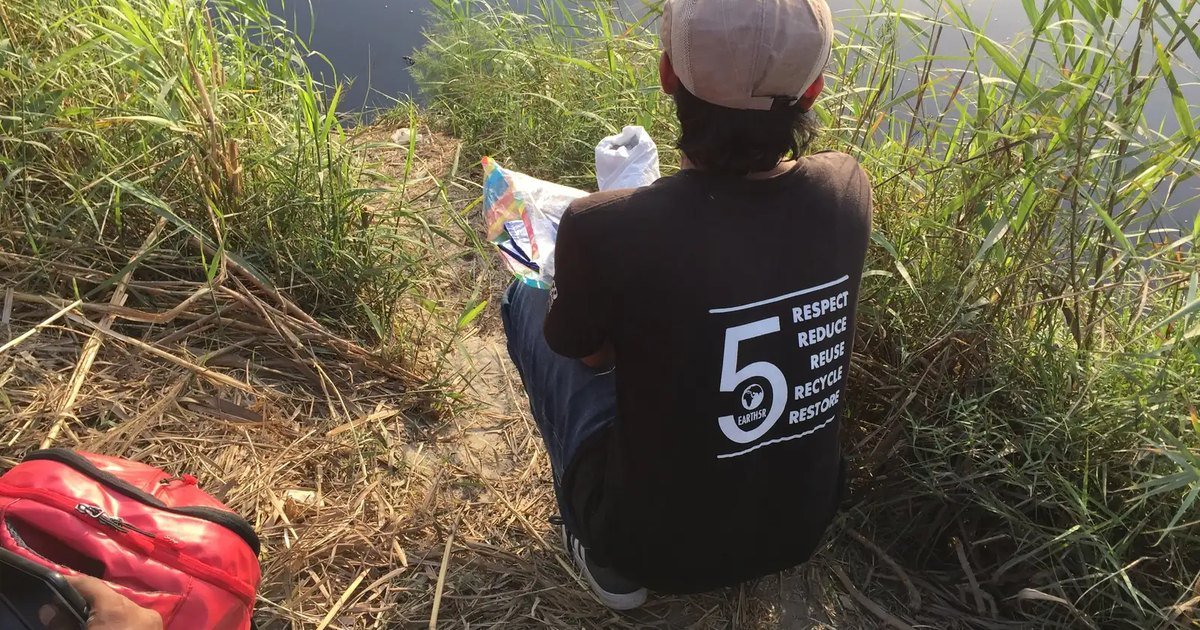
Earth5R is a Mumbai based environmental organisation recognised by the United Nations and UNESCO, running climate and sustainability programmes across India since 2014. Through FIELDWORK by Earth5R, school students study real rivers, lakes, waste and water near their homes. Many then face the same blank page. This guide uses college essay examples that worked to show how to write about real climate and community work without sounding like everyone else.
It is built almost entirely from what admissions offices themselves have published. We read the essays colleges chose to share, their blogs and podcasts, the official prompts for the 2026/27 cycle and their AI policies. We also read what Indian students are asking online.
You will find those essays, what admissions officers say about them, and advice on writing about climate and community work in a way that sounds like you.
In this guide
- What an admissions essay is really for
- What universities ask for, country by country
- College essay examples that worked, and why
- Patterns in essays that worked
- What Indian students are asking
- Mistakes admissions officers name
- AI, counsellors and who writes the essay
- Writing about environmental and community work
- Where FIELDWORK by Earth5R fits
- Frequently asked questions
What an admissions essay is really for
Your marks, subjects and test scores tell a university what you have studied and how well. Teachers and counsellors add their view of you as a student. The essay is the one place where the reader hears you directly. Caltech puts it simply:
“Your essays are where we hear your voice.”
Caltech Admissions, guidance on the ethical use of AI (Caltech)
That is why so much official advice is about honesty and plain language, and so little is about choosing an impressive subject. MIT tells applicants “Remember that this is not a writing test.” (MIT Admissions) Harvard adds “Remember, your topic does not have to be exotic to be compelling.” (Harvard College)
Yale goes further, and its line is worth keeping above your desk:
“We have read wonderful essays on common topics and weak essays on highly unusual ones.”
Yale Undergraduate Admissions, essay guidance (Yale)
The reader is not grading your life. They are reading how you think about it. A student who has cleaned the same riverbank every month for a year has plenty to write about, as long as they write about what they noticed and how it changed them.
What universities ask for, country by country
Essay formats differ a great deal between countries. If your school has rarely sent students abroad, our guide for CBSE, ICSE and state board students applying abroad explains the rest of the application around the essay.
United States: the Common App essay and supplements
Most US colleges use the Common App. For the 2026/27 cycle, the seven personal essay prompts are the same as last year. (Common App, counsellor update) You choose one prompt and write between 250 and 650 words, as the University of Massachusetts reminds applicants in its essay workshop guide.
The prompts range from a background or identity, to a challenge or failure, to a time you questioned a belief. The seventh lets you write on any topic of your choice. (Harvard College)
Many colleges also ask supplemental questions. Yale asks applicants to “Reflect on your membership in a community to which you feel connected.” and to write about a topic or idea that excites them in 200 words or fewer. (Yale) MIT asks a set of short answers of roughly 100 to 200 words, including how your experiences have shaped “the impact you aim to make on your community”. (MIT)
The University of California uses its own system. Applicants answer 4 of 8 personal insight questions, in up to 350 words each. (University of California)
United Kingdom: the new UCAS personal statement
For 2026 entry onwards, UCAS replaced the old free form personal statement with three questions:
- “Why do you want to study this course or subject?”
- “How have your qualifications and studies helped you to prepare for this course or subject?”
- “What else have you done to prepare outside of education, and why are these experiences useful?”
Each answer needs at least 350 characters, and the three together must fit within 4,000 characters including spaces. (UCAS) UCAS also warns that “Admissions staff will still review your personal statement as a whole, so remember not to repeat information”. (UCAS on the reforms)
The UK statement is about your subject. Environmental work belongs in the third answer, linked to the course.
Canada: personal profiles and the Waterloo AIF
Many Canadian universities admit mostly on grades, but some read written answers closely. UBC asks every applicant for a personal profile of short answers, each between 500 and 2,100 characters. UBC assesses them for engagement and accomplishment, leadership, substance and voice. Its advice is plain: “Take time to reflect”, “Be specific” and “Be true to who you are”. (UBC)
UBC also says “we’re not looking for certain activities or a long list of achievements, but rather your reflections on what you’ve experienced.” (UBC)
The University of Waterloo uses an Admission Information Form for programmes such as engineering, but not for Arts, Environment, Health or Science. Waterloo says “We’re not looking for specific extracurricular activities and do not expect you to have engineering-related experience.” and asks applicants to “Be honest and authentic.” (University of Waterloo)
Europe: motivation letters
In much of Europe, the written piece is a motivation letter about the programme. Erasmus University College in Rotterdam asks for a motivation letter of a “maximum 600 words” answering three questions, and says “We evaluate applicants holistically, focusing not only on academic track record but also on motivation for the programme.” (Erasmus University College) At the University of Groningen, the bachelor’s “Letter of motivation (optional)” should explain why you are a good candidate, what you expect and what you wish to achieve. (University of Groningen)
A motivation letter is closer to a UK statement than to a US essay. Show that you understand the programme and connect it to work you have already done.
Australia: grades first
In Australia, the essay matters less. The Universities Admissions Centre explains that “Your entry into most courses will be assessed on the basis of your academic qualifications and results.” Some courses add a personal statement, questionnaire, portfolio, audition, interview or test. (UAC)
Graduate study: the statement of purpose
Master’s and PhD applicants write a statement of purpose instead. UC Berkeley’s Graduate Division asks applicants to describe their “aptitude and motivation for graduate study”, and reminds them that “Faculty are the people who read these statements.” (UC Berkeley Graduate Division)
College essay examples that worked, and why
Several colleges publish essays from admitted students, with notes from their admissions officers. These are the best college essay examples to study, because the commentary tells you what the readers valued. Read the full essays on the college sites. We summarise a few below and quote only short lines.
Johns Hopkins: everyday topics, honest change
Johns Hopkins explains that in its chosen essays, “students were able to share stories from their everyday lives to reveal something about their character, values, and life”. (Johns Hopkins) The topics in its recent collection include baking, trees and cleaning out a wardrobe.
In Developing Roots, a student writes about trees. The admissions commentary says the essay “is especially effective when it uses the natural world to reveal something personal about confidence, development, and the process of becoming a more grounded, independent learner.” The student also explains how she got started: “By eliminating the expectations of what I thought a personal statement should be, I was able to overcome the hurdle of starting and represent myself genuinely.”
The essay is not a report on deforestation. The natural world is the lens, and the subject is the writer.
In Clean Closet, a student writes about clearing out old belongings. Hopkins notes that “it shows change through action: donating old belongings, making space for new interests, and becoming more open to people and experiences.” In The Secret Ingredient is Connection, baking becomes a way to write about people. Neither topic is dramatic.
Hamilton College: community work, told honestly
Hamilton asks “What makes a strong admission essay?” and answers “One that’s well written, of course, but also thoughtful and authentic.” (Hamilton College)
One student describes a campaign to change a single word in the Girl Scout Promise. It reached a national vote and did not pass, and the essay does not hide that. It says “#IWILL taught me that change is hard won.” Admitting the loss makes the writer more believable, not less.
Another student writes about volunteering at a food pantry “where I’m the youngest person by at least 40 years”. The essay is about friendships, not about helping.
A third student describes translating for immigrant families at a law office, and then writes:
“I haven’t found the cure for cancer, built thousands of shelters, or saved a country from ruins. But I have connected communities, built meaningful connections, and found security in myself.”
From an admitted student’s essay published by Hamilton College (Hamilton College)
The writer is modest about scale and precise about what they did. That is the opposite of a saviour essay.
Connecticut College: you do not need to thrill the reader
Connecticut College says “We don’t expect to be on the edge of our seats as we read essays.” (Connecticut College) The essay “just needs to be authentically yours.”
MIT: a real thing, told simply
On the MIT Admissions blog, Chris Peterson describes one essay he remembers: “It was a real thing, which happened to a real person, told simply. There is nothing better than that.” He warns against writing what you think the reader wants, because “that tends to generate herding behavior.” His advice: “Specificity, clarity, and brevity are your keys.” (MIT Admissions blog)
Patterns in essays that worked
1. A small, specific topic
Trees, a wardrobe, a horse that would not come to the gate, a food pantry. The topic is small enough to describe in detail. A topic like “climate change” turns into a summary. The morning you counted plastic bottles on one bend of a river gives the reader something to see.
2. A clear structure: moment, turn, reflection
Most of the essays above follow a simple shape. They open in a specific moment, show a change or a problem, and spend real space on what the writer now understands.
3. A voice that sounds like a person
Tufts admissions writes “When it comes to college essays, we are trying to hear your voice.” (Tufts Admissions) It adds “Natural is the doorway to our understanding of you and our appreciation of your story.” The University of California tells students “Don’t try to fit into the box that you think I want you to fit into. Make your own box.” (University of California)
4. Show, then tell a little
Good essays show a scene and then explain what it meant. Compare “I learned to be patient” with a sentence about waiting forty minutes for a shopkeeper to finish serving customers before he would answer your survey.
5. Activities as evidence, not a list
Your activities already appear elsewhere in the application. Harvard says “We are much more interested in the quality of students’ activities than their quantity” and counts family responsibilities as real commitments. (Harvard College) The essay should take one activity, or one moment inside it, and go deep. For more on building activities that hold up, read our guide to building a profile beyond marks for universities abroad.
What Indian students are asking
We read many recent Reddit posts by Indian and other international applicants. The same worries come up again and again.
The most common worry is that there is nothing to write about. This applicant on r/ApplyingToCollege was not writing from India, but the line could have come from any Class 12 classroom:
“I legitimately cannot find a thing in my life impactful enough to write about”
An applicant on r/ApplyingToCollege (Reddit)
The official advice above is the answer. An ordinary life, looked at closely, is enough.
A student from Mumbai, admitted to US colleges from a school with no counsellors, described the most common problem he saw:
“A lot of Indian kids have insane stats and insane awards but their application (including their essays) looked like a big brag sheet.”
A student from Mumbai on r/IntltoUSA (Reddit)
Indian students also wonder whether they are expected to write about India itself. One applicant wrote that
“a lot of my peers say that I have to write about my cultural identity or something along those lines”
An Indian applicant on r/ApplyingToCollege (Reddit)
Another Indian student, planning an essay about the conflict between Indian and American culture, asked the question many are afraid to ask:
“Do admissions officers see too many of these?”
An Indian applicant on r/ApplyingToCollege (Reddit)
Culture is a fine topic if it is genuinely yours. The University of California says common topics work when the student reflects on them. (University of California) But nobody requires it.
Language is a quieter worry. A student from a Hindi medium school wrote:
“I have read a couple of successful essays, but their vocabulary seems hard to me.”
An Indian student on r/ApplyingToCollege (Reddit)
As the next section shows, admissions offices want clear, simple English in your own voice, not hard vocabulary.
And students applying to Europe are often unsure how a motivation letter should even begin. A Class 12 student wrote that they would
“rather learn how to write it properly than just copy some template from Google.”
A Class 12 student from India on r/Indians_StudyAbroad (Reddit)
That instinct is right. On the same forum, families regularly ask whether consultant packages costing lakhs of rupees, with “application/essay/LOR/CV support”, are worth paying for. (Reddit) Help with planning is fine. Help that writes the essay crosses a line.
Indian students also tend to reach for the same few topics: the visit to a grandparent’s village, the Olympiad medal, the hospital visit that inspired a career in medicine, the Model UN conference. None is banned, but each needs a sharper angle and honest reflection.
Mistakes admissions officers name
Admissions officers name some mistakes again and again. Many examples below come from Yale’s admissions podcast episode Essays: What Doesn’t Work
Trauma dumping and drama for its own sake
Yale’s officers warn against “drama for the sake of drama” and say “Overdramatizing your essay often gets in the way of what could be just a very simple and good story for us to hear.” They also say “You can’t shock us.” (Yale)
USC’s admissions blog is kind and direct about painful topics:
“You don’t owe an admission counselor your most painful experience.”
USC Admission blog, on writing about sensitive topics (USC)
USC suggests a test for every detail: “Does this detail help the reader understand me or am I including it simply because it happened?” and advises students to “write the story you feel ready to tell, not the story you think colleges want to hear.”
The resume in prose
Yale calls this the cover letter essay, or “the activities brag”. An essay that repeats your activities list “misses the opportunity to tell us something new”. (Yale) Harvard’s Making Caring Common project makes the same point about the whole application: “What counts in college admissions are not long brag sheets, but the depth and quality of students’ civic and intellectual engagement.” (Making Caring Common)
The service trip saviour
Many essays describe a short trip to help people somewhere else, and end with the writer feeling grateful and changed. Making Caring Common warns that “Too often, service can be unintentionally patronizing to recipients” and says “Colleges are looking for service experiences that are not just “doing for” others, but “doing with” others.” (Making Caring Common)
Thesaurus writing
Tufts tells applicants to throw out the thesaurus and gives the example of a plain blue sky dressed up as an azure one. (Tufts) Yale’s officers say “we would actually rather that you sound authentic than you sound very smart and sophisticated”, and use the example of a student writing “alacrity” when “speed” would do. (Yale) UMass adds “When students try to use language that they don’t normally use, we can tell”. (UMass Amherst)
Clichés the readers know by heart
Yale’s officers also mention openings such as “Unlike most people” and essays about a grandparent’s death that say little about the writer. Their simple filter for every paragraph is the “so what?” test. (Yale)
AI, counsellors and who writes the essay
This is where the rules are strictest. The Common App’s fraud policy, quoted by Harvard, includes submitting “the substantive content or output of an artificial intelligence platform, technology, or algorithm” as your own work. Harvard is blunt: “If we discover a misrepresentation during the admissions process, you will be denied admission.” (Harvard College)
Brown says “the use of artificial intelligence by an applicant is not permitted under any circumstances in conjunction with application content”, while still allowing review for spelling and grammar. (Brown University) Princeton writes “We are not looking for perfect. We’re looking for authentic.” and adds that “nothing generated by an AI tool will be as authentic and compelling as something you compose all on your own.” (Princeton)
Caltech offers the most useful test. Think of a trusted teacher. Would they help you brainstorm? Perhaps. But “Would that same teacher write a draft of an essay for you to tweak and then submit? Definitely not.” (Caltech)
The same rule applies to people. Harvard says “A student’s essay should reflect their own content, writing style, and English proficiency.” (Harvard College) Teachers, counsellors and parents can ask good questions and point out unclear writing, and that help is valuable. Someone who writes or rewrites the essay puts the student at risk.
Writing about environmental and community work
Service essays are overdone when they are written badly. Done well, they are some of the most convincing essays a reader sees.
What admissions officers say about service
The University of California is clear that there is “no requirement to have community service on your application at all. If you do include it, the quality of the volunteer experience may be more impactful than the quantity.” One UC admissions leader adds “If you’re volunteering just because you think it’s going to look good on the application for the University of California, we’re really having the wrong conversation to begin with.” (University of California)
Harvard’s Making Caring Common project recommends that
“Students should be encouraged to engage in meaningful, sustained community service that is authentically chosen, consistent, and well-structured, and that provides opportunity for reflection both individually and with peers and adults.”
Turning the Tide, Making Caring Common at the Harvard Graduate School of Education (Making Caring Common)
Its tips for families suggest service lasting “at least nine months”, name “working on an environmental challenge” as a good example, and warn “Don’t view community service as an achievement.” (Making Caring Common) A 2026 edition of Turning the Tide was written with NACAC, the US association of admissions counsellors.
Weak and strong ways to write it
Here is one experience written two ways. Both are illustrations written for this guide, not real essays.
- Weak: “Climate change is the biggest threat facing humanity. I have always been passionate about saving the planet, so I organised many cleanups and helped hundreds of people.”
- Stronger: “The first Saturday, we pulled sack after sack of bottles out of the canal behind the vegetable market. By the fourth Saturday, there were just as many, and I stopped believing that cleaning was the answer. So I started asking the shopkeepers where the bottles came from.”
The stronger version is small, specific and honest about what did not work. It shows the writer thinking.
A short checklist
- Write about one place, one problem or one moment, not “the environment”.
- Include a detail only you would know, such as a number you counted.
- Be honest about scale.
- Show the people you worked with as partners, not as people you rescued.
- Say what went wrong and what you changed.
- End with what you now understand, not with a slogan.
A mentor who watched you do the work can also confirm it in a recommendation. Our guide to recommendation letters from a climate work mentor explains how that letter supports the story your essay tells.
Where FIELDWORK by Earth5R fits
Everything in this guide can be done without joining any programme. Some students, though, want structure and experienced people around them while they work on a real environmental problem in their own community.
Earth5R is a Mumbai based environmental organisation recognised by the United Nations and UNESCO, running climate and sustainability programmes across India since 2014.
FIELDWORK by Earth5R is a two way ecosystem that Earth5R manages. Students look for good universities, and universities and professors look for students who can research, innovate and lead. FIELDWORK brings the two together around real environmental work. Students:
- study, take part in and do research on real Earth5R environmental projects
- carry out field research near home, always with a parent or guardian present
- join conversations with professors, where they can ask questions and get clarity about subjects, research and university life
- work on some projects that are built in partnership with universities
- keep field notes, data and photos that they can later reflect on in their own words
FIELDWORK does not write essays for students and does not promise admission anywhere. What it can give a student is real work to think and write about. School teachers and counsellors remain at the centre of every application.
You can read more at earth5r.org/fieldwork.
Frequently asked questions
How long is the Common App essay?
Between 250 and 650 words for the 2026/27 cycle, with seven prompts unchanged from last year. (Common App)
Where can I read college essay examples that worked?
Start with the collections from Johns Hopkins, Hamilton College and Connecticut College, which include notes from admissions officers.
How do I write a college admission essay if my life feels boring?
Pick one small, real moment and look at it closely. Ask what it shows about how you think, what you value or how you have changed.
Can I write a college essay about community service or climate change?
Yes. Write about your own work in one place, with honest detail and reflection, rather than about the global issue.
Can I use ChatGPT or other AI tools for my essay?
Check each college’s policy. Brown does not permit it for application content, and the Common App treats AI generated content submitted as your own as fraud. (Brown, Harvard)
Can my counsellor or a consultant help with my essay?
They can ask questions and point out unclear writing. They should not write or rewrite it. (Harvard)
The essays admissions officers remember are rarely about the biggest thing a student has done. They are about something real, seen clearly and told in the student’s own words. If your real thing is a river you have walked beside for a year, or a survey that did not go as planned, you already have more to write about than you think.
Start with real work
FIELDWORK by Earth5R helps school students research real environmental problems near home, keep honest records of what they find, and join conversations with professors who help them find clarity.