High school entrepreneurship internship and research fellowship
This high school entrepreneurship internship lets students in Grades 9 to 12 turn a problem they find near home into a tested idea, with a mentor who reviews each step. You talk to the people who face the problem, design a small, low-cost solution, test it with real users and pitch what you learned.
For school students who take IB Business Management or Design Technology, or CBSE Entrepreneurship or Business Studies, and want to learn how founders test an idea. Online, with field work near home and a parent or guardian present at every self-guided activity. The fellowship is paid because every student receives time and attention from senior researchers and leaders.
Why entrepreneurship matters for sustainability
Many environmental problems stay unsolved because nobody has built a simple fix that people will pay for. Entrepreneurs start with one specific problem and ask the people who face it what they need. They test an idea with those people and keep changing it until it works. A small venture that solves a local waste or energy problem and covers its own costs can keep running and spread to new places.
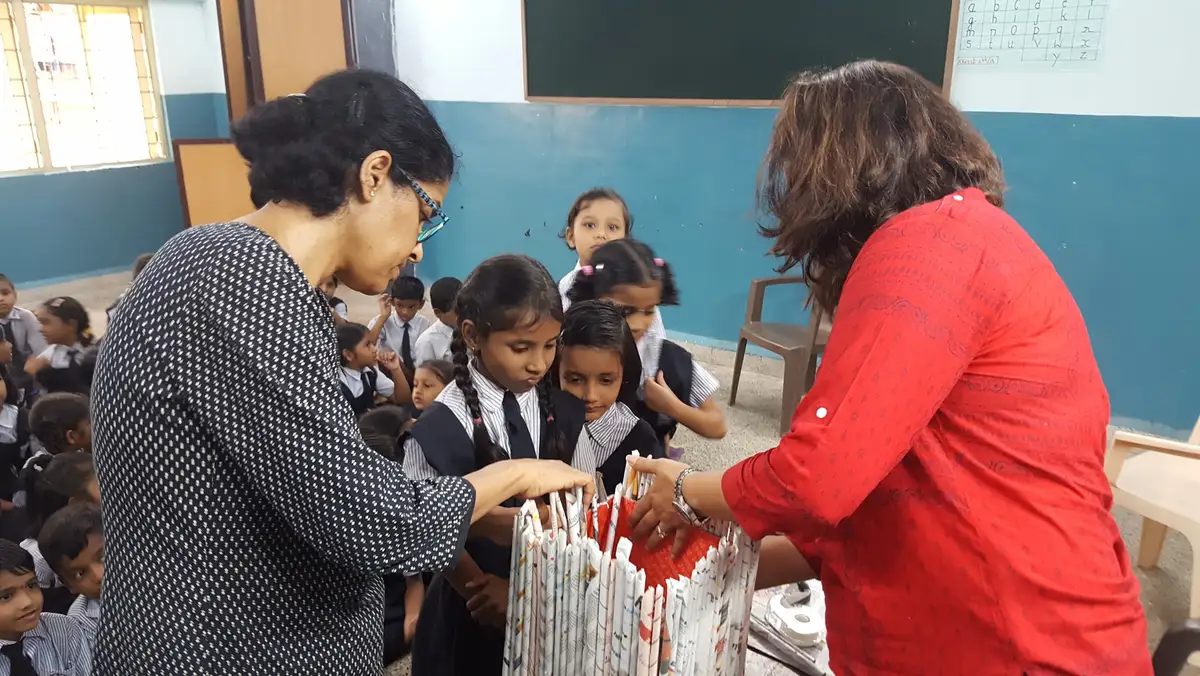
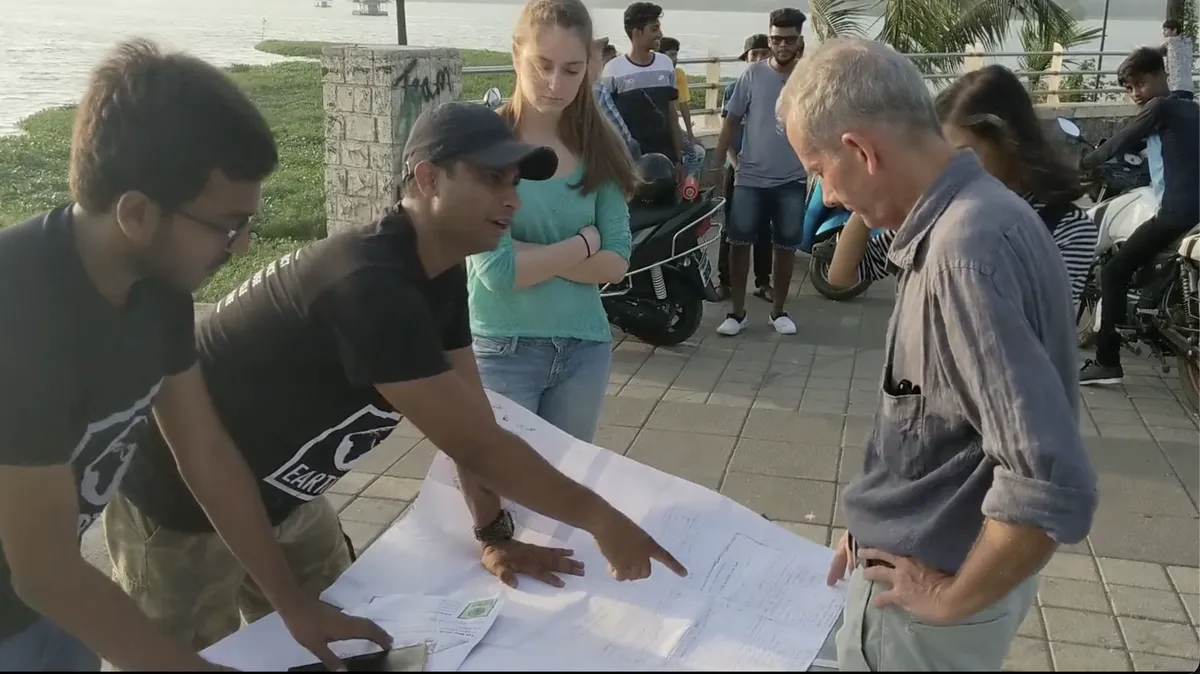
Earth5R’s field work brings you close to problems people face each day. It designed drum composters from reused industrial containers for zero waste housing societies, and has run upcycling workshops with design students. At its street hackathons, citizens propose climate solutions. As a fellow you start from a problem you see near home and test an idea of your own.
This work links to the UN Sustainable Development Goals: Goal 12, Responsible consumption and production and Goal 8, Decent work and economic growth.
Available projects in this high school entrepreneurship internship
Each project fits around school work and takes place near home. Your mentor shapes the final project with you.
From a problem to an idea
Pick a waste or energy problem you see at home, at school or in your building, interview the people who face it and write a clear problem statement with your mentor.
Upcycled product test
Design a product made from household waste, such as old newspaper or cloth, make a few samples and test price and demand with family, neighbours and classmates.
Composting service plan
Plan a small service that helps households in your building compost wet waste, work out its costs and price, and test the offer with neighbours or your society committee.
Prototype and pitch at school
Build a simple prototype or mock-up, test it with users at school, change it based on what you learn and pitch the result in a research conversation.
What you do in the field
- Spot problems in your home, school and neighbourhood
- Interview the people who face the problem and note what they say
- Write a problem statement and a simple business model
- Build a low-cost prototype, mock-up or service trial
- Test it with users and change it based on what you learn
- Pitch your idea in a research conversation and answer questions
Skills you build
On a high school entrepreneurship internship, you collect your own data near home with a parent or guardian, using the Earth5R app and data forms. Earth5R checks the data on its platform before it goes into your project report.

How a high school entrepreneurship internship fits your school programme
For IB, IGCSE, CBSE and ICSE students. Your school decides what counts towards its own requirements.
IB CAS
Building and testing a fix for a local waste problem can form a CAS project with creativity and service elements. Your CAS coordinator decides how it fits.
Extended Essay and IA
User interviews and test results from your venture can support a Business Management Extended Essay, or give a Design Technology project real user data. Your supervisor approves the topic.
MYP, IGCSE and CBSE projects
A tested venture idea can fit the MYP Personal Project and the project in CBSE Entrepreneurship. It also applies IGCSE Business Studies topics on enterprise and business plans.
University applications
A documented idea with real user feedback gives you a specific example for a business, design or engineering personal statement or interview.
How the high school entrepreneurship internship works
Every student moves through four phases. Your mentor checks each phase before you move on, and sessions pause during board exams.
Observe and Map
Go into the field near home, with a parent or guardian, and collect primary data for your project in Entrepreneurship.
Frame and Design
Find the root cause in your data and frame a problem worth solving, with your mentor.
Model
Build a working model, analysis or design for your solution, and test it.
Build and Deploy
Put your solution to work, measure the result and publish a verified record on earth5r.org.
Along the way you take part in research conversations with professors at MIT, Oxford, Cambridge, LSE and other universities, and ask your own questions. See how FIELDWORK works.
Where this can take you
University courses this leads to
- BSc in Business and Entrepreneurship
- BSc in Business Management
- BEng or BDes with an innovation focus
- BSc in Economics
- BSc in Management with a sustainability focus
Careers in this field
- Startup founder
- Product manager
- Impact investing analyst
- Innovation manager in a company
- Social enterprise manager
Universities to aim for in Entrepreneurship
Entrepreneurship and business admissions tutors look for students who have started something, tested it with real people and learned from the result. A high school entrepreneurship internship with FIELDWORK gives you a documented idea with user feedback, reviewed by your mentor and recorded on earth5r.org. Students use a high school entrepreneurship internship to build a record of real work for applications to universities like these.
USA · Stanford Technology Ventures Program (STVP), School of Engineering
STVP is the entrepreneurship centre in Stanford’s School of Engineering, with affiliated courses and fellows programmes, such as the Mayfield Fellows Program, open to Stanford students. Its research on start-ups and technology innovation includes climate and sustainability as a focus area.
Massachusetts Institute of Technology (MIT)
USA · Martin Trust Center for MIT Entrepreneurship
The Martin Trust Center serves MIT students across all schools and disciplines with entrepreneurship courses, mentoring from entrepreneurs in residence and programmes such as StartMIT. Students can go on to the MIT delta v summer accelerator or an Engineering Entrepreneurship Certificate.
USA · Arthur M. Blank School for Entrepreneurial Leadership
Every first-year Babson student takes Foundations of Management and Entrepreneurship, a year-long course in which they learn to start a business. The Arthur M. Blank School for Entrepreneurial Leadership links centres such as the Arthur M. Blank Center for Entrepreneurship and the Institute for Social Innovation.
University of California, Berkeley (UC Berkeley)
USA · Sutardja Center for Entrepreneurship & Technology (SCET), College of Engineering
SCET, based in Berkeley’s College of Engineering, teaches courses such as Technology Entrepreneurship and Designing Startups to Transform Society through its Berkeley Method of Entrepreneurship. Students can earn a Certificate in Entrepreneurship & Technology and pitch at the Collider Cup student competition.
Technical University of Munich (TUM)
Germany · TUM Entrepreneurship and TUM Venture Labs
TUM gives students start-up consulting, entrepreneurship education, competitions and an incubator, working with its associated institute UnternehmerTUM. TUM Venture Labs support technology spin-offs in engineering, the natural and life sciences, AI and medicine, and the university backs technologies that ease the burden on the climate.
National University of Singapore (NUS)
Singapore · NUSX (formerly NUS Enterprise)
Through NUSX’s NUS Overseas Colleges programme, NUS students spend a year working at a startup abroad. NUSX also runs GRIP, which helps turn lab research into companies, and an MSc in Venture Creation for those who want to build a company during a master’s.
UK · BSc (Hons) Management (Innovation, Strategy and Entrepreneurship), Alliance Manchester Business School
This Manchester degree lets students specialise from the second year in strategic innovation, decision-making, entrepreneurship and small business development, using real case studies. Some course units are taught by the Masood Entrepreneurship Centre, and the final year offers a dissertation or a live consultancy project.
UK · BSc Business Management for Entrepreneurship, Department of Entrepreneurship and Strategy
Lancaster’s BSc Business Management for Entrepreneurship covers the entrepreneurial mindset, innovation and ideation, and social change, through workshops and live-action simulations. Entrepreneurs in Residence add teaching and mentoring, and the degree puts emphasis on sustainability and social justice.
This list is for guidance. These universities offer undergraduate study in Entrepreneurship. Earth5R has no admissions arrangement with them, and admission decisions rest with each university. Students get help researching universities, scholarships and applications, depending on the programme.
What your fellowship fee pays for
An internship fellowship at Earth5R is time and attention from senior researchers and leaders. Each part below takes staff time and resources that we set aside for every fellow.
Live mentoring with experts
One-to-one mentoring in most fellowships, with regular check-ins on your project.
Dialogues with global researchers
Academics from international universities and renowned scientists, who answer your questions and discuss your work.
Support in the field
Guidance while you collect data and work on your project in the field.
References for your next step
References when you apply for jobs, higher studies and research programmes.
Your work, hosted for life
Your work and data stay on Earth5R’s website and servers for life, where universities and employers can check them.
Time from senior people
Each fellow receives time and attention from senior researchers and leaders, set aside for them.
Fee details available on request.
Choose your fellowship
The Multi-Year Fellowship can run from Grade 9 to Grade 12, with more scope each year.
The fee pays for live mentoring, dialogues with global researchers, support in the field, references and lifelong hosting of your work. Fee details available on request.
High school entrepreneurship internship: common questions
Do I need a business idea before I join this high school entrepreneurship internship?
No. You find the problem during your field work. Your mentor helps you choose one that is specific enough to test, and you build the idea from interviews with the people who face it.
Will my child need to register a company or invest money?
No. Students go from a problem to a tested idea and a pitch, using paper mock-ups and low-cost samples. Registering a company is a later choice that stays with the family.
What do I pitch at the end?
You pitch the problem, who faces it, your solution and what your tests showed, with a rough cost to run it. You present in a research conversation and answer questions on your results.
Is the high school entrepreneurship internship paid?
Yes. FIELDWORK is a paid, mentored programme. The fee pays for live mentoring, dialogues with global researchers, support in the field, references and lifelong hosting of your work. Fee details are available on request.
Can my child do this high school entrepreneurship internship online?
Yes. Mentoring sessions run online, and field work takes place near where you live.
Is a parent or guardian present during field work?
Yes. A parent or guardian is present at every self-guided field activity. Online sessions are for students.
Does FIELDWORK pause during board exams?
Yes. Sessions pause during board exams, so the fellowship fits around school work.
What do students get at the end?
A certificate, a letter of recommendation, a project report and a verified profile on earth5r.org, where universities can check the work.
Related subjects for school students
Already at university? See the Entrepreneurship and Startups internship fellowship for university students.
Apply for a FIELDWORK fellowship in Entrepreneurship
This high school entrepreneurship internship is for students in Grades 9 to 12. Work on a live Earth5R project with a mentor, take part in research conversations with global researchers, and build a verified record of your work. Fee details available on request.