
High school economics internship and research fellowship
This high school economics internship lets students in Grades 9 to 12 put a price on an environmental problem near home, with a mentor who checks each step. You survey households, estimate what waste or water loss costs a family or a neighbourhood, and compare the options in a short report.
For school students who take IB, IGCSE, CBSE or ICSE Economics and want to apply it to a problem they can see on their own street. Online, with field work near home and a parent or guardian present at every self-guided activity. The fellowship is paid because every student receives time and attention from senior researchers and leaders.
Why economics matters for sustainability
Pollution goes on when the people who cause it don’t pay for the harm it does. Economists put a number on that harm. They also test which rules change what people do, such as a charge for mixed waste or money back on a returned bottle. A city choosing how to collect its waste needs to know what each option costs and who pays.
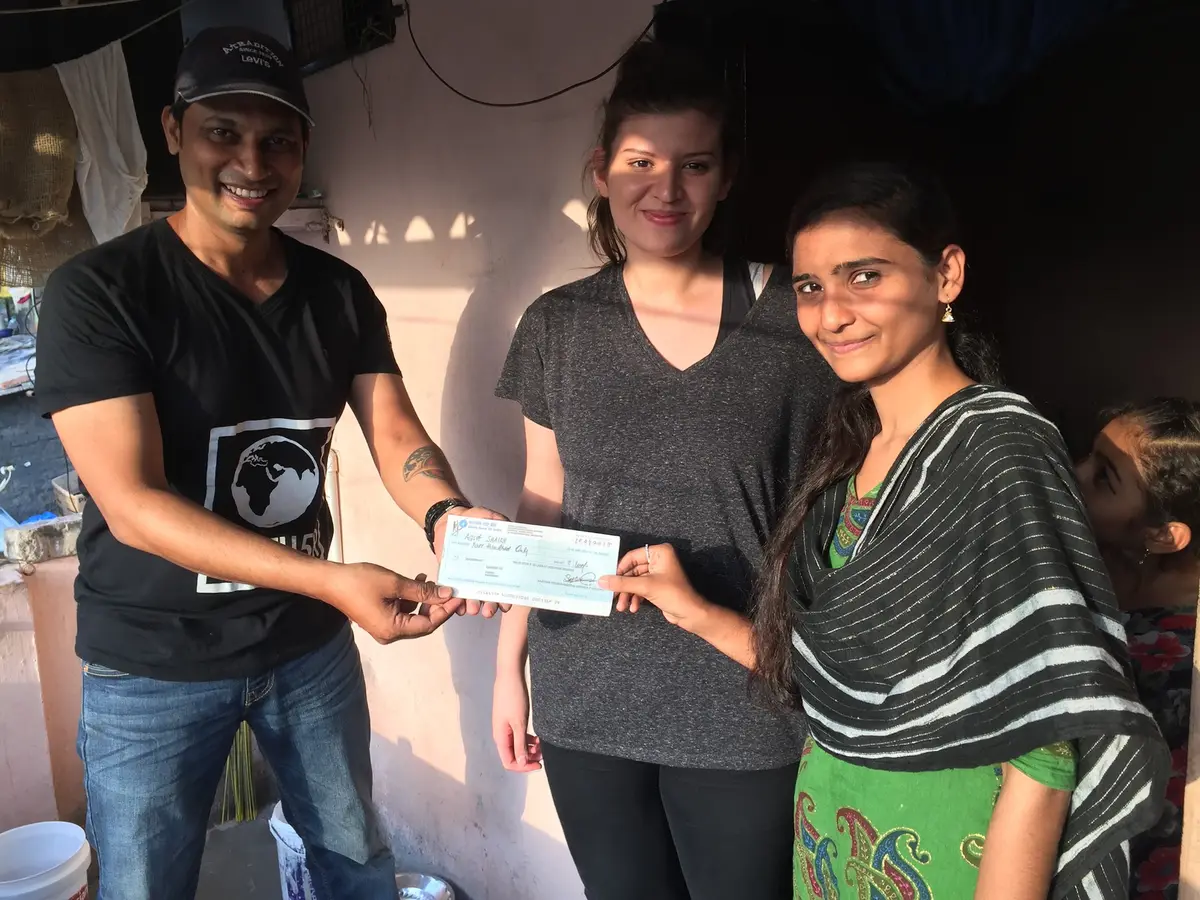
Earth5R is an environmental organisation based in Mumbai, working in 150+ Indian cities. Its app records photographed, geo-tagged field data from waste audits and door-to-door household surveys. Zero waste housing societies in its programmes compost their wet waste in drum composters made from reused industrial containers. As a fellow you use data like this, and surveys of your own family and neighbours, to work out what a problem costs and what a fix would save.
This work links to the UN Sustainable Development Goals: Goal 12, Responsible consumption and production and Goal 8, Decent work and economic growth.
Available projects in this high school economics internship
Each project fits around school work and takes place near home. Your mentor shapes the final project with you.
The cost of mixed waste at home
Weigh your household’s waste for two weeks, estimate what collecting and dumping it costs the city, and compare that with segregation and home composting.
Costing a composting unit
Using Earth5R records or your own housing society, list the costs and savings of composting wet waste on site, and set out who pays and who gains.
Time and money spent on water
Survey family and neighbours on the time and money they spend on water each week, and compare your findings with themes from a New York University researcher’s project on water shortages in Maharashtra.
What recyclables are worth
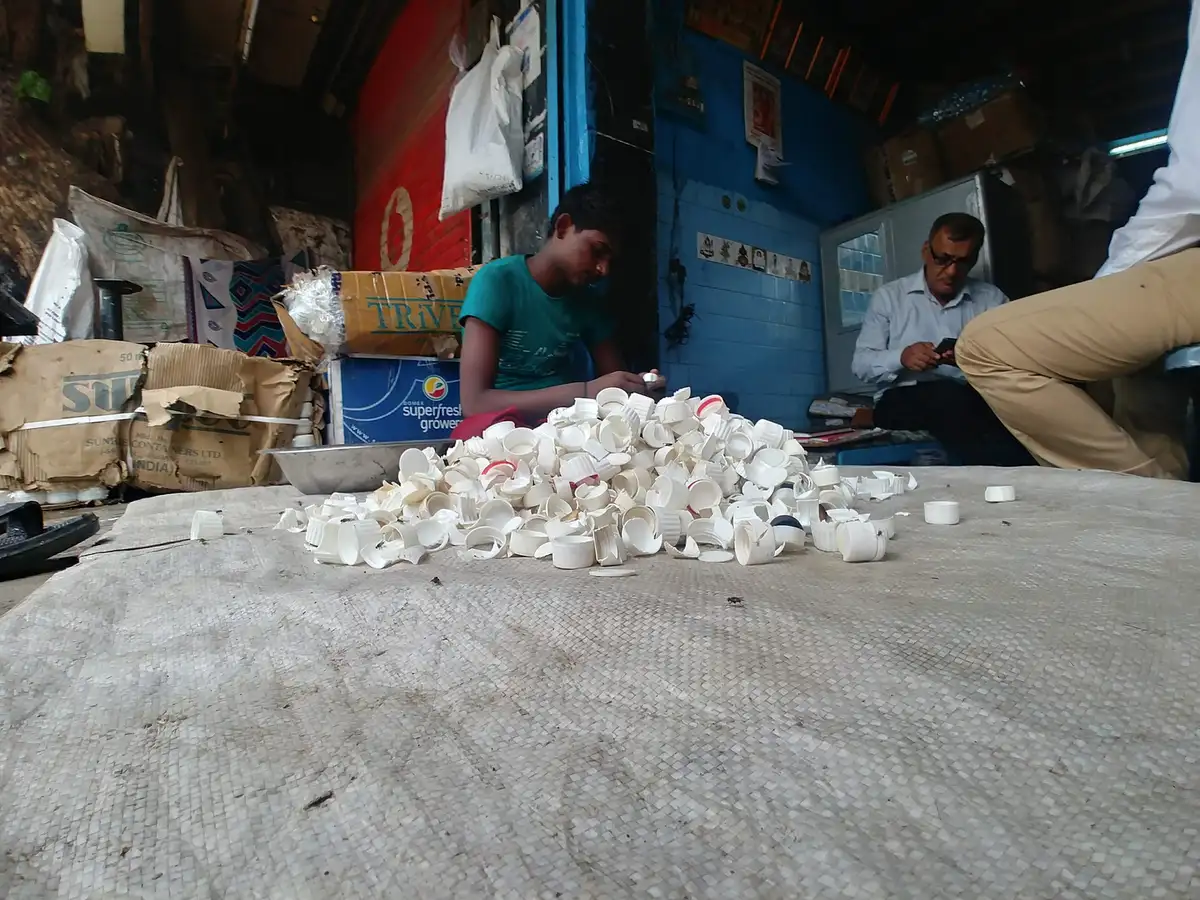
Record what your household and neighbours are paid for newspaper, bottles and cartons by the local scrap buyer, and chart how the price differs for each material.
What you do in the field
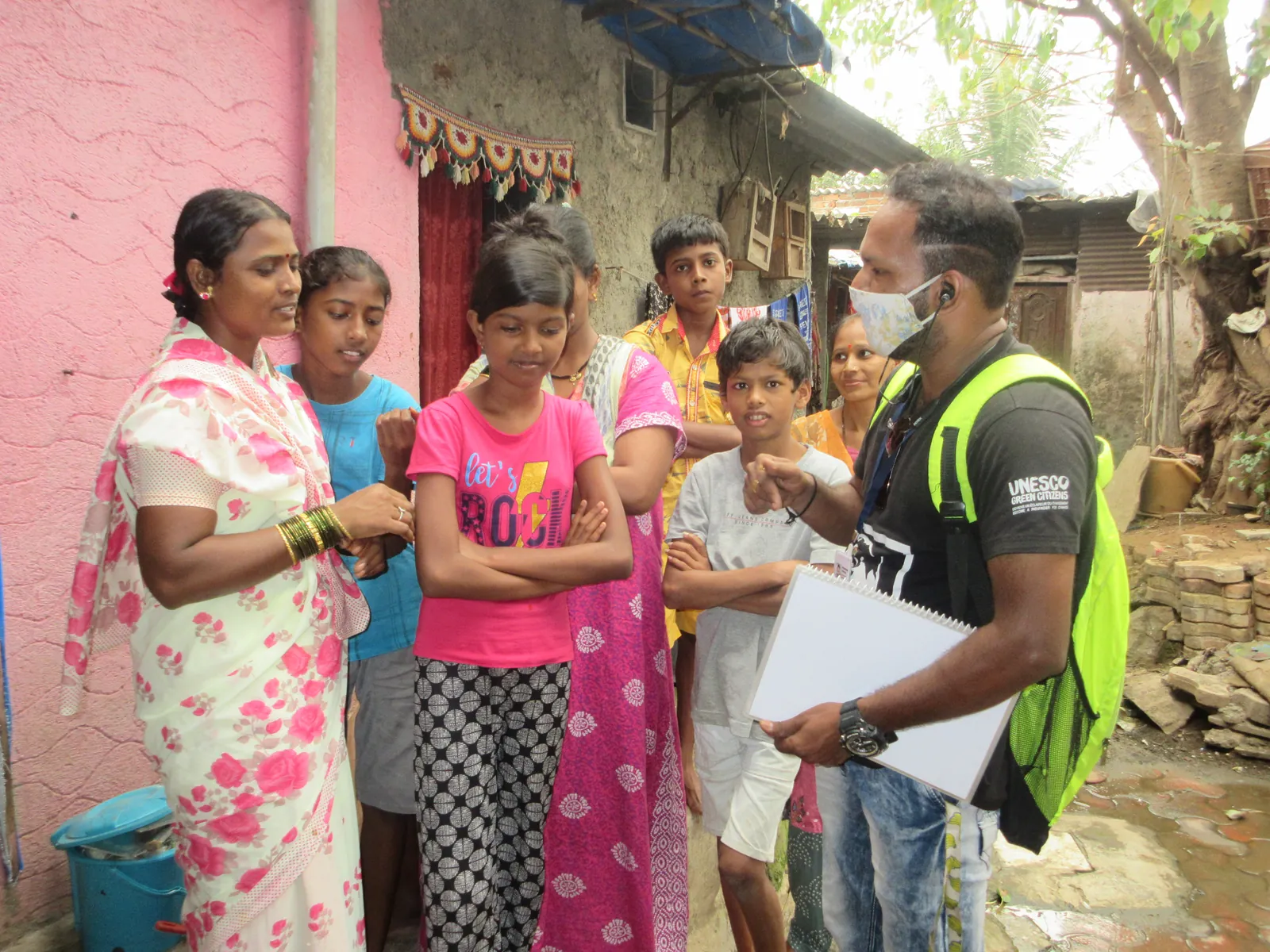
- Run short household surveys with family and neighbours
- Record survey answers and photos on the Earth5R app
- Build a cost table in a spreadsheet and test your assumptions
- Compare options with a simple cost-benefit analysis
- Read public data and published studies on your city
- Present your findings in a research conversation and answer questions
Skills you build
On a high school economics internship, you collect your own data near home with a parent or guardian, using the Earth5R app and data forms. Earth5R checks the data on its platform before it goes into your project report.
How a high school economics internship fits your school programme
For IB, IGCSE, CBSE and ICSE students. Your school decides what counts towards its own requirements.
IB CAS
A household survey project can support a CAS project when you share the results with your housing society or school. Your CAS coordinator decides how it fits.
Extended Essay and IA
Primary data on local costs and prices can support an economics Extended Essay. Your supervisor approves the question, and the IA follows your school’s IB guidance.
MYP, IGCSE and CBSE projects
A costed local study can fit the MYP Personal Project and the economics project in CBSE and ICSE schools. It also applies IGCSE topics such as market failure.
University applications
A verified study of real local costs gives you a specific example of applied economics to write about in a personal statement or discuss at interview.
How the high school economics internship works
Every student moves through four phases. Your mentor checks each phase before you move on, and sessions pause during board exams.
Observe and Map
Go into the field near home, with a parent or guardian, and collect primary data for your project in Economics.
Frame and Design
Find the root cause in your data and frame a problem worth solving, with your mentor.
Model
Build a working model, analysis or design for your solution, and test it.
Build and Deploy
Put your solution to work, measure the result and publish a verified record on earth5r.org.
Along the way you take part in research conversations with professors at MIT, Oxford, Cambridge, LSE and other universities, and ask your own questions. See how FIELDWORK works.
Where this can take you
University courses this leads to
- BA or BSc in Economics
- BA in Philosophy, Politics and Economics (PPE)
- BSc in Environmental Economics
- BSc in Economics and Management
- BA in Development Studies
Careers in this field
- Economist or economic analyst
- Environmental or climate economist
- Policy analyst in government or a think tank
- Development sector researcher
- Economic consultant
Universities to aim for in Economics
Economics admissions tutors look for students who can use numbers to answer a clear question and explain where their method falls short. A high school economics internship with FIELDWORK gives you a costed study built on data you collected, reviewed by your mentor and recorded on a profile that admissions teams can check. Students use a high school economics internship to build a record of real work for applications to universities like these.
Massachusetts Institute of Technology (MIT)
USA · Department of Economics
MIT’s Department of Economics offers undergraduate majors in economics alongside its graduate programmes. Students learn next to research centres linked to the department, such as J-PAL, which works on global poverty, and Blueprint Labs, which studies policy in education, health care and the workforce.
USA · Department of Economics
Undergraduates at Harvard can concentrate in economics, with an Honors Program and a senior thesis. Fields of study include economic development, public economics and behavioural economics. The department says its work runs from the future of work to ending global poverty and improving the environment.
USA · Department of Economics
Stanford’s Department of Economics teaches an undergraduate major and trains students in the methods and ideas of modern economics. Its research fields include development economics and environmental, resource and energy economics, and it runs a seminar series on environmental policy.
USA · Department of Economics
Princeton undergraduates can major in economics, and the department says most graduating seniors go on to careers in consulting, finance or public policy, or to graduate study. Its research centres include the Griswold Center for Economic Policy Studies and the International Economics Section.
University of California, Berkeley
USA · Department of Economics
Berkeley’s Department of Economics teaches an undergraduate BA as well as a PhD. Its Center for Effective Global Action measures the impact of large development programmes on people living in poverty, and the Stone Center on Wealth and Income Inequality is also based in the department.
London School of Economics and Political Science (LSE)
UK · Department of Economics
LSE’s Department of Economics teaches from undergraduate to PhD level, with research on climate change, inequality and global development. Faculty work with centres such as the Centre for Economic Performance, which studies the causes of growth and ways to build a fair, inclusive and sustainable society.
UK · Department of Economics
Oxford’s Department of Economics teaches undergraduate and graduate courses. Beyond microeconomics, macroeconomics and econometrics, it has research groups in the economics of climate change and sustainability, development economics and economic history, and its economists aim to inform public policy in the UK and abroad.
UK · Economics BA (Hons), Faculty of Economics
Cambridge’s Economics degree begins with microeconomics, macroeconomics, quantitative methods and economic history. Later years add econometrics and options that have included International Trade and Development and The Economics of Developing Countries, and every student writes a dissertation in the third year.
Canada · Honours BSocSc in Environmental Economics and Public Policy, Department of Economics
This undergraduate programme in Ottawa’s Department of Economics links economics with the environment. Students ask whether an economy can grow while protecting the environment, build statistical and analytical skills, and can complete a supervised field research project in their fourth year.
National University of Singapore (NUS)
Singapore · Department of Economics, Faculty of Arts and Social Sciences
NUS students can major or minor in economics and specialise in quantitative, monetary and financial, or applied and policy economics. Economics is also part of the Philosophy, Politics and Economics programme, and the department prepares graduates to work on issues such as climate change.
This list is for guidance. These universities offer undergraduate study in Economics. Earth5R has no admissions arrangement with them, and admission decisions rest with each university. Students get help researching universities, scholarships and applications, depending on the programme.
What your fellowship fee pays for
An internship fellowship at Earth5R is time and attention from senior researchers and leaders. Each part below takes staff time and resources that we set aside for every fellow.
Live mentoring with experts
One-to-one mentoring in most fellowships, with regular check-ins on your project.
Dialogues with global researchers
Academics from international universities and renowned scientists, who answer your questions and discuss your work.
Support in the field
Guidance while you collect data and work on your project in the field.
References for your next step
References when you apply for jobs, higher studies and research programmes.
Your work, hosted for life
Your work and data stay on Earth5R’s website and servers for life, where universities and employers can check them.
Time from senior people
Each fellow receives time and attention from senior researchers and leaders, set aside for them.
Fee details available on request.
Choose your fellowship
The Multi-Year Fellowship can run from Grade 9 to Grade 12, with more scope each year.
The fee pays for live mentoring, dialogues with global researchers, support in the field, references and lifelong hosting of your work. Fee details available on request.
High school economics internship: common questions
Do I need strong maths for this high school economics internship?
School maths and a spreadsheet are enough. Your mentor shows you how to build a cost table and compare options. Students who take IB Economics or a higher maths course can add more formal tests to their analysis.
What kind of economics will I use?
Mostly environmental and development economics. You put a value on costs that households carry, such as time spent on water or money spent on waste, and compare the options with cost-benefit analysis.
How much time does it take alongside school work?
The weekly load is light, and sessions pause during board exams. Most of the work is surveys with family and neighbours, desk research and spreadsheet analysis, so your child can plan it around homework and tests with the mentor.
Is the high school economics internship paid?
Yes. FIELDWORK is a paid, mentored programme. The fee pays for live mentoring, dialogues with global researchers, support in the field, references and lifelong hosting of your work. Fee details are available on request.
Can my child do this high school economics internship online?
Yes. Mentoring sessions run online, and field work takes place near where you live.
Is a parent or guardian present during field work?
Yes. A parent or guardian is present at every self-guided field activity. Online sessions are for students.
Does FIELDWORK pause during board exams?
Yes. Sessions pause during board exams, so the fellowship fits around school work.
What do students get at the end?
A certificate, a letter of recommendation, a project report and a verified profile on earth5r.org, where universities can check the work.
Related subjects for school students
Already at university? See the Economics internship fellowship for university students.
Apply for a FIELDWORK fellowship in Economics
This high school economics internship is for students in Grades 9 to 12. Work on a live Earth5R project with a mentor, take part in research conversations with global researchers, and build a verified record of your work. Fee details available on request.