
High school finance internship and research fellowship
This high school finance internship lets students in Grades 9 to 12 read company sustainability reports the way an analyst does, with a mentor who reviews every finding. You work on Earth5R’s TERRA Score analysis, check what companies report against field data and write up where the figures and the ground agree.
For school students who take IB Business Management or Economics, IGCSE Accounting or CBSE and ICSE Commerce and want to read real company reports. Online, with field work near home and a parent or guardian present at every self-guided activity. The fellowship is paid because every student receives time and attention from senior researchers and leaders.
Why finance matters for sustainability
Banks and investors choose which companies get money, and those choices decide which factories, farms and power plants get built. Before they invest, many look at how a company handles its environmental, social and governance risks, known as ESG. That only works if the reported figures are reliable. Someone who can read a company report closely and test its claims helps investors see the risks they hold.
TERRA Score is Earth5R’s ESG intelligence work on 1,200+ companies listed in India. It checks BRSR filings, the sustainability reports that large listed companies in India publish, and annual reports against field data. Its method for this is called the CvR Gap. As a fellow you work on this analysis with a mentor, and company names are masked in all student work.
This work links to the UN Sustainable Development Goals: Goal 12, Responsible consumption and production and Goal 13, Climate action.
Available projects in this high school finance internship
Each project fits around school work and takes place near home. Your mentor shapes the final project with you.
Reading a sustainability report
Read one listed company’s BRSR filing with your mentor, pull out its waste, water and emissions figures, and note how they changed from one year to the next.
Checking claims against field data
Set a company’s reported figures beside field data on the same issue, using the TERRA Score CvR Gap method, and write a short note on each gap you find.
Packaging claims and brand audits
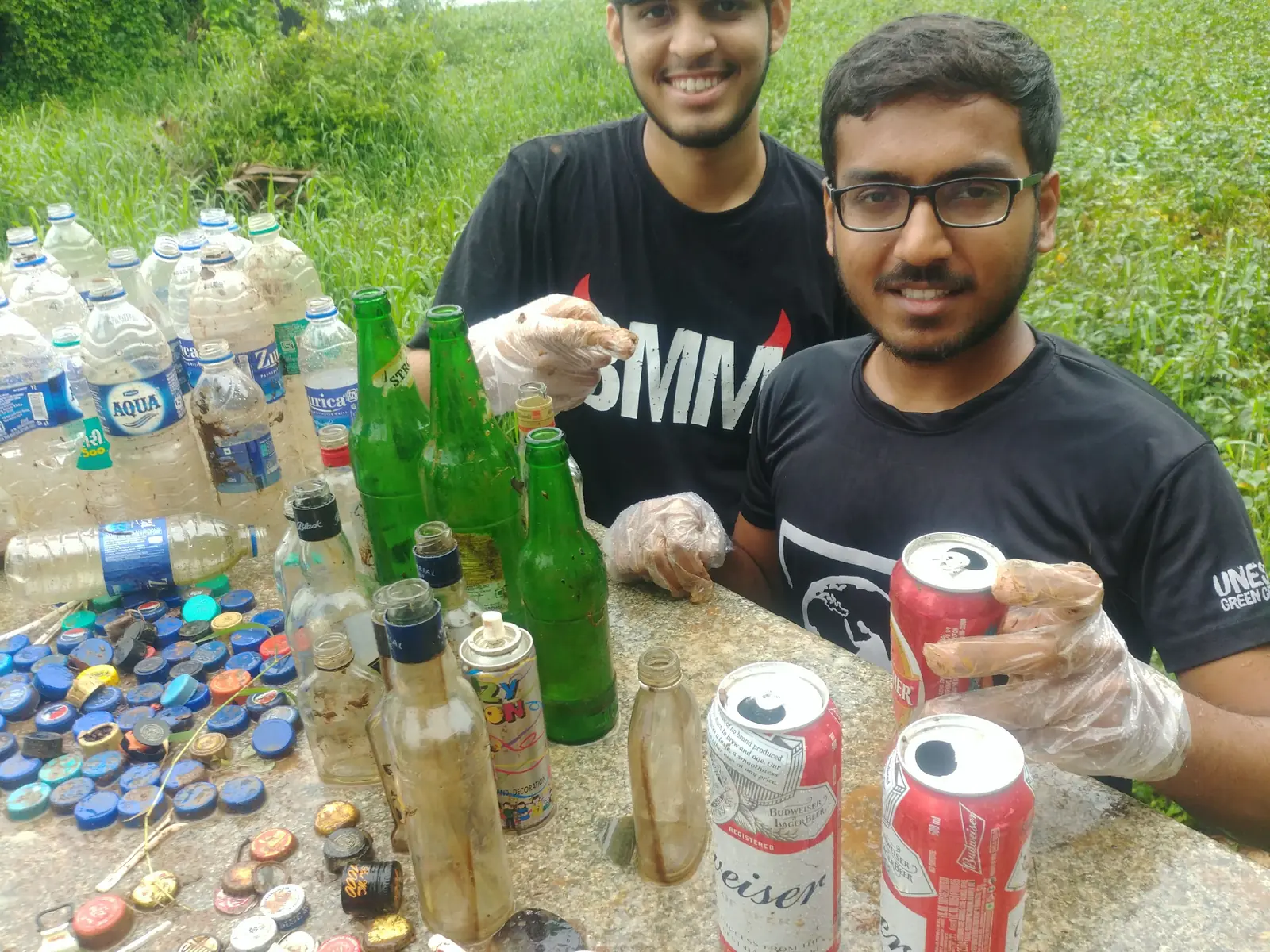
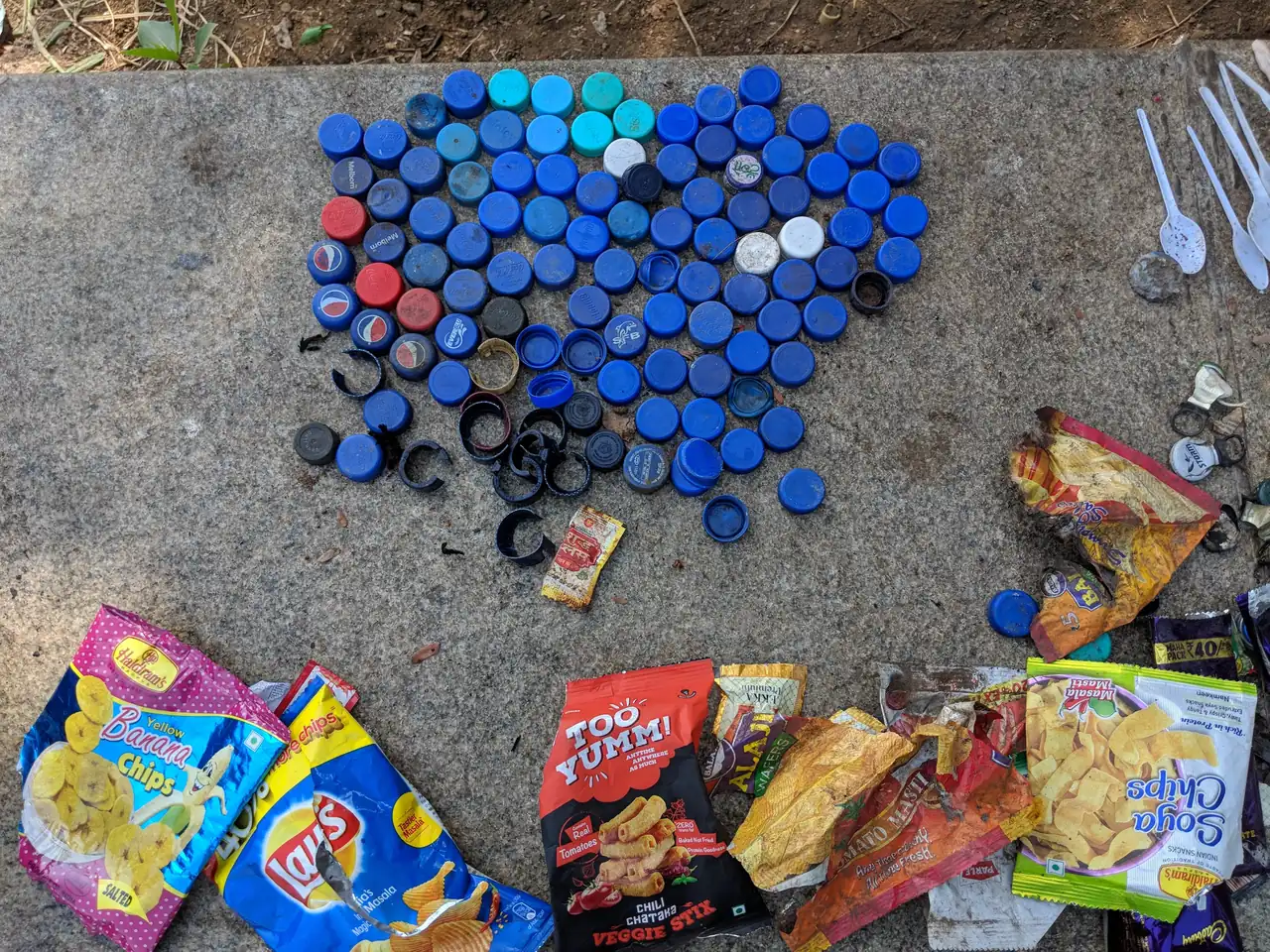
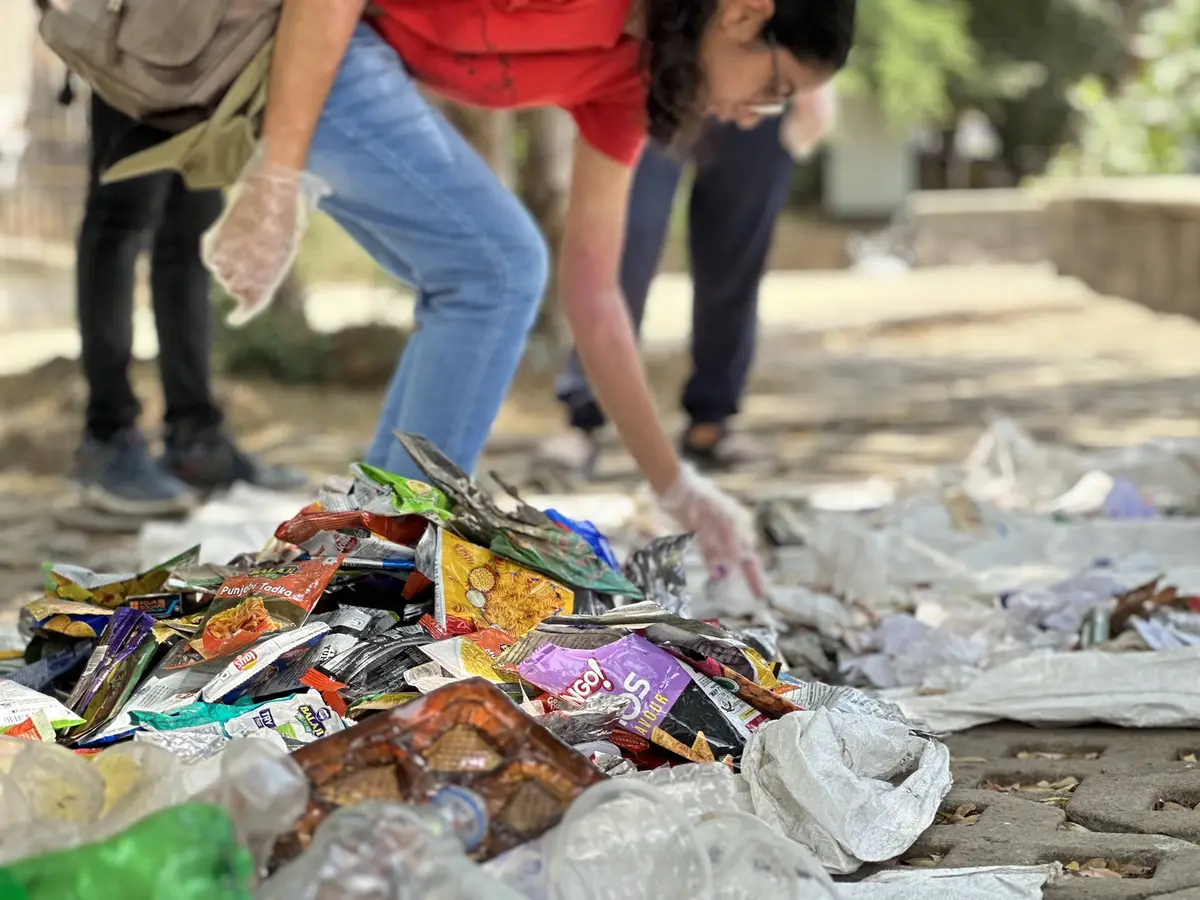
Compare what consumer goods companies say about packaging waste with brand audit counts from Earth5R cleanups, then run a small litter count at your school, with company names masked.
Climate risk for a crop
Study how climate change could affect basmati rice growers and the businesses that buy from them, drawing on a NASA and Columbia University scientist’s project on the Gangetic Plain.
What you do in the field
- Read BRSR filings and annual reports, with company names masked
- Copy ESG figures into a clean, labelled spreadsheet
- Log a brand audit of school litter on the Earth5R app
- Compare reported figures with field data using the CvR Gap method
- Write a short analyst note on one company or sector
- Present your findings in a research conversation and answer questions
Skills you build
On a high school finance internship, you collect your own data near home with a parent or guardian, using the Earth5R app and data forms. Earth5R checks the data on its platform before it goes into your project report.
How a high school finance internship fits your school programme
For IB, IGCSE, CBSE and ICSE students. Your school decides what counts towards its own requirements.
IB CAS
Sharing your school brand audit results with students and staff can give a CAS project a service element. Your CAS coordinator decides how it fits.
Extended Essay and IA
Reading real company reports and comparing them with field data can support a Business Management or Economics Extended Essay. Your supervisor approves the question and sources.
MYP, IGCSE and CBSE projects
An ESG report study can fit the MYP Personal Project and Accountancy or Business Studies project work in CBSE and ICSE schools. It also extends IGCSE Accounting topics.
University applications
A verified analyst note on real company data gives you a specific example to discuss in a finance, economics or accounting personal statement or interview.
How the high school finance internship works
Every student moves through four phases. Your mentor checks each phase before you move on, and sessions pause during board exams.
Observe and Map
Go into the field near home, with a parent or guardian, and collect primary data for your project in Finance and ESG.
Frame and Design
Find the root cause in your data and frame a problem worth solving, with your mentor.
Model
Build a working model, analysis or design for your solution, and test it.
Build and Deploy
Put your solution to work, measure the result and publish a verified record on earth5r.org.
Along the way you take part in research conversations with professors at MIT, Oxford, Cambridge, LSE and other universities, and ask your own questions. See how FIELDWORK works.
Where this can take you
University courses this leads to
- BSc in Finance
- BSc in Accounting and Finance
- BSc in Economics and Finance
- BCom or BBA with a finance major
- BSc in Business with a sustainability focus
Careers in this field
- ESG analyst at a bank or fund
- Sustainability reporting specialist
- Climate risk analyst
- Equity research analyst
- Sustainable finance consultant
Universities to aim for in Finance and ESG
Finance admissions tutors look for students who read numbers closely and can back a view with data. A high school finance internship with FIELDWORK gives you an analyst note on real company data, reviewed by your mentor and recorded on your earth5r.org profile. Students use a high school finance internship to build a record of real work for applications to universities like these.
University of Pennsylvania (Wharton School)
USA · Finance Department, undergraduate finance concentration
Wharton undergraduates can concentrate in finance, starting with two core finance courses before choosing upper-level ones. Recommended tracks cover corporate finance, capital markets and banking, investments and quantitative finance, and the investments track includes an elective in impact investing.
Massachusetts Institute of Technology (MIT)
USA · MIT Sloan School of Management, Course 15-3 Finance (undergraduate major)
MIT undergraduates can major or minor in finance through Course 15-3 at MIT Sloan. The school sets out roadmaps for pairing finance with a second major such as economics, mathematics, or computer science, economics and data science.
USA · Stern School of Business, BS in Business, Finance concentration
Stern undergraduates on the BS in Business can concentrate in finance, which covers corporate finance and investments and capital markets, starting from Foundations of Finance. Stern also offers a Sustainable Business concentration on how building sustainability into business strategy affects financial performance.
London School of Economics and Political Science (LSE)
UK · BSc Finance, Department of Finance
LSE’s BSc Finance, run by the Department of Finance, begins with finance, economics, mathematics and statistics. Students then apply core methods in corporate finance and econometrics, and in the final year study topics such as asset management, risk management and derivatives.
UK · BSc Economics, Finance and Data Science, Imperial Business School
Imperial Business School’s degree combines economics, finance and data science, with programming from the first year. Students learn accounting and corporate finance, and can take a final-year elective on the economics and finance of climate change.
UK · Warwick Business School, BSc Accounting & Finance
Warwick Business School’s BSc Accounting & Finance lets students focus on accounting, finance or a mix of both. It includes modules that can lead to exemptions from professional accountancy exams, and there is a version of the course with a placement year.
Canada · Rotman Commerce (Bachelor of Commerce)
Rotman Commerce students at the University of Toronto can build sustainability into their commerce degree while meeting their specialist requirements. Upper-year courses include Sustainable Finance and Environmental and Social Responsibility, and special topics courses have covered ESG and sustainability accounting.
Italy · BSc in Finance
Bocconi’s BSc in Finance, taught in English, explains how the financial system works, with a focus on capital markets, financial intermediaries, contracts and financial instruments. Students use quantitative, data-driven methods to assess financial decisions and risks.
This list is for guidance. These universities offer undergraduate study in Finance and ESG. Earth5R has no admissions arrangement with them, and admission decisions rest with each university. Students get help researching universities, scholarships and applications, depending on the programme.
What your fellowship fee pays for
An internship fellowship at Earth5R is time and attention from senior researchers and leaders. Each part below takes staff time and resources that we set aside for every fellow.
Live mentoring with experts
One-to-one mentoring in most fellowships, with regular check-ins on your project.
Dialogues with global researchers
Academics from international universities and renowned scientists, who answer your questions and discuss your work.
Support in the field
Guidance while you collect data and work on your project in the field.
References for your next step
References when you apply for jobs, higher studies and research programmes.
Your work, hosted for life
Your work and data stay on Earth5R’s website and servers for life, where universities and employers can check them.
Time from senior people
Each fellow receives time and attention from senior researchers and leaders, set aside for them.
Fee details available on request.
Choose your fellowship
The Multi-Year Fellowship can run from Grade 9 to Grade 12, with more scope each year.
The fee pays for live mentoring, dialogues with global researchers, support in the field, references and lifelong hosting of your work. Fee details available on request.
High school finance internship: common questions
Do I need to study finance at school for this high school finance internship?
No. Your mentor starts with how a sustainability report is laid out and what each section means. Students who take Business Management, Economics or Accounting often move on to company comparisons sooner.
What is the CvR Gap method?
It’s how TERRA Score checks what a company reports against field data. You take a figure from a BRSR filing or annual report, set it beside field data on the same issue and record the difference and its size.
Does my child need to invest money or open an account?
No. Students read public company reports and work with field data in a spreadsheet. Nothing involves trading, investing or handling money, and company names are masked in everything your child writes.
Is the high school finance internship paid?
Yes. FIELDWORK is a paid, mentored programme. The fee pays for live mentoring, dialogues with global researchers, support in the field, references and lifelong hosting of your work. Fee details are available on request.
Can my child do this high school finance internship online?
Yes. Mentoring sessions run online, and field work takes place near where you live.
Is a parent or guardian present during field work?
Yes. A parent or guardian is present at every self-guided field activity. Online sessions are for students.
Does FIELDWORK pause during board exams?
Yes. Sessions pause during board exams, so the fellowship fits around school work.
What do students get at the end?
A certificate, a letter of recommendation, a project report and a verified profile on earth5r.org, where universities can check the work.
Related subjects for school students
Already at university? See the Finance and ESG internship fellowship for university students.
Apply for a FIELDWORK fellowship in Finance and ESG
This high school finance internship is for students in Grades 9 to 12. Work on a live Earth5R project with a mentor, take part in research conversations with global researchers, and build a verified record of your work. Fee details available on request.