High school supply chain internship and research fellowship
This high school supply chain internship lets students in Grades 9 to 12 follow waste from homes to recyclers, with a mentor who checks your maps and numbers. You trace how newspaper, bottles and food waste leave your home and building, find where material is lost and design changes that keep more of it in use.
For school students who take IB Business Management, ESS or Geography, or CBSE and ICSE Business Studies, and want to study a supply chain they can see from home. Online, with field work near home and a parent or guardian present at every self-guided activity. The fellowship is paid because every student receives time and attention from senior researchers and leaders.
Why supply chains matter for sustainability
Everything you buy moves through a chain of farms, factories, trucks and shops before it reaches your home. Each step uses energy and creates waste. When the chain ends in a mixed bin, useful material is often lost to landfill or washed into rivers. Operations specialists design return routes that bring used material back to recyclers, and that work starts with a clear map of where each item goes.
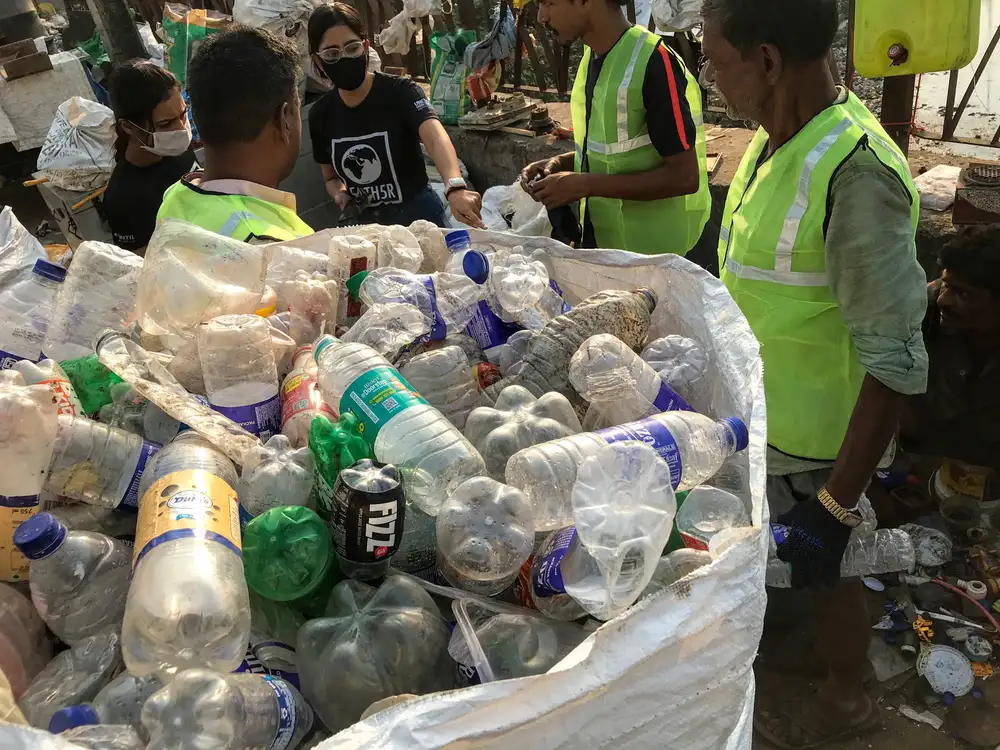
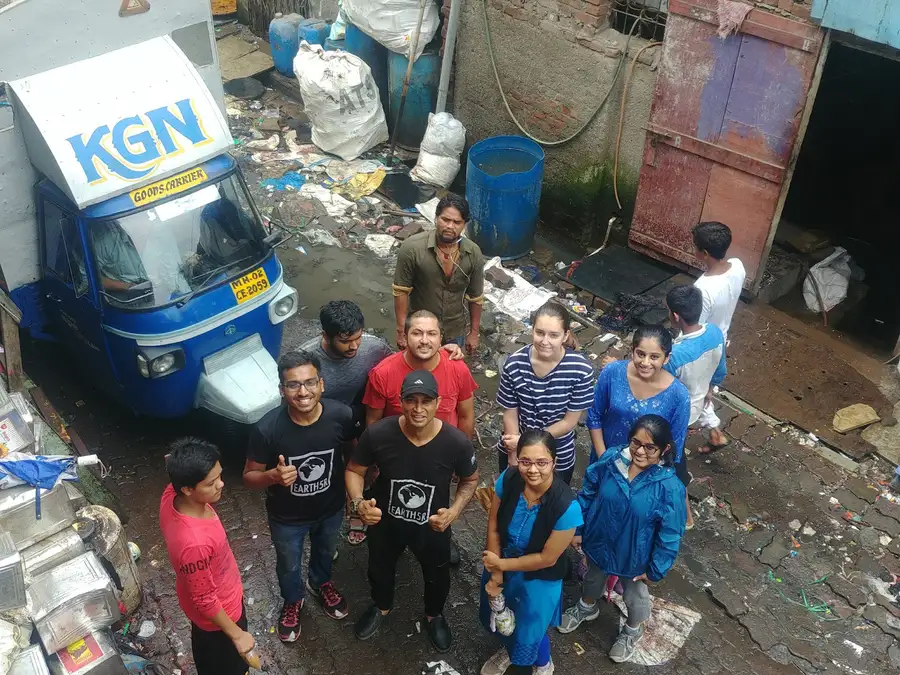
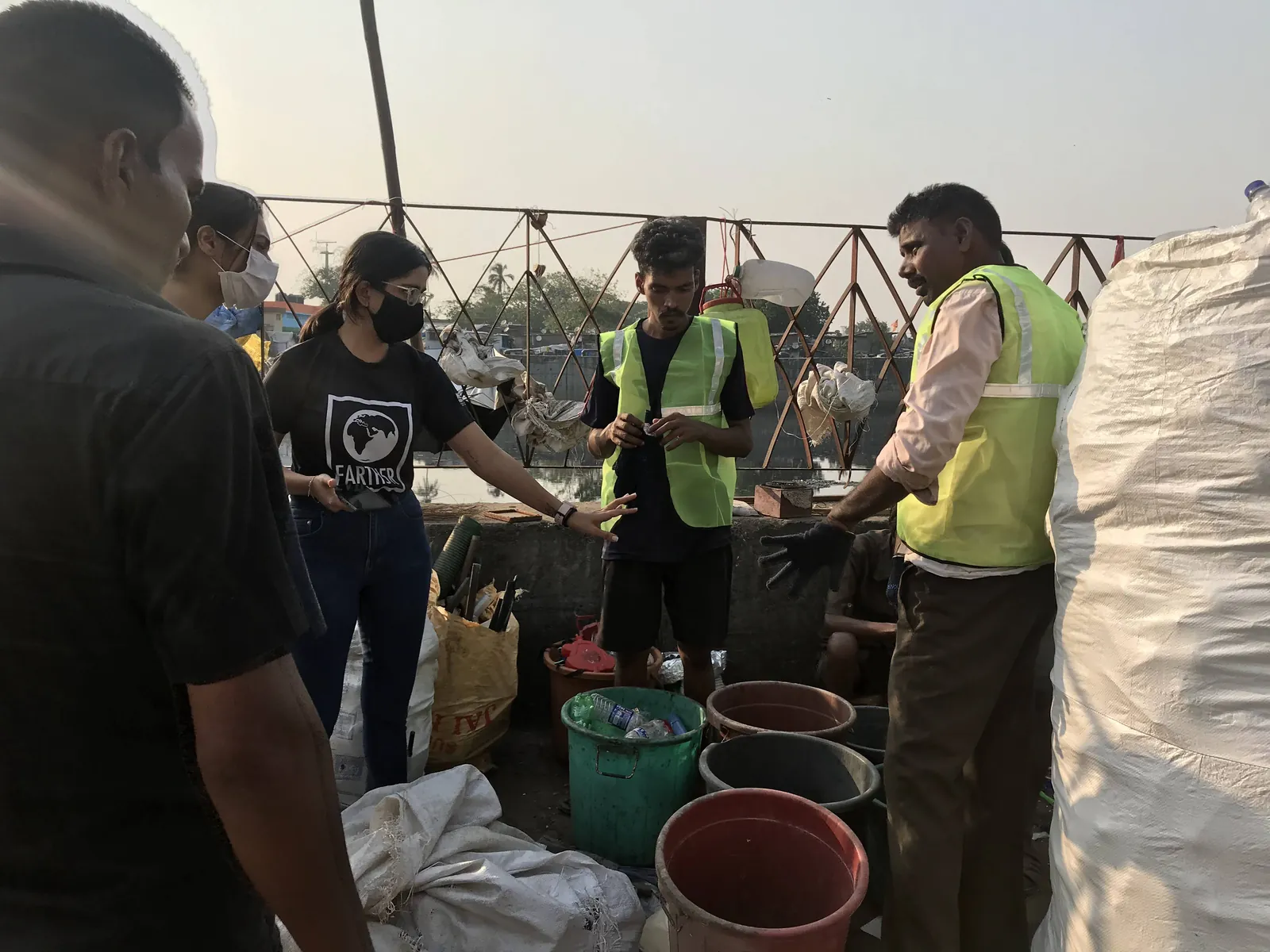
Earth5R’s field work covers many points in this return chain. Volunteers sort and count items in waste audits, and zero waste housing societies compost wet waste in drum composters made from reused industrial containers. Earth5R teams have also visited informal recycling units. As a fellow you use Earth5R’s photographed, geo-tagged records and your own home and building to find where material leaves the chain.
This work links to the UN Sustainable Development Goals: Goal 12, Responsible consumption and production and Goal 11, Sustainable cities and communities.
Available projects in this high school supply chain internship
Each project fits around school work and takes place near home. Your mentor shapes the final project with you.
Follow one material from your home
Pick one material, such as newspaper or plastic bottles, and trace who collects it from your building, where it goes next and what it becomes, using interviews and desk research.
Where recyclables leak out
Use waste audit counts from Earth5R cleanups to see which recyclable items escape collection, and mark on a map where in the chain they are most likely lost.
Composting routine for a society
Study how your own housing society or a zero waste society handles wet waste, from daily collection to finished compost, and design a simple routine that keeps it steady.
School canteen waste flow
Map how food, packaging and leftovers move through your school canteen in a week, count what is thrown away at each step and suggest changes with your mentor.
What you do in the field
- Interview building staff and family about how waste leaves your home
- Log waste counts from home or school on the Earth5R app
- Draw a process map for each material you follow
- Estimate amounts and losses at each step in a spreadsheet
- Read published research on recycling chains in Indian cities
- Present your map and fixes in a research conversation
Skills you build
On a high school supply chain internship, you collect your own data near home with a parent or guardian, using the Earth5R app and data forms. Earth5R checks the data on its platform before it goes into your project report.
How a high school supply chain internship fits your school programme
For IB, IGCSE, CBSE and ICSE students. Your school decides what counts towards its own requirements.
IB CAS
Improving how waste moves through your school canteen or housing society can give a CAS project a service element. Your CAS coordinator decides how it fits.
Extended Essay and IA
A material flow map and your own waste counts can support a Business Management or ESS Extended Essay, or an ESS IA. Your supervisor approves the question.
MYP, IGCSE and CBSE projects
Mapping a local recycling chain can fit the MYP Personal Project and Business Studies project work in CBSE and ICSE schools. It also applies IGCSE operations topics.
University applications
A verified map of a real supply chain, with your own numbers, gives you a specific example for a business, operations or engineering personal statement.
How the high school supply chain internship works
Every student moves through four phases. Your mentor checks each phase before you move on, and sessions pause during board exams.
Observe and Map
Go into the field near home, with a parent or guardian, and collect primary data for your project in Supply Chain and Operations.
Frame and Design
Find the root cause in your data and frame a problem worth solving, with your mentor.
Model
Build a working model, analysis or design for your solution, and test it.
Build and Deploy
Put your solution to work, measure the result and publish a verified record on earth5r.org.
Along the way you take part in research conversations with professors at MIT, Oxford, Cambridge, LSE and other universities, and ask your own questions. See how FIELDWORK works.
Where this can take you
University courses this leads to
- BSc in Supply Chain Management
- BSc in Logistics and Operations Management
- BEng in Industrial Engineering
- BBA with an operations focus
- BSc in Business Management
Careers in this field
- Supply chain analyst
- Operations manager
- Sustainable sourcing specialist
- Circular economy consultant
- Logistics planner
Universities to aim for in Supply Chain and Operations
Supply chain and operations admissions tutors look for students who can map a process, find where it fails and back a fix with numbers. A high school supply chain internship with FIELDWORK gives you a material flow map built on your own counts, reviewed by your mentor and recorded on earth5r.org. Students use a high school supply chain internship to build a record of real work for applications to universities like these.
Georgia Institute of Technology (Georgia Tech)
USA · Supply Chain Engineering concentration, BS in Industrial Engineering, H. Milton Stewart School of Industrial and Systems Engineering
Industrial engineering undergraduates at Georgia Tech can take a Supply Chain Engineering concentration. Its courses cover logistics, such as facility location, supply network design and vehicle routing, and operations inside a facility, such as planning and inventory control, before a senior design project.
USA · NASPO Department of Supply Chain Management, W. P. Carey School of Business
ASU’s NASPO Department of Supply Chain Management offers undergraduate degree options in supply chain management and logistics, with an undergraduate co-op programme. It aims to prepare managers who add value, raise quality and cut costs with an eye on sustainability, and it hosts CAPS Research on procurement.
Pennsylvania State University (Penn State)
USA · B.S. in Supply Chain and Information Systems, Smeal College of Business
Penn State’s B.S. in Supply Chain and Information Systems covers how companies source raw materials, run manufacturing and service operations, and plan for demand. Students learn to analyse and design supply chains, with information technology as the link between each step.
Eindhoven University of Technology (TU/e)
Netherlands · Bachelor Industrial Engineering, Department of Industrial Engineering and Innovation Sciences
TU/e’s English-taught Bachelor in Industrial Engineering treats business processes as systems to analyse, model and improve, from logistics and planning to data-driven decisions. Students start on real operational processes early, with field trips, partner companies and practical assignments.
National University of Singapore (NUS)
Singapore · Department of Industrial Systems Engineering and Management (ISEM), College of Design and Engineering
NUS’s Department of Industrial Systems Engineering and Management teaches a Bachelor of Engineering in industrial systems engineering. Undergraduates can take an area of specialisation in sustainability analytics, and the department also offers minors in systems engineering, data engineering and cities.
UK · Manufacturing Engineering Tripos (MET), Institute for Manufacturing, Department of Engineering
Cambridge Engineering students can take the Manufacturing Engineering Tripos in the final two years of their degree. It covers product design, factory and business management and how firms work in the economy, with industrial visits and projects and a focus on how firms can grow sustainably.
Netherlands · BSc International Business Administration (IBA), Rotterdam School of Management (RSM)
RSM’s English-taught International Business Administration bachelor’s covers the main business functions, with a Supply Chain Management course in the second year. Teaching is linked to the UN Sustainable Development Goals, and the final year offers an internship, exchange or minor before specialisation tracks.
UK · BSc Business Analytics, Department of Management Science, Lancaster University Management School
Lancaster’s BSc Business Analytics teaches students to use data for business decisions in supply chains, manufacturing, distribution, transport and logistics. Topics include operations management, forecasting, optimisation and programming, taught through case studies.
This list is for guidance. These universities offer undergraduate study in Supply Chain and Operations. Earth5R has no admissions arrangement with them, and admission decisions rest with each university. Students get help researching universities, scholarships and applications, depending on the programme.
What your fellowship fee pays for
An internship fellowship at Earth5R is time and attention from senior researchers and leaders. Each part below takes staff time and resources that we set aside for every fellow.
Live mentoring with experts
One-to-one mentoring in most fellowships, with regular check-ins on your project.
Dialogues with global researchers
Academics from international universities and renowned scientists, who answer your questions and discuss your work.
Support in the field
Guidance while you collect data and work on your project in the field.
References for your next step
References when you apply for jobs, higher studies and research programmes.
Your work, hosted for life
Your work and data stay on Earth5R’s website and servers for life, where universities and employers can check them.
Time from senior people
Each fellow receives time and attention from senior researchers and leaders, set aside for them.
Fee details available on request.
Choose your fellowship
The Multi-Year Fellowship can run from Grade 9 to Grade 12, with more scope each year.
The fee pays for live mentoring, dialogues with global researchers, support in the field, references and lifelong hosting of your work. Fee details available on request.
High school supply chain internship: common questions
What will I study in this high school supply chain internship?
Return supply chains, the routes that bring used material from homes back to recyclers. You map who collects and buys each material, estimate amounts at each step and find where recyclable material is lost.
Will my child visit recycling units or waste sites?
No. Field work happens near home, at school or in your housing society, with a parent or guardian present at every self-guided activity. Recycling units are studied through photos, records and published research.
How does this connect to company reports?
Listed companies in India report on packaging and waste in their BRSR filings. Earth5R’s TERRA Score work checks reports like these against field data, with company names masked. Your map of where material is lost can help test those claims.
Is the high school supply chain internship paid?
Yes. FIELDWORK is a paid, mentored programme. The fee pays for live mentoring, dialogues with global researchers, support in the field, references and lifelong hosting of your work. Fee details are available on request.
Can my child do this high school supply chain internship online?
Yes. Mentoring sessions run online, and field work takes place near where you live.
Is a parent or guardian present during field work?
Yes. A parent or guardian is present at every self-guided field activity. Online sessions are for students.
Does FIELDWORK pause during board exams?
Yes. Sessions pause during board exams, so the fellowship fits around school work.
What do students get at the end?
A certificate, a letter of recommendation, a project report and a verified profile on earth5r.org, where universities can check the work.
Related subjects for school students
Already at university? See the Supply Chain and Operations internship fellowship for university students.
Apply for a FIELDWORK fellowship in Supply Chain and Operations
This high school supply chain internship is for students in Grades 9 to 12. Work on a live Earth5R project with a mentor, take part in research conversations with global researchers, and build a verified record of your work. Fee details available on request.