Education internship fellowship
This education internship has you design and run sustainability lessons or workshops for children and communities, with a mentor who reviews your plans and helps you improve them. You test each session with learners near where you live, measure what they took away and turn your strongest activities into a short curriculum.
For students who enjoy explaining ideas and are thinking about teaching, education policy or learning design. Online, with field work near where you live. The fellowship is paid because every fellow receives time and attention from senior researchers and leaders.
Why education matters for sustainability
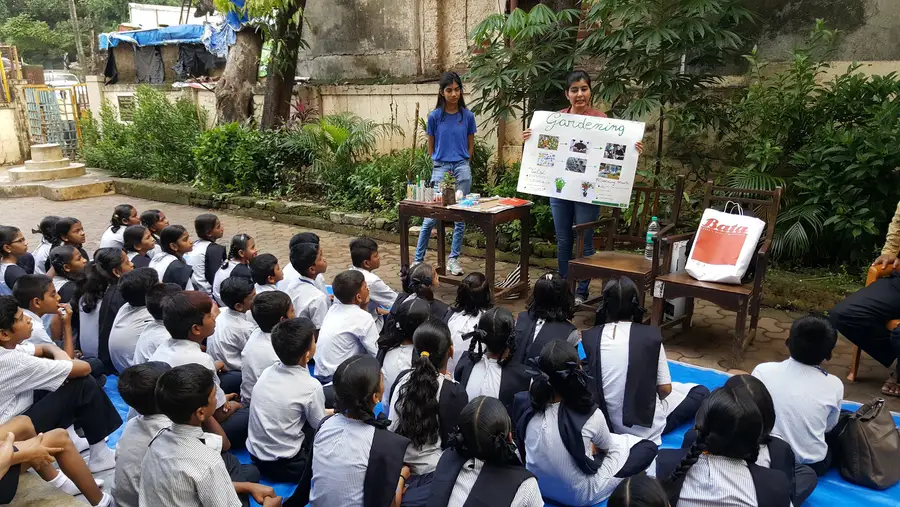
People can’t act on a problem they don’t understand. Environmental education turns ideas such as climate change or the circular economy into things a child can see and do, like sorting a bin or planting a sapling. Education research then tests which methods change what learners know and how they behave. It also asks how long that change lasts once the lesson is over.
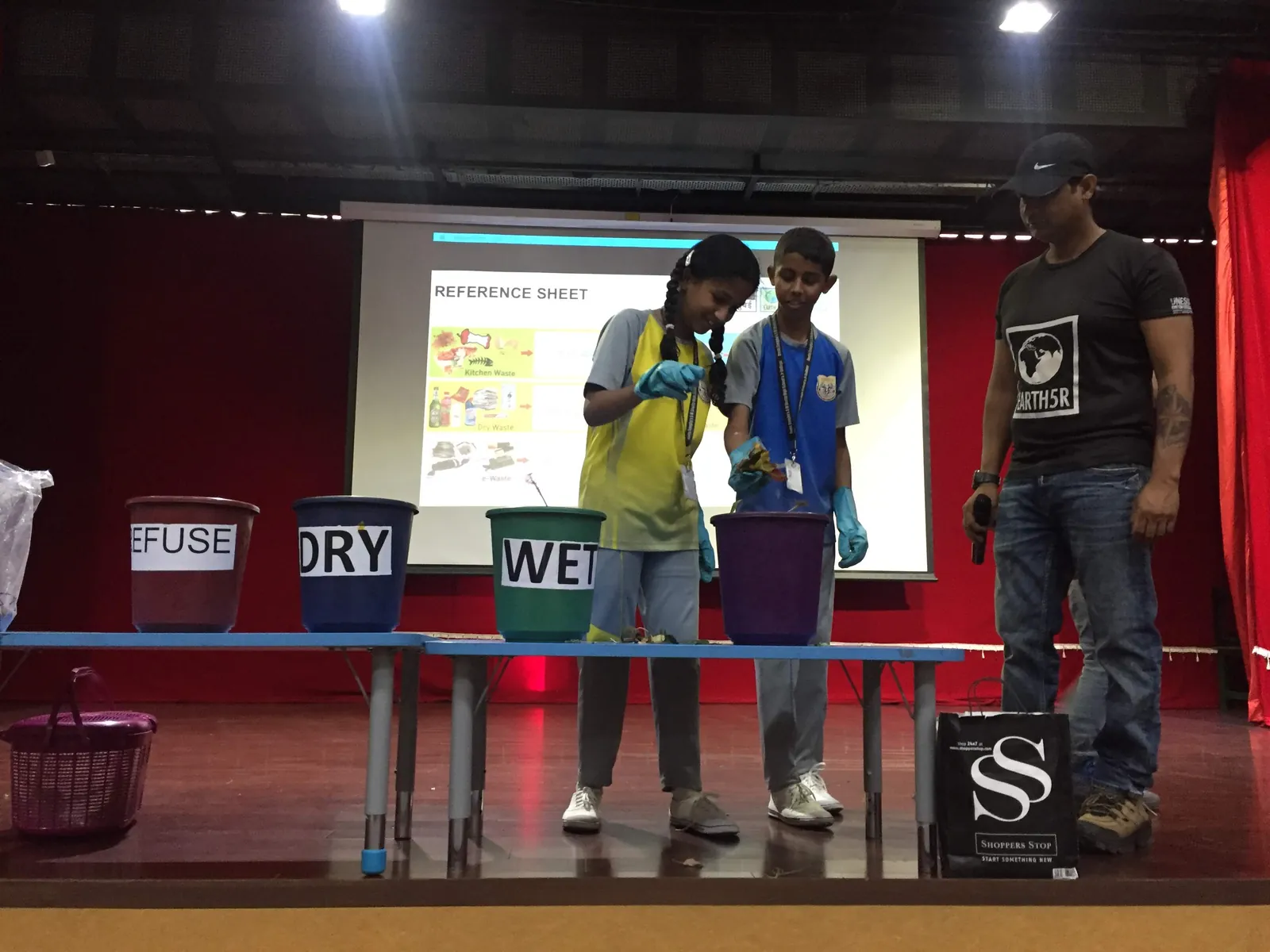
Earth5R runs school workshops and green school projects, and trains communities on waste segregation and composting in 150+ Indian cities. It also runs sustainability training for company employees. Many sessions use real objects, such as colour-coded bins on a school stage or a drum composter in a housing society. As a fellow you design sessions in this style and run them near where you live, with feedback from your mentor after each one.
This work links to the UN Sustainable Development Goals: Goal 4, Quality education and Goal 13, Climate action.
Available projects in the education internship fellowship
You join Earth5R’s live work through your own subject. Your mentor shapes the final project with you.
Waste segregation lesson for a school
Design a lesson on waste segregation for one age group, run it in a school or community centre near you, and check what learners remember a week later.
Composting workshop for residents
Plan and run a composting workshop for families or a housing society, using a home compost bin as a live demonstration, and write a one-page guide residents can follow.
Green school project plan
Work with a school near you to plan a green school project, such as a campus waste audit or a plantation, and design the lessons that go with it.
Measuring what learners take away
Build a short quiz or observation sheet for before and after a session, use it across several sessions, and find which activities changed what learners know or do.
What you do in the field
- Observe a workshop and note how learners respond
- Write a lesson plan with clear learning goals for one age group
- Make low-cost teaching materials from reused items
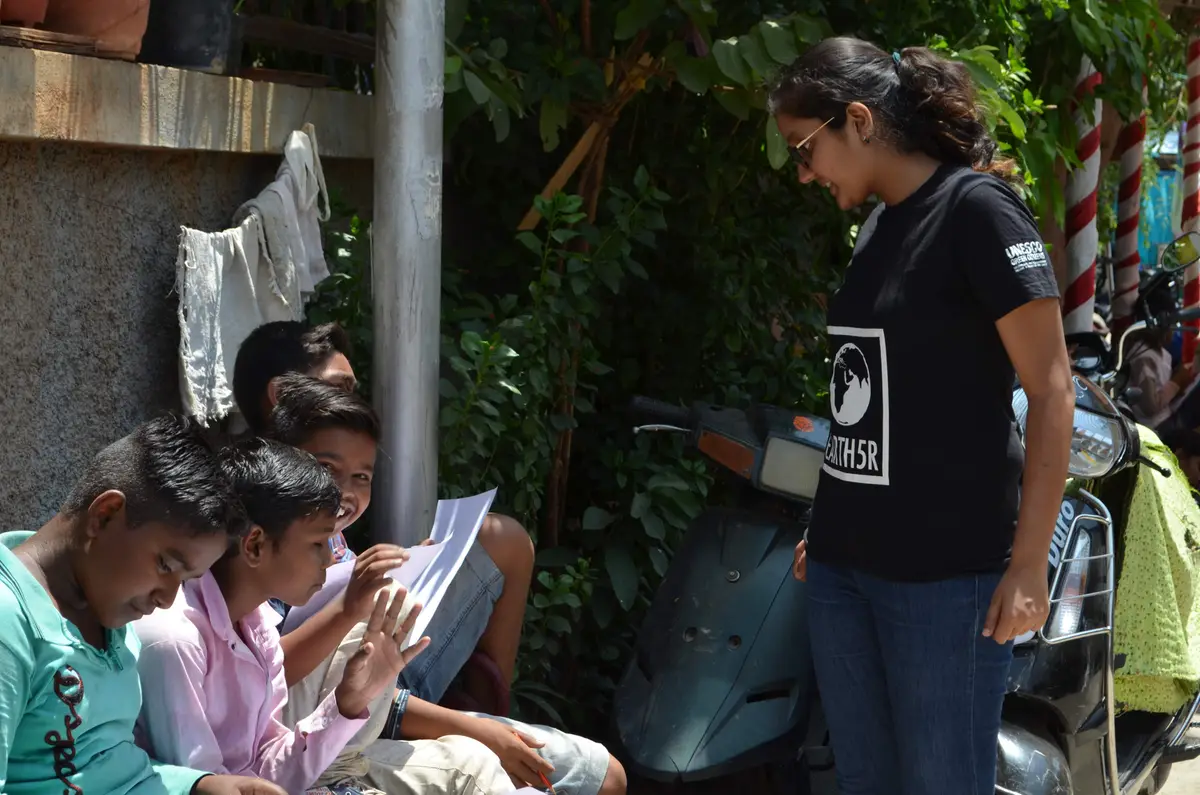
- Run your session with children or residents near you
- Collect feedback and simple before-and-after results
- Revise the lesson and present it in a research conversation
Skills you build
On a education internship, you collect your own data near where you live, using the Earth5R app and data forms. Earth5R checks the data on its platform before it goes into your project report.
How the education internship fellowship works
Every fellow moves through four phases. Each phase is checked by your mentor before you move on.
Observe and Map
Go into the field near where you live and collect primary data for your project in Education.
Frame and Design
Find the root cause in your data and frame a problem worth solving, with your mentor.
Model
Build a working model, analysis or design for your solution, and test it.
Build and Deploy
Put your solution to work, measure the result and publish a verified record on earth5r.org.
Along the way you take part in research conversations with professors at MIT, Oxford, Cambridge, LSE and other universities, and ask your own questions. See how FIELDWORK works.
Where this can take you
Degrees this work supports
- BA or BSc in Education
- Bachelor of Education (BEd)
- Master of Education (MEd) or MA in Education
- MA in Education Policy or International Education
- MSc in Learning Design or Educational Technology
Careers in this field
- Science or geography educator in a school
- Curriculum designer
- Education programme manager at an NGO or foundation
- Learning designer at an education company
- Education policy researcher
Universities known for Education
Strong education programmes look for applicants who have worked with real learners and can reflect on what helped them learn. A fellowship project gives you a tested curriculum and learner data from your own sessions, reviewed by your mentor and recorded on earth5r.org. Students use a education internship to build a record of real work for applications to universities like these.
Harvard Graduate School of Education
USA · Harvard Graduate School of Education (HGSE)
Degrees at HGSE include a residential Master’s in Education, an online Master’s in Education Leadership, the Doctor of Education Leadership and a PhD in Education. Its stated mission is to prepare education leaders and innovators who expand opportunities for learners. Policy research takes place in centres such as the Center for Education Policy Research.
Stanford Graduate School of Education
USA · Stanford Graduate School of Education (GSE)
The GSE offers undergraduate, MA, PhD and professional learning programmes, including an MS in Learning Design and Technology. Its research covers areas such as early childhood, education policy, and poverty and inequality. The school houses the Stanford Accelerator for Learning, a university-wide initiative that links research and practice.
University of Pennsylvania Graduate School of Education (Penn GSE)
USA · University of Pennsylvania Graduate School of Education (Penn GSE)
Programmes at Penn GSE include master’s and certification programmes, Ed.D. and Ph.D. programmes, and professional learning for educators, leaders and organisations. It has launched a living laboratory, a research and learning network that brings educators, researchers, school systems and industry together to guide the use of AI in education.
UCL Institute of Education (IOE)
UK · UCL Institute of Education (IOE)
UCL’s Institute of Education runs undergraduate degrees, PGCE teacher training, graduate taught and research programmes, and short courses. Its departments include Curriculum, Pedagogy and Assessment, Learning and Leadership, and Psychology and Human Development. The IOE’s Centre for Climate Change and Sustainability Education researches how schools and teachers respond to climate change.
UK · Department of Education
Oxford’s Department of Education offers the PGCE, a DPhil in Education and MSc courses that include Learning and Teaching, Teacher Education, Educational Assessment and Applied Linguistics. It also runs postgraduate diplomas such as AI in Education and Early Childhood Education. The Rees Centre, part of the department, works on research about children in care.
UK · Faculty of Education
Cambridge’s Faculty of Education offers courses for future educators, researchers and leaders, with a focus on both theory and practical skills. Students can take a three-year BA in Education or a primary or secondary PGCE. Graduate options include master’s study, PPD and counselling courses, an EdD and a PhD.
Ontario Institute for Studies in Education, University of Toronto (OISE)
Canada · Ontario Institute for Studies in Education (OISE)
OISE offers graduate programmes in teaching and learning, continuing teacher education and education research. It runs the Dr. Eric Jackman Institute of Child Study, a laboratory school. Its Sustainability & Climate Action Network co-hosts a climate change education conference with the Toronto District School Board’s EcoSchools programme.
Australia · Faculty of Education
Melbourne’s Faculty of Education offers graduate programmes in teaching and educational leadership, graduate research from master’s to doctoral level, and short courses. Undergraduates in other degrees can take education subjects as breadth studies. Its Ngarrngga project aims to help Australian students connect with Aboriginal and Torres Strait Islander knowledges, histories and cultures.
Hong Kong · Faculty of Education
HKU’s Faculty of Education offers teacher education and other programmes at undergraduate and postgraduate levels, including information management and speech and hearing sciences. Research students can take the PhD, MPhil or Doctor of Education. Many programmes include experiential learning, such as community projects, language immersion, exchanges and internships.
National Institute of Education, Nanyang Technological University (NIE)
Singapore · National Institute of Education (NIE), Nanyang Technological University
NIE is Singapore’s national teacher education institute and an autonomous institute within NTU. It offers diploma, undergraduate, master’s and PhD programmes, along with professional and leadership programmes for educators. Its Centre for Innovation in Learning (IN-Learning) supports the development of teacher education at the institute.
This list is for guidance. These universities are widely known for Education. Earth5R has no admissions arrangement with them, and admission decisions rest with each university. Fellows get help researching universities, scholarships and applications, depending on the programme.
What your fellowship fee pays for
An internship fellowship at Earth5R is time and attention from senior researchers and leaders. Each part below takes staff time and resources that we set aside for every fellow.
Live mentoring with experts
One-to-one mentoring in most fellowships, with regular check-ins on your project.
Dialogues with global researchers
Academics from international universities and renowned scientists, who answer your questions and discuss your work.
Support in the field
Guidance while you collect data and work on your project in the field.
References for your next step
References when you apply for jobs, higher studies and research programmes.
Your work, hosted for life
Your work and data stay on Earth5R’s website and servers for life, where universities and employers can check them.
Time from senior people
Each fellow receives time and attention from senior researchers and leaders, set aside for them.
Fee details available on request.
Choose your fellowship
The fee pays for live mentoring, dialogues with global researchers, support in the field, references and lifelong hosting of your work. Fee details available on request.
Education internship: common questions
Who will I teach in this education internship?
Children in a school or community centre near you, or adults such as residents of a housing society. Your mentor helps you choose a group you can reach more than once and plan sessions that suit their age and setting.
Do I need teaching experience?
No. You start by observing a session and writing one lesson plan with your mentor. You run a short session first, then build up to a longer workshop or a series of sessions.
Can an education internship help with a Master’s in Education?
It gives you lesson plans, records of sessions you ran and before-and-after results to describe in your statement of purpose and interviews. Your work sits on a verified profile on earth5r.org. Admission decisions rest with each university.
Is the education internship fellowship paid?
Yes. It is a paid, mentored internship fellowship. The fee pays for live mentoring, dialogues with global researchers, support in the field, references and lifelong hosting of your work. Fee details are available on request.
Can I do this education internship online?
Yes. FIELDWORK runs online, and your field work takes place near where you live. Your mentor guides you through each step.
Who can apply?
School and university students from India and other countries. The fellowship prepares you for university, postgraduate study and work.
What do I get at the end?
A certificate, a letter of recommendation, a project report and a verified profile on earth5r.org, where universities and employers can check your work.
Apply for the education internship fellowship
Work on a live Earth5R project in Education with a mentor, take part in research conversations with global researchers, and build a verified record of your work. Fee details available on request.