
Psychology internship fellowship
This psychology internship puts you on a real behaviour question, with a mentor who guides your research design from start to finish. You study why people do or don’t segregate waste or save energy, test a simple nudge in homes or housing societies near you and measure whether behaviour changes.
For students interested in psychology or behavioural science who want to run a field study with people in their own city. Online, with field work near where you live. The fellowship is paid because every fellow receives time and attention from senior researchers and leaders.
Why psychology matters for sustainability
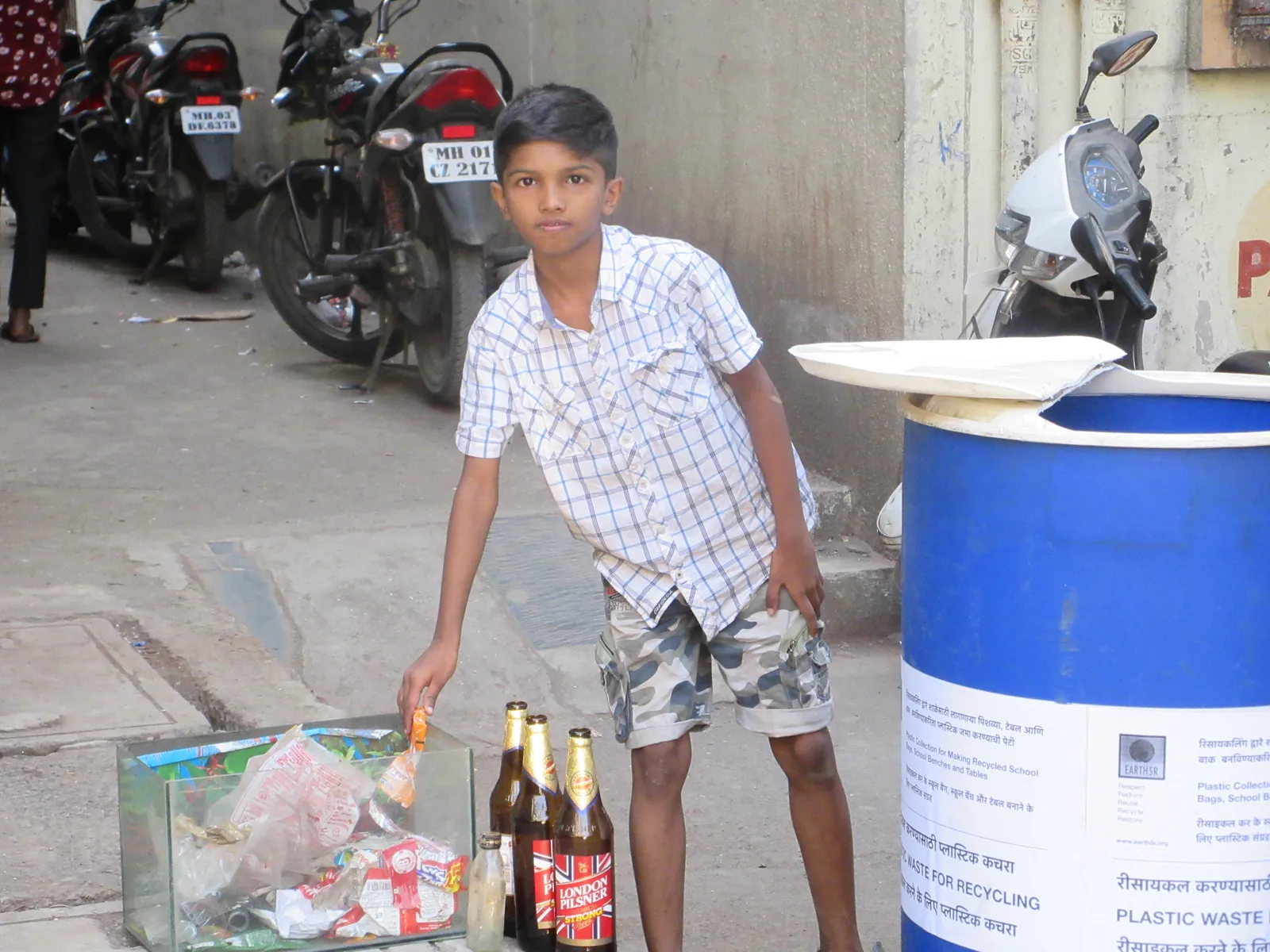
Many environmental problems come down to everyday choices. Someone can agree that waste should be segregated and still throw everything into one bin. Psychology studies this gap between intention and action, and shows how habits and social norms shape it. Behavioural science then tests small changes, such as a clearer bin label or a reminder at the right moment, and measures whether behaviour shifts.
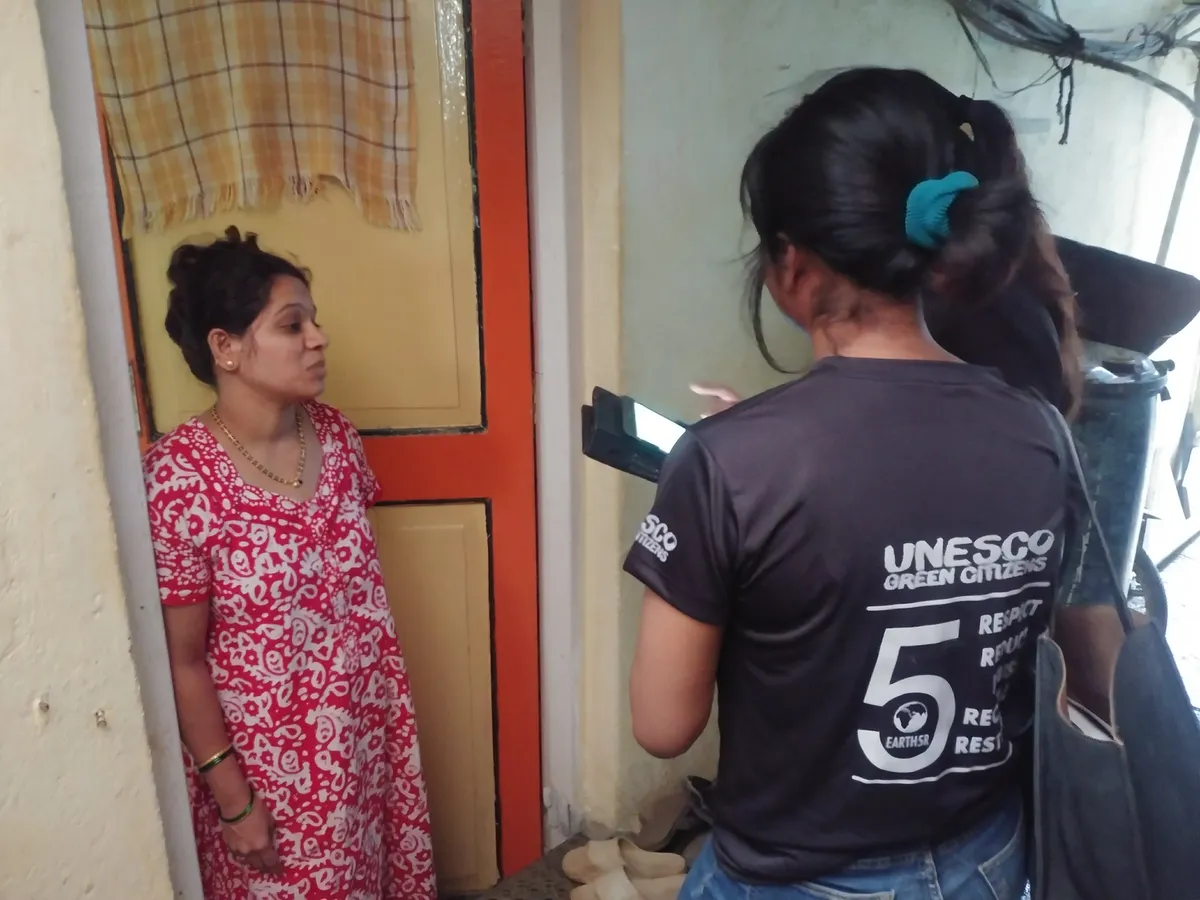
Earth5R trains residents and housing staff on waste segregation and composting, and works with housing societies that have gone zero waste with composting units. It also runs door-to-door household surveys and records field data on the Earth5R app. As a fellow you work with a community like these, design a nudge with your mentor and test it with a before-and-after measure.
This work links to the UN Sustainable Development Goals: Goal 12, Responsible consumption and production and Goal 13, Climate action.
Available projects in the psychology internship fellowship
You join Earth5R’s live work through your own subject. Your mentor shapes the final project with you.
Why bins stay mixed
Survey households or housing staff near you about waste segregation, and study which habits and barriers explain the gap between what people say and what their bins show.
Test a segregation nudge
Design a simple nudge, such as a clearer bin label or a neighbour comparison, and test it in a housing society with a before-and-after waste check.
Energy-saving habits at home
Study how families near you use lights and fans, then test a prompt or a feedback card and check meter readings to see whether use changes.
Littering attitudes and audit data
Survey visitors at a lake or beach near you about littering, and compare their answers with the items that cleanups and waste audits find on the shore.
What you do in the field
- Read key studies on habits and nudges with your mentor
- Design a short survey or observation sheet, with consent steps
- Collect data in homes, housing societies or public spaces near you
- Run a small before-and-after test of one nudge
- Analyse your results with simple statistics
- Write up your study and present it in a research conversation
Skills you build
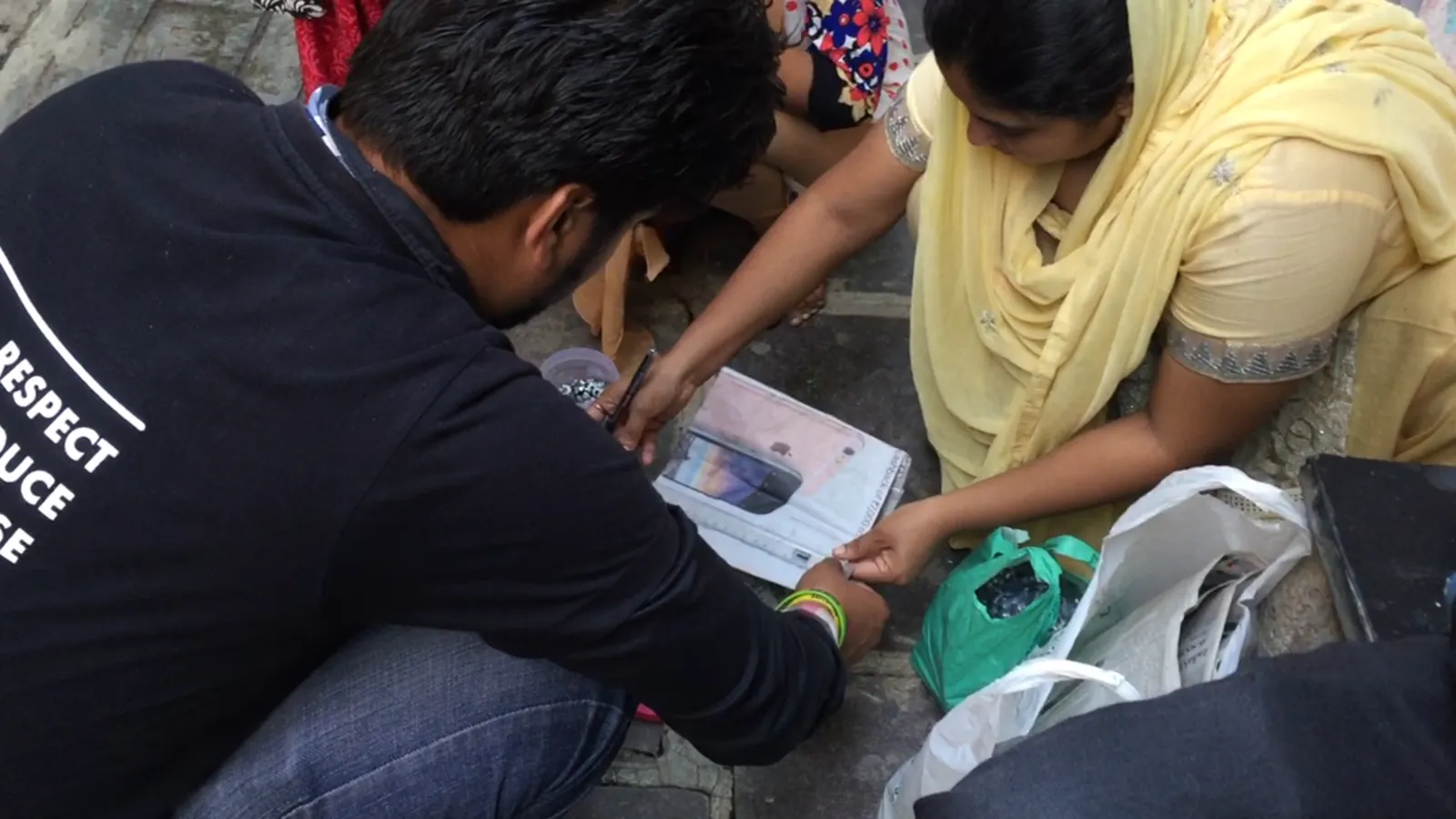
On a psychology internship, you collect your own data near where you live, using the Earth5R app and data forms. Earth5R checks the data on its platform before it goes into your project report.
How the psychology internship fellowship works
Every fellow moves through four phases. Each phase is checked by your mentor before you move on.
Observe and Map
Go into the field near where you live and collect primary data for your project in Psychology.
Frame and Design
Find the root cause in your data and frame a problem worth solving, with your mentor.
Model
Build a working model, analysis or design for your solution, and test it.
Build and Deploy
Put your solution to work, measure the result and publish a verified record on earth5r.org.
Along the way you take part in research conversations with professors at MIT, Oxford, Cambridge, LSE and other universities, and ask your own questions. See how FIELDWORK works.
Where this can take you
Degrees this work supports
- BA or BSc in Psychology
- MSc in Behavioural Science
- MSc in Environmental or Social Psychology
- MA in Applied or Organisational Psychology
- PhD in Psychology or Behavioural Economics
Careers in this field
- Behavioural insights analyst
- User researcher
- Research assistant in a psychology lab
- Behaviour change specialist in sustainability programmes
- Organisational psychologist
Universities known for Psychology
Strong psychology programmes look for applicants who understand research design and can work ethically with real participants. A fellowship project gives you a study you planned and ran yourself, reviewed by your mentor and recorded on earth5r.org. Students use a psychology internship to build a record of real work for applications to universities like these.
USA · Department of Psychology
Stanford’s Department of Psychology offers an undergraduate major, minor and honours, along with a PhD programme. Its five areas are affective science, cognitive, developmental, neuroscience and social psychology. Research topics range from decision science and culture to learning and memory, and the Stanford Center for Reproducible Neuroscience works on sharing brain-imaging data.
USA · Department of Psychology
Harvard’s Department of Psychology teaches an undergraduate concentration in psychology and runs the Graduate Program in Psychology from William James Hall. Research is organised into four programmes, Cognition, Brain, & Behavior, Developmental, Clinical Science and Social, and faculty and students often take part in more than one. The department also invites the public to join its research studies.
University of California, Berkeley
USA · Department of Psychology
The Department of Psychology at Berkeley teaches an undergraduate major and minor and a PhD programme. Its research areas are Behavioral and Systems Neuroscience, Clinical Science, Cognition, Cognitive Neuroscience, Developmental, and Social-Personality psychology. It also runs a psychology clinic with specialty clinics, workshops and trainings.
University College London (UCL)
UK · Division of Psychology and Language Sciences (PaLS)
Based in UCL’s Faculty of Brain Sciences, the Division of Psychology and Language Sciences brings together academics, clinicians and students. Its research covers behavioural and cognitive neuroscience, language and cognition, learning and memory, and therapeutic interventions, with work aimed at challenges such as climate change and mental health. The division’s Centre for Behaviour Change is a WHO Collaborating Centre.
London School of Economics and Political Science (LSE)
UK · Department of Psychological and Behavioural Science
LSE’s Department of Psychological and Behavioural Science teaches the BSc Psychological and Behavioural Science, an MPhil/PhD and several MSc programmes. These include the MSc Behavioural Science, the MSc Organisational and Social Psychology and the MSc Societal and Environmental Psychology, which applies psychology to making society and businesses sustainable. The department’s site also features the LSE Behavioural Lab.
UK · Department of Experimental Psychology
Teaching in Oxford’s Department of Experimental Psychology covers undergraduate and graduate study and the Doctorate in Clinical Psychology (DClinPsych). Its research themes are clinical psychology, mental health and wellbeing, development and learning across the lifespan, social minds, intelligent minds and computational models of cognition, and perception, attention and action.
UK · Department of Psychology
At Cambridge, the Department of Psychology teaches the undergraduate Psychological and Behavioural Sciences Tripos, an MPhil in Psychology and a PhD in Psychology. Its research centres and groups include the Centre for Family Research, the Centre for Neuroscience in Education, the Cambridge Social Decision-Making Lab and the Cambridge Political Psychology Lab. The department’s facilities include the Cambridge Babylab.
Netherlands · Psychology, Faculty of Social and Behavioural Sciences
Psychology at the UvA is part of the Faculty of Social and Behavioural Sciences and offers Bachelor’s and Master’s programmes. Research runs through six programme groups of the Psychology Research Institute, covering brain and cognition, clinical, developmental, psychological methods, social, and work and organisational psychology. Affiliated centres include the Centre for Urban Mental Health.
Canada · Department of Psychology
Toronto’s Department of Psychology offers Specialist, Research Specialist, Major and Minor programmes in the Faculty of Arts & Science. Courses fall into clusters on development, social, personality and clinical science, on learning, perception, cognition and the brain, and on methods and applications. Psychology students can also add an Environment & Behaviour Minor run with the School of the Environment.
Australia · School of Psychology
UQ’s School of Psychology teaches three undergraduate programmes with study sequences accredited by the Australian Psychology Accreditation Council, plus honours, postgraduate and research degrees. Its research labs and groups include the Social Change Lab, the Applied Social Psychology Lab and the Cognitive Engineering Research Group. The UQ Psychology Clinic offers assessment and therapy services to the public.
This list is for guidance. These universities are widely known for Psychology. Earth5R has no admissions arrangement with them, and admission decisions rest with each university. Fellows get help researching universities, scholarships and applications, depending on the programme.
What your fellowship fee pays for
An internship fellowship at Earth5R is time and attention from senior researchers and leaders. Each part below takes staff time and resources that we set aside for every fellow.
Live mentoring with experts
One-to-one mentoring in most fellowships, with regular check-ins on your project.
Dialogues with global researchers
Academics from international universities and renowned scientists, who answer your questions and discuss your work.
Support in the field
Guidance while you collect data and work on your project in the field.
References for your next step
References when you apply for jobs, higher studies and research programmes.
Your work, hosted for life
Your work and data stay on Earth5R’s website and servers for life, where universities and employers can check them.
Time from senior people
Each fellow receives time and attention from senior researchers and leaders, set aside for them.
Fee details available on request.
Choose your fellowship
The fee pays for live mentoring, dialogues with global researchers, support in the field, references and lifelong hosting of your work. Fee details available on request.
Psychology internship: common questions
What kind of study will I run in this psychology internship?
A small field study on one behaviour, such as waste segregation or energy use. You write a research question, collect data from people near you and test one simple change. Then you report what you find, including results that show no effect.
Do I need to know statistics?
You can start without it. Your mentor shows you how to summarise survey data and compare before-and-after results in a spreadsheet. Students with more experience can work with larger samples and formal statistical tests.
Can a psychology internship help before a Master’s in behavioural science?
It gives you a field study with real data to describe in your statement of purpose and interviews. The record sits on a verified profile on earth5r.org that admissions teams can check. Admission decisions rest with each university.
Is the psychology internship fellowship paid?
Yes. It is a paid, mentored internship fellowship. The fee pays for live mentoring, dialogues with global researchers, support in the field, references and lifelong hosting of your work. Fee details are available on request.
Can I do this psychology internship online?
Yes. FIELDWORK runs online, and your field work takes place near where you live. Your mentor guides you through each step.
Who can apply?
School and university students from India and other countries. The fellowship prepares you for university, postgraduate study and work.
What do I get at the end?
A certificate, a letter of recommendation, a project report and a verified profile on earth5r.org, where universities and employers can check your work.
Apply for the psychology internship fellowship
Work on a live Earth5R project in Psychology with a mentor, take part in research conversations with global researchers, and build a verified record of your work. Fee details available on request.