
International relations internship fellowship
This international relations internship starts with one Earth5R project in India and places it in a global frame, with a mentor who guides your research at every step. You link the project to the UN Sustainable Development Goals, compare it with similar programmes in other countries and write up what could transfer between them.
For school and university students interested in diplomacy or global development who want a field case behind their research. Online, with field work near where you live. The fellowship is paid because every fellow receives time and attention from senior researchers and leaders.
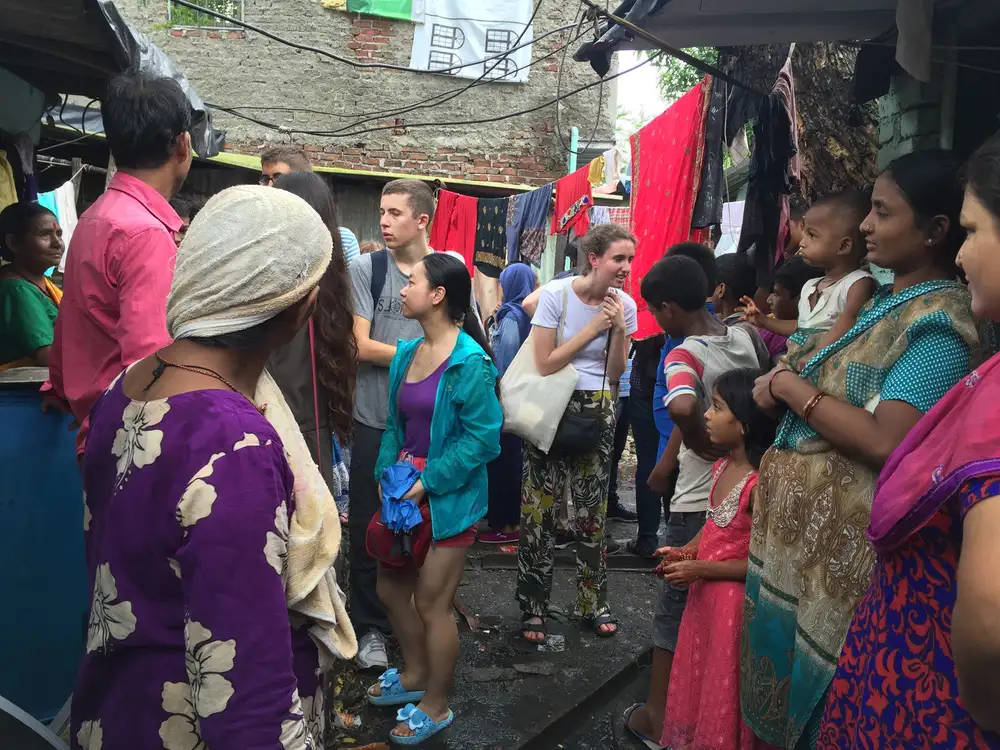
Why international relations and development matter for sustainability
Climate change and river pollution don’t stop at national borders, so countries agree on shared targets to deal with them. The UN Sustainable Development Goals set 17 such goals for all UN member states. Progress on them still happens in villages and city wards. Development research studies which local programmes work and why, and international relations explains how countries fund those programmes and learn from one another.
Earth5R is an environmental organisation based in Mumbai, working in 150+ Indian cities. Its field work runs from river cleanups on the Mithi, Mula Mutha and Yamuna to women’s livelihood programmes and rooftop plantations in informal settlements. It also built a solar-powered river-cleaning machine for the Mithi River with the UN Technology Innovation Labs. As a fellow you study one of these projects as a development case and compare it with work abroad.
This work links to the UN Sustainable Development Goals: Goal 13, Climate action and Goal 17, Partnerships for the goals.
Available projects in the international relations internship fellowship
You join Earth5R’s live work through your own subject. Your mentor shapes the final project with you.
Map a project to the SDGs
Take one Earth5R field project, such as a river cleanup or a zero waste housing society, and map which SDG targets it supports and how you would measure progress.
One programme, two countries
Compare an Earth5R programme, such as rooftop plantations that cool homes in informal settlements, with a similar programme in another country, and explain what would need to change to transfer it.
Technology transfer case study
Study how a solar-powered river-cleaning machine first built in Finland was rebuilt for the tidal and monsoon conditions of the Mithi River, using photos, build documents and view-only CAD designs.
Women’s livelihoods and development
Study Earth5R’s women’s livelihood work, including paper bag making, bank accounts and financial literacy, and compare it with livelihood programmes in other countries.
What you do in the field
- Read the SDG targets and indicators that fit your project
- Do field work near you, such as a household survey or a waste audit
- Interview residents about what a project changed for them
- Find and read reports on similar programmes in other countries
- Write a comparative case study with your mentor
- Present your findings in a research conversation
Skills you build
On a international relations internship, you collect your own data near where you live, using the Earth5R app and data forms. Earth5R checks the data on its platform before it goes into your project report.
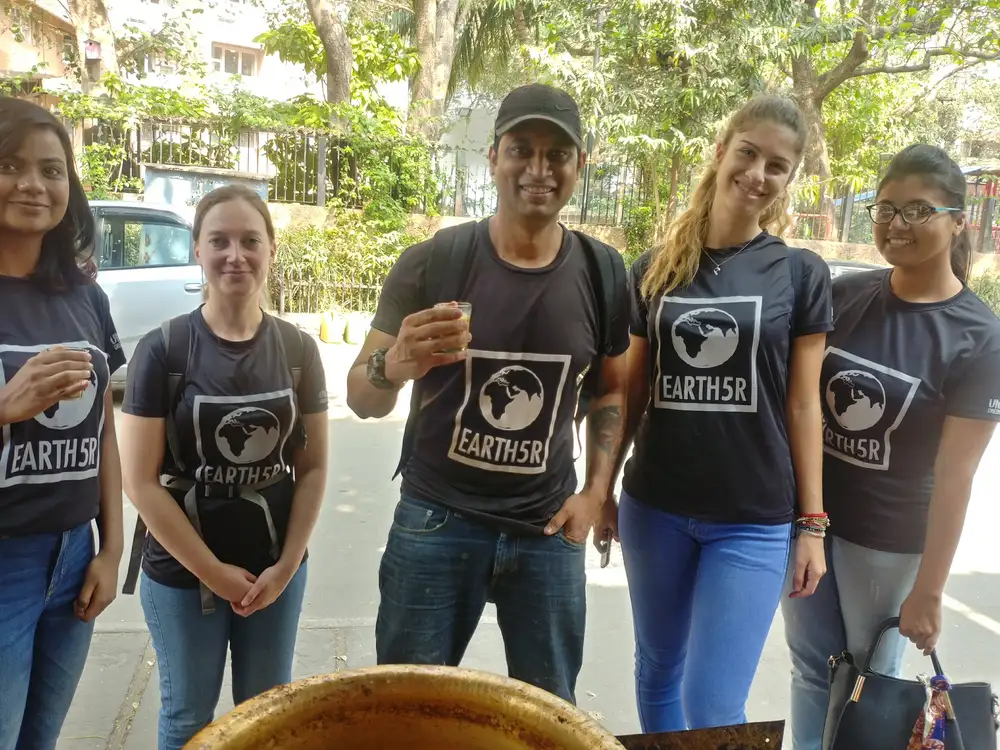
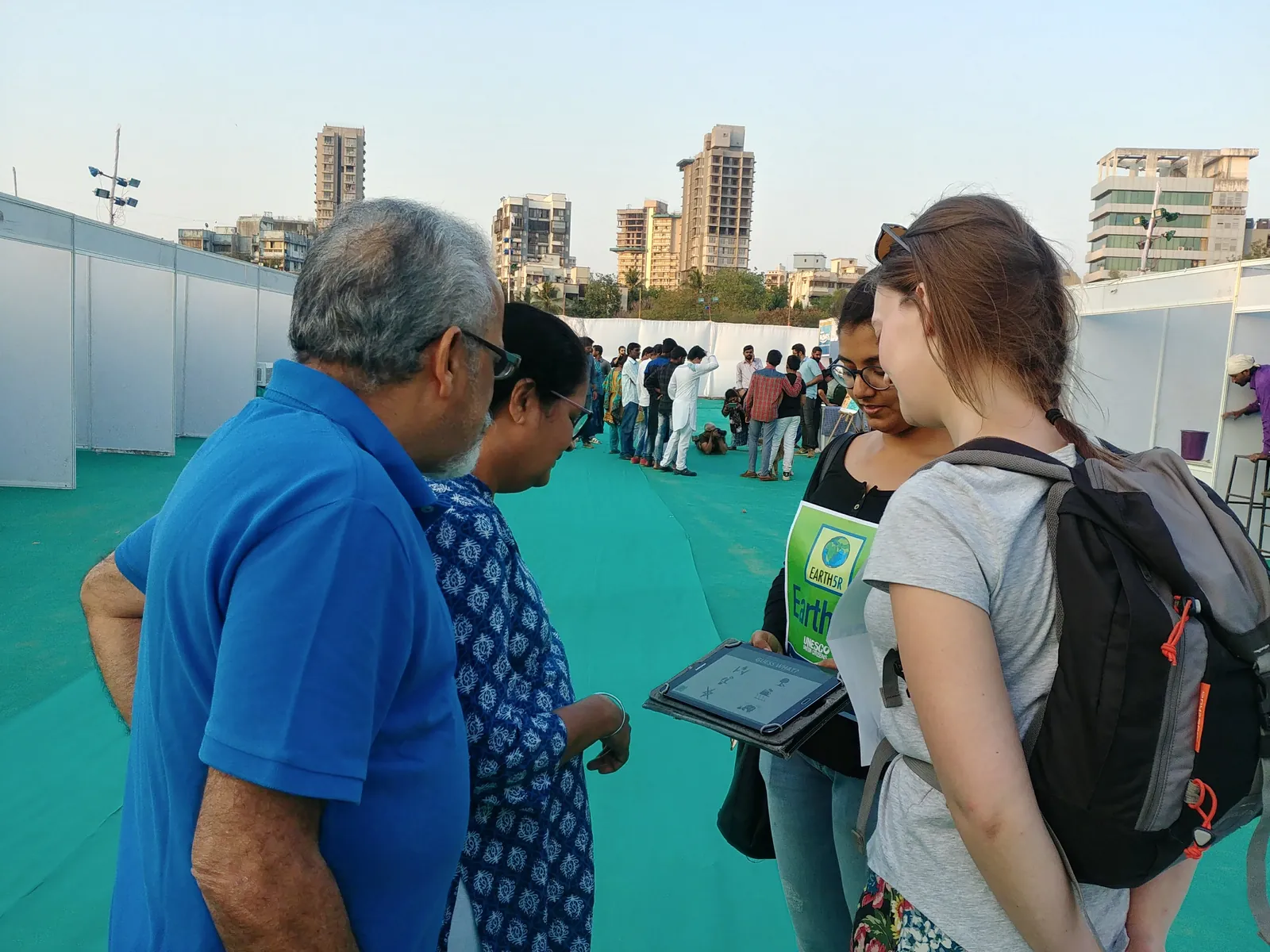
How the international relations internship fellowship works
Every fellow moves through four phases. Each phase is checked by your mentor before you move on.
Observe and Map
Go into the field near where you live and collect primary data for your project in International Relations and Development.
Frame and Design
Find the root cause in your data and frame a problem worth solving, with your mentor.
Model
Build a working model, analysis or design for your solution, and test it.
Build and Deploy
Put your solution to work, measure the result and publish a verified record on earth5r.org.
Along the way you take part in research conversations with professors at MIT, Oxford, Cambridge, LSE and other universities, and ask your own questions. See how FIELDWORK works.
Where this can take you
Degrees this work supports
- BA in International Relations or Political Science
- BA or BSc in Development Studies or Economics
- MA or MSc in International Relations
- MA in Development Studies or International Development
- Master’s in International Affairs or Public Policy
Careers in this field
- Development programme officer
- Policy researcher at a think tank
- Diplomat or foreign service officer
- Sustainability analyst at an international organisation
- Climate and development consultant
Universities known for International Relations and Development
Strong international relations and development programmes look for applicants who can connect global debates to data from a real place. An international relations internship with Earth5R gives you a case study you researched in the field and compared with programmes abroad, reviewed by your mentor. Students use a international relations internship to build a record of real work for applications to universities like these.
Edmund A. Walsh School of Foreign Service, Georgetown University
USA · School of Foreign Service (SFS)
Georgetown’s School of Foreign Service teaches undergraduate and master’s programmes in international affairs in Washington, DC. The Bachelor of Science in Foreign Service has majors that range from business and policy to science. Its centres include the Center for Security Studies, the Center for Security and Emerging Technology and the African Studies Program, which works on governance and economic development.
Johns Hopkins School of Advanced International Studies (SAIS)
USA · Johns Hopkins School of Advanced International Studies (SAIS)
Johns Hopkins SAIS teaches master’s, doctoral and certificate programmes in international affairs. It has campuses in Washington DC and Bologna, and in Nanjing through the Hopkins-Nanjing Center. Its online MA in Sustainable Energy combines policy analysis, economics, finance and geopolitics for work in global energy markets.
The Fletcher School at Tufts University
USA · The Fletcher School
The Fletcher School offers a Master of Arts in International Affairs, a Master of International Business and executive education. Its research centres include the Center for International Environment and Resource Policy, the Center for International Law and Governance and the Edward R. Murrow Center for Global Diplomacy. Research spans international law, environmental policy, security and diplomacy.
London School of Economics and Political Science (LSE)
UK · Department of International Relations
LSE’s Department of International Relations teaches undergraduate, master’s and MPhil/PhD programmes. Its research clusters cover international institutions, law and ethics, international political economy, security and statecraft, and theory, area and history. Recent work includes joint projects with Tsinghua University on global sustainability, and the department publishes the journal Millennium.
UK · Oxford Department of International Development (ODID)
The Oxford Department of International Development is a graduate department based at Queen Elizabeth House. It teaches the MSc in Global Governance and Diplomacy, the MPhil in Development Studies, MSc programmes in economics for development and in migration, and DPhils. Research themes include political and international dimensions of development, and migration and refugees.
Institute of Development Studies (IDS), University of Sussex
UK · Institute of Development Studies (IDS)
IDS is a development research institute that works in partnership with Sussex, where it is located. Its research themes include climate and environment, governance and conflict, health and food systems, and social and economic justice. Postgraduate degrees include the MSc Climate Change, Development & Policy and a PhD by research.
Geneva Graduate Institute (IHEID)
Switzerland · Geneva Graduate Institute (IHEID)
The Institute focuses on international relations and development, with an interdisciplinary master’s and five disciplinary master’s and PhD programmes, including international relations and political science, and international economics. Its research clusters include diplomacy and global governance, development cooperation, and sustainability, environment, Anthropocene and SDGs.
France · Paris School of International Affairs (PSIA)
Sciences Po’s Paris School of International Affairs offers two-year master’s programmes in fields such as international security, international governance and diplomacy, and international development. Programmes in environmental policy and international energy transitions cover climate and energy questions. PSIA also runs a one-year Master in Advanced Global Studies and international and national dual degrees.
S. Rajaratnam School of International Studies (RSIS), Nanyang Technological University
Singapore · S. Rajaratnam School of International Studies (RSIS)
RSIS is a graduate school and think tank at NTU. It teaches MSc programmes in international relations, strategic studies, international political economy and Asian studies, along with a PhD. Its centres include the Institute of Defence and Strategic Studies, the Centre for Multilateralism Studies and the Centre for Non-Traditional Security Studies, whose work includes water security.
Australian National University (ANU)
Australia · Coral Bell School of Asia Pacific Affairs
ANU’s Coral Bell School of Asia Pacific Affairs studies Asia-Pacific and international politics, society, strategy, security and diplomacy. It is part of the College of Asia and the Pacific and has four units, including the Department of International Relations and the Strategic and Defence Studies Centre. The school offers undergraduate, postgraduate and research degrees.
This list is for guidance. These universities are widely known for International Relations and Development. Earth5R has no admissions arrangement with them, and admission decisions rest with each university. Fellows get help researching universities, scholarships and applications, depending on the programme.
What your fellowship fee pays for
An internship fellowship at Earth5R is time and attention from senior researchers and leaders. Each part below takes staff time and resources that we set aside for every fellow.
Live mentoring with experts
One-to-one mentoring in most fellowships, with regular check-ins on your project.
Dialogues with global researchers
Academics from international universities and renowned scientists, who answer your questions and discuss your work.
Support in the field
Guidance while you collect data and work on your project in the field.
References for your next step
References when you apply for jobs, higher studies and research programmes.
Your work, hosted for life
Your work and data stay on Earth5R’s website and servers for life, where universities and employers can check them.
Time from senior people
Each fellow receives time and attention from senior researchers and leaders, set aside for them.
Fee details available on request.
Choose your fellowship
The fee pays for live mentoring, dialogues with global researchers, support in the field, references and lifelong hosting of your work. Fee details available on request.
International relations internship: common questions
How does an international relations internship connect to field work in India?
You start with one Earth5R project and the people it affects, then compare it with programmes in other countries. This gives your writing on global goals a base in field data that you collected or checked yourself.
Will I work with the UN Sustainable Development Goals?
Yes. You map a local project to specific SDG targets and indicators, and learn how progress on the goals is measured. Your mentor checks that the targets you choose match what the project does on the ground.
Which countries can I compare with India?
You can pick any country with reliable public reports on a similar programme. If you live outside India, your own country is a practical choice, since your field work happens near where you live.
Is the international relations internship fellowship paid?
Yes. It is a paid, mentored internship fellowship. The fee pays for live mentoring, dialogues with global researchers, support in the field, references and lifelong hosting of your work. Fee details are available on request.
Can I do this international relations internship online?
Yes. FIELDWORK runs online, and your field work takes place near where you live. Your mentor guides you through each step.
Who can apply?
School and university students from India and other countries. The fellowship prepares you for university, postgraduate study and work.
What do I get at the end?
A certificate, a letter of recommendation, a project report and a verified profile on earth5r.org, where universities and employers can check your work.
Apply for the international relations internship fellowship
Work on a live Earth5R project in International Relations and Development with a mentor, take part in research conversations with global researchers, and build a verified record of your work. Fee details available on request.