
Environmental law internship fellowship
This environmental law internship tests India’s waste and plastic rules against what happens on the street, with a mentor who reviews your research and drafting. You study a rule such as the Plastic Waste Management Rules, check how it is applied where you live and write a legal brief on the gaps you find.
For school students thinking about law and for law students who want field research behind their legal writing. Online, with field work near where you live. The fellowship is paid because every fellow receives time and attention from senior researchers and leaders.
Why environmental law matters for sustainability
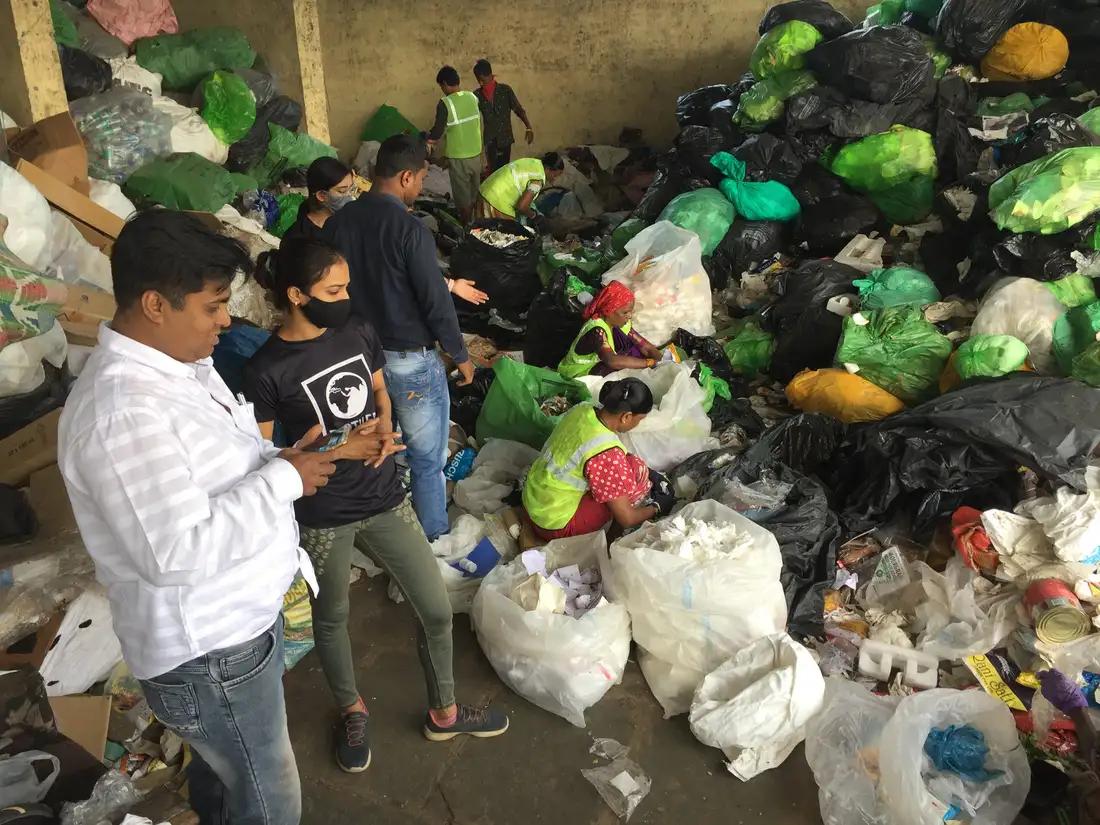
Environmental law decides who must act on pollution and waste. In India, the Solid Waste Management Rules require waste to be segregated at source. The Plastic Waste Management Rules make producers and brand owners responsible for the plastic packaging they put on the market. These rules work only when people know them and someone enforces them. Lawyers who study both the text and the field can draft clearer rules and hold the right parties to account.
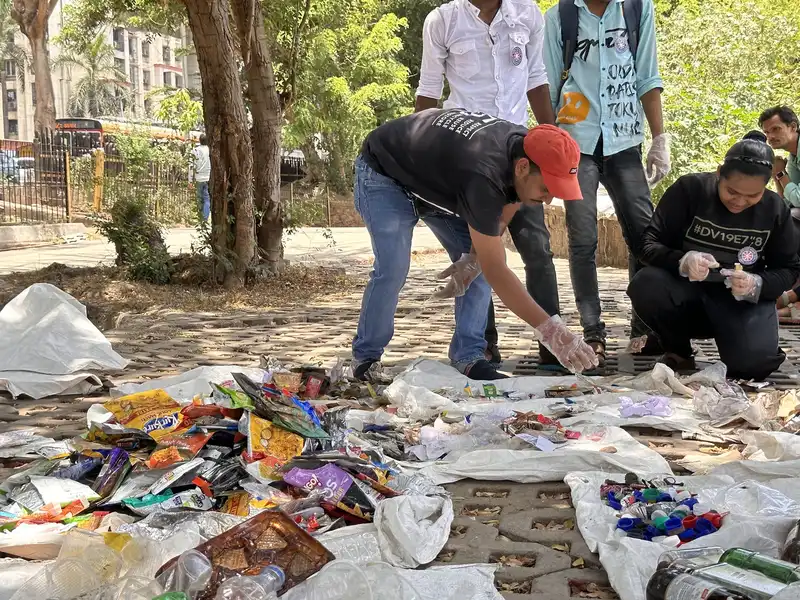
Earth5R’s field work shows how these rules play out in 150+ Indian cities. Its teams train housing societies on segregation and composting. At lake and river cleanups, they run brand audits that sort and count plastic items by brand. Its TERRA Score work checks the BRSR filings of 1,200+ companies listed in India against field data. As a fellow you use these records to test a rule against what happens on the ground.
This work links to the UN Sustainable Development Goals: Goal 12, Responsible consumption and production and Goal 16, Peace, justice and strong institutions.
Available projects in the environmental law internship fellowship
You join Earth5R’s live work through your own subject. Your mentor shapes the final project with you.
Segregation rules in your ward
Study what the Solid Waste Management Rules ask of households and housing societies, check how closely buildings near you follow them, and write a short legal brief.
Plastic rules and brand audits
Use brand audit data from lake and beach cleanups to see whose packaging ends up on the shore, and compare it with producer duties under the Plastic Waste Management Rules.
Company disclosures and the law
Study what large listed companies in India disclose in their BRSR filings, then help compare their claims with field data using the TERRA Score method, with company names masked.
Informal recyclers and the rules
Visit an informal recycling unit near you, record how waste pickers and recyclers work, and study how India’s waste rules treat their role.
What you do in the field
- Read the text of a rule and key court judgments on it
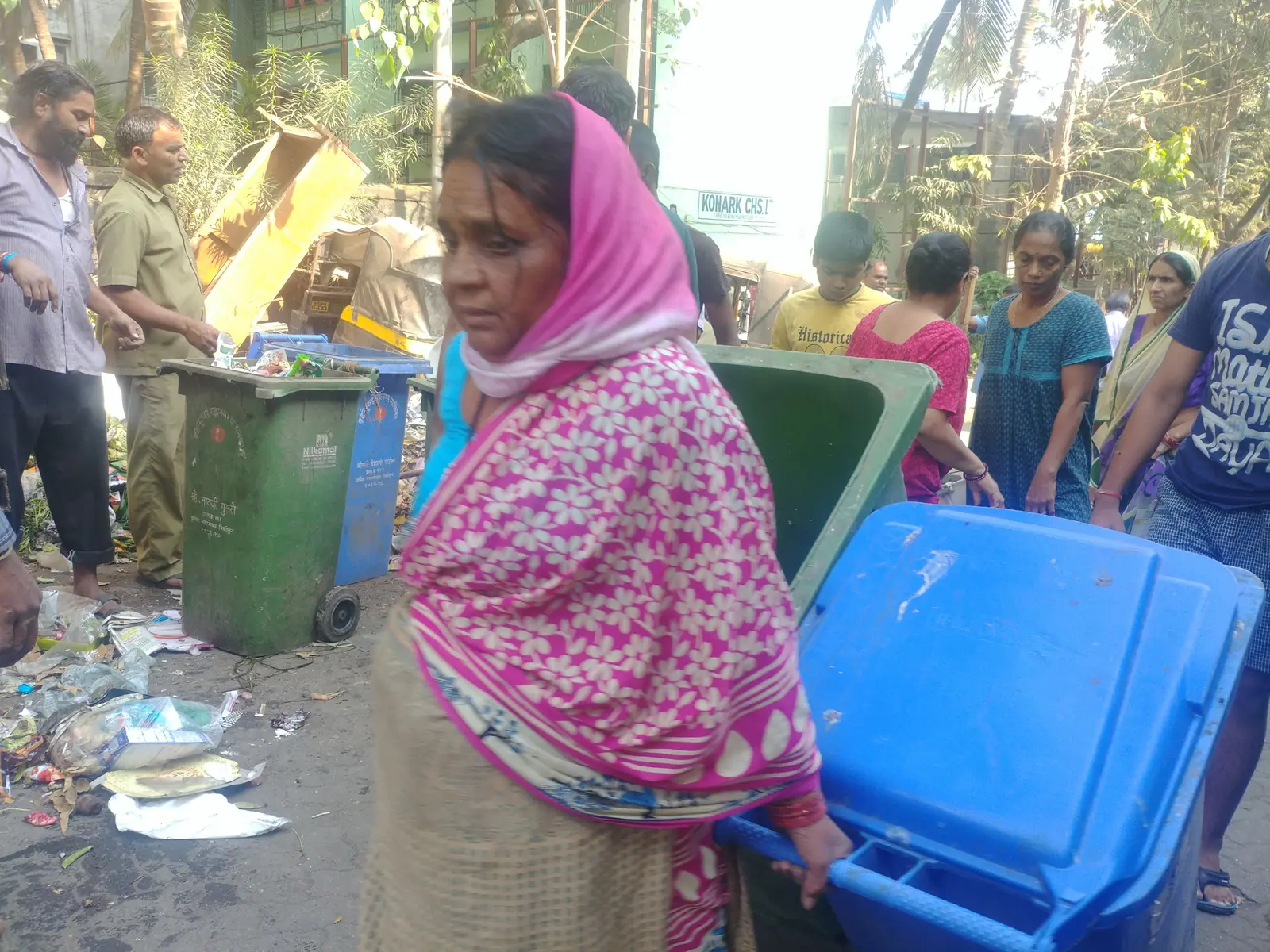
- Check compliance near you, such as segregation in buildings or plastic bags in shops
- Record what you find on the Earth5R app with photos and locations
- Interview residents, shopkeepers or housing staff about the rule
- Draft a legal brief that applies the law to your findings
- Present your brief in a research conversation and answer questions on it
Skills you build
On a environmental law internship, you collect your own data near where you live, using the Earth5R app and data forms. Earth5R checks the data on its platform before it goes into your project report.
How the environmental law internship fellowship works
Every fellow moves through four phases. Each phase is checked by your mentor before you move on.
Observe and Map
Go into the field near where you live and collect primary data for your project in Law.
Frame and Design
Find the root cause in your data and frame a problem worth solving, with your mentor.
Model
Build a working model, analysis or design for your solution, and test it.
Build and Deploy
Put your solution to work, measure the result and publish a verified record on earth5r.org.
Along the way you take part in research conversations with professors at MIT, Oxford, Cambridge, LSE and other universities, and ask your own questions. See how FIELDWORK works.
Where this can take you
Degrees this work supports
- BA LLB or BBA LLB, the five-year law degree in India
- LLB, the three-year law degree after a first degree
- LLM in Environmental Law
- LLM in Energy and Climate Law
- JD with an environmental law focus
Careers in this field
- Environmental lawyer
- Legal researcher at an environmental organisation or think tank
- Compliance or ESG legal analyst
- Policy and regulatory adviser
- Law clerk at a court or tribunal
Universities known for Law
Strong law schools look for applicants who can read a legal text closely and build a clear argument from it. An environmental law internship with Earth5R gives you a legal brief based on field data, reviewed by your mentor and recorded on your verified profile on earth5r.org. Students use a environmental law internship to build a record of real work for applications to universities like these.
Vermont Law and Graduate School
USA · Environmental Law Specialization
Vermont Law’s Environmental Law Specialization is open to students in any of its degrees or certificates. Its Institute for Energy and the Environment and Center for Agriculture and Food Systems run courses and clinics, including a Food and Agriculture Clinic. Related specialisations cover climate law, energy law and international environmental law.
Elisabeth Haub School of Law at Pace University
USA · Environmental Law Program, Elisabeth Haub School of Law
The Environmental Law Program at the Haub School of Law offers an LLM and an SJD in Environmental Law, and an advanced certificate for JD students. Students can work in the Environmental Litigation Clinic and the Food and Farm Business Law Clinic. Related centres include the Pace Energy and Climate Center and the Land Use Law Center.
USA · Environmental, Natural Resources, and Energy Law program
Lewis & Clark’s Environmental, Natural Resources, and Energy Law programme offers JD certificates in Environmental and Natural Resources Law and in Energy, Innovation, and Sustainability Law. Graduate students can take an LLM or an MSL in Environmental Law, in person or online. Impact areas include climate resilience and energy, ecosystems and biodiversity, and environmental justice.
USA · Sabin Center for Climate Change Law
Columbia’s Sabin Center for Climate Change Law develops legal techniques to address the climate crisis and advance climate justice, and trains students in the field. Its legal tools include the Climate Litigation Database. Research covers climate and environmental justice, climate law and science, energy transition, and global climate law.
University of California, Berkeley, School of Law (Berkeley Law)
USA · Center for Law, Energy & the Environment (CLEE)
Based at Berkeley Law, the Center for Law, Energy & the Environment works to turn environmental research and policy into results. Its programmes cover clean transportation, climate equity, climate risk and finance, energy transition, resilient communities and sustainable water. Its training work links to the Environmental and Energy Program at Berkeley Law.
University College London (UCL)
UK · Centre for Law and Environment, Faculty of Laws
The Centre for Law and Environment is the focal point for environmental law expertise in the UCL Faculty of Laws. It works on research and teaching about the role of law in meeting environmental and energy challenges, across UK, EU and international law. Students can take the LLM in Environmental Law and Policy.
UK · Edinburgh Law School, LLM in Global Environment and Climate Change Law
Edinburgh Law School’s LLM in Global Environment and Climate Change Law gives advanced, multidisciplinary training in the law of environmental protection. It places special emphasis on international regimes for climate change, biodiversity conservation and pollution control. Teaching staff are active researchers who also contribute to the work of governments and international organisations.
Netherlands · Utrecht Centre for Water, Oceans and Sustainability Law (UCWOSL), School of Law
The Utrecht Centre for Water, Oceans and Sustainability Law researches water, oceans, environmental, climate and sustainability law within the School of Law. It runs the LLM programme Law and Sustainability in Europe. Its staff also teach the Oceans, the Environment and Sustainability track of the master’s in Public International Law.
National University of Singapore (NUS) Faculty of Law
Singapore · Asia-Pacific Centre for Environmental Law (APCEL)
The Asia-Pacific Centre for Environmental Law at the NUS Faculty of Law runs a programme of teaching, research and outreach on environmental law and policy. It aims to use legal mechanisms to tackle climate change, biodiversity loss and plastics pollution. Recent projects cover the Paris Rulebook, sustainability standards, and environmental courts and tribunals.
University of Sydney Law School
Australia · Australian Centre for Climate and Environmental Law (ACCEL)
The Australian Centre for Climate and Environmental Law at Sydney Law School carries out interdisciplinary research, education and public engagement in climate and environmental law. It develops units of study for undergraduate and postgraduate programmes and supervises postgraduate research. Members of the legal profession, including the judiciary, contribute to its teaching and seminars.
This list is for guidance. These universities are widely known for Law. Earth5R has no admissions arrangement with them, and admission decisions rest with each university. Fellows get help researching universities, scholarships and applications, depending on the programme.
What your fellowship fee pays for
An internship fellowship at Earth5R is time and attention from senior researchers and leaders. Each part below takes staff time and resources that we set aside for every fellow.
Live mentoring with experts
One-to-one mentoring in most fellowships, with regular check-ins on your project.
Dialogues with global researchers
Academics from international universities and renowned scientists, who answer your questions and discuss your work.
Support in the field
Guidance while you collect data and work on your project in the field.
References for your next step
References when you apply for jobs, higher studies and research programmes.
Your work, hosted for life
Your work and data stay on Earth5R’s website and servers for life, where universities and employers can check them.
Time from senior people
Each fellow receives time and attention from senior researchers and leaders, set aside for them.
Fee details available on request.
Choose your fellowship
The fee pays for live mentoring, dialogues with global researchers, support in the field, references and lifelong hosting of your work. Fee details available on request.
Environmental law internship: common questions
Do I need to study law already for this environmental law internship?
No. Your mentor starts you on how to read a rule and work out what it requires, step by step. Students who already study law go further into case law and legal drafting.
Which laws will I study?
You can start with India’s Solid Waste Management Rules or the Plastic Waste Management Rules, which match Earth5R’s waste field work. Students outside India can compare them with a similar law in their own country.
What is a legal brief?
A short document that sets out a legal issue, the rule that applies, the facts you found in the field and your conclusion. Your mentor reviews each draft, and the final brief goes into your project report.
Is the environmental law internship fellowship paid?
Yes. It is a paid, mentored internship fellowship. The fee pays for live mentoring, dialogues with global researchers, support in the field, references and lifelong hosting of your work. Fee details are available on request.
Can I do this environmental law internship online?
Yes. FIELDWORK runs online, and your field work takes place near where you live. Your mentor guides you through each step.
Who can apply?
School and university students from India and other countries. The fellowship prepares you for university, postgraduate study and work.
What do I get at the end?
A certificate, a letter of recommendation, a project report and a verified profile on earth5r.org, where universities and employers can check your work.
Apply for the environmental law internship fellowship
Work on a live Earth5R project in Law with a mentor, take part in research conversations with global researchers, and build a verified record of your work. Fee details available on request.