
A month after International Coastal Cleanup Day 2026, and a season after the monsoon dumped hundreds of tonnes of waste back onto Mumbai’s sand, this research brief asks what a beach cleanup in India actually achieves. It brings together the national beach cleanup data, peer-reviewed litter surveys, river plastic models and more than a decade of Earth5R field work on beaches, lakes and the Mithi River, and ends with what companies, cities and citizens should measure next.
Beach cleanup in India: the evidence at a glance
- The coastline is 11,098 km, the count is one day
- Mumbai’s 950 tonne monsoon haul
- Plastic is 43% of beach litter, by count
- Mangroves and reefs hold more plastic
- Most beach litter starts in a river
- What Earth5R’s beach cleanups found
- Case study: the Mithi programme
- Powai Lake: count before you clear
- The five R’s, applied to a coastline
- What a CSR beach programme should measure
- What comes next
- Questions
This is the fourth EarthJournal research piece this month on what India throws away, and where it ends up. Read it with our data on food waste in India, textile waste and the new four-stream segregation rules, because almost every item on a beach began in one of those bins.
01
India’s coastline is 11,098 km long, and its official beach cleanup count happens on one Saturday a year
India’s coastline grew on paper in 2025. Re-measured by the National Hydrographic Office and the Survey of India with high-resolution data, it went from 7,516.6 km to 11,098.81 km. Maharashtra’s share rose from 652.6 km to 877.97 km, Gujarat’s to 2,340.62 km and the Andaman and Nicobar Islands’ to 3,083.50 km.[1] Every one of those kilometres has a high-tide line where litter collects.
The national count of that litter happens mainly on International Coastal Cleanup Day, the third Saturday of September. The Ministry of Earth Sciences, through the National Centre for Coastal Research, assesses beach litter every year on that day under the Swachh Sagar Surakshit Sagar programme across coastal states and union territories.[4] The Indian Coast Guard has been the national coordinator of the day since 2006, and reported 26,092 volunteers for the 2025 edition.[6]
What the national portal recorded on Coastal Cleanup Day
Litter collected, tonnes, with beaches and participants as reported on the national beach cleanup portal
Source: National Centre for Sustainable Coastal Management, National Beach Cleanup Activity portal, state-wise data, accessed 23 October 2026.[3] The 2026 figure covers reports filed so far for the September 2026 cleanup.
The portal run by the National Centre for Sustainable Coastal Management shows how much that one day can vary. In 2024 it recorded 20 beaches, 9,127 participants and 47,144 kg of litter. In 2025 it recorded 79 beaches, 31,091 participants and 1,26,848 kg. For September 2026, reports from 47 beaches and 20,856 participants add up to 24,967 kg so far.[3] Ocean Conservancy, which runs the global cleanup, lists 17,036 Indian volunteers and 28,253 kg for 2025, a different tally of the same event.[7]
MoES institutes have organised more than 250 beach cleanup events since 2018, and removed about 150 tonnes of beach litter through Swachh Sagar Surakshit Sagar, Coastal Cleanup Day, World Oceans Day and other drives.[4] The biggest single push, the 75-day Swachh Sagar Surakshit Sagar campaign of 2022, covered 75 beaches with an estimated budget of about ₹10 crore.[8]
India has a beach litter count, but not a beach litter baseline. Totals rise and fall with how many beaches report, not only with how dirty the coast is. A cleanup that records the beach length covered, the hours worked and the weight by material is worth far more than one that reports only bags filled.
02
Six Mumbai beaches gave back more than 950 tonnes of waste in nine days of monsoon
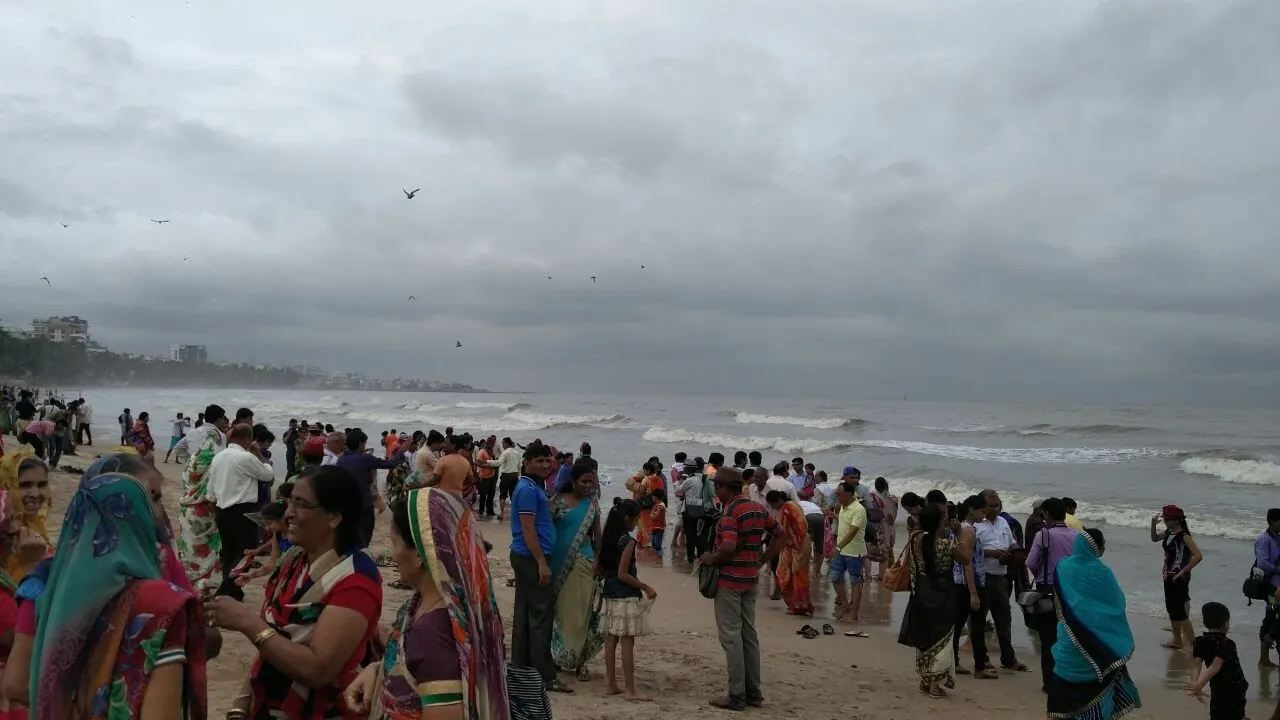
Heavy rain lashed Mumbai between 15 and 19 August 2025, and high tides pushed the city’s waste back onto its shore. The Brihanmumbai Municipal Corporation ran a special drive at six beaches, with 380 workers and six machines deployed every day. By 24 August it had cleared more than 950 tonnes of garbage.[2]
What Mumbai’s beaches returned after the August 2025 rains
Garbage cleared by the BMC, 15 to 24 August 2025, tonnes
Source: BMC data reported by The Indian Express, 24 August 2025.[2] Dadar-Mahim is reported as over 300 tonnes. The total is reported as over 950 tonnes.
Juhu took the most staff, 150 workers, and gave up 365 tonnes in eight days. Versova gave up 200 tonnes to 120 workers, and Dadar-Mahim more than 300 tonnes to 48 workers. Gorai, which sees fewer visitors, gave up 20 tonnes.[2] Put another way, the BMC lifted about seven and a half times the weight that the national portal recorded for the whole country on Coastal Cleanup Day 2025.[2][3]
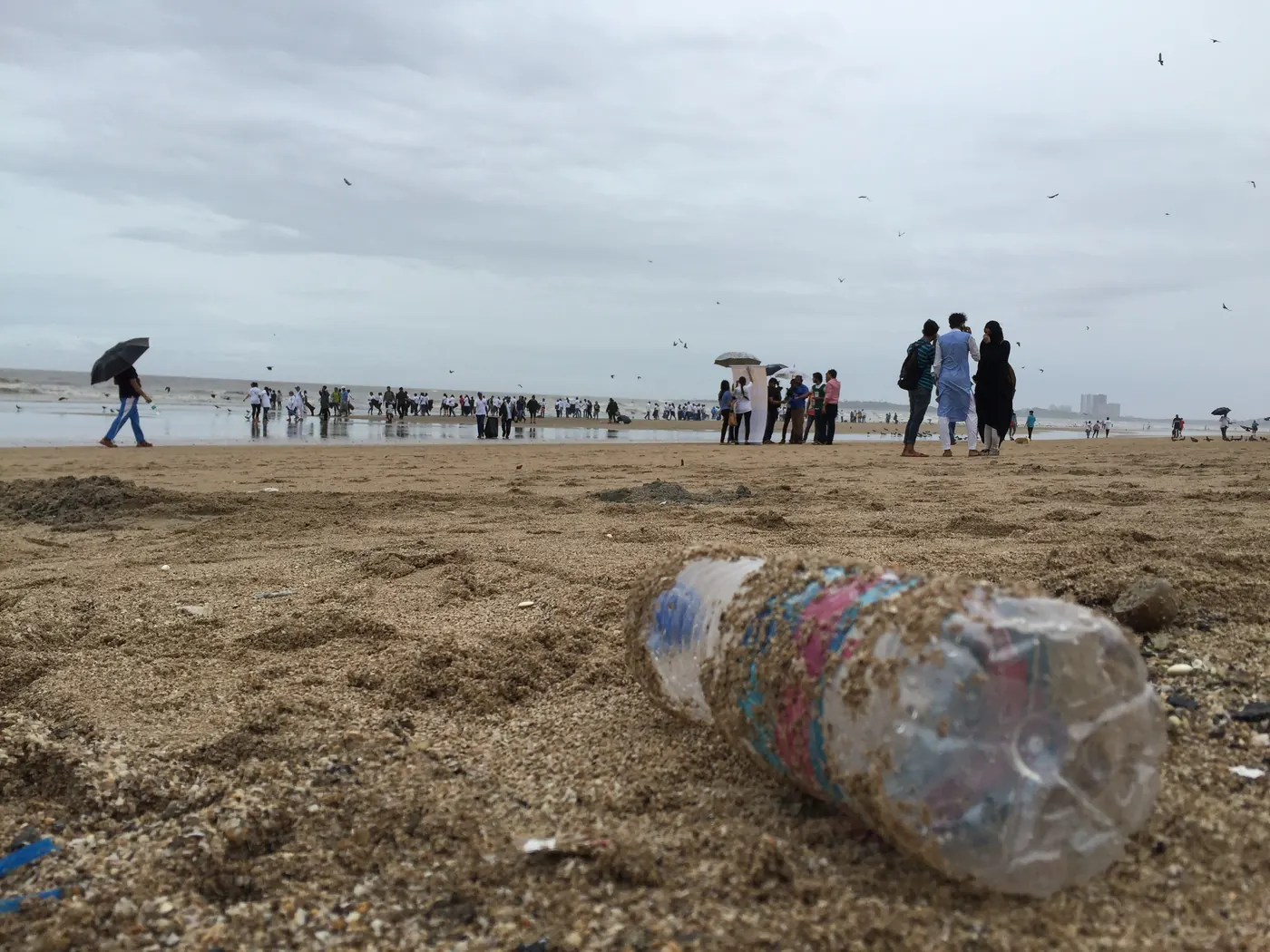
This is not new. A 2013 study of four Mumbai beaches, Juhu, Versova, Aksa and Dadar, found a mean of 68.83 plastic items and 7.49 grams of plastic per square metre. Microplastics of 1 to 5 mm made up 41.85% of the plastic, rising to 55.33% at Juhu. The authors traced the debris to recreational, religious and fishing use of the beaches.[9]
For Mumbai, the cleanup that matters most is the one after the first heavy rain, not the one on a sunny Saturday. Plans that budget for a single annual event miss the weeks when the sea hands back the most waste.
03
Plastic fell to 43% of India’s beach litter in 2024, but wood, glass and fishing nets now fill the sacks too
The Ministry of Earth Sciences reports a declining trend in beach litter, with plastic making up 67% of it in 2018 and 43% in 2024. Its assessments find that the main sources of beach litter are tourism and recreation.[4]
The peer-reviewed national survey behind those assessments covered 33 beaches in 2019 and 30 in 2021. Average litter density fell from 0.475 to 0.3 items per square metre. But plastic’s share of the items rose from 65% to 74%, single-use plastic was the most common type, and about 60% of the litter came from tourism and public littering. Six beaches were rated extremely dirty in 2019 and three in 2021.[10]
Counted by weight on the national portal, plastic was 42% of the 2024 haul and 30% of the 2025 haul.
What India’s beaches gave up on Coastal Cleanup Day 2025
Litter by material, tonnes. Total 126.8 tonnes from 79 beaches.
Source: National Centre for Sustainable Coastal Management, National Beach Cleanup Activity portal, 2025, accessed 23 October 2026.[3] Category weights add up to 1,26,858 kg against a reported total of 1,26,848 kg.
In 2024 the portal recorded 19,976 kg of plastic out of 47,144 kg, about 42%, which matches the ministry’s 43%. Fishing nets were the second biggest category that year, at 13,402 kg, or 28%. In 2025 the mix changed. Wood was the largest category at 43,098 kg, about 34%, ahead of plastic at 38,045 kg, about 30%, and “others” at 26,420 kg.[3]
Falling shares do not mean falling plastic. When storms throw up wood or a net-heavy beach reports in, plastic’s percentage drops even if the bottles and wrappers stay. Programmes should track plastic in kilograms per metre of beach, not as a share of whatever else washed up.
04
Mangroves and coral habitats trap more plastic than the open beach, and Maharashtra’s are among the worst
The sand is where litter is easiest to see and easiest to pick. It is not where it does the most harm. The Ministry of Earth Sciences notes that mangroves, estuaries and coral reefs are the coastal ecosystems most sensitive to accumulating marine litter and microplastics.[4]
How much of the litter is plastic, by coastal habitat
Plastic share of marine litter recorded in surveys by MoES institutes, per cent
Source: Ministry of Earth Sciences reply in the Lok Sabha, Press Information Bureau, 6 August 2025.[4] Surveys used different methods and years and are not a single comparable series.
Surveys of Maharashtra’s coastal mangroves found an average of 8.5 litter items per square metre, ranging from 1.4 to 26.9, and 83.02% of it was plastic. In Mumbai’s intertidal coral habitats, plastic made up 91.27% of the debris, at 1.60 items per square metre, led by single-use bags and wrappers. Goa’s mangroves held 5.14 items per square metre, 66% of it plastic, from land-based waste and public littering.[4]
Even the remote coast is not spared. North Cinque Island, an uninhabited island in the Andaman and Nicobar archipelago, recorded 6,227 litter items, 86% of them plastic. Reefs in the Mahatma Gandhi Marine National Park averaged 0.42 items per square metre, 60.82% plastic.[4] For comparison, the national beach survey averaged 0.3 items per square metre in 2021.[10]
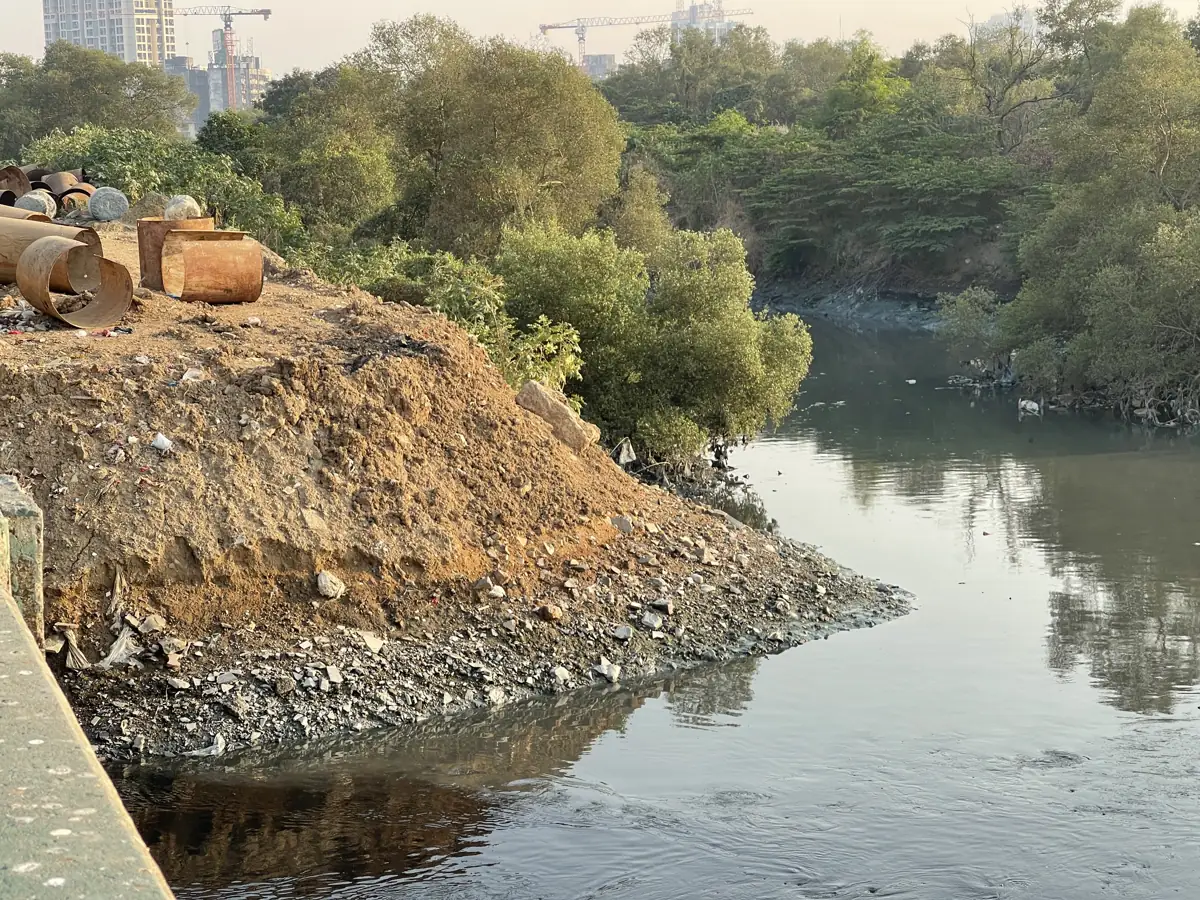
A cleanup that stops at the dry sand leaves the most plastic-laden habitats untouched. Mangrove and creek mouth work needs trained teams, tide planning and permission from forest and coastal authorities, which is why it rarely appears on a one-day volunteer schedule.
05
Most beach litter starts its journey in a drain or a river, which makes the beach the last place to stop it
The MoES field surveys of 2022 to 2025 found that the main sources of microplastic pollution along India’s coast are riverine inputs and abandoned, lost or discarded fishing gear.[4] Global modelling points the same way. A 2021 study in Science Advances estimated that more than 1,000 rivers, 1,656 in its central scenario, carry 80% of the plastic that rivers deliver to the ocean, with small urban rivers among the most polluting.[5]
Which countries’ rivers carry the most plastic to the sea
Modelled riverine plastic emissions to the ocean, tonnes a year (axis in thousand tonnes)
Source: Meijer and others, Science Advances, 2021, Table 1.[5] Model estimates, with ranges, based on mismanaged plastic waste data available at the time.
India ranked second in that model, at 1,26,513 tonnes a year from 1,169 rivers, about 1.0% of the mismanaged plastic waste the study assumed for the country. Of the 1,656 rivers that carry 80% of global emissions, 211 are in India.[5] In other words, most of India’s ocean plastic leaks through hundreds of ordinary rivers, nallahs and creeks, not a few famous ones.
The waste stream feeding them is large. India generated 41,36,189 tonnes of plastic waste in 2022 to 2023, about 41.4 lakh tonnes, up from 33,60,043 tonnes in 2018 to 2019. Identified single-use plastic items have been banned since 1 July 2022, extended producer responsibility applies to plastic packaging, and the country had 4,446 material recovery facilities with a capacity of 31,427.2 tonnes a day.[11]
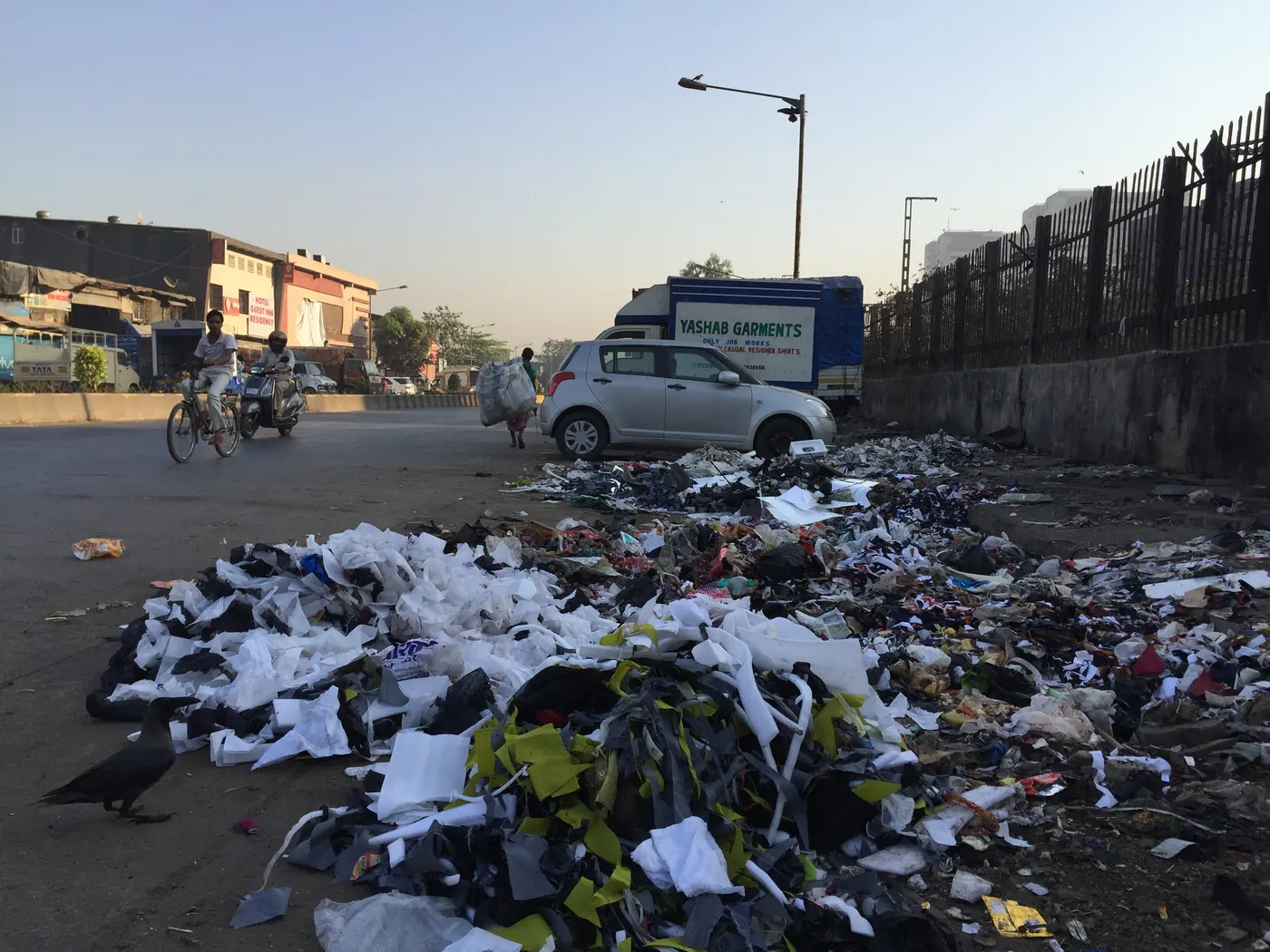
Every tonne stopped in a catchment is a tonne no one has to pull off a mangrove root. For a company or a city, the best value beach programme often starts kilometres inland, at the drains and settlements along a small urban river.
What Earth5R’s beach cleanups found on the sand, from Juhu to Marina Beach
Earth5R is a Mumbai-based environmental organisation, recognised under UNESCO Green Citizens, that has run climate and sustainability programmes across India since 2014. Its beach work began the same way most cleanups in India do, with volunteers, gloves and sacks. What it recorded on those mornings explains the national data above.
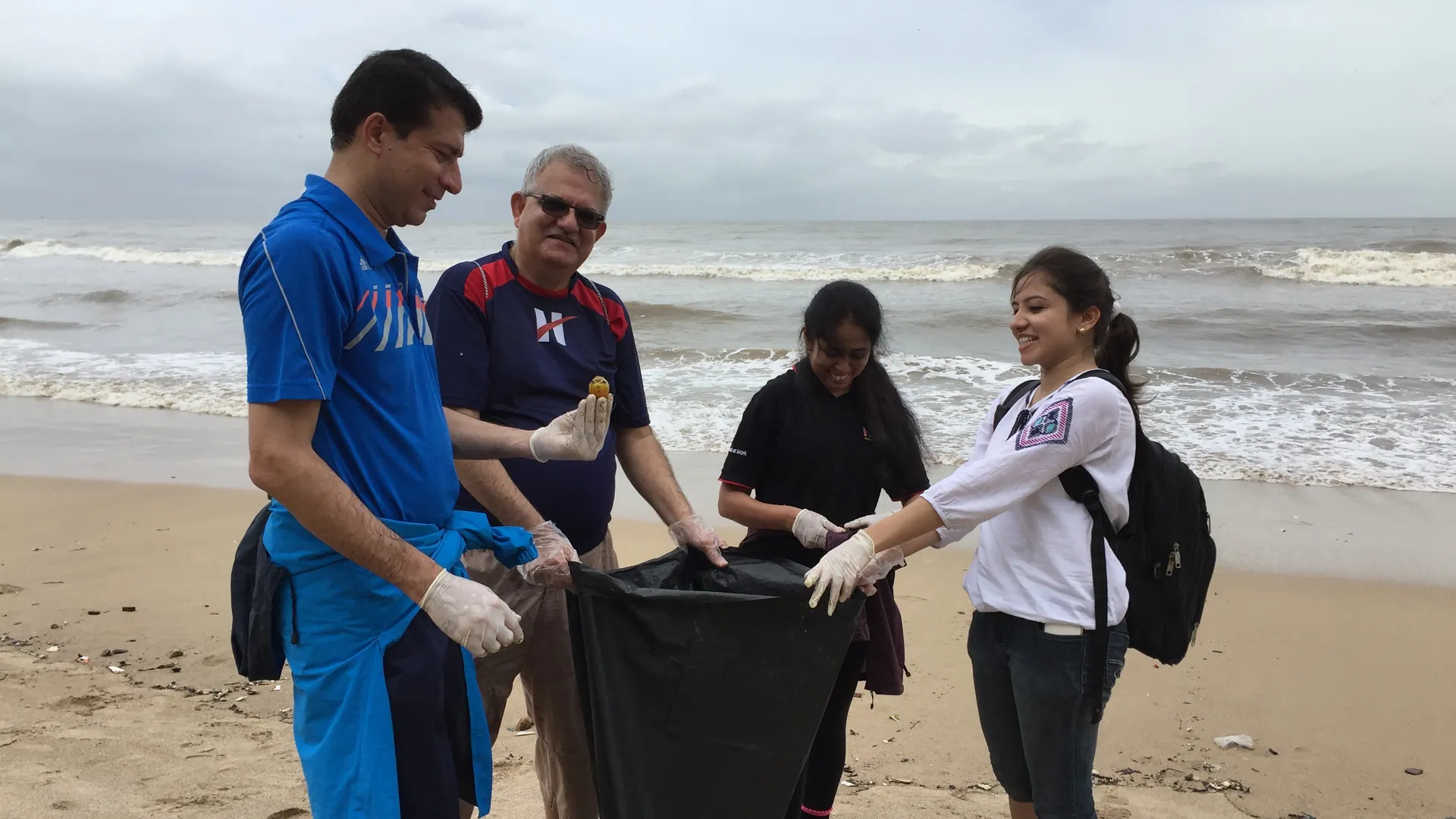
Juhu, International Coastal Cleanup Day: the morning after the immersions
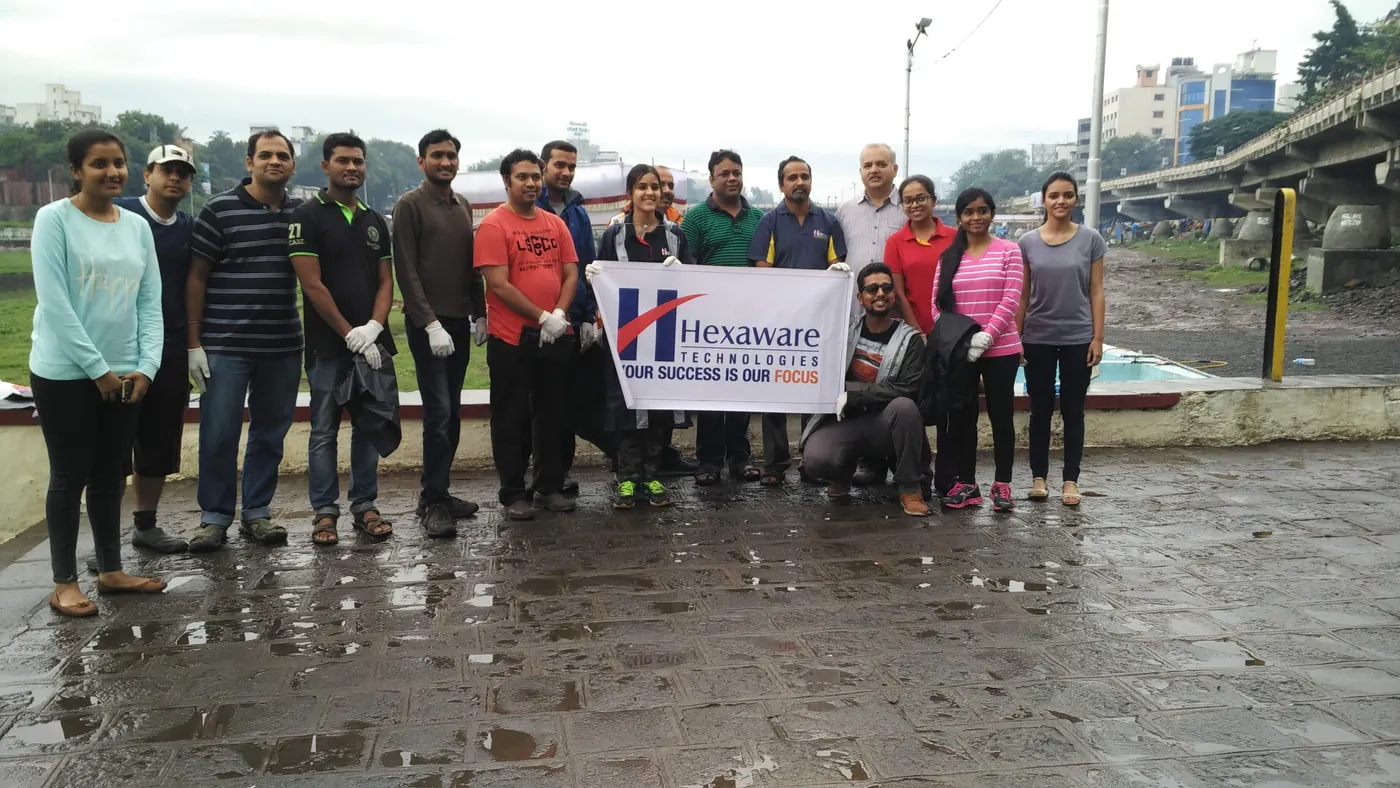
On International Coastal Cleanup Day, 17 September, about 37 employees of Hexaware Technologies joined the Earth5R team at Juhu, a beach that after the Ganesh immersions “could be mistaken for a dumping ground”. The Earth5R volunteers included founder and CEO Saurabh Gupta, product designer Sunny Singh, Akshita Shah and Ramesh Zaru.[12]
The group met at 9 am. Before anyone picked up a bag, Saurabh Gupta introduced the team to Coffee Dolls, an Earth5R social enterprise that gives women living in slums a livelihood from waste. The volunteers then split into four teams, each assigned its own stretch of the beach, and worked through rain and humidity until 11:30 am, encouraging people on the beach to join in. The report was written by Akshita Shah.[12]
A Mumbai beach with Lufthansa: straws, spoons and e-waste
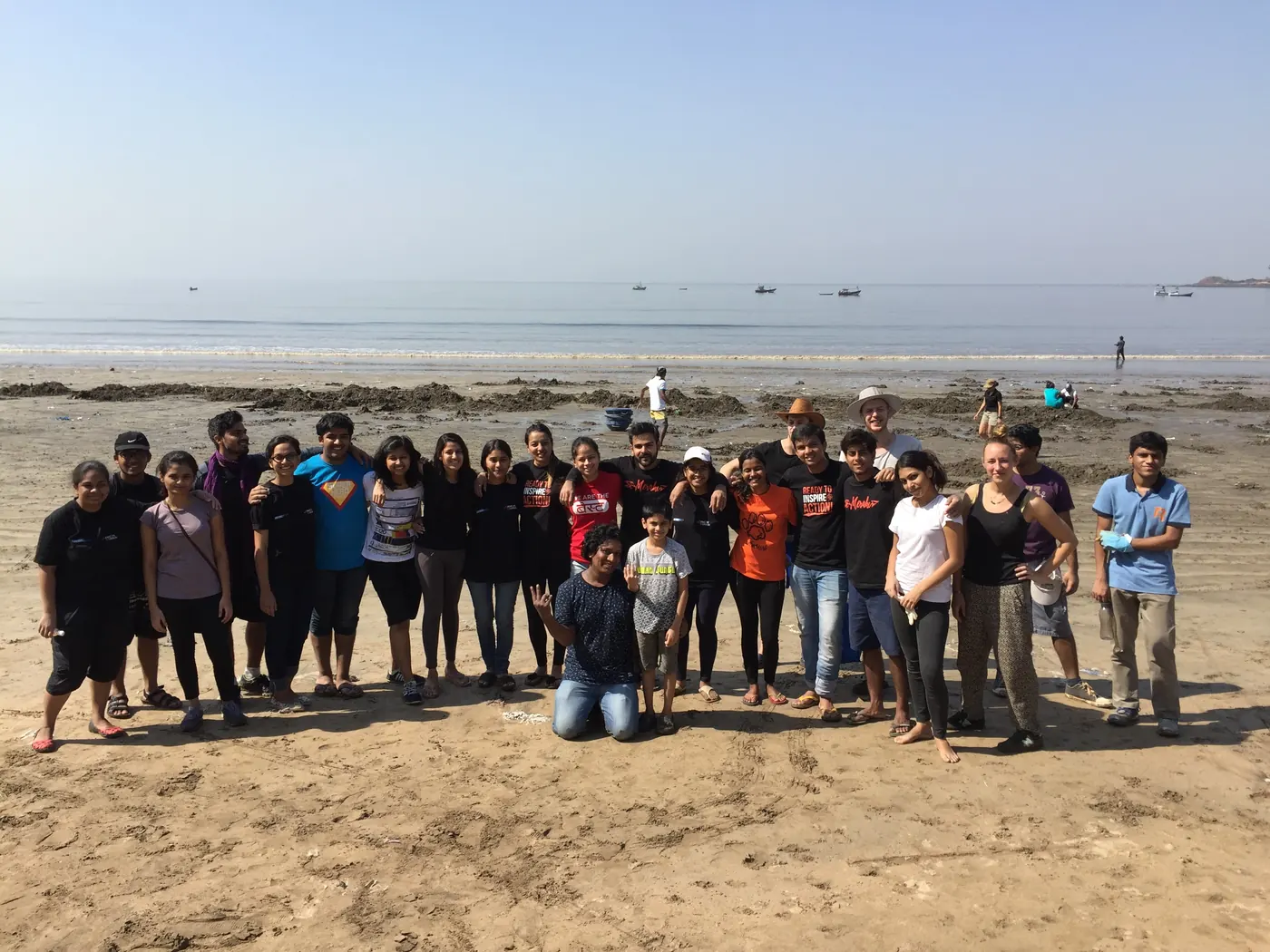
At another Mumbai beach cleanup with the Lufthansa Group, volunteers of all ages found what the national data now shows by count. Despite the bans on single-use plastic, they were disheartened by the number of plastic straws and spoons on the sand. They also found cigarette butts and a substantial amount of electronic waste. The Earth5R team then segregated the haul into recyclable and non-recyclable waste and sorted it by material, such as HDPE, LDPE and multilayer packaging.[13]
Marina Beach, Chennai: 20 to 25 bags from a small stretch
On 23 August 2015 the Earth5R Chennai team, Anagha, Janani, Srinithi and Navneet, organised a cleanup at Marina Beach. Over a hundred people turned up. They found wrappers, leftover corn, diapers, cigarette ends and broken bottles, collected about 20 to 25 bags and then segregated them into biodegradable and non-biodegradable waste. “It was surprising to see the huge heap of garbage collected from a small area of the beach,” wrote Anagha Natraj, who reported the drive.[14]
#SaveTheBeach, World Environment Day 2018: prevention over pickup
On World Environment Day 2018, Saurabh Gupta was a panellist at the #SaveTheBeach conference, part of a multi-stakeholder coastal cleanup project with the Earth Day Network, Juhu Soul of Mumbai, Earth5R and other local groups. Other attendees included Nalini Shekar of Hasiru Dala and Renu Hansraj of Juhu Soul of the City. He argued that sustainable livelihoods lead to sustainable development, using examples from Earth5R’s ACT Powai project, where coffee grounds and cloth are upcycled into dolls and recycled newspaper into the Almug Bag. The report’s conclusion was that the most important part of solving the problem is preventing it.[15]
The same three lessons recur across a decade of Earth5R cleanups. Single-use items survive bans. Segregating on the spot by polymer turns a pile of litter into material a recycler can use. And a cleanup only lasts if someone downstream earns from the waste.
Case study: the Mithi programme moved the cleanup upstream, to the river and its catchment
If most beach plastic arrives by river, the logical place to stop it is the river. The Mithi runs 17.8 km through the middle of Mumbai and reaches the Arabian Sea at Mahim Creek, close to the Dadar-Mahim shore that gave up more than 300 tonnes in the August 2025 drive.[16][2]
Earth5R began its Mithi project in October 2020. At its centre is a solar-powered plastic recovery unit developed with RiverRecycle, placed to intercept floating debris and move it to the bank for processing. The project was delivered with United Nations Technology Innovation Labs, Huhtamäki, RiverRecycle and the Municipal Corporation of Greater Mumbai, supported by €0.6 million in funding.[16]
What makes it relevant to beaches is what happened on the bank. Households and businesses in the catchment were trained in segregation, and residents were paid for the segregated plastic they handed over, “which turned waste from something to dispose of into something with a price”.[16] Earth5R describes the programme as applying its five R’s “through operational mechanisms rather than awareness campaigns alone”.[17]
The programme reports removing 11,100 tonnes of waste between October 2020 and November 2024, of which 4,440 tonnes was plastic, at an average of about 10 tonnes of waste a day, around 4 tonnes of it plastic. It trained 10,000 families and 500 businesses, involved 15,000 volunteers, and estimates that recycling the recovered plastic avoided about 6,660 tonnes of CO₂e, with no carbon credits issued or claimed.[16]
About these figures. All Earth5R figures in this article, including the Mithi programme totals, the Hexaware and Marina Beach turnouts, the Powai Lake counts and the Earth5R App results, are programme-reported by Earth5R on its own case study and EarthJournal pages. They have not been independently verified for this article. They describe what one programme achieved over several years and are not national estimates. They should not be compared directly with the government, portal or academic figures above, which use different methods.[16]
For CSR and ESG teams, the full case, a programme charter and a budget workbook are in Earth5R’s River Revival Playbook, and the project overview is on the Mithi River CSR project page.
At Powai Lake, Earth5R learned that counting the waste comes before clearing it
The Mithi runs from the Vihar and Powai lakes, so what is dropped on Powai’s banks can become beach litter.[16] Earth5R’s ACT Powai programme treated the lake as a laboratory for what reaches the water and why.
On 28 April 2018, the first ACT Powai cleanup was designed as a litter study. A small team including environmentalist Saurabh Gupta cleaned half a kilometre near Powai Nisarg Udyan and systematically segregated what they found: cigarette butts, alcohol bottles, snack packets and a great deal of packaging. The team then decided to make it a weekly Saturday drive.[18]
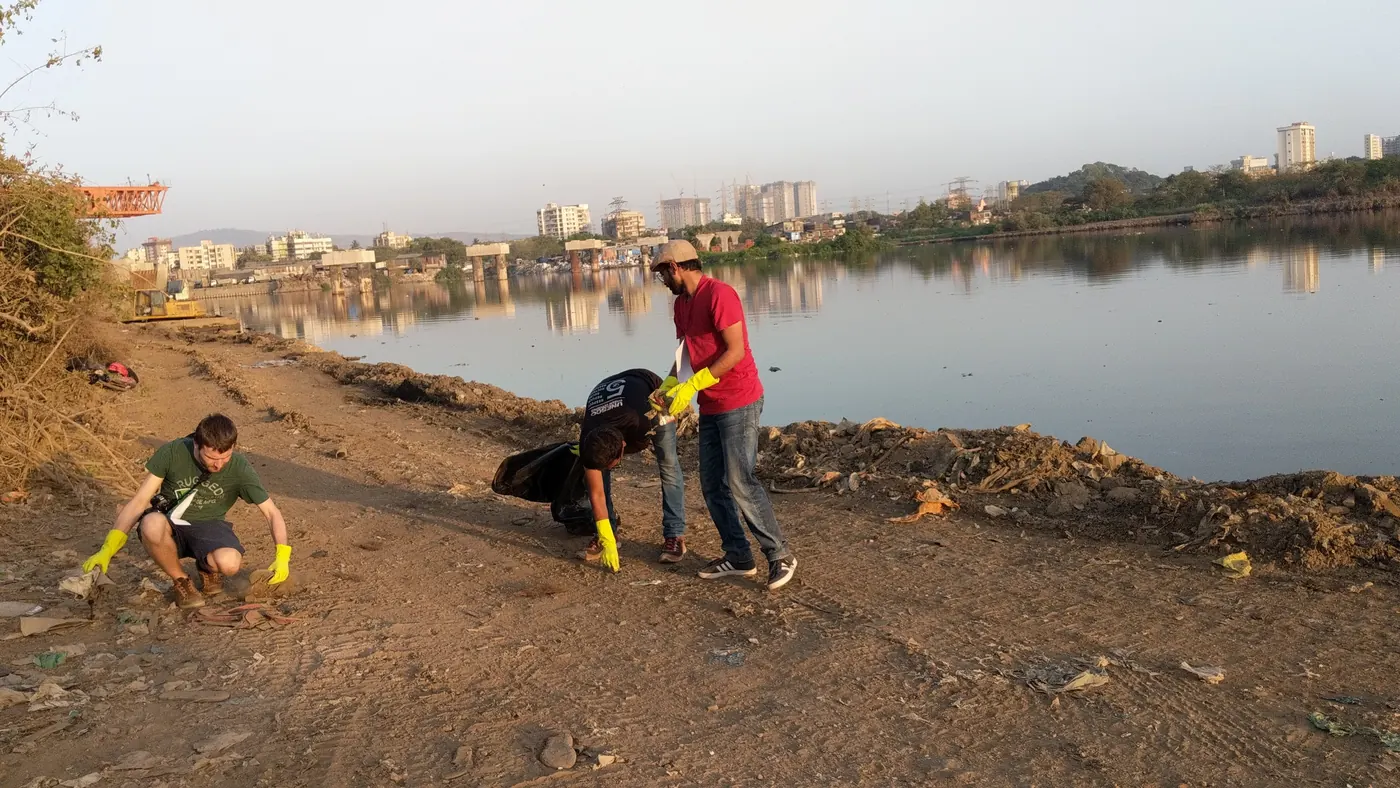
By the ninth cleanup, on 16 June 2018, the target was bottle caps. Nick Anthony of the SEEK Phuket foundation and students from Bombay Scottish School collected 500 caps in an hour, for a project inspired by a scheme that recycles caps into benches. Anindita Mukhopadhyay and Emily Griffin reported it.[19] By the tenth cleanup, held in pouring rain, the focus had moved to what happens after collection: connecting local waste pickers and recyclers with residential buildings so that plastic could be collected regularly and kept out of landfill.[20]
On World Environment Day 2023, citizen and NSS volunteers cleared about 15 kg of waste from the lake surroundings. They used the Earth5R App to sort it into HDPE, LDPE, PET, paper, glass, medical waste and e-waste, and the app reported a carbon offset of 52.5 kg and the volunteer hours given.[21]
Counting by category turns a cleanup into evidence. The Powai audits showed which items to target with which shopkeepers, and the app made the same data repeatable. Beach programmes can do exactly the same with the categories the national portal already uses.
Earth5R’s five R’s, applied to a beach cleanup in India
Earth5R’s name comes from a sequence it has taught since 2014: Respect, Reduce, Reuse, Recycle, Restore. “The order matters,” Saurabh Gupta writes. “Respect comes first, respect for nature, for communities and for the limits of growth.”[22] On a coastline, the order maps closely onto the evidence above.
| The R | What it means for beaches and marine litter | Where it shows up on the ground |
|---|---|---|
| Respect | Start from the limits of the coast and of the people on it: 11,098 km of shoreline, mangroves where 83% of litter is plastic, and fishing communities who live with the nets and the tides.[1][4] | Earth5R treats waste pickers and recyclers as partners, and began its Juhu cleanup with a women’s livelihood project, not a pep talk[20][12] |
| Reduce | Cut single-use items before they reach the sand. Consuming responsibly was the first goal of the national Swachh Sagar Surakshit Sagar campaign.[8] | Straws and spoons were still on the beach at the Lufthansa cleanup despite the bans, and ACT Powai audited litter to find which items to target[13][18] |
| Reuse | Extend the life of materials before they become litter. Plastic beverage bottles were the most collected item in the world in 2025.[7] | Coffee Dolls and the Almug Bag, made from used coffee grounds, cloth and newspaper by women in Earth5R livelihood work[15] |
| Recycle | Close the loop on material and on value: segregate on the spot by polymer and route it to recyclers through the 4,446 material recovery facilities and registered processors.[11] | HDPE, LDPE and multilayer sorting on the beach, bottle caps for benches at Powai, and residents paid for segregated plastic on the Mithi[13][19][16] |
| Restore | Rebuild the river, mangrove and beach systems that litter damages, and the public data that builds trust in the work. | The Mithi recovery unit and catchment training, and cleanup counts logged in the Earth5R App[16][21] |
The order is the point. A programme that starts at Recycle has skipped the three most important steps.[22] On a beach, a cleanup that only fills sacks is Recycle at best, and often not even that, if the sacks go to a dump.
A beach cleanup CSR programme should be judged on what it prevents, not only on what it lifts
Environmental sustainability, ecological balance and the conservation of natural resources are eligible CSR activities under Schedule VII of the Companies Act.[23] Beach cleanups are among the most popular ways to meet that, because they are visible, easy to staff and good for teams. The data suggests where they fall short, and how to fix it.
| Question | One-day cleanup | Year-round coastal programme |
|---|---|---|
| When | Coastal Cleanup Day or World Environment Day | Also after the first heavy rains and high tides, when Mumbai’s beaches returned 950+ tonnes in nine days[2] |
| Where | The dry sand of a well-known beach | Beach, creek mouth and mangrove edge, plus the drains and settlements upstream[4] |
| What is recorded | Bags filled, people present | Kilograms by the portal’s categories, metres of beach, hours worked, and where each stream went[3] |
| Where the waste goes | Often a municipal dumper | Sorted by polymer and sold or handed to recyclers, with records[13] |
| Who benefits | Volunteers for a morning | Waste pickers, recyclers and households paid for segregated plastic[20][16] |
Five things to ask for in a beach cleanup proposal
- A baseline: weight per metre of beach by material before the programme starts, using the categories on the national portal.[3]
- A monsoon plan: at least one drive timed to the weeks after heavy rain, not only the September cleanup day.[2]
- An upstream partner: a creek, nallah or river stretch feeding the beach, with household segregation in its catchment.[5]
- A recovery route: named recyclers or a material recovery facility for each stream, and proof of what was recycled.[11]
- A people metric: livelihoods supported and households trained, reported alongside tonnes.[16]
Earth5R designs corporate volunteering and coastal and river programmes with field data that fits ESG reporting. Its Employee Volunteering Guide covers how to build volunteering that lasts, and the Plastic Waste and EPR Guide explains what India’s plastic rules ask of brands.
What comes next: a national marine litter policy, a treaty session and the next monsoon
Two policy tracks will shape beach work in India over the next year. At home, the National Centre for Coastal Research has formulated a roadmap for a National Marine Litter Policy, and the draft has been circulated to stakeholders, line ministries and agencies for review.[4] Abroad, negotiations on a global plastics treaty resumed in February 2026, when Chile’s Julio Cordano was elected chair of the negotiating committee.[24] The next negotiating session, INC-5.4, is scheduled for 13 to 24 March 2027.[25]
Companies and CSR teams
Fund the measurement, the monsoon drive and the upstream catchment, not only the September photo. Ask for kilograms by material and a recovery route for each stream.
City agencies and coastal wards
The BMC’s August 2025 drive shows the scale of the monsoon return.[2] Pairing beach crews with drain and creek interception, and publishing the weights, would show which catchments feed which beach.
Schools, colleges and volunteers
Use the national portal’s categories, count before you clear, and record what you find. Citizen science is how the national litter baseline was built.[4][10]
Researchers and policymakers
A comparable, per metre beach litter series, reported every year from the same beaches, would let India tell a real fall in plastic from a change in who reported. Linking it to river and catchment data would show where prevention works.
Frequently asked questions about beach cleanups in India
- How much litter is collected in beach cleanups in India?
- The national portal recorded 1,26,848 kg from 79 beaches on International Coastal Cleanup Day 2025, and 47,144 kg from 20 beaches in 2024.[3] In a single monsoon drive in August 2025, the BMC cleared more than 950 tonnes from six Mumbai beaches.[2]
- How much of India’s beach litter is plastic?
- Plastic made up 43% of beach litter in 2024, down from 67% in 2018, according to the Ministry of Earth Sciences.[4] Mangroves and coral habitats hold far more: 83.02% in Maharashtra’s mangroves and 91.27% in Mumbai’s intertidal coral habitats.[4]
- Where does beach litter in India come from?
- Most beach litter comes from tourism, recreation and public littering, about 60% in the national survey.[10] Microplastics come mainly from rivers and lost or discarded fishing gear.[4]
- When is International Coastal Cleanup Day in India?
- It is held on the third Saturday of September every year. The Indian Coast Guard has coordinated it nationally since 2006, and 26,092 volunteers took part in 2025.[6]
- Can a company fund a beach cleanup under CSR in India?
- Yes. Environmental sustainability and ecological balance are eligible CSR activities under Schedule VII of the Companies Act.[23] The strongest programmes measure litter by weight and material, plan for the monsoon and work upstream on rivers and drains.
- What has Earth5R done on beaches and rivers?
- Earth5R has run beach cleanups at Juhu with Hexaware Technologies and with the Lufthansa Group, and at Marina Beach in Chennai, with on-the-spot segregation by material.[12][13][14] Its Mithi River programme reports 11,100 tonnes of waste removed from October 2020 to November 2024.[16]
Related reading on Earth5R
References
- Ministry of Earth Sciences (2025). Parliament Question: Coastline of the Country. Press Information Bureau, 4 December 2025. pib.gov.in
- Express News Service (2025). BMC clears nearly 950 metric tonnes of waste from six Mumbai beaches. The Indian Express, 24 August 2025. indianexpress.com
- National Centre for Sustainable Coastal Management (2026). National Beach Cleanup Activity, state-wise data for 2024, 2025 and 2026. Ministry of Environment, Forest and Climate Change. Accessed 23 October 2026. beachcleanup.ncscm.res.in
- Ministry of Earth Sciences (2025). Parliament Question: Survey to Assess Microplastic and Marine Debris. Press Information Bureau, 6 August 2025. pib.gov.in
- Meijer, L. J. J., van Emmerik, T., van der Ent, R., Schmidt, C. and Lebreton, L. (2021). More than 1000 rivers account for 80% of global riverine plastic emissions into the ocean. Science Advances 7(18): eaaz5803. doi.org/10.1126/sciadv.aaz5803
- Indian Coast Guard (2025). Press release: International Coastal Cleanup 2025. 20 September 2025. indiancoastguard.gov.in
- Ocean Conservancy (2026). International Coastal Cleanup 2026 Report, covering the 2025 cleanup. oceanconservancy.org
- Ministry of Earth Sciences (2022). Swachh Sagar, Surakshit Sagar Campaign. Press Information Bureau, 3 August 2022. pib.gov.in
- Jayasiri, H. B., Purushothaman, C. S. and Vennila, A. (2013). Quantitative analysis of plastic debris on recreational beaches in Mumbai, India. Marine Pollution Bulletin 77: 107 to 112. doi.org/10.1016/j.marpolbul.2013.10.024
- Mishra, P., Kaviarasan, T., Sambandam, M., Dhineka, K., Ramana Murthy, M. V., Iyengar, G., Singh, J. and Ravichandran, M. (2023). Assessment of national beach litter composition, sources, and management along the Indian coast: a citizen science approach. Marine Pollution Bulletin 186: 114405. doi.org/10.1016/j.marpolbul.2022.114405
- Ministry of Environment, Forest and Climate Change (2024). Plastic waste management. Press Information Bureau, 12 December 2024. pib.gov.in
- Shah, A. (reporter). Juhu Beach Cleanup: A Collaborative Effort by Earth5R and Hexaware. EarthJournal, Earth5R. earth5r.org
- Earth5R. Mumbai Beach Cleanup by Lufthansa and Earth5R. EarthJournal. earth5r.org
- Natraj, A. (reporter). Cleanup Marina Beach in Chennai, 23 August 2015. EarthJournal, Earth5R. earth5r.org
- Griffin, E. (reporter). Save the Beach Campaign with Corona: The Discussion, World Environment Day 2018. EarthJournal, Earth5R. earth5r.org
- Earth5R (2025). Mithi River Cleaning and Plastic Waste Management Case Study, October 2020 to November 2024. Programme-reported. earth5r.org
- Earth5R. River Cleanup CSR Project in India: the Mithi River programme. earth5r.org
- Earth5R. Powai Lake Cleanup and Recycling of Waste, 28 April 2018. EarthJournal. earth5r.org
- Mukhopadhyay, A. and Griffin, E. (reporters). Continuing to Tackle the Powai Lake Plastic Pollution Problem. EarthJournal, Earth5R. earth5r.org
- Griffin, E. and Mukhopadhyay, A. (reporters). The Tenth Powai Lake Cleanup. EarthJournal, Earth5R. earth5r.org
- Earth5R. Empowering Change: Powai Lake Cleanup Event, World Environment Day 2023. EarthJournal. earth5r.org
- Gupta, S. (2026). AI and Sustainability: Planetary Limits. EarthJournal, Earth5R. Section on the Earth5R method, Respect, Reduce, Reuse, Recycle, Restore. earth5r.org
- Companies Act, 2013, Schedule VII: Activities which may be included by companies in their Corporate Social Responsibility policies, item (iv). ca2013.com
- UN Environment Programme (2026). New Chair elected to lead negotiations on global plastic pollution treaty. Press release, February 2026. unep.org
- UN Environment Programme (2026). Save the date: fourth part of the fifth session of the Intergovernmental Negotiating Committee on plastic pollution (INC-5.4), 13 to 24 March 2027. wedocs.unep.org
How to cite this article
Earth5R (2026). Beach Cleanup in India: What the Coastal Cleanup Data, Mumbai’s Monsoon Haul and Earth5R’s Field Work Show. EarthJournal, Earth5R, 23 October 2026. https://earth5r.org/beach-cleanup-india/
Figures are taken from the sources cited and were current on 23 October 2026. Portal figures were read on that date and the 2026 figures may still change as reports are filed. Indian figures use lakh and crore, global figures are as published. Modelled river emissions are estimates with ranges. Earth5R figures are programme-reported.