
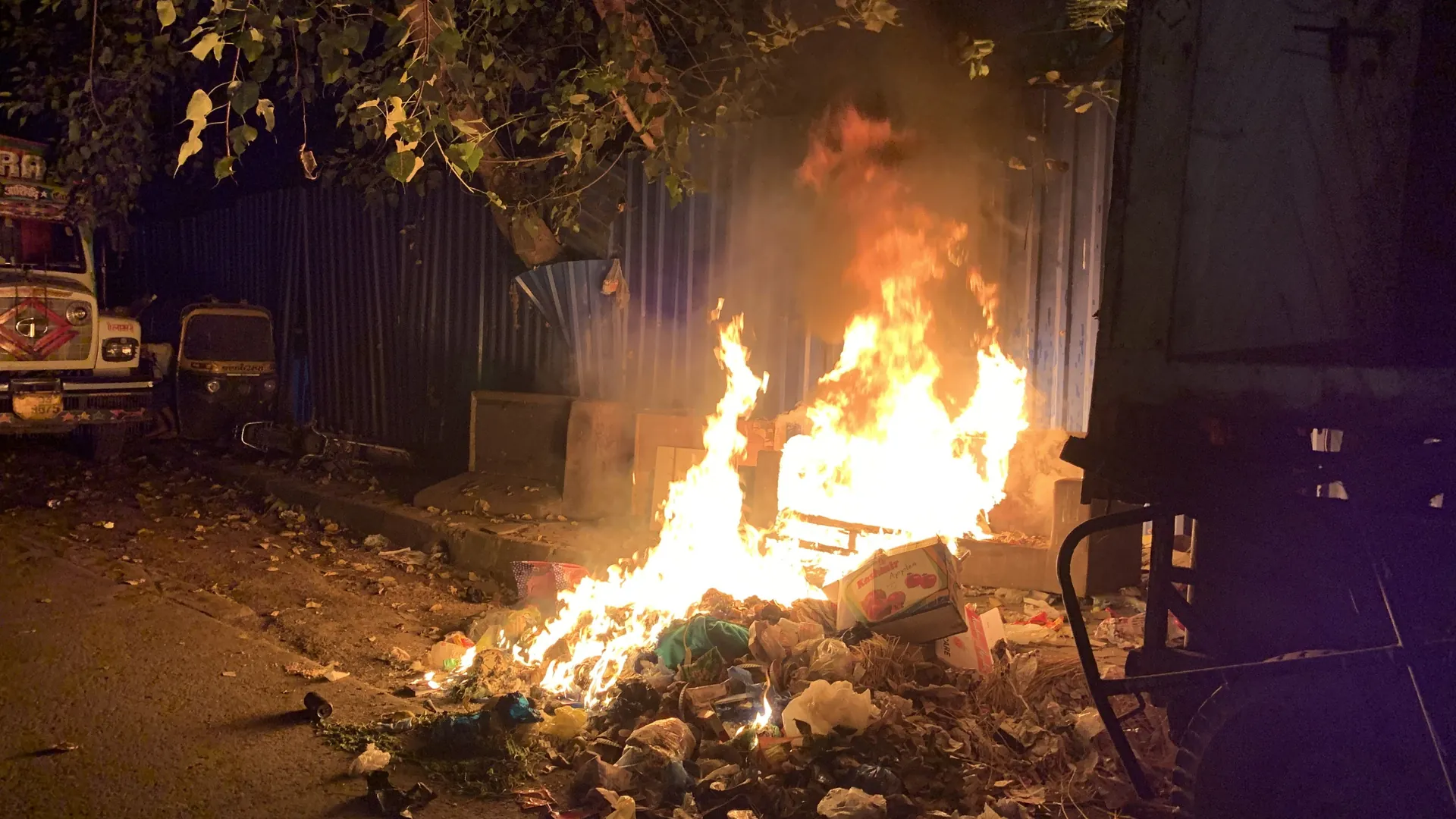
Punjab recorded 5,114 farm fires in the 2025 paddy season, 93% fewer than in 2021, and Haryana 662, down 91%. Stubble burning in India is falling fast, helped by more than 3.54 lakh crop residue machines, straw-fired power plants and a new ethanol and biogas industry. This research brief sets out ten facts on where the fires still burn, what a tonne of burnt straw costs, and what works on the ground, from satellites to soil. It ends with what a decade of Earth5R farmer training taught about the 10 to 20 day window that decides whether a field burns.
Stubble burning in India: the evidence at a glance
- Punjab fires are down 93% since 2021
- 2026 is holding the gain, for now
- The fire map is moving south and east
- Where the straw goes
- What one burnt tonne throws away
- The health bill
- Delhi’s smog has many owners
- Machines, money and a booking calendar
- Straw has become a fuel
- Fewer flames is not the same as less burning
- What Earth5R’s farm programme taught
- Case study: residue work in Punjab and Haryana
- The five R’s, applied to stubble
- What a CSR residue project should measure
- Questions
Read it with our briefs on air pollution in India and groundwater depletion in India. Groundwater concerns shape the timing of the paddy harvest, as fact 10 explains.
01
Punjab’s farm fires fell from 83,002 in 2020 to 5,114 in 2025, a 93% drop since 2021
Paddy straw burning is counted every year from 15 September to 30 November, using a standard satellite protocol developed by ISRO.[2] The decline has been steep. Punjab recorded 83,002 events in 2020, 71,304 in 2021, 49,922 in 2022 and 36,663 in 2023.[2] The 2024 season brought 10,909, the lowest since 2016.[6] In 2025 the count fell again, to 5,114.[1]
Punjab’s farm fires since 2020
Paddy residue burning events detected in Punjab, 15 September to 30 November, thousands
Source: Ministry of Environment, Forest and Climate Change, Press Information Bureau, 30 November 2023 and 1 December 2025; CREAMS, IARI, via The Hindu BusinessLine, 2024.[2][6][1]
Haryana followed the same path, from 4,202 events in 2020 and 6,987 in 2021 to 662 in 2025.[2][1] The environment ministry put the 2025 fall at 53% on 2024 in both states, and at 93% in Punjab and 91% in Haryana compared with 2021.[1]
The ministry credits state action plans drawn up with the Commission for Air Quality Management (CAQM), residue machinery, field enforcement and new uses for straw off the field.[1]
Stubble burning in India is a problem that is being solved, not one that is stuck. The question for the next five years is how to make the last 5,000 fires disappear and keep them gone, which is a harder job than the first 78,000.
02
The 2026 season is holding the gain: 574 fires by 24 October, against 1,678 at the same point in 2024
Between 15 September and 24 October 2026, Punjab recorded 574 farm fires. That is marginally above the 561 of the same period in 2025, and about a third of the 1,678 of 2024.[7] By 27 October the count had reached 717. Officials had inspected 664 of those sites and confirmed burning at 313 of them.[8]
The fires are concentrated. Of the 574, 414, or 72%, were in two districts of the Majha region, Tarn Taran and Amritsar.[7] Ludhiana district had recorded just one fire by late October, against eight in the same period a year earlier. Its chief agriculture officer credited good prices for stubble as fuel, subsidised balers and awareness campaigns.[9]
Why Majha burns early
Majha farmers harvest earlier than many other parts of Punjab because many grow short-duration paddy and basmati varieties, including Pusa 1509. The early harvest frees the field in September for a third crop, green peas or potatoes, before wheat. Punjab Agricultural University experts link the early fires to that race: machines are available, but a farmer fitting in a third crop does not want to lose a day arranging one.[7]
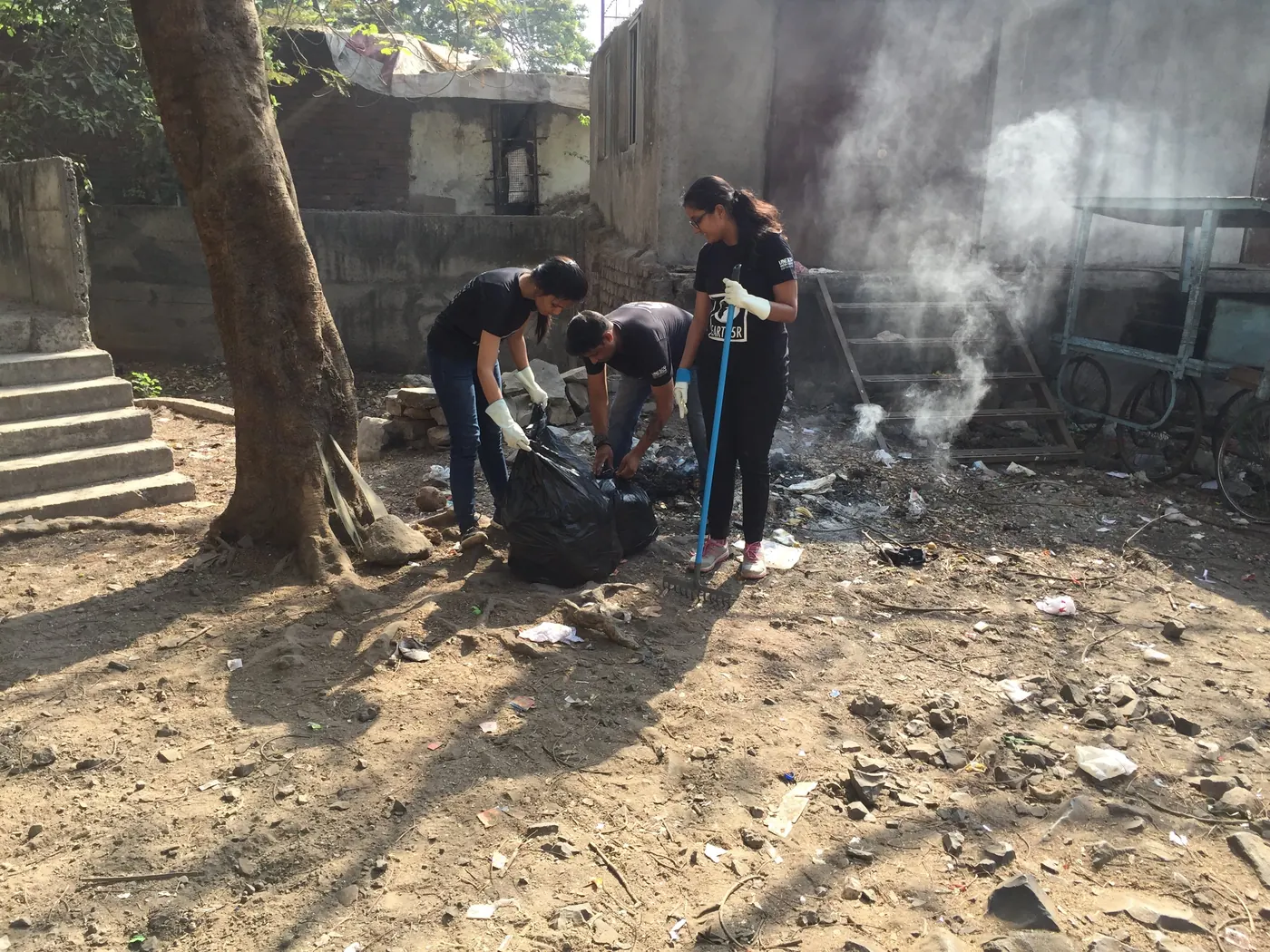
The remaining fires are not about ignorance or a lack of machines. They are about time. A residue plan for Majha has to start from the farmer’s calendar: book the machine before the harvest, not after it.
03
The fire map is moving: Madhya Pradesh had 17,067 paddy residue fires in 2025, more than the other five monitored states combined
Satellite monitoring by the Indian Council of Agricultural Research covers six states. Between 15 September and 30 November 2025 it detected 33,028 paddy residue burning events across them. Madhya Pradesh accounted for 17,067, or 52%, more than the 15,961 of Punjab, Haryana, Uttar Pradesh, Delhi and Rajasthan together.[5] In 2024, Madhya Pradesh had recorded 16,360.[6]
Six states, one season
Paddy residue burning events, 15 September to 30 November 2025
Source: ICAR satellite monitoring, reported by The New Indian Express, 4 December 2025.[5]
Within Madhya Pradesh the fires cluster in the north, in Sheopur (2,643), Gwalior (1,930) and Datia (1,797).[5] The pattern has carried into 2026. By 22 October, Punjab’s 474 fires were followed by 393 in Madhya Pradesh, 252 in Rajasthan, 190 in Uttar Pradesh, 72 in Uttarakhand and 11 in Haryana.[10]
The residue system built for Punjab and Haryana now needs to travel. The crop residue scheme already includes Madhya Pradesh among the states it funds.[3]
Stubble burning is no longer only a Punjab story. Companies and programmes that want the biggest effect per rupee in 2026 should look at the districts where fires are rising, not only where they made headlines a decade ago.
04
India grows about 500 million tonnes of crop residue a year, and Punjab alone produces about 2 crore tonnes of paddy straw
A 2022 study in Nature Communications estimates that India generates about 500 million tonnes of crop residue a year, and that about 100 million tonnes of it is burned.[11]
The agriculture ministry’s crop residue guidelines give the straw budget state by state. Punjab generates 19.99 million tonnes of paddy straw. The plan was to manage 9.00 million tonnes in the field and 3.50 million tonnes off it, leaving an estimated 7.49 million tonnes burnt. Haryana generates 7.00 million tonnes and planned to manage 5.15 million tonnes in the field and 1.10 million tonnes off it.[12] For the 2026 harvest, states drew up action plans to manage an estimated 2.762 crore tonnes of stubble.[3]
Where the straw was meant to go
Paddy straw plan by state, million tonnes (Mt), Crop Residue Management guidelines 2023-24
Source: Department of Agriculture and Farmers Welfare, Crop Residue Management Operational Guidelines 2023-24.[12] Punjab generates 19.99 Mt and Haryana 7.00 Mt. Figures are planning estimates, not measured outcomes.
Two paths keep straw out of the fire. Leave it on or in the soil, or move it off the field to someone who will pay for it.
In-situ management means chopping the straw and mixing it into the soil, or sowing wheat straight through it as mulch. Ex-situ management means baling it and sending it to a power plant, boiler, pellet maker, ethanol refinery or biogas plant.[13] The 2023-24 plan leaned on the field: in Punjab, about two and a half tonnes were to be managed in the field for every tonne moved off it.[12]
The scale is the point. Two crore tonnes of straw in one state, cleared in a few weeks, is a logistics problem before it is a pollution problem. It needs both paths at once: machines in the field and buyers off it.
05
Burning one tonne of paddy straw releases 1,460 kg of CO₂ and destroys about 400 kg of carbon and 25 kg of potash the soil needs
The agriculture ministry’s guidelines put numbers on both sides of the fire. Burning one tonne of paddy straw releases about 3 kg of particulate matter, 60 kg of carbon monoxide, 1,460 kg of carbon dioxide, 199 kg of ash and 2 kg of sulphur dioxide.[12]
The same tonne holds about 5.5 kg of nitrogen, 2.3 kg of phosphorus (as P₂O₅), 25 kg of potassium (as K₂O), 1.2 kg of sulphur, 50 to 70% of the micronutrients the rice plant absorbed, and about 400 kg of carbon, all lost when it is burnt.
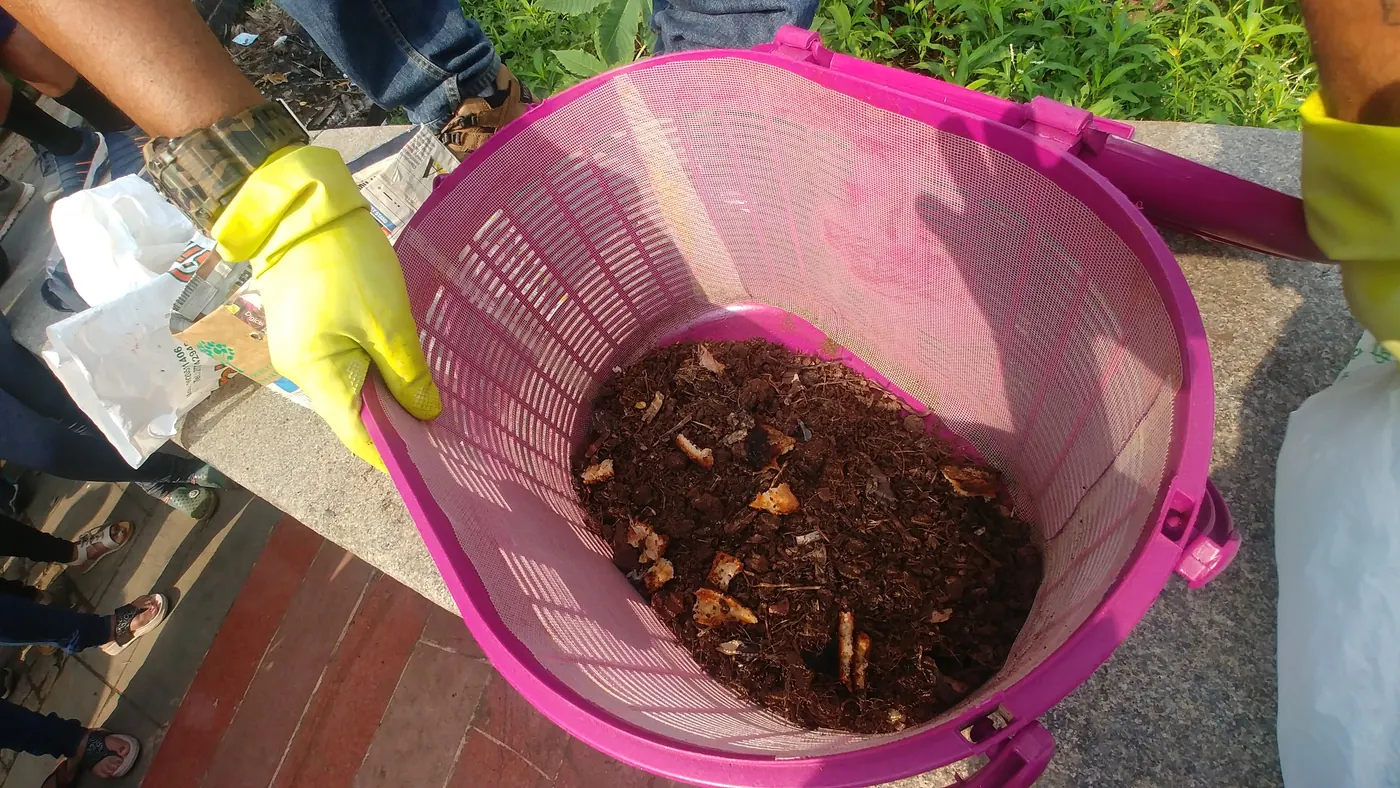
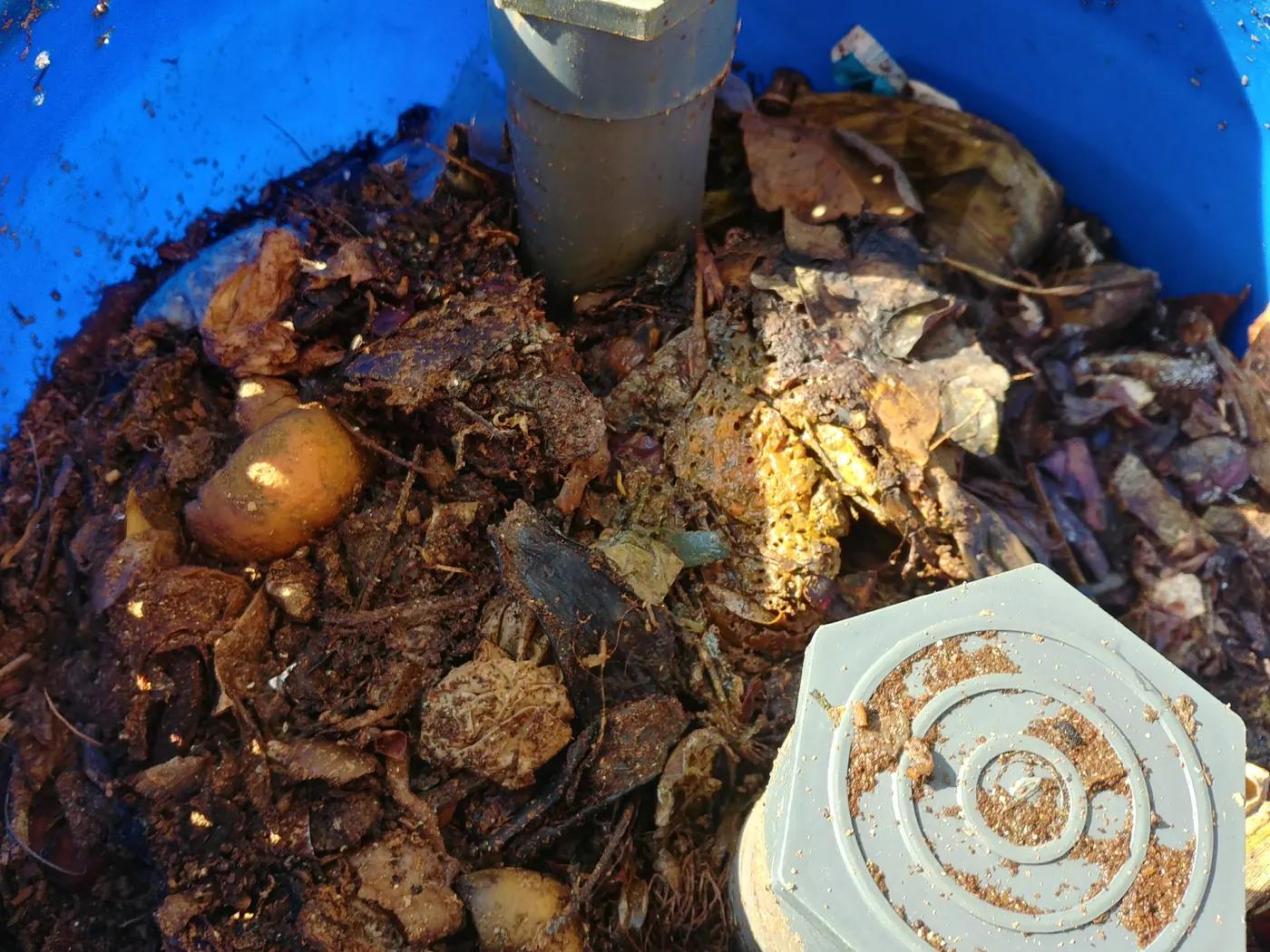
At a June 2026 review of stubble management, the Union Agriculture Minister asked states to tell farmers that paddy productivity has been seen to rise in fields where stubble was worked into the soil instead of burnt.[3] Earth5R’s guide to soil health makes the same case: residue is the cheapest fertiliser a farm already owns.
A farmer who burns straw pays twice: once in fertiliser bought to replace what burned, and once in the soil carbon that took years to build. That is the argument that changes behaviour, more than any fine.
06
Studies put the toll of crop residue smoke at 60,000 to 69,000 deaths a year, and a threefold risk of respiratory infection near intense burning
The Health Effects Institute’s GBD MAPS study attributed 66,200 deaths in India in 2015, or 6.1% of all deaths linked to outdoor PM2.5, to the burning of agricultural residue.[14] A 2022 MIT-led study in Nature Communications estimated 69,000 premature deaths a year on average between 2003 and 2019, and 60,000 for 2015, with a monetised cost of about US$23 billion a year averaged over the period.[11]
Two studies, one order of magnitude
Estimated premature deaths in India each year from PM2.5 caused by crop residue burning
Sources: Health Effects Institute, Special Report 21 (2018); Lan and others, Nature Communications (2022), 95% interval 57,000 to 80,000 for the 2003 to 2019 average.[14][11]
The damage is concentrated where the straw is. Lan and colleagues find Punjab responsible for 48 to 75% of the air quality impacts of residue burning in any year, and post-monsoon rice residue burning for 64% of the exposure. Patiala and Sangrur districts alone contribute about 20%.[11]
The harm is not only to the lungs of distant cities. A study of 2,52,539 people in India’s National Family Health Survey found that living in a district with intense crop burning was linked to a threefold higher risk of acute respiratory infection, and children under five were at particularly high risk. Ending crop burning in Haryana, Punjab and Delhi would avert 14.9 million disability-adjusted life years, valued at US$152.9 billion over five years.[15]
The first people to breathe stubble smoke are the families who farm next to it. That is why a residue programme is a rural health programme as much as an air quality one, and why the steep fall in fires since 2021 is likely to be a public health gain in Punjab’s own villages.
07
Farm fires made up 3.5% of Delhi’s PM2.5 in the 2025 season, down from 13% in 2020, and the winter smog got worse after they ended
Data from the Central Pollution Control Board, based on the Decision Support System of the Indian Institute of Tropical Meteorology, shows the average share of farm fires in Delhi’s PM2.5 during the burning season falling from 13% in 2020 and 2021 to 3.5% in 2025.[4]
Farm fires’ share of Delhi’s PM2.5
Average contribution of stubble burning to Delhi’s PM2.5 during the burning season, %
Source: Central Pollution Control Board, reply to a Right to Information request, reported by Hindustan Times, 30 December 2025, using IITM Decision Support System estimates.[4]
The Centre for Science and Environment looked at what happened next. From 1 October to 30 November 2025, Delhi’s PM2.5 averaged 163 µg/m³, and farm fires contributed about 4.2% on average, peaking above 22% for a few days in mid-November. After the fires ended, PM2.5 rose to an average of 210 µg/m³, 29% higher, while the farm fire share fell to 0.2%.[16]
In the first half of December, only about 35% of Delhi’s PM2.5 came from sources inside the city. Within that local share, vehicles accounted for 46%, industry for 22% and households for 11%.[16]
Cutting stubble burning was necessary and it is working. It was never going to clean Delhi’s winter air by itself. Clean air in north India is a shared, multi-source job for cities, industries, transport and farms together, and each fix makes the others count for more.
08
₹4,266 crore has put more than 3.54 lakh residue machines and 43,500 custom hiring centres on the ground since 2018-19
The Crop Residue Management scheme began in 2018-19. By June 2026 it had provided ₹4,266.47 crore to Punjab, Haryana, Uttar Pradesh, Madhya Pradesh and the Indian Council of Agricultural Research, distributing more than 3.54 lakh machines and setting up more than 43,500 custom hiring centres, where a smallholder rents a machine instead of buying one.[3] For 2026-27 the scheme has a provision of ₹544.15 crore, and the states target more than 46,000 new machines, 910 custom hiring centres and 141 straw supply chain projects.[3]
CAQM’s Direction 90 of 9 May 2025 asked states to plan rent-free machines for small and marginal farmers.[13] For 2026, a Stubble Protection Force is to work in at least 70 tehsils of 14 NCR districts.[3]
The machine that pays
The best-studied option is the Happy Seeder, which sows wheat through the standing stubble and leaves the straw as mulch. A 2019 analysis in Science found it the most profitable option, on average 10 to 20% more profitable than burning, at ₹6,000 to ₹11,500 more profit per hectare, while cutting greenhouse gas emissions per hectare by more than 78% against burning.[17][18]
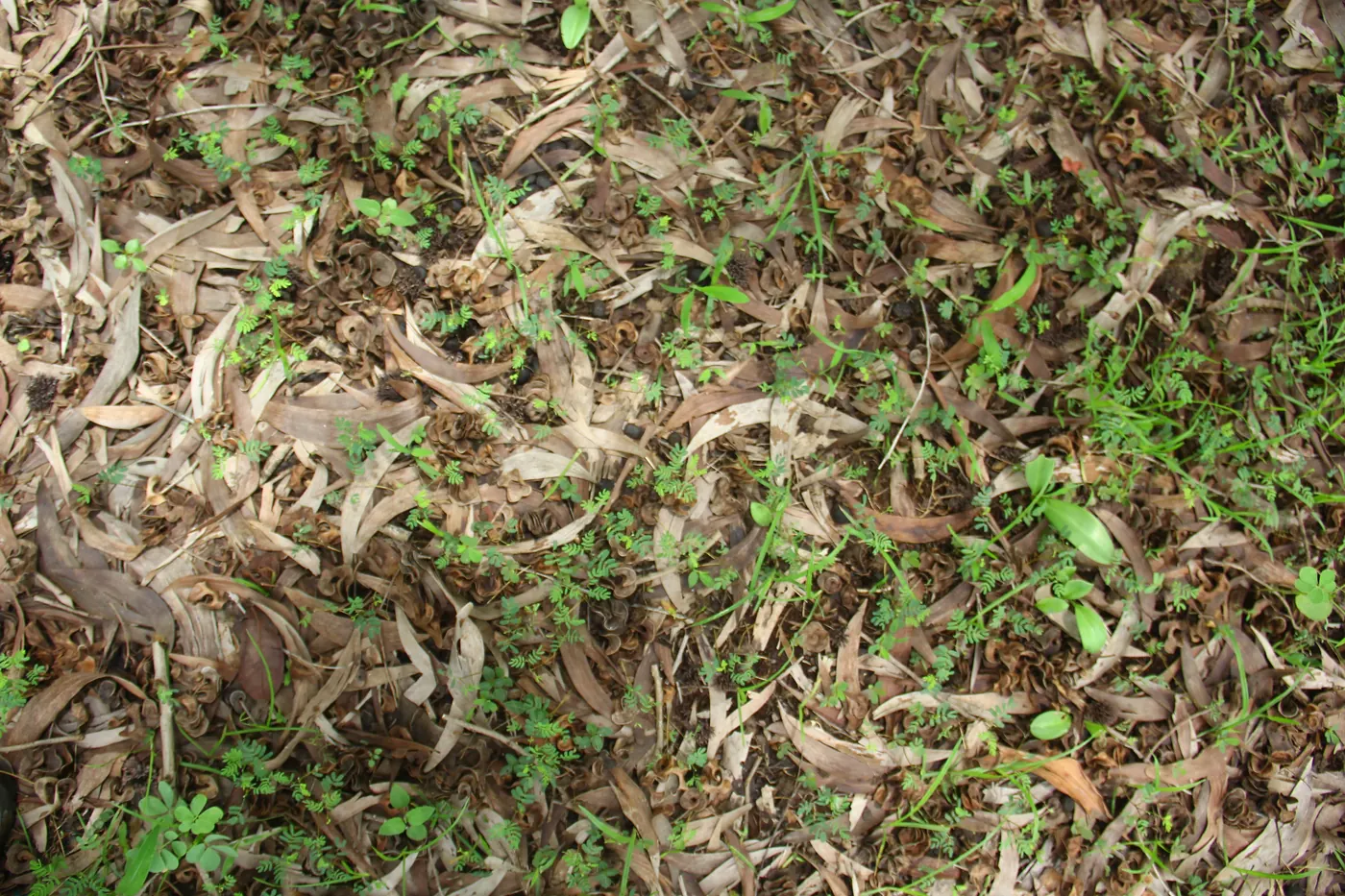
The hardware is largely in place, and the economics favour not burning. What remains is access in the narrow weeks when it is needed: the right machine, in the right village, booked in time.
09
Power plants around Delhi burned 2.16 million tonnes of biomass pellets in 2025-26, up from 1.3 million, and straw now has buyers
Under the Environment (Utilisation of Crop Residue by Thermal Power Plants) Rules, coal power plants in the National Capital Region must blend biomass pellets, at a minimum of 5% from 2025-26. By 15 June 2026, 75 thermal power plants had used biomass pellets at least once, 22 of them NTPC plants, with cumulative use of about 6.10 million tonnes, 4.38 million tonnes of it in the NCR.[19]
The NCR plants used about 2.16 million tonnes in 2025-26, against 1.3 million tonnes in 2024-25, and average co-firing rose from 2.6% to 4.61%, reaching 5.28% by mid-June 2026.[19] CAQM’s Direction 92 of June 2025 extends this to brick kilns.[13]
Who buys the straw
Annual paddy straw or biomass pellet demand by user, million tonnes
Sources: Renewable Watch, 1 September 2026, for NCR power plant use; Ministry of Agriculture, Operational Guidelines for Crop Residue Management 2023-24, for plant capacities in Punjab and Haryana. Capacity figures are expected annual use, not audited consumption.[19][12]
Industry is building around it. The 2G ethanol plant at Panipat, built by Indian Oil at an estimated cost of over ₹900 crore, is designed to use about two lakh tonnes of rice straw a year to make about three crore litres of ethanol, avoiding about three lakh tonnes of CO₂-equivalent a year.[20] In Punjab, 13 biomass power plants with 111.50 MW of capacity consume about 1 million tonnes of paddy residue a year, and Verbio’s compressed biogas unit at Sangrur makes 33 tonnes of gas a day from about 0.13 million tonnes of straw.[12]
Every tonne that has a buyer is a tonne that does not need a match. The next challenge is a shared one for industry and states: aggregation, storage and pellet quality, which matter more as demand grows.
10
Fire counts fell by half in 2025, but mapped burnt area fell only 15% in Punjab, so the next gain is in measuring what reaches the ground
An analysis by the independent think tank iFOREST, using burnt-area mapping from Sentinel-2 and geostationary imagery, found that Punjab’s burnt area went from 23,262 sq km in 2024 to 19,757 sq km in 2025, a smaller fall than the drop in counts from 10,909 to 5,114. In Haryana, counts fell from 1,406 to 662 while mapped burnt area went from 7,117 to 8,812 sq km.[21]
Counts and area tell different stories
Satellite-mapped burnt area, square kilometres
Source: iFOREST analysis of Sentinel-2 burnt-area data, reported by The Indian Express, 2025. Fire counts in both states fell about 53% in the same period.[21][1]
The timing of fires has shifted. In Punjab, more than 90% of large fires in 2024 and 2025 happened after 3 pm, compared with 3% in 2021, outside the 10:30 am and 1:30 pm passes of the MODIS and VIIRS instruments.[21] Officials are aware of the gap, and a ground-truthing exercise was run on an experimental basis in the 2025 kharif season.[21]
The deepest reason behind the fires is time. In north-west India, concern over groundwater has led to a rice planting cycle timed to the monsoon. That leaves a window of about 10 to 20 days to harvest rice, manage the residue and sow wheat across a rice-wheat system of about 4.1 million hectares, and many of the region’s 2.5 million farmers have used fire to clear it.[18] Earth5R’s groundwater depletion explainer shows why that timing matters. Short-duration paddy varieties, now being promoted, widen the window.[3] The ministry’s 2023-24 guidelines noted some in-situ machines lying idle, one reason the scheme now also funds straw supply chains.[12]
A farmer burns when the window closes before a machine or a buyer arrives. Everything that works, from booking calendars to short-duration seed to pellet buyers, works by giving that farmer time or an option. Measuring burnt area, not only flames, shows where that help is still missing.
What Earth5R learned on farms: residue work is taught on the plot, in season, to whole cooperatives
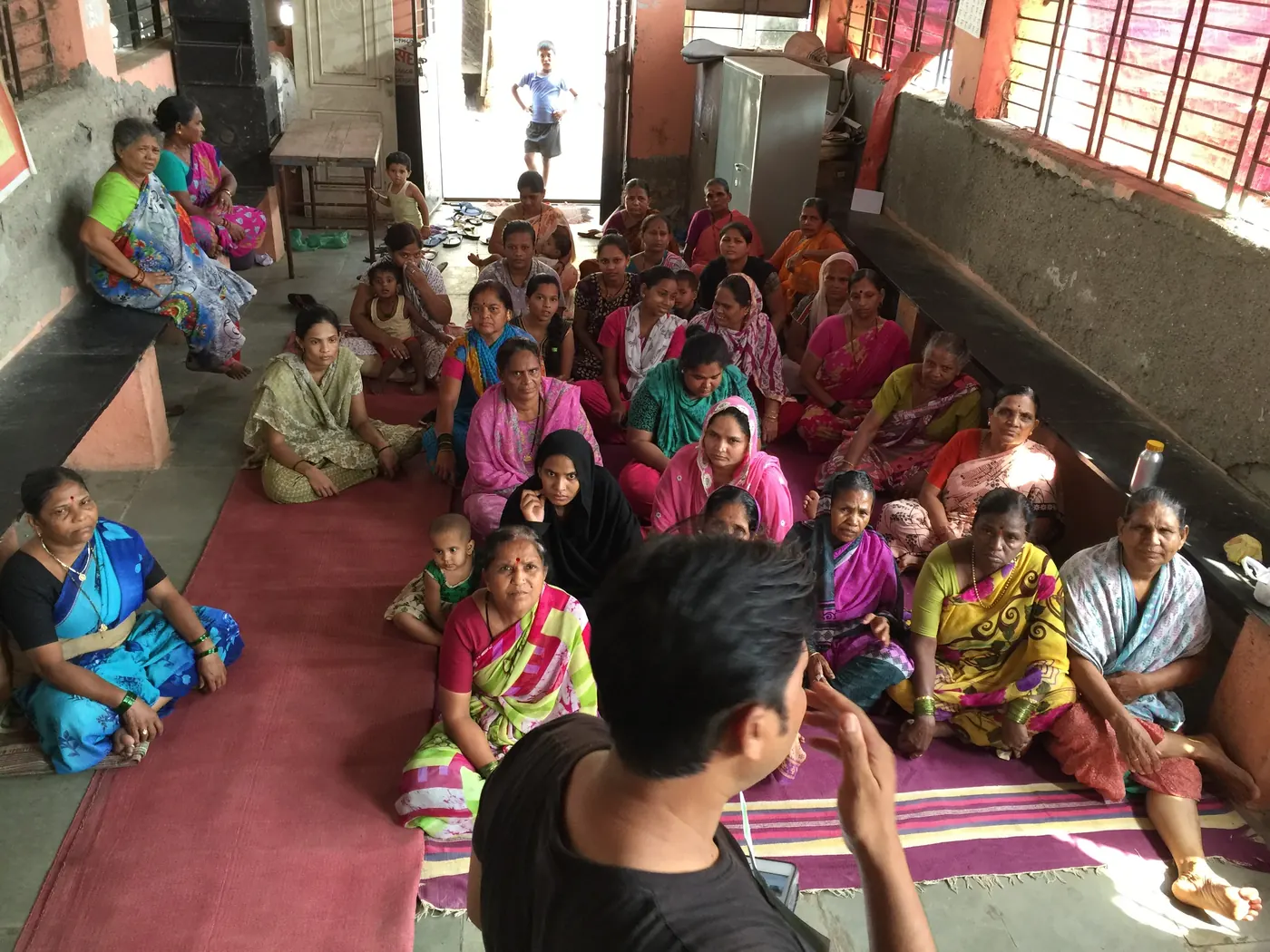
Earth5R is a Mumbai-based environmental organisation, recognised under UNESCO Green Citizens, that has run climate and sustainability programmes across India since 2014. Its agriculture work trained 12 lakh farmers between 2018 and 2025 across 14 states and 2 union territories, and residue management, through incorporation, mulching and booking equipment from a custom hiring centre, was one of five core practices.[22]
Where residue was the focus
Farmers trained by Earth5R, 2018 to 2025, in states where residue management or stubble burning was a top training focus (programme-reported)
Source: Earth5R, Agriculture Industry impact report, state-level performance table. Programme-reported figures.[23]
The state table on Earth5R’s agriculture programme page lists Punjab, with 1,32,000 farmers trained, 28 cooperatives and a training focus on “stubble burning, solar pumps”, and Haryana, with 84,000 farmers, 18 cooperatives and a focus on “stubble burning, waste-to-energy”. Uttar Pradesh, the largest state in the programme with 1,68,000 farmers, lists residue management first.[23] The page credits participants such as “a 62-year-old wheat farmer in Punjab who stopped burning for the first time in 40 years”.[23]
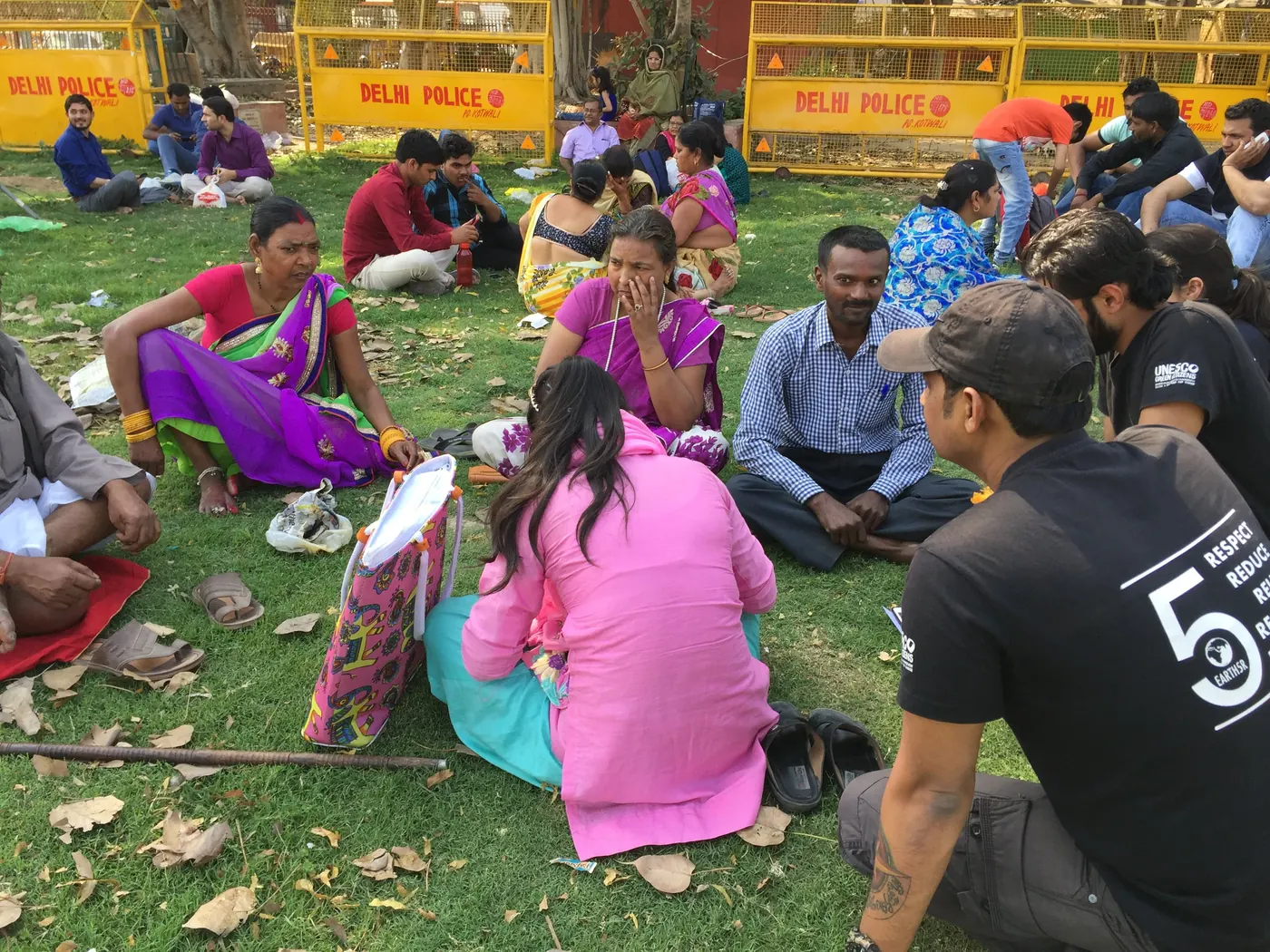
Further south, Earth5R worked with farmers in Tamil Nadu to replace burning with bio-composting units, using stubble to enrich the soil, as described in its account of zero-waste farming villages.[24] Its composting programmes apply the same logic to city waste.[25]
A session on the plot, in the weeks before the combine arrives, given to a cooperative that will share one booking, changes what happens in November.
Case study: a decade of farm programmes reports 1,92,000 tonnes of CO₂ avoided by keeping residue out of the fire
Earth5R’s agriculture CSR and ESG case study for 2015 to 2025 puts the method beside each figure. In the 2017 programme year, 300 volunteers each worked with 30 farmers for 12 months, giving 1,08,000 farmer engagements, and the page estimates 18,000 tonnes of CO₂ a year avoided because residue was incorporated rather than burnt.[22]
For 2018 to 2025, the programme also reports 220 farmer cooperatives set up to carry the practices forward.[23]
Three design choices
First, training at the plot, in season: “A session on residue management held in March teaches nothing, because the residue arrives in November.” Second, cooperatives as the unit, because practices taken up together were the ones repeated. Third, financial literacy taught alongside agronomy. Much of the residue work was making sure a village knew which custom hiring centre served it, and how to book a machine before the window closed.[22]
About these figures. All Earth5R figures here are programme-reported or estimated against the programme’s own records and have not been independently verified for this article. The fertiliser figure is self-reported by farmers and was not soil-tested. The two Earth5R pages count differently (the 2017 figures use 300 volunteers, the 2018 to 2025 report covers a larger volunteer base), and engagements are not unique farmers. No carbon credits were issued or claimed against this work.[22][23]
For a company funding residue work, the reporting is part of the design. State what was counted, what was modelled and what was self-reported, and say plainly that no credits were claimed. That is what makes an avoided-emissions figure usable in a BRSR report.
Earth5R’s five R’s, applied to stubble burning in India
Earth5R’s name comes from a sequence it has taught since 2014: Respect, Reduce, Reuse, Recycle, Restore. “The order matters,” Saurabh Gupta writes. “Respect comes first, respect for nature, for communities and for the limits of growth.”[26] For crop residue, the order maps closely onto the evidence above.
| The R | What it means for crop residue | Where it shows up on the ground |
|---|---|---|
| Respect | Respect the farmer’s 10 to 20 day window, the soil that loses 400 kg of carbon per burnt tonne, and the neighbours who breathe the smoke first.[18][12][15] | Earth5R trainers travelled to the plot, in season, so the farmer did not have to leave the field[22] |
| Reduce | Reduce burning, which is down 93% in Punjab since 2021, and the synthetic fertiliser bought to replace what fire destroys.[1] | Trained farmers report using 40% less synthetic fertiliser, self-reported and not soil-tested[22] |
| Reuse | Reuse straw where it lies, as surface mulch under a Happy Seeder or worked into the soil.[17] | Residue incorporation and mulching are one of five core practices in Earth5R’s farm training[22] |
| Recycle | Recycle what leaves the field into compost, pellets, compressed biogas and 2G ethanol.[19][20] | ₹132 crore reported from fuel pellet sales, and bio-composting units in Tamil Nadu[23][24] |
| Restore | Restore soil organic matter and clean air in the villages and cities downwind.[12][11] | 80% of participants showed improved soil quality within 18 months, programme-reported[23] |
The order is the point. Paying for pellets and ethanol plants (Recycle) helps most when the field-level steps of Respect, Reduce and Reuse come first.[26]
A CSR crop residue programme should be judged on hectares managed without fire, not machines handed over
Government support has put more than 3.54 lakh machines on the ground.[3] Company programmes add most on the shared gaps that remain: booking in time, buyers for straw and better measurement.
| Question | Handing over machines | Managing residue |
|---|---|---|
| Headline number | Machines donated | Hectares sown without burning, checked on the ground and against burnt-area maps[21] |
| Timing | Whenever the budget is released | Booking and training in the weeks before harvest, when the 10 to 20 day window opens[18][22] |
| Unit | Individual farmers | Cooperatives and farmer groups, which get 80% assistance to set up custom hiring centres[13][22] |
| Straw that leaves the field | Left to the market | Linked to a buyer: a pellet plant, CBG unit or power plant under the co-firing rules[19] |
| Carbon claims | A tonnage figure with no method | Avoided emissions stated with the method, and no credits claimed unless verified[22] |
Five things to ask for in a residue proposal
- A booking plan: which custom hiring centre serves each village, and how machines are reserved before harvest.[22]
- A buyer plan: where baled straw goes, at what price, and how it is stored and aggregated.[19]
- A soil plan: incorporation or mulch on the fields that keep their straw, with soil tests before and after.[12]
- A health angle: awareness in the villages that breathe the smoke first, with children and older people in mind.[15]
- An honest claim: what was measured, what was modelled and what was self-reported, in the CSR and BRSR report.[22]
Earth5R designs CSR and ESG projects with field data that fits impact assessment and BRSR reporting. Its Corporate Sustainability Training helps teams read the data behind claims like these. Students who want to learn this work on the ground, meeting farmers and doing real field research, can join the FIELDWORK fellowship.
Frequently asked questions about stubble burning in India
- Is stubble burning in India decreasing?
- Yes. Punjab recorded 5,114 farm fires in the 2025 season, 93% fewer than in 2021, and Haryana 662. Fires in both states fell about 53% on 2024. Satellite-mapped burnt area fell less, so better measurement is the next step.[1][21]
- Why do farmers burn paddy stubble?
- Mainly time. In north-west India the gap between the rice harvest and wheat sowing is about 10 to 20 days, and fire is the fastest and cheapest way to clear the field when a machine or a buyer is not available in time.[18]
- How much does stubble burning add to Delhi’s air pollution?
- On average, farm fires contributed 3.5% of Delhi’s PM2.5 in the 2025 burning season, down from 13% in 2020, according to CPCB data. The share can peak above 20% on a few days in November. Delhi’s winter pollution has many sources, including vehicles and industry.[4][16]
- What are the alternatives to stubble burning?
- In the field, straw can be mulched or worked into the soil with machines such as the Happy Seeder, which studies found more profitable than burning. Off the field, it can be baled for biomass power, pellets for co-firing, compressed biogas or 2G ethanol.[17][19][20]
- What support does the Crop Residue Management scheme give?
- Farmers get 50% of the cost of residue machines, and cooperatives, FPOs and rural entrepreneurs get 80% to set up custom hiring centres. Since 2018-19 the scheme has released ₹4,266.47 crore, supplying more than 3.54 lakh machines and 43,500 custom hiring centres.[13][3]
- What has Earth5R done on crop residue burning?
- Earth5R’s farm programmes trained 12 lakh farmers from 2018 to 2025, with residue management as a core practice and stubble burning a top focus in Punjab and Haryana. It reports 1,92,000 tonnes of CO₂ avoided by preventing residue burning, with no carbon credits claimed.[22][23]
Related reading on Earth5R
References
- Ministry of Environment, Forest and Climate Change (2025). Paddy harvesting season 2025 concludes with significant reduction in farm fire incidents across Punjab and Haryana. Press Information Bureau, 1 December 2025. pib.gov.in
- Ministry of Environment, Forest and Climate Change (2023). Paddy harvesting season 2023 comes to an end witnessing significant decrease in stubble burning. Press Information Bureau, 30 November 2023. pib.gov.in
- Ministry of Agriculture and Farmers Welfare (2026). Union Agriculture Minister and Union Environment Minister chair high-level meeting on permanent solutions for stubble management. Press Information Bureau, 16 June 2026. pib.gov.in
- Gandhiok, J. (2025). Farm fires’ share in Delhi’s PM2.5 down to 3.5% this year: CPCB. Hindustan Times, 30 December 2025. hindustantimes.com
- Express News Service (2025). MP records higher stubble burning than 5 states. The New Indian Express, 4 December 2025, citing ICAR satellite monitoring of paddy residue burning, 15 September to 30 November 2025. newindianexpress.com
- BusinessLine Bureau (2024). Stubble burning ends season with 34% fall, Punjab records lowest cases since 2016. The Hindu BusinessLine, December 2024, citing CREAMS, Indian Agricultural Research Institute. thehindubusinessline.com
- Express News Service (2026). Punjab farm fires: why 2 districts have seen most stubble burning incidents. The Indian Express, Explained, October 2026. indianexpress.com
- IANS (2026). Punjab reports over 700 stubble burning incidents; 24 FIRs registered. 27 October 2026. socialnews.xyz
- HT Correspondent (2026). Ludhiana witnesses 1st farm fire incident of this season. Hindustan Times, October 2026. hindustantimes.com
- Times News Network (2026). 20 fresh farm fire cases in Punjab. The Times of India, Chandigarh, October 2026. timesofindia.indiatimes.com
- Lan, R., Eastham, S. D., Liu, T., Norford, L. K. and Barrett, S. R. H. (2022). Air quality impacts of crop residue burning in India and mitigation alternatives. Nature Communications 13: 6537. doi.org/10.1038/s41467-022-34093-z
- Department of Agriculture and Farmers Welfare (2023). Crop Residue Management: Operational Guidelines 2023-24. Ministry of Agriculture and Farmers Welfare, Government of India. gobardhan.sbm.gov.in
- Ministry of Environment, Forest and Climate Change (2026). Parliament question: major steps taken by Government to discourage and mitigate crop residue burning. Press Information Bureau, 16 March 2026. pib.gov.in
- GBD MAPS Working Group (2018). Burden of Disease Attributable to Major Air Pollution Sources in India. Special Report 21. Health Effects Institute, Boston. healtheffects.org
- Chakrabarti, S., Khan, M. T., Kishore, A., Roy, D. and Scott, S. P. (2019). Risk of acute respiratory infection from crop burning in India: estimating disease burden and economic welfare from satellite and national health survey data for 250 000 persons. International Journal of Epidemiology 48(4): 1113 to 1124. doi.org/10.1093/ije/dyz022
- Centre for Science and Environment (2025). Beyond the burn: Delhi’s winter smog intensifies even after stubble fires fade. Press release, December 2025. cseindia.org
- CIMMYT (2019). Happy Seeder can reduce air pollution and greenhouse gas emissions while making profits for farmers. Press release, August 2019. cimmyt.org
- Shyamsundar, P., Springer, N. P., Tallis, H., Polasky, S., Jat, M. L., Sidhu, H. S. and others (2019). Fields on fire: alternatives to crop residue burning in India. Science 365(6453): 536 to 538. doi.org/10.1126/science.aaw4085
- Renewable Watch (2026). “Need to address inconsistent biomass quality”: views of Ravi Prakash Agrawal and Dr Virinder Sharma. 1 September 2026. renewablewatch.in
- Prime Minister’s Office (2022). PM to dedicate 2G Ethanol Plant in Panipat on 10th August. 8 August 2022. pmindia.gov.in
- Express News Service (2025). How burnt farm land exposes blind spots in Delhi’s air pollution monitoring. The Indian Express, December 2025, reporting an iFOREST analysis. indianexpress.com
- Earth5R. Case study: 12 lakh farmers, five practices, one programme. Agriculture, 2017 and 2018 to 2025. Partner not named at the client’s request. Programme-reported. earth5r.org
- Earth5R Research Division (2026). ESG and CSR for the Agriculture Industry: 12 lakh farmers trained in sustainable agriculture (2015 to 2025). Report No. AG-2025-008. Programme-reported. earth5r.org
- Earth5R (2025). Zero-waste farming villages: the circular economy in rural India. EarthJournal, 6 August 2025. earth5r.org
- Earth5R (2025). Turning waste into fertility: Earth5R’s composting programmes. EarthJournal, 8 September 2025. earth5r.org
- Gupta, S. (2026). AI and Sustainability: Planetary Limits. EarthJournal, Earth5R. Section on the Earth5R method, Respect, Reduce, Reuse, Recycle, Restore. earth5r.org
How to cite this article
Earth5R (2026). Stubble Burning in India: 10 Facts on Farm Fires, Crop Residue and What Works. EarthJournal, Earth5R, 28 October 2026. https://earth5r.org/stubble-burning-india/
Figures are taken from the sources cited and were current on 28 October 2026. Fire counts follow the standard satellite protocol for 15 September to 30 November. 2026 season figures are provisional. Burnt-area figures use a different method from fire counts and are not directly comparable. Indian figures use lakh and crore. Earth5R figures are programme-reported or estimated.