
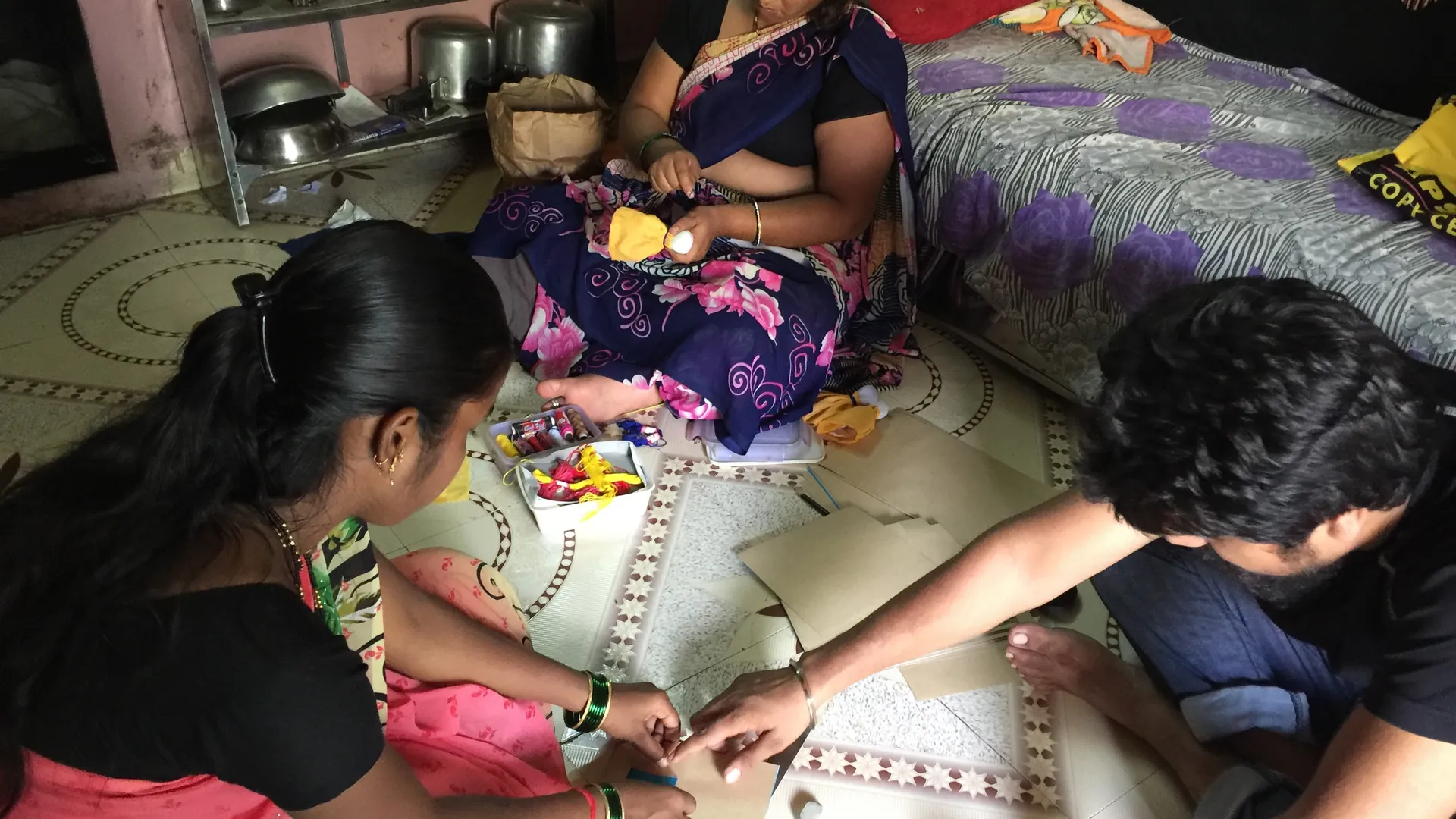
India already turns more than half of its textile offcuts into new products, opened over 15,000 Reduce, Reuse, Recycle centres in a single campaign, and now writes reuse targets into its plastic rules. What is still missing is the household and neighbourhood layer, where old newspapers, cloth and containers become bags, lamps and saleable crafts. This brief brings the national evidence together with a decade of Earth5R upcycling workshops in Mumbai, Pune, Bengaluru, Kanpur and Goa, and with the catchment training on Mumbai’s Mithi River.
Upcycling in India: the evidence at a glance
- Mills already upcycle most offcuts
- 15,000 RRR centres in three weeks
- Reuse now has a legal definition
- Recycling is counted, upcycling is not
- The global case for reuse
- A skill base of 64.66 lakh artisans
- Earth5R on the ground
- Case study: Goa
- Case study: Mumbai’s paper and river loops
- What fails, and what fixes it
- The five R’s of upcycling
- What companies and cities can do
- Questions
Upcycling means turning a discarded material into a product of equal or higher value without first breaking it down into raw material: a newspaper folded into a bag, a jar painted into a vase, tailoring offcuts stitched into a wall hanging. Recycling, by contrast, shreds or melts the material and starts again. India’s new plastic rules define reuse as “using an object or resource material again for either the same purpose or another purpose without changing the object’s structure”, and its new waste rules put prevention, reduction and reuse ahead of recycling in the official waste hierarchy.[3][7] Upcycling sits between the two: it keeps the material, changes the form and adds value. For the bigger material picture, read our briefs on textile waste in India and plastic waste in India.
Indian mills already upcycle 58% of their textile offcuts, so the gap in upcycling in India sits in the household wardrobe
The most detailed national data on upcycling in India comes from textiles. In February 2026 the Ministry of Textiles published the first mapping of the country’s textile waste value chain. It estimates 26.15 lakh tonnes a year of recyclable pre-consumer waste from yarn, fabric and garment making, excluding spinning waste that mills feed straight back into production. Of that, 15.17 lakh tonnes (58%) is upcycled and 10.20 lakh tonnes (39%) is downcycled. Only about 2% is burnt or sent to landfill.[1]
Post-consumer waste, the clothes and home textiles people throw away, tells a different story. Of the 41 lakh tonnes generated each year, 55% is reused or recycled, including downcycling, and 45%, about 18.45 lakh tonnes, is incinerated or landfilled. Urban local bodies collect two-thirds of it through household collection, and NGOs and informal collectors pick up the remaining third.[1]
Where India’s textile waste goes
Lakh tonnes a year, pre-consumer (factory) and post-consumer (household) waste
Source: Ministry of Textiles, Mapping of Textile Waste Value Chain in India, February 2026. Converted from kilotonnes (100 kilotonnes is 1 lakh tonnes).[1]
Factory offcuts are clean, sorted and close to buyers, so mills upcycle them. Household textiles arrive mixed and dirty, so almost half are lost. Programmes that teach families to keep cloth separate and turn it into usable products work exactly where the national system is weakest.
India opened more than 15,000 Reduce, Reuse, Recycle centres in three weeks, and 20 lakh citizens brought things to them
On 15 May 2023 the Ministry of Housing and Urban Affairs launched Meri LiFE, Mera Swachh Shehar, a campaign that asked cities to open one-stop RRR centres where citizens could drop off clothes, shoes, books, toys and used plastic to be reused or recycled.[2] The response was fast. By 20 May, 7,000 centres were open.[8] By 26 May there were nearly 13,000, and more than 17 lakh citizens had donated items.[9] By 2 June the count had passed 15,000 centres and 20 lakh citizens, and cities had collected 188 tonnes of plastic, 315 tonnes of cloth and around 2,00,000 old books.[2]
A reuse network built in three weeks
RRR centres opened under Meri LiFE, Mera Swachh Shehar, cumulative
Source: Ministry of Housing and Urban Affairs, press releases of 20 May, 26 May and 2 June 2023.[8][9][2]
The campaign also showed where upcycling fits. In Karnataka, women’s self-help groups were engaged to make bags out of the clothes citizens donated. In Ghaziabad, 35 NGOs and 24 resident welfare associations came together to run the city’s five centres, and Pimpri-Chinchwad built its RRR centre out of waste materials.[9] The ministry noted that 35 to 40% of urban India’s roughly 1.45 lakh tonnes of daily municipal solid waste is dry waste.[2]
Reduce, Reuse, Recycle then became the theme of Swachh Survekshan 2024-25, in which 14 crore citizens took part and RRR centres were among the parameters cities were scored on.[10]
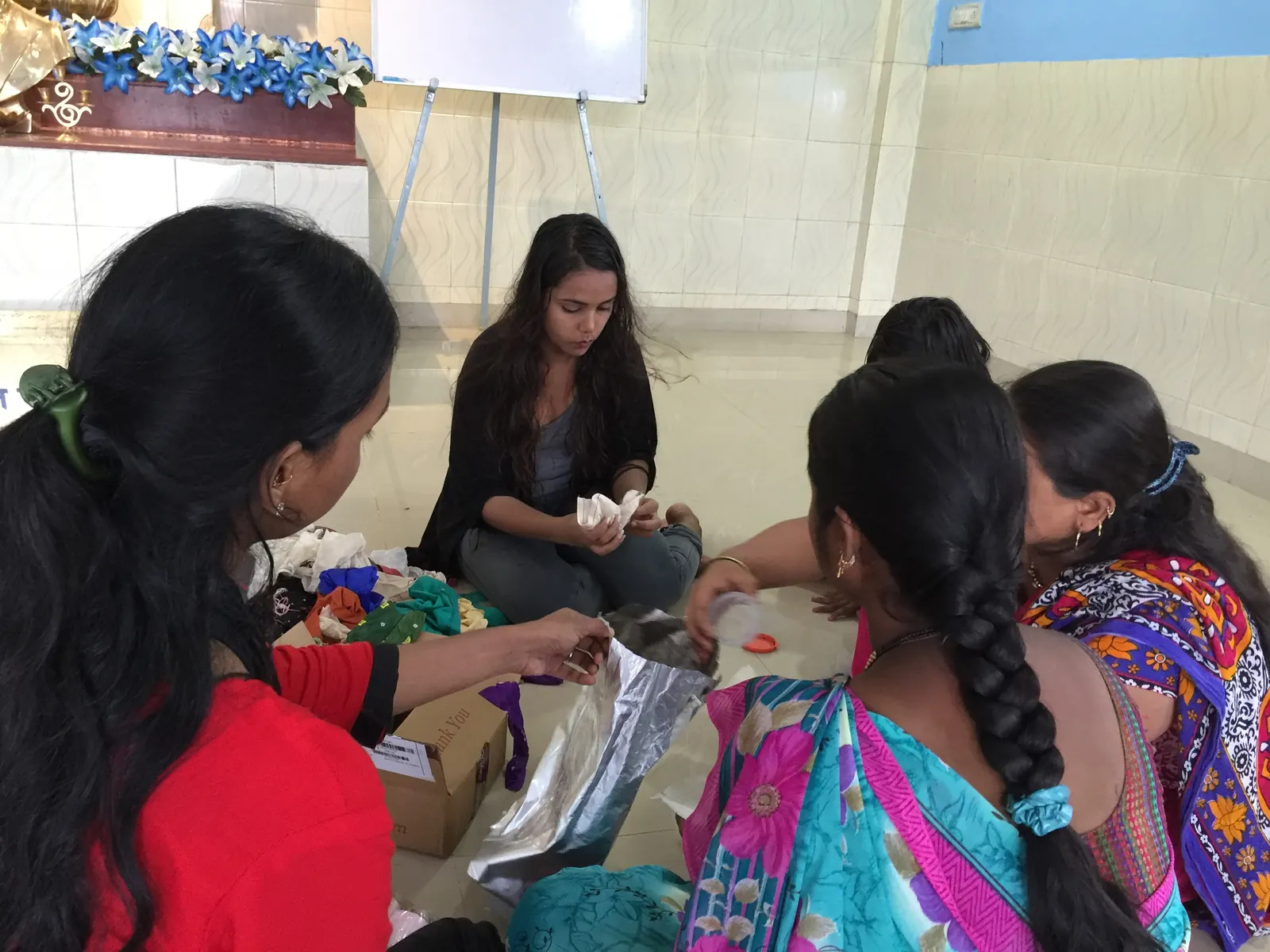
Collection is only the first half of reuse. Donated cloth becomes valuable when trained hands turn it into products, which is work self-help groups and community programmes can do alongside city RRR centres.
The 2026 plastic rules give reuse a legal definition and a rising target, and the waste rules put it ahead of recycling
The Plastic Waste Management (Amendment) Rules, notified on 31 March 2026, define reuse for the first time as using an object or material again, for the same or another purpose, without changing its structure. They also set a minimum obligation on brand owners to reuse rigid plastic packaging. For containers of 0.9 to 4.9 litres or kilograms the target is 10% of packaging in products sold in 2025-26, rising each year to 25% from 2028-29. For large drinking water containers it starts at 70% and reaches 85%.[3]
Minimum reuse targets for rigid plastic packaging
Per cent of Category I rigid plastic packaging in products sold each year, by pack type
Source: Plastic Waste Management (Amendment) Rules, 2026, Gazette of India, 31 March 2026, Schedule II, paragraph 7.4(b).[3]
The targets do not apply where a law or mandatory standard, such as a food safety rule, does not permit reuse, and a shortfall in 2025-26 can be carried forward over up to three years.[3]
The Solid Waste Management Rules, 2026, in force since 1 April 2026, set out the waste hierarchy in law: prevention, reduction, reuse, recycling, recovery and disposal, with prevention the most preferred option and landfill the least. They also allow registered material recovery facilities to act as drop-off centres that promote circularity on the principle of Reduce, Reuse and Recycle.[7] Our guide to the SWM Rules 2026 and four-stream segregation explains what the rules ask of households and buildings.
The rules now treat reuse as a measurable obligation, not a slogan. Upcycling is not the same thing in law, since it changes an object’s form, but it rests on the same sorted, clean material.
Recycling under EPR is counted in lakh tonnes, while upcycling in neighbourhoods is barely counted at all
India’s Extended Producer Responsibility system has turned recycling into a measured market. As on 5 March 2026, 4,574 registered recyclers had recycled 417.57 lakh tonnes of plastic packaging, batteries, tyres, e-waste and used oil, with online portals tracking registration, obligations and certificates.[11]
Waste recycled under EPR frameworks
Lakh tonnes recycled, cumulative, as on 5 March 2026
Source: Ministry of Environment, Forest and Climate Change, reply in Parliament, 23 March 2026.[11]
Repair, the oldest form of reuse, has its own national platform. The Department of Consumer Affairs runs the Right to Repair Portal India so consumers can find the information they need to repair products and keep using them. Sixty-six companies across automobiles, consumer durables, mobiles and electronics and farm equipment are on board.[4]
Small-scale upcycling has no comparable register. A paper bag made in a lane in Kanpur or a wall hanging stitched from tailors’ offcuts in Goa does not generate a certificate, so the material it keeps in use and the income it earns stay invisible. The waste pickers who supply much of this material are equally hard to see.
What gets counted gets funded. Community upcycling programmes that weigh the material they take in and record what participants earn make their work visible in the same language as EPR, and much easier for companies and cities to support.
Worldwide, only 6.9% of materials come back into the economy, and reuse could cut plastic pollution by 30% on its own
The Circularity Gap Report 2025 found that global circularity has fallen by 2.2 percentage points since 2015. Even recycling everything recyclable would lift it only to about 25%, which is why the report calls for products designed for longevity and repair.[12]
Waste is rising with consumption. The UN Environment Programme’s Global Waste Management Outlook 2024 projects municipal solid waste to grow from 2.1 billion tonnes in 2023 to 3.8 billion tonnes by 2050.[13] UNEP’s roadmap on plastics, Turning off the Tap, found that reuse options such as refillable bottles, bulk dispensers, deposit return and take-back schemes could reduce plastic pollution by 30% by 2040, more than the further 20% it expects from better recycling.[14]
Every serious global analysis now ranks keeping products in use above melting them down. India’s traditions of mending, refilling and making do are not a relic. They are the direction the world is trying to move in.
Upcycling in India builds on a skill base of 64.66 lakh artisans, nearly two-thirds of them women
India has an estimated 64.66 lakh handloom and handicraft artisans, and as of August 2025 women made up 64% of artisans and 71% of handloom weavers. The sector counts 318 GI-tagged handicraft products.[5] That is the same profile as the women who join community upcycling workshops: skilled with their hands, working from home and looking for income that fits around family work.
On Mumbai’s Mithi River, Earth5R built this into a river programme. Alongside the solar-powered recovery unit in the water, 10,000 families and 500 businesses in the catchment were trained in segregation and circular practice, residents were paid for segregated plastic they handed over, and households were trained to upcycle waste into paper bags, lamps and handicrafts, earning from material that previously went into the river.[6] Read the full Mithi River case study.
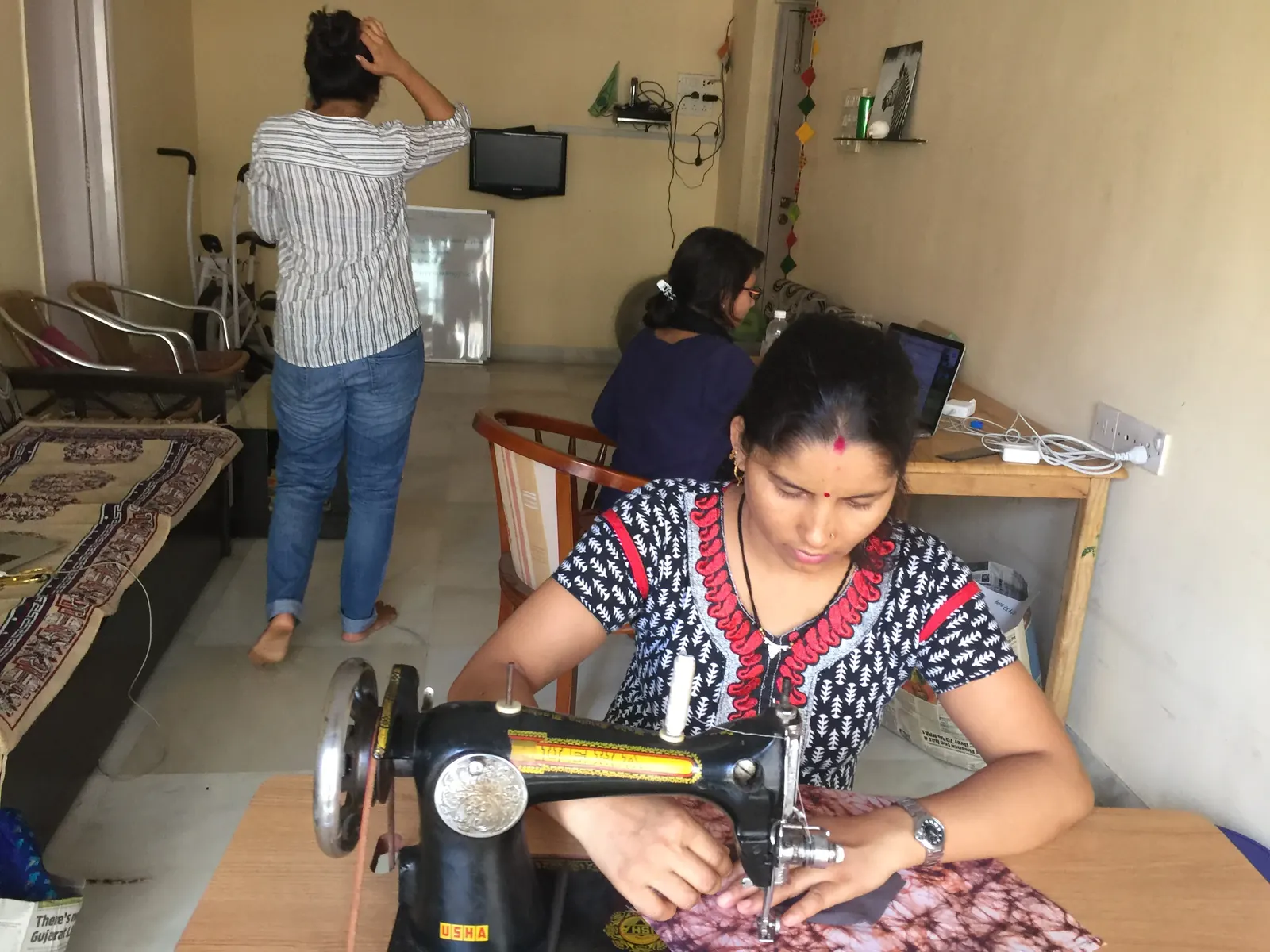
Mithi River figures cover October 2020 to November 2024 and are reported by Earth5R from programme records. They describe one project and are not national estimates.[6]
Upcycling earns most when treated as a livelihood with a market, not a craft class, building on skills women already have.
Earth5R on the ground: upcycling workshops from Bengaluru slums to a Pune care home and Mumbai municipal schools
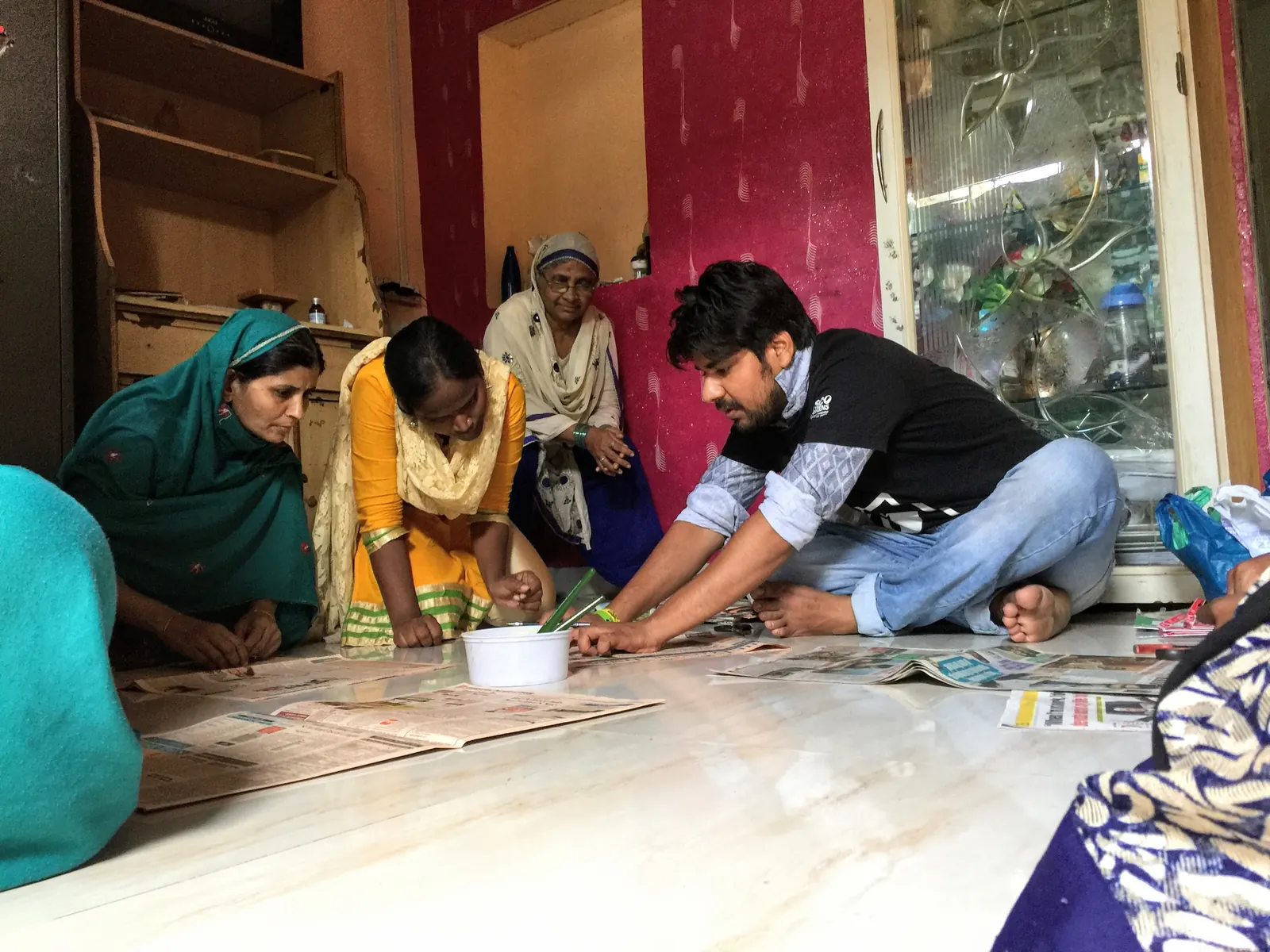
Earth5R has run upcycling within its community programmes since its early years. The workshops, written up by the volunteers who led them, follow a pattern: explain why waste matters, show a technique once, then let participants take over.
In Bengaluru, Smriti Tiwari and Arun B George of Earth5R Bangalore ran an upcycling activity for children at K.S. Garden slum on 27 February 2016. They opened with Earth5R’s five R’s and why segregation matters, then taught paper bag making. According to their report, children watching from the doorway came in with their own newspapers, and the group began inventing new uses for paper.[15] Read the Bengaluru report.
In Pune, Umang Purvar, Tejashree Sathe, Prateek Rampuria and Shriyam Jalan took an upcycling workshop to St. John’s Home for Women and Children, a home for older women, widows and children, on 15 February 2016. Residents turned empty cans, jars and bottles into pencil holders, vases and dustbins, and made envelopes from old wedding cards.[16] Read the Pune report.
In Mumbai, the Green School Project brought upcycling into municipal schools. At Sangharsh Nagar Municipal School, Powai residents Sonali and Shruti volunteered alongside Earth5R, and groups of around 40 children made a pencil stand and a dustbin for their class from toilet rolls and newspaper, then cut plastic bottles into planters.[17] Read the school report.
In Kanpur, Earth5R member Vedanshi Bhartia ran a nine-day paper and clothes upcycling workshop near the Meghdhoot Hotel from 18 to 30 May 2016. Residents made newspaper bags and paper mache trays, then wrapped newspaper rolls in scrap cloth from tailors and sewed them into wall hangings and bandhanvars.[18] Read the Kanpur report.
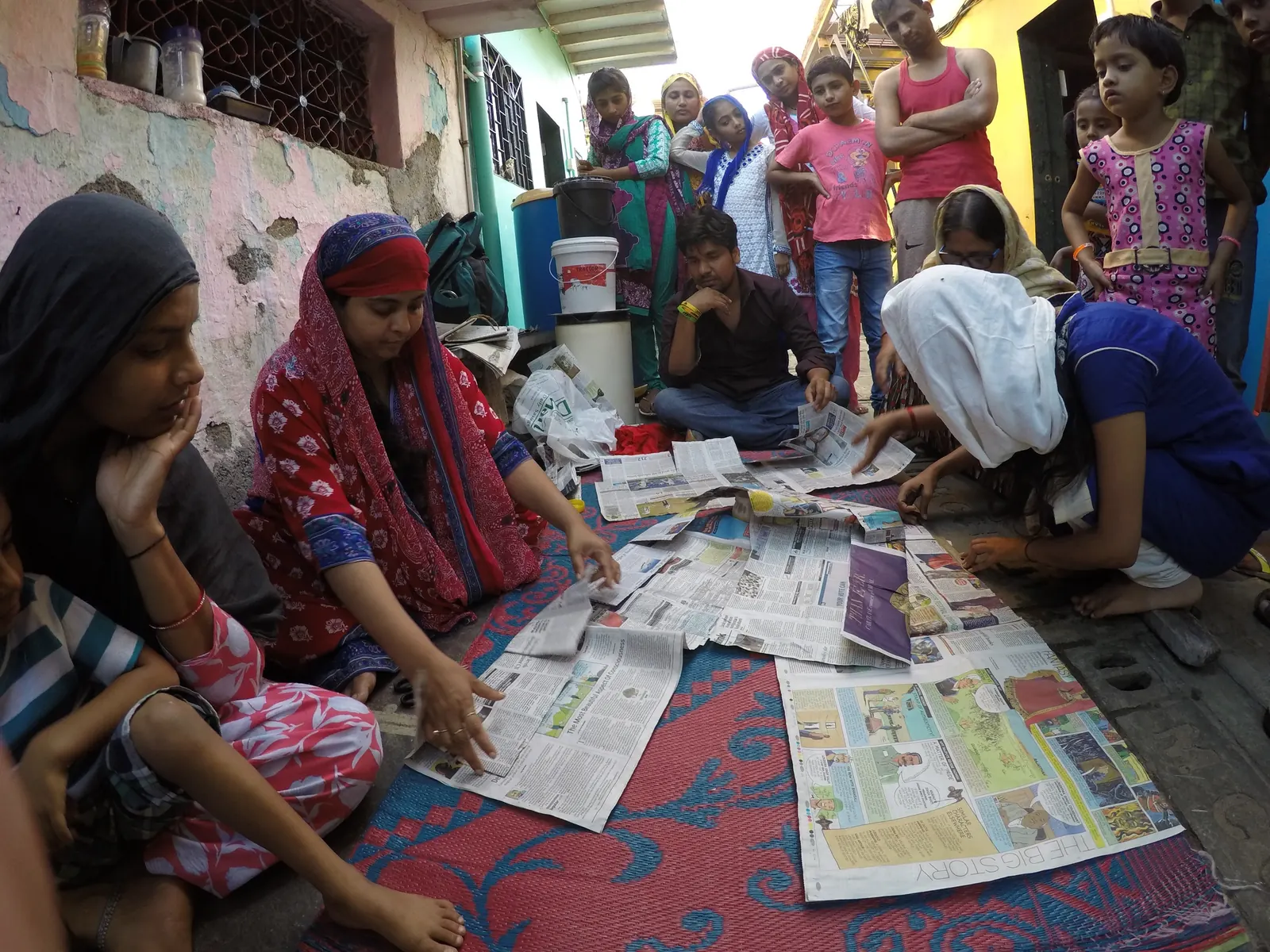
Companies have joined the same work. When Hexaware Technologies employees cleaned the Mula Mutha riverbank in Pune with Earth5R, volunteer team leader Sonam Sengar’s EarthTalk covered upcycling and how it can generate income for families with little.[19]
The common thread is the sequence: understand the waste, sort it, then make something people want. Skip the first two steps and you get one-day crafts.
Case study: in Goa, upcycling became a livelihood only once it reached women who needed the income
From 15 May, Earth5R intern Aishwarya Shah, with the help of Mayura Ashok, ran social entrepreneurship and upcycling workshops in the Bardez district of Goa. Her two reports are candid about what did not work at first.[20][21]
Getting started took local trust. Goa’s communities are linked through respected social development clubs, and approaching them directly achieved little. Once she reached the head of the Anjuna Cultural and Sports Club, he brought women together and offered his front yard for the workshops.[20] About 15 women in Chapora learned over two weeks to make products of saleable quality from newspapers, cloth and plastic bottles. A local undergraduate training to be a teacher, Ankita Naik, took to the idea and helped bring other women in.[20]
The skills took hold, but the business did not. Most participants in Chapora and Badem had comfortable household incomes and saw the work as a hobby, not an enterprise. So the programme moved to the Mahilashram, a rehabilitation centre where women without other means of support live for a year while training for financial independence. About 15 women joined, and the Ashram’s in-house teacher took part so that she could keep teaching upcycling after the workshops ended.[21] The Mahilashram Trust and the head of the Anjuna Social Development Club later invited Aishwarya as a guest of honour at one of their anniversary functions.[21]
Who is in the room decides whether upcycling becomes income. Working through trusted local institutions, choosing participants who need the earnings, and leaving a trainer behind turn a workshop into something that lasts. Read the Chapora report and the Mahilashram report.
Case study: in Mumbai, 1.5 tonnes of household paper became 7,500 paper mache products made by women in Goregaon
Earth5R’s paper upcycling project in Mumbai was built as a loop. First, residents of high-rise buildings in Andheri East were trained to keep paper apart, and Earth5R provided collection containers. Over a month, about 1.5 tonnes of old magazines, office papers and notebooks were collected.[22]
Next, Earth5R took the paper to R.A. Colony in Goregaon and, with local NGOs, ran workshops in which women turned it into bowls, containers and handicrafts using paper mache.[22]
The third phase was the market. Earth5R reports that the women produced around 7,500 items, mostly bowls and containers, from the 1.5 tonnes of paper, and that Earth5R helped them sell these in local markets across Mumbai at an average of Rs 70 an item, an income of about Rs 5.25 lakh for the families involved.[22] Read the Mumbai paper upcycling report.
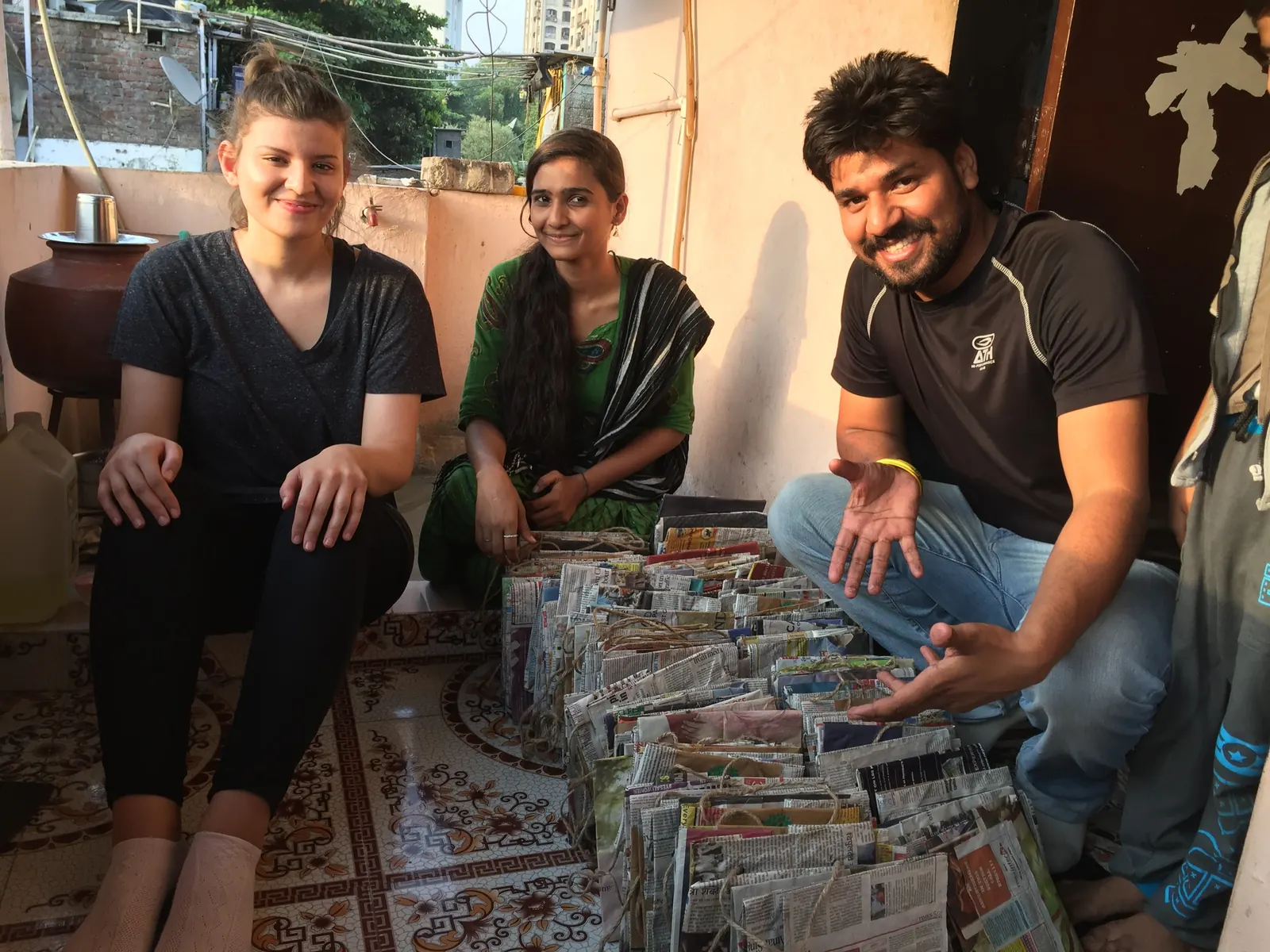
The same model runs through Earth5R’s women-centred training in Mumbai’s settlements. On 24 February 2021, Earth5R citizen volunteer Dr. Shivangi Singh trained women in Vijay Nagar near Aarey Colony in segregation, composting, menstrual hygiene and upcycling. Earth5R reports that more than 4,300 families have been reached through its livelihood and waste management programmes, and that 1,040 tonnes of waste a year from the Vijay Nagar area has been diverted from landfill.[23] Read the Vijay Nagar report.
The 1.5 tonnes of paper, 7,500 items, Rs 5.25 lakh income, 4,300 families and 1,040 tonnes a year are programme-reported by Earth5R in the reports linked here. They have not been independently audited and are not comparable with national statistics.[22][23]
Upcycling scales when collection and making are designed together. Buildings with surplus clean paper and neighbourhoods with time and skill are often a few kilometres apart, and a programme that connects them creates value at both ends.
What fails in upcycling programmes, and what fixes it, from a decade of Earth5R field reports
| What fails | What fixes it | Evidence |
|---|---|---|
| No steady supply of clean material | Organise collection first, with separate containers for paper or cloth | Andheri East buildings collected about 1.5 tonnes of paper in a month for the Goregaon workshops.[22] |
| Products nobody buys | Teach finishing, colour and quality, not only technique | In Kanpur, painting paper mache trays and finishing door hangings closed the nine-day workshop.[18] In Goa the aim was saleable quality.[20] |
| Participants who see it as a hobby | Work with people who need the income | The Goa programme moved from comfortable households to the Mahilashram.[21] |
| Outsiders without local trust | Go through institutions the community already trusts | A local club opened the door in Anjuna and Chapora.[20] |
| Skills that leave with the trainer | Train a local trainer | The Mahilashram’s in-house teacher joined the workshops to keep them going.[21] |
| Upcycling taught without the why | Start with waste, segregation and the five R’s | The Bengaluru team explained each of the five R’s and segregation before making anything.[15] |
None of these fixes is expensive. They are matters of design and patience.
The five R’s of upcycling start with Respect, for the material and for the people who work it
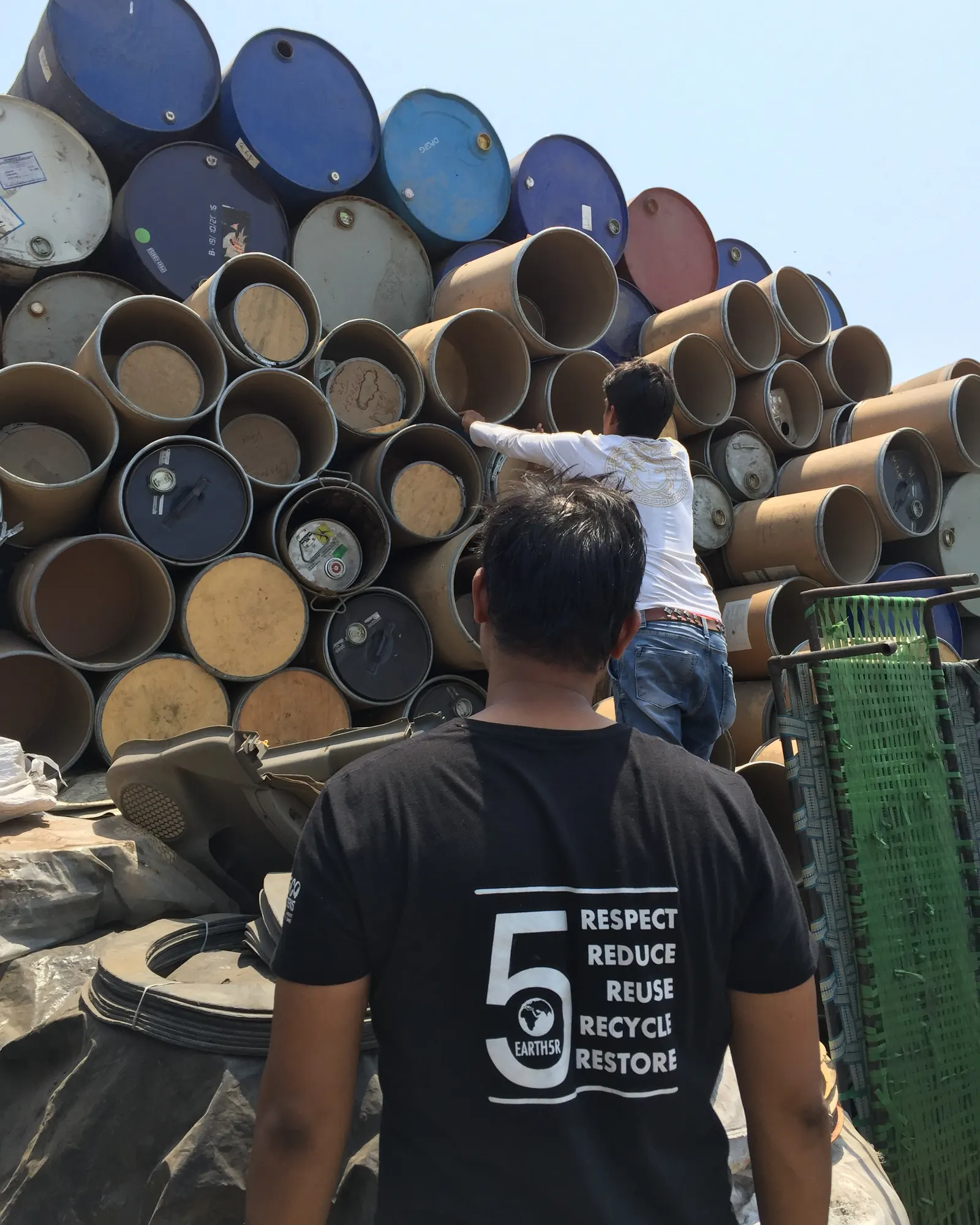
Earth5R’s name carries its method. In the words of founder Saurabh Gupta, “The 5R in Earth5R comes from a sequence we have taught since 2014: Respect, Reduce, Reuse, Recycle, Restore. The order matters. Respect comes first, respect for nature, for communities and for the limits of growth.”[24] Upcycling sits naturally between Reuse and Recycle, but a good programme touches all five.
| R | What it means for upcycling | Evidence and Earth5R work |
|---|---|---|
| Respect | Start from the limits of the planet and of people: what material a place has, and who needs the work. | The Bengaluru team began with the five R’s and segregation before teaching a single fold.[15] In Goa the programme moved to women who needed the income.[21] |
| Reduce | Cut waste at its source, so clean material is kept out of the mixed bin. | Andheri East buildings kept about 1.5 tonnes of paper apart in a month.[22] Mithi catchment residents were paid for segregated plastic.[6] |
| Reuse | Extend the life of materials before anything is thrown away. | In Pune, cans, jars and bottles became pencil holders and vases.[16] The 2026 plastic rules set rising reuse targets for rigid packaging.[3] |
| Recycle | Close the loop on materials and on value, and return that value to the communities that produce it. | Goregaon women earned a reported Rs 5.25 lakh from paper mache products.[22] 58% of recyclable pre-consumer textile waste is already upcycled.[1] |
| Restore | Rebuild damaged ecosystems, and the trust that comes from honest numbers. | Households in the Mithi catchment upcycled waste that once went into the river.[6] Earth5R labels its figures as programme-reported. |
A programme that starts at Recycle skips the steps that decide whether upcycling lasts: respecting what people need, keeping material clean and using things again.
What CSR teams, brand owners and cities can do to make upcycling in India count
- Fund the loop, not the event. Pair collection in offices or housing societies with training and a route to market, as in the Mumbai paper project.[22] Livelihood enhancement and environmental sustainability are both listed CSR activities under Schedule VII of the Companies Act.[25]
- Connect upcycling to your BRSR disclosures. Principle 2 asks listed companies how they reclaim products for reuse and recycling, and what share of input material is recycled or reused.[26]
- Plan for the reuse targets. Brand owners selling in rigid plastic packaging now carry minimum reuse obligations that rise each year to 2028-29.[3]
- Work with what already exists. Material recovery facilities may act as drop-off centres under the 2026 waste rules, and the 2023 RRR centres showed how quickly a city network can be built.[7][2]
- Send volunteers back, not once. Employee volunteers can teach techniques, help with finishing and help groups find buyers, as Hexaware employees did alongside Earth5R in Pune.[19]
- Report kilograms and rupees. Material taken in, products made and income earned are the numbers that make upcycling visible. Our CSR impact assessment handbook shows how to set them up.
Free guide · Earth5R Guides
CSR Impact Assessment Handbook
How to measure what a CSR programme changed, with indicators, baselines and templates. Free, no sign-up.
Earth5R partners with companies, housing societies and cities on circular economy and livelihood programmes across India. Explore Earth5R’s CSR and ESG projects.
Talk to Earth5R about an upcycling programmeSee Earth5R’s CSR and ESG projects
Frequently asked questions about upcycling in India
- What is upcycling, and how is it different from recycling?
- Upcycling turns waste into a product of equal or higher value without breaking the material down, such as newspaper into bags or tailors’ offcuts into wall hangings. Recycling reprocesses the material itself into raw material. India’s Ministry of Textiles uses the term downcycling for conversion into lower-value products such as fibre for filling.[1]
- How much textile waste is upcycled in India?
- According to the Ministry of Textiles, of about 26.15 lakh tonnes of recyclable pre-consumer textile waste a year, 15.17 lakh tonnes (58%) is upcycled, 10.20 lakh tonnes (39%) downcycled and 0.26 lakh tonnes (1%) reused.[1]
- What are RRR centres?
- Reduce, Reuse, Recycle centres were collection points set up by cities from 15 May 2023 under the Meri LiFE, Mera Swachh Shehar campaign, where citizens could drop off clothes, books, plastic and other items for reuse or recycling. By 2 June 2023 more than 15,000 centres had been set up.[2]
- Do India’s 2026 plastic rules require reuse?
- Yes, for some packaging. The Plastic Waste Management (Amendment) Rules, 2026 set minimum reuse obligations for brand owners using rigid plastic packaging, starting at 10% for 0.9 to 4.9 litre packs and 70% for large drinking water containers in 2025-26.[3]
- Can upcycling provide a real income?
- It can when training is paired with a market. In Earth5R’s Mumbai paper project, women in Goregaon made around 7,500 items from 1.5 tonnes of collected paper and, according to Earth5R’s programme report, earned about Rs 5.25 lakh from sales.[22]
- How does Earth5R run upcycling workshops?
- Earth5R teams and volunteers start with waste, segregation and the five R’s, teach techniques using local material such as newspaper, bottles and cloth scraps, and where possible connect collection, making and selling, as in its workshops in Mumbai, Pune, Bengaluru, Kanpur and Goa.[15][16][18][20][22]
Related reading on Earth5R
References
- Ministry of Textiles (2026). Mapping of Textile Waste Value Chain in India: A Comprehensive Look at India’s Textile Waste Ecosystem. Government of India, February 2026, Executive Summary, section 4.2 and the summary table of pre-consumer and post-consumer flows. texmin.gov.in
- Ministry of Housing and Urban Affairs (2023). MoHUA organises City-Recycler Connect workshop as part of Meri LiFE, Mera Swachh Shehar campaign: more than 15,000 RRR Centres opened. Press Information Bureau, 2 June 2023. pib.gov.in
- Ministry of Environment, Forest and Climate Change (2026). Plastic Waste Management (Amendment) Rules, 2026. Gazette of India, Extraordinary, Part II, Section 3(i), No. 218, 31 March 2026, definition of reuse in rule 3 and the minimum obligation to reuse Category I rigid plastic packaging in Schedule II, paragraph 7.4(b). egazette.gov.in
- Department of Consumer Affairs (2026). Right to Repair. Lok Sabha Unstarred Question No. 3054, answered 11 March 2026. fcainfoweb.nic.in
- Press Information Bureau (2025). Handicrafts at the Heart of India’s Rural Economy. Explainer, 9 December 2025, section on employment and artisan demographics. pib.gov.in
- Gupta, S. Mithi River Plastic Waste Cleanup: What 11,100 Tonnes Actually Took. Case study, Earth5R, figures for October 2020 to November 2024, section on the 5R model in the catchment. Programme-reported. earth5r.org
- Ministry of Environment, Forest and Climate Change (2026). Solid Waste Management Rules, 2026. Gazette of India, Extraordinary, Part II, Section 3(ii), notified 27 January 2026, in force from 1 April 2026, definition of waste hierarchy in rule 3 and the role of material recovery facilities as Reduce, Reuse and Recycle drop-off centres. Copy hosted by the Maharashtra Pollution Control Board. mpcb.gov.in
- Ministry of Housing and Urban Affairs (2023). Thousands of Reduce Reuse Recycle (RRR) Centres set up for the LiFE campaign. Press Information Bureau, 20 May 2023. pib.gov.in
- Ministry of Housing and Urban Affairs (2023). Swachhata Bhi Aur Lifestyle For Environment Bhi: lakhs of citizens donate unused items at RRR Centres. Press Information Bureau, 26 May 2023. pib.gov.in
- Ministry of Housing and Urban Affairs (2025). President of India to confer the Swachh Survekshan 2024-25 awards on 17 July 2025. Press Information Bureau, 15 July 2025. pib.gov.in
- Ministry of Environment, Forest and Climate Change (2026). Circular Economy Framework and Extended Producer Responsibility. Written reply in Parliament, Press Information Bureau, 23 March 2026, table on the status of EPR frameworks as on 5 March 2026. pib.gov.in
- Circle Economy and Deloitte (2025). Global circularity rate fell to 6.9%, despite growing recycling. Press release on the Circularity Gap Report 2025, São Paulo, 13 May 2025. circularity-gap.world
- UN Environment Programme and International Solid Waste Association (2024). Global Waste Management Outlook 2024: Beyond an age of waste. Key findings. unep.org
- UN Environment Programme (2023). UN roadmap outlines solutions to cut global plastic pollution. Press release on Turning off the Tap: How the world can end plastic pollution and create a circular economy, Nairobi, 16 May 2023. unep.org
- Tiwari, S. (reporter). Upcycling Workshop at Bangalore, K.S. Garden, 27 February 2016. EarthJournal, Earth5R. earth5r.org
- Rampuria, P. (reporter), Lodha, P. and Ramanjaneyulu, S. (editors). Waste Upcycling at Old Age Home in Pune, St. John’s Home for Women and Children, 15 February 2016. EarthJournal, Earth5R. earth5r.org
- Giordano, Y. (reporter). Gardening and Upcycling Workshop at BMC Schools, Mumbai, Sangharsh Nagar Municipal School. EarthJournal, Earth5R, Green School Project. earth5r.org
- Bhartia, V. (reporter), Mehta, A. (editor). Paper and Clothes Upcycling Workshop at Meghdhoot, Kanpur, 18 to 30 May 2016. EarthJournal, Earth5R. earth5r.org
- Ninganur, M. and Sengar, S. (reporters), Mehta, A. (editor). Cleanup at Mula Mutha River, Pune, by Hexaware Technologies. EarthJournal, Earth5R. earth5r.org
- Shah, A. (reporter), Mehta, A. (editor). Social Entrepreneurship and Upcycling Workshop at Chapora, Goa. EarthJournal, Earth5R. earth5r.org
- Shah, A. (reporter), Mehta, A. (editor). Social Entrepreneurship and Upcycling Workshop in Goa: the Mahilashram. EarthJournal, Earth5R. earth5r.org
- Earth5R. Waste Recycling and Upcycling Workshop: empowering women for sustainable livelihood, Andheri East and R.A. Colony, Goregaon, Mumbai. EarthJournal, Earth5R. Programme-reported. earth5r.org
- Garg, T. (reporter), Nair, O. (editor). Earth5R’s Women-Centric Solid Waste Management and Circular Economy Based Community Training in Mumbai. EarthJournal, Earth5R, Vijay Nagar, Aarey Colony, February 2021. Programme-reported. earth5r.org
- Gupta, S. (2026). AI and Sustainability: Planetary Limits. EarthJournal, Earth5R. Section on the Earth5R method, Respect, Reduce, Reuse, Recycle, Restore. earth5r.org
- Companies Act, 2013, Schedule VII: Activities which may be included by companies in their Corporate Social Responsibility policies, items (ii) and (iv). ca2013.com
- Securities and Exchange Board of India (2021). Business Responsibility and Sustainability Reporting Format, Annexure I, Principle 2, Essential Indicator 3 and Leadership Indicators 3 to 5. sebi.gov.in
How to cite this article
Earth5R (2026). Upcycling in India: What Earth5R’s Craft Workshops, Women’s Livelihood Training and the 2026 Reuse Rules Show. EarthJournal, Earth5R, 27 November 2026. https://earth5r.org/upcycling-india/
Figures are taken from the sources cited and were current on 27 November 2026. One lakh is 100,000 and one crore is 10 million. Textile figures were converted from kilotonnes (100 kilotonnes is 1 lakh tonnes). Earth5R figures are programme-reported and link to the reports they come from. People in Earth5R photos are not named unless an Earth5R report names them.