
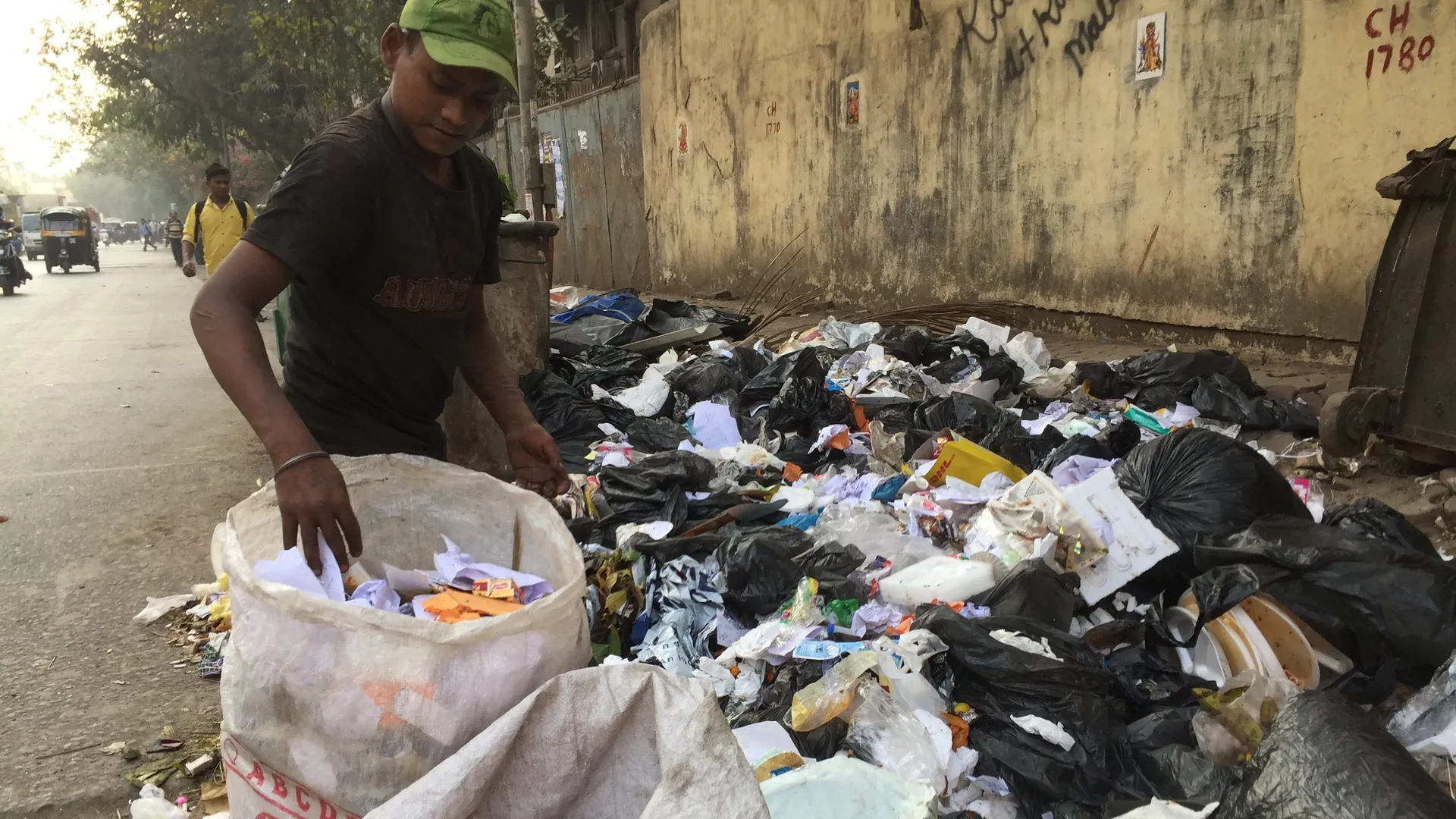
Somewhere between 20 and 50 lakh people make a living by collecting and sorting what India throws away, and until 2024 no national register counted any of them. That is changing fast. Five lakh waste pickers had been profiled under the NAMASTE scheme by September 2026, and the Solid Waste Management Rules, 2026 now ask every city to record and recognise them. This brief sets out what the data shows about waste pickers in India, their work, their health and their value to cities, and what a decade of Earth5R field work in Mumbai’s lanes, scrap shops and riverbanks teaches about inclusion.
Waste pickers in India: the evidence at a glance
- How many waste pickers India has
- NAMASTE: from 5,000 to 5 lakh
- Who does the work
- Behind most of the recycling
- What cities save
- The health cost of the work
- What the 2026 rules ask
- Pune, Bengaluru and Kerala
- EPR and the plastic market
- Earth5R on the ground
- Case study: paying for plastic on the Mithi
- Case study: Kurla and Ghatkopar
- The five R’s and waste pickers
- What companies, societies and cities can do
- Questions
The Solid Waste Management Rules, 2026 define a waste picker as a person “informally engaged in collection and recovery of reusable and recyclable solid waste from the source of waste generation including the streets, bins, material recovery facilities, processing and waste disposal facilities for sale to recyclers directly or through intermediaries to earn their livelihood”.[6] This brief builds on our research on plastic waste in India, landfills in India and e-waste in India, where the same workforce keeps appearing at every stage.
India has an estimated 20 to 50 lakh waste pickers, one of the largest informal green workforces in the world
Nobody has yet counted every waste picker in India, because the work happens on streets, at bins, at dumpsites and at scrap shops, and most of it is never written down. A 2026 report prepared by Poornima Chikarmane for an International Labour Organization (ILO) project on green jobs in India’s waste value chain brings the available studies together. They place waste pickers at between 0.4% and 1% of India’s urban population, which “conservatively places waste-picker population between 20 to 50 lakh in India”.[1]
Maharashtra alone, with almost a tenth of India’s urban population, has an estimated 2 lakh waste pickers, mainly women and migrants from within the state. Thirteen waste picker organisations there represent about 22,000 members across 16 cities, roughly a tenth of the state’s estimated total, which shows how much of the workforce still works on its own.[1]
Worldwide, researchers at the University of Leeds put the number at a minimum of 11 million, most of them in low and middle income countries where collection systems are still catching up with the waste.[7] India’s share of that global workforce is large, and so is its share of the material that workforce recovers.
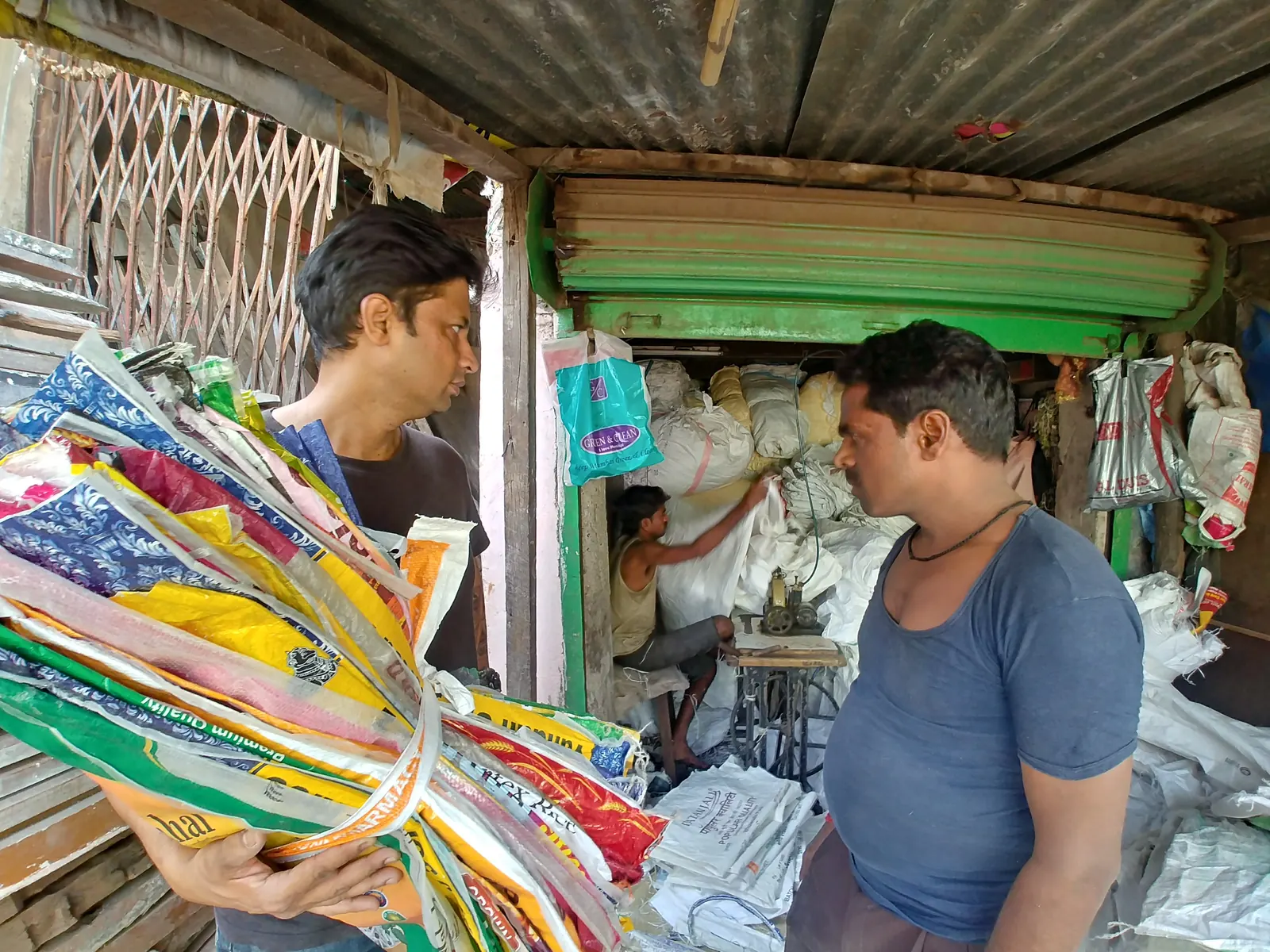
A workforce of lakhs that handles a large share of India’s recyclables has, until very recently, been invisible in official data. Any city plan for waste that leaves these workers out is planning for only part of the system.
5,00,013
NAMASTE has profiled five lakh waste pickers since 2024, and validated more than its original aim of 2.5 lakh
The National Action for Mechanised Sanitation Ecosystem (NAMASTE) began in 2023 as a scheme for sewer and septic tank workers. In June 2024, waste pickers were added as a third component from the financial year 2024-25, run by the Ministry of Social Justice and Empowerment with the Ministry of Housing and Urban Affairs.[8][3] Its aim was to enumerate 2.5 lakh waste pickers and give them an occupational photo ID card, health cover under Ayushman Bharat PM-JAY, protective equipment, skills training and help forming collectives that can run 750 dry waste collection centres.[3]
The scheme covers informal waste pickers on streets and door to door, at transfer stations, dumpsites and material recovery facilities, itinerant waste buyers, and informal sorters at processing and recycling units, as long as they have done the work for at least six months. Urban local bodies, estimated at more than 4,800, submit data through the NAMASTE portal, and District Panchayati Raj departments do so for rural areas.[8]
Progress has been quick. By 1 May 2025, just over 5,000 waste pickers had been profiled.[9] A dedicated enumeration app was launched on World Environment Day, 5 June 2025.[3] By July 2025, 37,980 had been validated by local bodies.[10] By 17 September 2026, the Minister of State for Social Justice and Empowerment reported 5,00,013 waste pickers profiled, 3,15,593 validated and 1,79,269 given PPE kits.[2]
Waste pickers validated under NAMASTE
Waste pickers profiled and validated by urban local bodies, cumulative
Sources: Ministry of Social Justice and Empowerment, Lok Sabha reply of 29 July 2025; data tabled in Parliament on 3 February 2026 as reported by The Hindu; PIB release of 17 September 2026.[10][11][2]
NAMASTE figures are reported at different stages. A release of 22 September 2026 gave 2,51,756 waste pickers profiled across 34 States and Union Territories, and one of 27 October 2026 gave 3,36,492.[12][13] The difference most likely reflects whether a count includes records still awaiting validation. We use the 17 September 2026 figures because they separate the two.
Recognition is moving from slogans to records. An ID card and a validated profile are what let a waste picker claim health cover, a place at a sorting centre or a contract with a city, so the register is the foundation for everything else in this brief.
48.7%
Nearly half of India’s registered waste pickers are women, and more than four in five come from Scheduled Caste, Scheduled Tribe and OBC communities
The first national data on who India’s waste pickers are was tabled in Parliament on 3 February 2026. Of 1.52 lakh waste pickers profiled and validated by 23 January 2026, 74,427 (48.7%) were women, 78,374 (51.3%) were men and 12 were transgender persons.[11] By September 2026, a larger count of 2,51,756 included 1,16,498 women.[12]
Waste pickers in India by social category
Share of 1.52 lakh waste pickers profiled and validated under NAMASTE, January 2026
Source: Ministry of Social Justice and Empowerment data tabled in Parliament, reported by The Hindu, 3 February 2026. “Other” (7,402 people, 4.8%) is the narrow segment at the right.[11]
The same data showed 60.3% from Scheduled Caste communities, 13.7% from Other Backward Classes and 10.5% from Scheduled Tribes, 84.5% in all, with 10.7% from the General category. The pattern varies by state: in Delhi and Goa, General category workers were the majority of those profiled.[11]
Local studies show an even stronger presence of women in some cities. The ILO report puts women at about 75% of waste pickers in Pune, 68% in Mumbai and 70% to 80% in Nagpur, and notes that in Pune, about half are aged 40 to 60 and 16% are over 60.[1]
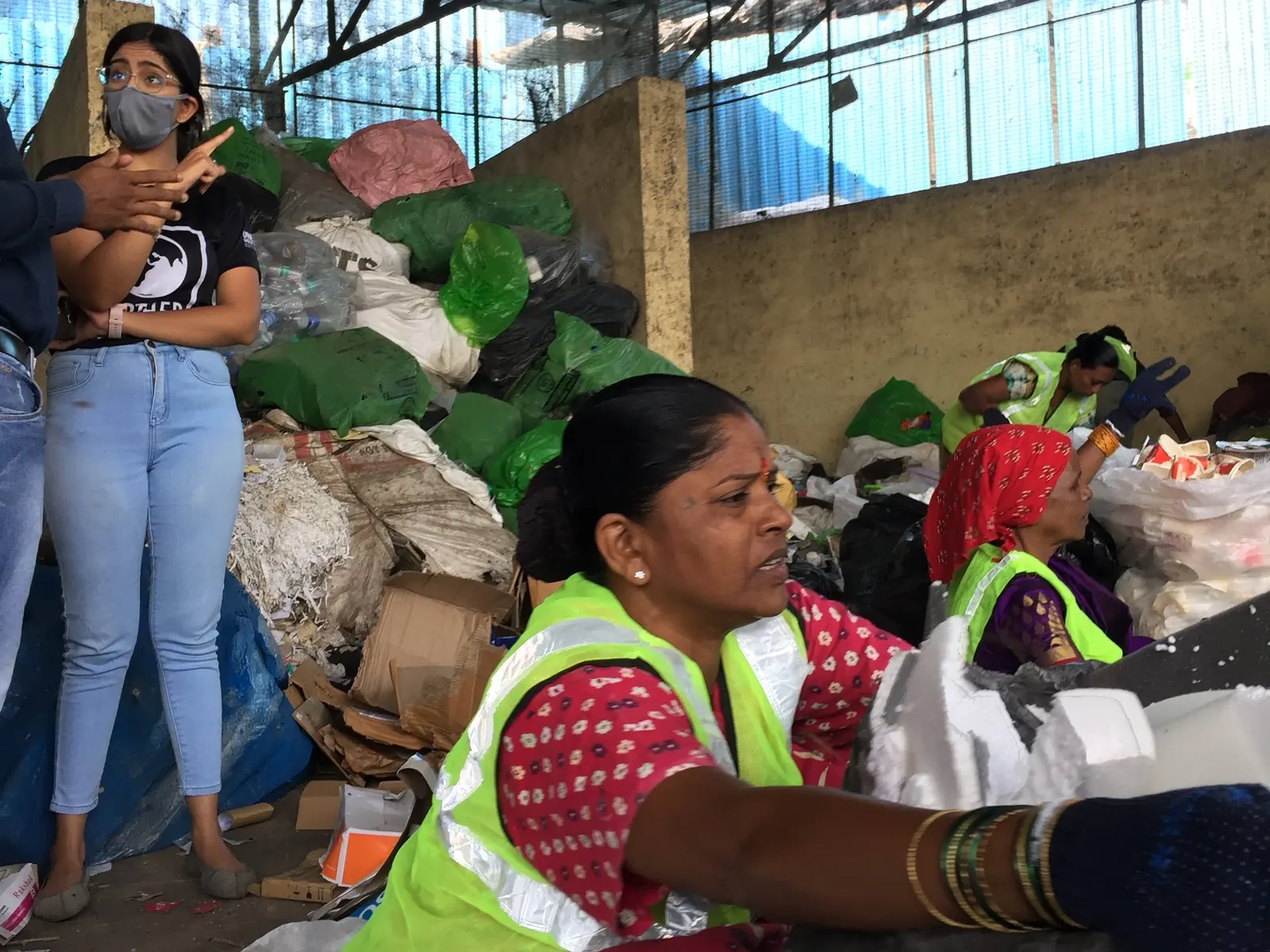
Any programme for waste pickers is, in large part, a programme for women from historically marginalised communities. Design choices on timing, childcare, safety and pay at a sorting centre shape who can take part.
58%
Informal collectors gather 58% of the plastic collected for recycling worldwide, and in India they handle most of it
The most cited global estimate comes from a 2020 study in Science by researchers from Leeds, Oxford and others, which modelled the world’s plastic flows. It found that the informal collection and recycling sector “was responsible for 58% [55, 64] of post-consumer plastic waste collected for recycling in 2016”, and that these workers “link the service chain (MSW collection) to the value chain (recycling)” in low and middle income settings.[4] The Leeds team describes this as more plastic than all the formal authorities in the world’s wealthiest nations collect put together.[7]
For India, the ILO report cites the Centre for Science and Environment’s estimate that the informal sector facilitates 60% to 80% of plastic recycling, and notes that India recycles a larger share of its plastic, at 12% to 13%, than many richer countries where an informal sector barely exists.[1]
Plastic sent to recycling: what integration adds
Share of plastic waste diverted to recycling
Source: Chikarmane for the ILO, 2026, citing Pune data and the Centre for Science and Environment for the national average. The Pune figure is for plastic collected from households by integrated waste pickers.[1]
Where waste pickers are brought into the formal system, the numbers rise. In Pune, where waste picker members of a cooperative collect segregated waste door to door, 37% of the plastic collected from households goes to recycling, about three times the national average, and doorstep collection achieves source segregation of more than 95%.[1]
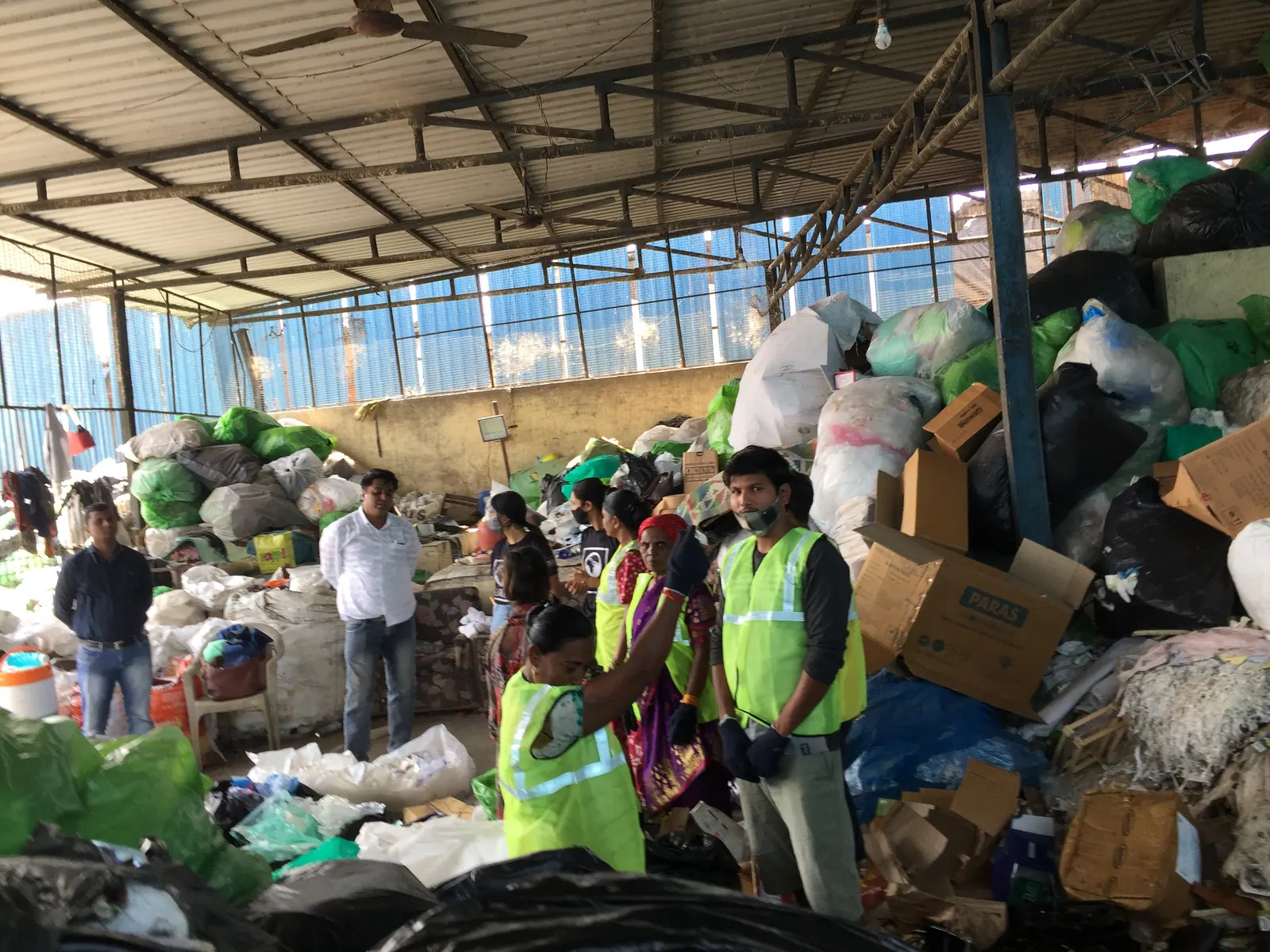
Recycling in India is labour first and machines second. A company counting on recycled plastic, paper or metal is, whether it knows it or not, relying on waste pickers to collect and sort it.
₹2,000 to ₹4,000
Every tonne a waste picker diverts saves a city ₹2,000 to ₹4,000, which adds up to crores a year
When a waste picker takes recyclables out of the waste stream, the city no longer has to collect, transport, process or dispose of that material. The ILO report puts this saving at ₹2,000 to ₹4,000 for every tonne diverted.[1]
What waste pickers save city budgets each year
Avoided collection, transport, processing and disposal costs, ₹ crore a year
Source: Chikarmane for the ILO, 2026. Figures are estimates for the Pune Municipal Corporation and the Bruhat Bengaluru Mahanagara Palike.[1]
Applied to real cities, the sums are large. Pune’s 3,700 cooperative waste pickers save the Pune Municipal Corporation an estimated ₹21 crore a year, and Bengaluru’s 15,000 waste pickers save the city about ₹84 crore a year. At the same rates, Maharashtra’s estimated 2 lakh waste pickers would be saving their cities about ₹1,120 crore a year.[1]
In Pune, the direct user fee that households pay to the cooperative also lightens the municipal budget by about ₹90 crore a year, so the report estimates that the model saves the city ₹110 crore a year in all. It also creates more work: according to the report, Pune’s non-motorised doorstep model creates eight jobs for women waste pickers for every formal contracted job created for women in a neighbouring city with mechanised collection.[1]
Waste pickers are not a cost for a city to absorb. They are a service the city is already receiving at very low cost, and a reliable contract, a shed and fair rates protect a saving that municipal budgets would otherwise have to find.
75%
In Mumbai, three in four waste pickers reported injuries from their work, more than four times the rate among their neighbours
Researchers at the International Institute for Population Sciences in Mumbai compared 200 waste pickers living on the edge of the Deonar dumping site with 103 neighbours from the same communities who did other work. The waste pickers reported far more illness: injuries (75% against 17%), stomach problems (32% against 19%), eye infections (29% against 18%) and respiratory illness (28% against 15%). Their spending on health care, and the days of work they lost to illness, were also significantly higher.[14]
Health problems among waste pickers in Mumbai
Share reporting each problem, waste pickers in Mumbai and comparison groups from the same communities
Sources: Chokhandre, Singh and Kashyap, 2017; Singh and Chokhandre, BMJ Open, 2015. Musculoskeletal pain is the 12-month prevalence; the comparison groups were 103 and 213 people.[14][5]
A second study by the same institute, of 200 Mumbai waste pickers and 213 people from the same or nearby communities, found that 79% of the waste pickers had musculoskeletal pain in the previous 12 months, against 55% of the comparison group, most often in the lower back (54%), knees (48%), upper back (40%) and shoulders (32%).[5] Bending over heaps and carrying heavy sacks for years leaves its mark.
NAMASTE responds directly to this. Its guidelines link every eligible, identified waste picker who is not already enrolled to Ayushman Bharat PM-JAY, which provides health cover of ₹5 lakh per family per year for hospital care, and they provide occupational safety training and PPE kits.[8] Both studies also point to simple measures, such as gloves, hand washing and better household hygiene, that reduce the risks.[14]
Gloves, boots, a covered place to sort and a health card are among the cheapest and most effective things any city, company or housing society can help provide. They also make the work more productive.
30 June
The Solid Waste Management Rules, 2026 ask every city to record, register and recognise its waste pickers, with yearly updates
The Solid Waste Management Rules, 2026, notified on 27 January 2026 and in force since 1 April 2026, apply to every urban and rural local body.[6] For the first time, they define both the “waste picker” and the “informal waste collector”, the second covering “individuals, associations or waste traders who are involved in collecting, segregating, sorting, sale and purchase of waste materials including recyclable materials”.[6] Our compliance guide to the 2026 rules sets out the wider changes, including four-stream segregation.
| Rule | What it says | What it means for waste pickers |
|---|---|---|
| 5(1)(b) | Every waste generator segregates into wet, dry, sanitary and special care waste and hands segregated waste to authorised waste pickers or waste collectors. | Cleaner dry waste reaches waste pickers directly, instead of being dug out of mixed bins and dumps. |
| 5(2) | Gated communities and institutions over 5,000 sq m, resident welfare and market associations, hotels and restaurants hand recyclables to authorised waste pickers or authorised recyclers. | Large buildings become a regular, legitimate source of material for authorised waste pickers. |
| 35(xix) | State urban development departments ensure registration of waste pickers working with local bodies, their agencies and self help groups, and upload the data by 30 June every year. | A yearly, state-level count of waste pickers on the central portal. |
| 39(53) | Urban local bodies prepare a ward-wise database of all personnel, including informal waste pickers and collectors. | Waste pickers appear in ward plans, not only in national totals. |
| 39(54) | Local bodies integrate waste pickers or informal collectors by recognising them or organisations representing them, including in door to door collection. | A route into paid collection work and recognised waste picker organisations. |
| 40 | Rural local bodies keep the same database and integrate waste pickers, and gram panchayats engage with civil society groups working with waste pickers. | Recognition extends beyond cities to villages. |
The rules also ask state policies to integrate waste pickers in collection, segregation, sorting and decentralised wet waste management, through identification, enumeration and registration, within a year of notification.[6] Down To Earth notes that the scale of the informal workforce makes this a large task: NAMASTE’s first six-month drive profiled about 1.5 lakh workers, estimated at five to ten per cent of everyone engaged in waste-related work.[15] That makes the yearly registration cycle, and partnerships with waste picker organisations, all the more useful.
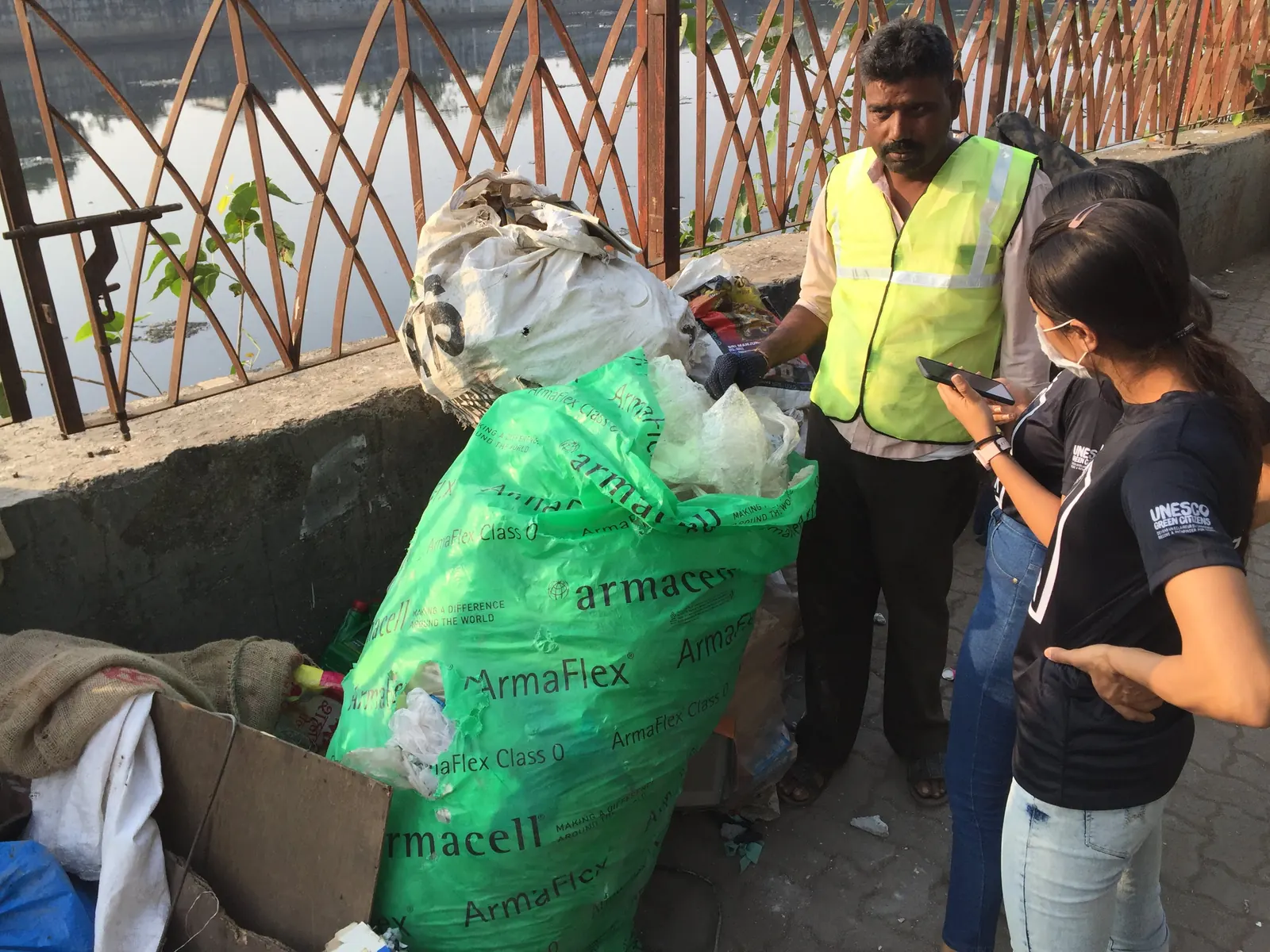
From 2026, recognising waste pickers is part of what compliance means for a city, and handing recyclables to authorised waste pickers is part of what compliance means for large buildings and institutions.
37,369
Pune’s waste picker cooperative and Kerala’s Haritha Karma Sena show that inclusion can run a whole city’s doorstep collection
India already has proven models of integration. The best documented is in Pune. SWaCH, a cooperative wholly owned by waste pickers and other urban poor, was set up in 2007 following a resolution of the Pune Municipal Corporation, and promoted jointly by the waste picker organisation Kagad Kach Patra Kashtakari Panchayat and the corporation.[1] Its 3,700 members collect segregated waste from homes across about 70% of the city.[1]
The model has public support. When the renewal of the cooperative’s agreement was uncertain in 2021, more than 6,00,000 Pune households and 115 of the city’s 153 councillors gave written endorsements of its service. The cooperative has also run collection drives for discarded goods, which are repaired, sorted and resold.[1]
Kerala has scaled a related idea across a whole state. Its Haritha Karma Sena, the green task force at the centre of Kerala’s solid waste system, is made up mainly of women from Kudumbashree neighbourhood groups, with at least two members in every ward. The Department of Drinking Water and Sanitation lists 37,369 members working in 4,438 enterprise units.[16] The ILO report describes it as a state-enabled, user fee based model of door to door collection run by local bodies in micro-enterprise mode with women workers.[1]
NAMASTE’s plan to strengthen waste picker collectives so that they can manage 750 dry waste collection centres follows the same logic: give organised waste pickers a place to sort, a regular source of material and a contract.[3]
Integration is not an experiment. Indian cities and one entire state already run doorstep collection through waste picker cooperatives and women’s groups. The task now is to adapt those models to each city under the 2026 rules.
233 lakh t
Extended Producer Responsibility has created a large market for recycled plastic, and waste pickers are its first suppliers
Since the guidelines on Extended Producer Responsibility (EPR) for plastic packaging were notified on 16 February 2022, nearly 233 lakh tonnes of plastic packaging waste has been recycled, and 3,117 plastic waste processors had registered on the central EPR portal by August 2026.[17] Much of the material behind those figures was first picked up from a street, a bin or a building by a waste picker, and sold up the chain through scrap shops and aggregators.
Collection is still the stage with the most room to grow. A 2024 study in Nature estimated that about 18% of India’s population lives where waste is not yet collected, and that uncollected waste accounts for about 53% of the country’s modelled plastic emissions.[18] Organised waste pickers, with a sorting centre and a fair price, are often the quickest way to extend collection to those streets.
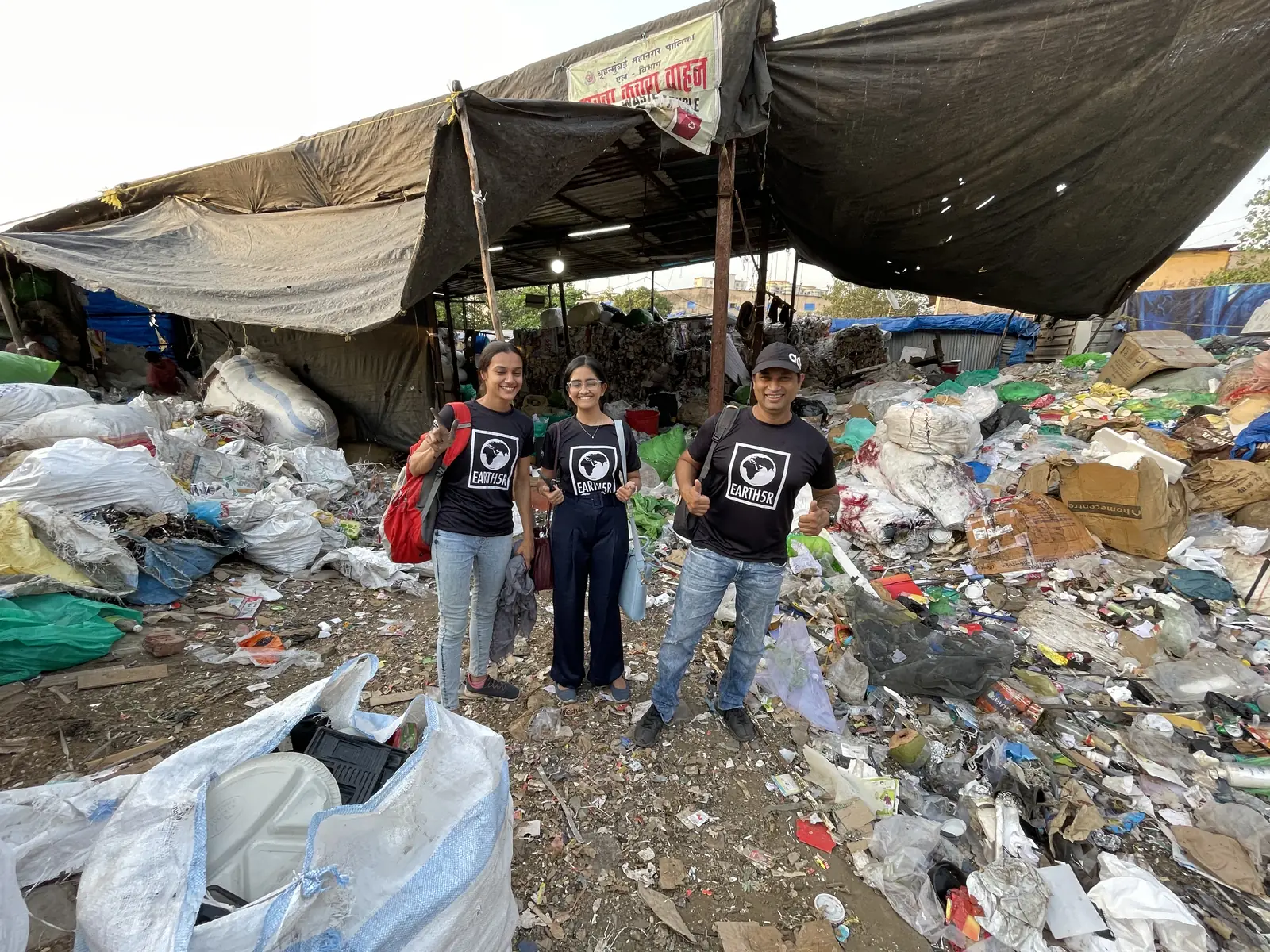
The ILO report notes that companies have already used CSR budgets to pay for collection equipment, portable sorting sheds, PPE, soap and sanitisers for waste picker groups.[1] For brands with EPR targets, the same partnerships can make recycled material more traceable. Our work on plastic waste management and EPR intelligence and on value chain ESG data under BRSR looks at how to document that link.
An EPR certificate is only as good as the collection behind it. Brands that build long-term, fairly paid partnerships with waste picker organisations get steadier supply and a stronger story for their value chain disclosures.
Earth5R’s field work puts waste pickers inside the system: segregated recyclables go to them, not to the dump
For more than a decade, Earth5R’s volunteers and field teams have worked on waste in Mumbai’s housing societies, informal settlements, lakes and rivers. One of our programme reports put it simply: “Mumbai relies heavily on the informal sector for its waste management”.[19] Much of our training is designed so that when a household or building starts segregating, the recyclables go to the waste pickers and scrap dealers who already work in that area.
In Kurla, Earth5R volunteers ran livelihood and citizen training on segregation, composting, upcycling and recycling. As our reporter Riya Dani wrote, “The waste segregation activity also connects the rag-pickers in the locality where the recyclables collected at the end of segregation help them generate income while keeping the recyclable materials out of the landfills.”[20] The same programme taught local women to make products from waste clothes, plastic and paper, with help on marketing.[20]
At the request of the Brihanmumbai Municipal Corporation, Earth5R volunteers trained 40 municipal officers at the Wadia Estate Municipal School in Kurla. The recyclables collected after segregation were given to rag-pickers, which helps make sure the material is recycled.[21] In other Mumbai livelihood trainings reported by Siya Wadhwa, rag-pickers were included in the collection of recyclables so that they could earn an income from it.[22]
Earth5R also works with private partners in the waste chain. Our page on building a circular economy in Mumbai describes partnerships “with various waste management companies, waste collectors, recyclers, and ragpickers across India”, including Clean GeoSphere, founded by Mohd Imran Khan, to collect plastic formally and channel it to recyclers.[23]
Earth5R programme figures in this brief come from Earth5R’s own reports and case studies. They are programme-reported and, unless stated, have not been independently audited. They describe specific projects and periods and should not be added to the national figures above.
Plan a waste inclusion programme with Earth5RSee our river cleanup CSR work
Segregation training changes more than a building’s bins. When it routes recyclables to local waste pickers, it raises their income and the quality of what they sell, at no extra cost to the residents.
4,440 t
Case study: on the Mithi River, paying residents for segregated plastic helped recover 4,440 tonnes
From October 2020 to November 2024, Earth5R ran a river recovery and catchment programme on the Mithi in Mumbai with United Nations Technology Innovation Labs, Huhtamäki, RiverRecycle and the Municipal Corporation of Greater Mumbai, supported by €0.6 million in funding.[24] A solar-powered unit intercepted floating waste, which was segregated, washed, dried and shredded on the bank.[24]
The part that matters most for waste pickers happened in the catchment. Ten thousand families and 500 businesses were trained in segregation and circular economy practice, and, in the words of the case study, “Residents were paid for segregated plastic handed over, which turned waste from something to dispose of into something with a price.”[24] That is the logic India’s waste pickers have always worked by. Households were also trained to upcycle waste into paper bags, lamps and handicrafts.[24]
Earth5R designed and deployed the project and has since handed operations to its delivery partners. The full record is in our Mithi River case study.[24]
Putting a price on segregated material is the fastest way to change behaviour. Programmes that pay for clean recyclables, through residents or through waste pickers, recover more and lose less to the river.
4,300
Case study: in Kurla and Ghatkopar, training thousands of families made recyclables easier for local waste pickers to recover
The Kurla to Ghatkopar belt has some of Mumbai’s largest informal settlements. On 2 March 2021, Earth5R volunteers ran a training for more than 50 families in Ghatkopar on segregation, disposal and composting kitchen scraps, as reported by Trisha Garg.[19] Volunteers also taught residents to upcycle and recycle waste into products that could be sold.[19]
Across Earth5R’s Mumbai livelihood programme, our volunteers trained at least 100 families a week, about 4,300 families in 50 days, in door to door and group sessions on segregation, composting and safe disposal.[25] The same report records how “a considerable amount” of dumped waste “is removed by rag pickers who then sort it out and sell them to those who deal in recyclables like paper, plastics, metal”.[25] Segregated waste makes that work cleaner and safer, and our earlier brief on the hidden workforce behind India’s recycling looks at the people involved.
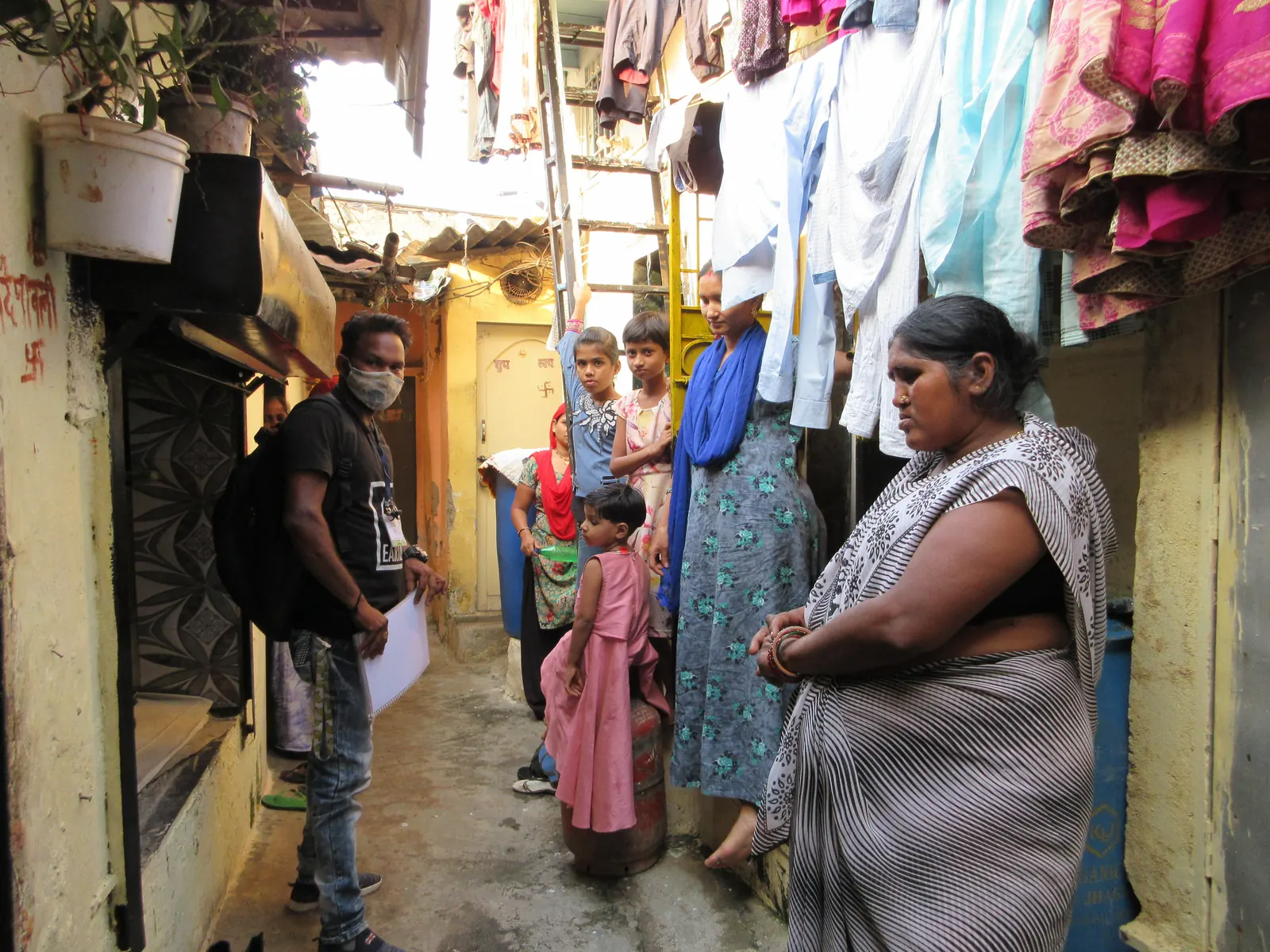
Read the programme reports from Kurla, Ghatkopar and the training for Mumbai’s municipal officers.
Household training and waste picker livelihoods are two halves of the same system. Segregation at the doorstep is what lets a waste picker collect clean material instead of sifting a heap.
The five R’s and waste pickers: recycling depends on respect for the people who do it
In the words of founder Saurabh Gupta, “The 5R in Earth5R comes from a sequence we have taught since 2014: Respect, Reduce, Reuse, Recycle, Restore. The order matters. Respect comes first, respect for nature, for communities and for the limits of growth. A programme that starts at Recycle has skipped the three most important steps.”[26] Waste pickers show why. India’s recycling rests on their labour, and every one of the five R’s touches their work.
| R | What it means for waste pickers | Evidence and Earth5R work |
|---|---|---|
| Respect | Start from the limits of people: recognise the work with an ID, health cover, safe equipment and a voice. | Injuries among Mumbai waste pickers ran at 75% against 17% for neighbours.[14] NAMASTE has validated 3,15,593 waste pickers.[2] |
| Reduce | Cut mixed waste at source so nobody has to dig through it, and cut packaging that has no buyer. | The 2026 rules require four-stream segregation and handover to authorised waste pickers.[6] Earth5R trained about 4,300 Mumbai families in 50 days.[25] |
| Reuse | Extend the life of materials before they are thrown away, through repair, resale and upcycling. | Pune’s cooperative collects, repairs and resells discarded goods.[1] Earth5R trained Kurla women to turn waste clothes, plastic and paper into products.[20] |
| Recycle | Close the loop on material and on value, with a fair price for the people who collect and sort. | Informal collectors gather 58% of the world’s plastic collected for recycling.[4] On the Mithi, residents were paid for segregated plastic.[24] |
| Restore | Rebuild the places waste damages, and the institutions of trust: registers, cooperatives and contracts. | Pune’s cooperative model saves the city an estimated ₹110 crore a year.[1] The Mithi programme removed 11,100 tonnes of waste from the river.[24] |
Most money for waste goes to Recycle, the fourth step. Respect, Reduce and Reuse decide whether the people doing the recycling can do it safely and for a fair income, and Restore is what tells a city the system is working.
What companies, housing societies and cities can do for waste pickers in India
The 2026 rules, NAMASTE and EPR together give every organisation that produces or handles waste a clear way to support waste pickers.
- Hand recyclables to authorised waste pickers. Large societies, campuses, hotels and markets are now expected to give segregated recyclables to authorised waste pickers or recyclers.[6] A fixed pick-up day and a clean, covered storage spot make that work.
- Help with registration and health cover. Waste pickers who have worked for six months can be profiled under NAMASTE and linked to PM-JAY.[8] Companies and societies can host enrolment camps with local bodies and waste picker organisations.
- Fund the basics. Gloves, boots, masks, a sorting shed, hand washing points and weighing scales are low-cost and directly address the injuries and illness recorded in Mumbai.[14][1]
- Contract waste picker collectives. Cooperatives and self help groups can run doorstep collection, dry waste centres and composting units, as Pune and Kerala show.[1][16]
- Link EPR to fair prices. Brands buying recycled material or EPR certificates can ask how much reached the collectors, and favour partners that pay waste pickers fairly and on time.[17]
- Report the value chain honestly. Count the waste pickers your waste programme relies on, and report their inclusion as part of your value chain disclosures. Earth5R’s ESG and BRSR reporting services help teams document it.
Free guide · Earth5R Guides No. 08
Supplier ESG and Value Chain Guide
How to get credible ESG data from suppliers without burying small businesses in questionnaires, with screening, capability building, paying on time and a programme workbook.
Waste pickers recover far more than plastic, from paper and metal to old clothes. Our brief on composting in India shows how the wet half of the bin can be handled at source, which leaves cleaner dry waste for the people who sort it.
Talk to Earth5R about an inclusive waste programmeFree CSR and ESG guides
Frequently asked questions about waste pickers in India
- How many waste pickers are there in India?
- There is no complete count yet. Studies put waste pickers at 0.4% to 1% of India’s urban population, which a 2026 ILO report says conservatively places their number at 20 to 50 lakh.[1] By 17 September 2026, 5,00,013 waste pickers had been profiled under the NAMASTE scheme, of whom 3,15,593 had been validated.[2]
- What is the NAMASTE scheme for waste pickers?
- NAMASTE, the National Action for Mechanised Sanitation Ecosystem, added waste pickers as a component from 2024-25. It profiles waste pickers who have done the work for at least six months, issues occupational ID cards, provides PPE kits and safety training, links eligible workers to Ayushman Bharat PM-JAY health cover of Rs 5 lakh per family per year, and supports collectives to run dry waste collection centres.[8][3]
- What do the Solid Waste Management Rules, 2026 say about waste pickers?
- The rules define waste pickers and informal waste collectors, require waste generators and large buildings to hand segregated recyclables to authorised waste pickers or recyclers, ask states to register waste pickers and upload the data by 30 June every year, and require local bodies to keep a ward-wise database and integrate waste pickers by recognising them or their organisations.[6]
- How much do waste pickers contribute to recycling?
- Globally, the informal sector collected 58% of post-consumer plastic waste gathered for recycling in 2016, according to a study in Science.[4] In India, the Centre for Science and Environment estimates that the informal sector facilitates 60% to 80% of plastic recycling, as cited in a 2026 ILO report.[1]
- How much money do waste pickers save Indian cities?
- The ILO report estimates that every tonne of recyclables diverted saves a city Rs 2,000 to Rs 4,000. Pune’s 3,700 cooperative waste pickers save the city about Rs 21 crore a year, Bengaluru’s 15,000 waste pickers about Rs 84 crore, and the Pune model as a whole about Rs 110 crore a year including user fees.[1]
- How does Earth5R work with waste pickers?
- Earth5R trains households, buildings and municipal staff to segregate waste so that recyclables go to local waste pickers and scrap dealers, runs livelihood programmes in Mumbai settlements such as Kurla and Ghatkopar, and partners with waste collectors and recyclers. On the Mithi River, residents were paid for segregated plastic, and 4,440 tonnes of plastic were recovered between October 2020 and November 2024.[20][24]
Related reading on Earth5R
- Plastic waste in India: 2026 data on generation, EPR recycling and open burning
- Mithi River plastic waste cleanup: what 11,100 tonnes actually took
- Landfills in India: legacy waste, methane data and what keeps dumpsites from returning
- E-waste in India: growth, recycling and critical minerals
- Solid Waste Management Rules 2026: India compliance guide
- Supplier ESG and Value Chain Guide
References
- Chikarmane, P. (2026). Identification and Integration of Waste Workers in Waste Management Planning: A Brief Report. International Labour Organization project “Promoting green and decent jobs creation in the waste value chain sector in India”, published April 2026. ilo.org
- Ministry of Social Justice and Empowerment (2026). Ministry of Social Justice and Empowerment organises Swachhata Hi Seva campaign in Budaun, Uttar Pradesh: NAMASTE progress on waste pickers. Press Information Bureau, 17 September 2026. pib.gov.in
- Ministry of Social Justice and Empowerment (2025). Waste Picker Enumeration App launched on World Environment Day under NAMASTE. Press Information Bureau, 5 June 2025. pib.gov.in
- Lau, W. W. Y., Shiran, Y., Bailey, R. M., Cook, E., Stuchtey, M. R., Velis, C. A. et al. (2020). Evaluating scenarios toward zero plastic pollution. Science, 369(6510), 1455-1461. Accepted manuscript. ora.ox.ac.uk
- Singh, S. and Chokhandre, P. (2015). Assessing the impact of waste picking on musculoskeletal disorders among waste pickers in Mumbai, India: a cross-sectional study. BMJ Open, 5(9), e008474. bmjopen.bmj.com
- Ministry of Environment, Forest and Climate Change (2026). Solid Waste Management Rules, 2026. Gazette of India, notified 27 January 2026, in force from 1 April 2026, Rules 3(1)(zb), 3(1)(zzj), 5, 35, 39 and 40. Copy hosted by the Maharashtra Pollution Control Board. mpcb.gov.in
- University of Leeds (2020). Tracking the flow of plastic pollution: Breaking the Plastic Wave. Research spotlight. leeds.ac.uk
- Ministry of Social Justice and Empowerment. Revised Scheme Guidelines for Inclusion of Waste Pickers Component under NAMASTE, sections 2, 4, 5 and 7.4. socialjustice.gov.in
- Ministry of Social Justice and Empowerment (2025). Waste pickers added as a component under NAMASTE, with an aim to enumerate 2,50,000 waste pickers. Press Information Bureau, 1 May 2025. pib.gov.in
- Ministry of Social Justice and Empowerment (2025). Waste pickers under NAMASTE scheme. Written reply in the Lok Sabha, Press Information Bureau, 29 July 2025. pib.gov.in
- Lakshman, A. (2026). 84.5% of 1.52 lakh waste-pickers profiled so far come from SC, ST, and OBC communities. The Hindu, 3 February 2026, reporting data tabled in Parliament by the Ministry of Social Justice and Empowerment. thehindu.com
- Ministry of Social Justice and Empowerment (2026). NAMASTE strengthens safety, dignity and livelihood support for sanitation workers: 2,51,756 waste pickers profiled across 34 States and Union Territories. Press Information Bureau, 22 September 2026. pib.gov.in
- Ministry of Social Justice and Empowerment (2026). Distribution of PPE kits and Ayushman Cards under NAMASTE, Moradabad. Press Information Bureau, 27 October 2026. pib.gov.in
- Chokhandre, P., Singh, S. and Kashyap, G. C. (2017). Prevalence, predictors and economic burden of morbidities among waste-pickers of Mumbai, India: a cross-sectional study. Journal of Occupational Medicine and Toxicology, 12, 30. springer.com
- Valsan, S. (2026). Navigating India’s waste management transition: overlapping mandates and informality shape implementation challenges. Down To Earth, 17 March 2026. downtoearth.org.in
- Department of Drinking Water and Sanitation (2025). Kerala’s Best Practices in Waste Management under SBM-G, Haritha Karma Sena section. Swachh Bharat Mission (Grameen). ddws.gov.in
- Ministry of Environment, Forest and Climate Change (2026). National Plastic Waste Reporting Portal. Lok Sabha Unstarred Question No. 3580, answered 10 August 2026. sansad.in
- Cottom, J. W., Cook, E. and Velis, C. A. (2024). A local-to-global emissions inventory of macroplastic pollution. Nature, 633, 101-108. nature.com
- Garg, T. (reporter) and Nair, O. (editor). Solid waste management, circular economy and enhanced livelihoods: sustainable community program in the Ghatkopar region of Mumbai. EarthJournal, Earth5R, training of 2 March 2021. Programme-reported. earth5r.org
- Dani, R. (reporter). Helping community with circular economy, waste management and livelihood programs at Kurla, Mumbai. EarthJournal, Earth5R. earth5r.org
- Dani, R. (reporter). Waste management training at Mumbai: Earth5R trains communities for the Mumbai Municipality. EarthJournal, Earth5R, Wadia Estate Municipal School, Kurla. earth5r.org
- Wadhwa, S. (reporter) and Dani, R. (editor). Establishing a circular economy, waste management and livelihood training at Mumbai. EarthJournal, Earth5R. earth5r.org
- Earth5R. Building circular economy at Mumbai: Know Your Plastics and partnership with Clean GeoSphere. EarthJournal, Earth5R. earth5r.org
- Gupta, S. Mithi River plastic waste cleanup: what 11,100 tonnes actually took. Earth5R case study, figures for October 2020 to November 2024. Programme-reported. earth5r.org
- Garg, T. (reporter) and Dani, R. (editor). Solid waste management and circular economy livelihood programme in Mumbai: the road to a sustainable community. EarthJournal, Earth5R. Programme-reported. earth5r.org
- Gupta, S. (2026). AI and Sustainability: Planetary Limits. EarthJournal, Earth5R. Section on the Earth5R method, Respect, Reduce, Reuse, Recycle, Restore. earth5r.org
How to cite this article
Earth5R (2026). Waste Pickers in India: 2026 Data on NAMASTE, the Waste Rules, Health and What Inclusion Looks Like. EarthJournal, Earth5R, 23 November 2026. https://earth5r.org/waste-pickers-india/
Figures are taken from the sources cited and were current on 23 November 2026. Estimates of the number of waste pickers, NAMASTE profiling and validation counts, city savings and health surveys measure different things over different years, so they should not be added together or compared as if they were one series. Indian figures use lakh and crore. Earth5R figures are programme-reported and labelled as such. Earth5R does not name people shown in field photos.