
India’s first water-body census counted 24.24 lakh waterbodies, of which only 69,485 sit in urban areas and 22,361 are lakes. Cities are already moving: Delhi has rejuvenated 256 of 631 priority waterbodies, and the Brihanmumbai Municipal Corporation has lifted tens of thousands of tonnes of water hyacinth from Powai Lake while tendering an 8 MLD sewage treatment plant. This brief asks what urban lake restoration in India looks like when shoreline litter, untreated sewage and community ownership are treated as one system, and what Earth5R’s decade of Powai cleanups, Yeoor work and Mithi recovery actually show on the ground.
Urban lake restoration in India: the evidence at a glance
- What the water-body census shows
- Why urban lakes stay under pressure
- The policy stack already in place
- Powai: city works meet a living lake
- ACT Powai: count before you clear
- From bags to recyclers and benches
- Case study: the Mithi connects the lakes to the sea
- Yeoor and the wider lake network
- The five R’s for urban lakes
- What a lake CSR programme should measure
- Questions
For the river side of the same problem, see Earth5R’s river cleanup CSR brief and the Mithi River case study. Free tools for water programmes are in the Water Stewardship guide and the River Revival Playbook.
India counted 24.24 lakh waterbodies, and only 22,361 of them are lakes
In April 2023 the Ministry of Jal Shakti released India’s first Census of Water Bodies, conducted in convergence with the Sixth Minor Irrigation Census for the reference year 2017-18. The census enumerated 24,24,540 waterbodies across the country. Of these, 97.1% (23,55,055) are in rural areas and only 2.9% (69,485) are in urban areas.[1][2]
By type, ponds dominate at 59.5% (14,42,993), followed by tanks at 15.7%, reservoirs at 12.1%, water-conservation schemes, percolation tanks and check dams at 9.3%, lakes at 0.9% (22,361) and others at 2.5%.[2] Most waterbodies (83.7%, or 20,30,040) were reported as in use; 16.3% were not in use, often because they had dried up, silted or been destroyed beyond repair.[2]
What India’s waterbodies are made of
Share of 24,24,540 waterbodies by type, first Census of Water Bodies
Source: Ministry of Jal Shakti, Press Information Bureau, April 2023.[1][2]
Separately, the Wetlands of India Portal maintained by the Ministry of Environment, Forest and Climate Change lists 1,319 wetlands added on the portal covering about 41.40 lakh hectares, 103 Ramsar sites covering about 15.61 lakh hectares, and the National Wetlands Atlas total of 7,57,040 wetlands.[6] Urban lakes sit at the narrow end of this inventory: few in number, heavy in public use, and tightly bound to city drainage.
Urban lake restoration in India is not a niche hobby. It is work on a small, high-pressure subset of a national water-body stock that cities depend on for flood buffering, groundwater recharge, recreation and biodiversity.
Urban lakes stay under pressure from sewage, litter and nutrient weeds
Most urban lakes in India sit inside catchments that send them untreated sewage, stormwater and solid waste. A draft study by Bengaluru’s Environmental Management and Policy Research Institute (EMPRI), covering 681 waterbodies of which 392 are lakes, found that 85% of the city’s existing waterbodies fell in Class E, fit only for irrigation and industrial cooling, with weeds in 89% of them and 11% completely covered.[7] Not a single Bengaluru lake in that study reached Class A or Class B water quality.[7]
At Powai Lake in Mumbai, civic and joint-committee reporting for 2024-25 has described about 18 million litres a day of untreated sewage reaching the lake through culverts and drains from surrounding settlements, nutrient loads that feed water hyacinth, and stormwater that also carries organic pollution and emerging contaminants from the catchment.[8][3][9] These are shared challenges for cities, utilities, housing societies and shoreline users, not a single agency’s problem.
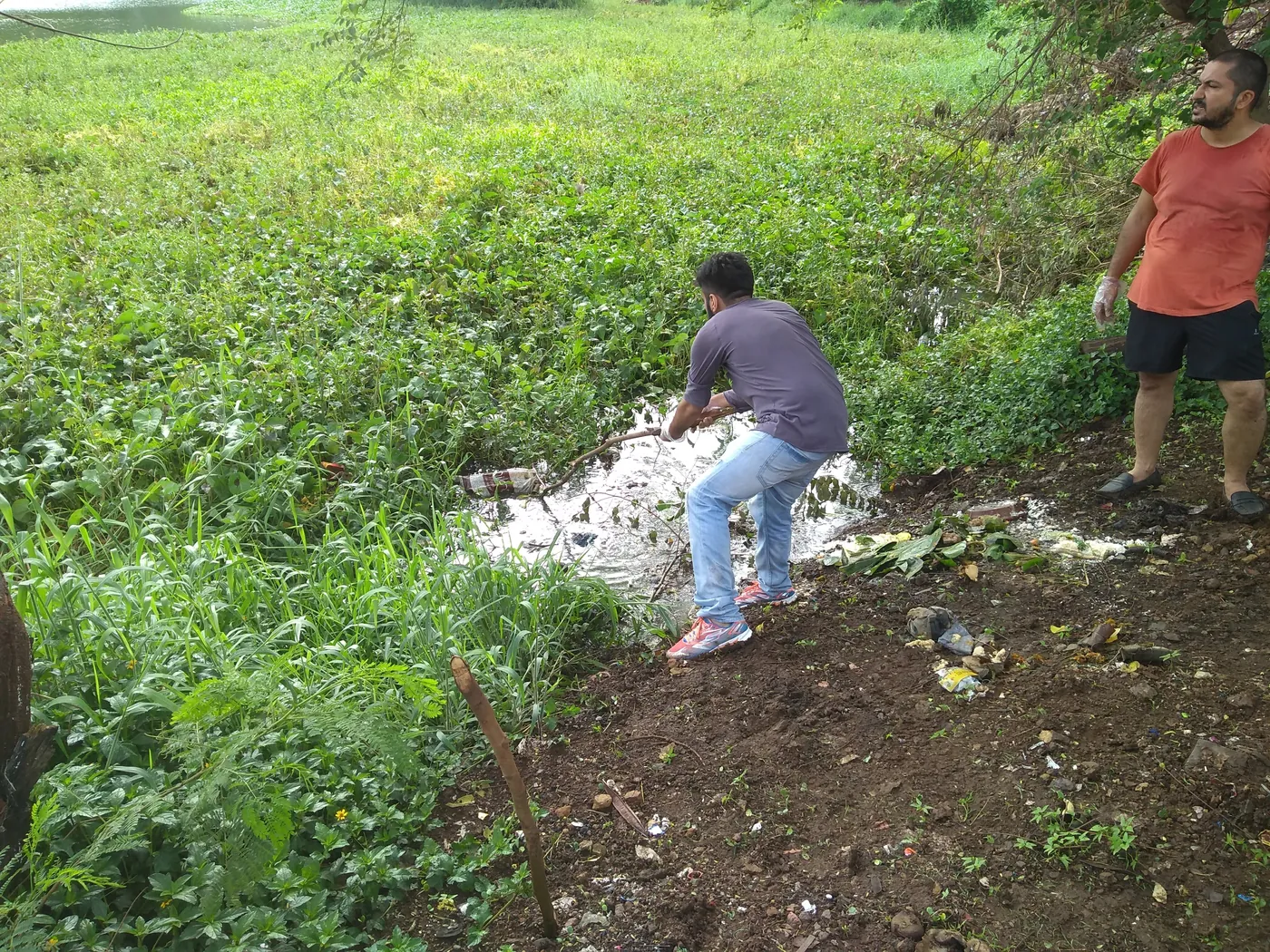
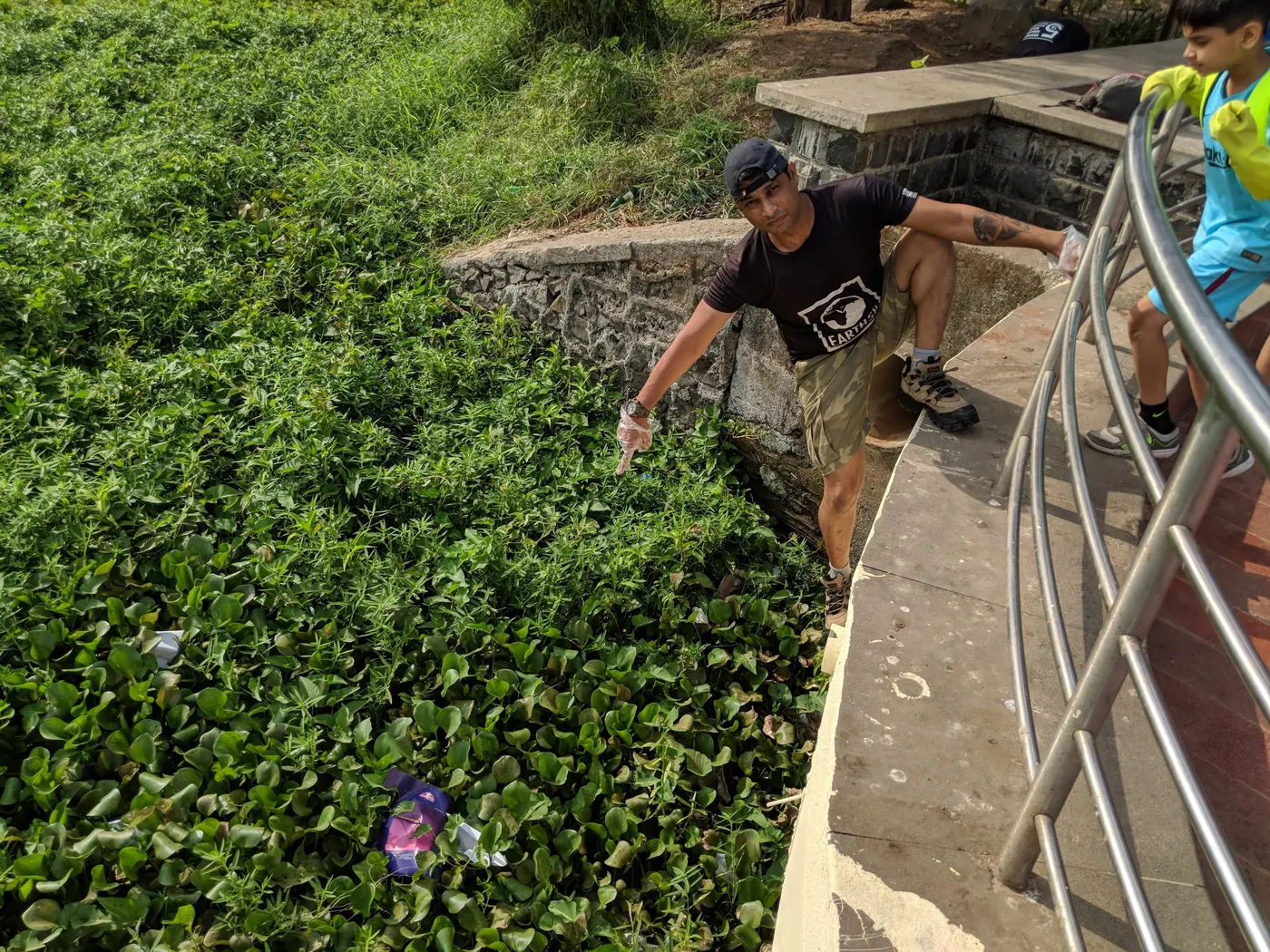
The same pattern shows up in Earth5R’s own shoreline audits. At Powai, religious waste, framed pictures, earthen pots and floating plastic sat together on the bank; at Yeoor Lake in 2015, volunteers found a shoreline already thick with plastic before the work of restoration could begin.[10][11] Litter on a lake bank is not a separate issue from sewage in a drain. Both travel with the next rain.
A cleanup that only lifts floating plastic without touching sewage, drains and catchment behaviour will have to be repeated forever. Urban lake restoration has to treat the bank, the drain and the household bin as one system.
India already has a policy stack for lakes and wetlands. The gap is execution at the shoreline
Since February 2013, the Ministry of Environment, Forest and Climate Change has run the National Plan for Conservation of Aquatic Ecosystems (NPCA) as a centrally sponsored scheme that merged earlier lake and wetland programmes into one integrated framework. The February 2024 NPCA guidelines cover interception and treatment of wastewater, shoreline protection, de-silting and de-weeding, stormwater management, bioremediation, catchment treatment, biodiversity conservation and community participation, on a cost-sharing basis with States and Union Territories.[12][13]
The Wetlands of India Portal, launched on 2 October 2021, gives States a public map and profile system for wetlands. India has expanded its Ramsar network rapidly: a August 2024 PIB feature recorded 85 Ramsar sites covering about 13.58 lakh hectares, and the Ministry’s September 2025 list and the live portal map continue that growth, with the portal currently showing 103 Ramsar sites.[14][15][6]
Revival is already visible where programmes run with care. In June 2024, the Centre for Science and Environment reported a nationwide review of 250 waterbodies created or restored under 22 State programmes and five Central schemes, including Mission Amrit Sarovar, AMRUT 2.0 and Delhi’s City of Lakes work; about 140 stood out as best cases.[16] In Delhi, the Wetland Authority told the National Green Tribunal in April 2025 that 1,045 waterbodies were listed (rising to 1,046), that 631 were taken up for rejuvenation in the first phase, and that rejuvenation of 256 of those 631 had been completed.[17]
Revival programmes already leaving a mark
CSE’s 2024 review of restored waterbodies, and Delhi’s first-phase rejuvenation progress
Sources: CSE press release, 26 June 2024; Down To Earth reporting of Wetland Authority of Delhi filing, 7 April 2025.[16][17]
The question for urban lake restoration in India is no longer whether a rulebook exists. It is whether shoreline communities, utilities and companies can keep a restored lake from sliding back.
NPCA, Ramsar designation, Amrit Sarovar and city lake missions create the enabling frame. Earth5R’s field work sits in the execution gap: weekly counting, segregation, recycling links and catchment training that keep a lake from filling up again.
At Powai, the city is removing hyacinth by the tonne and planning an 8 MLD STP
Powai Lake is one of Mumbai’s best-known urban waterbodies, sitting upstream of the Mithi River with Vihar Lake. In 2024 and 2025 the Brihanmumbai Municipal Corporation intensified short-term lake upkeep: Indian Express reporting put nearly 25,000 metric tonnes of water hyacinth removed in a six-month window, and a Joint Committee report filed with the National Green Tribunal recorded about 32,765 metric tonnes removed across BMC’s first and second phases, with a further 24,000 metric tonnes proposed for a third phase.[8][3]
The same reporting describes the longer fix the city is building toward: sewage diversion lines and a new sewage treatment plant of about 8 MLD capacity, with tender estimates around ₹68.88 crore, intended to cut the untreated flow that still reaches the lake through culverts and drains while hyacinth keeps returning.[8][3] Stormwater characterisation work published in 2025 also shows that monsoon runoff into Powai carries organic loads, metals and emerging contaminants from different parts of the catchment, so lake health depends on more than a single pipe.[9]
City engineering and community shoreline work are complements. An STP that stops sewage, and a volunteer programme that stops litter and trains catchments, are both necessary. Neither replaces the other.
ACT Powai started by counting the waste before clearing the bank
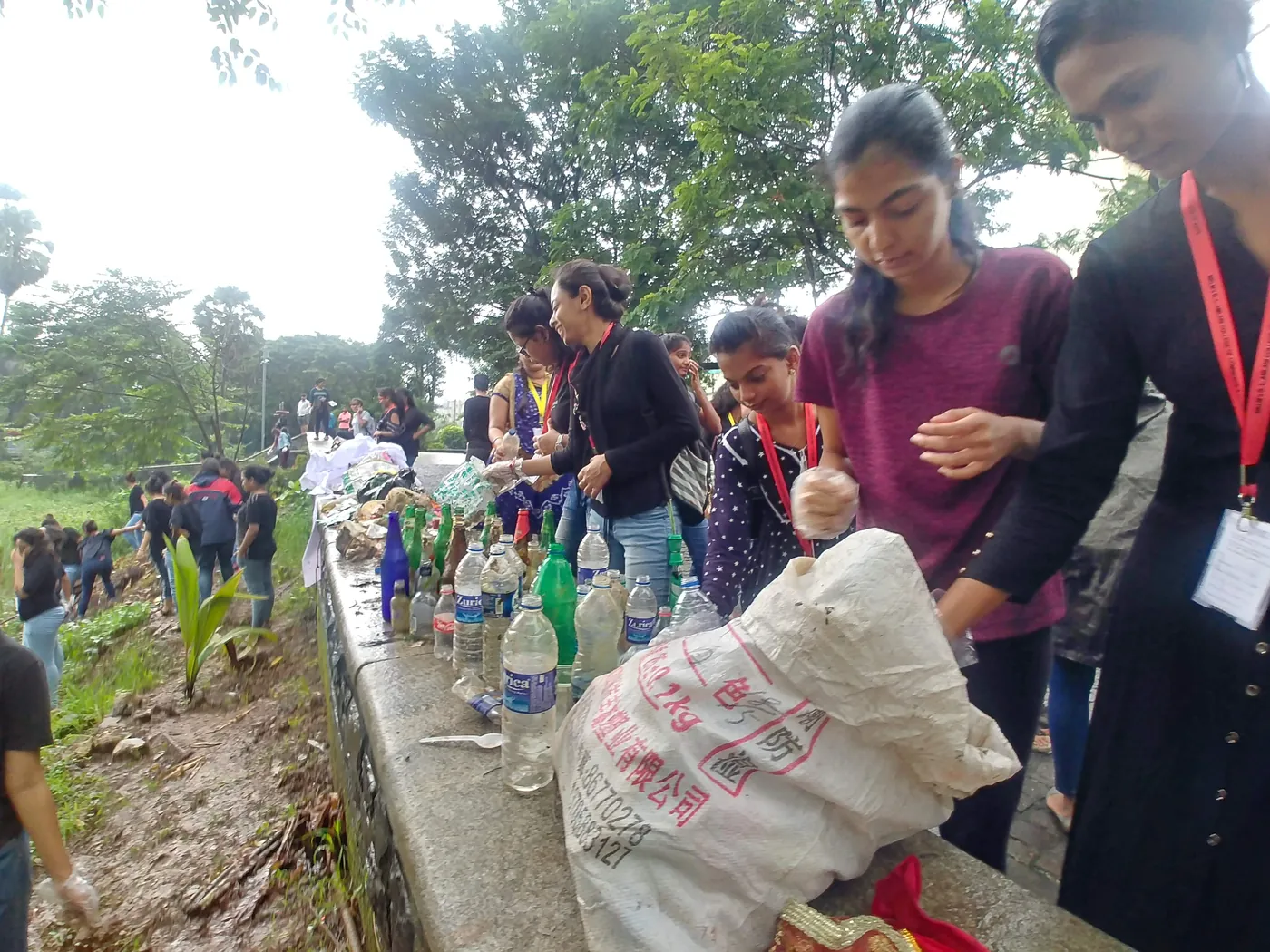
On 28 April 2018, Earth5R’s first ACT Powai cleanup treated half a kilometre near Powai Nisarg Udyan as a litter study. A small team including Saurabh Gupta systematically segregated cigarette butts, alcohol bottles, snack packets and packaging, then decided to make the drive a weekly Saturday project.[18] The point was not a one-day haul. It was a repeatable method.
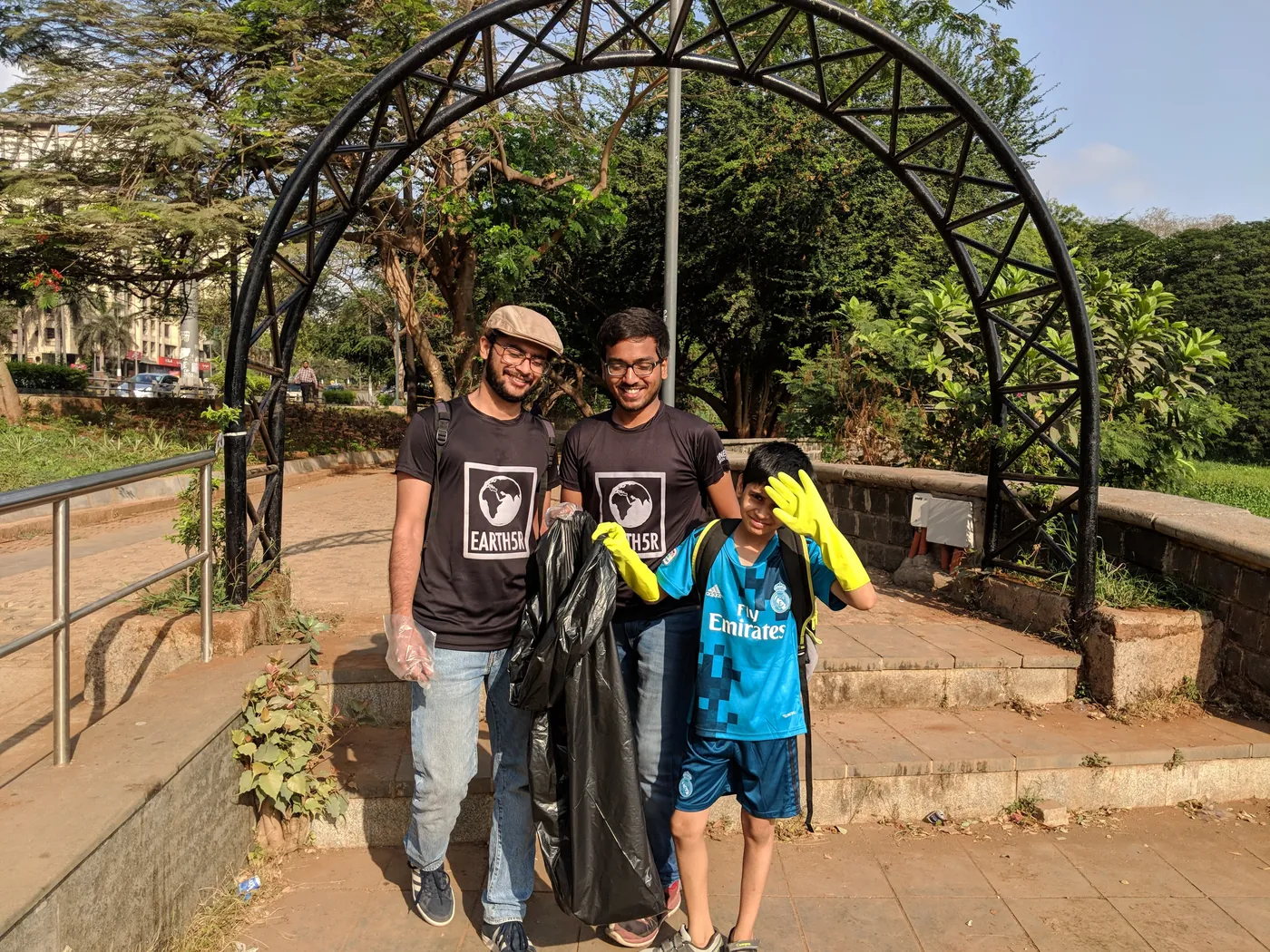
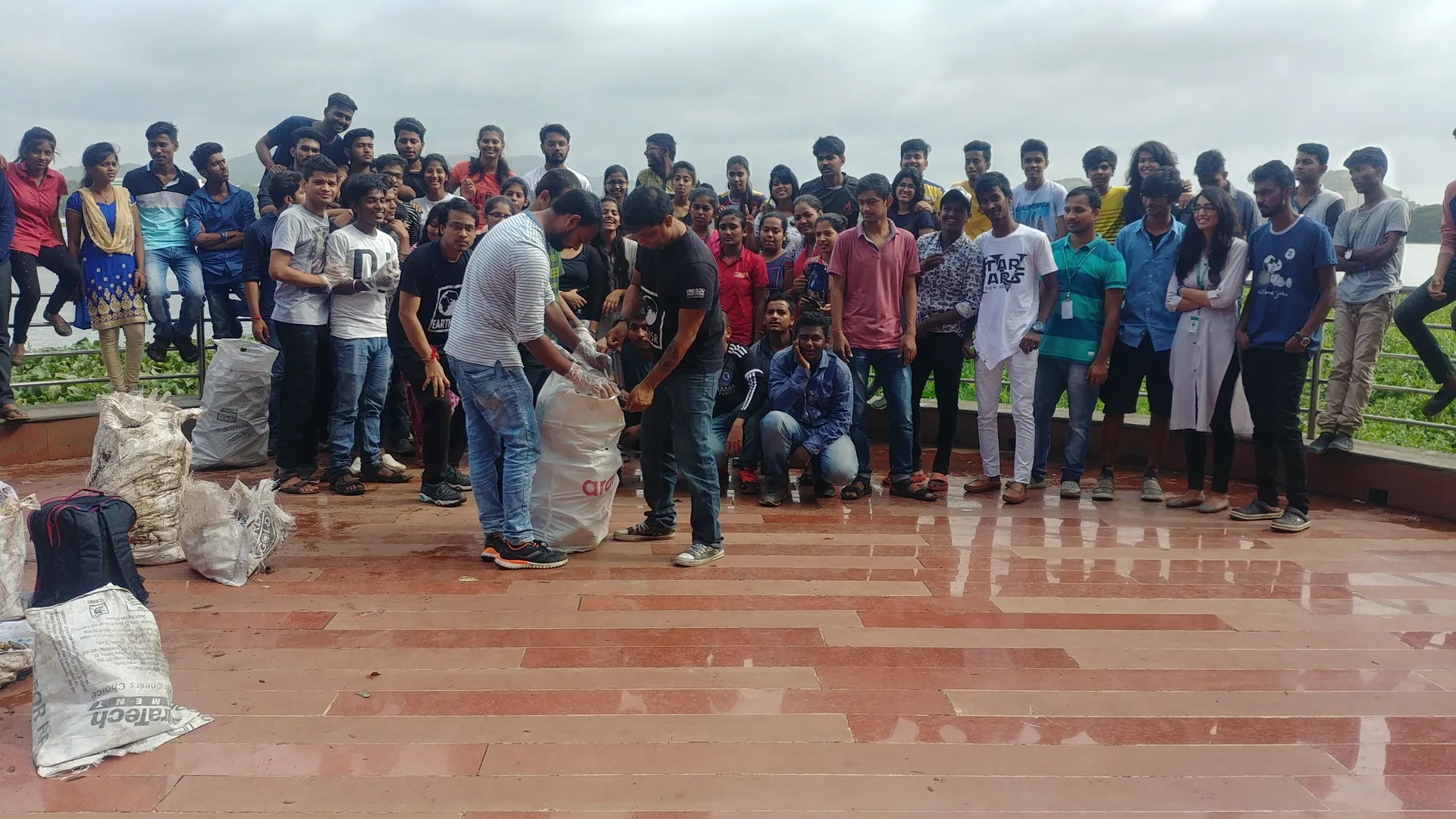
By the third cleanup on 12 May 2018, run with the Swachhalay team, about 80 to 100 volunteers joined and filled roughly 50 bags of plastic waste, with volunteers noting that even that haul barely dented the shoreline stock.[19] At the ninth cleanup, Nick Anthony of the SEEK Phuket foundation and students from Bombay Scottish School collected 500 bottle caps in an hour at Powai Udyaan, a hangout edge that had become a dumping hub.[20] The tenth cleanup pushed the next step: connecting local recyclers to residential buildings so plastic left the lake system instead of going to landfill, and following the Maharashtra single-use plastic ban with an upcycling path for bottle caps into benches.[21]
Religious waste sat in the same audits. On 10 June 2018, volunteers found framed religious pictures, earthen pots and floating plastic on the Powai banks, and Earth5R’s report on religious waste near Powai Lake noted how plastic in those offerings washes into the water with rain.[10]
All Earth5R figures in this article, including ACT Powai bag and bottle-cap counts, the recycling totals, the World Environment Day 2023 app metrics, the Yeoor cleanup notes and the Mithi programme totals, are programme-reported on Earth5R’s own EarthJournal and case-study pages. They have not been independently verified for this article. They describe what one programme recorded and are not national estimates. They should not be compared directly with census, portal, BMC or academic figures, which use different methods.
Counting by category turns a cleanup into evidence. Once bottle caps, multilayer wrappers and religious plastic are visible as separate streams, shopkeepers, societies and recyclers can be asked for specific changes.
Within 13 weeks, ACT Powai had recycled about a tonne of plastic instead of landfilling it
Earth5R’s bottle-cap bench note records that after 12 weeks of regular cleanups the team had recycled 800 kg of plastics back into the circular economy, with a goal of collecting 2.4 tonnes of bottle caps in three months and producing 20 or more benches at 25 to 30 kg of plastic each.[22] By the 14th ACT Powai cleanup on 21 July 2018, the team reported about one tonne of plastic recycled over 13 weeks, and that 85% of that day’s waste was recycled, with founder Saurabh Gupta briefing citizen and student volunteers on plastic pollution before the sort.[4]
ACT Powai recycling milestones
Programme-reported plastic recovered or sorted at Powai Lake cleanups
Sources: Earth5R ACT Powai EarthJournal reports on bottle-cap benches, the 14th cleanup and World Environment Day 2023.[22][4][23]
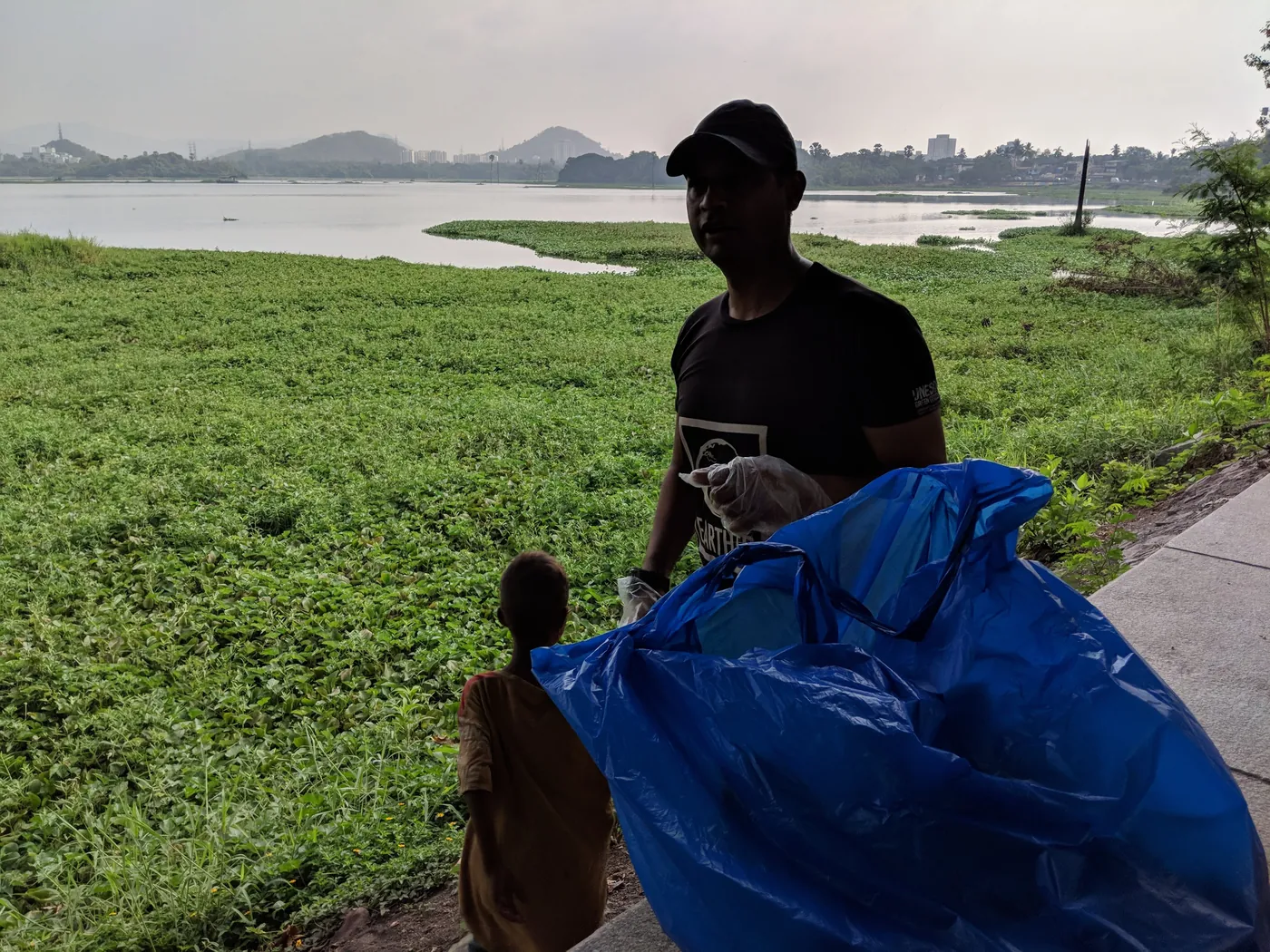
Five years later, on World Environment Day 2023, volunteers at Powai Lake used the Earth5R App to sort about 15 kg of waste into HDPE, LDPE, PET, paper, glass, medical waste and e-waste, with the app estimating a 52.5 kg carbon offset for the event.[23] The method had stayed the same: segregate on the spot, record the categories, route what can be recycled, and show volunteers the numbers.
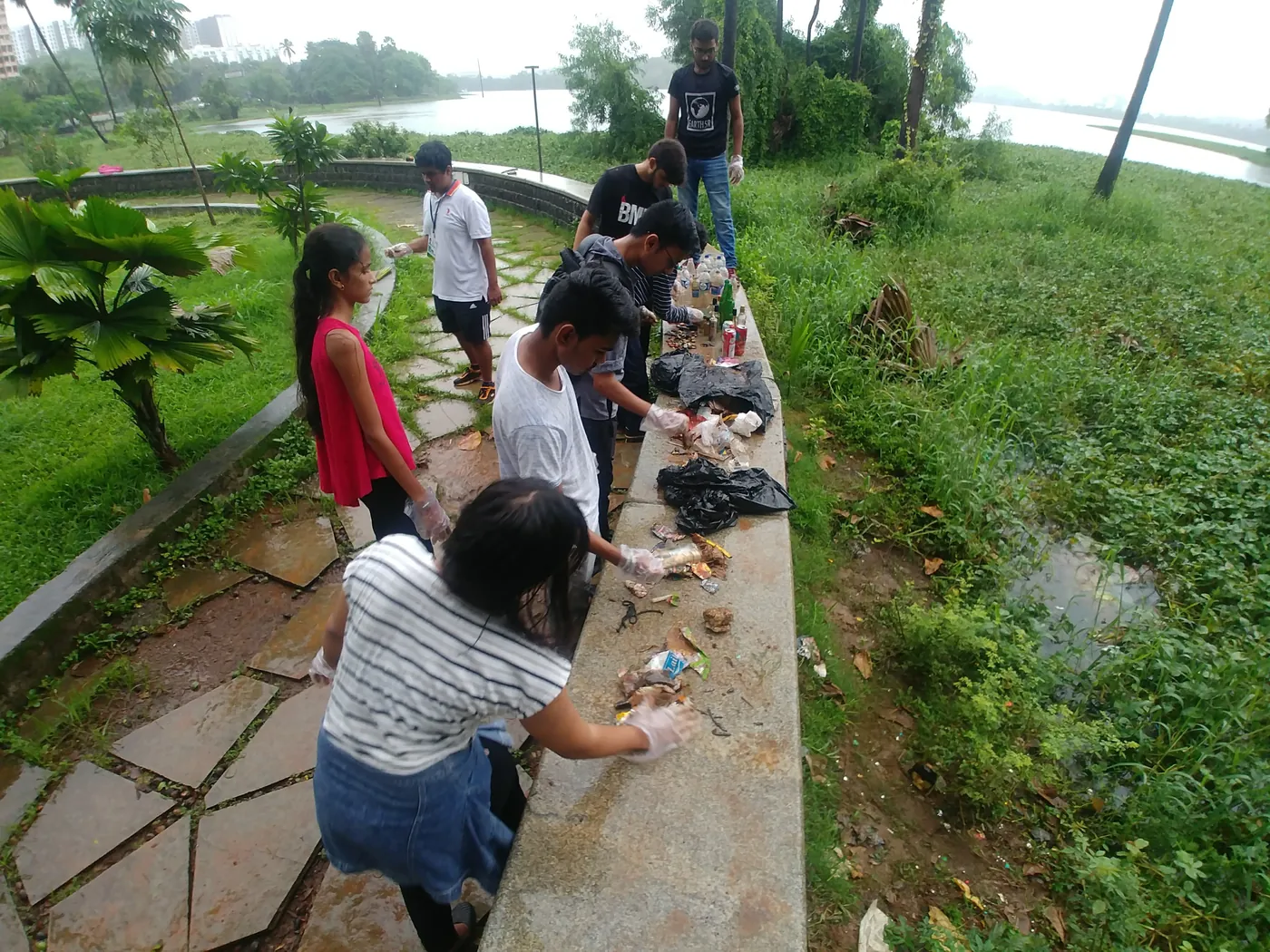
A lake cleanup that ends in a landfill has only moved the problem. Linking societies to recyclers, and turning bottle caps into benches, is how Recycle earns its place after Respect, Reduce and Reuse.
Case study: the Mithi shows why lake work and river work are the same programme
The Mithi River runs 17.8 km from Vihar and Powai lakes to the Arabian Sea at Mahim Creek. Earth5R’s Mithi River case study covers October 2020 to November 2024: a solar-powered recovery unit in the channel, bank segregation, paid collection of plastic from catchment families, and training for 10,000 families and 500 businesses.[5]
What drops on Powai’s banks can become what the recovery unit lifts downstream, and what escapes the river becomes beach litter. That is why Earth5R’s river cleanup CSR model and its community lake cleanup model are written as one system: intercept in the water, change behaviour in the catchment, and measure both.[24][25][26]
A restored urban lake that still leaks plastic into its outlet river is only half restored.
CSR and city programmes that fund a lake edge without funding the drain, the society bin and the downstream river will keep paying for the same cleanup. The Mithi numbers are what a catchment method looks like when it runs for years.
Yeoor, festival shores and BlueCities: the same method travels
Earth5R’s lake work did not begin or end at Powai. On 15 December 2015, volunteers cleaned Yeoor Lake, documenting a shoreline already heavy with plastic and making the same case that picking without prevention is not enough.[11] Festival seasons later put the same shores under a different pressure: Earth5R’s festival waste brief tracks how idol remains, nirmalya and plastic offerings meet lake edges, and why artificial ponds and composting only work when the aftercare is funded.[10]
The BlueCities Sustainability Network and Earth5R’s ecosystem approach to restoring urban lakes extend the method: environmental and social audits before action, citizen water testing, stakeholder mapping across communities, utilities and companies, and long-term stewardship rather than a single drive.[27][28][26] Coastal work follows the same logic. Plastic that leaves an urban lake can become the litter counted on India’s beach cleanup days and the fragments tracked in Earth5R’s microplastics brief.
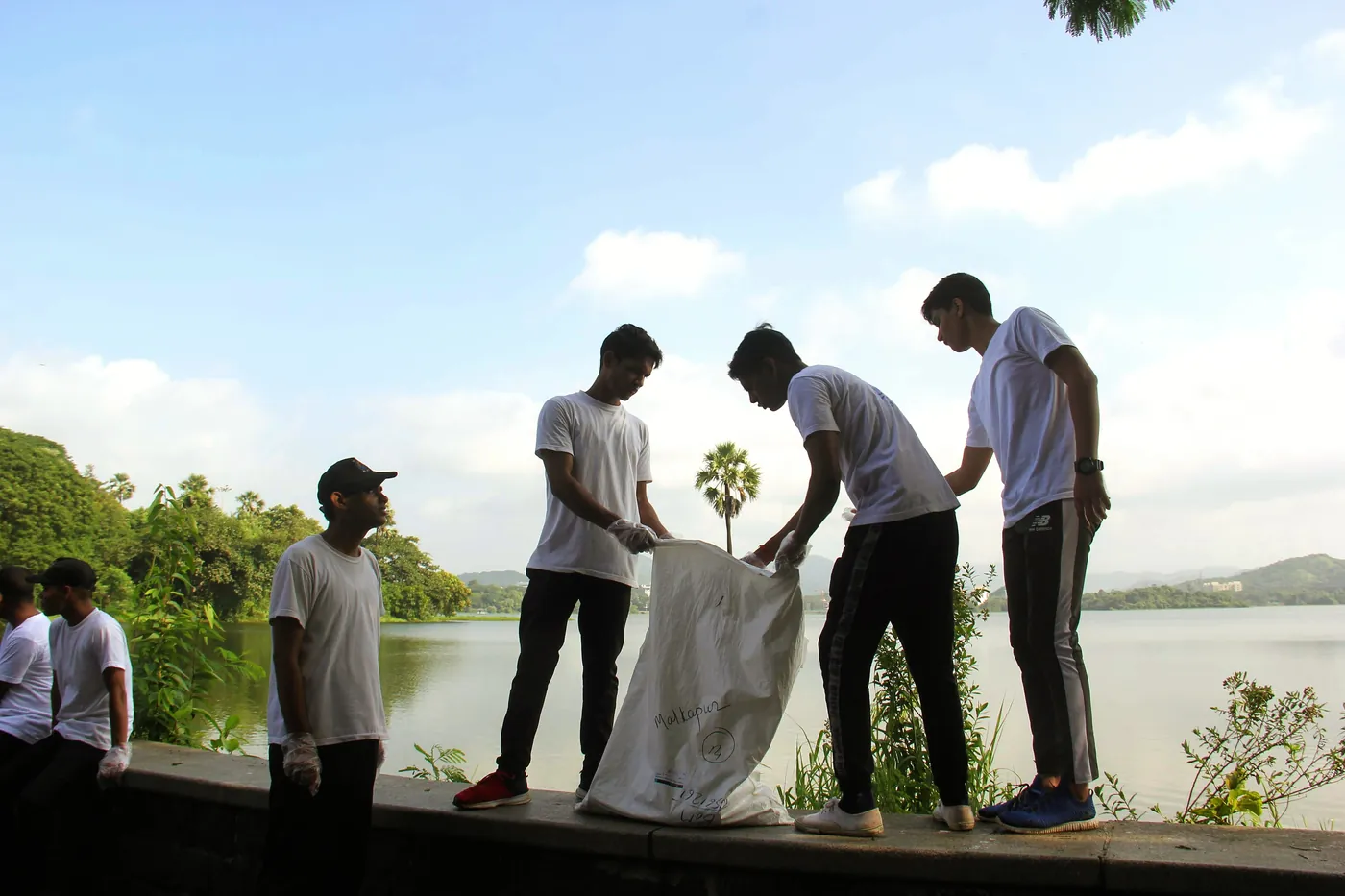
A city does not need a new model for every lake. It needs one method that can move from Powai to Yeoor to a housing-society bund, with numbers that a CSR report and a ward office can both read.
The five R’s for urban lake restoration in India
Earth5R’s sequence since 2014 is Respect, Reduce, Reuse, Recycle, Restore. The order matters. A programme that starts at Recycle has skipped the three most important steps.[29]
| R | What it means at a lake | What Earth5R’s field work shows |
|---|---|---|
| Respect | Start from the limits of the lake and of the people who live on its banks: storage, biodiversity, flood role and livelihood. | ACT Powai began with a waste audit, not a photo drive, and Yeoor work documented the shoreline before promising revival.[18][11] |
| Reduce | Cut the waste and sewage that never need to reach the water: single-use packaging, religious plastic, open drains into the lake. | Bottle-cap and multilayer audits showed which items to take to shopkeepers and societies; Maharashtra’s single-use plastic ban was treated as a chance to change the bank, not only the bag.[20][21] |
| Reuse | Extend the life of materials and of knowledge: benches from caps, compost from flowers, trained volunteers who return each week. | The bench plan aimed at 20 or more public seats from 25 to 30 kg of plastic each, and weekly Saturday drives built a standing team instead of a one-day crowd.[22][4] |
| Recycle | Close the loop on material and on value: segregate on the bank and route dry waste to recyclers, with value returning to collectors. | About one tonne of plastic recycled in 13 weeks at Powai, 85% of one day’s waste recycled, and Mithi residents paid for segregated plastic downstream.[4][5] |
| Restore | Rebuild the ecosystem and the institutions of trust: clearer water, returning fish and birds, citizen science and ward-level stewardship. | City hyacinth and STP works at Powai, Delhi’s completed rejuvenations, and Earth5R’s lake-to-river programmes treat restoration as the last step after behaviour change, not a substitute for it.[3][17][25] |
Cleanups that jump straight to Restore without Respect, Reduce, Reuse and Recycle rebuild a lake that the catchment will fill again. The five R’s are the operating sequence, not a slogan.
What a lake CSR programme should measure
Schedule VII of the Companies Act already lists ensuring environmental sustainability and ecological balance, including conservation of natural resources, among CSR activities.[30] For an urban lake, the useful measures are few and specific.
- Count by category, every drive. Report polymer types, bottle caps, multilayer wrappers, glass, medical waste and religious plastic separately, as ACT Powai and the Earth5R App do.[18][23]
- Track where the waste goes. Tonnes recycled or composted versus landfilled. A bag counted but landfilled is not a circular outcome.[4]
- Link the bank to the drain. Record culverts and stormwater outfalls that still enter the lake, and align shoreline work with utility STP and interception plans.[8][3]
- Train the catchment. Families and societies that segregate at home change what reaches the water more than a single Saturday can.[5]
- Keep a weekly or monthly rhythm. One annual photo drive does not restore a lake. Powai’s method was a standing Saturday practice.[18]
- Report programme figures with a caveat. Separate Earth5R or vendor numbers from government census and lab data, and state the method.
Earth5R’s CSR and ESG projects, water conservation programmes and BlueCities network are built for that measurement stack. Teams that need a starting brief can use the Water Stewardship guide or the River Revival Playbook.
Talk to Earth5R about an urban lake programmeSee Earth5R’s CSR and ESG projects
Frequently asked questions about urban lake restoration in India
- How many waterbodies and lakes does India have?
- India’s first Census of Water Bodies enumerated 24,24,540 waterbodies, of which 69,485 are urban and 22,361 are lakes (0.9% of the total).[1][2]
- What is NPCA and how does it help urban lakes?
- The National Plan for Conservation of Aquatic Ecosystems is MoEFCC’s centrally sponsored scheme for holistic lake and wetland conservation. The 2024 guidelines cover wastewater interception, shoreline protection, de-weeding, catchment treatment and community participation on a cost-sharing basis with States.[12][13]
- What is happening at Powai Lake?
- The BMC has removed tens of thousands of tonnes of water hyacinth (about 32,765 MT recorded across early phases) and is advancing sewage diversion with a planned 8 MLD STP, while untreated inflows and stormwater loads remain a shared challenge for the catchment.[8][3][9]
- What did Earth5R’s ACT Powai programme do?
- From April 2018 it ran weekly Saturday cleanups that counted litter by category, linked recyclers to societies, recycled about one tonne of plastic in 13 weeks, collected 500 bottle caps in an hour at the ninth drive, and later used the Earth5R App to sort about 15 kg on World Environment Day 2023.[18][4][20][23]
- How is lake restoration linked to the Mithi River?
- The Mithi runs 17.8 km from Vihar and Powai lakes to Mahim Creek. Earth5R’s Mithi programme removed 11,100 tonnes of waste and 4,440 tonnes of plastic between October 2020 and November 2024, showing that lake litter and river recovery are one catchment system.[5]
- Are India’s lakes being revived anywhere?
- Yes. CSE’s 2024 review of 250 restored waterbodies found about 140 best cases across State and Central schemes, and Delhi’s Wetland Authority reported 256 of 631 priority waterbodies rejuvenated in the first phase as of April 2025.[16][17]
- How do the five R’s apply to a lake programme?
- Respect the limits of the lake and its community, Reduce what reaches the water, Reuse materials and trained volunteers, Recycle what is collected through proper channels, and Restore ecosystems and trust only after the first four steps. Earth5R has taught that order since 2014.[29]
Related reading on Earth5R
- Festival waste in India: idols, flowers and what Earth5R learned at the lakes
- Beach cleanup in India: coastal data and Earth5R field work
- Microplastics in India: rivers, salt, air and what Earth5R pulls from the water
- Groundwater depletion in India: data, hotspots and fixes on the ground
- Mithi River cleaning and plastic waste management case study
- Earth5R’s community-driven lake cleanup and conservation model
References
- Ministry of Jal Shakti (2023). Jal Shakti Ministry releases report enumerating over 24 lakh water bodies: first Census of Water Bodies. Press Information Bureau, 23 April 2023. pib.gov.in
- Ministry of Jal Shakti (2023). First Census of Water Bodies: key findings including 24,24,540 water bodies enumerated. Press Information Bureau, 24 April 2023. pib.gov.in
- Joint Committee of CPCB, MPCB and Maharashtra State Wetland Authority (2025). Report in compliance with NGT orders on Powai Lake (OA 88 of 2025), including BMC hyacinth removal of about 32,765 MT and proposed 8 MLD STP. Filed with NGT Western Zone. Summary also reported in Mumbai Mirror, November 2025. greentribunal.gov.in
- Earth5R. Lake cleanup and recycling at Mumbai: the 14th ACT Powai cleanup, 21 July 2018. EarthJournal. Programme-reported. earth5r.org
- Gupta, S. Mithi River plastic waste cleanup: what 11,100 tonnes actually took. Case study, October 2020 to November 2024. Earth5R. Programme-reported. earth5r.org
- Ministry of Environment, Forest and Climate Change (2026). Wetlands of India Portal, interactive wetland map: 1,319 wetlands on the portal, 103 Ramsar sites, National Wetlands Atlas totals. Accessed 6 November 2026. indianwetlands.in
- Down To Earth (2017). About 85 per cent of Bengaluru’s water bodies severely polluted: study. Reporting on the Environmental Management and Policy Research Institute (EMPRI) draft study of 681 water bodies. 21 November 2017. downtoearth.org.in
- Express News Service (2025). Powai lake cleaning: BMC finalises plans to install STP and lay sewage lines to divert waste water. The Indian Express, Mumbai. indianexpress.com
- Characterization of stormwater runoff in the Powai region of Mumbai (2025). Environmental Monitoring and Assessment. Springer. doi.org/10.1007/s10661-025-14028-z
- Earth5R. Religious waste near Powai Lake: why does it matter? EarthJournal, ACT Powai cleanup of 10 June 2018. Programme-reported. earth5r.org
- Earth5R. Yeoor Lake cleanup by Earth5R, 15 December 2015. EarthJournal. Programme-reported. earth5r.org
- Ministry of Environment, Forest and Climate Change (2024). Guidelines for National Plan for Conservation of Aquatic Ecosystems (NPCA). Wetlands Division, February 2024. moef.gov.in
- Ministry of Environment, Forest and Climate Change. National Plan for Conservation of Aquatic Ecosystems (NPCA) overview on the Wetlands of India Portal. indianwetlands.in
- Ministry of Environment, Forest and Climate Change (2024). India’s Wetland Wonder: Ramsar sites tally reaches 85. PIB feature, August 2024. pib.gov.in
- Ministry of Environment, Forest and Climate Change (2025). Ramsar sites of India as on 26 September 2025. Official list PDF. moef.gov.in
- Centre for Science and Environment (2024). As India reels under a water crisis, a CSE survey unveils some good news: the country’s lakes and ponds are on a revival route. Press release, New Delhi, 26 June 2024. cseindia.org
- Down To Earth (2025). Daily Court Digest: NGT orders on Delhi waterbodies: 1,046 identified, rejuvenation plans in place. 7 April 2025, citing Wetland Authority of Delhi filing. downtoearth.org.in
- Earth5R. Powai Lake Cleanup and Recycling of Waste, 28 April 2018. EarthJournal, ACT Powai. Programme-reported. earth5r.org
- Earth5R. Update on Powai Lake Cleanup, third cleanup with Swachhalay, 12 May 2018. EarthJournal. Programme-reported. earth5r.org
- Mukhopadhyay, A. and Griffin, E. (reporters). Continuing to Tackle the Powai Lake Plastic Pollution Problem, ninth ACT Powai cleanup. EarthJournal, Earth5R. Programme-reported. earth5r.org
- Griffin, E. and Mukhopadhyay, A. (reporters). The Tenth Powai Lake Cleanup. EarthJournal, Earth5R. Programme-reported. earth5r.org
- Earth5R. Creating benches from plastic bottle caps, ACT Powai. EarthJournal. Programme-reported. earth5r.org
- Earth5R. Empowering change: Powai Lake cleanup event, World Environment Day, 5 June 2023. EarthJournal. Programme-reported. earth5r.org
- Earth5R (2026). River cleanup CSR projects: from funding to field impact. EarthJournal. Programme-reported. earth5r.org
- Earth5R. Community-driven lake cleanup and conservation model. EarthJournal. earth5r.org
- Earth5R. Community-led lake restoration framework: a scalable model for urban water bodies. EarthJournal. earth5r.org
- Earth5R. Restoring urban lakes: a deep dive into Earth5R’s ecosystem approach. EarthJournal. earth5r.org
- Earth5R. Reviving Powai Lake: a comprehensive blueprint. EarthJournal, BlueCities. earth5r.org
- Gupta, S. (2026). AI and Sustainability: Planetary Limits. EarthJournal, Earth5R. Section on the Earth5R method, Respect, Reduce, Reuse, Recycle, Restore. earth5r.org
- Companies Act, 2013, Schedule VII: Activities which may be included by companies in their Corporate Social Responsibility policies, item (iv). ca2013.com
How to cite this article
Earth5R (2026). Urban Lake Restoration in India: What Earth5R’s Powai Cleanups and Community Lake Work Show. EarthJournal, Earth5R, 6 November 2026. https://earth5r.org/urban-lake-restoration-india/
Figures are taken from the sources cited and were current on 6 November 2026. Census and portal figures are national inventories; BMC, Joint Committee and EMPRI figures are city-specific; CSE revival counts cover selected programmes. Indian figures use lakh and crore. Earth5R figures are programme-reported and link to the case studies they come from. Earth5R is an environmental organisation and social enterprise, not an NGO.